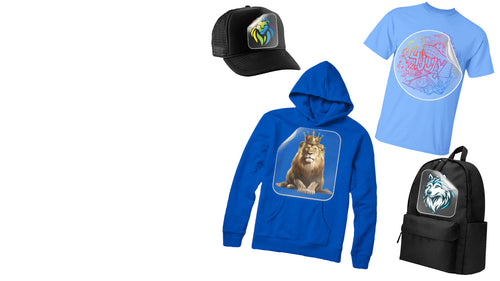
Yes, on the right towels and in the right spots, and the line between a clean press and a lifted logo comes down to the surface. If DTF is the pick, we'd order our standard hot peel transfers and gang sheets for the run.
What a DTF Transfer Needs From the Fabric
A DTF transfer is a full-color print on film that bonds to the fabric's surface with heat and pressure. If you're new to the process, our explainer on what is a DTF transfer walks through how the film, adhesive powder and press work together. The takeaway for towels is simple: the adhesive grips best on a flat, stable surface, so the weave of the towel matters as much as its fiber content.
DTF Towel Printing on Terry, Microfiber and Flat Weave
Terry is the hard case. Its tall, loose loops give the adhesive an uneven base, and the pile can poke through fine detail. Microfiber is a smooth, short-nap fabric that is typically polyester-based. That makes DTF on microfiber towels workable in many cases, so test one first. Flat-weave tea and bar towels offer a smoother surface than looped terry. Our post on what fabrics can be used with DTF transfers covers the fiber side, including polyester and blends. Towel construction is the part you'll want to test yourself.
Why Pile Height and Adhesive Matter
Our explainer on what are DTF transfers made of breaks down the film, ink and adhesive layers, and each one plays a part on a towel. The adhesive has to reach a stable base to bond. On a looped surface, tall pile can stand up around the edge of a design, show through thin areas or lift after repeated washing. Pre-pressing flattens some of that pile, which gives the transfer a smoother surface to bond to. Deep, loose terry stays the riskiest choice for a transfer.
When DTF Is the Right Call for Custom Towel Logos
DTF earns its place on towels when the artwork is detailed and the surface is flat enough to hold it. Three situations come up most: flat borders, microfiber, and the pressing habits that help either hold.
Custom Towel Logos on Flat Borders and Hems
Woven borders and hems are flatter areas that can suit a transfer. These bands sit flat, so a full-color logo has a stable base even when the body of the towel is plush. Flat-weave tea towels and bar towels work the same way across the whole face. DTF holds gradients and fine text that stitching tends to simplify, which matters when a client's logo is detailed. Keep the design inside the flat area and clear of the pile.
Microfiber Towels for Gyms, Salons and Detail Shops
Microfiber's smooth surface may suit a press-and-peel transfer, though results vary by towel, which makes it a candidate for gym and detailing towels that carry a logo in one corner. Premium Hot Peel DTF Transfers by Size press and peel in seconds, which suits a one-corner logo. Microfiber can react to high heat differently from cotton, so test before pressing and keep the pressing tips below in mind.
Heat Transfers on Towels: Pressing Tips
Good pressing habits matter more on a towel than on a tee. Pre-press the area, then press on a flat, firm surface with even pressure so the transfer meets the whole design area. Follow the temperature, time and pressure on your transfer's instructions, since settings vary by fabric. Check the towel's care label, then press one towel and wash it before you touch the full run. Wash durability on towels depends on pile, fiber and press settings, so confirm it with your own sample wash before you promise a client anything.
When to Choose Another Method
DTF isn't the answer for every towel, and knowing its limits saves you reprints and unhappy clients.
Embroidery for Thick, Deep-Pile Terry
Plush bath towels with deep, dense pile are embroidery territory. Embroidery stitches through the pile and doesn't depend on a surface bond, which is why it holds up on plush terry. Embroiderers commonly lay a water-soluble topper over the pile to keep stitches from sinking into the loops, and add a backing underneath for stability. Embroidery cost depends on stitch count and the shop, so get a quote from your embroiderer. DTF has no minimums or setup fees, so a small test run costs little in setup. Simple, bold logos stitch best, while fine detail may still point you back to DTF on a flat border.
Sublimation for White or Light Polyester Towels
Sublimation is a solid pick when the towel is white or light and made of polyester, or has a polyester coating, because the dye bonds with polyester fibers. On cotton terry or dark towels, that bond typically doesn't form well, and the colors may not show. DTF is the better call when the towel is dark, a blend, or you want a single process across your whole product line, since DTF works on a wide range of fabrics, including cotton and polyester.
A Quick Way to Choose Your Method
Start with the surface: flat borders, flat-weave and microfiber point to DTF, while deep terry points to embroidery. Then look at the artwork, since multi-color logos with fine detail favor DTF and simple bold marks suit stitching. Deep, dense terry is usually better suited to embroidery. On flat borders, flat-weave and microfiber, dark or blended fabrics go to DTF.
Bulk Towel Decoration With Lion DTF Transfers
The job splits across two options: Transfers by Size for a single image sized and ordered by quantity, and the Gang Sheet Builder for ordering more than a few images.
Premium Hot Peel DTF Transfers by Size
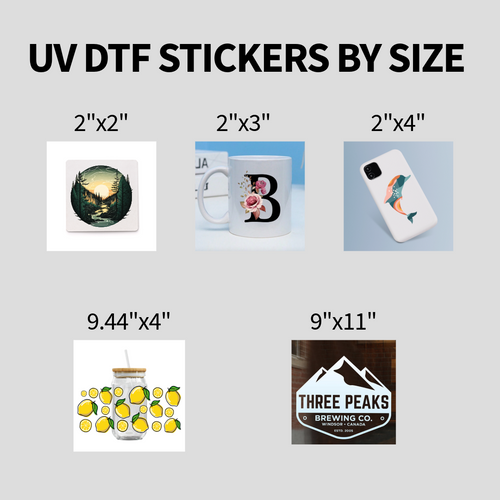
Premium Hot Peel DTF Transfers by Size suit runs where every towel gets the same logo at the same size. You upload your artwork, set the size, add a quantity and order, and each transfer prints on hot peel film, so you press and peel. Sizes run from 1.25in x 1.25in up to 10.32in x 11.1in, with options like 1.94in x 8.51in in between, which covers a small corner mark on a gym towel and a larger panel on a flat-weave. The transfers ship on a sheet and aren't cut. Artwork changes such as color or resolution fixes may carry a fee, so send clean files.
Gang Sheets for Mixed or Repeat Logo Runs
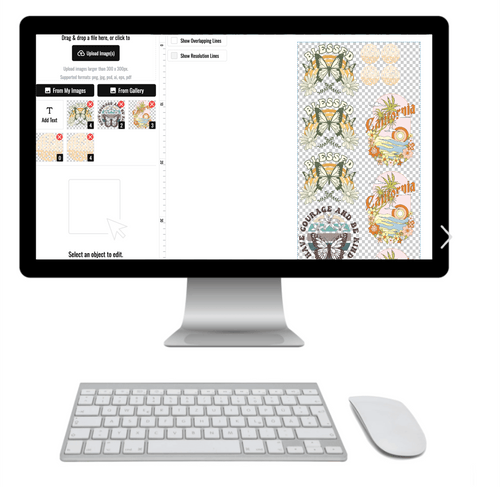
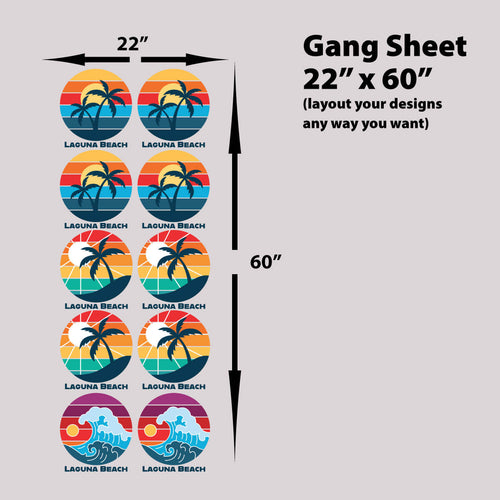
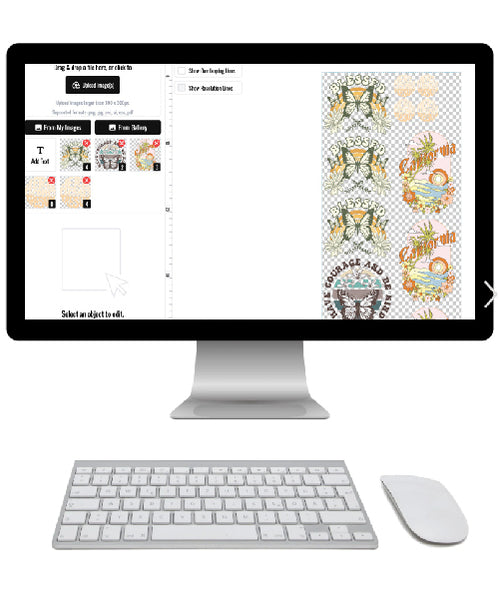
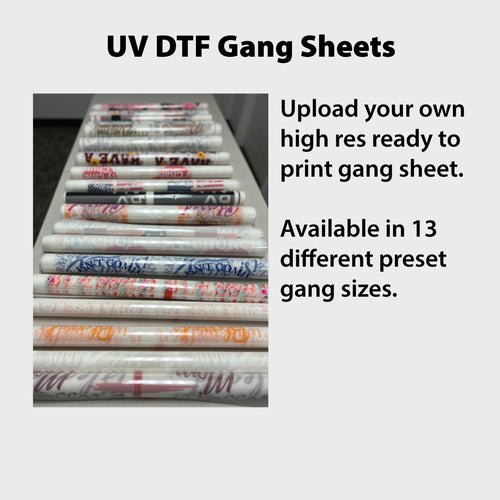
The Premium Hot Peel DTF Gang Sheet Builder is the tool for laying out several logos or sizes on one sheet. Premium Hot Peel DTF Gang Sheets put multiple designs, or multiple copies of one design, on one sheet of film, which saves film cost and cuts wasted material compared with printing designs separately. Less material consumption is one reason shops ask are DTF transfers sustainable and how DTF compares with other methods. For two or more designs, the Builder lets you upload, size and set a quantity.
Turnaround and Support for Towel Orders
Same-day and next-day printing, with 24-hour production available, keeps a towel order moving, and our color matching technology helps hold your logo color steady across runs. We produce in the U.S., and our DTF specialists are available seven days a week by call, text, email or website chat at 833-350-5466. You can order a test sheet first and see how the transfer behaves on your towel.