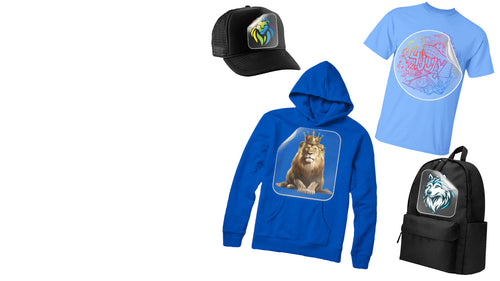
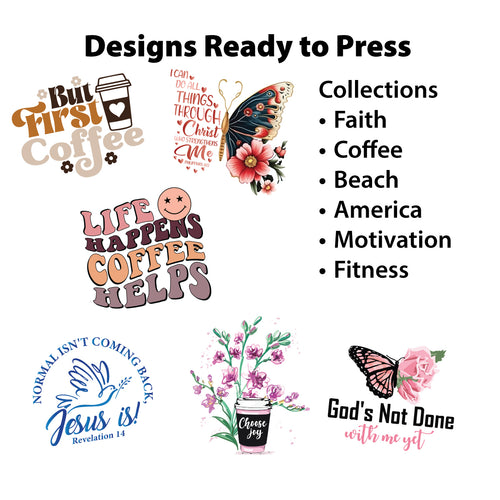
A jacket run rewards a method with few steps per garment, and our ready-to-press hot peel transfers need no setup and no complicated processes: just heat and apply.
How a DTF Transfer Bonds to Heavy Twill
Our guide on what is a DTF transfer covers the full process. The short version: a design is printed in full color on clear film, backed with adhesive powder and cured. A heat press melts that adhesive so it soaks into the weave. Denim is a common garment for DTF, and its coarse, rugged surface shows off fine detail and vibrant color. Hot peel transfers arrive ready to press, so your shop supplies the heat and you just press and peel.
Which Denim Fabrics Take DTF
Cotton, polyester, blends and canvas all work with DTF transfers, so cotton-poly blend denim is a fit too, since both fibers work with DTF. Each design prints over a white ink base, which helps color show up on both pale washes and dark indigo. Before a run, check the fabric label and read our guide on what fabrics can be used with DTF transfers.
DTF vs Other Denim Heat Transfers and Paint
Fabric paint and dye suit one-off craft projects. Paint is applied by hand, and dye colors the whole garment without placing a detailed logo. Among denim heat transfers, vinyl needs every design cut and weeded. DTF prints full color, from fine detail to gradients, with no screens to burn and no weeding, and every transfer from the same file matches the last. Our color matching technology keeps color accurate across print runs, and our premium hot peel transfers arrive ready to press for production work.
DTF on Jackets and Jeans: Placement That Sells
Placement decides how a finished piece reads on the rack, and jackets and jeans each come with a seam map to work around.
DTF Denim Jackets: Back Panels, Chests and Sleeves
The back panel is the biggest flat area on a jacket, so it suits a large design set between the yoke seam and the waistband. Left-chest logos sit best clear of the pocket flap and button placket. Sleeve and collar marks should stay small and away from seam ridges, and snaps and rivets are no-go zones. Denim shirts follow the same logic, with chest and upper back placements. Cropped and women's cuts have less back panel, so scale the artwork to each garment instead of reusing one size.
DTF on Jeans: Pockets, Hems and Legs
Back pockets take small marks that stay inside the stitching. Hems work above the fold, where the fabric lies flat. The outer thigh or lower leg offers the most room, with a clean panel between the side seam and the inseam. Thick side seams and pocket edges create uneven pressure, so keep designs off them and slip a pressing pillow inside the leg. Stretch denim moves more at the knee, so leave large solid blocks off that zone. Men's and women's cuts differ in leg width, so size the artwork for each cut.
Pressing DTF on Denim Without Seam Problems
Seams make pressure uneven on denim, so a few steps before and after the press protect every garment in the run.
Prep: Pre-Press and Flatten the Surface
A short pre-press drives out moisture and smooths wrinkles. Position the design clear of thick seams, and place a pressing pillow or folded cloth under the area so the platen meets a flat surface. Lay a Teflon or parchment cover sheet over the transfer before you close the press. Follow the temperature, time and pressure settings that come with your transfer.
Press and Peel: Hot Peel Timing
Press with even pressure across the whole design, since textured twill needs full contact to bond. With hot peel transfers, you press and peel in seconds. Lion DTF's hot-peel transfers are designed for easy application, so peel as soon as the press opens. Check every edge and corner before the next jacket, and replace the cover sheet and press again briefly if one lifts.
Ordering DTF Transfers for Bulk Custom Denim Jackets
Our bulk and wholesale options cover large runs, with pricing as low as $0.017 per square inch for bulk orders. Match the product to your layout and file.
Premium Hot Peel DTF Gang Sheet Builder for Mixed Jacket Layouts
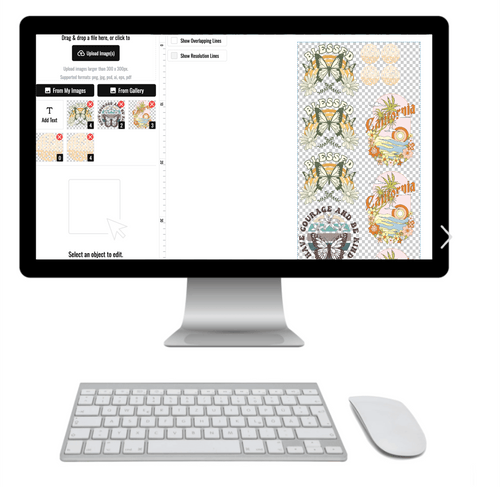
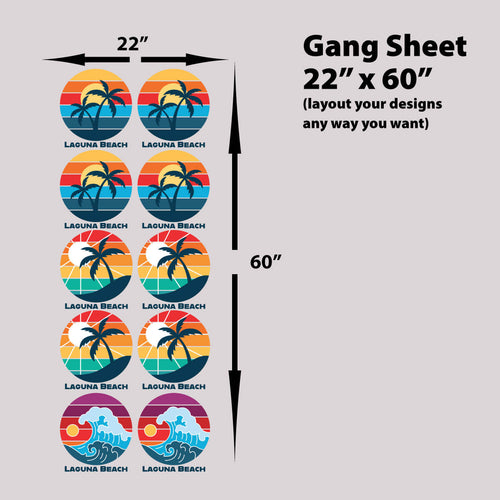
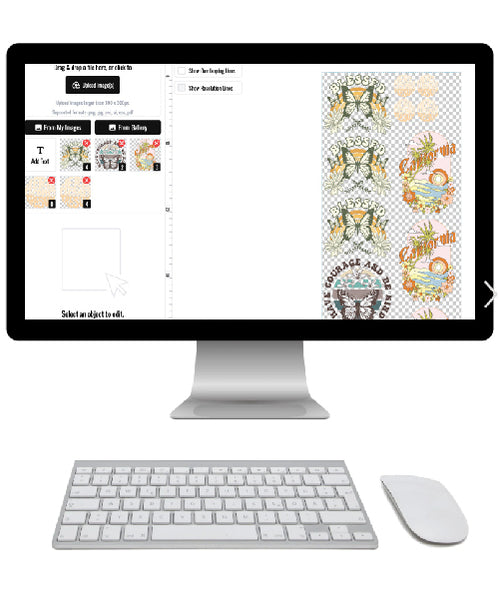
The Premium Hot Peel DTF Gang Sheet Builder suits shops that mix designs across a jacket run. Build your gang sheet with back panels, chest logos and sleeve marks together so the film is used efficiently. Choose it when a single order includes several designs or garment sizes and you want one printed sheet to cover the lot. Everything prints as a hot peel transfer, so every piece applies the same easy way.
Premium Hot Peel DTF Transfers by Size for Repeat Logos
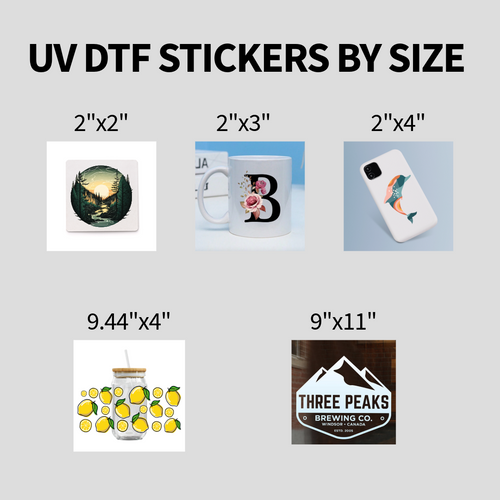
Premium Hot Peel DTF Transfers by Size fits a single design repeated across a run. Upload your artwork, set the size and add a quantity. Sizes run from 1.25in x 1.25in to 10.32in x 11.1in, from small chest marks to full back panels. Transfers ship on a sheet, not cut, and artwork changes may carry a fee. Our color matching technology keeps color accurate across print runs. For more than a few images, use the gang sheet builder instead.
Premium Hot Peel DTF Gang Sheets for Ready-Made Sheet Orders
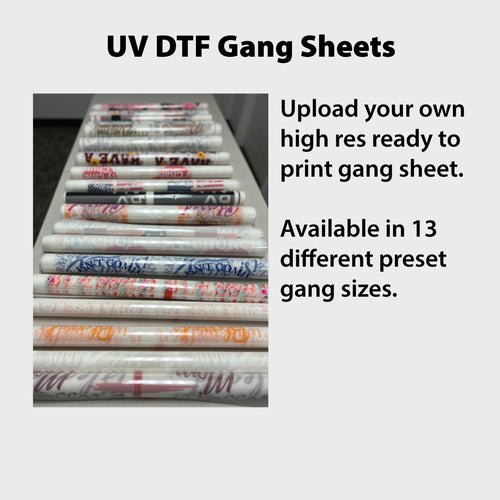
Premium Hot Peel DTF Gang Sheets fit shops that already have a finished sheet file. Send the sheet, and we print it on hot peel film, ready to press. Same-day or next-day printing is available, with 24-hour production, so a jacket order does not stall waiting on film. Our DTF specialists and design experts are available seven days a week at 833-350-5466 by call, text, email or website chat if you want a second look at a file.
Durability, Materials and Waste
Jackets get washed, worn and layered for years, so buyers need to know what holds the print on and what goes into it.
What Makes a Print Hold Up in the Wash
A transfer has three working layers: film, ink and adhesive. The design is printed over a white ink base, covered in adhesive powder and cured, so the print bonds to the weave on dark denim. Our breakdown of what are DTF transfers made of walks through each layer. Our transfers are wash-tested, and our premium hot peel prints are made to last 100+ washes. Even pressure and seam-clear placement protect that result.
What Brand Buyers Should Know About DTF Sustainability
Heat-transfer prints are generally not considered a wet or chemical process under OEKO-TEX MADE IN GREEN implementation guidance. For brand buyers, the guidance treats the heat-transfer step as free of wet or chemical processes. A DTF run can cut steps in the shop. Our answer to are DTF transfers sustainable covers the wider picture on waste and materials.