


If a DTF transfer is rated for 100 washes, why does the collar peel after six trips through the laundry? Because the wash count describes a test, not a property of the product. It reflects one film, one powder, one press setting, one detergent and one drying routine, and it says nothing about the poly-cotton hoodie you plan to decorate.
The same gap shows up in pricing and service format. Two suppliers can quote the same square inch and deliver completely different things: different film, different adhesive coverage, different turnaround, different documentation.
The four decisions below are what separate an order that works from one you end up reprinting: which service format you buy, how the transfer is built, how the artwork is prepared, and how you test durability and compliance before committing to a run.
Compare the DTF Printing Service Options
| Service option | Who supplies the design | What you receive | Turnaround or price |
|---|---|---|---|
| DTF Print Only | You create or upload the design and choose single-size prints or a gang sheet | Printed transfers shipped to you | Often 24-hour printing; orders ship in 1-2 business days |
| Print & Press | You upload or create the design and bring your garment | Design printed and pressed onto your garment | Handled in one visit; no press or shipping needed |
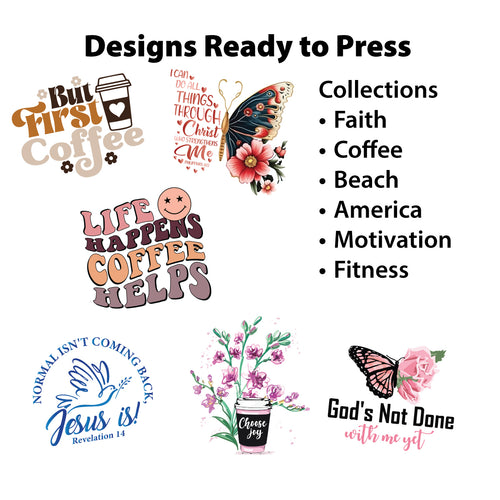
| Ready to Press | Pick from ready-made collections | Pre-made transfers ready to apply | Stock designs, so no artwork or layout time before you press |
| We Build a Gang Sheet for You | You send designs and the team builds the layout | Custom gang sheet | Listed at $25.00 |
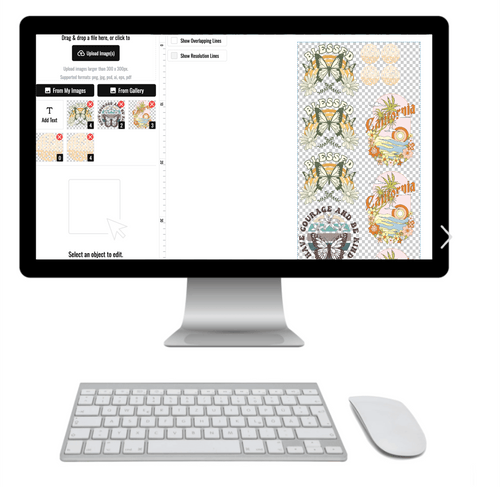
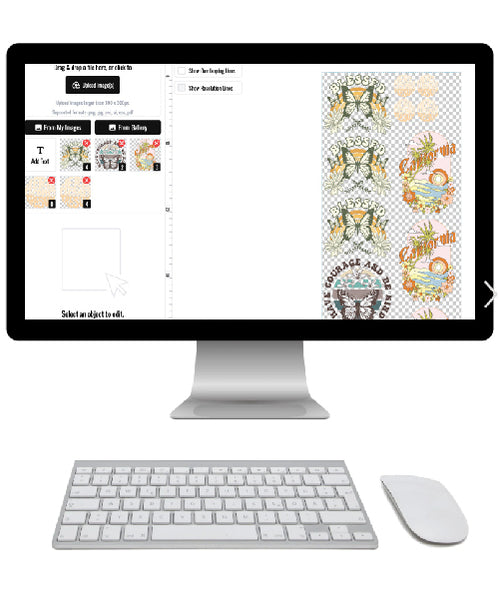
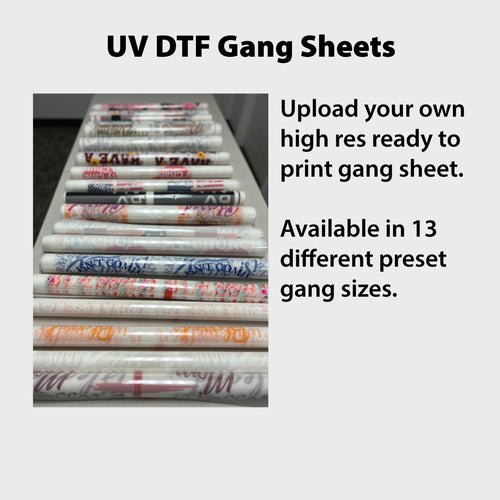
DTF Print Only keeps the press in your building. You create or upload the artwork, pick single-size prints or a gang sheet, and receive printed transfers shipped to you. A screen shop with a press already on the bench gets the lowest cost per print this way, because you're not paying anyone for press labor.
Print & Press flips the responsibility. You build the design with the online tool, bring the garment in, and the team prints and presses it onto the fabric. If you're still weighing transfer output against direct-to-garment, DTF vs DTG printing covers where each method wins. This format suits buyers with no press, or with one garment that has to come out right.
Ready to Press solves deadline pressure rather than a specific design. Ready-made collections cover themes like America, faith, coffee and seasonal holidays, so a school fundraiser in three days gets transfers on the table instead of a layout project.
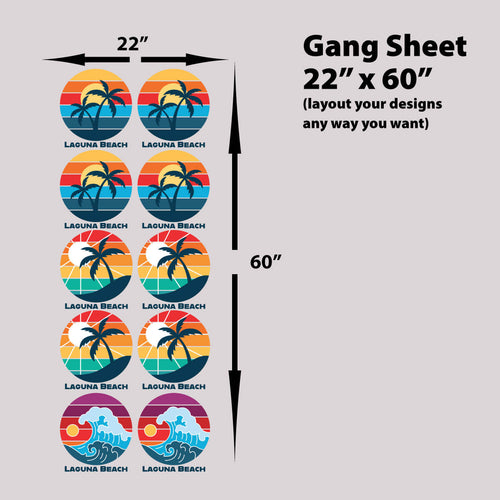
We Build a Gang Sheet for You is the row for files that are ready but nesting that isn't. It's listed at $25.00, and the team handles the arrangement.
Pick the row that fixes your bottleneck. If press time is the constraint, buy Print Only. If handling garments is the constraint, buy Print & Press. If layout time is the constraint, hand it over.
How DTF Transfers Are Made
A DTF transfer works like a printed sticker with a glue layer that activates under heat, except the glue arrives as a powder and the printing happens on film rather than on the garment. Every stage after printing exists to protect that bond.
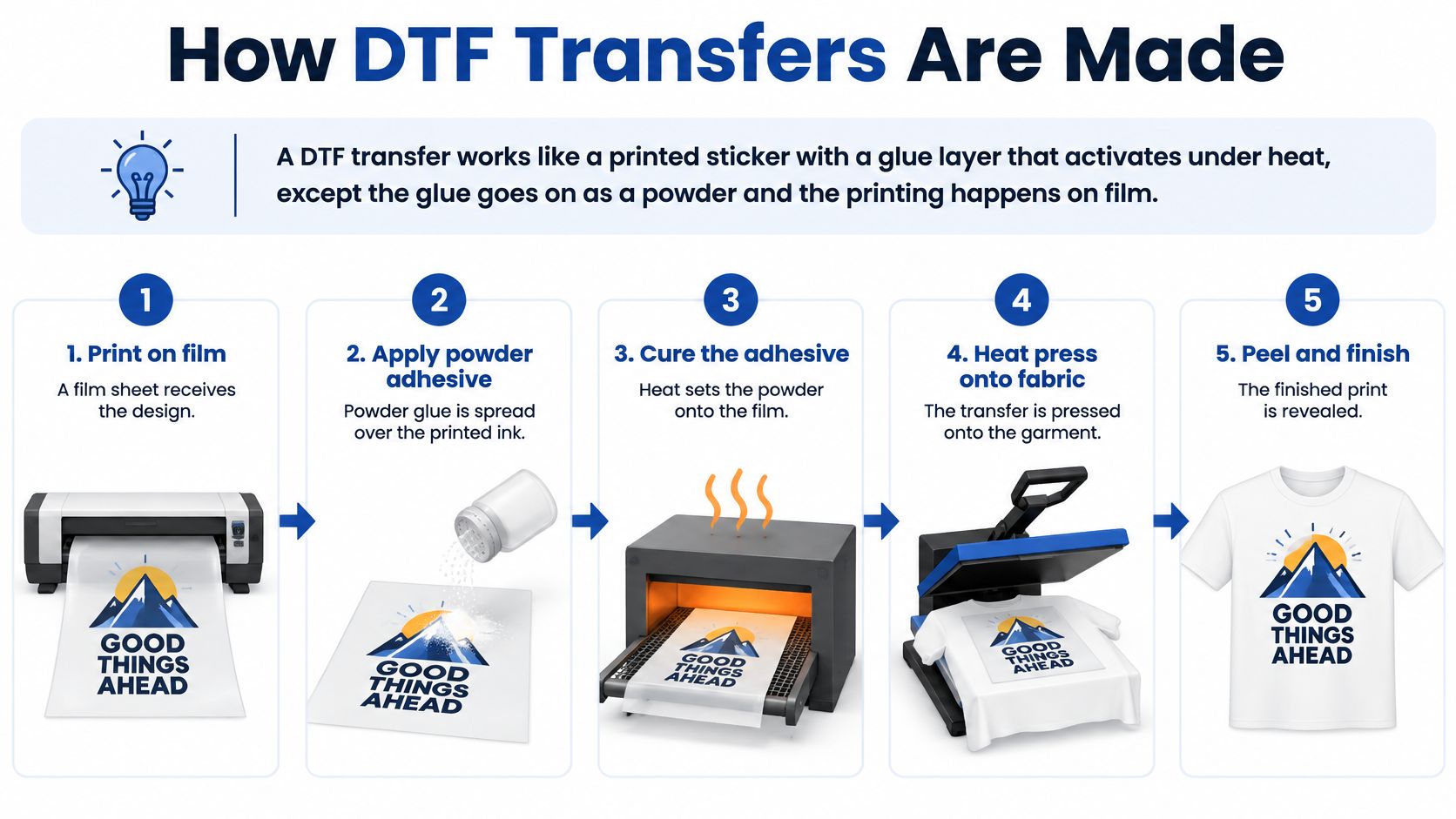
- Print on film. The design prints in mirror image onto a special PET film in full colour plus an opaque white layer, so the transfer carries its own background.
- Apply powder adhesive. While the ink is still wet, powdered hot-melt adhesive spreads across the print and settles into the image.
- Cure the adhesive. Loose powder shakes off and the film cures until the powder melts into one continuous layer instead of sitting on top as grit.
- Heat press onto fabric. The transfer goes onto the garment and the press drives the adhesive into the fibres.
- Peel and finish. DTF film is a hot peel, so it comes off while still warm, right after pressing.
The white layer is the reason dark shirts work. On a black hoodie the white underbase sets the opacity, and whatever sits above it determines the colour the eye reads. That layer has a narrow working range: a production walkthrough of how DTF transfers are made notes that excessive white or adhesive coverage stiffens the print and dulls hand feel, while too little reduces saturation and bonding consistency.
Curing is where the transfer either becomes a product or stays a picture. The Uninet DTF application instructions put curing at approximately 120°C/250°F for 120 seconds in a curing unit, with application pressure around 60 lb. Treat those numbers as one supplier's spec, not a universal standard. Lion DTF Transfers applies transfers with a 5-second garment pre-press, then 10 seconds at medium pressure under teflon or parchment paper. The settings that matter are the ones your service runs, so ask for them before a production order.
Under-curing leaves adhesive that releases early in the wash, and heavy powder coverage leaves a rubbery hand. Because no weeding is involved, fine lines and small text survive the process where cut vinyl would lose them, which is why the method suits detailed logos.
Preparing Artwork So Prints Match Your Design
Most colour complaints start in the file, not in the printer. Run this list before you upload and you remove the majority of reprints.
- Build at final size, around 300 DPI. Enlarging a small image later softens edges, and no amount of ink recovers detail that was never in the file.
- Use a transparent background. The film prints only what's in the artwork, so a stray white canvas turns into a printed white box on your garment.
- Send vector for logos and type wherever it exists. If the only version is a low-resolution image, ask for vectorization rather than scaling up a JPG.
- Keep your smallest detail above your own visibility threshold. DTF holds thin lines and small type well, which is precisely why a blurry file shows its flaws at full size.
- Name the colours that have to match a brand standard and request the Color Matching Guide before the job runs.
- Flag white ink. On dark garments, say which areas need a full white underbase and which should stay clear of white.
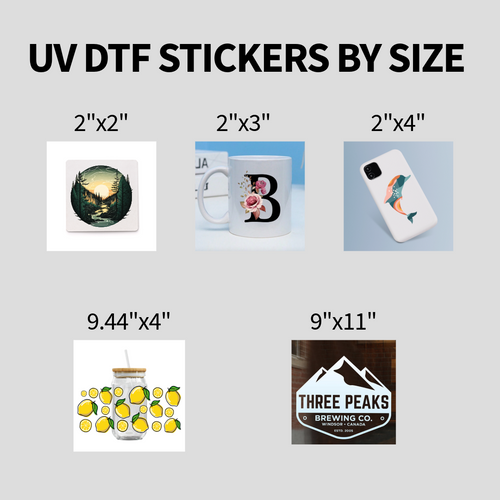
- Label every file with its width and height, then confirm the total fits the sheet size you're ordering.
Substrate is part of the brief, not an afterthought. Research published through the Society for Imaging Science and Technology on branded textile colour treats colour retention as a measurement problem tied to fabric composition, press settings, detergent, water temperature and cycle count. The same transfer will not reproduce identically on cotton, polyester and blends, so tell your printer what the garment is.
Practical rule: a screenshot is not print-ready artwork. If that's all you have, request vectorization before the order, not after the proof.
What Drives DTF Printing Service Pricing
Pricing starts at $0.017 per square inch, so printed area is the lever that moves the bill. A 10 x 12 inch design covers 120 square inches, which comes to about $2.04 at that starting rate. Colour count doesn't enter the calculation: a one-colour logo and a photographic gradient occupy the same film.
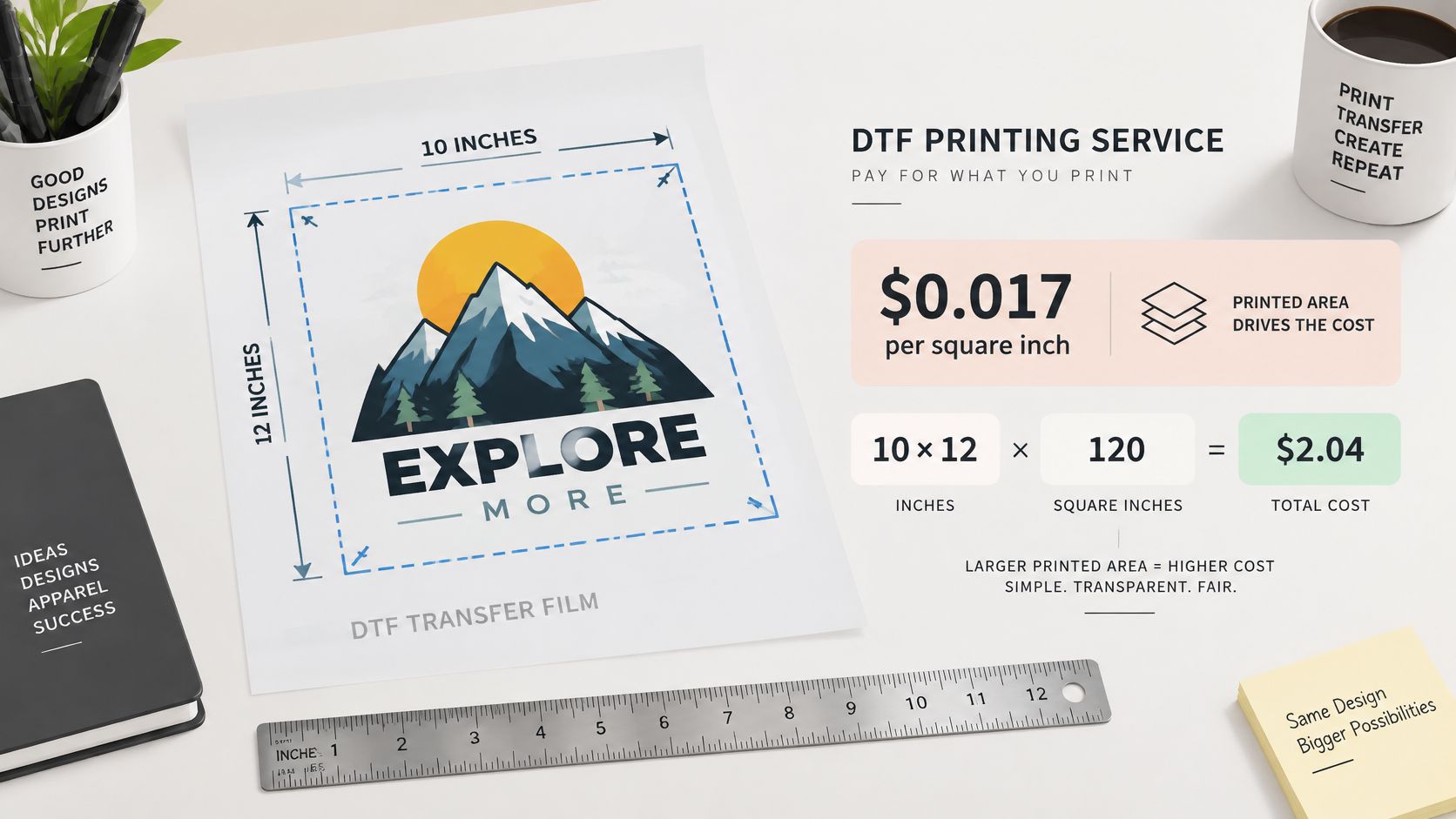
Two things inflate the area you pay for. Extra print locations are separate film and separate press cycles, and loose layouts leave gaps that still consume sheet space. That second point is why nesting discipline matters more than haggling over the base rate.
| Cost driver | How it changes the price | Worked example |
|---|---|---|
| Print area | Billed by square inch from $0.017 | A 10 x 12 inch design is 120 square inches, about $2.04 at the starting rate |
| Unused space on a sheet | Adds to the printed area you pay for | Tighter nesting lowers the area per design |
| Built-for-you gang sheet | Fixed listed fee for the layout service | $25.00 listed price |
| Rush printing and shipping | Faster turnaround or upgraded delivery adds to the order | A per-order premium on top of the base square-inch rate |
Gang sheets address the waste problem by combining several graphics onto one layout, which reduces film, setup handling, and packaging per design. You can build the sheet yourself with the online tool, or have the team build it for you at the listed $25.00 fee. How much you save depends on artwork dimensions, spacing and cut margins, and how full the sheet ends up, so run your actual files through both options before committing. The trade-offs between the two approaches are explained in gang sheet printing versus individual printing.
Before you compare services on the headline rate alone, ask two questions: what the per-square-inch rate covers, and whether gang sheet layout is included or billed separately. A written quote on your real files is the number that matters, not the starting rate on the pricing page.
Price the job in a fixed order: area per design, then your layout method, then any rush or shipping upgrade. Compare that total against a written quote rather than the advertised rate.
Durability, Curing and Wash Testing
A wash count is a test result, and the useful version of it arrives with conditions attached. Our transfers use premium hot peel film and are tested to last 100+ washes, but that figure describes a set of conditions, not a guarantee that survives any garment, any press and any dryer setting.
Where wash failures actually start
Curing, not printer resolution, decides whether a print stays on. The Printing Industries Association guidance on textile washfastness is direct about the mechanics: the entire thickness of the ink film must reach its curing temperature, because surface-level heating leaves the film insufficiently fused. It also states that when a print fails within five to six washings or shows excessive abrasion, insufficient heat during curing is the most likely cause. Properly cured, thicker films may resist visible abrasion for roughly 30 to 50 washings.
That's the honest frame for any high wash claim. Fabric composition, adhesive chemistry, artwork coverage, press temperature and pressure, detergent, drying method and abrasion all change the outcome, so a number earned on one cotton tee doesn't transfer to a performance polo.
A wash count without a fabric, a press setting and a detergent is a marketing number, not a specification.
What published testing actually shows
A 2023 study of printed textile durability washed samples at 40 °C for 30 minutes with an 800 revolutions-per-minute spin cycle and found screen printing and DTF the most resistant among the methods tested, each comparatively stable through 20 cycles, while visible colour change appeared across all print types after the 15th wash (study published in Věda a Technologie, 2023). It doesn't prove every DTF transfer survives 20 washes. It does show the conditions you should be quoting.
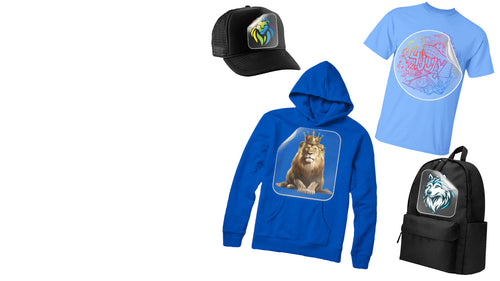
Pressing follows a short, repeatable sequence: pre-press the garment for 5 seconds to drive off moisture, cover the transfer with teflon or parchment paper, then press with medium pressure for 10 seconds and peel while warm.
| Symptom | Likely cause | Fix |
|---|---|---|
| Edges lift or peel after a few washes | Adhesive not fully cured or uneven press | Check press time and even heat, then repress with the film covered |
| Peeling on the first day | Garment washed before the bond settled | Wait about 24 hours before the first wash |
| Print dulls or cracks after hot washes | Harsh detergent, high heat or hot tumble drying | Wash inside out in cool water and dry on low heat |
| Transfer will not stick | Garment not pre-pressed or moisture present | Pre-press for 5 seconds, then press with medium pressure for 10 seconds under teflon or parchment |
Test on your own blank rather than trusting the headline. Five cycles at the temperature and detergent you expect in use, then inspect edges, colour and cracking separately, and write down the press settings so a passing result can be repeated.
Compliance and Questions to Ask Before You Order
Print quality is the easy conversation. Chemical compliance is the one that produces a marketplace delisting or a recall. PFAS restrictions are moving quickly: France's national legislation bans PFAS in clothing textiles and footwear from January 2026, the European Chemicals Agency is evaluating a broad EU restriction expected to be adopted in 2027, and multiple U.S. states have enacted or proposed limits on intentionally added PFAS in textiles and apparel, as the OEKO-TEX green chemistry briefing sets out.
No DTF product should be assumed PFAS-free by default, including ours. Film, powder, ink, coating and packaging are separate material decisions, and a garment that passed last season may not pass for the market you're shipping into this season.
Ask for these four documents:
- Written supplier declarations covering the film, the adhesive powder and the inks used on your order.
- Test reports matched to the blank garment, not only to the transfer, because compliance is assessed at product level.
- The list of markets where the finished item will be sold, so the right standard gets applied.
- A statement that separates intentionally added substances from incidental contamination, since the two are regulated differently.
Then ask three operational questions:
- Which fabric was the test run on?
- Which press conditions and wash cycle were used?
- Is compliance for the transfer and for the blank garment documented separately?
This matters most for apparel brands, promotional agencies, schools and sellers shipping internationally, where one material choice can trigger labelling or customs problems. The vetting process is covered in more depth in how to choose a reliable DTF transfer supplier in the US.
Choose a Service and Place a Test Order
A sample order costs a few dollars; a failed production run costs the whole run. Work through these steps in sequence.
- Match the job to a format. Print Only if you press in-house, Print & Press if you don't, Ready to Press if the deadline is tight, and the built-for-you gang sheet if layout is the blocker.
- Request free samples before committing to anything larger. We offer them so the first test isn't your customer's shirt.
- Press the sample on the blank you sell, at the settings you plan to run in production. A test on a scrap of something similar proves very little, because adhesion, stretch and colour behaviour all change with the fabric.
- Run five wash cycles under the conditions you expect in use. A peer-reviewed study of DTF-printed QR labels on cotton and polyester found them completely scannable after five washes, with colour-fastness ratings of Grade 4 to 5 under its test conditions (Wiley, Advances in Materials Science and Engineering). Treat that as a benchmark worth copying, not a promise about commercial laundering or high-heat drying.
- Record what happened. Note fabric, press temperature, pressure, dwell time, detergent, drying method and cycle count, then give separate verdicts for cracking, peeling, fading and loss of stretch. A single "looks fine" tells you nothing when a problem surfaces later in the garment's life.
- Confirm compliance documents for every market where the finished product will be sold.
When the sample passes, scale up by building a custom gang sheet online so the layout uses the film area efficiently and per-design costs stay predictable. If you'd rather hand the layout off, send the files and the team builds the gang sheet for you for a flat $25.00. Our DTF specialists and design experts answer file, colour and turnaround questions seven days a week by call, text or email at 833-350-5466 or orders@liondtf.com.
Order one free sample on the garment you plan to sell, and let five washes decide before a production run does.
Lion DTF Transfers prints full-colour hot peel transfers starting at $0.017 per square inch, with 24-hour printing turnaround, orders shipping in 1 to 2 business days, and free samples so you can run the five-wash test on your own blank before a production order. Upload artwork, build a gang sheet with the online tool, or send your files and let the team lay them out for a flat $25.00. Visit Lion DTF Transfers to place an order or ask a question by call, text or email any day of the week.
Email orders@LionDTF.com or Text or Call: 833-350-5466