



You're probably dealing with this right now. A customer approved the mockup, the deadline is tight, and the transfer shipment shows up looking off. Colors are muddy. Fine text isn't clean. The print feels thick. Worst of all, you don't know if it'll survive the first wash on the actual garment your customer ordered.
That's the moment a bad supplier stops being a minor inconvenience and becomes a business problem. You still have to answer the customer, eat the remake if needed, and protect your reputation.
If you're trying to figure out how to choose a reliable DTF transfer supplier in the US, don't treat it like a simple price-shopping exercise. You're choosing the company that helps you hit delivery dates, protect print quality, and keep reorders easy instead of painful.
Why Your Supplier Choice Defines Your Apparel Business
A weak supplier doesn't just send bad transfers. They create missed deadlines, wasted blanks, extra press time, and awkward customer conversations. In a print business, your supplier's consistency becomes part of your brand whether you like it or not.

Buying transfers is usually the smarter move
Most small apparel businesses don't need to own a full in-house DTF setup yet. For startups and small businesses, buying DTF transfers from a reliable supplier is the strategic choice because commercial-grade in-house equipment often exceeds $10,000 to $20,000, and that upfront investment usually outweighs the per-print savings until volume is very high and consistent. That same model minimizes risk, preserves capital, and gives businesses access to pro-level output immediately. Suppliers can also offer turnaround as fast as 1 to 2 days with no minimum order requirements, which is why this route is described as the preferred path for 95% of entrepreneurs in the custom apparel market in this breakdown of in-house printing versus buying transfers.
That matters more than people admit. Cash tied up in printers, shakers, maintenance, and troubleshooting can't be used for blanks, marketing, staff, or sample kits.
A reliable supplier protects margin
The trade-off isn't “outsourcing versus control.” It's whether you want to spend your time printing transfers or selling finished apparel. If you're still building customer volume, the better move is usually to keep production flexible and keep overhead lower.
A dependable US supplier also shortens the feedback loop. If there's an issue, you can usually get a faster answer, a cleaner remake process, and shipping that fits real customer deadlines. That's a big reason shops looking for dependable domestic production often start with guides like where to find reliable DTF transfer printing services near me.
Practical rule: If your supplier misses, your shop misses. Customers won't separate your vendor's mistake from your promise.
What actually changes when you choose well
A strong supplier gives you three things that directly affect profit:
- Predictable output: You know what kind of detail, feel, and adhesion to expect.
- Faster quoting: You can promise realistic delivery windows without guessing.
- Lower remake risk: Good transfers reduce the chance that you'll waste garments or labor fixing preventable problems.
That's why supplier selection sits so close to the bottom line. It affects every order after the first one.
Decoding Print Quality and Color Matching
“Good quality” is too vague to be useful. When you're evaluating a DTF supplier, you need to look at the technical decisions behind the transfer, because those choices show up in line sharpness, color consistency, hand feel, and wash performance.

The specs that separate clean prints from problem prints
One of the most common mistakes buyers make is ignoring the technical side. Expert guidance points to ink type, film thickness, and curing temperature as major quality markers. The same benchmark notes that 80 to 120μm is the optimal film thickness range, 280°F is the standard powder curing temperature, and 67% of failed transfers result from powder mismatch or insufficient curing. It also notes that top US suppliers can reach 99% color accuracy, while average-tier vendors fall below 85%, which is a serious problem for brand consistency. You can review those benchmarks in this DTF quality guide focused on supplier performance.
That's not abstract shop talk. If curing is off, you'll see weak adhesion and poor wash resistance. If color management is sloppy, your reorder won't match the original run.
What to ask before you place a serious order
Don't start with a large batch. Start with a sample order and ask direct questions.
- Ask about ink system: Find out whether the supplier is using pigment-based DTF inks and how they handle color consistency across repeat runs.
- Ask about film behavior: You want film that releases cleanly and supports sharp detail, especially in small text and thin outlines.
- Ask about curing discipline: A serious supplier should be able to speak clearly about powder application and curing, not just promise that the print is “durable.”
If the answers sound vague, that's your answer.
How to inspect a sample pack like a printer
Press the sample onto the types of garments you sell. Don't only test on a smooth cotton tee if your store moves hoodies, performance wear, and blends.
Check these points closely:
| Checkpoint | What you want to see |
|---|---|
| Fine lines | No broken edges or fuzzy borders |
| Small text | Clean, readable letters without filling in |
| Solid fills | Even coverage, no patchiness |
| Color | Close match to the approved artwork |
| Feel | Flexible print, not overly stiff |
Use a phone camera or magnifier if needed. Look at edges, gradients, and the white underbase around the design. That's where weak production usually gives itself away first.
For shops that care a lot about brand color and vivid output, it also helps to review examples from suppliers that talk specifically about DTF transfer suppliers with the most vibrant colors.
If a supplier can't explain how they manage color, they probably can't reproduce your artwork consistently.
Don't confuse saturation with accuracy
A loud print isn't always a correct print. Some transfers look bright on day one but drift away from the actual brand file. That's a problem for schools, merch brands, franchises, and anyone doing repeat business.
The shops that stay organized use a simple standard. They compare the transfer to the artwork file, then compare the reorder to the first successful run. If those two checks don't hold, the supplier isn't stable enough for serious production.
Evaluating Durability Beyond the Wash Count
A lot of suppliers lean hard on one claim: “100+ washes.” That sounds reassuring, but it doesn't answer the primary question for most shops. Will the transfer hold up on the garments customers really buy?

Why blended fabrics expose weak suppliers
Cotton is forgiving. Many blends are not. That's where weak adhesive behavior, inconsistent powder, or uneven film quality tends to show up.
A 2025 industry survey by the Print Industry Association found that 68% of print shops experienced inconsistent adhesion on poly-blends despite supplier claims of 100+ washes, while only 12% of supplier websites provide fabric-specific adhesion data. That issue matters even more because poly-blend apparel sales grew 22% in the U.S. retail market in the last 12 months, making fabric-specific reliability a major buying concern. Those findings appear in this analysis of what to look for in a wholesale DTF supplier.
That gap is where expensive mistakes happen. A transfer that behaves perfectly on a ring-spun cotton tee may fail on a 50/50 hoodie, athletic blend, or fleece item.
Test the fabric mix you actually sell
If you want a pro-level way to evaluate durability, stop asking only for wash counts. Ask how the transfer performs across fabric types.
Use your own sample process:
- Press on multiple garment types: Test cotton, poly-blend, and any specialty fabric you sell often.
- Stretch the print area by hand: Look for edge lifting, surface cracking, or whitening in the ink layer.
- Run repeated wash-and-dry cycles: Use normal customer behavior, not only the gentlest possible care routine.
- Check high-stress placements: Chest prints, sleeve designs, and areas that flex often reveal adhesion problems faster.
What real-world failure looks like
Weak durability usually doesn't announce itself all at once. It starts as a tiny lifted corner, a hairline crack after stretching, or color loss on a blended sweatshirt. Shops that miss those early signs end up hearing about it from the customer instead.
A useful reference point is to compare your own tests against practical guidance on how long DTF transfers last, then judge whether a supplier's performance holds up on your actual garment mix.
Shop-floor advice: Don't approve a supplier based on a cotton sample if your catalog lives on fleece, tri-blends, or 50/50 hoodies.
The better question to ask suppliers
Instead of asking, “How many washes does it last?” ask this:
“What happens on poly-blends, fleece, and mixed-fiber garments after repeated washing and stretching?”
That question tells you whether the supplier understands real production or just knows how to market to beginners.
Assessing Production Speed and Capabilities
A late transfer order can wreck a profitable week fast. The art is approved, the customer wants the job by Friday, your press schedule is full, and then you find out the supplier printed nothing for two days because “ships next day” only meant the box went out fast after production finally started.

Production time and shipping time are not the same
Shops need two separate answers from a supplier:
- How long until the order is printed
- How long until the carrier delivers it
Those are different bottlenecks, and both affect margin. Fast shipping does not help if the order sits in prepress or waits in a print queue. For contract decorators, Etsy sellers, school merch shops, and anyone handling event dates, print turnaround matters more than the shipping label.
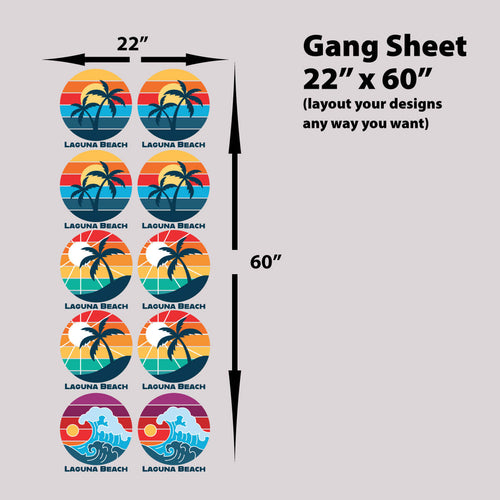
A better way to vet this is to ask for the supplier's cutoff times, average production window for standard gang sheet orders, and policy for rush reprints. The Federal Trade Commission's guidance on shipping and delivery claims is a useful reference here because it makes a simple point: advertised ship timing needs to match real fulfillment practices. If a supplier is vague about when printing starts, treat that as a warning sign.
Capability shows up when the order is messy
Easy orders make everyone look good. A more telling scenario is a mixed order with several sizes, repeat logos, left-chest placements, and one customer email asking for a file swap after checkout.
A supplier worth keeping should handle:
- Mixed-size gang sheets without wasting usable film space
- Multiple SKUs in one order without mixing up art files
- Rush replacements when a misprint threatens your deadline
- Consistent reruns so the second order matches the first
That matters more than marketing copy. Shops selling popular 50/50 hoodies, fleece, and tri-blends already deal with enough variation on press. You do not need added inconsistency from a supplier that cannot keep file handling, sizing, and repeat orders under control.
Gang sheet tools affect labor cost
Gang sheets are not just a convenience feature. They decide how much paid time your staff spends building layouts instead of quoting jobs, running presses, or packing orders.
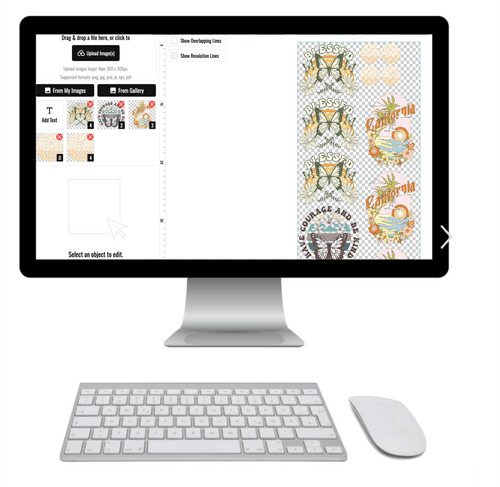
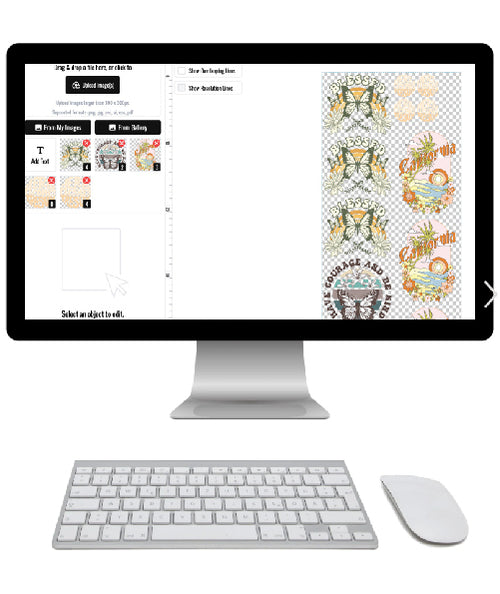
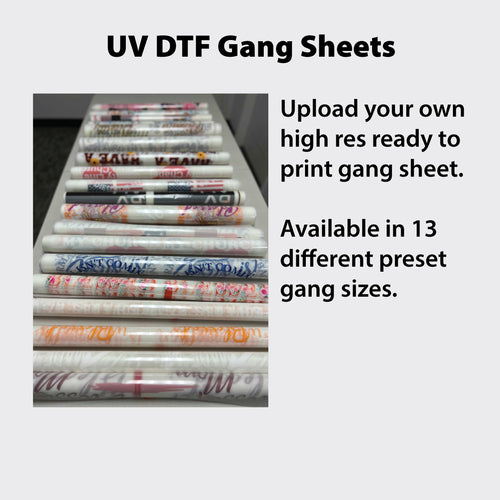
I pay close attention to the upload workflow for that reason. A good Auto-build gang sheet builder speeds up layout, reduces wasted film, and lowers the odds of duplicate art, bad spacing, or wrong-size prints. A clumsy builder does the opposite. It pushes labor upstream and creates mistakes you only catch when the heat press is already hot.
A quick look at a live ordering workflow helps separate polished operations from clunky ones:
What to look for before you place a real order
Use a paid test order, not a sample request, and watch the process from upload to delivery.
| Supplier setup | What it usually means for your shop |
|---|---|
| Fast print turnaround with clear daily cutoffs | Better planning for customer deadlines and less idle press time |
| Strong gang sheet tools | Lower layout labor and less wasted film |
| Clear proofing and file handling | Fewer art mistakes and easier reruns |
| Manual quoting or confusing uploads | More back-and-forth, more avoidable delays |
A supplier's ordering system is usually a preview of its production discipline. If ordering feels sloppy, reruns and rush jobs often feel worse.
Analyzing Pricing Models and Customer Support
The cheapest transfer isn't always the lowest-cost decision. Shops lose money on hidden fees, remake time, and poor communication far more often than they lose money on a slightly higher transparent rate.
What transparent pricing actually looks like
A reliable US supplier should show clear pricing without setup fees, surprise rush charges, or confusing add-ons. Industry benchmark guidance points to straightforward per-square-inch pricing, such as $0.017 to $0.02 per square inch, with no minimum orders, delivery guarantees with tracking, and strong customer trust signals. That same benchmark highlights suppliers holding 4.5+ stars on Trustpilot from over 3,000 verified reviews, alongside consistent print quality that withstands 100+ washes without cracking or peeling, in this buyer guide to top DTF transfer companies.
That kind of pricing structure helps you quote confidently. It also makes it easier to compare suppliers side by side because you're not guessing what will show up at checkout.
Hidden fees do real damage
Low headline pricing often hides the actual cost of working with the supplier. Watch for these issues:
- Setup charges: These can severely impact margin on smaller jobs.
- Rush fees that appear late: If a supplier advertises speed but charges unpredictably for it, quoting becomes messy.
- High minimums: These push you into over-ordering when you only need a few transfers.
- Weak shipping communication: If tracking is poor or delivery promises are loose, your customer service workload goes up.
Support is part of the product
When something goes wrong, support quality becomes production quality. That's especially true when a file uploads incorrectly, a reorder needs matching, or a deadline changes mid-job.
Look for support that's easy to reach in the channels people use. Call, text, email, and chat all matter because different issues need different speeds. If a supplier is hard to reach before you buy, they won't become more responsive after they have your money.
Good support doesn't just solve problems. It keeps small problems from turning into remakes.
Reviews that are worth trusting
Don't just skim the star rating. Read the review pattern. You want to see consistent comments about print quality, turnaround, and issue resolution. Verified reviews matter more than vague testimonials because they give you a better signal on whether the supplier performs reliably over time.
A supplier relationship works when price, consistency, and responsiveness line up. If one of those breaks, the “deal” usually stops being a deal.
Your Final DTF Supplier Evaluation Checklist
Most shops don't need more opinions. They need a usable tool they can put next to two supplier tabs and make a decision with.
Print this out, duplicate it in a spreadsheet, or use it during sample testing. The point is to compare actual buying criteria, not just who had the nicest homepage or lowest teaser price.
DTF Supplier Evaluation Checklist
| Evaluation Criteria | Supplier A Notes | Supplier B Notes |
|---|---|---|
| Print quality on fine lines and small text | ||
| Color matching consistency across first order and reorder | ||
| Film release quality and overall hand feel | ||
| Performance on cotton garments | ||
| Performance on poly-blends and fleece | ||
| Stretch resistance after pressing | ||
| Wash performance on the actual garment types you sell | ||
| Clarity on ink, film, and curing standards | ||
| Production turnaround speed | ||
| Shipping options for rush jobs | ||
| Same-day pickup or expedited options if needed | ||
| Gang sheet ordering experience | ||
| Auto-build gang sheet builder usability and film efficiency | ||
| Transparent per-square-inch pricing | ||
| Hidden fees, setup fees, or minimums | ||
| Tracking, delivery communication, and reliability | ||
| Support speed by call, text, email, or chat | ||
| Review quality and consistency | ||
| Confidence level for repeat orders |
How to use it without overthinking
Give each supplier a short sample order first. Test the same artwork, on the same garment categories, under the same pressing conditions. Then fill out the checklist while the results are fresh.
Don't choose based on one flashy feature. Choose the supplier that gives you the fewest unknowns across quality, speed, and cost. That's the supplier that helps you sleep better before a deadline.
The best supplier usually isn't the one making the biggest claims. It's the one that performs predictably when the order matters.
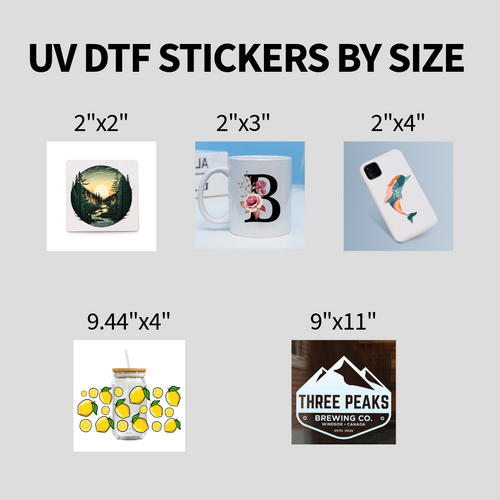
If you want a supplier that makes ordering simple and production-ready, take a look at Lion DTF Transfers. Their lineup covers premium hot-peel DTF transfers, gang sheets, and UV DTF stickers, and the online ordering flow is built for speed. The standout feature for busy shops is the Auto-build gang sheet builder, which makes layout easier and more cost effective when you're trying to maximize film use without wasting time. If your business needs fast turnaround, strong color accuracy, and a smoother path from artwork upload to press-ready transfers, Lion DTF is worth considering.