



You need transfers fast. A launch date is set, the blanks are on the table, and the only thing you can't afford is a vendor who says “ready tomorrow” and ships you film that peels on the first wash.
That's why “where can i find reliable dtf transfer printing services near me?” is the wrong question if you stop at geography. Local matters. Reliability matters more. A nearby printer who misses deadlines, rejects files without warning, or sends inconsistent color will cost you more than a provider a little farther away with a disciplined workflow.
I've seen new brands make the same mistake over and over. They choose based on price first, then try to manage quality problems after the order lands. The better move is to vet the printer like a production partner. You're not buying a sheet of transfers. You're buying consistency, communication, and fewer avoidable reprints.
Your Guide to Finding the Best Local DTF Transfers
You can lose a full selling day before the first shirt is even pressed. The film arrives on time, the print looks sharp, and then the transfer cracks, shifts color, or lifts at the edges after one wash test. That is the fundamental risk in choosing a DTF provider. The question is not only who is close. It is who can produce repeatable results under deadline.
DTF works well for short-run merch, event shirts, uniforms, and ecommerce orders because it gives small brands room to print across different fabric types without the setup burden of screen printing. But flexibility only helps if the printer controls the basics: film, powder, curing, color handling, and order accuracy. A transfer can look good on film and still fail once it is pressed, stretched, and washed, so vetting matters.
Use one rule from the start: choose the local printer you can verify, not the one with the lowest headline price.
A dependable shop should show three things immediately:
- What they print: custom transfers, gang sheets, or both
- How fast they move: same-day, next-day, or standard turnaround
- How you order: upload flow, file specs, pickup, and shipping details
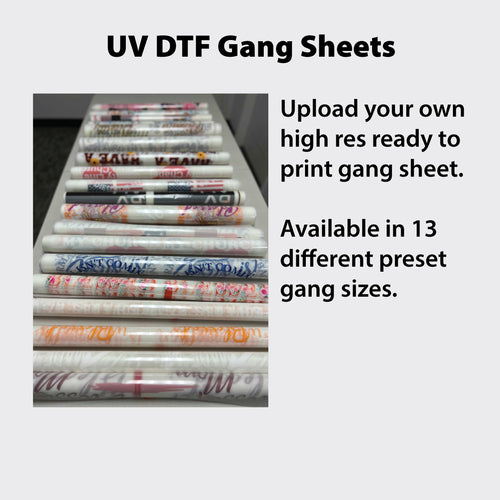
If you want a benchmark for that process, review a page built around custom DTF transfers near you. It shows the kind of ordering structure serious buyers should expect, especially if you want local pickup but still need online gang sheet tools to keep costs under control.
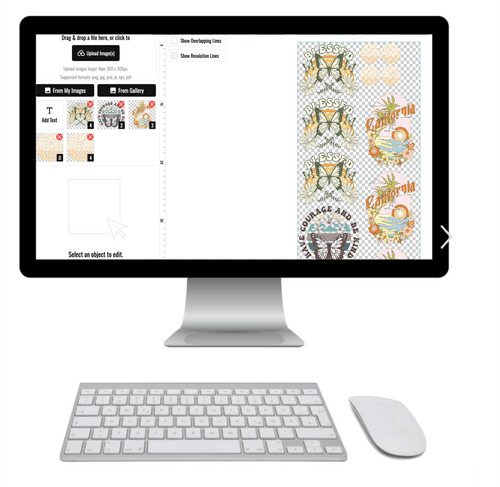
That last point gets overlooked. A local provider is more useful when they also offer a solid gang sheet builder, clear file checks, and predictable turnaround windows. That combination helps you waste less space on the sheet, catch artwork problems before print, and avoid paying rush rates to fix preventable mistakes.
Practical rule: A printer that hides its process usually creates problems during production.
Good DTF is repeatable. It presses cleanly, holds color, survives washing, and shows up when promised. Nice social posts do not prove that. A disciplined workflow does.
Starting Your Search for a Local DTF Provider
Most buyers start with Google Maps. That's fine, but the search terms matter. “DTF near me” is too broad. Use terms that reveal operational details.

Search like a buyer who has to hit a deadline
Try searches like these:
- For urgent orders: “same-day Lion DTF transfers”
- For better pricing: “Lion DTF gang sheets”
- For pickup: “Lion DTF transfer printing walk-in pickup”
- For trade support: “wholesale Lion DTF transfers”
- For event work: “rush Lion DTF t-shirt full service printing”
Then compare what shows up in maps, organic search, and local listings. A useful benchmark is whether the provider publishes a real address, clear pickup information, and file requirements. According to DTF Print Pros' guidance on finding DTF transfers in Texas, stronger providers tend to show verifiable addresses, same-day printing capability, walk-in pickup hours, 1 to 2 day shipping zones, and 300 DPI upload guidelines that help keep file rejection below 25%.
That's the kind of detail serious shops publish because they already know where customer orders usually go wrong.
What to check in the first 30 seconds
Open the site and scan for these signals:
| What you see | What it tells you |
|---|---|
| Real street address and business hours | They likely operate a physical production workflow |
| Upload specs and artwork guidelines | They've standardized intake instead of fixing every file manually |
| Actual transfer photos or pressing videos | They're showing output, not just mockups |
| Turnaround and rush options | They understand production scheduling |
| Phone, text, chat, or email | They expect pre-order questions |
If you want another practical reference for what local apparel search intent looks like, review a page focused on t-shirt printing near me. Even if you're ordering transfers instead of finished shirts, the same screening logic applies.
A printer's website should answer basic production questions before you ever contact them.
Build a shortlist, not a favorite
Don't stop after the first promising result. Pull together three to five providers. You need comparison points on responsiveness, file handling, and order clarity.
A vendor can look polished online and still be weak in production. Shortlisting gives you an advantage. It also lets you compare who answers technical questions directly and who replies with vague sales language.
Critical Questions to Vet Any DTF Printing Service
Most bad orders don't fail because DTF is flawed. They fail because the buyer never asked the questions that expose weak production habits.

A solid vetting call should cover quality, speed, and support. If the shop can't answer cleanly, move on. You're looking for operational clarity, not enthusiasm.
Quality that holds up after pressing
Ask about output, not promises. Reliable DTF services can achieve color accuracy exceeding 95% Pantone matching and run 40% faster than DTG for small-to-medium orders, according to TShirtdon's DTF service overview. That same source cites independent SGIA testing showing quality DTF retains 92% vibrancy after 50 industrial washes.
That matters because a transfer can look good on film and still fail once it's pressed, stretched, and washed.
Here's the script I'd use:
Ask these questions directly
Do you offer hot-peel or cold-peel transfers?
What file format do you prefer for best output?
How do you handle color matching for brand colors?
Can you show actual pressed samples on cotton, polyester, and blends?
Have your transfers been tested for wash durability?
What happens if the transfer doesn't apply cleanly using your recommended settings?
A good printer won't dance around these. They'll answer with process details.
Speed that's real, not just advertised
Some shops say “same day” but mean “we'll print it if nothing goes wrong.” That's not the same as having a reliable rush workflow.
Ask these questions:
- Cutoff times: What's the latest order time for same-day production?
- Proofing delays: Do they stop the clock if your file needs correction?
- Pickup readiness: Will they notify you when the order is packed?
- Rush constraints: Are gang sheets, large runs, or reorders handled differently?
If you're selling online or outfitting a team, missing one event window can wipe out the savings from a cheap order.
Support that solves problems fast
Support is where weak printers get exposed. When artwork has a transparency issue, a thin line, or a low-resolution export, you need someone who catches it early.
If a shop can't explain its reprint policy before you order, you've already learned enough.
Use a simple comparison table as you vet vendors:
| Category | Strong answer | Weak answer |
|---|---|---|
| File review | Specific DPI and format guidance | “Upload whatever you have” |
| Color | Discusses matching process and expectations | “It should be close” |
| Turnaround | Gives cutoff times and exceptions | “Usually fast” |
| Problem handling | Clear reprint or correction process | “We'll see” |
The best conversations feel boring in the right way. Clear steps. Clear limits. No ambiguity.
Why You Must Order and Test a Sample Transfer
Marketing photos don't prove reliability. They prove someone knows how to design a mockup.

That's why a sample order isn't optional. It's the cheapest way to catch bad adhesion, muddy color, heavy hand feel, or poor peel behavior before you commit to a larger run. This matters even more because many vendors say their transfers “won't crack or fade,” while user forums often report budget transfers fading after 20 to 50 washes. The same DTF Miami Prints article on local DTF services points out that some professional services guarantee 100+ wash durability, which makes real testing the only sensible way to compare claims.
If you want a low-risk way to do that, order a free premium DTF transfer sample pack and press it onto the actual blanks you plan to sell. Test on your real garments, not whatever spare tee is closest to your heat press.
What to test the moment it arrives
Check the transfer before it ever touches fabric.
Look for sharp edges, clean white underbase coverage, readable small text, and smooth ink laydown. If the film already looks inconsistent, pressing won't save it. Then press it using the provider's instructions, not your usual default settings.
After the first press, evaluate:
- Color on garment: Does it still match the artwork closely?
- Feel: Is it overly thick or plasticky for the product you're making?
- Peel behavior: Does the film release cleanly?
- Edge hold: Do corners and fine lines stay bonded?
A transfer that survives the first press but fails after washing was never a good transfer. It was just untested.
A quick visual walkthrough can also help you spot issues before a full production run:
Wash it like a customer would
Don't baby the sample. Wash and dry it the way your buyer probably will.
Press one sample and keep one unwashed as a control. Then compare color, texture, cracking, and edge integrity after multiple cycles. If the print loses character too quickly, that's your warning. If it holds up, you've got evidence, not hope.
Common Red Flags That Signal an Unreliable Printer
You can usually spot a risky DTF vendor before placing the first serious order. The warning signs are rarely subtle.
What should make you pause
-
They won't answer technical questions
If you ask about file setup, fabric compatibility, peel type, or pressing instructions and get vague replies, expect the same vagueness when there's a problem. -
Pricing feels slippery
A dependable shop explains whether you're paying by size, sheet, or artwork setup. If costs keep changing between quote and checkout, budgeting gets messy fast. -
The site uses only polished mockups
Mockups sell. They don't prove production quality. You want pressed examples, transfer close-ups, or shop-floor content that shows real output. -
Communication slows down after the first inquiry
Fast replies before payment and silence after payment is a bad pattern. Missed messages usually become missed deadlines. -
They resist samples or trial orders
That's a major issue. A shop that trusts its product usually has no problem letting you test before you scale.
Why these red flags matter
Each one points to a different production risk. Poor communication leads to missed event dates. Weak file review leads to blurry prints or rejected artwork. Unclear specs lead to failed pressing and wasted blanks.
If you run a brand, a school order, or a client job, you don't absorb that damage alone. Your customer sees the failure, not the vendor. That's why it's smarter to reject questionable shops early than to “give them a shot” on an important run.
Ordering Efficiently for Maximum Value and Speed
Once you've found a reliable printer, the next mistake to avoid is sending the order inefficiently. Good sourcing can still turn into bad economics if you upload every design as a separate transfer.

Why gang sheets usually win
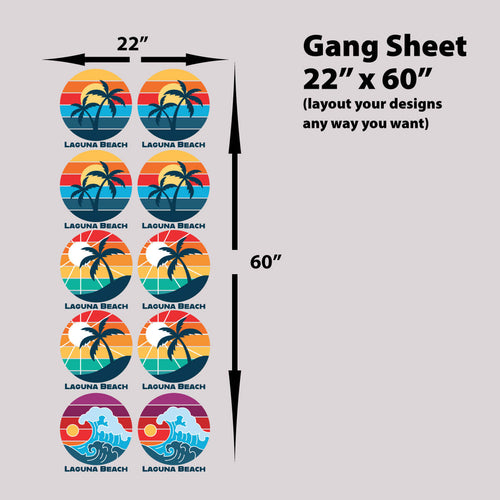
A gang sheet lets you place multiple logos, left-chest prints, sleeve hits, tags, and full fronts on one sheet. That gives you more control over waste and usually lowers your unit cost.
Using an online gang sheet builder can cut costs by 30% to 40% compared to ordering individual transfers, with pricing as low as $0.017 per square inch, according to Lion DTF's gang sheet pricing information. That's the practical reason experienced buyers use gang sheets whenever they can.
Use the Auto-build gang sheet builder
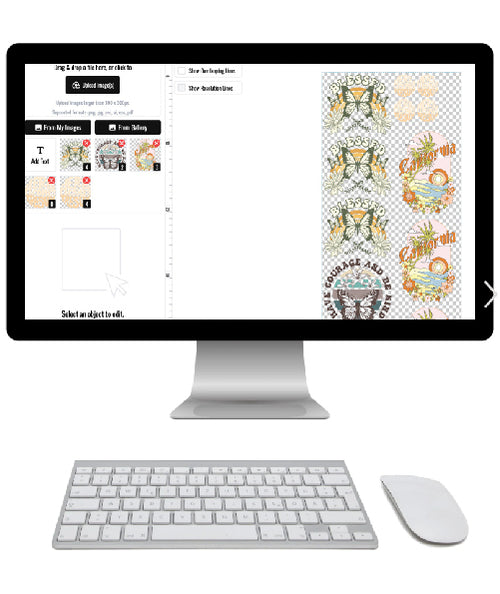
Preparation matters as much as supplier choice in this process. An Auto-build gang sheet builder helps arrange artwork efficiently so you're not manually dragging files around and guessing at spacing. That saves time, reduces layout errors, and makes it easier to combine small placements into a single order.
This is also the one place where a tool matters more than a sales pitch. Lion DTF Transfers offers an Auto-build gang sheet builder that organizes uploaded artwork for more efficient ordering. If you're comparing providers, that kind of tool is worth noting because it helps with both speed and cost control, especially when you want local pickup or a fast ship option without wasting sheet space.
A few ordering habits make a difference:
- Group by garment type: Keep similar placements together so pressing goes faster.
- Include extras: Add a few backup logos or common sizes if space allows.
- Name files clearly: Front, back, sleeve, and tag placements should never be ambiguous.
- Match the order to production: Don't mix a rush launch with half-finished artwork.
The cleanest orders usually get the cleanest results.
If you need a practical option for custom transfers, gang sheets, samples, and fast turnaround, Lion DTF Transfers is one provider to consider. You can upload artwork, use the Auto-build gang sheet builder for more efficient layouts, and choose the ordering flow that fits whether you're testing a small run or preparing a larger production batch.