



You're probably asking this because you've already seen the problem. The mockup looked sharp. The screen colors were rich. Then the transfers arrived, and the reds felt flat, the blues looked muddy, and the print lost energy the second it hit a dark shirt.
That's why “which dtf transfer suppliers offer the most vibrant colors?” is the wrong question if you stop at a brand list. Almost every supplier says they offer vibrant color. Far fewer can explain how they get it, how they measure it, and how you can verify it before you commit to a production run.
The practical way to buy DTF isn't to trust gallery photos. It's to use a Vibrancy Verification Toolkit. That means asking technical questions, ordering the right kind of sample, and knowing which answers separate a real production partner from a sales page full of adjectives.
Why 'Vibrant' Is the Most Important Word in DTF Printing
A customer approves a proof on Monday. By Friday, the shirts arrive and the print has lost the punch that sold the design in the first place. Reds read weak. Blues turn heavy. On a dark garment, the whole image looks flatter than the file. That is not a small cosmetic miss. It is a production failure that triggers reprints, refund requests, and doubts about your brand.
In custom apparel, color is part of the product. If the print lacks saturation and separation, buyers notice fast.

The problem is that "vibrant" gets used as marketing shorthand for almost anything colorful on a website. Real vibrancy is more specific. It shows up as strong saturation, clean hue separation, stable output across repeat orders, and a close match between approved artwork and pressed result. If a supplier cannot explain how they control those variables, "vibrant" is just ad copy.
A buyer needs a way to verify the claim before placing a meaningful order. Start with the file side, because some color loss starts before the transfer is printed. This guide to RGB to CMYK conversion for apparel printing is a useful baseline if you want to separate artwork problems from supplier problems.
What buyers should treat as proof, not promise
| Supplier or benchmark | What suggests stronger color output | What a buyer should verify |
|---|---|---|
| DMandprints | Public mention of calibrated commercial equipment and color-managed workflow | Ask how often profiles are updated and whether they can discuss tolerances for repeat jobs |
| STAHLS' UltraColor MAX | Expanded-gamut positioning and a reputation for bright branded graphics | Check whether your artwork actually contains colors outside standard CMYK range |
| Ninja Transfers | Aggressive color marketing and broad product visibility | Request a real sample on black cotton, not only a studio photo or mockup |
| Kodak DTF film setups | Film choice can support sharp, high-density output in a tuned system | Confirm the supplier has optimized ink, powder, curing, and profiling around that film |
| FilmKing UltraGloss setups | Finish can create extra visual pop on logos and text | Decide whether that gloss effect matches your brand aesthetic or looks artificial |
| Generic “vibrant color” vendors | Strong adjectives, little process detail | Treat them as unverified until they pass your sample and repeat-order test |
The table is not a winner list. It is a filter. A serious supplier can answer technical questions without hiding behind vague language.
Dark garments expose weak print control faster than light ones. A weak white underbase, poor curing, or sloppy profiling will mute color even if the artwork is prepared correctly. That is why your Vibrancy Verification Toolkit should focus on evidence you can inspect: dark-shirt samples, repeat consistency, and direct answers about color management.
Suppliers worth shortlisting treat vibrancy as a measurable print standard. Suppliers worth avoiding treat it as a headline.
Decoding Color Vibrancy The Technical Factors That Matter
A print can look loud on Instagram and still be technically weak. Real vibrancy shows up in measurable color range, clean separation, a stable white foundation, and repeatable output from job to job.

Ink set and achievable gamut
Ink matters, but buyers often give it too much credit. A supplier can run a wide-gamut setup and still miss brand colors if profiling is poor, the file is prepared badly, or the white underbase is built with no restraint.
Expanded ink sets can reproduce brighter reds, greens, oranges, and fluorescent-looking tones that standard CMYK struggles to reach. That benefit is real for branded merch, athletic graphics, and artwork built around saturated spot colors. It is less dramatic for designs that already sit comfortably inside standard print range.
File preparation sets the ceiling before the printer starts. Screen colors are created in a different color space than garment prints, so unrealistic artwork expectations are common. Buyers who want cleaner supplier conversations should understand the basics of RGB to CMYK conversion in apparel printing.
For your Vibrancy Verification Toolkit, ask one direct question here: “Which colors in my test file are outside your normal printable range, and how do you handle them?” A serious supplier will answer with process details, not adjectives.
RIP software and calibration discipline
RIP software controls how artwork becomes printable data. It affects ink limits, underbase behavior, pass structure, and color mapping. The printer follows those instructions, so a good machine with weak profiling still produces inconsistent color.
Some suppliers treat calibration as a setup task they did once. Good suppliers treat it as ongoing maintenance. They profile, recheck, and document drift before it becomes visible in production.
Pro Transfers' guide to accurate colors for DTF transfers references spectrophotometer-based measurement and Delta E targets as practical ways to judge color accuracy. That is the kind of language buyers should listen for. “Bright” is a marketing claim. Measured tolerance is a production standard.
Use questions like these:
| Technical factor | What to look for | Question to ask supplier |
|---|---|---|
| Ink system | Expanded ink set or a standard set tuned for the artwork you actually run | “What ink configuration are you using, and which color families does it reproduce well?” |
| Calibration | Spectrophotometer use, documented profiling, scheduled recalibration | “How often do you profile, and what do you use to measure drift?” |
| RIP workflow | Named RIP software, controlled presets, repeatable print conditions | “What RIP do you use, and how do you keep output consistent across reorders?” |
| White underbase | High opacity with controlled spread and clean edge detail | “How do you build white underbase for dark garments without dulling the top color?” |
| Curing | Stable adhesion, color retention, and no brittle hand feel | “How do you confirm the print keeps its color and feel after pressing and washing?” |
White underbase controls perceived vibrancy
On black and navy garments, the white layer does most of the heavy lifting. Weak opacity makes colors look dirty. Excessive white can make edges clumsy, reduce detail, and give the print a heavy hand.
This is one of the easiest places to catch supplier shortcuts.
Ask for a macro photo or physical sample showing red, royal blue, skin tones, and gray transitions on a dark shirt. Those areas reveal whether the supplier can support saturation without choking the artwork. If they only show brightly lit lifestyle photos, treat that as a warning sign.
Curing determines whether the color lasts
A transfer can leave the press looking sharp and still fail after wear if cure settings are off. Under-cured prints lose strength early. Over-cured prints can feel brittle, lose flexibility, or shift visually after pressing.
Buyers should treat durability as part of vibrancy, not a separate topic. A bright print that fades, cracks, or changes character after a few washes was never high-quality color output in the first place.
The practical standard is simple. Judge vibrancy as a system result: gamut, profiling, white underbase, and cure control working together. That framework gives buyers a way to verify color quality instead of relying on supplier hype.
How to Test and Verify Supplier Color Quality
The fastest way to waste money is to order production before ordering proof. If color matters to your brand, testing isn't optional.

Ask for the right sample
Don't request “a sample.” That's too vague. Request a test file that exposes the supplier's workflow.
Include these elements in one sheet:
- Solid color blocks: Use your key brand colors and a few difficult saturated tones.
- Gradients: Add smooth blends to reveal banding and weak profiling.
- Fine details: Small text, thin outlines, and hairline elements show print control.
- Skin tones or photographic areas: These expose muddy transitions fast.
- Dark-garment target: Make sure at least one design is intended for black or deep navy.
A simple request works well: “Please print this test sheet at production quality for dark and light garments. I want to evaluate color accuracy, white underbase, edge detail, and wash performance.”
Evaluate the print in person
Once the sample arrives, don't judge it under one light source. Look at it in daylight, indoor lighting, and the same environment where the final product will usually be worn or sold.
Check these points first:
-
Color separation
Bright doesn't mean over-saturated. Distinct tones should still feel distinct. -
White cleanliness
The white should look white, not gray or yellowed. -
Edge sharpness
Fine lines should hold. Muddy edges often signal underbase or curing issues. -
Surface feel after pressing
A vibrant print shouldn't require a heavy, plasticky look.
A useful reference point is whether the supplier can talk intelligently about profiling and file handling. If they can explain what an ICC profile does in print color control, that's usually a better sign than another generic promise about “premium quality.”
Do a simple wash test
Initial color pop matters. Long-term color retention matters more. Top-tier film setups such as Kodak DTF have benchmarked durability with color retention for 50+ washes on dark fabrics in DTF Print Co's film quality ranking. That's why your test shouldn't stop at unboxing.
Press the sample correctly. Then wash it the way your customers are likely to wash it. Compare before and after photos under the same lighting. You're looking for fading, cracking, edge lift, and loss of contrast.
After you've inspected a few samples, this walkthrough can help you tighten up your visual review process:
Use a gang sheet to make testing cheaper
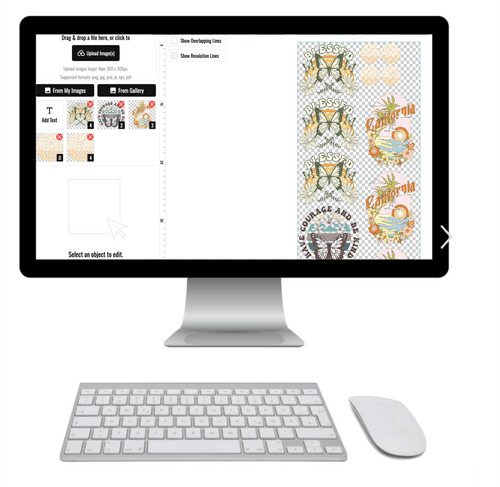
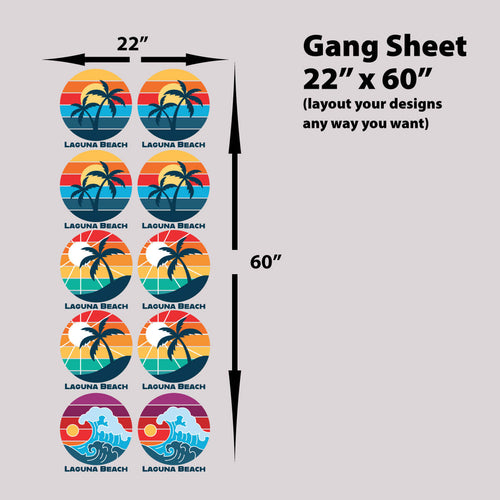
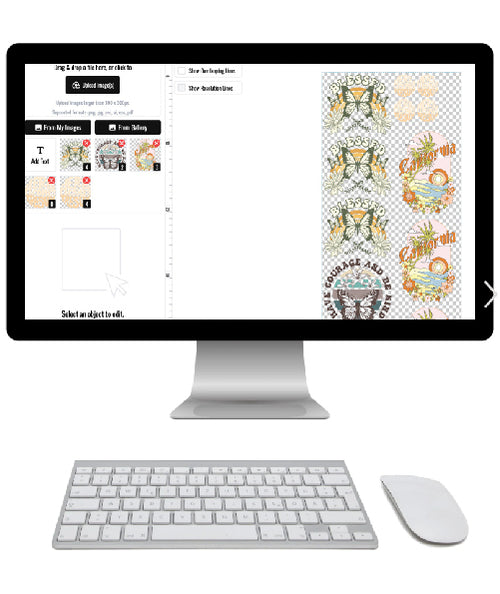
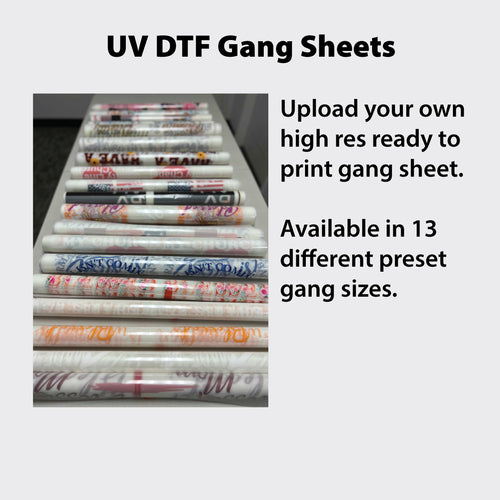
If you're testing multiple logo versions, color variants, or client artworks, a gang sheet is the practical move. It lets you compare several designs in one order instead of paying for separate test purchases. An Auto-build gang sheet builder is especially useful here because it speeds up setup and keeps sample testing cost-effective when you want to compare multiple color scenarios side by side.
The best sample order isn't one design. It's a mixed sheet that shows how the supplier handles different artwork problems in one run.
Identifying Red Flags and Green Lights in a Supplier
Some suppliers fail the vibrancy test before you ever place an order. The signals show up in how they talk, what they show, and what they avoid.
Red flags that usually mean marketing first, process second
The first warning sign is vague language. If the whole pitch is “vivid,” “premium,” “next-level,” and “brightest colors,” but there's no mention of calibration, profiling, underbase control, or durability testing, you're looking at branding, not process.
Another red flag is pushing 9-color or neon-heavy systems without discussing trade-offs. Recent market promotion has leaned hard into expanded ink sets for vivid hues, but many sellers still don't provide enough proof on longevity or cost-effectiveness for higher-volume users, as discussed in Upload Transfers' overview of Color-Flare Neon DTF transfers.
Watch for these patterns:
- No sample discipline: They want your production order before you've seen a real test.
- Only mockups or heavily edited photos: You never see plain, honest close-ups.
- No dark-garment examples: This often hides weak white handling.
- Dodging process questions: They can't explain their RIP, profiling, or cure workflow.
- Only talking about brightness: No mention of retention after washing.
Green lights that usually point to real production control
A good supplier doesn't just claim vibrancy. They make it inspectable.
Look for signs like these:
- Transparent technical language: They can explain how they manage color, not just how they market it.
- Testing mindset: They encourage sample orders and comparison prints.
- Durability proof: They discuss wash performance in practical terms.
- Useful order tools: They make it easy to submit multiple variants without friction.
- Honest fit-for-use guidance: They'll tell you when a premium ink setup helps and when it probably doesn't.
If a supplier answers technical questions clearly and doesn't get defensive when you ask for proof, that's usually a better indicator than the glossiness of their website.
The 9-color question buyers should ask
Don't ask, “Do you have a 9-color system?” Ask, “What jobs benefit from it, and what evidence do you have that it holds up in use?”
That question cuts through a lot of noise. Serious suppliers can answer it. Weak ones pivot back to adjectives.
The Lion DTF Approach to Color Vibrancy
A buyer usually reaches a critical evaluation point after the first disappointing sample. The website looked bright. The mockups looked saturated. Then the actual transfer lands flat on a dark shirt, reds shift, blues lose depth, and nobody can explain why.
Lion DTF's approach is more useful when it gives you something concrete to verify. The Lion DTF color matching guide gives buyers a physical reference for judging output against a known target instead of relying on a backlit screen. That matters because “vibrant” only has value if you can compare the print in hand to an expected result.

The practical standard is simple. A supplier should help you test color, not just admire it. Good vibrancy control shows up in how the order workflow supports side by side evaluation of your own files, especially when you need to compare difficult hues, bold fills, fine detail, and dark-garment performance in the same run.
That makes mixed-design gang sheet ordering useful for buyers who want proof before they scale. Put several logos, colorways, and edge-case graphics on one sheet. Press them onto the garments you sell. Check whether the supplier holds saturation, preserves small details, and keeps whites clean enough to support the top colors instead of muting them.
That workflow tends to help a few groups in particular:
- Small shops: Test client artwork without spending a full production budget on a guess.
- E-commerce sellers: Compare variants before product photos and listings lock you into a look.
- Schools and teams: Review mascots, names, and sponsor graphics together for consistency.
- Agencies and promo distributors: Check whether brand-sensitive artwork stays believable across multiple designs.
The useful question is not whether a supplier talks about vivid output. The useful question is whether their system makes verification easy. If the tools support comparison, sample review, and repeatable color decisions, you have a better shot at getting real vibrancy instead of marketing language.
Strong suppliers make it easy to inspect color performance with your artwork, your garments, and your press settings.
Frequently Asked Questions About DTF Color Vibrancy
Why doesn't my print match my screen exactly
Your screen and a printed transfer don't speak the same color language. Screens display light. DTF printing lays down ink on film and then transfers that ink onto fabric. Even with excellent profiling, exact visual parity isn't always possible.
What you should expect is a controlled, believable match. Strong suppliers manage that by calibrating their print workflow, setting realistic expectations, and checking difficult colors before full production. If a seller promises perfect screen-to-shirt matching without any caveats, that's usually oversimplified.
Are 9-color transfers always better than standard DTF
Not always. They can be better for certain work.
Expanded ink sets are most useful when your designs rely on intense spot colors, neon-like hues, or brand colors that sit outside ordinary CMYK comfort zones. They may be less important for routine logos, simple merch graphics, or designs that already print well in a standard enhanced workflow. The question isn't whether more channels sound impressive. It's whether your artwork needs them.
Do neon and vivid systems last as long
That depends on the supplier's process discipline. A vivid system is only valuable if the supplier can explain how it holds up after pressing and washing. Some vendors market bright output aggressively but leave unanswered questions about longevity and production economics.
Buyers should ask for real samples, especially on dark garments. If the answer to durability is vague, treat the color claim as unproven.
Does fabric type affect how vibrant the transfer looks
Yes. Fabric changes how the final print reads.
The shirt color matters first. Dark garments demand a stronger white foundation. Fabric texture matters too. A smoother surface usually shows detail and saturation more cleanly than a rougher or more irregular knit. Good suppliers account for that in how they build the print and how they advise you on garment choice.
What's the fastest way to compare suppliers fairly
Send the same mixed test file to each one. Use the same press method. Apply the transfers to the same garment type. Then compare them under the same lighting before and after washing.
Keep your comparison focused on visible performance:
- Which sample keeps color separation best
- Which one looks cleanest on black
- Which one holds fine detail
- Which one still looks intentional after washing
- Which supplier gave the clearest technical answers
What if I only run small batches
That's exactly when careful testing matters. Small runs don't protect you from expensive mistakes. They can make each mistake hurt more because your margin is tighter.
Use gang sheets, include multiple artwork types, and verify before you scale. If a supplier makes sampling hard, they're telling you something about how they handle quality.
If you want a practical way to test color accuracy without overcomplicating the order process, Lion DTF Transfers offers DTF transfers, gang sheets, and tools like an Auto-build gang sheet workflow that make side-by-side color evaluation easier before you commit to larger runs.