



If you're juggling several small apparel orders at once, the print method you choose has a direct effect on margin. A left-chest logo run for one client, a back print for another, and a handful of hats for a personal brand can all look manageable on screen. On the production side, they create a real decision: order every transfer separately, or consolidate the artwork onto a gang sheet and cut it apart after printing.
That choice affects more than material cost. It changes how much dead space you pay for, how many files you have to manage, how often you stop and restart production, and how much room you leave for avoidable handling mistakes. For a growing apparel business, those details add up fast.
The short answer is that gang sheets are usually more cost-effective once you're producing multiple designs, multiple placements, or repeat quantities. The longer answer matters more, because there are still situations where individual printing makes sense. The right call depends on order mix, sheet utilization, and how disciplined your workflow is.
| Method | Best fit | Cost behavior | Workflow effect | Main drawback |
|---|---|---|---|---|
| Individual printing | One-off graphics, quick samples, simple reorder of one design | Easy to understand, but waste grows as order variety increases | Straightforward for tiny jobs | You pay for each separate print setup and leave unused film area behind |
| Gang sheet printing | Multi-design orders, multi-placement jobs, combined daily production | More efficient when you can fill sheet space well | Supports batch production and fewer repeated steps | Requires layout planning and clean file organization |
| Auto-build gang sheet workflow | Shops that want gang sheet savings without manual layout time | Helps reduce wasted space and ordering friction | Simplifies preparation for mixed orders | Still requires checking artwork size and cut spacing |
The Printer's Dilemma Individual vs Consolidated Orders
A lot of growing shops hit the same wall. Orders are coming in, but they aren't neat, uniform runs of one graphic in one size. They're mixed jobs with front logos, sleeve hits, names, back designs, and short-run requests from different buyers.
That creates a practical question. Do you treat every transfer as a separate purchase and keep the process simple, or do you consolidate everything onto a larger sheet and lower the cost per usable print?
The answer isn't just about what feels easier at checkout. It affects your profit on small graphics, your turnaround on mixed orders, and your ability to scale without adding chaos to production. A shop can stay busy and still lose margin if it keeps buying small transfers one by one for work that should have been grouped.
Practical rule: If the order includes multiple placements, multiple designs, or several small graphics, stop and check whether those pieces can live on one sheet before you order anything.
Shops often default to individual transfers because they're familiar. That's fine for a single sample or a one-design reorder. It breaks down when your day is full of mixed jobs that could have been batched together.
The goal isn't to force gang sheets into every order. It's to know when consolidation lowers unit cost enough to justify the shift, and when simplicity is worth the extra spend.
Defining the Two DTF Printing Methods
Before comparing cost, it helps to separate the two buying methods clearly. In most shops, the confusion starts because both methods produce the same end result on the garment. The difference is how you buy the transfer and how efficiently you use print area.
Individual printing
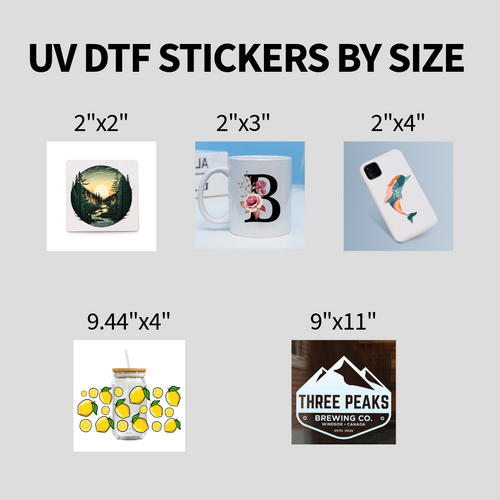
Individual printing is the separate-transfer model. You'll also see it sold as DTF by size. You order each design as its own print, already isolated as a single transfer.
If you need ten left-chest logos, you order ten individual logos. If you need five sleeve prints and five back prints, each version is ordered separately. This method is simple to understand, easy to reorder, and useful when the job only needs one design or one small test run.
It also has a built-in weakness. Every transfer is treated as its own item, so unused area around small artwork doesn't help you. You're paying for separate pieces instead of optimizing shared space.
Gang sheet printing
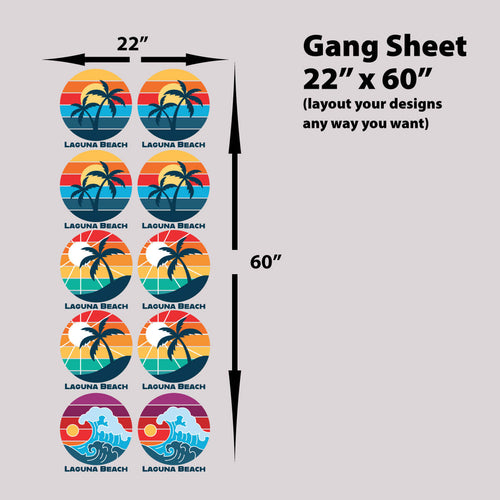
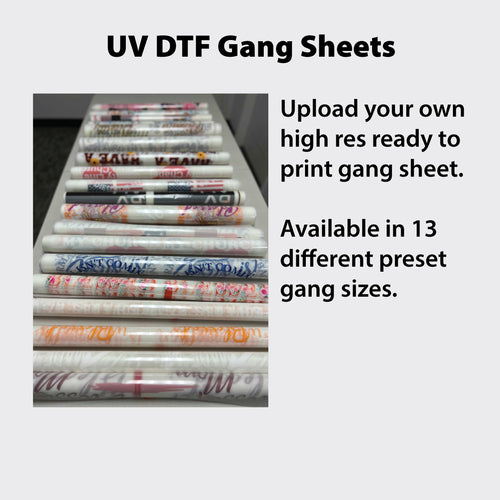
Gang sheet printing combines multiple designs on one larger sheet of transfer film. You can place different logos, sizes, names, placements, or even separate customer orders on the same sheet, then cut them apart after production.
That changes the economics because the sheet area is shared. Instead of paying for every graphic as a separate unit, you pay for the sheet space being used more efficiently. For a practical overview of how shops structure these layouts, this breakdown of DTF gang sheets is a useful reference.
A gang sheet can hold:
- Different placements: Left chest, sleeve, full back on one run
- Different clients: Small orders grouped into a single production batch
- Different sizes: Adult, youth, and accessory graphics mixed together
- Extra copies: A few backup prints without creating a separate order flow
Gang sheets don't change the print technology. They change how well you use the printable area you already pay for.
That distinction matters. You're not buying lower quality. You're buying efficiency.
A Detailed Cost Breakdown Per-Piece Savings Quantified
Cost differences show up fast once you price the job by used film area instead of by isolated pieces.
Take a common order for a growing apparel brand: 15 left-chest logos, 15 sleeve prints, and 5 full-back designs. On paper, that looks like 35 transfers. In production, it is really a mix of small and large graphics competing for film space. If you order every piece separately, the small prints usually carry the worst value because each one includes its own handling and unused surrounding area. If you consolidate the same artwork onto gang sheets, the economics improve only if the layout is tight enough to keep waste low.
A sample order comparison
| Method | Items Ordered | Estimated Total Cost | Cost Per Transfer |
|---|---|---|---|
| Individual printing | 35 separate transfers across three placement types | Higher when each graphic is purchased separately | Higher, especially on small graphics |
| Gang sheet printing | Same artwork consolidated onto one or more larger sheets | Lower when sheet space is packed efficiently | Lower because the sheet cost is shared |
| Break-even point | Reached once enough designs or placements fit efficiently on a sheet | Depends on layout efficiency | Improves as unused space falls |
That break-even point matters more than the headline price.
Here is the practical rule I use. Gang sheets usually start making financial sense when the order includes multiple small placements, mixed sizes, repeat logos, or several customer jobs that can be combined cleanly. If the order is a true one-off with one graphic and no good way to fill the remaining sheet area, individual transfers can still be the better buy because they avoid setup waste.
The exact total depends on live pricing, transfer dimensions, and how tightly the artwork fits. A reliable comparison starts with printable area, then adds the labor required to prepare the file and manage the order. That is the part many shops miss when they quote too quickly.

Where the savings come from
The savings come from a few specific places:
-
Shared production cost
Separate transfers create repeated costs around film usage, printing, powder application, curing, trimming, and order handling. A gang sheet spreads those steps across more sellable pieces. -
Higher yield from small graphics
Left-chest logos, sleeve hits, hat-size art, and pocket prints often waste the most money when ordered one by one. Packed together, those same graphics use film far more efficiently. -
Lower effective cost on mixed-placement jobs
A chest, sleeve, and back program for the same garment line is often cheaper to produce as a consolidated layout than as three disconnected transfer orders. -
Cleaner quoting
Consolidated transfer cost is easier to roll into finished garment pricing. That matters if you are refining your custom shirt pricing structure and trying to protect margin on small to mid-size runs.
A simple example makes the point. If 15 chest logos and 15 sleeve prints fit into leftover space around larger back graphics, those small placements stop behaving like premium-priced individual items. They become incremental use of film you were already buying. That can be the difference between a healthy margin and a quote that looks profitable only until production starts.
What erodes the savings
Gang sheets are not cheaper by default. They lose value when the process is sloppy.
- Blank space is left on the sheet because artwork was not organized before ordering
- Sizing errors force reprints, which wipes out the material savings
- Single-design rush jobs are forced into a gang format even though there is no real consolidation benefit
- Manual layout takes too long, turning material savings into admin labor
That last point gets expensive quickly in a busy shop. If a production assistant spends 20 minutes arranging art to save a few dollars in transfer cost, the gain may disappear. The right choice is the one that lowers total job cost, not just print cost.
Effortless Savings With The Auto-Build Gang Sheet Builder
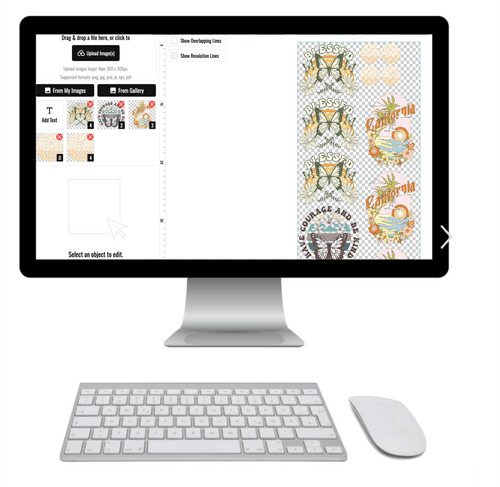
A common failure point with gang sheets has nothing to do with print pricing. It happens at a desk, before the order is ever sent. A shop takes a mixed order with left chest logos, full backs, and a few sleeve hits, then someone spends 15 to 30 minutes arranging files by hand just to make the sheet fit cleanly. On a busy day, that labor can wipe out the per-sheet savings you calculated earlier.

Why layout labor matters
Material cost is only one line on the job ticket. Prep time counts too.
If a production assistant earns $18 to $25 per hour, even 20 minutes of manual layout adds $6 to $8+ in labor before printing starts. On a small order, that can erase most of the margin benefit of consolidating artwork onto one sheet. On a larger order, it slows quoting, delays approvals, and creates another place for sizing mistakes to creep in.
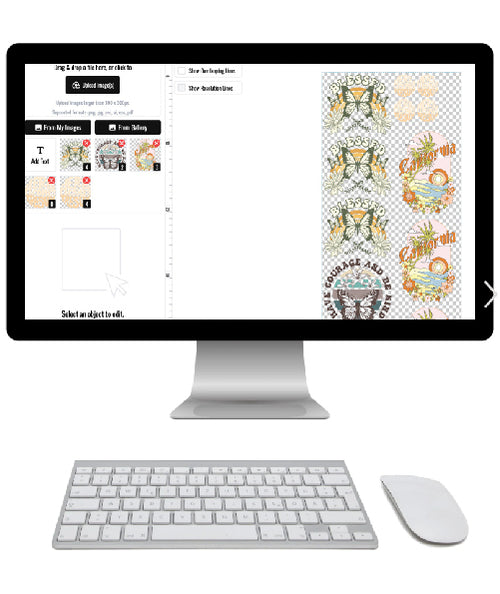
That is why auto-build tools matter in real shops. They reduce the hands-on layout work that usually makes gang sheets feel harder than they should be. Instead of rebuilding artboards in design software, the operator uploads the files, reviews placement, and moves the order forward.
Lion DTF Transfers offers that type of Auto-build workflow. For teams that want a practical reference point, their guide to ordering a DTF gang sheet shows how consolidated layouts are handled without building every sheet manually from scratch.
What the tool changes in production
The cost advantage shows up in three places at once. Labor drops because fewer jobs need manual arrangement. Sheet utilization improves because unused pockets of film are less likely to get missed. Rework tends to fall because the team is working from one organized layout instead of several disconnected files.
In a growing apparel shop, that matters more than the software feature itself. A key gain is repeatability. Sales can collect the artwork. Production can review one sheet. Press operators can stage transfers in a cleaner sequence.
Here is where auto-build usually pays for itself fastest:
- Mixed-placement orders with front, back, and sleeve graphics
- Small customer batches that are too fragmented for efficient individual ordering
- Teams without a dedicated production artist handling layout all day
- Shops quoting fast-turn jobs where prep speed affects margin as much as print cost
A quick product walkthrough helps if you're evaluating whether this fits your process:
If gang sheets feel inefficient in your shop, manual prep is usually the real cost problem.
That is the practical case for auto-build. It does not make every order cheaper. It makes the gang sheet method usable at scale, especially for smaller teams that need the savings from consolidation without adding another admin task to every job.
Beyond Price Workflow Turnaround and Quality Considerations
A shop can save money on film and still lose margin on the floor.
Take a common order: 12 shirts for a local gym, each with a left chest logo, a full back print, and two sleeve hits. If those transfers are ordered individually, production has to track 48 separate pieces, sort them correctly, and keep every placement tied to the right garment size and customer line item. On paper, the print cost may look manageable. In practice, the handling time is where the order starts to drag.
Gang sheets change the economics of that kind of job because they reduce touchpoints. Industry practitioners regularly report that batch processing with gang sheets saves meaningful production time, especially on orders with multiple garments and multiple placements. The gain is not only at the press. It shows up in prep, sorting, staging, and fewer avoidable mistakes.
Production friction with individual printing
Individual transfers fit simple work. One logo, one shirt, one replacement print. They are also easier to order when a shop is testing artwork or buying a very small quantity.
The problem shows up once the order mix gets messy. Separate transfers create more file versions to manage, more line items to check in, and more opportunities for a press operator to grab the wrong print from the stack. A few extra seconds at each step does not sound serious until it happens 40 or 50 times in one shift.
Common friction points include:
- More file handling and approval checks
- More pieces to count, sort, and store
- More chances of mismatch between placement and garment
- More stop-start motion at the heat press
- More reprints caused by picking the wrong transfer
Batch efficiency with gang sheets
Gang sheets fit the way many apparel shops run. Orders come in with mixed placements, short runs, and artwork variations. Consolidating those prints into a shared sheet gives production one cleaner batch to cut, label, and stage.

That matters most in shops that process several small orders per day, not just one long run. One organized sheet can keep a front logo, back graphic, and sleeve print together through receiving and production. That cuts confusion and makes it easier to train newer staff on a repeatable process.
| Consideration | Individual printing | Gang sheet printing |
|---|---|---|
| Order handling | Separate prints to receive and track one by one | Consolidated output grouped by job or customer |
| Press workflow | Frequent sorting between placements | Cleaner batch staging before pressing |
| Turnaround | Works for one-off or replacement prints | Better for mixed daily production and short runs |
| Scalability | More admin load as SKUs and placements grow | Easier to standardize across repeat orders |
Quality and consistency
Print quality comes from file setup, printer calibration, transfer production, and application discipline. A gang sheet does not automatically improve the print itself.
What it does improve is batch control. When related graphics are printed together, they are less likely to get split across separate orders or mixed into the wrong customer stack. That helps consistency on jobs with multiple placements, especially when the same team is cutting and pressing on a tight schedule.
Shops still need basic discipline:
- Confirm final print dimensions before the sheet is submitted
- Leave enough space for trimming
- Label cut transfers by customer or garment group
- Avoid packing small pieces so tightly that cutting slows the job down
Poorly built gang sheets create their own bottleneck at the trimming table. Well-built gang sheets usually shorten the path from receiving to pressing and keep more of the order together from start to finish.
Recommendations For Your Business Type
The most useful answer to gang sheet printing vs individual printing: which is more cost-effective? is this: it depends on what kind of shop you're running today, not the one you plan to become later.
Hobbyists and home crafters
If you make occasional shirts, gifts, or test pieces, individual transfers can be enough. They're easy to order, easy to understand, and they don't require much planning.
But even at hobby level, a small gang sheet often makes more sense when you're doing a set of related projects. A few pocket logos, sleeve designs, and backup prints on one sheet usually create less waste than buying every small graphic separately.
E-commerce sellers and brand owners
This group benefits from gang sheets quickly. Online sellers rarely run one perfect design in one perfect quantity. They deal with launch graphics, placement variants, samples, and small replenishment runs.
For that environment, gang sheets are usually the operational choice. They let you combine multiple SKUs or design versions into one transfer order and keep your per-piece cost under better control. If you're constantly ordering chest logos, tag prints, and back graphics separately, you're making your margin thinner than it needs to be.

Print shops and decorators
For print shops, gang sheets are less of a tactic and more of a system. The more client variety you handle, the more important batching becomes. You can consolidate logos from several customers, organize by garment type, and reduce the repeated handling that slows the floor down.
Individual transfers still have a place for:
- Single replacement prints
- One-off samples
- Fast reorder of one exact graphic
- Jobs where layout time would outweigh any sheet savings
Schools, teams, and event orders
These buyers often have multiple elements in one project. Team logo, sponsor mark, front hit, back design, and personalized names all create natural gang sheet opportunities.
A gang sheet works especially well when the order includes:
- a common logo used across all garments
- several secondary graphics
- optional extras for late additions or spoilage coverage
For organizations ordering coordinated apparel, the most expensive choice is often the one that looks simplest at first.
A straightforward decision rule
Use individual printing when the order is narrow, simple, and small.
Use gang sheet printing when the order includes variety, repeated small graphics, multiple placements, or any batch that can be grouped without creating cutting headaches.
If you're on the fence, check one thing first. Can you fill a meaningful portion of a gang sheet with real, current production needs? If yes, that's usually the more cost-effective route.
Frequently Asked Questions
Can I mix designs from different clients on one gang sheet
Yes, as long as your file organization is clean and you're confident you can separate and label the prints after cutting. Shops do this all the time to improve sheet usage and reduce waste on mixed daily orders.
The key is discipline after production. Once the sheet is printed, each cut transfer needs to go back into the right workflow without confusion.
Is there a quality difference between gang sheet transfers and individual transfers
Not necessarily. The layout format doesn't automatically change the print quality. What matters is the print process, the artwork, and how the transfer is applied.
Gang sheets and individual transfers can produce the same finished result on the garment. The main difference is purchasing format and production efficiency.
What's the easiest way to prepare files for a gang sheet
Transparent PNG files are usually the simplest starting point for most shops and creators. Keep dimensions accurate, make sure the artwork is clean, and confirm that each design is sized correctly before building the sheet.
If you're using an auto-build tool, the upload process becomes much easier because you don't have to manually compose the full layout yourself.
How do I cut the designs apart after printing
Most shops use sharp scissors, a rotary cutter, or a guillotine-style cutter, depending on volume and shape complexity. The best choice is the one that lets you trim cleanly without damaging neighboring designs.
Leave enough spacing during layout so cutting stays easy. Overpacked sheets save space on screen but can become annoying on the table.
When should I stick with individual printing
Stick with individual printing when:
- You need one sample only
- You're testing a new design
- The reorder is for one exact graphic
- You don't have enough artwork to use a gang sheet efficiently
When should I switch to gang sheets
Switch when:
- You have multiple placements in one order
- You're printing several small graphics
- You're combining daily work from multiple jobs
- You want to reduce wasted printable area and simplify batch handling
The practical threshold isn't emotional. It's operational. If consolidation lowers your transfer cost and reduces repeated handling, the shop should switch.
If you're ready to compare options for your own order mix, Lion DTF Transfers offers DTF by size, gang sheets, and an Auto-build gang sheet workflow that can help you consolidate artwork without manual layout work.