


You've got a pop-up coming up in Oakland, a team order waiting on approval, or a small merch drop that needs to look finished without tying up cash in a large inventory run. You want bright artwork, reliable adhesion, and a fulfillment option that fits your actual deadline, whether that means pickup nearby or shipping to your door.
That's where DTF Oakland becomes a practical search, not just a printing term. Direct-to-Film transfers support detailed, full-color artwork, short runs, mixed garment fabrics, and gang-sheet ordering. The buying questions are more specific: how quickly can the transfers be ready, what file should you upload, how should multiple designs be packed, and will the print hold up after repeated washing?
Introduction to DTF Oakland for Makers and Small Businesses
Oakland makers often work in compact batches. A food business may need branded shirts for a market appearance. A creator may be testing a new design before committing to a larger collection. A school group, local team, or event organizer may need several designs across different garment colors, with no interest in ordering more pieces than the project requires.
Traditional production methods can make those jobs awkward. Screen printing may require more planning when artwork uses several colors or when the order is small. Cut vinyl can work for simple graphics, but detailed, multicolor artwork takes more preparation. DTF transfers give small businesses another route: prepare the artwork, print it onto transfer film, and press it onto the garment when needed.
The local question isn't only whether a provider serves Oakland. You also need to know whether “local” means true pickup, Bay Area shipping, or a broader service area. Existing Oakland-focused pages often explain the basic process but leave practical details unclear, including pickup timing, order cutoffs, file preparation, and whether the workflow suits event merchandise or creator-led micro-drops. Industry coverage of DTF and DTG workflows in 2026 reflects that buyers increasingly care about fast, on-demand production rather than a general definition alone.
What this guide helps you decide
You'll learn how the transfer is made, why it suits cotton, polyester, and blends, and how gang sheets can lower the effective cost of individual designs. You'll also get a practical ordering path, shipping, and pressing and wash-care details that affect the finished garment.
The aim is simple. By the time you choose a provider, you should know what to ask, what to upload, how to pack your artwork efficiently, and how to test one garment before scaling a full batch.
How DTF Transfers Work From Film to Finished Garment
Think of a DTF transfer as a sticker sandwich designed for fabric. The artwork isn't printed directly onto the shirt. It's built in layers on a special film, prepared with adhesive, and then moved onto the garment with heat and pressure.

The four stages
- Artwork goes onto film. A printer places the design on a coated transfer film. Full-color artwork, gradients, small details, and white elements can be prepared together rather than separated into individual screens.
- Adhesive powder is applied. Fine powder covers the printed ink. The powder becomes the bonding layer between the design and the garment, so even coverage matters.
- The adhesive is cured. Heat melts and sets the powder. This step is easy to overlook, but it controls how well the transfer bonds and how it behaves through washing. Uptown Stitch's Oakland DTF overview describes the workflow as printing, powdering, curing, and heat pressing, with curing playing a significant role in bond strength and wash durability.
- The transfer is heat pressed. The prepared film is placed on the garment and pressed. After the correct application, the carrier film is peeled away, leaving the printed design attached to the fabric.
The practical idea: The printer creates the image, the powder creates the bond, and the heat press activates the transfer on the garment.
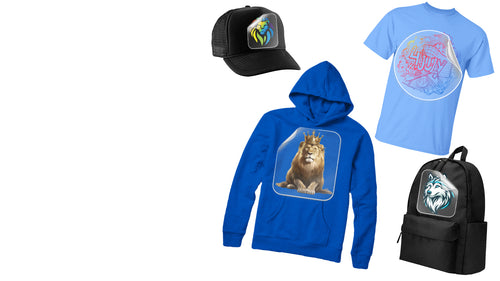
The process works well for makers who want to separate printing from pressing. You can order prepared transfers, keep them organized by design or garment, and press them as orders arrive. That's useful for small apparel sellers who don't want every shirt produced before a customer has bought it.
For a visual explanation of the stages, see this step-by-step guide to how DTF transfers work.
The final result depends on more than colorful ink. Film quality, powder coverage, curing, garment preparation, pressure, temperature, and peel timing all affect the finished print. That's why a reliable workflow treats the transfer as a small production system rather than a decorative sticker.
Why DTF Makes Sense for Oakland Apparel Projects
DTF earns its place when the project combines short runs, complex artwork, and mixed fabrics. A neighborhood brand might need one sample shirt, while a school order may need several sizes and colors. A creator might want a detailed illustration on a dark hoodie without preparing separate screens for every color.
Compare the method to the job
Screen printing remains useful for repeat production with a consistent design, especially when the artwork and garment selection are stable. But screen count, setup, and run planning become more important as colors and variations increase. Vinyl suits clean lettering and simple shapes, although detailed full-color artwork can require more pieces and more assembly.
DTF takes a different approach. A local Oakland provider states that a single custom piece can be produced as easily as a larger run, with no color limits, and that the method bonds well to cotton, polyester, and blends. TeaRabbit's Oakland DTF service information connects those features to lower setup overhead and flexible, multicolor short-run production.

| Method | Color and artwork fit | Small-run practicality | Fabric flexibility |
|---|---|---|---|
| DTF | Full-color designs with no color limits | A single piece can be practical | Cotton, polyester, and blends |
| Screen printing | Strong for planned, repeat designs | Setup can make small jobs less convenient | Depends on ink, garment, and production setup |
| Vinyl | Useful for simpler shapes and lettering | Suitable for individual pieces | Depends on vinyl type and garment |
Match DTF to your production pattern
DTF is a strong candidate when your catalog contains several artwork styles, garment colors, or fabric types. It also fits creator-led micro-drops because you can print transfers for the demand you have instead of guessing at a large finished-garment inventory.
That doesn't make DTF the automatic answer for every order. If you're repeating one simple design across a planned production run, compare the total setup and per-piece costs with screen printing. If the graphic is mostly a name or number, vinyl may be faster to assemble. DTF becomes compelling when flexibility matters as much as the image itself.
Saving More With Gang Sheets and the Auto Build Builder
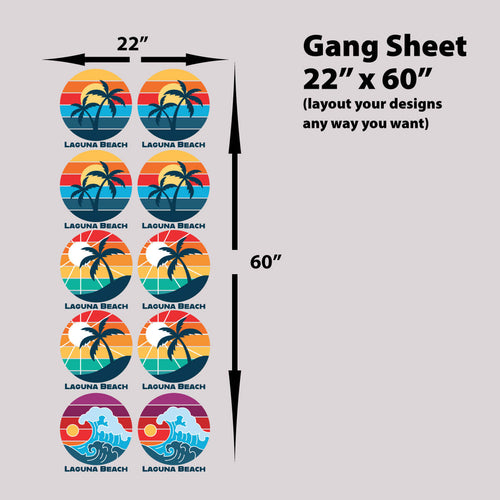
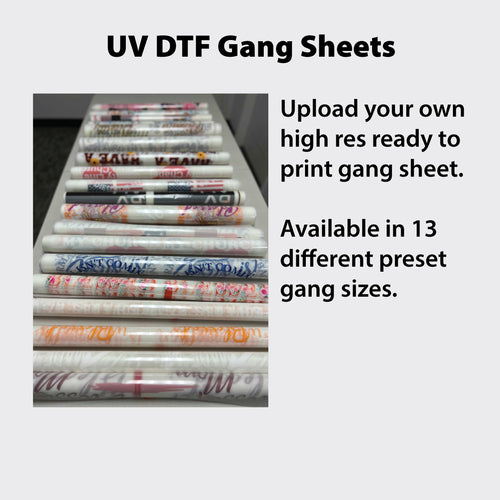
A gang sheet places multiple separate designs on one transfer layout. You can trim each graphic after printing and press the pieces onto different garments. Instead of ordering every design on its own sheet, you use the available film area as one shared workspace.
The economics come from packing. Setup and media costs spread across several designs, and tighter layouts leave less unused film. One independent guide reports 30% to 50% lower per-transfer film cost through gang-sheet printing, while another reports 40% to 60% lower per-piece pricing compared with individual ordering, depending on the layout and order conditions. DTF Database's gang-sheet explanation covers the cost-sharing principle behind that approach.
What the Auto-build workflow changes
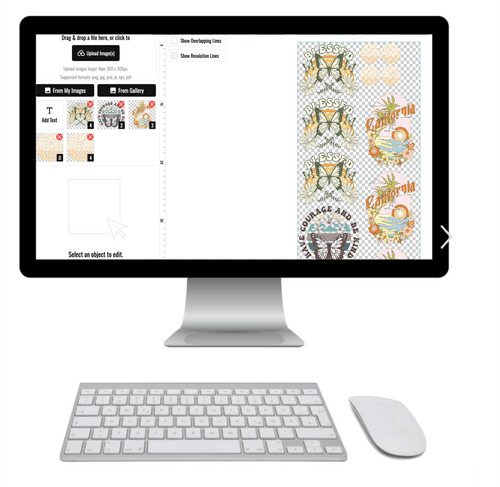
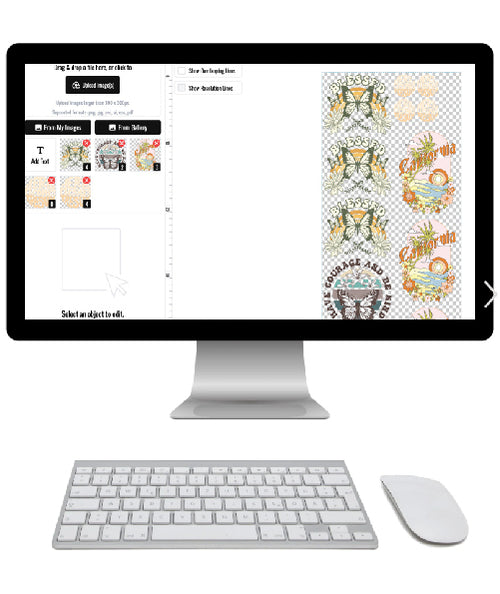
Manual layout takes judgment. You need to estimate how many logos fit, leave enough spacing for trimming, and avoid rotating or scaling artwork incorrectly. Lion DTF's Auto-build gang sheet builder handles the arrangement for you, which makes the process easier for a first-time maker and more efficient for a seller preparing many designs.
You upload the artwork, select the relevant layout options, and let the builder organize the sheet for usable space. The benefit isn't only convenience. A better-packed sheet can reduce wasted film and make the cost of each individual transfer easier to control.
Use a smaller sheet when you're testing artwork or fulfilling a compact order. Choose a larger gang sheet when you have several logos, product variations, or repeat graphics that can be trimmed separately.
For a guided layout process, use the DTF gang sheet builder workflow.
How to Order DTF Transfers in Oakland Step by Step
A Friday pop-up in Oakland is coming up, and the shirts are still unpressed. Start with the deadline, then work backward. Record when the transfers must arrive, whether you will press them yourself, and whether local pickup or shipping fits the schedule. These choices determine how much time remains for artwork corrections and production.

Build the order
- Choose the format. Select a transfer by size for one main design. Use a gang sheet when several graphics will share the film and be trimmed afterward.
- Prepare and upload artwork. Send a clean, print-ready file at the intended dimensions. Check transparent areas, fine edges, small text, and white elements on dark garments. If the file needs cleanup, vectorization or design support can reduce production errors.
- Match the transfer to the garment. Identify whether you will press cotton, polyester, a blend, stretch fabric, a dark shirt, or another product. Fabric affects both the pressing approach and the way you judge the finished print.
- Review the layout or proof. Inspect scale and spacing before approval, especially on a gang sheet. Leave enough room around every graphic for trimming without cutting into a neighboring design.
- Confirm fulfillment. Ask the provider for the current production cutoff, pickup window, and shipping estimate before placing an urgent order. Lion DTF Transfers offers printing, pickup, and shipping services, but availability and timing should be confirmed for your order.
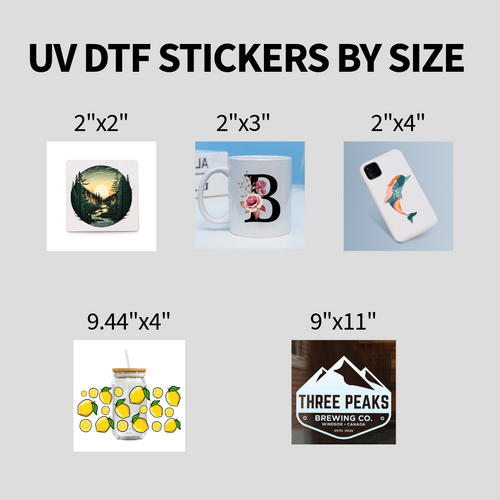
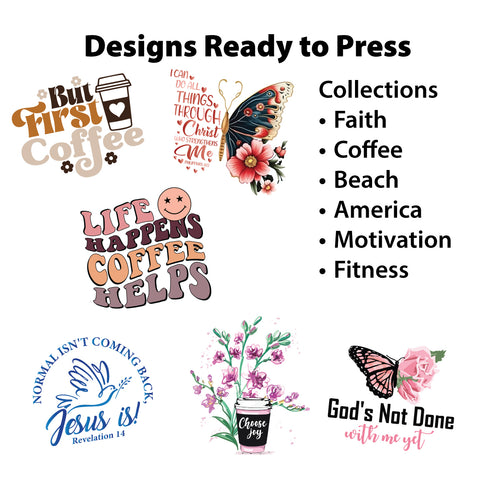
Ready-to-press collections can suit a simple project that does not need custom artwork. For hard surfaces, UV DTF stickers offer another decorating option. If your design is unfinished, vectorization or a service that builds the gang sheet for you can reduce layout work.
Pickup or shipping
Local pickup works well when you are near the Irvine, CA location and can collect the package after production. Shipping may fit better when you are outside the area, need a delivery record, or have a tight event schedule. Ask about cutoffs before payment, then keep the order confirmation, approved artwork, and fulfillment method together.
Before pressing, follow the instructions supplied with the transfer. General hot-peel guidance recommends a prepress of about 10 seconds, a press temperature of 240°F to 280°F, a 10-second press, and an immediate hot peel in one smooth motion, as outlined in Enda's DTF transfer FAQ. If the supplier's instructions differ, use those settings for that specific transfer.
Quality Wash Tests and Performance on Real Fabrics
A transfer may look perfect after pressing and still fail during wear. For an Oakland shop, the reliable test uses the actual blank, press, and care routine that customers will receive. Fabric type and application conditions come first, followed by washing and drying.
Properly applied transfers can last through many washes, but no range guarantees every garment. Press settings, curing, fabric texture, detergent, agitation, and drying heat all affect the bond. For more detail on expected service life, see this guide to how long DTF transfers last.
Test the actual use case
A stretch shirt should flex without cracking or lifting. On a dark garment, inspect white-base coverage and the edges. Workwear, uniforms, team gear, and other frequently washed products deserve a sample test on the exact blank before a larger order.
Use a simple shop routine:
- Inspect the edges: Check for lifting, weak adhesion, or powder residue.
- Stretch the fabric gently: Look for cracking or separation while the material moves.
- Wash a sample: Follow the care directions supplied for the transfer and garment.
- Compare after washing: Review color, hand feel, edge adhesion, and surface texture before approving production.
Wash garments inside out with cold water when the care guidance calls for it, and avoid high drying heat. Excess heat can stress the transfer and the garment, especially for customers who wash often.
Look beyond basic durability
Print feel matters alongside wash performance. A stiff graphic may survive washing yet feel wrong on a soft Oakland streetwear blank. Sublicool's 2026 DTF overview discusses newer approaches such as softer powders, smarter coatings, cleaner white-ink control, powderless systems, and more eco-friendly films and inks. Treat those points as process considerations, then judge the result on your own fabric and equipment.
A real shop example makes the test useful: press one logo on the final shirt, wash it using the planned customer instructions, and compare it with an unwashed sample. That small check can reveal problems before a gang sheet becomes a costly batch.
Quality rule: Test the transfer on the same fabric, with the same press, that your customer will receive.
Oakland Use Cases and Your Next Steps With Lion DTF
DTF fits Oakland projects that need variety without a complicated production setup. A streetwear seller can place several graphics on a gang sheet and press garments as orders arrive. A school or team organizer can prepare logos, names, and event artwork for different shirt colors. A local food business can use branded apparel for staff and supporters, while an e-commerce seller can keep transfers on hand instead of storing every finished garment.
The same decision logic applies across those projects:
- For a small merch drop: Use a gang sheet and review each design at final size.
- For mixed garments: Confirm that the transfer is appropriate for cotton, polyester, or blends before production.
- For an urgent event: Establish the pickup or shipping cutoff before approving artwork.
- For hard products: Consider UV DTF stickers when the decoration belongs on a non-fabric surface.
- For repeated customer orders: Test wash performance on the exact blank and document the pressing routine.
Oakland's fire department history shows how local institutions can grow from a small volunteer service into a modern all-hazards emergency response agency. The department was officially formed on March 13, 1869, and the city identifies Phoenix Engine Company No. 1 at Fifth and Washington Streets as its first station. Oakland was also among the first U.S. fire departments to hire African American firefighters in the 1920s, and Fire Chief John Sweeney ordered station integration in 1955, making it one of the first major departments in the country to desegregate its workforce, according to the City of Oakland's fire department history. Local apparel projects often carry that same community focus, whether they represent a team, a neighborhood business, a creator, or an event.
For your next order, decide the deadline, garment type, artwork count, sheet format, and fulfillment method. Then request help if the file, layout, or pressing plan isn't clear. A short conversation before production can save a full batch from an avoidable sizing or adhesion problem.
Lion DTF Transfers offers custom DTF transfers by size, gang sheets, UV DTF stickers, ready-to-press designs, and support with vectorization or gang-sheet building. Visit Lion DTF Transfers to prepare an Oakland order, compare pickup and shipping options, and get your artwork ready for pressing.
Email orders@LionDTF.com or Text or Call: 833-350-5466