


If you're trying to launch merch, fulfill custom shirt orders, or press a few designs at home, you usually hit the same wall fast. You want bright color, sharp detail, and a print method that doesn't force you into one fabric type or a huge minimum.
That's where DTF transfers fit. They give creators and shops a practical way to print detailed artwork, move it onto many kinds of garments, and keep production flexible when orders are mixed.
What Are DTF Transfers and Why Are They So Popular
DTF means direct-to-film. Instead of printing directly onto the garment, the design is first printed onto a special film, then turned into a heat-applied transfer.
That sounds simple, but the reason people keep asking how do DTF transfers work is because the method solves several problems at once. You can run full-color art, keep fine details, and decorate more than just one fabric category.
Historically, DTF emerged as a newer garment-decoration method built around a clear five-step flow: print the design on PET film, apply adhesive powder while the ink is still wet, cure the powder, heat-press the film onto the garment, and peel the film away. That workflow is what allows detailed, full-color artwork without the color-separation limits of screen printing, as outlined in Instagraph's explanation of DTF transfers.
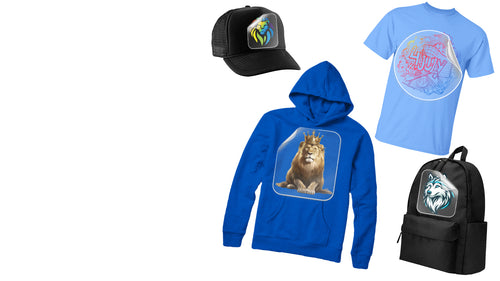
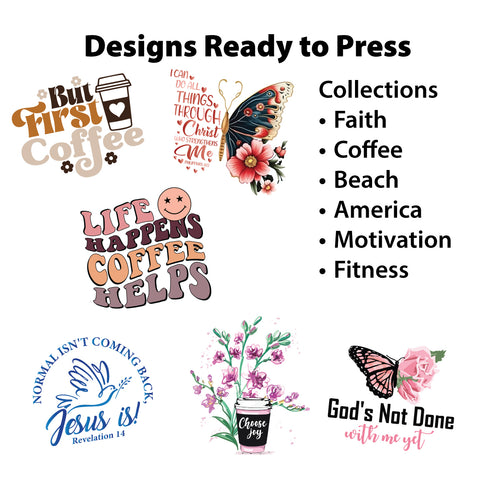
For a customer, that matters in practical terms. It means a single logo isn't locked to cotton tees only. The same artwork can often be used across shirts, hoodies, jerseys, tote bags, and other items in the same project.
Why customers choose DTF
A lot of print methods are strong in one lane and weak in another. DTF became popular because it covers several lanes well.
- Fabric flexibility: It works across a wide range of garment types, which is useful when one order includes different blanks.
- Strong color presentation: Complex artwork, gradients, and small details reproduce cleanly.
- Dark garment compatibility: You don't have to simplify artwork just because the shirt color is black or navy.
- Practical ordering: You can prepare multiple designs together and press them as needed.
DTF isn't popular because it's trendy. It's popular because it handles real-world mixed orders without forcing a new setup for every garment type.
If you want a broader overview before ordering, this guide to DTF transfers gives useful background on where the method fits.
The Core DTF Printing Process Explained
The easiest way to think about DTF is as a layered transfer system. You're not just printing ink and hoping it sticks. You're building a printable image, adding a bonding layer, activating it with heat, and removing the carrier film after the design anchors to the fabric.

Step one prints the artwork onto PET film
The design starts on PET film, not on the garment itself. The film acts as the carrier that holds the ink layer in the right shape until pressing.
This is why digital file quality matters early. If edges are rough, transparent areas are dirty, or fine details aren't built correctly, the transfer will faithfully reproduce those problems. The process is accurate. That's a benefit and a warning.
Step two adds the adhesive powder
Once the artwork is printed, thermoplastic adhesive powder is applied while the ink is still wet. This step is what turns a printed sheet into a real transfer.
A lot of beginners think the powder is a minor add-on. It isn't. The powder becomes the bonding layer that reflows under heat and helps anchor the image to the textile fibers.
Practical rule: If the adhesive layer is uneven, the final print usually tells on itself through weak edges, inconsistent feel, or poor hold after washing.
Step three cures the powder
After powdering, the transfer is cured. This stabilizes the adhesive so it can be handled and then activated during application.
That cure stage is one of the reasons professional output looks more consistent than rushed output. Under-cured transfers can feel unpredictable at the press. Overhandled or poorly cured pieces can also create avoidable problems before they ever reach the garment.
Step four presses the transfer onto the garment
At the press, heat and pressure do the conversion work. A DTF transfer is a layered heat-transfer system in which artwork is printed in color onto PET film, then adhesive powder is applied and cured. That powder acts as the bonding layer during pressing, reflowing under heat to anchor the ink to textile fibers, which is why DTF works so well on dark fabrics, synthetics, and mixed blends, as described in Ninja Transfers' DTF process overview.
In plain shop language, this is the moment the transfer stops being a film and becomes part of the garment surface.
Step five peels the carrier away
After pressing, the film is peeled away and the printed image remains behind. A clean peel usually tells you the previous steps were done right. A bad peel often points back to one of three issues: weak file prep, poor transfer construction, or incorrect press settings.
If you want to understand the production side more thoroughly, this guide on how to make DTF transfers is a useful companion.
What each stage contributes
| Stage | What it does | What goes wrong if it's weak |
|---|---|---|
| Preserves artwork detail | Jagged lines, muddy edges | |
| Powder | Creates the bonding layer | Poor adhesion, edge lift |
| Cure | Stabilizes the transfer | Inconsistent pressing behavior |
| Press | Activates the bond | Weak hold or scorched result |
| Peel | Removes the carrier cleanly | Distortion, partial release |
Benefits of DTF Compared to Other Printing Methods
When customers compare decoration methods, they usually aren't asking for a chemistry lesson. They're asking practical questions. Will the colors pop on a black hoodie? Can I use the same design on a polyester jersey and a cotton tee? Will a short run still make sense?
Those are the situations where DTF stands out.

Where DTF has the edge
A key advantage of DTF is its broad material compatibility. Imaging Spectrum notes that, unlike DTG, which is primarily for cotton, DTF works on cotton, polyester, nylon, spandex, leather, and various blends, and its use of CMYK plus white ink supports printing on both light and dark garments across major fabric categories in this DTF comparison overview.
That single point changes a lot operationally. Shops don't have to split one order into multiple decoration methods just because the garments vary.
DTF versus screen printing
Screen printing still makes sense in the right environment, especially when the artwork and garment selection are stable. But it has creative limits that show up fast when a job includes multiple colors, intricate detail, or a mix of item types.
DTF is often the easier fit when the order looks like this:
- Mixed garments: Cotton tees, poly performance tops, and blends in one batch
- Complex artwork: Gradients, shadows, and small text that would be tedious to separate
- Short to medium runs: Jobs where setup flexibility matters more than a fixed-volume workflow
- Frequent design changes: Names, event art, seasonal drops, and small brand releases
DTF versus DTG
DTG can produce a soft result on the right cotton garment, but it's more limited by substrate. DTF is usually the more forgiving choice when the fabric mix is wider or when dark garments are central to the job.
That doesn't mean DTF wins every comparison. There are trade-offs.
Some decorators prefer DTG when they want ink to sit more naturally within the shirt surface. Some choose screen printing when the same graphic repeats at scale. DTF wins on flexibility.
The practical trade-offs
| Method | Strong fit | Common limitation |
|---|---|---|
| DTF | Mixed fabrics, detailed art, dark garments | Adds transfer production and heat press steps |
| Screen printing | Repeatable bulk graphics | Less flexible with complex multicolor setup |
| DTG | Cotton-focused direct printing | Narrower fabric range |
If your work involves varied apparel, changing graphics, and smaller batch decision-making, DTF usually gives you fewer production headaches.
How to Prepare and Order Your Custom Transfers
File prep is where cost control starts. Not at the press. Not after the order is submitted. If your artwork is clean and your layout is efficient, the job gets easier downstream.
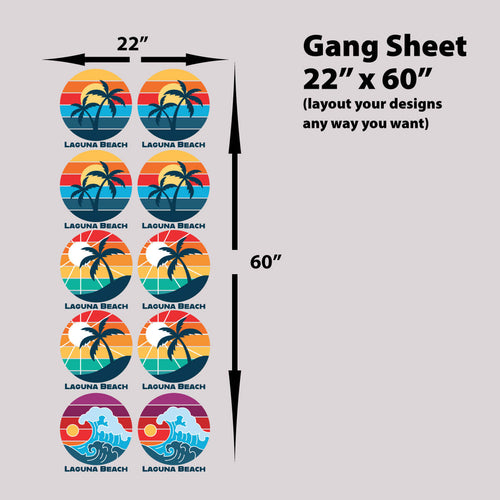
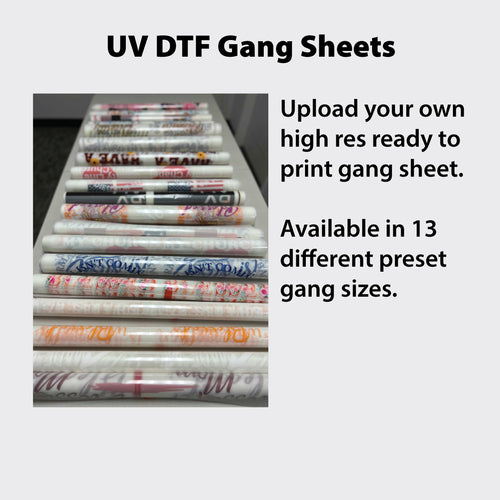
The biggest lever here is the gang sheet. Instead of ordering every design as a separate transfer, you place multiple graphics on one sheet and use the available space more efficiently.
Why gang sheets matter
For businesses, the efficiency question isn't just what DTF is. It's when it fits the order. Industry explainers note that DTF works especially well with gang sheets, which let operators place many different designs on one film for diverse small-to-medium batch orders, as discussed in this video on when DTF is most efficient.
That matters for schools, merch sellers, events, and print shops because their orders rarely come in as one perfect repeated design. More often, the sheet includes front logos, left chest marks, sleeve hits, back prints, and several size variations.
What to check before uploading
Use this checklist before you build a sheet:
- Clean edges: Remove accidental backgrounds, stray pixels, and low-quality shadows.
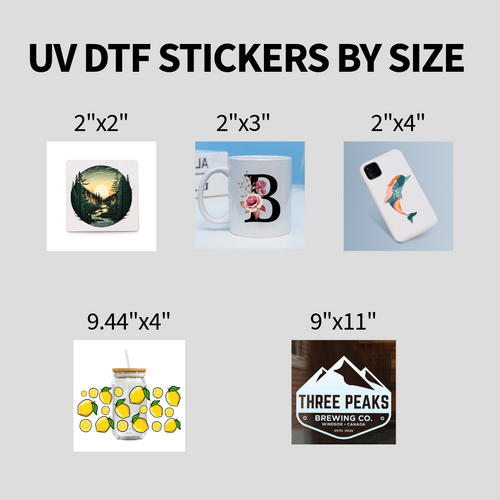
- Correct sizing: Build artwork for the actual print size you want on the garment.
- Readable detail: Tiny text may look fine on a screen but fail once pressed.
- Consistent spacing: Leave enough room between designs so cutting and handling stay easy.

The easiest way to build a sheet
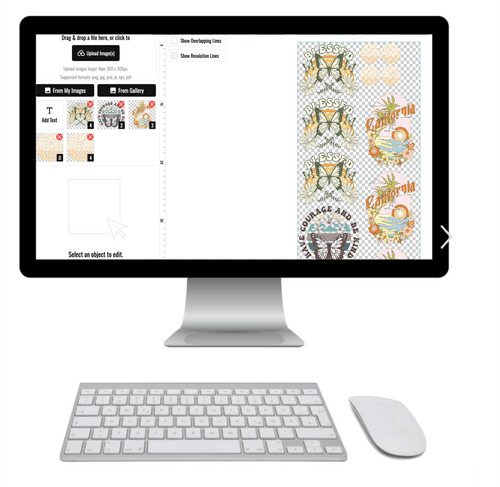
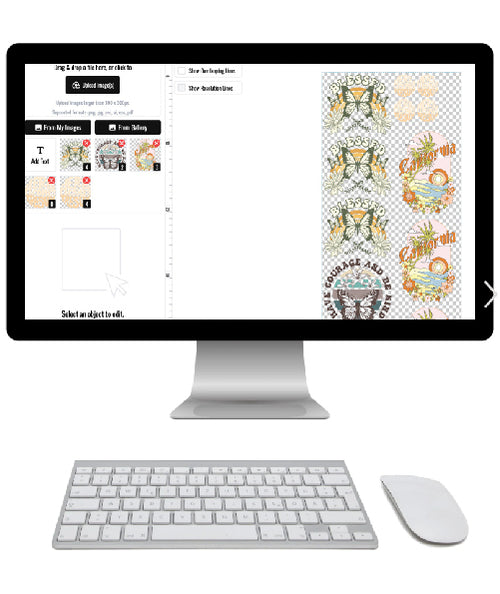
If you don't want to manually arrange every design, the Auto-build gang sheet builder is the most practical place to start because it helps organize layouts for ease of use and cost effectiveness. For customers with a mix of logos, pocket prints, and full fronts, that kind of tool cuts down on wasted space and ordering mistakes.
Some shops and creators still prefer to build layouts manually. That's fine when precision placement matters or when the order has unusual dimensions. But for most repeat commercial work, automatic layout gets the job moving faster.
The cheapest transfer isn't the one with the lowest line-item price. It's the one that uses sheet space well, arrives press-ready, and doesn't create rework.
A simple ordering flow
- Finalize artwork first. Don't resize rough drafts after the fact if detail matters.
- Group designs logically. Keep event sets, brand sets, or customer sets together.
- Choose a sheet strategy. Manual placement for full control, auto-build for speed and efficiency.
- Review before checkout. Look for tiny art, crowding, and duplicate pieces you missed.
This is the stage where disciplined prep pays off. Shops that treat gang sheets as a production tool, not just an upload form, usually get cleaner workflow and better unit economics.
Applying and Caring For Your DTF Prints
A good transfer can still fail if it's pressed poorly. Most post-press issues come from uneven heat, incorrect timing, or rushing the peel.

Press settings that matter
From a production standpoint, transfer quality depends heavily on controlled heat input. Lion DTF instructions for heat pressing are around 240-280°F for 7 to 10 seconds, and instant hot-peel. Too little heat can weaken adhesion and wash durability. Too much can damage the print or garment surface.
That means three variables need to stay under control:
- Temperature: Stay within the transfer maker's recommended range.
- Time: Don't shorten dwell time because you're in a rush.
- Pressure: Make sure the transfer contacts the garment evenly.
A practical pressing routine
Start with a flat, lint-free garment. Pre-pressing briefly helps remove moisture and smooth the surface. Place the transfer, press with consistent pressure, and follow the intended peel method for that transfer type.
If a transfer is meant for hot peel, peel it confidently. If it calls for cooling first, let it cool. A lot of avoidable defects come from treating every transfer the same.
Here's a visual walkthrough of the application process:
A successful press usually looks boring. The artwork releases cleanly, the edges stay down, and nothing fights you.
Basic care after pressing
Once the garment is printed, care still matters. Properly applied DTF transfers are known for long wear life and repeated laundering performance when pressed correctly and cared for properly, as noted in the earlier source.
Tell end users to keep care simple:
- Wash inside out: This reduces surface abrasion.
- Use normal laundering habits with care: Avoid harsh treatment when possible.
- Be careful with high heat: Excessive heat can stress the print over time.
- Skip direct ironing on the print: Protect the transferred surface.
Good transfer construction helps, but correct application and sensible care are what preserve the final result.
Troubleshooting Common DTF Transfer Issues
Most DTF problems aren't random. They usually trace back to one stage in the lifecycle: artwork, transfer construction, pressing, or garment choice.
When the print doesn't adhere well
If edges lift or sections don't stick, check press consistency first. Uneven pressure, too little heat, or cutting press time short are the usual causes. Also look at the garment surface. Seams, moisture, and heavy texture can interrupt contact.
When colors look dull after pressing
This often starts before pressing. Low-quality source files, muddy transparency effects, or artwork built at the wrong size can make a transfer look flat even when the press step is correct.
It can also happen when too much heat alters the finish. The print may still bond, but fine detail and surface appearance suffer.
When the transfer feels too heavy or stiff
Some feel comes from design choice. A large solid block of color will naturally feel different from a smaller, more open graphic. But stiffness can also point to poor press discipline, especially if the transfer was overcooked or pressed onto a garment that doesn't suit the artwork layout well.
Fast diagnosis guide
| Problem | Likely cause | First thing to check |
|---|---|---|
| Poor adhesion | Heat, pressure, or time issue | Press settings and garment flatness |
| Dull finish | File quality or overheating | Artwork prep and platen temperature |
| Rough peel | Wrong peel timing | Transfer instructions |
| Heavy hand feel | Artwork density or overpressing | Design coverage and press routine |
Reliable outcomes usually start with clean files and professionally made transfers. That doesn't remove the need for a good press setup, but it does eliminate a lot of variables before the transfer ever reaches your shop table.
If you're ready to turn artwork into press-ready transfers, Lion DTF Transfers offers options for ordering by size, uploading print-ready files, and building gang sheets online, including an Auto-build gang sheet workflow for faster layout and more efficient sheet usage.