
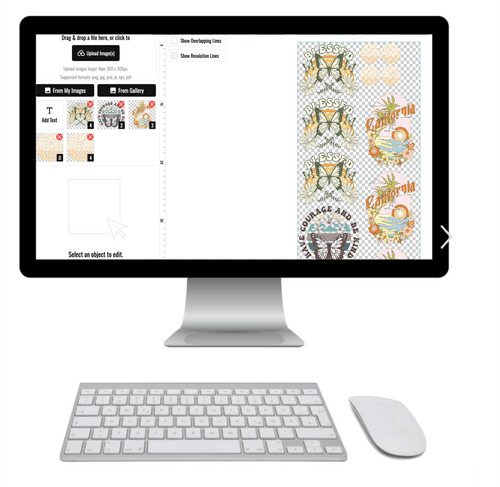
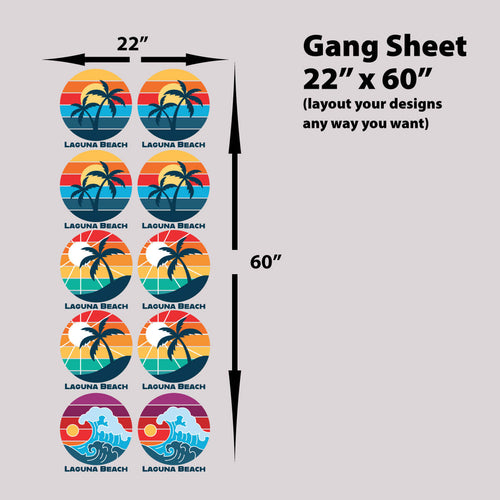
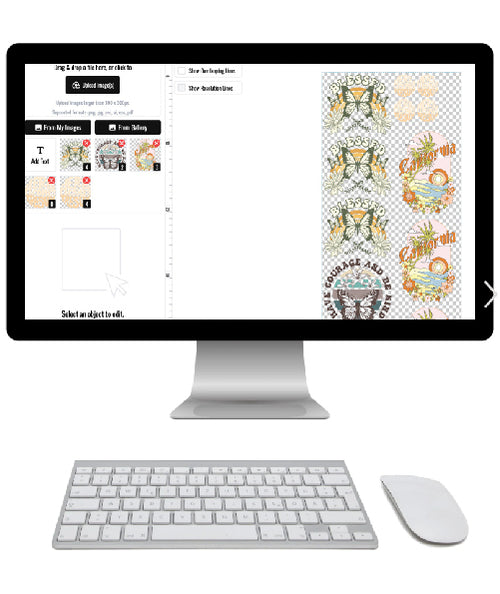
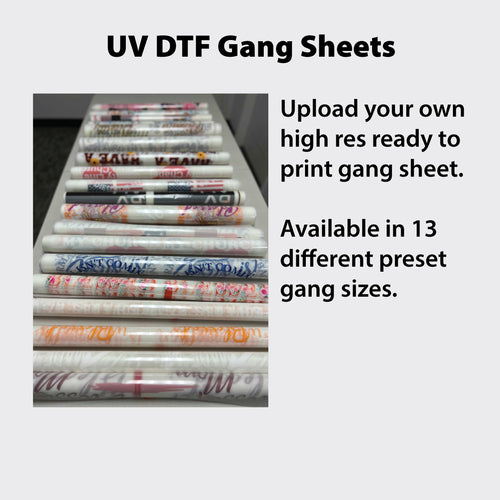



Think of a DTF gang sheet builder as your secret weapon for making more money in the custom apparel game. It’s an online tool that lets you cram multiple designs onto one big transfer sheet, which is a massive upgrade from printing them one by one. This approach completely changes your workflow, maximizing every inch of film and directly boosting your bottom line.
Why a DTF Gang Sheet Builder Drives Profitability
For any business slinging custom apparel—from a side-hustle on Etsy to a full-blown print shop—profit lives and dies by efficiency. Every blank spot on a transfer film is money down the drain. Every minute you spend manually dragging and dropping designs is time you're not spending on growing your business.
This is where a DTF gang sheet builder stops being just a "tool" and becomes a core part of your operation. It shifts your entire production mindset from thinking about individual prints to mastering bulk efficiency. Our Auto-build gang sheet builder, for example, is designed for maximum ease of use and cost-effectiveness, turning a complex task into a simple upload.
The financial payoff is immediate. Instead of paying for each design to be printed separately, you can consolidate dozens, sometimes even hundreds, of graphics onto a single sheet. For a small shop gearing up for a holiday rush, this means you can offer a ton of different designs without having to risk ordering big batches of each. For a larger shop handling a bulk order for a local sports team, you can fit logos for jerseys, shorts, and hats all onto the same master sheet, squeezing every drop of value out of the print run.
The Power of Automated Efficiency
Anyone who has tried to manually nest designs knows it's a tedious game of digital Tetris. You nudge, rotate, and try to fit every image perfectly to cut down on empty space. It can take forever, especially with complex shapes. This is where an advanced DTF gang sheet builder with an automated function really shines.
At Lion DTF Transfers, our Auto-build gang sheet builder was designed from the ground up for one purpose: to save you time and money. It completely removes the guesswork by automatically arranging all your uploaded artwork for the tightest possible fit, guaranteeing you get the most out of every single sheet for ultimate ease of use and cost-effectiveness.
This automated process doesn’t just give you back precious time; it often creates a more efficient layout than what the human eye can piece together. The algorithm analyzes the unique contours of your designs and nests them in ways you might not have even considered.
Manual vs. Auto-Build Gang Sheet Workflow
Switching from a manual layout process to an automated builder is a true game-changer. The difference isn't just about convenience; it directly impacts your time, costs, and overall output. Here’s a quick breakdown of how the two workflows stack up.
| Feature | Manual Arrangement | Lion DTF Auto-Build Builder |
|---|---|---|
| Time Investment | Hours of tedious adjustments | Seconds to minutes |
| Material Waste | Higher due to human error | Minimized with algorithm precision |
| Skill Requirement | Requires design software experience | Beginner-friendly, just upload |
| Cost Per Print | Higher due to inefficient layouts | Slashed by maximizing sheet space |
| Consistency | Varies with each new layout | Consistently optimal results |
Ultimately, the auto-build feature lets you focus on creating great designs and serving your customers, not on playing a frustrating puzzle game. It turns a major production bottleneck into a simple, efficient step.
The growth in this tech makes perfect sense. The Direct-to-Film printing market hit a massive USD 2.72 billion valuation in 2024, showing just how much demand there is for personalized gear. Industry insiders report that using a gang sheet can cut production costs by 30-50% compared to printing individual transfers. That’s a make-or-break margin for any growing business.
This kind of efficiency is exactly what you need to successfully grow your t-shirt business with DTF transfers. By making this workflow a part of your process, you’re not just saving a few bucks—you’re building a more profitable and scalable operation with every order you send out.
Getting Your Artwork Ready for Flawless DTF Prints
Before you even think about opening a DTF gang sheet builder, the real work begins with your artwork. This is the prep stage, and honestly, it’s where the magic happens. Skipping these steps is the fastest way to get blurry edges, weird color boxes, or prints that just look amateur.
Taking a few minutes to nail your file setup will save you the headache and cost of reprinting an entire sheet. The goal is to get what’s on your screen to translate perfectly onto a garment. That means focusing on three critical things: the background, the resolution, and the file format. Get these right, and you're set up for crisp, vibrant, professional-looking transfers every time.
The Non-Negotiable: A Transparent Background
First things first: your artwork must have a transparent background. This is probably the most common mistake we see, and it's an easy one to avoid.
DTF printing lays down a white ink base behind your design, which is what makes the colors pop on any fabric. If your uploaded file has a solid white background, the printer sees that white box as part of the design. The result? A clunky, unprofessional transfer with a big, noticeable square around your graphic.
Here’s how to make sure your background is truly transparent in common design tools:
- Canva: When you download, just check the box for "Transparent background." This is usually a pro feature, but it's well worth it.
- Adobe Photoshop: Before you export, simply hide the background layer. You'll see that classic checkered pattern, which means you're good to go.
- Adobe Illustrator: Just make sure there's no colored shape or artboard fill behind your vector art before you save.
Getting this right is the difference between a design that looks like it's part of the shirt and one that looks like a sticker awkwardly placed on top.
Why 300 DPI is the Gold Standard
Next up is resolution, measured in DPI (Dots Per Inch). For DTF, 300 DPI is the industry standard for a reason—it dictates the sharpness and clarity of your print.
If you use a low-res image, like one pulled from the web at 72 DPI, it's going to look pixelated and blurry when it’s printed on a shirt. It’s that simple.
Think of it like thread count in high-end sheets. A higher thread count feels smoother and more detailed. It's the same with DPI—more dots of ink packed into each inch gives you a crisp, high-definition print.
The key is to set your canvas or artboard to 300 DPI right from the start. You can't just "upscale" a low-res image later and expect it to look good. That just makes the existing pixels bigger and fuzzier. Stick to 300 DPI from the beginning, and every line, detail, and piece of text will print with professional clarity.
Choosing the Right File Format
Finally, how you save your design file matters a lot. While a few formats can work, some are way better at preserving the quality and transparency you just worked to create.
- PNG (Portable Network Graphics): This is our top recommendation for most people. It handles high resolutions perfectly and, most importantly, fully supports transparency.
- AI (Adobe Illustrator) & EPS (Encapsulated PostScript): These are vector files, which are fantastic because they can be scaled to any size without losing an ounce of quality. They do require professional design software, though.
- Avoid JPEGs at all costs. JPEGs do not support transparency. They also use compression that can degrade your image quality, leaving you with fuzzy edges and weird digital artifacts around your design.
By nailing these three pillars—a transparent background, 300 DPI resolution, and the right file format—you're basically guaranteeing yourself a great result.
If file prep still feels a bit overwhelming or you'd just rather have an expert handle it, we've got you. You can learn more about how we can create a gang sheet for you and ensure every piece of artwork is perfectly optimized. For a different angle on apparel decoration, check out this excellent guide on printing photos on clothing, which covers a range of methods.
Mastering the Gang Sheet Layout for Maximum Yield
Once your artwork is prepped and ready to go, this next step is where you really start to see the money-saving magic of DTF printing. Mastering your gang sheet layout is less about printing and more about strategy. It's the art of turning what would have been wasted film into pure profit.
Think of it like a game of Tetris. You're trying to fit as many designs as possible onto your sheet, making sure every last square inch is working for you. This isn't just about dropping files onto a canvas; it's about thinking like a puzzle master to drive down your cost per print.
Practical Techniques for Smart Layouts
To get the absolute most out of every sheet, you have to be strategic. The goal is simple: eliminate as much empty space as possible. A well-designed dtf gang sheet builder makes this whole process feel intuitive.
Here are a couple of go-to techniques I use all the time:
- Nesting: This is my favorite trick. You simply tuck smaller designs into the awkward empty spaces left by larger ones. Got a big, circular graphic for a t-shirt front? It’s going to leave gaps in the corners. That’s perfect real estate for sleeve logos, pocket prints, or tiny neck tags.
- Rotating: Don't hesitate to spin your artwork around. Sometimes, a quick 45 or 90-degree turn is all it takes for a design to fit perfectly next to another piece, instantly reclaiming valuable space.
Just by combining these two methods, you can often cram 10-20% more designs onto a single sheet compared to a basic layout. Over hundreds of prints, that adds up to some serious savings. This all starts with good file prep, as this infographic shows.
This visual flow really drives home the point: a high-quality PNG, a truly transparent background, and a crisp 300 DPI resolution are the non-negotiable building blocks for an effective gang sheet.
A Real-World Scenario
Let's picture a startup clothing brand gearing up for a new launch. They need a bunch of different transfers for their first collection:
- 15 large front-chest designs for adult tees (11 inches wide)
- 15 smaller versions for youth sizes (8 inches wide)
- 30 small sleeve logos (3 inches wide)
- 30 interior neck tag labels (2 inches wide)
That's 90 individual designs. Trying to arrange all of those by hand would be a nightmare. You’d be dragging, dropping, and rotating each one, trying to find the optimal fit. It’s possible, sure, but it’s a huge bottleneck in your workflow. For a more detailed look at the manual approach, check out our guide on how to create a DTF gang sheet in Canva.
The Auto-Build Advantage for Cost-Effectiveness
This is exactly where an automated tool becomes a game-changer. Instead of spending an hour playing digital Tetris with your designs, our Auto-build gang sheet builder does the heavy lifting for you.
You just upload all your prepped artwork, and the software instantly arranges everything.
Our Auto-build feature is your new efficiency partner. It analyzes the unique shapes of your designs and nests them with algorithmic precision, guaranteeing the most cost-effective layout in seconds. It saves you valuable design time and maximizes your material usage without any manual effort.
For that startup brand, this means they can upload their 90 files and get a perfectly optimized gang sheet ready for print in less than a minute. That frees them up to focus on what really matters—marketing and selling their products—instead of getting bogged down in production details.
From Digital Design to Delivered Transfers
Once your digital canvas is packed perfectly with your designs, you're on the home stretch. This is where your carefully arranged artwork finally becomes a physical, press-ready product. Nailing these last few ordering steps is key to making sure the transfers that show up at your door are exactly what you had in mind.
Before you do anything else, give it one last, thorough review. Seriously, zoom in on that gang sheet. Make sure no designs are touching and that you've left yourself enough room to comfortably cut everything apart. A quick double-check here can save you a massive headache later.
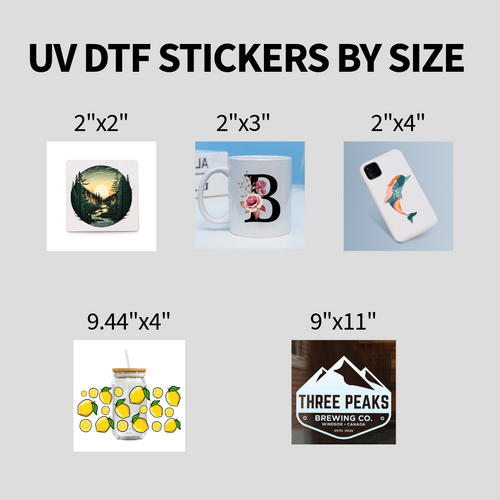
Now, you’ll pick your sheet size, a choice that really just depends on the scale of your project. If you're a hobbyist making a few shirts for a family reunion, a smaller 22x24 inch sheet will probably do the trick. But if you're a print shop cranking out a huge corporate order, you might need a massive 22x200 inch roll. Getting this right means you aren't paying for film you don't use.
Navigating Turnaround and Shipping Options
After confirming your layout and size, the next big decision is all about speed. How fast do you need those transfers in hand? Knowing the lingo here is crucial for matching the delivery timeline to your project deadline.
Every business has different needs. A hobbyist can probably wait for standard shipping, but a business on a tight deadline for a big event needs to hit the accelerator.
Let's break down what these options really mean:
- Standard Printing and Shipping: This is your most budget-friendly route. Your order goes into the regular production queue and ships via ground service. It's the perfect choice when your timeline has some wiggle room.
- 24-Hour Printing: This option bumps your order to the front of the print line, guaranteeing it gets printed and ready to ship within a single business day. It’s a huge time-saver on the production end.
- Next-Day Air: This is purely a shipping upgrade. When you pair it with fast printing, it ensures your package is delivered the business day after it ships out. This is the go-to for those urgent, can't-miss-it projects.
A promotional company, for example, might land a last-minute t-shirt order for a weekend festival. They would combine 24-hour printing with Next-Day Air to guarantee the transfers arrive in time to press. That combo is an absolute lifesaver for hitting tight client deadlines.
This need for speed is a massive driver in the industry. As the DTF market races toward a projected USD 3.92 billion by 2030, services like 24-hour printing directly solve a real problem: 35% of print shops say deadline pressure is their biggest challenge. It's why 70% of DTF users credit gang sheets with boosting their throughput. You can find more insights on the growing DTF printing market.
When to Outsource the Layout Process
What happens if you're slammed with work or just aren't confident building the sheet yourself? That's where a "done-for-you" service becomes your best friend. It’s the perfect solution for anyone who’d rather focus on their designs and customers instead of the technical side of production.
Our We Build It for You service is a fantastic time-saving alternative. Just upload your individual art files, and our experts will handle the entire layout. We make sure every single design is perfectly nested to get you the best possible yield and cost-effectiveness, taking all the guesswork completely off your plate.
This service is a great fit for:
- Business owners who are juggling way too many tasks.
- Designers who want to be certain their layout is professionally optimized.
- Anyone new to the DTF gang sheet builder who wants a guaranteed perfect result the first time.
Choosing this option lets you tap into expert efficiency without any learning curve. You get a flawlessly arranged gang sheet that's ready for printing, so you can move from digital concept to delivered transfers with total confidence.
Application Tips for Professional Quality Results
Your transfers have landed, and now for the fun part: bringing your designs to life. Moving from a perfectly laid-out gang sheet to a finished garment is all about mastering the pressing process. This is where your technique makes all the difference, creating a flawless, durable finish that feels like it’s part of the fabric itself.
A successful DTF application really boils down to three things: temperature, time, and pressure. Think of them as the three legs of a stool—if one is off, the whole thing gets wobbly. Getting this trio dialed in is the secret to a professional-quality press, every single time.
Dialing In Your Heat Press Settings
Not all fabrics are created equal, so a one-size-fits-all approach just won't cut it. Cotton can take the heat, but polyester is much more sensitive and can easily scorch if you're not careful. Blends, naturally, fall somewhere in between.
Here are our go-to starting points for the most common materials we see:
-
100% Cotton & Cotton Blends:
- Temperature: 280°F
- Time: 10 seconds
- Pressure: Medium to firm
-
100% Polyester & Poly Blends:
- Temperature: 240-260°F
- Time: 7-10 seconds
- Pressure: Medium
Treat these as your baseline. It’s always a good idea to test a small, hidden area first, especially if you're working with a new garment brand. Little variations in fabric thickness or dye can sometimes mean you need to tweak your settings slightly.
The Hot Peel Process and What to Do When It Goes Wrong
Our transfers are designed for a hot peel, which means you get to rip that film off the second the press pops open. It's fast, efficient, and leaves you with a soft, flexible finish that everyone loves.
But let's be real—sometimes things don't go perfectly. If you ever find a transfer isn't sticking the way it should, don't sweat it. The problem almost always comes back to one of those three core variables.
Here’s a quick troubleshooting guide for the common hiccups:
| Issue | Potential Cause | Solution |
|---|---|---|
| Edges are lifting | Not enough pressure or uneven pressure | Increase your heat press pressure. Make sure your pressing pillow is flat. |
| Transfer won't stick | Temperature is too low | Bump the temperature up by 5-10°F and give it another press. |
| Scorching on polyester | Temperature is too high or time is too long | Dial back the heat and shorten the press time. A protective sheet helps, too. |
| Spotty adhesion | Uneven pressure from seams or collars | Use a pressing pillow to raise the print area and create a totally flat surface. |
Honestly, the most common mistake we see is not using enough pressure. A lot of people underestimate just how much force is needed. Your heat press should take a good, firm push to lock it down. If it closes with barely any effort, you need to crank that pressure knob.
The goal is to literally embed the transfer's adhesive into the fibers of the fabric. Without enough downward force, the adhesive just kind of sits on top and will never form a permanent bond, leading to peeling after a few washes.
Making Sure That Vibrancy Lasts
Your job isn't quite done once the transfer is on the shirt. The final, crucial step is making sure your customers know how to take care of their new gear. A perfect press can be ruined by a bad wash cycle. Proper care is what ensures those vibrant colors you planned on your dtf gang sheet builder will last for the long haul.
Here are the essential care instructions to pass along:
- Wait 24-48 hours before the first wash. This gives the adhesive time to fully cure.
- Always turn the garment inside out before washing. It’s the best way to protect the print from abrasion.
- Wash in cold water on a gentle cycle.
- Tumble dry on low heat or, even better, just hang it up to dry.
- Never use bleach or fabric softeners, and don't even think about ironing directly on the transfer.
Following these simple rules helps maintain the print's integrity and pop. It's the final piece of the puzzle that ensures the professional quality you delivered during pressing translates into a durable, well-loved product.
Got Questions About DTF Gang Sheets? We’ve Got Answers.
Even the most seasoned pros run into questions when dialing in their DTF gang sheets. Getting the right answers upfront is the key to avoiding costly mistakes and making sure your workflow is seamless, from uploading a design in the dtf gang sheet builder to pulling that perfectly pressed shirt off the heat press.
Let's dive into some of the most common questions we hear from print shops, apparel brands, and at-home creators.
What’s the Smallest Line Thickness I Can Get Away With?
This is a great technical question, and getting it right is crucial for durability. We always recommend keeping your lines and small design details at a minimum thickness of 0.018 inches.
Why so specific? Anything thinner than that struggles to grab enough adhesive powder during the printing process. When that happens, those fine details might look great on the film but will likely start peeling or flaking off after just a few washes. Think of it as the foundation for your design—if it's too weak, the whole thing suffers. Sticking to this minimum ensures every piece of your art, no matter how intricate, bonds properly and lasts.
My Transfers Aren’t Peeling Right. What Am I Doing Wrong?
If you’re fighting with a transfer during the peel, the problem almost always boils down to the big three: temperature, time, or pressure. It’s the essential trifecta for a perfect press. More often than not, the culprit is not enough pressure. Your heat press should take some real muscle to lock down; if it closes too easily, you’re not getting the firm, even contact you need.
Another common mistake is trying to press over seams, collars, or zippers without using a pressing pillow. Those uneven surfaces create gaps where the press can't make full contact, leading to patchy adhesion. A simple foam pillow solves this instantly by elevating the print area and giving you a perfectly flat surface for the transfer to bond to.
How Should I Price the Shirts I Make with Gang Sheets?
Nailing your pricing is what separates a hobby from a business. A great starting point for many brands is the 3x rule. Just take your total cost of goods (the blank shirt + the cost per transfer) and multiply it by three. This simple formula covers your materials, factors in your labor, and gives you a healthy profit margin.
Here’s what that looks like in the real world:
- Blank Shirt Cost: $5.00
- Transfer Cost: $1.50 (find this by dividing your gang sheet cost by the number of designs on it)
- Total Cost: $6.50
- Retail Price: $6.50 x 3 = $17.50
Of course, this is just a baseline. You should always do a little market research to see what similar shirts are selling for. From there, you can adjust your price based on your brand’s reputation, design complexity, and who you're selling to.
Can I Just Use an Iron Instead of a Heat Press?
We get this question a lot, especially from people just starting out. While it's tempting, we strongly advise against using a regular home iron for DTF transfers. It's just not going to work.
Irons are notorious for creating hot and cold spots, and they can't deliver the consistent, heavy pressure needed for the adhesive to permanently bond to the fabric. You'll end up with transfers that peel at the edges, crack after one wash, or just don't stick at all. A quality heat press is a non-negotiable investment if you're serious about creating professional apparel that lasts.
The real beauty of our Auto-build gang sheet builder is how it makes professional tools like a heat press more accessible. By automatically nesting designs to maximize every square inch of film, it drives down your per-print cost significantly. This makes it much easier to justify the investment in proper equipment while still protecting your profit margins.
It’s this combination of cost-efficiency and simplicity that makes an automated system so valuable. It handles the tedious work of arranging files, so you can focus on what matters: pressing flawless products and growing your business.
Ready to see just how easy and affordable professional-grade transfers can be? At Lion DTF Transfers, we’ve combined industry-leading technology with expert support to help you get it right every time.
Build your custom gang sheet today and see the difference for yourself!