



You're standing in a Las Vegas hotel ballroom with a convention opening tomorrow, a stack of dark shirts on the way, and artwork that still exists as separate files on a designer's laptop. The first instinct is usually to order each transfer individually. That's the mistake that inflates the job.
DTF printing in Las Vegas is a procurement decision shaped by deadlines, garment types, pickup logistics, artwork quality, and the amount of film you waste. Convention teams, local print shops, schools, sports clubs, small apparel brands, and hobby pressers all need the same basic answer: which transfer format can be produced accurately, pressed reliably, and delivered before the event starts?
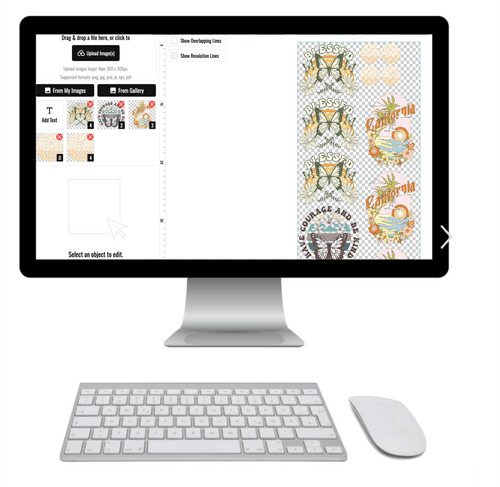
The practical answer depends on how you prepare the order. You'll need to choose between finished garments and print-only transfers, decide whether local pickup is worth the drive, confirm whether your design works on cotton or performance fabric, and pack multiple graphics efficiently. The Auto-build gang sheet builder is the cost lever most buyers underuse because it arranges mixed artwork on one sheet instead of leaving empty film around every individual design.
Why Las Vegas Buyers Are Searching for DTF Right Now
The search for DTF Las Vegas usually starts with a deadline, not curiosity. A convention merch team needs branded shirts before booth traffic peaks. A local print shop needs transfers for a customer order. A school or club wants team gear across several garment colors, while a small brand needs a short run without committing to a large inventory.
Las Vegas adds pressure because many apparel jobs are tied to scheduled events, tourist seasons, launches, tournaments, and promotional campaigns. Buyers often need vivid full-color graphics on dark garments, but they also need flexibility across cotton, polyester, blends, and performance materials. DTF fits that combination because the white underbase keeps colors visible on dark fabric and the transfer format avoids the setup associated with traditional screen printing.

The buyer's decision path
Start with the deadline, then work backward:
- Confirm the event date and garment arrival. A transfer order isn't finished until someone still has time to press, inspect, fold, and distribute the shirts.
- Separate the designs by size and placement. Left-chest graphics, full fronts, sleeves, and youth prints shouldn't be treated as one universal dimension.
- Check the fabric mix. DTF handles varied apparel well, but press settings and testing matter more when the order includes stretch or athletic garments.
- Build one efficient sheet. Uploading every graphic as an individual order often leaves unused film and makes the invoice harder to control.
Practical rule: Plan backward from the moment the shirts must be worn, not the moment the transfers leave the printer.
This guide focuses on that buying workflow. You'll see how the process works, how to prepare artwork, what drives price, when pickup beats shipping, and how to test a transfer before committing an entire event run.
What DTF Transfers Actually Are and How They Work
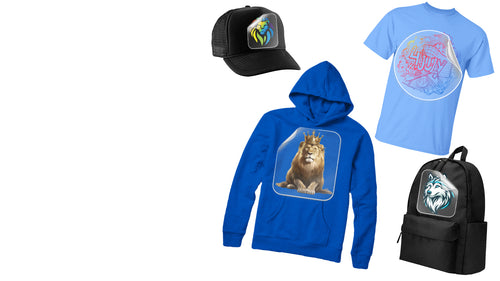
Direct-to-Film, or DTF, prints artwork onto PET film before it reaches the garment. The film carries the design temporarily, while the ink, white underbase, and adhesive form the layer that bonds to fabric under a heat press. For Las Vegas orders, that separation matters because a shop can print transfers ahead of an event, then press them onto different garment sizes as inventory arrives.
The production workflow has four stages:
- Print: The printer applies CMYK color, a white underbase, and adhesive. A commonly reported configuration uses a 300 DPI print engine with this CMYK, white, and adhesive stack, as described in the DTF process specifications.
- Powder: Hot-melt polyurethane powder coats the printed adhesive.
- Cure: Heat activates and stabilizes the powder for pressing.
- Press: Heat and pressure move the finished design from film to fabric.
The white underbase keeps a bright red logo or detailed illustration visible on a black shirt. It also lets the same artwork work across light and dark garments without the fabric color changing the appearance as sharply. The adhesive creates the bond across cotton, polyester, nylon, spandex, and blends, although each fabric still deserves a test press.
Typical pressing guidance falls around 240 to 280°F for 10 seconds at medium pressure. Treat those figures as a starting point, since the transfer, garment coating, and press calibration can change the result. Correct application and laundering can support durability around 100 or more washes. Dense, oversized prints feel heavier than small logos, while lighter coverage usually produces a softer hand.
A visual walkthrough helps new press operators follow the film, powder, curing, and garment sequence. This DTF transfer process guide provides that orientation before a rush event order reaches the press.
Preparing Artwork the Right Way for Las Vegas Orders
A last-minute convention order can reach the press with a logo that looked fine on a phone but prints with fuzzy edges, unreadable small text, or a white box around the artwork. File preparation determines whether the job stays on schedule.
Use this checklist before uploading:
- Set the working resolution to 300 DPI. Build the file at its intended physical size so edges retain enough detail.
- Use a transparent background. PNG transparency works for most raster artwork. Keep a white rectangle only when it is part of the design.
- Choose color deliberately. CMYK files can enter the print workflow, and CMYK gives designers more control over separation. Inspect saturated colors after conversion.
- Keep small details readable. Hairline strokes, tiny lettering, and low-contrast elements may disappear during printing and pressing.
- Supply vector art when possible. Vector logos resize cleanly before export at the required dimensions.
- Check bleed and edges. Borders and background panels need enough bleed to prevent a visible gap around the shape.
- Remove unnecessary profiles and hidden layers. Stray marks, unused objects, and conflicting profiles can create prepress surprises.
File names also matter during a rush. Labels such as front-logo-black-tee, left-chest-school, or sleeve-brand-mark tell the production team where each design belongs. Confirm every file against the garment color before submitting.
The gang sheet decision
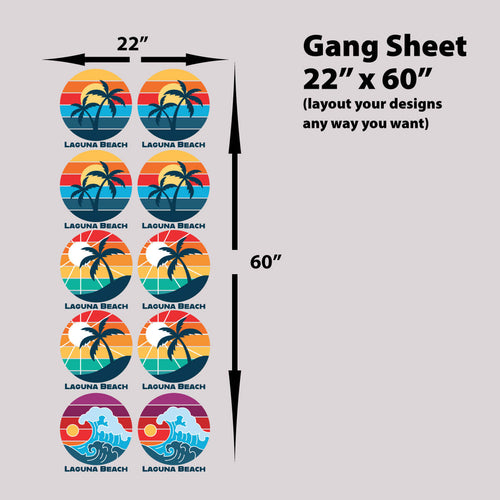
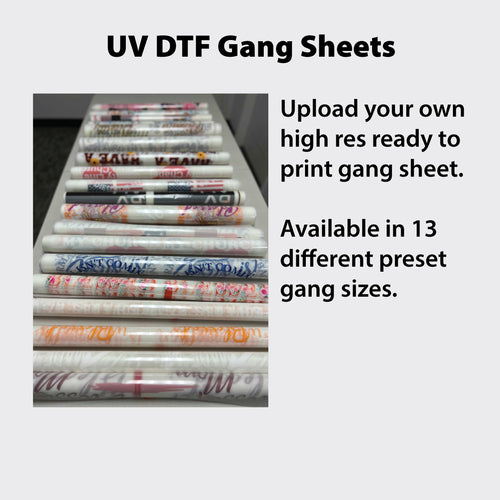
A gang sheet combines several designs on one larger film sheet. For a Las Vegas order containing event logos, names, sleeve graphics, or multiple print sizes, it can reduce the empty space paid for around separate transfers. The usable area must be packed carefully, not merely placed on the sheet.
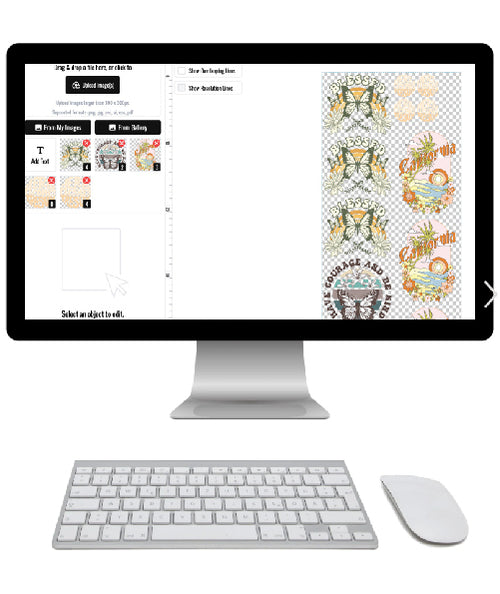
Manual arrangement gives control but takes time, and crowded spacing can create cutting or handling problems. The Auto-build gang sheet builder arranges mixed artwork faster and helps expose unused margins before payment. Its value is practical for deadline orders: efficient packing turns the sheet into more sellable transfers, while poor spacing leaves paid film unused. The advertised floor price of $0.017 per square inch only matters when the available area is filled with the artwork you need. Ordering details are available through Lion DTF Transfers.

Before a shipment cutoff, open the final files once more. Verify dimensions, transparency, spelling, garment color, and placement labels. A clean handoff keeps the print team from guessing, which is especially important when several event or team designs share one order.
DTF Pricing in Las Vegas and What Actually Drives Cost
A Las Vegas order can look inexpensive until unused film, rush handling, or a poorly packed sheet enters the quote. DTF pricing follows printed area, not the number of ink colors. A detailed multicolor logo may cost less than a simple design if its finished dimensions are smaller. Film area, artwork size, quantity, layout efficiency, and turnaround choice shape the final invoice.
The basic calculation is:
Width × height = square inches.
A 4 by 4 inch transfer uses 16 square inches. A 22 by 24 inch gang sheet uses 528 square inches. Those measurements do not equal finished print counts, because the larger sheet only pays off when it is filled with artwork. For event orders, team names, sponsor marks, and several logo sizes, efficient packing can make the sheet more useful than ordering each transfer separately.
Lion DTF Transfers lists prices as low as $0.017 per square inch in the published Lion DTF ordering information. At that published floor rate, a 4 by 4 inch transfer produces an arithmetic example of $0.272, while a completely filled 22 by 24 inch sheet produces $8.976 in area pricing. These figures illustrate the rate, not a guaranteed quote. Shipping, rush handling, artwork services, unused space, and order policies can change the amount charged.
| Order Type | Typical Size | Approx. Price Per Print | Best For |
|---|---|---|---|
| One-off small transfer | 4 by 4 inches | Area-based, with the published floor rate starting at $0.017 per square inch | A single sample, small logo, or replacement print |
| Packed gang sheet | 22 by 24 inches | Area-based, with the published floor rate starting at $0.017 per square inch | Mixed designs, event batches, and resale inventory |
| Rush transfer order | Depends on artwork | Quote depends on area and selected service tier | Deadlines where standard shipping no longer fits |
| Repeat production sheet | Depends on artwork mix | Quote depends on packed area and quantity | Local shops and brands repeating proven designs |
The Auto-build gang sheet builder is the cost lever many buyers underuse. It reduces manual layout work and helps fit names, logos, sleeve graphics, and secondary marks onto available film. It cannot reduce the area required by a large full-front graphic, but it can prevent several partially empty sheets from being ordered for one event.
Turnaround also affects the cost. Available options include 24-hour printing, 1 to 2 business day shipping, same-day shipping, and next-day air. Choose the service tier only after confirming garment arrival, artwork approval, pickup timing, and the hours available for pressing. A cheaper transfer that arrives after the Las Vegas event is not a saving.
Compare the practical routes
Same Day Shipping works best for a completed order that's ready for print. Confirm that the transfer is physically ready to print, not merely queued, and ask whether the stated window starts after artwork approval.
Standard shipping is the calmest choice when the event has planning room. Published service information indicates orders can ship in 1 to 2 business days, while next-day air is the escalation route when the schedule is too tight for ground transit.
What to ask before paying for rush
Several local providers advertise rush or fast production services, but advertising speed doesn't always mean the work is produced in-house. Ask four direct questions:
- Production location: Is the transfer printed locally or shipped in from another facility?
- Cutoff time: What time must the file be approved, not merely uploaded?
- Eligibility: Does the rush tier apply to gang sheets, large orders, color matching, or artwork repair?
For broader guidance on finding a nearby supplier and evaluating the options, use this guide to custom DTF transfers near you. The right choice depends on which part of your workflow is late, the printer, the carrier, or the person at the heat press.
Pressing DTF Transfers and the Wash Test That Saves a Run
A transfer can be printed correctly and still fail on the garment. Moisture, uneven pressure, or an incorrect peel can leave edges lifting after the shirt reaches an event or customer. Start with a clean, dry garment, then pre-press it briefly to remove moisture and flatten the application area. Position the film according to the supplier's instructions, and use the specified temperature, dwell time, and pressure for that transfer.
Reported DTF guidance uses 240 to 280°F for 10 seconds at medium pressure. Treat those settings as a starting range, not a universal command. A thin performance shirt, heavy hoodie, and cotton tee can respond differently, so press a sample on the actual blank before running the full Las Vegas order.
Read the peel correctly
Some transfers are made for a hot peel. Others must cool before the film comes away. Peeling a cold-peel transfer too soon can lift design edges or sections of the print. Leaving a hot-peel transfer to cool can slow production and change the result, so confirm the supplier's peel instructions before pressing the first shirt.
If the instructions call for it, apply a short second press with protective paper after removing the film. A weak-looking design does not automatically need more heat or dwell time. Check pressure, garment moisture, film orientation, and peel timing first.
Run two shirts before the full order
For event apparel, team uniforms, or a branded run, use two identical garments for approval:
- Press the first shirt with the recommended settings.
- Press the second using the same setup to check repeatability.
- Inspect color density, edge adhesion, placement, and hand feel.
- Wash one sample according to the garment care instructions.
- Compare it with the unwashed shirt before approving production.
The reported durability expectation is 60 or more washes, based on the technical process reference. Lion DTF Transfers separately states that its transfers are tested to last 100 or more washes, as published on its site. Treat both figures as reference points, not a guarantee for every blank, artwork file, or press setup.
Cracking, edge peeling, or a white underbase showing through the color usually indicates a pressing, artwork, powder, or curing problem. Stop and correct the cause before decorating the rest of the order. For the full application sequence, follow these DTF pressing instructions.
Why Choose Lion DTF Transfers for Las Vegas Orders
A Las Vegas buyer usually has three decisions to make at once: color and file accuracy, efficient ordering, and deadline control. Convention apparel, team gear, and branded event runs leave little room for reprints, so the supplier must fit the actual schedule, not just offer a low transfer price.
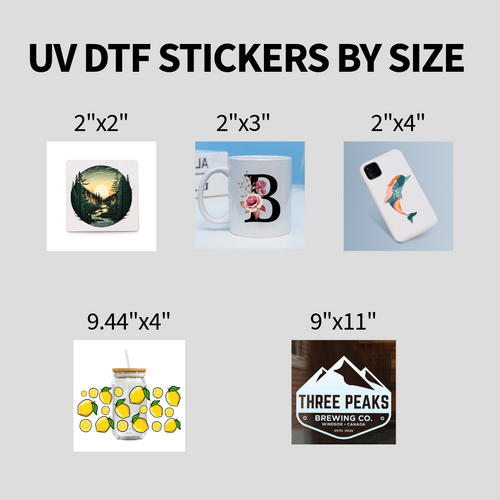
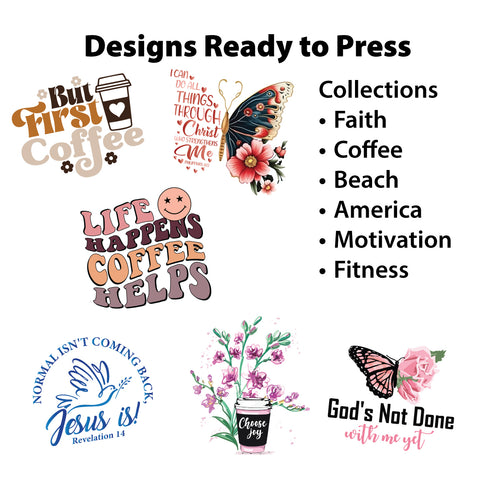
Lion DTF Transfers provides custom transfers ordered by size, gang sheet printing, hot-peel DTF transfers, UV DTF stickers, and ready-to-press collections. The ordering process supports artwork uploads, size selection, and online gang sheet creation. The Auto-build gang sheet builder deserves particular attention. Mixed event orders often include chest logos, large fronts, names, and sleeve marks. Packing those files efficiently reduces wasted sheet area and can lower the total order cost more reliably than comparing a single transfer price.
The published service information includes 24-hour printing, 1 to 2 business day shipping, same-day pickup, and next-day air. It also describes transfer durability testing and customer review volume on the Lion DTF Transfers website. Treat those published details as planning information, not a guarantee for every garment, file, or press setup. A sample remains the practical check before approving a full event run.
Match the service to the job
A convention team may need a packed gang sheet and a confirmed rush cutoff. A local print shop may place greater value on repeatable sizing, dependable color handling, and consistent application across reorders. A small brand could use ready-to-press designs, while a creator with a weak logo file should resolve the artwork before placing the order.
Pickup and shipping also change the buying decision. A local buyer with a firm event deadline can compare same-day pickup against the time required to receive and press the transfers. A buyer outside the immediate area should confirm the production cutoff, carrier option, and remaining garment-preparation time before choosing expedited delivery.
Artwork support can help when the file, rather than the print queue, is causing the delay. Available services include logo and shirt design, vectorization, a We Build a Gang Sheet for You service, and assistance by call, text, email, and website chat.
For Las Vegas orders, the practical sequence is clear: prepare clean files, use Auto-build to pack mixed artwork, confirm the cutoff, then choose pickup or shipping based on the pressing schedule. That workflow gives event buyers control over the decisions most likely to affect cost and delivery.
Common Questions Las Vegas DTF Buyers Ask First
How large should a gang sheet be?
Start with the artwork you need, not the largest sheet available. Group small logos, names, sleeve marks, and repeated graphics together, then use the Auto-build gang sheet builder to arrange them efficiently. A full-front design may consume much of the usable area, while a mixed event order can often fit several smaller graphics around it.
What does rush turnaround really mean?
Rush usually refers to production or transit, not the entire apparel workflow. Confirm the artwork approval cutoff, whether the order qualifies, when printing begins, and whether you're collecting the transfers or waiting for a carrier. The published options include 24-hour printing, same-day pickup, and next-day air, but eligibility still depends on the order details.
Which fabrics work well with DTF?
DTF is used across cotton, polyester, nylon, spandex, and blends. Stretch fabrics and thin athletic materials deserve a test press because pressure, temperature, and the visible hand feel can differ from a heavier cotton garment.
What should you do with a low-quality JPEG logo?
Don't enlarge it and hope the printer can repair it. Ask for vectorization or recreate the logo from a clean reference, then approve a sample before ordering the full batch. Screenshots and compressed social-media files often carry too little detail for crisp transfer edges.
For your next DTF Las Vegas order, use Lion DTF Transfers to upload artwork, build a cost-efficient gang sheet, and choose from standard shipping, 24-hour printing, same-day pickup, or next-day air. Send your files early enough to test one or two pressed garments, then place the production order with the delivery method that matches your event deadline.