



You've got the transfers printed, the shirts stacked, and the press warmed up. This is the part where good artwork either turns into clean, retail-ready apparel or gets ruined in a few seconds by bad pressure, too much heat, or a rushed peel.
That's why people who learn how to press DTF transfers properly get more consistent results with less waste. The transfer matters, but the press is where the adhesive activates, the film releases, and the print either locks in or starts failing at the edges. If you're building sheets for production, using an auto-build gang sheet builder also helps keep layouts efficient and costs under control before you ever get to the press.
The Final Step to Flawless Custom Apparel
A DTF transfer can look perfect on film and still fail on the garment. That's the part many beginners don't expect. They focus on the artwork, color, and placement, then treat the press like a simple finishing move.
It isn't simple. It's controlled heat, pressure, timing, and contact.
When a press goes wrong, the failure usually shows up fast. Corners lift. Fine details don't bond. The film fights you during the peel. Or the print looks acceptable at first, then starts breaking down because the adhesive never fully bonded into the fabric surface.
Why the press matters more than most people think
DTF works because heat activates the adhesive powder and pressure helps it make full contact with the garment. Time matters too, but not in isolation. You're not just heating plastic. You're creating a bond between transfer and textile, and that bond depends on the combination being right.
That's why one generic setting doesn't solve every job. A flat cotton tee behaves differently than a stretchy blend. A hoodie with seams near the print area behaves differently than a smooth shirt panel. A cap front is a different problem entirely because pressure becomes harder to distribute evenly.
A clean press comes from even contact first. If the transfer only touches the garment well in some areas, heat settings won't save it.
Shops that stay consistent usually treat pressing like a repeatable process, not a guess. They check garment surface, remove moisture, center the transfer, and make sure the platen setup matches the placement area.
Start with a good transfer and a workable layout
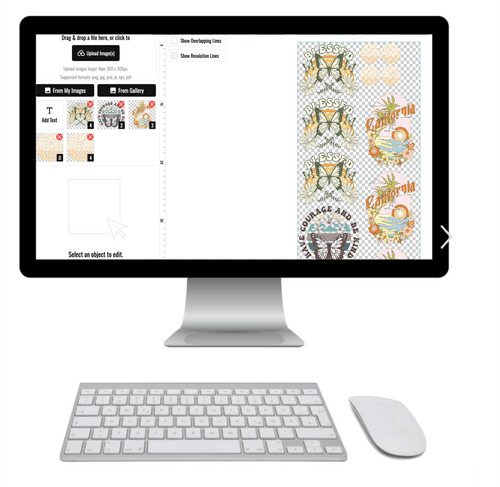
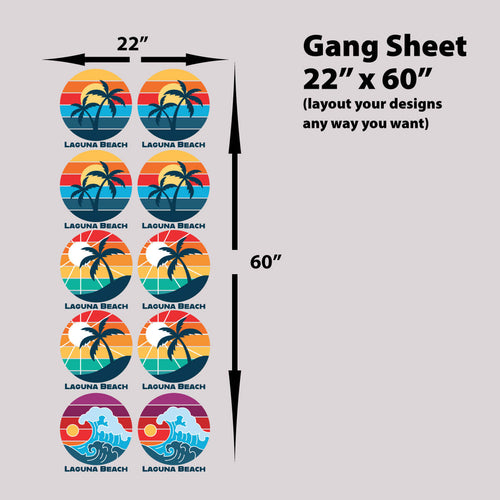
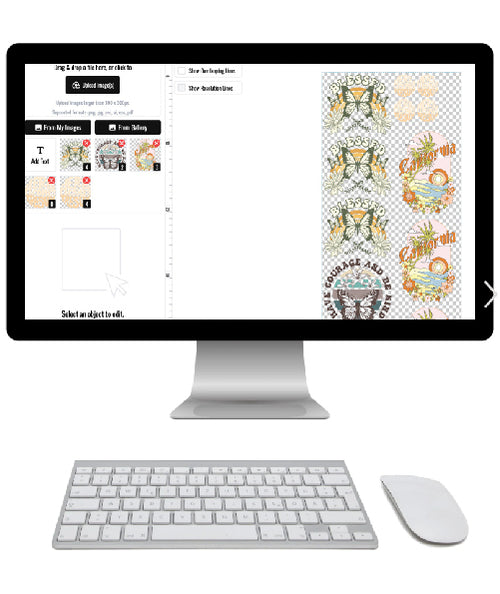
Perfect application starts before the press closes. If your gang sheet layout is crowded, awkwardly spaced, or built without production flow in mind, you make pressing harder than it needs to be. That's why an Auto-build gang sheet builder is useful. It lets you organize multiple graphics efficiently, reduce waste, and build sheets that are easier to cut, sort, and press.
That matters in real production. Faster sorting and cleaner layout choices usually mean fewer handling mistakes at the heat press.
Gathering Your Tools for a Perfect Press
Bad presses often start with bad prep. Not dramatic mistakes. Small ones. A little moisture in the shirt. Lint under the design. A raised seam stealing pressure from the center of the transfer.
You don't need a huge tool kit, but you do need the right one.

The tools that actually affect your result
A quality heat press comes first. Consistent pressure matters as much as heat. If you're still deciding what style fits your workflow, this guide on what a heat press is and how the main types work is worth reviewing before you buy or upgrade.
Here's how the common press styles behave in the shop:
- Clamshell presses are compact and fast. They work well for flat garments, but they can be less forgiving when you're pressing thicker items or placements near raised areas.
- Swing-away presses give you cleaner access for alignment and usually make it easier to apply even pressure across larger prints.
- Auto presses help with repeatability. If you're running volume, repeatable closing force and dwell time make production smoother.
Then come the support tools that save garments.
- Parchment paper or a finishing sheet protects the print during the second press and helps control surface finish.
- Heat-resistant tape keeps small or awkwardly placed transfers from shifting before the platen closes.
- A lint roller removes fibers, dust, and debris that can show through the finished transfer.
- Heat press pillows help when the print area sits near seams, zippers, pockets, or textured construction.
Why each prep item earns its place
A lint roller sounds minor until you press a transfer onto a black shirt and see tiny fibers trapped under the design. Once they're in there, they're in there.
Heat-resistant tape matters most on placements that don't have much room for error. Left chest logos, sleeve prints, youth garments, and oddly shaped graphics all benefit from extra stability.
Parchment paper matters during finishing because the post-peel press isn't just about appearance. It helps settle the surface and reinforce the application without direct platen contact on the exposed print.
Practical rule: If an accessory prevents movement, uneven pressure, or contamination, it's not optional. It's part of the press.
The pre-press that people skip and regret
The most overlooked move is the pre-press. Before the transfer touches the garment, press the blank briefly to flatten wrinkles and drive out moisture.
Moisture interferes with bonding. Wrinkles create uneven contact. Both problems show up later as weak adhesion, rough texture, or areas that didn't fully take. A shirt can feel dry in your hands and still hold enough moisture to affect the result.
If your process feels inconsistent, tighten up this part first.
Mastering the Hot-Peel Pressing Technique
The pressing motion should feel smooth and repeatable from garment loading to finishing press. If you're fighting the film, guessing on pressure, or adjusting placement after the transfer is already down, you're adding failure points.
This is the flow that works in a real shop.
Set a baseline before you chase perfection
A reliable starting point matters because every press, transfer, and garment combination behaves a little differently. A widely cited baseline for pressing DTF transfers is around 240°F to 280°F, with medium to firm or medium-to-high pressure, and roughly 10 seconds of dwell time, as outlined in Insta Graphic Systems' DTF pressing guide.
Use that as your baseline, not as a blind rule. It gives you a stable place to begin, then you can adjust based on the fabric, the transfer, and how your press performs under load.

Build the press in the right order
Start with the garment loaded flat on the platen. Keep the print area fully supported. If the collar, hem, seam, or pocket edge is under the transfer zone, you're already losing pressure where you need it most.
Pre-press the garment briefly. You're flattening the surface and clearing out moisture so the adhesive can bond evenly. Then place the transfer with the adhesive side down and film facing up.
Alignment matters, but so does stillness. Once the transfer is in place, don't let it drift while closing the press. If the garment is slippery or the placement is tight, secure it before pressing.
A solid first press should feel deliberate. Close the press with the target pressure. Let the press complete the dwell time. Don't lift early because the film looks settled. Don't add random extra seconds because you want insurance. Overcooking creates its own problems.
Later in the process, seeing the full motion helps. This walk-through shows the pressing rhythm clearly:
The peel is where many applications get lost
Hot peel means you need to move with intention. Not aggressively, but confidently.
If you hesitate, stop halfway, or peel straight upward, you can pull against the bond instead of releasing from it. The backing should come off in a smooth, low-angle motion that stays close to the garment surface.
Peel low and steady, not up and away. Let the film release across the print instead of yanking against it.
Watch the transfer as you peel. If a small area tries to lift, lay the film back down and repress that section rather than forcing the peel through. A rushed peel can turn a good press into a wasted garment.
Don't skip the finishing press
After the film comes off cleanly, cover the design with parchment paper or a finishing sheet and press again briefly. This second press improves the hand feel and helps lock the application down.
The difference is easy to see in production. Prints usually look more settled, edges feel cleaner, and the surface finish is more consistent after that final pass.
Here's the full press sequence most operators should follow:
- Load flat: Make sure the print zone sits on a stable, even surface.
- Pre-press the blank: Remove moisture and flatten wrinkles before placement.
- Place accurately: Set the transfer once and keep it from shifting.
- Run the main press: Use your tested baseline and avoid adding random extra time.
- Hot peel correctly: Peel low, smooth, and without hesitation.
- Finish the print: Cover and repress to improve the final result.
If you want fewer ruined shirts, make this routine automatic.
Dialing in Your Settings A Quick Reference Guide
No shop stays consistent by treating every garment the same. Cotton gives you room to work. Polyester demands more caution. Blends sit somewhere in between, and construction details often matter more than fiber content.
The point of a quick-reference guide isn't to pretend every fabric has one perfect recipe. It's to help you make better decisions faster. If you need a broader settings overview, Lion DTF also has a dedicated guide on heat press settings for DTF.
Quick Reference DTF Pressing Settings
| Fabric Type | Temperature (°F/°C) | Time (Seconds) | Pressure |
|---|---|---|---|
| 100% Cotton | Start within the common DTF baseline range | Start within the common baseline range | Medium to firm |
| Polyester | Start within the common DTF baseline range, then test lower if needed | Start within the common baseline range | Medium |
| 50/50 Blends | Start within the common DTF baseline range | Start within the common baseline range | Medium |
| Tri-blends | Start within the common DTF baseline range | Start within the common baseline range | Medium, adjusted carefully |
| Fleece and textured garments | Start within the common baseline range, then fine-tune based on surface texture | Start within the common baseline range | Medium to firm, with attention to even contact |
What changes from fabric to fabric
Cotton is usually the easiest place to start. The surface is stable, it tolerates normal DTF pressing well, and it usually gives you a straightforward read on whether your transfer and press are working together.
Polyester needs more care. The main issue isn't that DTF won't work on it. The issue is that polyester is less forgiving when heat is too aggressive. If you see shine, scorching risk, or fabric sensitivity, reduce your aggression and test before committing to a run.
50/50 blends are common in real orders because they balance feel and durability. The trick is to press them like a fabric that can react to too much heat, but still needs enough energy to bond cleanly.
Tri-blends are softer and often more delicate in feel. That makes pressure and surface finish more noticeable. If you flatten the fabric too hard or overdo the heat, the print can look heavier than it should.
The real decision isn't just fabric
Construction changes your pressing plan just as much as fiber content. A hoodie chest print over a pouch edge, a tee with a side seam creeping into the design area, or a ribbed surface all affect contact.
Use this decision filter before pressing:
- If the surface is flat: Use your normal baseline and test for finish.
- If the area is raised or uneven: Fix the contact problem first, then worry about heat.
- If the fabric is heat-sensitive: Press conservatively and test upward only if needed.
- If the print is large: Check that pressure stays even across the full design.
That's how experienced shops keep settings useful. They treat the table as a starting point, then make substrate decisions based on what the garment is doing on the platen.
Solving Problems Before They Ruin a Garment
Most failed applications don't come from one dramatic mistake. They come from a shop assuming that if the temperature is close enough, the press will work itself out.
It won't. DTF is very forgiving in some ways, but it still depends on contact, sequencing, and peel control.

Transfer not sticking cleanly
Problem: Parts of the design don't bond, or sections lift with the film.
Cause: Usually one of three things. Not enough effective heat, not enough pressure, or poor platen contact. “Poor contact” gets missed the most because the press may close normally while the actual print area stays uneven.
Solution: Check the surface first. Make sure the garment isn't bridging over a seam, collar edge, zipper area, or pocket ridge. Then review pressure before changing temperature.
Film won't peel the way it should
Problem: The backing drags, snags, or pulls pieces of the print.
Cause: Peel technique is often the culprit. A high-angle pull creates unnecessary stress on the bond. Hesitation can do the same thing.
Solution: Peel low and in one smooth motion. If part of the design starts lifting, stop, lay the film back down, and repress instead of trying to save it mid-pull.
If a peel starts going bad, force makes it worse. Reset the film, repress, and try again with a cleaner motion.
The print looks heavy, shiny, or overworked
Problem: The design has an odd surface finish or the garment shows press marks.
Cause: Too much heat, too much dwell, or too much pressure. Sensitive fabrics will show this faster than basic tees.
Solution: Back off one variable at a time. If the bond is already there, adding more heat won't improve it. It usually just stresses the garment.
Hard placements need a different strategy
A major gap in most guides is how to press on difficult substrates like seams, zippers, and hats. Uneven surfaces can cause pressure loss and failed applications, which is why tools like a heat press pillow or a two-step press matter so much, as noted in Transfer Kingdom's troubleshooting guidance for difficult DTF placements.
That shows up in real jobs like these:
- Over seams: Raise the print area so the transfer sits on a level plane. If the seam steals pressure, the center or edge of the design won't bond correctly.
- Near zippers: Don't let the zipper hardware become the highest point under the platen. Support the surrounding print zone and keep pressure focused where the transfer sits.
- On fleece: Texture can interrupt contact. A flatter pressing surface and careful finishing press usually help.
- On hats or structured items: Curvature changes everything. Smaller placements, support tools, and staged pressing give you more control than trying to force a single flat press.
A simple problem and solution check
| Problem | Likely cause | Practical fix |
|---|---|---|
| Edge lifting | Uneven contact or weak pressure | Recheck support under the print area |
| Adhesive outline | Too much heat or press stress | Reduce aggressiveness and test again |
| Press box on fabric | Excess pressure or direct finish contact | Use a cover sheet and ease up on the press |
| Uneven bonding across design | Seams, texture, or poor platen setup | Use a pillow or isolate the print zone |
Shops waste fewer garments when they stop chasing a magic setting and start diagnosing the actual failure point.
Ensuring Your Designs Last
A clean peel isn't the finish line. The job isn't done when the film comes off. It's done when the print holds up in real wear, real washing, and real customer use.
That's why post-press handling matters. Let the garment settle before it gets folded tight, worn hard, or washed too soon. The print may look finished immediately, but giving the bond time to fully set is part of protecting the result.
Aftercare protects the work you already did
Good aftercare instructions are simple and worth giving with every order:
- Wash inside out: This reduces direct abrasion on the print surface.
- Use cold water: Gentler wash conditions help preserve the application.
- Dry with care: Low tumble or hang drying is easier on decorated garments.
- Avoid rushing the first wash: Giving the print time to settle helps protect adhesion.
If durability matters to your customers, these instructions matter too. Lion DTF Transfers publishes additional guidance on how long DTF transfers last, including aftercare considerations that help protect the finished print over time.
Consistency beats rescue work
The longest-lasting print usually comes from boring discipline. Good transfer quality. Flat loading. Clean pre-press. Correct peel. Proper finishing press. Sensible aftercare.
The easiest way to get long-lasting prints is to stop trying to rescue bad presses. Build a repeatable press routine instead.
That's what keeps custom apparel looking professional after it leaves the shop.
If you need ready-to-press transfers, gang sheets, or a faster way to organize artwork for production, Lion DTF Transfers offers custom DTF ordering along with an Auto-build gang sheet builder that can make sheet setup easier and more cost-effective before you ever get to the press.