


When you're searching for "custom dtf transfers near me," you're not just buying a product. You're looking for a reliable local partner who can help bring your designs to life. A local print shop offers a mix of convenience, speed, and real-person service that the big online-only companies just can't compete with, making sure your custom apparel projects get done right.
Why a Local Provider is Your Best Bet
Choosing a nearby expert for your DTF transfers has some serious practical advantages that directly impact your wallet and your deadlines. The most obvious win? You can forget about shipping delays and costs. Instead of waiting days for a package to travel across the country, you can often just swing by for local pickup and get your transfers in hand way faster.
That kind of speed is a game-changer for anyone on a tight schedule, like when you need to fill a last-minute order for a local event or restock a best-selling t-shirt design. Plus, talking directly with a team that's right down the road helps prevent those costly mix-ups with colors, sizing, or file setup, ensuring your designs get printed correctly the first time.
So, What Exactly Is DTF?
DTF, or Direct-to-Film, is a pretty amazing printing process where designs are first printed onto a special film. That film is then transferred onto fabric using a heat press. This method is a favorite for a reason—it’s incredibly versatile and the quality is top-notch.
Here's why so many people are turning to DTF:
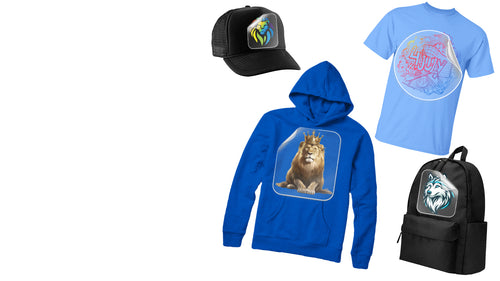
- Works on Almost Anything: DTF prints beautifully on a huge range of materials. We're talking cotton, polyester, blends, and even tricky items like hats and bags.
- Vibrant, Full-Color Graphics: Unlike some older methods, DTF is perfect for creating complex, photo-realistic images with unlimited colors and smooth gradients.
- Awesome Feel and Durability: The finished transfers are lightweight, flexible, and soft. It gives the garment a premium feel that holds up through dozens and dozens of washes.
Everyone Wants Custom Stuff
The demand for personalized gear is exploding. The global market for DTF printing was valued at a massive USD 2.72 billion in 2024 and is only expected to keep climbing. This trend shows a huge appetite for unique, custom-made apparel, and local providers are in the perfect spot to meet that demand with fast turnarounds. You can dive deeper into the DTF market's rapid expansion to see how it's shaking up local business.
Working with a local partner like Lion DTF gives you professional-grade quality with the convenience of a neighborhood shop. You can stretch your budget and streamline your whole process with tools like our Auto-build gang sheet builder, which makes arranging a bunch of designs on one sheet super easy and cost-effective. It's this blend of cutting-edge tech and local service that empowers creators and small businesses to pump out high-quality custom apparel without the headache.
How to Vet Local DTF Transfer Printers
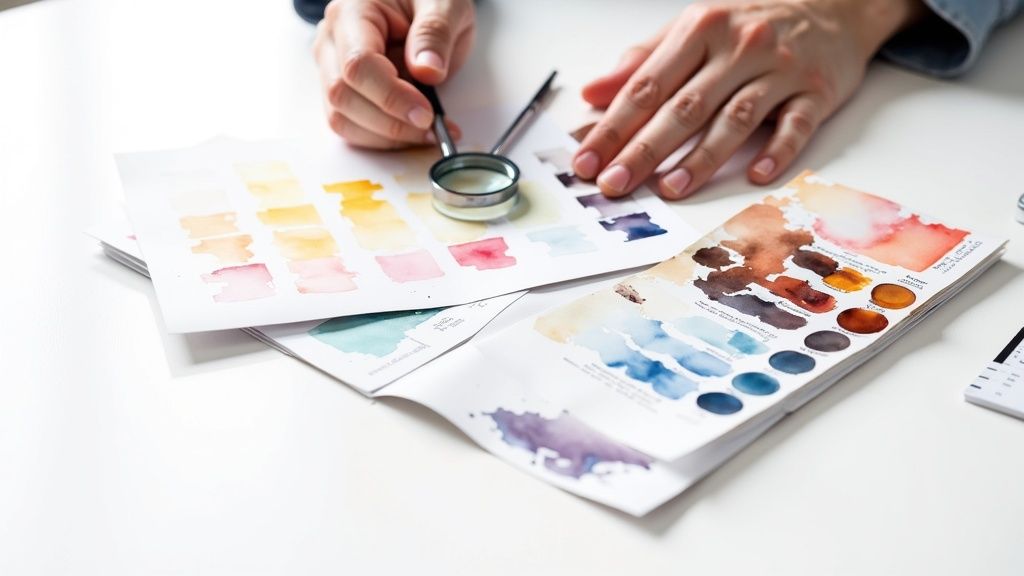
Googling "custom dtf transfers near me" is the easy part. The real work starts when you have to figure out which local printer can deliver professional-grade results every single time. Let's be honest—not all DTF transfers are created equal. The quality of a printer's equipment, materials, and process directly impacts how vibrant and durable your final product will be.
To avoid costly mistakes and frustrating reprints, you need a solid plan for vetting potential partners. This goes way beyond just comparing prices. It’s about asking the right questions to understand exactly what you’re getting. Any trustworthy provider will be transparent about their operation and more than happy to prove the quality of their work.
Digging Into the Technical Details
When you first connect with a potential printer, it's time to get specific about their setup. The quality of their transfers is directly tied to the tools they use. Don't be shy about asking technical questions—a professional shop will have these answers on deck.
Here’s what you absolutely need to ask:
- What type of printer and inks do you use? You're listening for commercial-grade machines and premium, certified inks. This is what gives you vibrant colors and excellent wash resistance.
- What kind of film and adhesive powder are you using? High-quality film ensures consistent ink absorption, and the right adhesive powder is crucial for making sure the transfer actually sticks to the garment for the long haul.
- How do you handle color matching? Ask if they use color profiles (like an ICC profile) to ensure the colors on your screen translate accurately to the physical print. Inaccurate color is one of the most common and frustrating pitfalls in this business.
A great local DTF provider is more than a supplier; they're a partner in your creative process. Their investment in quality equipment and materials is an investment in your brand's success.
From Samples to Full Orders
Never, ever commit to a big order without seeing the product with your own eyes. The single most important step in vetting a printer is to get your hands on a sample pack. This is your chance to physically evaluate their work before you spend a dime on your own designs.
Once those samples arrive, put them through the wringer.
Feel the texture. Is it soft and flexible, or does it have that thick, plastic-y feel? Press one onto a scrap piece of fabric and give it a good stretch. Does it crack or peel when you pull the material? Finally, throw it in the wash a few times to see how it holds up.
This hands-on test tells you everything you need to know about the durability and real-world performance of their transfers. It's the ultimate quality check.
Once you’re happy with what you see, you can place your first order with confidence. For the best bang for your buck, use a tool like our Auto-build gang sheet builder to fit multiple designs onto a single sheet. This drastically reduces your cost per print and makes even small runs incredibly affordable.
To make things easier, here's a quick checklist you can use when talking to a potential new DTF supplier.
Vetting Checklist for Local DTF Providers
| Category | Key Questions to Ask | What to Look For |
|---|---|---|
| Equipment & Materials | What printer, inks, film, and powder do you use? | Commercial-grade equipment, certified inks, and transparency about their materials. Vague answers are a red flag. |
| Quality Control | Can I get a sample pack? How do you ensure color accuracy? | A willingness to provide samples. They should mention using ICC profiles or a color management system. |
| Wash Durability | How many washes are your transfers rated for? Can you provide test results? | A specific number (e.g., 50+ washes) and confidence in their product's longevity. Bonus points for in-house testing data. |
| Turnaround & Fulfillment | What is your standard turnaround time? Do you offer local pickup or rush options? | Clear, reliable timelines. Look for same-day or next-day options if speed is important. Easy pickup is a major plus for local shops. |
| File & Ordering Process | What file types do you accept? Do you have an online ordering portal or gang sheet builder? | Support for high-resolution PNGs (300 DPI) with transparent backgrounds. A user-friendly online system simplifies everything, and an Auto-build gang sheet builder is a huge plus for ease of use and cost-effectiveness. |
| Support & Expertise | Is there someone I can talk to if I have a technical question or an issue with my order? | Direct access to knowledgeable staff. You want a partner who can help you troubleshoot, not just a faceless ordering system. |
This checklist covers the critical areas that separate an average printer from a great one. A reliable partner will have solid answers for every one of these questions, giving you the confidence you need to move forward.
DTF Printing vs. Traditional Methods
For ages, screen printing was the king of custom apparel. There was no other game in town. But if you’ve ever been stuck dealing with its limitations, you know it can be a slow, messy, and surprisingly expensive process, especially if you're not ordering a massive batch of simple, one-color designs.
This is exactly why so many creators and brands are ditching the old ways and embracing modern DTF technology.
The biggest difference boils down to setup and complexity. Screen printing demands a separate, physical screen for every single color in your design. Got a cool, photorealistic graphic with a dozen colors and subtle gradients? That means a dozen different screens, a ton of setup time, and a bill that reflects all that labor. It just doesn't make sense for small runs or one-off jobs.
DTF printing completely sidesteps that entire bottleneck. Your designs are printed digitally onto a special transfer film in one clean pass. This process captures an unlimited spectrum of colors, tiny details, and smooth gradients without ever needing a screen. That efficiency is a game-changer for anyone who needs flexibility and creative freedom.
Speed and Versatility Wins
Direct-to-film isn't just a little faster; it fundamentally changes the workflow. You can switch between complex, full-color designs in minutes, completely cutting out the hours of prep, screen burning, and cleanup that screen printing requires. This makes it the perfect match for the on-demand, small-batch orders that define the modern custom apparel market.
And that advantage goes way beyond just speed. Let's talk about fabric compatibility. Screen printing can get tricky with synthetics like polyester or certain blends, often requiring special inks and additives. DTF transfers, on the other hand, adhere beautifully to a massive range of materials.
- Cotton & Blends: You get that classic soft, flexible feel on all your standard cotton and poly-cotton tees and hoodies.
- Polyester: DTF delivers incredible vibrancy and durability on performance wear and athletic apparel.
- Specialty Fabrics: It even works like a charm on tougher materials like denim, canvas, and nylon.
This versatility means you can use one single transfer type for almost your entire product line, from t-shirts and hoodies to tote bags and hats.
By getting rid of the color-by-color screen setup, DTF empowers you to print what you want, when you want it, without getting penalized for creativity. Suddenly, full-color, highly detailed designs are just as easy and affordable to produce as a simple one-color logo.
The Clear Choice for Modern Creators
Another huge win for DTF is cost-effectiveness, particularly when you're working with multiple designs. With screen printing, printing five different graphics means five separate, costly setups. With DTF, you can throw all five of those designs onto a single transfer sheet.
Our Auto-build gang sheet builder makes this ridiculously easy, letting you arrange multiple images to maximize every last square inch of film. This dramatically slashes your cost per print.
Finally, DTF is simply a more sustainable choice. It uses far less water and produces significantly less ink waste than traditional screen printing, which is notorious for its heavy use of chemicals and extensive screen washing.
For a deeper dive into how these two methods really stack up, check out our detailed guide on DTF vs. screen print transfers. It's the perfect resource for figuring out which method is the right fit for you.
Preparing Your Files and Placing an Order
So, you've found a great local provider for your custom DTF transfers. Now comes the fun part: turning your digital vision into a physical, press-ready transfer. The final quality of your print is almost entirely dependent on the quality of the file you send over. A clean, properly prepared file is the secret to getting a design that looks exactly how you imagined it, with no frustrating surprises.
The single most important rule? Resolution. Your artwork absolutely must be a minimum of 300 DPI (dots per inch). This is the industry standard for a reason—it guarantees your design will be sharp and crisp, not blurry or pixelated when it's printed. Think of it like a low-quality photo; if it looks blocky and unprofessional on screen, it's going to look even worse on a t-shirt.
Setting Up Your Artwork for Success
Beyond resolution, there are a couple of other things to nail down: the file format and the background. For DTF printing, you have to submit your design with a transparent background. If you leave a white or colored background in the file, it will get printed right along with your design, which can totally ruin the look on the final garment.
This is why choosing the right file format is crucial. Your best options are:
- PNG: This is the go-to format for most people. It supports high resolution and, most importantly, transparency.
- TIFF: Another fantastic option that keeps your image quality high and handles transparency perfectly.
- Vector (AI, EPS, SVG): While you might not upload these directly, vector files are amazing because they can be scaled to any size without losing quality and then exported as a high-resolution PNG.
Stay away from JPEGs. They don't support transparency and their compression can mess with your image quality. If you're feeling a bit stuck on the design side, our guide on how to create a DTF gang sheet in Canva is a lifesaver.
Maximize Your Value with a Gang Sheet Builder
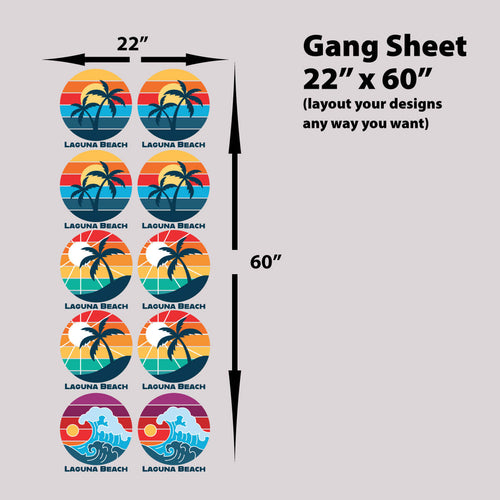
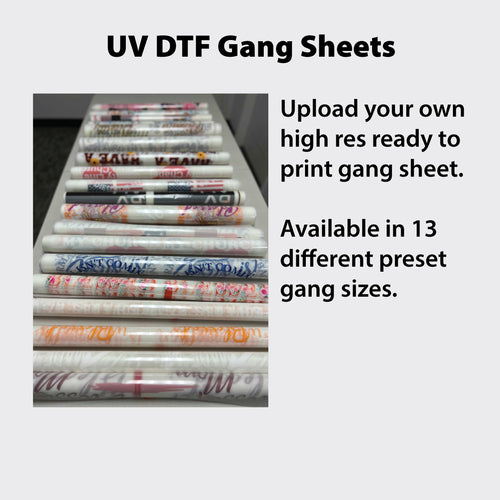
Here’s a pro tip that will make your budget go way further. Instead of ordering transfers one by one, the smartest and most cost-effective way to do it is with a gang sheet. This just means you arrange a bunch of different designs onto one big sheet of transfer film. This process, often called "nesting," brings your cost-per-image way, way down.
And the best part? You don’t need to be a graphic design wizard to pull it off.
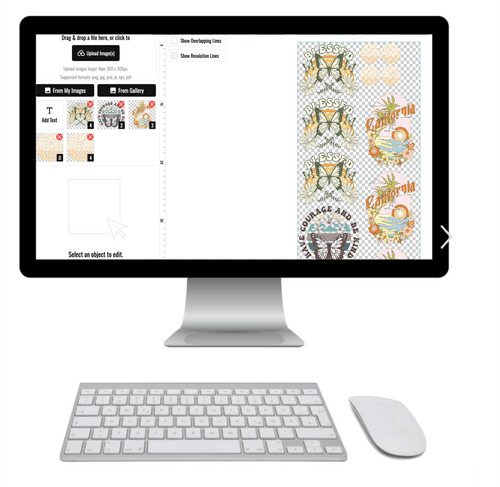
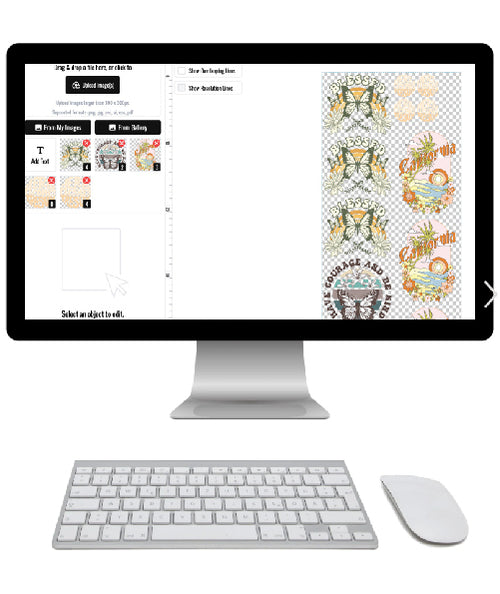
Our online Auto-build gang sheet builder makes this whole process incredibly simple. You can upload all your different designs, resize them on the fly, and arrange them on a digital canvas to squeeze every last bit of value out of the space.
This tool is an absolute game-changer, especially for small businesses and creators. Let's say you need 10 big logos for the front of a shirt, 15 smaller ones for the left chest, and 20 little sleeve designs. Instead of placing three different orders, you can fit them all onto one or two gang sheets and only pay for the film you actually use. It’s the most efficient way to get professional-quality custom DTF transfers, even if you're just starting out with small, multi-design runs.
Applying Your Custom DTF Transfers
Alright, your custom DTF transfers are in hand. Now for the best part—bringing your designs to life on fabric. Nailing a flawless, pro-level application is all about precision. Get the technique right, and you'll create products that look and feel like they belong on a high-end retail rack.
The key to a perfect press is dialing in your heat press settings. Temperature, pressure, and time are the three pillars of a durable bond, and these can change a bit depending on the fabric you're working with. For most cotton and poly-blend garments, a solid starting point is a temperature between 240-280°F with medium, even pressure for about 10 seconds.
This visual guide breaks down the simple workflow, from finalizing your digital design to placing your order. It's a great little roadmap showing how easy it is to prep your files for printing.
The process is refreshingly straightforward: design your art, arrange it efficiently on a sheet using a tool like our Auto-build gang sheet builder for ease of use and cost effectiveness, and upload it to get printed.
Hot Peel vs. Cold Peel
One of the biggest factors in the final look and feel of your transfer comes down to the peeling method. DTF transfers are typically either "hot peel" or "cold peel," and knowing the difference is crucial.
- Hot Peel: This means you peel the film away immediately after the heat press opens, while everything is still hot. It's fast and efficient, usually leaving a softer, more matte finish that melts right into the fabric.
- Cold Peel: With this technique, you have to wait for the garment and transfer to cool down completely before you pull off the film. Cold peels often produce a glossier, slightly thicker finish.
Here at Lion DTF, we've gone all-in on premium hot-peel transfers because they deliver that amazing soft-hand feel our customers are always looking for. If you want to dive deeper, check out our guide on tips and tricks for beginners pressing DTF transfers to really master the process.
Pro Tips for a Perfect Press
Before you even think about laying down your transfer, always pre-press your garment for 5-7 seconds. This simple step is non-negotiable for professionals. Why? It zaps any hidden moisture and smooths out wrinkles, creating a perfectly flat and dry surface for the transfer to stick to.
A pre-press is the single best thing you can do to guarantee a strong, long-lasting bond. It ensures the adhesive melts directly into the fabric fibers, not into steam created by leftover moisture.
After the initial press and peel, a lot of pros will do a final "finishing press" for another 5-10 seconds. Just throw a Teflon sheet or some parchment paper over the design for protection. This little extra step helps lock in the design, boosting its durability and improving the overall feel. Stick to these steps, and you'll be pressing your custom DTF transfers with confidence every single time.
How DTF Transfers Are Changing the Local Custom Apparel Game
The custom apparel world is going through a massive shake-up, and honestly, DTF technology is the reason why. This is way more than just a new way to print t-shirts; it’s completely leveling the playing field. For the first time, small, local print shops can go head-to-head with the huge national operations. The game has totally changed.
A huge part of this shift is the insane demand for personalized gear. As more people launch online stores and side hustles, they need a way to get high-quality prints without ordering thousands of pieces. DTF makes that possible.
It's All About Empowering Local Entrepreneurs
Compared to the old-school screen printing setups that need a ton of space and cash, getting into DTF printing is much easier. This has opened the door for local entrepreneurs to start their own print shops, offering pro-level quality that used to be out of reach. Suddenly, finding top-tier custom dtf transfers near me isn't a headache anymore—it’s a reality.
And sticking with a local provider has some serious perks:
- Insanely Fast Turnarounds: Your local shop can offer same-day or next-day pickup. Good luck getting that kind of speed from a giant online printer shipping from across the country.
- Real Relationships: When you work with someone in your neighborhood, you build trust. You can actually talk to a person who knows your projects and can give you direct support.
- Investing in Your Community: Spending your money with a local printer means you're putting it right back into your own community’s economy. It’s a win-win.
Bridging Digital Tools with Local Service
Here’s the best part: you don't have to give up the convenience of online tools to get that local service. The smartest shops are blending powerful online builders with their neighborhood print services, giving you a seamless experience. For example, our Auto-build gang sheet builder lets you arrange a bunch of different designs on a single sheet right from your computer. You get to maximize every inch of film, which makes your prints incredibly cost-effective.
It's that perfect mix of easy online ordering with the speed and reliability you only get from a local partner. This combination is what’s fueling so much growth in the market. In fact, the DTF film market segment alone is projected to hit around USD 800 million by 2033. That growth is being driven by small businesses using this tech to meet the demand for custom everything. If you want to see the full picture, you can explore more insights about the DTF film market. This trend is cementing local DTF providers as the go-to partners for modern creators and brands.
Answering Your Top Questions About DTF Transfers
When you're diving into the world of custom apparel, a few questions always pop up. You’re looking for quality, durability, and a great final product. If you've been searching for "custom DTF transfers near me," you're probably wondering what to expect. Let's clear up some of the most common questions we hear every day.
How Long Do DTF Transfers Last?
This is the big one, right? Longevity is everything. A professionally printed and applied DTF transfer should easily handle 50-100+ washes without cracking, peeling, or fading.
The two biggest factors here are the quality of the materials—the ink and the adhesive powder—and how well the transfer is pressed. A solid application with the right heat press settings creates a permanent bond that’s built to last.
Of course, proper care helps push that lifespan even further. A simple wash routine will keep your prints looking sharp.
- Turn it inside out: Always wash your garments inside out.
- Keep it cool: Use a cold, gentle cycle in the machine.
- Skip the harsh stuff: Stay away from bleach and fabric softeners.
- Dry on low: Hang drying is best, but a tumble dry on the lowest heat setting works too.
Following these simple washing instructions can make a huge difference, keeping your custom DTF prints looking as good as the day they were pressed.
This kind of durability means that whether you're making merch for your brand or outfitting a local sports team, you can trust the final product to hold up. It's a reliable, professional solution. And when you use our Auto-build gang sheet builder, you can pack multiple designs onto one sheet, getting that same premium quality in the most cost-effective way possible.
Ready to create vibrant, durable custom apparel without the hassle? The team at Lion DTF Transfers is here to deliver professional results with fast turnarounds and quality you can count on.
Build your custom gang sheet online at https://liondtf.com