
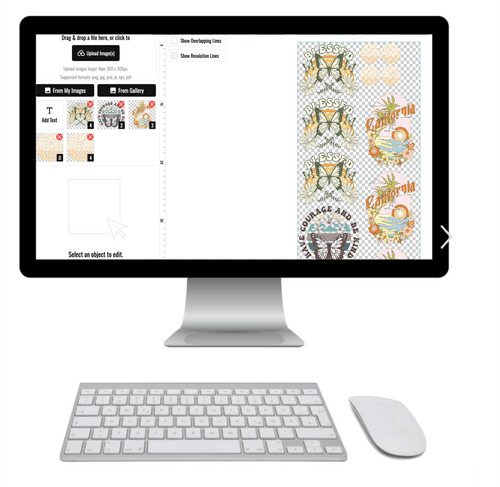
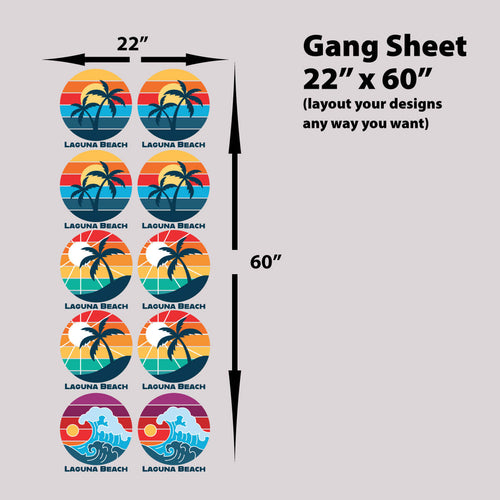
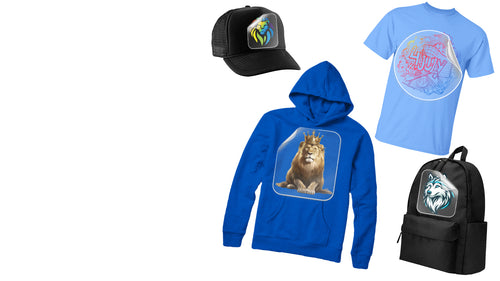
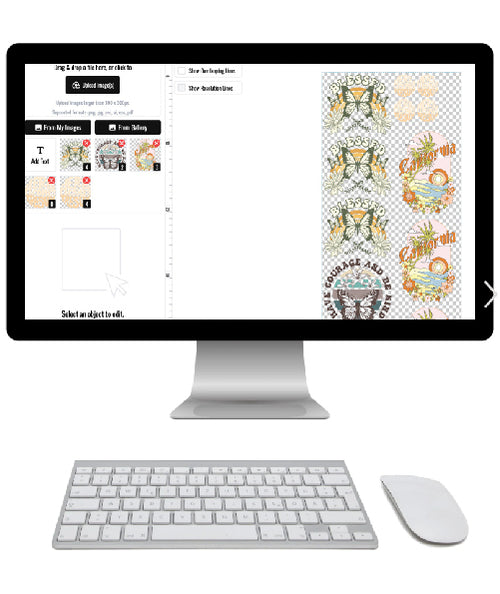
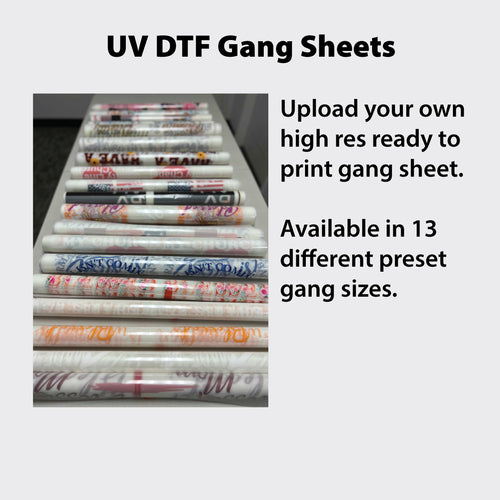
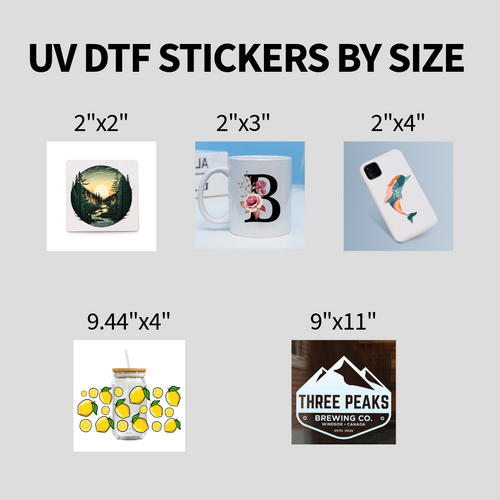
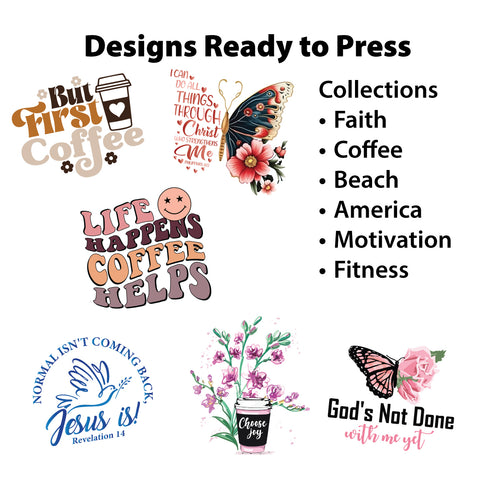


Two weeks before the 100th day, the teacher has a classroom full of kids asking what to wear, a parent group wants matching shirts, and nobody has approved the logo yet. That's the moment when the 100 days of school logo stops being a cute idea and starts affecting cost, print quality, and whether students want to wear the shirts. The best way to handle it is to pick one direction fast, then build it for shirts, DTF transfers, and gang sheets at the same time. I'd start with six workable routes, from milestone badges to QR-linked class memories, and I'd keep each one tied to shirt placement, colorways, and production reality. Lion DTF Transfers' Auto-build gang sheet builder helps keep multi-shirt orders cost-effective through efficient nesting, so the artwork can move from rough concept to a press-ready order without extra back-and-forth.
1. Milestone Number Badge with Celebratory Stars
A centered 100 with stars and confetti is the safest choice when a committee wants something clean, cheerful, and easy to approve. It reads fast on a shirt, holds up on a hoodie chest print, and keeps the number as the main mark instead of burying it in detail. The strongest version uses bold numerals, a simple burst around them, and enough open space that the print still reads well at youth size.
That layout also works well on a gang sheet. A symmetrical badge nests neatly, and if the school wants the same graphic on shirts, stickers, and banners, the master artwork can move across those uses without being rebuilt for each format. Treat school-branded marks like official marks, with attention to contrast, proportions, and legibility, and start from vector artwork so the file stays clean for apparel and promo printing.
Practical rule: test the badge at the smallest imprint size before production. Thin stars and narrow numerals can disappear on left-chest placements, sleeve prints, or small youth shirts even when the mockup looks fine on screen.
For a schoolwide order, keep the palette tight, usually two or three colors, then prepare separate files for light and dark garments. On dark shirts, a white underbase keeps the stars and number from sinking into the fabric. If the event date is tight, Lion DTF Transfers' Auto-build gang sheet builder is a practical way to place multiple class sizes or front-back versions on one sheet without wasting transfer space.
2. 100 Days Smarter Character Design
A character design gives the shirt more personality, especially for younger grades. An owl, a book, or a school mascot holding the number 100 feels playful without losing the milestone message. It also gives teachers something students can point to in class and in the hallway photo line, because kids usually respond faster to a face than to plain typography.
Keep the character readable at transfer size
Character art fails when it gets overworked. Too many pencils, tiny sparkles, and thin outlines can disappear on DTF, especially when the design is scaled down for a youth tee or a pocket-sized print. I'd simplify the illustration, keep the outline strong, and preserve one clear focal point, usually the face or the number itself. Test the character in grayscale and as a one-color reversed version so it still reads when color is removed.
That same discipline helps with school branding. If the art depends on color alone to carry the joke or the message, some students and families will miss it. A clean fallback also makes the design easier to place on dark garments, lower-cost runs, or smaller transfer areas.
A character logo works best when it still makes sense after simplification. If the owl loses its glasses or the book loses its outline, the design is probably too detailed for apparel.
For production, I'd send the art as an editable vector file and keep a transparent-background version ready for different garment colors. On the gang sheet, group the character and text variations together by size so the printer can place them without extra gaps. Lion DTF Transfers' Auto-build gang sheet builder makes it easier to combine those versions on one sheet, which helps when one grade wants a mascot version and another wants a plain school-name version.
3. Timeline Progress Bar Achievement Design
A progress bar design is the most literal way to show the journey to 100. It works well for tech-minded schools, upper elementary groups, or any committee that wants something more modern than stars and confetti. The bar can be horizontal across a hoodie back or circular on a front print, and the filled segments give the whole shirt a sense of movement and completion.
Make the bar do real visual work
This style only succeeds when the segment structure stays legible. If the bar has too many tiny marks, it can become noise at shirt size, especially on transfers that will be viewed from a distance. I'd keep the color contrast strong, use milestone markers only where they help the eye, and choose a garment color that supports the bar instead of competing with it. When the shirt is for a smaller print run, it's smarter to simplify the segment count visually than to force a hyper-detailed progress chart into a small chest print.
That advice lines up with how schools already use the 100th day in math. Starfall's teacher guide connects the day to counting to 100 by ones and tens, comparing counting methods, and using a hundred chart and 100 objects to make the number concrete. Starfall's Day 100 math guide A progress bar can echo that idea on the shirt, because it visually suggests sequence, grouping, and completion without needing a long explanation.
Production note: if the shirt needs both a front badge and a large back graphic, build both pieces on one gang sheet so the print run stays organized and the art stays consistent.
A district order benefits from a clean proof showing placement, dimensions, and garment color. That's especially true when different sizes are involved, because the back print may need a different visual balance than the youth front print. Lion DTF Transfers' Auto-build gang sheet builder is useful here because it can nest front and back variations together without turning the order into a juggling act.
4. Retro 100 Typography with Vintage School Color Palette
Retro type gives the 100th day a familiar school-day feel that parents and teachers usually recognize right away. Bold letters, vintage school colors, and a little texture can make the design read like spirit wear instead of a classroom craft. That works when the shirt needs to feel intentional on the first pass and still hold up on press.
Nostalgia has to survive printing
Retro designs are easy to overdo. Too many effects, too many colors, or too much distressing can blur on a transfer and flatten the charm. I'd keep the palette restrained, use matte-looking finishes rather than glossy styling, and make sure the type stays readable from across a room. The cleanest version should still press well on a hoodie or a dark tee.
Legibility matters more than decoration here. If the lettering depends on a thin outline or a faded fill, it may not hold up at the smallest intended size. A one-color fallback is smart too, because retro art often needs a simplified version for low-detail placements.
Keep the distressing light, and test the type at final size before approving the art.
Colorway checks should happen on real garment colors, not just on a white screen. Burgundy and gold can look right in proofing and still shift once they land on navy, heather gray, or black shirts. The committee should review a few versions against the actual blanks, since shirt color, ink contrast, and the transfer all affect the result.
Lion DTF Transfers' Auto-build gang sheet builder helps keep those options organized, so sample variants do not turn into separate, inefficient orders. It also makes it easier to group the approved colorways on one sheet and keep the press run tidy.
5. Interactive QR Code Integration Design
A QR-linked logo makes sense when a school wants the shirt to do more than look good in a group photo. The number 100 can sit beside a code that links to class memories, a video, a class website, or a donation page, and the design can still feel intentional if the code is built into the artwork instead of slapped on as an afterthought. This is a strong choice for parent groups that want the shirt to become a keepsake with a digital layer.
Make the code functional before it gets stylish
A QR code only matters if it scans quickly and lands on a page that works on a phone. I'd keep the URL short, test the scan before production, and make sure the landing page is mobile-friendly since that's where users will likely open it. Add a short line such as “Scan for class memories!” so families know what to do when they see the shirt.
The best place to start for artwork placement is a clean Illustrator workflow. Lion DTF Transfers' guide on embedding images in Illustrator explains a practical design workflow for preparing files, which is useful when a QR element needs to sit correctly inside the larger composition. Embed image in Illustrator That matters because QR art needs enough contrast and enough quiet space around the code to remain usable after printing and pressing.
If the QR code has to fight a busy background, it's probably too decorative. Scanability should win over style every time.
This style works best when the school is comfortable with a hybrid object, part apparel graphic, part digital gateway. It can link to class photos, a video message from teachers, or a memory wall, which gives the shirt a life beyond the one-day event. Lion DTF Transfers' Auto-build gang sheet builder is handy for making a few QR variants tied to different class URLs without creating a separate order for each version.
6. Collaborative Class Collage Design Format
A class-collage logo turns the shirt into a keepsake, not just a celebration graphic. Student names, initials, or small icons can radiate around the 100, or the number can become the trunk of a class tree with names as leaves. That kind of layout gets a strong response because every student can find a personal part of the design.
Names are where production mistakes show up fast
This shirt can look simple from across the room and still fail in production. Misspelled names, text that is too small, or a crowded composition can wipe out the value of the piece. I'd collect the verified class roster early, lock spelling before layout starts, and keep the text large enough to read on the smallest shirt in the order. A spreadsheet-based workflow helps when the design has several versions, because different teachers or grade levels often want different name combinations.
The practical payoff is flexibility. One room can get names grouped by teacher, another can use initials, and a third can use icons if the list is too long for the print area. Readable size and clear contrast still matter here, because a sentimental idea does not help if the names are hard to see on fabric.
For a print shop, the Auto-build gang sheet builder earns its place here. Lion DTF Transfers' DTF gang sheets workflow can organize multiple name variations efficiently, which helps when the same concept has to become several individualized shirts without turning into manual layout work.
Personalized shirts fail when the names feel squeezed in as an afterthought. The layout has to respect the text first, the decoration second.
That matters most on elementary keepsakes, grade transition shirts, and class community projects. These orders need the roster checked before the art is finalized, because a long name list or a tight print area leaves less room to fix mistakes later. I also like to proof one or two sample shirts before full production when the roster is long or the layout is packed.
7. Augmented Reality and 3D Effect Design with Dimensional Graphics
A dimensional logo gives the 100th day a more futuristic feel. Shadows, layered shapes, and strong highlights can make the number look like it's lifting off the fabric, which is why this direction appeals to tech-forward schools and older students who don't want the shirt to look too childish. It's also the easiest style to admire on a mockup and the easiest to ruin if the color separation is sloppy.
Depth needs clean registration
Three-dimensional art depends on alignment. If the layers are off, the illusion collapses, and the shirt looks messy instead of advanced. I'd only recommend this direction when the designer understands color separation, registration marks, and how the garment color changes the way the depth reads. High-contrast combinations work best because the shadow and highlight need enough separation to read from a distance.
Lion DTF Transfers' UV DTF guidance is a useful reference for thinking about sharp detail and layer control in decorated graphics. UV DTF transfers While a shirt transfer and a sticker are different products, the production logic is similar enough to make the point clear, fine detail needs precision, and the file has to be prepared with care. For a 3D-style 100 days of school logo, that means no guesswork on layers and no surprise changes at approval time.
A sample press is essential here. Dimensional art can look fantastic in a render and awkward on fabric if the shadows are too heavy or the garment color undercuts the effect. I'd also avoid putting this style on a shirt that needs a tiny left-chest placement, because the illusion needs room to breathe.
When the design depends on depth, buy the sample before you buy the full run.
Lion DTF Transfers' Auto-build gang sheet builder helps the committee compare a few dimensional variations in one order, which makes it easier to choose the version that holds up on cloth instead of only on screen.
100 Days Logo, 7-Design Comparison
| Design | 🔄 Implementation Complexity | ⚡ Resource Requirements | ⭐ Effectiveness / Quality | 📊 Expected Outcomes / Impact | 💡 Ideal Use Cases & Tips |
|---|---|---|---|---|---|
| Milestone Number Badge with Celebratory Stars | Low, simple, centered composition, scalable | Low, few colors, minimal design time; optimized gang sheets reduce waste | ⭐⭐⭐⭐, high visual clarity and recognizability | Clear milestone signaling; broad appeal; low per-unit cost | Use 2–3 school colors; white underbase for dark garments; upload high‑res for Auto-build |
| 100 Days Smarter Character Design | Medium–High, detailed character work and expressions | High, skilled illustrator, multi-color DTF, color‑matching consultation | ⭐⭐⭐⭐⭐, strong emotional connection and reuse potential | High engagement and shareability; higher production cost per unit | Vectorize artwork; request color matching; simplify for small sizes |
| Timeline Progress Bar Achievement Design | Medium, many segments and registration precision | Medium, multi-color gradients, possible large print area | ⭐⭐⭐⭐, communicates journey visually and memorably | Edu‑narrative keepsake; conversation starter; needs precise print control | Simplify segment count for small runs; specify Pantone; verify contrast on garment |
| Retro 100 Typography with Vintage Palette | Low–Medium, typography and vintage effects | Low, limited color count, simpler registration, cost‑efficient | ⭐⭐⭐⭐, nostalgic appeal, strong legibility across sizes | Multi‑generational appeal; collectible look; economical to produce | Limit palette to 3–4 colors; use matte finishes; research authentic school colors |
| Interactive QR Code Integration Design | Medium, must integrate functional QR and design harmoniously | Low–Medium, print precision for scanability; ongoing digital content maintenance | ⭐⭐⭐⭐, merges physical + digital; measurable via analytics | Drives engagement, sharing, and tracked visits; value depends on maintained links | Use URL shortener; test scans at production size; ensure mobile landing pages and CTA |
| Collaborative Class Collage Design Format | High, personalization & many variants per order | High, data management, longer prep and higher per-unit cost | ⭐⭐⭐⭐⭐, very high sentimental/kepsake value | Strong student buy‑in; unique keepsakes; extended lead time and QA needs | Collect verified roster early; use ≥8–12pt for names; provide spreadsheet for Auto-build |
| Augmented Reality / 3D Effect Design with Dimensional Graphics | High, complex layering, registration critical | High, professional designer, precise color separation, possible special inks | ⭐⭐⭐⭐, highly eye‑catching and modern when executed well | Differentiates merchandise; strong social media photography; risk of dating | Work with experienced designer; request physical sample; use high‑contrast color combos |
Choose One Direction and Build Your Gang Sheet
The best 100 days of school logo is the one that fits the wearer, the shirt size, and the available print area. A design that looks great on a mockup can still fail if the contrast is weak, the text is too small, or the garment color fights the artwork, so I'd check those pieces before anyone approves the run. On dark garments, plan for a white underbase when the art needs brightness and legibility. For name-based, QR-based, or dimensional designs, order one sample first because those are the styles most likely to reveal layout or scan issues only after pressing.
For school committees, the easiest path is to keep the artwork simple enough to reuse across shirts, transfers, banners, and digital posts. That's where Lion DTF Transfers' Auto-build gang sheet builder helps, because it lets you combine sizes, colorways, and front-back variations into one more efficient order. If the school needs personalization, the We Build a Gang Sheet for You service is a practical way to keep the layout organized before production starts.
The final check should be straightforward. Confirm the event date, confirm the roster, confirm the garment colors, and confirm whether the shirt needs one schoolwide graphic or several classroom versions. Then upload the art, build the sheet, and lock the proof before the deadline starts working against you. For schools ready to move, go to liondtf.com, upload the artwork, start a gang sheet, or ask about the build service before the bulk order is approved.
Lion DTF Transfers can help turn a 100 days of school logo into ready-to-press DTF transfers, gang sheets, and school apparel files that are easier to organize for multiple sizes and shirt colors. If you're planning a classroom or schoolwide order, visit Lion DTF Transfers to upload artwork, build a gang sheet, or ask about the “We Build a Gang Sheet for You” service before you commit to a bulk run.