



The most popular advice about Valentines DTF transfers is also the least profitable: print a pile of bright red couple shirts, discount them aggressively, and hope they sell before February 14. That approach treats a major apparel occasion like a clearance event. A better strategy is to sell wearable designs, personalization, coordinated products, and tightly planned short runs that customers can use beyond one day.
Direct-to-film printing fits this opportunity because it supports detailed artwork, fast seasonal changes, and small-batch production without the setup burden associated with traditional screen printing. The margin, however, won't come from the transfer alone. It comes from choosing designs people want to wear, packing artwork efficiently, pressing consistently, and offering products that feel like gifts rather than disposable holiday props.
Revenue Potential of Valentines DTF Transfers Beyond Novelty Tees
Valentine's merchandise can support higher-value sales than novelty heart tees suggest. 43% of U.S. shoppers purchased clothing, shoes, or accessories for Valentine's Day, according to NRF-backed Valentine's shopping data. In one 2023 dataset, apparel represented 72% of Valentine's gifts, while RetailNext reported that apparel traffic rose 3.6% on February 14, 2024, even as overall U.S. traffic fell 1.6% versus the prior year. The opportunity is an apparel-buying window, not a minor add-on to candy and flowers.
That demand includes printed shirts, hoodies, totes, and accessories. A shop offering only low-priced couple shirts captures a narrow slice of it. Customers buy for partners, friends, family members, coworkers, and themselves, so a broader catalog can raise average order value without relying on discounts.
Stop designing for the trash bin
The weak seasonal model is easy to recognize: oversized hearts, generic couple slogans, limited garment colors, and no personalization. Once Valentine's Day passes, the product has little use, forcing the seller to compete on price and urgency.
Build garments customers will keep wearing. Small romantic embroidery-style marks rendered as DTF, refined typography, initials, custom names, pet references, friendship phrases, and muted graphics can work with jeans and neutral outerwear. The emotional connection stays seasonal, while the garment avoids looking like a costume.
Practical rule: Build Valentine's products around how the garment will be worn after the holiday, not only how it will photograph on February 14.
Why DTF suits the season
Direct-to-film printing is a relatively recent garment-decoration method. Its commercial development accelerated in the early 2000s, and the process became mainstream in the 2020s. A history of DTF transfers from Wunderlabel traces the method's roots to early digital-printing advances and notes that Kornit Digital, often associated with early industrial DTF systems, was founded in 2002.
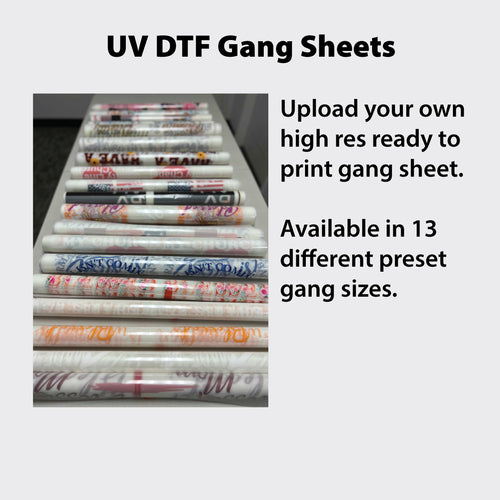
For a seasonal print shop, the practical advantage is flexibility. You can test a concept without committing to a large screen-printing setup, produce gradients and fine lettering, and change from romantic couple artwork to Galentine's or personalized designs without rebuilding the entire workflow. Efficient gang sheet planning can also keep small seasonal runs productive by grouping compatible artwork before pressing.
Build the holiday catalog with clear price and style tiers: a left-chest tee, a more substantial hoodie or loungewear set, and a personalized option with names or meaningful dates. The transfer is the decoration method. The offer is the product strategy.
2027 Design Trends and Sizing Strategies
Valentine's graphics are moving away from a single red-and-pink visual language. Styling built around one bold romantic element paired with neutrals, with burgundy, chocolate brown, blush, cream, black, and metallics appearing alongside traditional red and pink.
That shift gives print sellers room to create designs that feel like fashion rather than event merchandise. A cream hoodie with burgundy lettering, a chocolate-brown tee with a soft blush graphic, or a black sweatshirt with a restrained metallic accent can appeal to buyers who like the holiday but don't want loud theme wear.
Design for repeat wear
Minimalist line art works particularly well for left-chest placements and small accessories. A simple heart outline, two intertwined initials, a tiny bow, or a single flowing word can feel intentional when the artwork has clean spacing and a restrained color palette. Fine details still need enough separation to survive printing and pressing, so avoid reducing delicate artwork until the smallest elements remain clearly legible.
Typography offers another route. Use elegant scripts for names or short phrases, but pair them with a readable secondary typeface when the message matters. A design that looks beautiful in a product mockup can fail on fabric if the script is too thin, too tightly kerned, or crowded around a small personalization field.
Match the print area to the garment
Sizing shouldn't be an afterthought. A left-chest mark needs a different visual weight from a center-chest graphic, and an oversized streetwear tee can carry more artwork than a fitted lounge top. Prepare separate files or clearly defined size variants rather than scaling one design blindly across every blank.
- Left chest: Keep the composition compact and simple, with strong recognition at a glance.
- Center chest: Use balanced typography and enough negative space so the design doesn't feel like a promotional logo.
- Oversized tees and hoodies: Let the graphic occupy more visual space, but test its relationship with dropped shoulders and wider garment proportions.
- Fitted loungewear: Favor lighter compositions and placements that follow the garment's shape instead of creating a rigid block.
- Totes and accessories: Use bold silhouettes and simplified lettering, since fabric movement and viewing distance can reduce fine detail.
Offer colorways that work across more than one blank. A burgundy design on cream may also work on black with a changed underbase or accent, while blush and chocolate can create a softer alternative to saturated red. This approach lets you reuse artwork across tees, hoodies, totes, and coordinated sets without making every listing look identical.
Maximizing Margins with the Auto-Build Gang Sheet Builder
Seasonal DTF profitability often depends on how well you use the film, not just what you charge for the finished garment. A gang sheet consolidates multiple designs onto one sheet, reducing the wasted material and separate print handling that come with ordering every design individually. DTF Gang Sheet Builder guidance from DTFGO describes this consolidation as a way to improve efficiency, reduce waste, and lower printing costs.
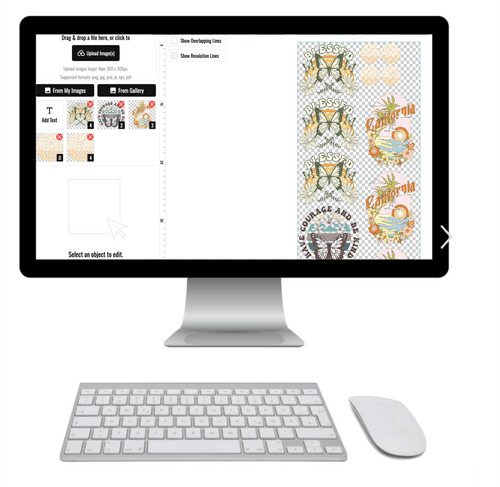
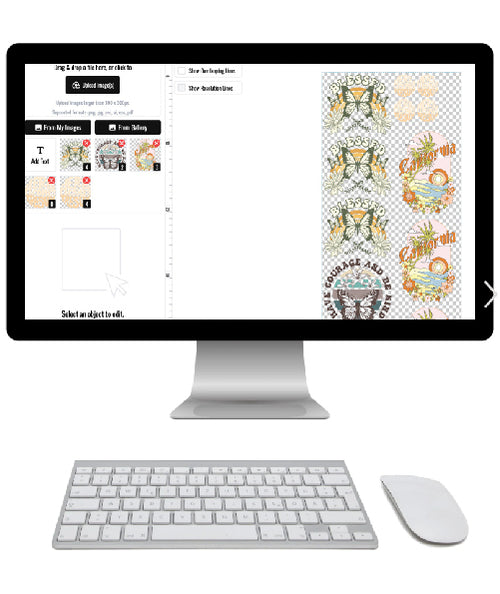
Our Auto-build gang sheet builder is useful because it removes much of the repetitive layout work. A standard workflow is straightforward:
- Upload mixed artwork. Add left-chest logos, center-chest graphics, sleeve marks, names, and small icons in the same project. Confirm transparent backgrounds, intended dimensions, and file quality before arranging anything.
- Review the automatic arrangement. The builder places designs into the available sheet area, helping you avoid the empty gaps that appear when someone manually drags artwork into position under time pressure.
- Inspect spacing and orientation. Automatic packing is a starting point, not permission to skip review. Check that irregular hearts, script flourishes, and close-cut details have enough separation for handling and cutting.
- Group by production need. Keep similar sizes or garment applications together when that makes pressing and fulfillment easier. A well-packed sheet should also make your cutting table faster, not merely reduce unused film.
- Approve the final layout. Verify every name, colorway, and size before ordering. Seasonal errors are expensive because there may not be enough time to replace a rushed batch.
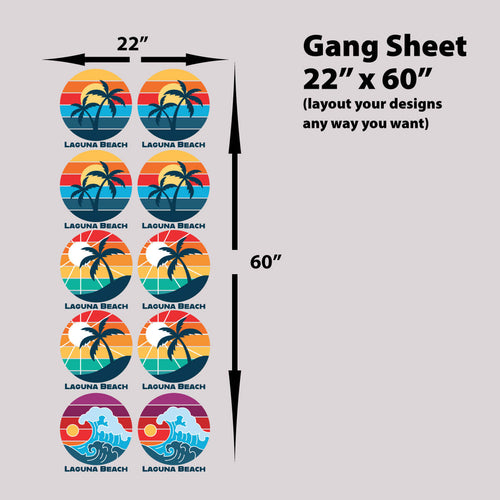
A common gang-sheet workflow uses a 22-inch width, with builders offering preset lengths from 2 feet to 20 feet. That fixed-width format makes packing discipline important. Several small Valentine icons may fit beside a large front graphic, but a few oversized designs can consume the available length quickly.
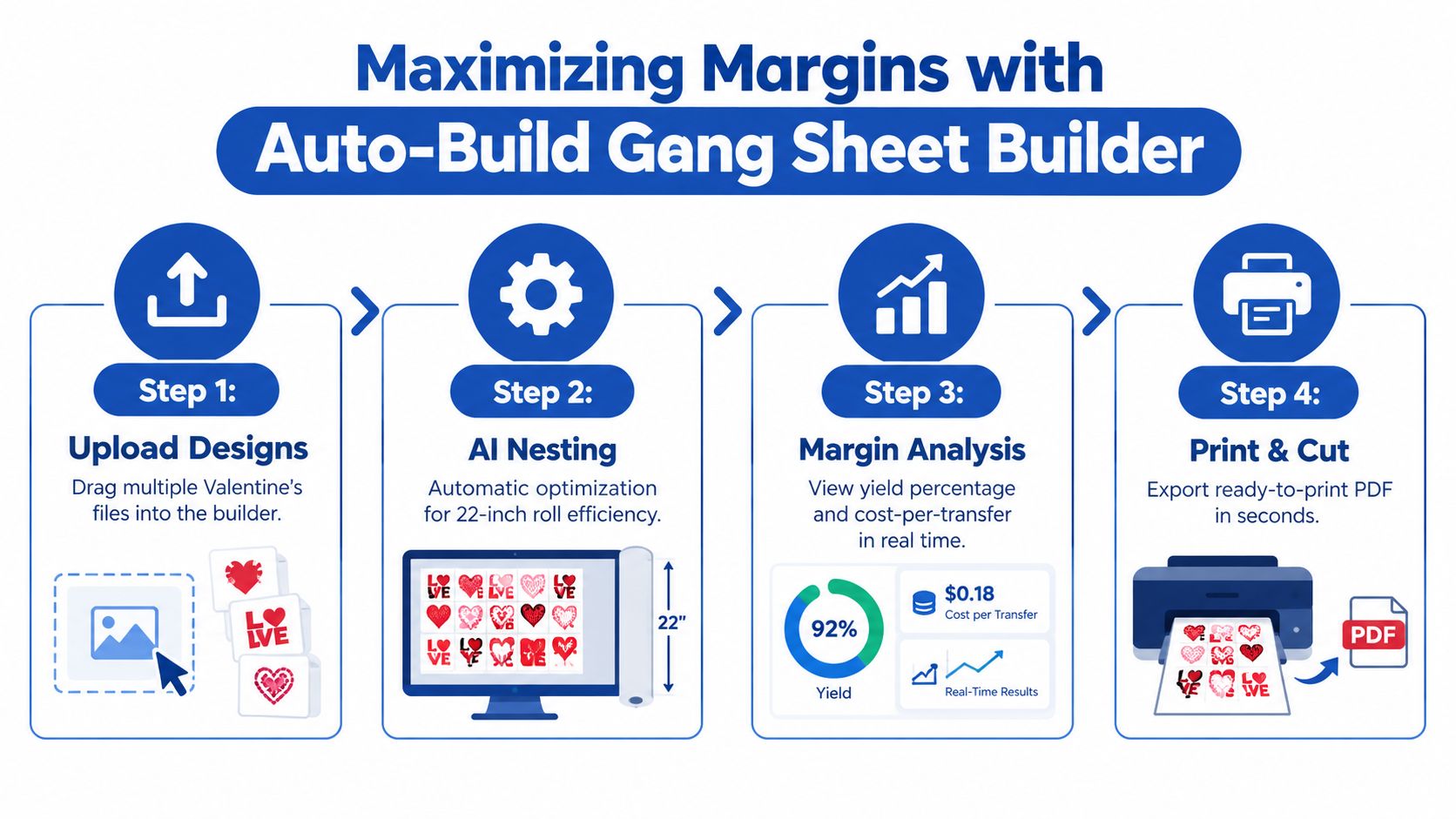
For a practical reference, the new auto-builder feature for DTF gang sheet creation shows why automated packing is more than a convenience. It protects operator time and helps you make better use of each purchased sheet.
Watch the process here before building your first seasonal layout:
The right question isn't only how many transfers fit. Ask whether the layout supports your actual order mix, keeps designs easy to identify, and reduces the handling time between printing and pressing. Ease of use and cost effectiveness work together when the builder gives you a dense layout that your team can still process accurately.
Dialing in Press Settings for Seasonal Fabrics
Seasonal margins disappear quickly when a transfer fails after pressing. DTF results depend on the interaction between the PET release film, printed image, and TPU adhesive powder. The film carries the design through curing and pressing. The adhesive must soften enough to bond with the garment, without remaining undercured or receiving excessive heat.
Published technical guidance places DTF pressing around 240 to 280°F, with medium-firm pressure and a short dwell time, according to WinnerJet's DTF transfer film guidance. Use that range as a starting window. The supplier's instructions, garment fiber content, press calibration, and film type can shift the correct settings. For the full temperature, pressure, and dwell-time chart, see these heat press settings for DTF transfers.
Test each fabric category before production
Press a sample on every materially different blank before running a seasonal batch. A lightweight poly-blend, brushed hoodie, cotton tee, and plush lounge garment can respond differently to the same heat and pressure. Log temperature, dwell time, pressure, peel behavior, and final appearance. That record gives the operator a repeatable setup instead of forcing them to rely on memory during a rush.
Under-pressing can leave the adhesive under-bonded. Excessive heat may affect edge fidelity, wash resistance, or thin lettering. Fine scripts deserve their own test because softened adhesive and excess pressure can blur small edges even when a large heart still looks acceptable.
Adjust for garment thickness
Thick fleece may require a different pressure response from a lightweight top. Start inside the supplier's stated window, use medium-firm pressure, and change one variable at a time. Changing temperature, dwell, and pressure together hides the cause of a failed test and makes the final production setting harder to repeat.
Follow the specified peel method, whether hot or cold. A hot peel may save handling time, but it is unsuitable when the transfer calls for a cold peel. If recommended by the supplier, a brief cover press can seal the surface and edges. Excessive reheating can damage fine detail or create unwanted shine.
Customer instructions also affect finished quality. Tell buyers to turn decorated garments inside out, use a suitable wash cycle, and avoid direct high heat on the print. Good durability starts at the press and continues with proper garment care.
Press-room note: Test the smallest text first on any seasonal design with fine script. Large hearts can conceal a process problem that tiny lettering exposes immediately.
High-Converting Use Cases Beyond the Couple Shirt
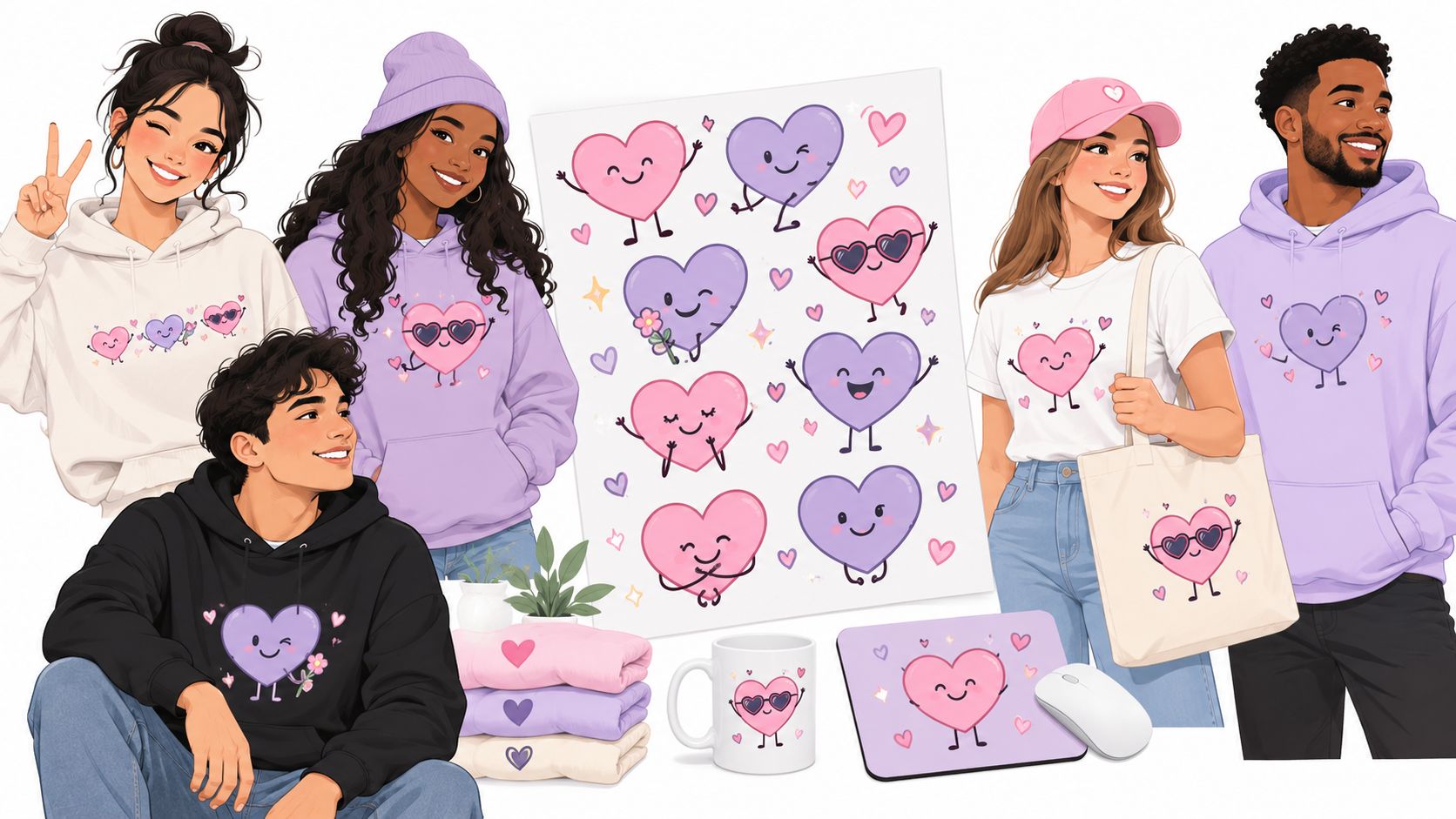
Matching couple shirts have a place in a Valentine's catalog, but they shouldn't define the catalog. The more durable opportunity is paired personalization, where the customer pays for a relationship, memory, or coordinated set rather than two generic graphics.
Independent reports an average shopper budget of $199.78 and identifies matching hoodies, custom-name tees, and loungewear sets as strong Valentine's products. The same source reports that 1 in 5 buyers pays at least 20% more for a custom product, while memory-based and friendship-driven designs perform well for Galentine's and non-couple buyers.
Build offers around relationships
A personalized product justifies more than a generic design when the customization feels meaningful. A name alone may be enough for a simple tee, but a shared phrase, pet reference, anniversary memory, or friendship expression gives the buyer a stronger reason to choose a custom option.
Consider these catalog directions:
- Galantine's sets: Offer coordinated tops with different names or roles, using one shared visual system rather than identical garments.
- Memory-based apparel: Turn a meaningful phrase, nickname, or private joke into a restrained design that friends can wear together.
- Custom-name loungewear: Pair a hoodie and matching lounge item with names placed consistently across the set.
- Pet-themed gifts: Use a simplified pet portrait, name, or heart motif for buyers whose Valentine's celebration centers on an animal.
- Personalized totes: Give customers a lower-commitment accessory that still carries the same artwork language as the apparel collection.
- Everyday romantic hoodies: Use burgundy, cream, black, or chocolate bases for designs that remain useful after the holiday.
Bundles increase the perceived value because the buyer receives a coordinated gift rather than a single decorated blank. They also make your production easier when the same artwork and color system repeat across several products.
Price the meaning, not just the ink
The labor in a custom order includes file preparation, proofing, name accuracy, layout, pressing, and fulfillment. A product page that treats personalization as a free extra can turn a time-consuming order into a margin problem. Define what the buyer can customize, set a clear character limit, and show a proofing process that prevents avoidable errors.
Couple products can still sell, but they should sit beside friendship and self-purchase options. That broader mix protects you from relying on one relationship type and gives customers more ways to celebrate. The design language can stay coherent while the emotional use case changes.
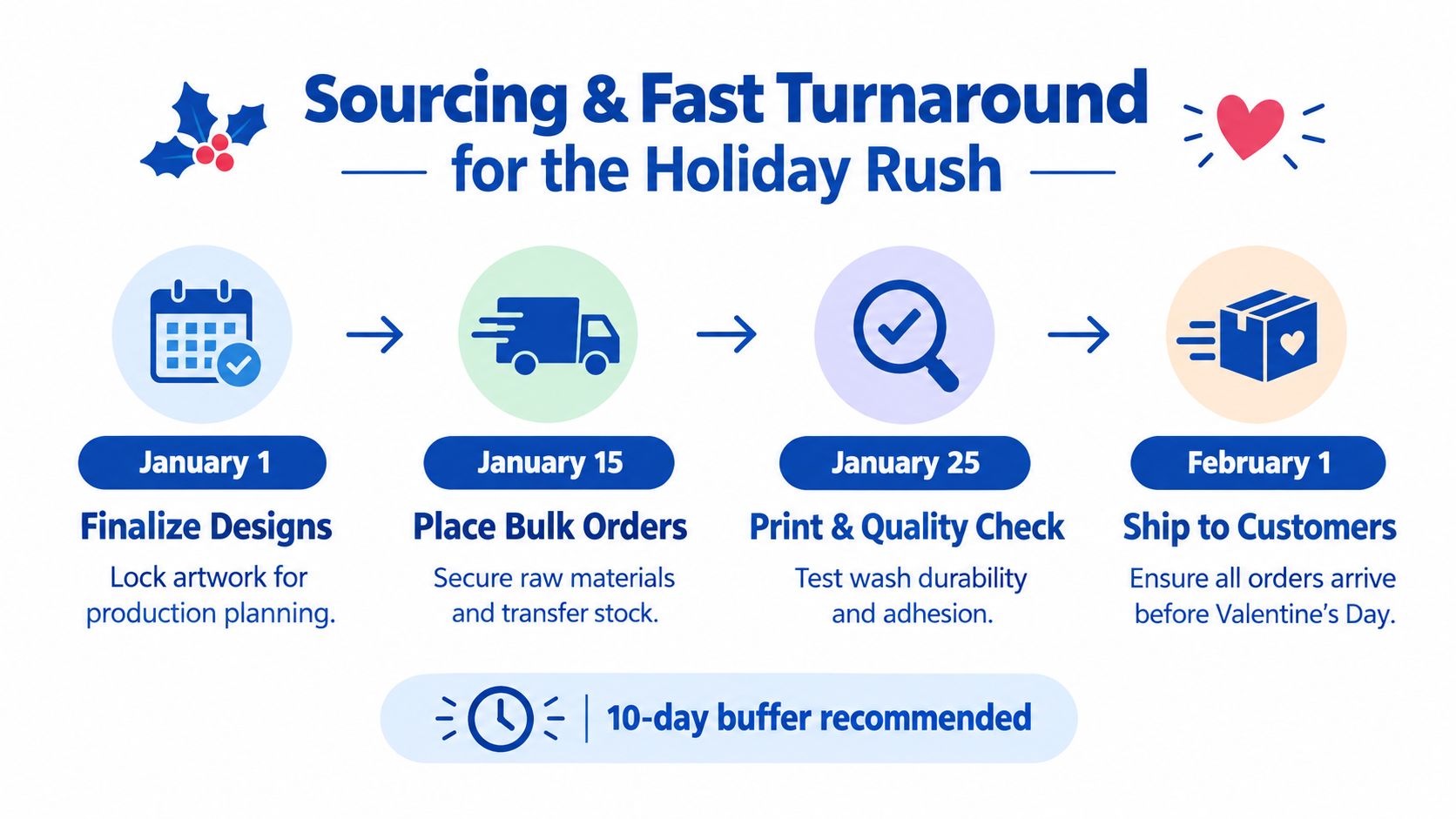
Sourcing and Fast Turnaround for the Holiday Rush
Valentine's orders are deadline-driven. A transfer that arrives after the occasion may remain usable, but it cannot solve an immediate customer need. Match the sourcing method to order certainty, production volume, and the delivery date.
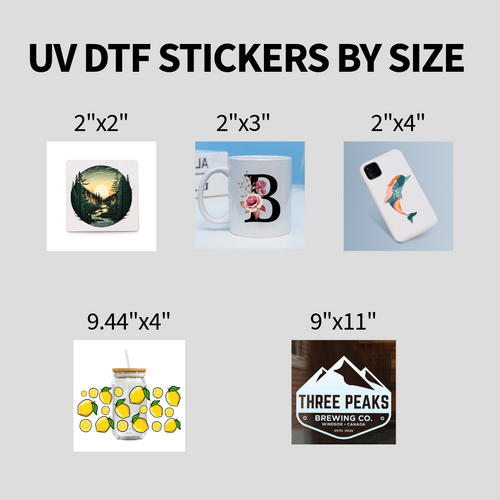
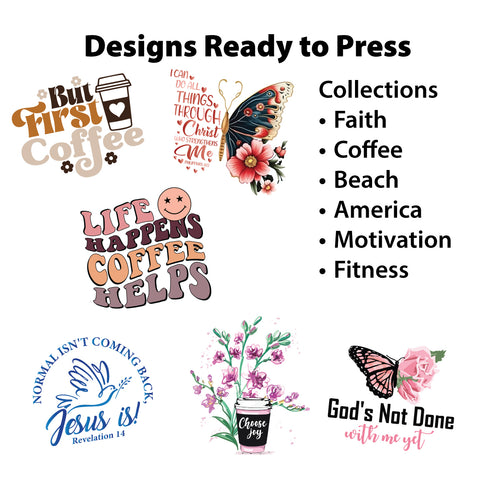
For a planned collection, custom gang sheets provide control over artwork, sizing, and product variety. For late orders, ready-to-press seasonal designs shorten approval and preparation time. Specialty suppliers may offer faster production, local pickup, or expedited shipping, but those options only help when they are included in the order plan before the cutoff.
Choose the right fulfillment path
Start a planned launch with approved artwork, available blanks, and a pressing schedule you can meet. Keep a focused group of ready-to-press designs for local events, pop-up shops, and late customers. This creates a second sales path when there is no time to build a fully custom sheet.
DTF suits short runs because artwork can move from preparation to pressing without the setup associated with traditional screen-printing. That flexibility supports seasonal launches and lets small and mid-size providers test wearable personalization without carrying a large inventory of finished garments.
Use this comparison before selecting a sourcing route:
| Order situation | Practical choice | Main trade-off |
|---|---|---|
| Planned collection | Custom gang sheet | More preparation, more control |
| Mixed seasonal catalog | Auto-built gang sheet | Efficient layout, requires final review |
| Late local order | Ready-to-press collection | Faster launch, less exclusivity |
| Urgent replacement | Expedited fulfillment | Higher logistics pressure |
| Pop-up inventory | Curated pre-printed designs | Risk of leftover stock |
For practical guidance on supplier selection, formats, artwork preparation, and delivery planning, review this guide to where to buy DTF transfers before seasonal demand peaks.
Protect the final handoff
Avoid scheduling pressing on the same day as delivery unless the order is local and the workflow is proven. Leave time for blank-garment substitutions, failed press tests, name corrections, and carrier delays. If you promise a date, state the cutoff clearly and offer the fastest available option rather than guessing.
A late-season catalog should stay easy to produce. Limit blank colors, standardize placements, and choose artwork operators can identify quickly. Speed comes from fewer decisions, while a final quality check protects the personalized, higher-value orders that support seasonal margins.
Scaling Your Seasonal Catalog with Confidence
A profitable Valentine's program is repeatable. Start with designs that reflect wearable 2026 styling, then create size variants for the garments you sell. Build personalization into the product architecture, not as an improvised request in the order notes.
Next, use the Auto-build gang sheet builder to consolidate artwork and reduce manual layout work. Review every automatic arrangement, especially around script lettering, names, and irregular shapes. The tool should remove bottlenecks while leaving a deliberate quality-control checkpoint before production.
Your operating checklist should cover four areas:
- Catalog: Include couple, friendship, self-purchase, pet, and understated everyday options.
- Production: Test each distinct garment type and document the successful press window.
- Fulfillment: Separate planned custom orders from ready-to-press rush inventory.
- Margin: Account for personalization labor, blank garments, pressing time, packaging, and expedited delivery before publishing prices.
Don't wait until the holiday rush to discover that one design only works on one blank or that your most popular personalization requires too much manual handling. Run samples early, track which formats are easy to press, and remove designs that create more corrections than sales.
The strongest seasonal sellers aren't just printing more hearts. They're building a compact system that turns relevant artwork into wearable products, packs production efficiently, and gives customers a reason to buy coordinated or personalized pieces. That system can support Valentine's Day now and other short-run occasions later.
Lion DTF Transfers offers ready-to-press DTF transfers, custom transfers by size, gang sheets, and seasonal collections for apparel sellers who need consistent production support. Build your Valentine's catalog around wearable personalization and efficient layouts, then visit Lion DTF Transfers to plan your next transfer order.
Email orders@LionDTF.com or Text or Call: 833-350-5466