



So, you have an idea for a t-shirt brand. That's great! But before you jump into printing, a little bit of planning goes a long way. The difference between a brand that fizzles out and one that thrives often comes down to the groundwork laid in these early stages. It all starts with finding your people—your niche—and then building a smart, simple plan to reach them.
Laying the Groundwork for Your T-Shirt Brand

Every successful t-shirt company I've seen started by carving out a specific corner of the market where their designs could truly connect. Don't try to sell to everyone. Instead, focus on an audience you genuinely understand.
Think about communities that are already passionate and looking for ways to show it.
- Specialized hobbies: Think gaming, surfing, cycling, or even niche crafts like pottery or woodworking. These groups have built-in communities hungry for gear that "gets" them.
- Local pride: School sports teams, town festivals, and neighborhood inside jokes are fantastic starting points. These often lead to repeat orders and word-of-mouth marketing.
- Social causes or movements: People love wearing their values. A brand built around a message they believe in can create incredibly loyal customers.
The global t-shirt market is massive—it hit 22 billion units sold, valued at $85.9 billion, and is projected to climb to 25 billion units ($105.1 billion) by 2035. In the US alone, we import around 3.2 billion tees annually. There's plenty of room for you, but only if you stand out. You can dig into more t-shirt market stats on IndexBox if you want to see the full picture.
Don't Guess, Validate Your Ideas
Before you spend a single dollar on inventory, you need to confirm people actually want what you’re planning to sell. This doesn't have to be complicated. A few simple reality checks can save you from a garage full of unsold shirts.
- Become a fly on the wall: Lurk in subreddits and Facebook Groups related to your niche. What are people excited about? What jokes are they telling? This is free, unfiltered market research.
- Check the pulse with Google Trends: Are people actively searching for keywords related to your idea? A spike in interest could signal you're onto something.
- Just ask: Talk to friends or set up a small, informal focus group. Show them your ideas and listen—really listen—to their feedback.
Build a Lean, No-Fluff Business Plan
Forget the 50-page business plan nobody will ever read. What you need is a "lean plan"—a simple, one-page guide to keep you on track. It should be clear enough to guide your decisions but flexible enough to change as you learn.
Here's what to include:
- Your Mission: In one sentence, who are you serving and what makes your brand different?
- Startup Costs: Ballpark what you'll need for blank shirts, printing supplies (or services), and your initial marketing push. Be realistic!
- Brand Identity: Jot down a name, some logo concepts, and the overall vibe or tone of voice.
A clear niche and a lean plan can easily cut your startup time in half. It’s the difference between moving with purpose and just guessing your way forward.
A Real-World Niche in Action
Let's look at a practical example. Emma, a yoga teacher in a small coastal town, noticed a gap in the market. Her students wanted yoga-themed apparel, but they also cared deeply about sustainability.
So, she didn't just order a box of generic "Namaste" shirts. She polled her class of 20 students, asking them to vote on their favorite designs and what they'd be willing to pay. The consensus was clear: organic cotton shirts with eco-friendly inks, priced around $25.
Here’s how she validated her idea:
- She created a quick survey with Google Forms to let her students rank designs.
- She posted mockups in Instagram polls to build buzz and gather more feedback.
- She got samples from a few local print shops before committing to a big order.
Emma's approach took the guesswork out of her launch. She knew her first product would sell because her customers had already told her what they wanted.
Putting It All Together
With a validated niche and a simple plan, you've built a solid foundation. This is the blueprint that will guide you through the more hands-on steps of sourcing blanks, creating designs, and getting your shirts printed.
And if you’re looking for a low-risk way to get started, you might want to explore different fulfillment options. We put together a guide on print-on-demand business models that breaks down how you can launch without holding any inventory.
Now, it’s time to move confidently into bringing your brand to life.
Developing Designs and a Brand That Connects
Your niche gives you a target, but your designs and brand are what actually hit the bullseye. A clever graphic might catch someone's eye, but it's the brand connection that keeps them coming back. This is where you graduate from simply selling shirts to building a real, memorable identity.
Great designs aren't always complicated works of art. In fact, the most successful ones are often simple, bold, and get their message across in a split second. They connect with an inside joke, a shared passion, or a feeling that your specific audience immediately gets. When you're figuring out how to start a t-shirt business, aim to create designs that make your ideal customer think, "Wow, that's me."
Creating or Sourcing Your Artwork
When it comes to getting your designs made, you have two main roads you can take: do it yourself or bring in a professional. There’s no right or wrong answer here—it all comes down to your own skills, budget, and how much time you can spare.
If you’ve got a creative side, there are plenty of user-friendly tools you can use to bring your ideas to life.
- Canva: A fantastic starting point for beginners. It's packed with templates and has simple tools for text and graphics that make design accessible.
- Procreate: If you have an iPad and enjoy digital drawing, this is an incredibly popular and powerful choice for illustration.
- Adobe Illustrator: This is the industry gold standard for creating vector graphics. Vectors are key because they can be scaled to any size without losing quality, ensuring your prints are always crisp.
But what if design just isn't your thing? Don't sweat it. Hiring a talented artist can be one of the smartest moves you make. Marketplaces like Fiverr, Upwork, and Dribbble are full of freelance designers who live and breathe t-shirt graphics. You can easily find someone whose style lines up with your brand and get top-notch artwork without breaking the bank.
Building Your Brand's Identity
Your brand is so much more than just a cool logo. It’s the entire vibe you put out there—from your business name and color scheme to the personality in your Instagram captions. A solid brand builds trust and makes your products feel like they're part of something bigger.
A brand is the story people tell about you when you're not in the room. Make sure you're giving them a good story to tell.
Start by nailing down the fundamentals:
- A Memorable Name: You want something that’s easy to say, spell, and recall. It should hint at what you’re about without being so narrow that it boxes you in later.
- A Simple Logo: Your logo will go everywhere: your website, your neck tags, your packaging. It needs to be clear and recognizable, whether it's tiny on a social media profile or large on a banner.
- A Consistent Voice: Are you funny and a little bit snarky? Or are you more inspiring and uplifting? Whatever your brand's personality is, make sure it shines through consistently wherever you talk to your customers.
Essential Design and File Prep
Once your designs are ready, getting them prepped for printing is absolutely critical. A fantastic design can be completely ruined by a low-quality file. For those vibrant, sharp prints you're after, your artwork needs to be a high-resolution PNG file (at least 300 DPI) with a transparent background. This is non-negotiable. It ensures that only your design gets printed on the shirt, not a clunky white box around it. Our guide on what makes a good t-shirt design dives deeper into the technical details to help you get your prints just right.
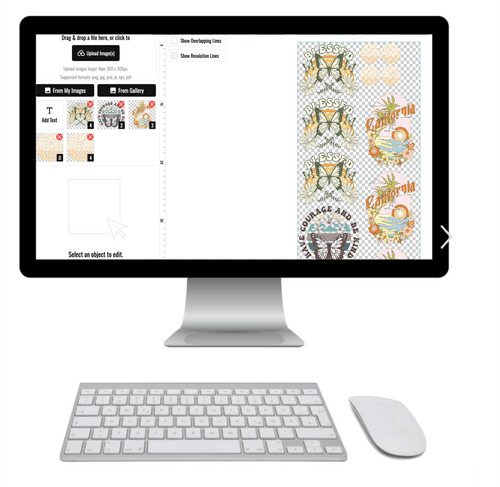
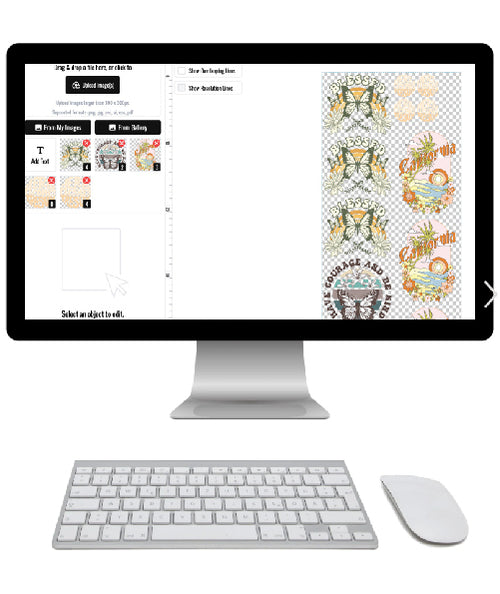
This is also where finding a printing partner with a straightforward upload process becomes a lifesaver. For example, our Auto-build gang sheet builder was designed specifically for this. You just upload your print-ready PNG files, and the tool automatically nests them together to use every inch of space. This is a game-changer for your bottom line, as it drastically lowers your cost per design and lets you get a whole variety of prints for one flat price.
Choosing The Right T-Shirt Printing Method
So you’ve nailed down your brand identity and you have designs that will actually connect with your customers. What's next? The single most important production decision you'll make is how you're going to get those designs onto a shirt. This choice dictates your quality, how much cash you need upfront, and how quickly you can grow.
The timing couldn’t be better. The custom t-shirt market is exploding, set to jump from $7.01 billion to a whopping $20.05 billion by 2035. Why? Because people want unique stuff—personalized apparel now makes up over 60% of all sales. This whole boom is driven by printing tech that makes one-of-a-kind shirts easy and affordable to produce. If you want to dig into the numbers, Precedence Research has the full market analysis.
This growth is your green light, but you need the right tools for the job. Let’s break down the three main players in the printing game: traditional screen printing, Direct-to-Garment (DTG), and the modern workhorse, Direct-to-Film (DTF).
Comparing T-Shirt Printing Methods
Choosing your printing method is a foundational step. To make it easier, here's a quick side-by-side comparison of DTF, DTG, and Screen Printing. This table breaks down the key features to help you decide which one aligns best with your business goals, budget, and the types of designs you want to create.
| Feature | DTF Transfers | DTG (Direct-to-Garment) | Screen Printing |
|---|---|---|---|
| Best For | On-demand printing, small to medium runs, versatile fabric types | Complex, full-color designs on 100% cotton, print-on-demand | Large bulk orders (50+), simple designs with few colors |
| Startup Cost | Low (Heat press is the main investment) | Very High (Printers cost $15,000+) | High (Screens, press, inks, washout booth) |
| Color Detail | Excellent; full-color, photo-realistic prints | Excellent; photo-quality detail and gradients | Good, but each color adds cost and complexity |
| Fabric Versatility | High; works on cotton, polyester, blends, canvas, and more | Low; best results on 100% cotton (pretreatment needed for darks) | Moderate; specific inks needed for different fabric types |
| Feel on Shirt | Soft and flexible, thin layer on top of the fabric | Very soft; ink soaks directly into the fibers | Varies; can be thick, especially with multiple colors |
| Durability | High; excellent wash and stretch resistance | Good, but can fade over time with washing | Excellent; extremely durable and long-lasting prints |
Each method has its place, but for a new brand looking for flexibility and professional quality without a massive upfront investment, DTF transfers consistently come out on top. They give you the freedom to experiment and scale smart.
The Old-School Standard: Screen Printing
Screen printing is the OG of the t-shirt world. It’s what most people picture when they think of shirt printing. The process uses a mesh screen as a stencil to push ink onto fabric, one color at a time.
- The Good: The prints are incredibly durable and the cost per shirt becomes very low on big orders (think 50+ shirts of the same design). The colors are super vibrant.
- The Bad: Setup costs are no joke. You need a separate screen for every single color, which makes it impractical and expensive for small batches or colorful designs. There’s a steep learning curve to get it right.
Screen printing really only makes sense if you’re printing a large run of a simple, one or two-color design—like for a local 5K race or a basic logo tee you plan to sell by the hundreds.
The Full-Color Specialist: Direct-to-Garment (DTG)
Direct-to-Garment is essentially an inkjet printer for clothes. A specialized DTG machine sprays water-based inks directly onto the fabric, which allows it to create incredibly detailed, full-color designs with millions of shades.
DTG shines when you have photorealistic artwork or designs with complex gradients. But here's the catch: the printers are a massive investment, often starting at $15,000 and going way up from there. It also performs best on 100% cotton and requires a pre-treatment spray for dark garments, which adds another step and more cost to your process.
The Modern Workhorse: Direct-to-Film (DTF)
Direct-to-Film (DTF) has quickly become the smartest choice for new and growing t-shirt brands. The process is simple: your design is printed onto a special transfer film, which you then apply to the shirt with a basic heat press.
DTF gives you the best of both worlds. You get the stunning, full-color detail of DTG, but with the freedom to print on almost any fabric you can think of—cotton, polyester, tri-blends, you name it. For a new business, that kind of versatility is gold. You’re not locked into only selling cotton tees.
For a startup, the real magic of DTF is how easy it is to get started. You don't need a $15,000 printer taking up a whole room. All you need is a heat press and a supplier for your transfers. You can start producing pro-level shirts from your garage on day one.
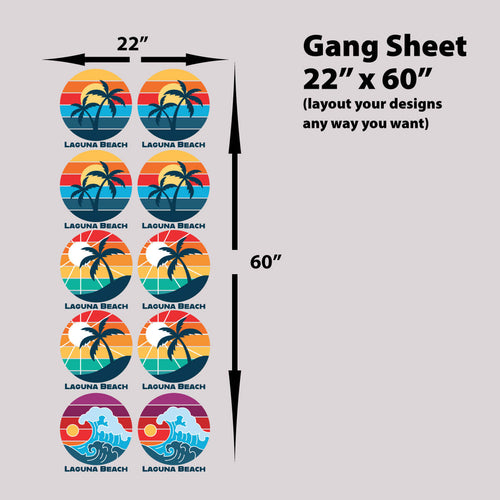
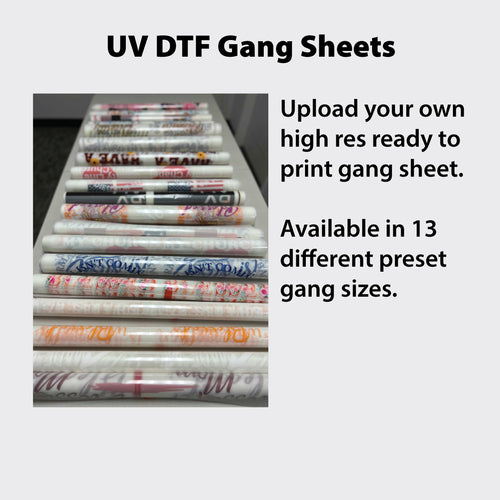
The smartest way to work with DTF is by ordering your designs on gang sheets. A gang sheet is one large transfer film that you can fill up with as many different designs as you can fit. This is where our Auto-build gang sheet builder becomes your secret weapon.
You just upload all your different print-ready PNG files, and our tool automatically arranges them to pack the sheet as tightly as possible. This crushes your cost per print and lets you produce a huge variety of designs—different logos, chest graphics, and sleeve hits—all for one flat price. It’s the perfect way to test new ideas without getting stuck with a pile of unsold shirts. If you want to get into the nitty-gritty, we have a detailed guide on the different t-shirt printing methods right here.
The flowchart below gives you a visual on how to think about getting your designs ready, which will directly influence your choice of printing method.

As you can see, whether you design the art yourself or hire a pro, the complexity of your final design will point you toward a specific printing solution.
Ultimately, the combination of professional quality, fabric versatility, and low startup cost makes DTF the clear winner for anyone trying to figure out how to start a t-shirt business today.
With your designs ready and your printing method locked in, it's time to talk about the physical side of your business: the materials and your production space. This is where the rubber meets the road. The quality of your blank t-shirts is every bit as important as the art you put on them. It’s what customers feel, wear, and ultimately, what they’ll judge your brand by.
A scratchy, poorly-fitting shirt can completely undermine an amazing design. That's why smart sourcing isn't just a box to check—it's a core part of building a t-shirt business people trust. You need to find suppliers who deliver high-quality garments that match your brand’s vibe and price point.
Selecting the Right Blank T-Shirts
Let’s be clear: not all blank tees are the same. The fabric, fit, and feel are what separate a premium product from a forgettable one. Your choice here directly impacts customer happiness and how your brand is perceived.
Here's what I always look at when sampling and choosing blanks:
- Fabric Composition: The big three are 100% cotton, polyester/cotton blends, and tri-blends. Ringspun cotton is a big step up in softness from standard cotton. Tri-blends? They have that super-soft, slightly heathered look that feels worn-in from day one.
- Weight and Feel: T-shirt weight is measured in ounces. Lighter shirts (3-5 oz) have a modern, drapey fit that's popular right now. Heavier shirts (6 oz and up) give you that classic, beefy feel that screams durability.
- Fit and Sizing: Are you going for a modern, athletic fit or a more classic, boxy cut? Always, and I mean always, check the size charts and order samples. You need to know the fit is consistent with what your audience expects.
- Sustainability: If your brand has an eco-friendly angle, look for suppliers offering organic cotton or recycled materials. This isn’t just a niche concern anymore; it can be a massive selling point.
Seriously, order samples before you even think about a bulk purchase. Wear them. Wash them. Dry them on high heat. See what happens. It's the only real way to know if a shirt lives up to your standards.
The Secret to Profitability: Gang Sheets
When you're starting out, every dollar counts. This is where Direct-to-Film (DTF) transfers combined with gang sheets become your secret weapon for profitability. A gang sheet is simply one big transfer sheet that you can cram with as many different designs as you can fit.
Instead of ordering individual transfers for each design, you can drop multiple graphics—front logos, back pieces, sleeve hits, even custom neck tags—all onto a single sheet for one flat price. This move absolutely crushes your cost per print and maximizes the value of every single order.
Using gang sheets is the single most effective way to lower your production costs with DTF. It lets you produce a huge variety of designs, test out new ideas, and keep your inventory lean without paying for individual prints.
This is precisely why we built our Auto-build gang sheet builder. We designed it to make this whole process ridiculously easy and cost-effective. You just upload your print-ready PNG files, and the tool automatically nests them together, killing wasted space and packing as many designs as possible onto the sheet. It completely removes the guesswork.
Setting Up Your Heat Press Station
Once you have your blank shirts and your DTF transfers in hand, it's go-time. Your heat press is the heart of your operation, so setting it up for efficiency is crucial for getting consistent, professional results.
Don't fall for the cheap, hobby-grade presses you see on Amazon. A professional-quality heat press is an investment that pays for itself by preventing ruined garments and transfers caused by inconsistent heat and pressure.
To get your workspace humming, follow these tips:
- Create a Dedicated Space: Put your press on a sturdy, heat-resistant table. Make sure you have enough room to lay out shirts and organize your transfers without feeling cramped.
- Calibrate Your Press: Always test your press for accurate temperature and even pressure. A simple heat gun can help you find cold spots on the platen before they ruin a shirt.
- Organize Your Supplies: Keep everything you need within arm's reach—Teflon sheets, heat-resistant tape, and your transfers. A smooth workflow is a fast workflow.
- Follow the Recipe: Every transfer and garment combo has a perfect time, temperature, and pressure. Follow your supplier's instructions to the letter for a perfect application every time.
By investing in quality blanks, optimizing your transfer orders with a gang sheet builder, and setting up a pro-level pressing station, you’re building a production system that’s both lean and capable of creating apparel your customers will actually love to wear.
Launching Your Online Store and Finding Customers

Even the most incredible T-shirts won't just sell themselves. Once you've got your production process dialed in, it's time to build your online home and start finding your people. This is where your brand really comes to life and starts making connections.
Your online store is so much more than just a place to list products—it's your brand's digital storefront. A professional, trustworthy site is absolutely critical for turning casual visitors into paying customers. E-commerce is the undeniable engine driving apparel sales today. In fact, the global shirt market is set to climb from $82.08 billion to $105.85 billion by 2031, a surge driven almost entirely by online demand. You can read the full research on the shirt market to grasp just how essential a solid digital presence is.
Choosing Your E-Commerce Platform
Your first big decision is figuring out where to build your store. The good news? You don't need to be a web developer to create a beautiful, functional shop. Platforms like Shopify and Etsy are popular for a reason—they make selling online incredibly accessible.
- Shopify: This is the go-to for anyone serious about building a standalone brand. You get total control over your store's look and feel, plus a whole suite of powerful tools for marketing and analytics. If your long-term vision is to build an independent brand empire, this is where you want to be.
- Etsy: If you'd rather tap into a built-in audience of shoppers actively looking for unique, handcrafted goods, Etsy is a fantastic place to start. The trade-off is less brand control, but the existing marketplace traffic can give you a massive initial boost.
No matter which path you choose, the goal is the same: create a clean, easy-to-navigate site. Use high-quality product images, write descriptions that tell a story, and make your checkout process dead simple.
Product Photography That Actually Sells
Let's be real: your product photos are your most powerful sales tool. Since customers can't touch or feel your shirts, your images have to do all the heavy lifting. Grainy, poorly lit photos will kill a sale in a heartbeat.
You don't need a pro studio to get great shots. A smartphone, some good natural light from a window, and a clean background are all you really need to get started.
- Lifestyle Shots: Show real people wearing your shirts. This helps customers see themselves in your product and connects your designs to the lifestyle you're promoting.
- Flat Lays: Neatly arrange your shirt on a clean, simple surface. Add a few props that match your brand’s vibe to create a visually interesting scene.
- Detail Close-ups: Capture the texture of the fabric and the quality of the print. This builds trust and shows you stand by your product's quality.
Great product photography isn’t about having the most expensive camera. It’s about telling a story and showing your product in its best light—literally.
Marketing Strategies You Can Start Today
With your store live, it's time to get some eyeballs on it. Marketing doesn't have to be expensive or complicated. The key is to focus your efforts where your niche audience already hangs out.
Social Media Community Building Don't just be a billboard for your products. Use platforms like Instagram and TikTok to build a genuine community around your brand. Share behind-the-scenes content, like your design process or you heat pressing a new batch of shirts. Run polls asking your followers which design they want to see next. This kind of real engagement turns passive followers into loyal fans who feel invested in your brand's journey.
Basic Search Engine Optimization (SEO) SEO is simply the art of getting free, targeted traffic from Google. Start with the basics by using relevant keywords in your product titles and descriptions. For instance, if you sell shirts for rock climbers, use phrases like "rock climbing t-shirt" or "bouldering graphic tee." This helps people find you at the exact moment they're searching for products like yours. It’s a long-term game, but the payoff is a steady stream of highly motivated buyers.
Got Questions About Starting Your T-Shirt Business?
Diving into the world of custom apparel always brings up a ton of questions. Let's be honest, knowing how to start a t-shirt business is really about tackling these common hurdles one by one. I've heard them all from new entrepreneurs, so let's get you some straightforward, practical answers.
What's This Actually Going to Cost Me?
This is the big one, and the honest answer is: it all depends on how you set up your business. Your startup costs can be next to nothing or run into several thousand dollars. It’s all about the path you choose.
A print-on-demand (POD) model has the lowest barrier to entry, period. Your main costs are your e-commerce platform fees (like a basic Shopify plan) and maybe a few bucks for design software or hiring a freelancer. Since you don’t buy any inventory upfront, your initial investment could easily be under $100.
If you decide to go the in-house route using DTF transfers, your main investment is a solid heat press. A quality one will run you anywhere from $300 to over $1,000. After that, you'll need a small stock of blank shirts and your first order of transfers. This approach gives you more control and much better margins, with a typical startup cost falling somewhere between $500 and $2,000.
A classic rookie mistake is skimping on a cheap, unreliable heat press. Your press is the most important tool you own—it guarantees consistent, professional results and saves you from ruining perfectly good shirts and transfers.
Do I Have to Be a Graphic Designer?
Absolutely not. Look, design skills are a great bonus, but they're far from a requirement. Many of the most successful t-shirt brand owners are curators and marketers first, not artists.
Here are your main options if design isn't your thing:
- Hire a Freelancer: Sites like Fiverr and Upwork are packed with talented designers who live and breathe t-shirt graphics. You can get a professional, print-ready design for as little as $20-50.
- Use Design Templates: Plenty of online tools and transfer suppliers offer pre-made, editable templates. You can tweak the text, colors, and other elements to make something unique without having to start from a blank canvas.
- Lean into Typography: Some of the most iconic t-shirt designs are just text. A clever phrase in a great-looking font can be incredibly powerful and requires almost no traditional design skill.
Your job as the business owner is to have the vision. You can always find someone to help you execute it.
How Do I Handle Shipping Without Losing My Mind?
Shipping can feel like a monster, but a little systemization makes it completely manageable. If you’re printing and shipping your own shirts (instead of using POD), organization is your new best friend.
First, set up a dedicated shipping station. Seriously. Keep all your supplies—poly mailers, a shipping scale, a label printer, maybe some thank you cards—all in one spot. This one simple step will save you a shocking amount of time.
Next, simplify your shipping rates. Offer a flat rate for domestic shipping or, even better, free shipping over a certain amount (e.g., free shipping on orders over $75). This makes checkout dead simple for your customers and makes your life easier, too.
Most e-commerce platforms like Shopify have built-in integrations with postal services, letting you buy and print postage right from your dashboard. It streamlines the whole process and even gives you access to discounted shipping rates.
What’s the Smartest Way to Order a Bunch of Different Designs?
When you’re just starting, you want to test the waters with a variety of designs without getting stuck with a box of shirts that nobody wants. The most cost-effective way to do this is by using gang sheets with DTF transfers.
A gang sheet lets you cram multiple different designs—your main graphics, logos, sleeve hits, even neck tags—onto one large transfer sheet for a single flat price. This drives your cost per individual print way, way down.
This is precisely why our Auto-build gang sheet builder is such a game-changer for new businesses. You just upload all your different print-ready files, and the tool automatically nests them together to use every last inch of the sheet. It makes ordering a diverse set of designs ridiculously simple and affordable, letting you test what sells without a huge financial risk.
Ready to bring those designs to life with prints that are professional, vibrant, and tough enough to last? At Lion DTF Transfers, we make it easy. Use our Auto-build gang sheet builder to get the most value for your money and get started today. Explore our services at https://liondtf.com.