


A great t-shirt design is more than just a slick graphic. It’s a carefully balanced recipe of a powerful concept, smart visual execution, deep audience connection, and technical print-readiness. Each ingredient is essential. Get them right, and you create something people don't just want to wear—they connect with it.
The Four Pillars of an Unforgettable T Shirt Design
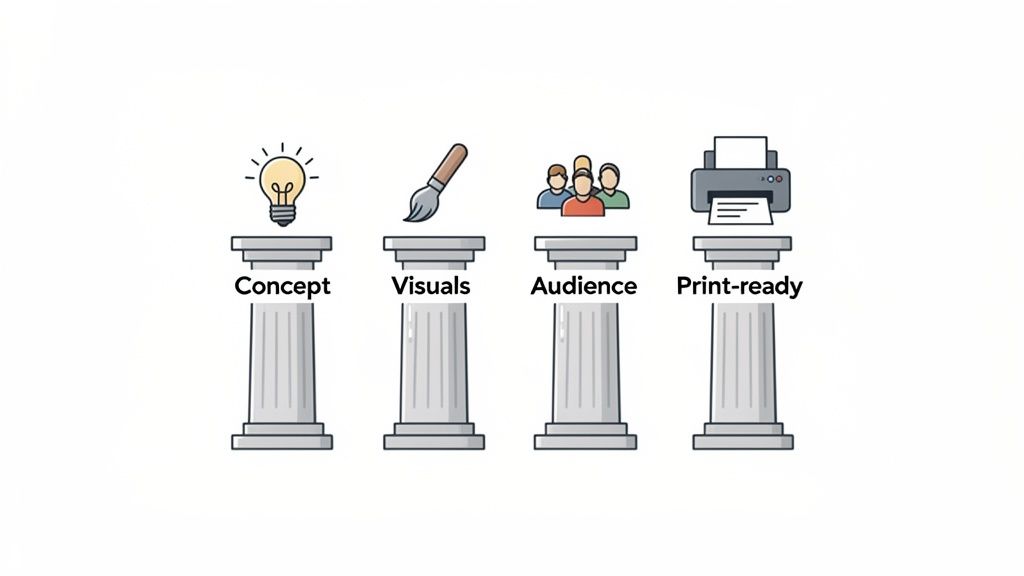
Turning a simple idea into wearable art that actually sells requires a solid blueprint. Just like building a house, a t-shirt design needs a strong foundation to stand out and last. That foundation rests on four core pillars that have to work together.
Get these right, and you've got a design that's not just visually appealing, but also meaningful, targeted, and perfectly printable.
Ignore even one of these pillars, and the whole thing can fall flat. A brilliant concept with clumsy visuals won’t connect, and a beautiful graphic that isn't ready for the printer is just a useless file. Understanding how these elements play off each other is the first step to creating consistently great apparel.
Understanding the Core Components
So, what makes a design really click? It starts with a clear message and a real purpose. This is where your brand’s identity is non-negotiable. A sharp brand positioning statement acts as your North Star; checking out these brand positioning statement examples can help you lock in a design that communicates exactly who you are. That clarity guides every other decision.
From there, you build on that concept with visuals that actually resonate with a specific group of people. Finally, you nail the technical details so the finished shirt looks exactly like it did on your screen.
We'll dive into each pillar, but first, let’s get a high-level view.
The table below breaks down these four essential components, giving you a quick-reference guide to what they mean and why they’re so critical for your success.
The Four Pillars of Effective T-Shirt Design
| Pillar | What It Means | Why It Matters |
|---|---|---|
| Powerful Concept | The core idea, message, or story behind your design. It’s the "why" that gives your shirt meaning beyond its appearance. | A strong concept creates an emotional connection, making the design memorable and more than just decoration. It sets you apart. |
| Visual Execution | How you use composition, color, typography, and imagery to bring the concept to life visually. | This is what grabs attention. Good execution makes a design balanced, readable, and aesthetically pleasing from a distance. |
| Audience Connection | Designing with a specific niche, community, or customer in mind. It’s about creating something for them. | A design that speaks to a specific audience feels authentic and personal, turning customers into loyal fans. |
| Print-Readiness | The technical preparation of your design file for flawless printing, especially for DTF (Direct-to-Film). | This ensures your vision translates perfectly to fabric without errors, saving time, money, and frustration during production. |
Mastering these four areas is the secret to creating designs that not only look fantastic but also sell well and build a real brand. When you nail these fundamentals, you set yourself up for success and make the whole production process smoother and more affordable.
Mastering the Art of Visual Storytelling
A killer concept is the soul of your design, but the visual execution is how that soul learns to speak. This is where your big idea gets real, moving from a thought in your head to a story people can wear on a cotton canvas. It's about more than just slapping a cool graphic on a shirt; it’s about using composition, typography, and color to steer the viewer's eye and hit them with a specific feeling.
Think of your t-shirt as a tiny, moving billboard. You’ve only got a few seconds to grab someone's attention from across a room. A strong visual story makes that instant connection, ensuring your design isn't just seen—it’s remembered. That’s the difference between a shirt people wear and a shirt people talk about.
Crafting a Balanced Composition
Composition is simply how you arrange everything in your design. It's like directing a play: every element needs to be in just the right spot to tell the story clearly. A well-composed shirt design feels balanced, guides your eye to a clear focal point, and just looks right.
An effective layout uses classic principles like balance, contrast, and negative space to create something visually satisfying. It makes sure no single element is screaming for attention unless you want it to. This harmony is what separates a professional, thoughtful design from an amateur one.
Here are a few ground rules to get you started:
- Rule of Thirds: Picture a 3x3 grid laid over your design space. Instead of dead-centering everything, try placing key elements along those lines or where they cross. It instantly makes things more dynamic.
- Visual Hierarchy: Decide what you want people to notice first, second, and third. Use size, color, and placement to make your most important element—like a clever phrase or a central image—the hero of the design.
- Negative Space: Don't forget the empty areas! The space around your design elements is just as important as the elements themselves. Good use of negative space keeps things from looking cluttered and gives your key pieces room to breathe, making them pop even more.
Making Typography Talk
Typography is so much more than just spelling out words; it's the voice of your design. The font you pick can whisper, shout, joke, or inspire—it sets the entire vibe before a single word is even processed. The right typeface is a visual shortcut, telling the audience if the shirt is vintage, modern, aggressive, or playful.
For instance, a thick, bold, sans-serif font screams strength and modernity, perfect for a gym brand. On the other hand, an elegant, flowing script might suggest artistry or romance, making it a great fit for a boutique brand. A mismatched font sends a confusing message and can kill your whole concept.
A study on font psychology found that different typefaces can significantly alter a consumer's perception of a brand's personality. This highlights how crucial it is to select a font that aligns with the story your design is trying to tell.
The Strategic Power of Color
Color is easily the most powerful emotional tool you have. It's the first thing our brains react to, capable of shifting moods and influencing decisions in a split second. A tight, intentional color palette often packs a much bigger punch than a chaotic rainbow of clashing shades.
Understanding a little color psychology helps you connect with your audience on a subconscious level.
- Warm Colors (Reds, Oranges, Yellows): These are all about energy, passion, and happiness. They're fantastic for grabbing attention and creating a sense of excitement.
- Cool Colors (Blues, Greens, Purples): These tones are often tied to calmness, trust, and nature. They work well for brands wanting to appear serene, professional, or eco-friendly.
Ultimately, mastering visual storytelling comes down to making deliberate choices that serve your core idea. If you need a hand turning your concepts into print-ready files, our guide on how to create your own t-shirt designs is a great place to start. Getting these elements right also simplifies production, especially when you're using our Auto-build gang sheet builder for easy and cost-effective printing. To really speed up the creative process, designers can also use an AI T-Shirt Design Generator to explore different visual styles in a flash.
Connecting with Your Audience and Dominating a Niche
A technically perfect design can still fall flat if it doesn’t speak to anyone. The absolute most important part of a good t-shirt design is knowing exactly who you're creating it for. Going beyond broad demographics like age or gender is where the real magic happens. Success is all about tapping into the mindset of niche communities.
Trying to create a generic "cool shirt" is a surefire way to get lost in an ocean of competition. Your goal should be to forge a symbol of identity for a specific group of people. The design needs to feel like an inside joke, a shared passion, or a badge of belonging that only they will truly get.
Why Niche Targeting is Non-Negotiable
Think about the difference between a shirt that says "I Love Dogs" and one that shows a goofy, illustrated Golden Retriever with the caption, "Golden Hour is All the Time." The first one is for everyone, which means it’s really for no one. The second design, however, creates an instant bond with Golden Retriever owners on a much deeper level.
This strategy turns a simple piece of clothing into a statement that says, "I see you, I get you, and I'm one of you." Authenticity is your most powerful tool here. A design that feels genuine to a niche will always crush one that's just chasing a trend from the outside.
The secret to a design that sells isn't trying to please the whole world. It’s about making a small, passionate group of people feel completely and totally understood.
From Anime Streetwear to Cottagecore
The t-shirt market is huge, but it's also incredibly fragmented. While the global t-shirt market hit an estimated $46.99 billion, the real success stories belong to designs that feel personal. We're seeing an explosion in micro-niche styles—cottagecore, anime streetwear, hyper-local pride—because people are craving designs that reflect their specific identity. You can dig deeper into these t-shirt market statistics and see just how much micro-trends are driving the industry.
This is where solid research becomes your superpower. To really own a niche, you have to live and breathe it.
- Learn Their Visual Language: What colors, symbols, and fonts does this community already gravitate toward? A punk rock niche is all about gritty, hand-drawn letters, while a "clean girl aesthetic" leans into minimalist type and pastel colors.
- Speak Their Lingo: What are the inside jokes, catchphrases, or core ideas that define them? These are absolute goldmines for design concepts that signal you're part of the club.
- Understand Their Values: What do they actually care about? A design for a school spirit club, for instance, has to tap into pride and tradition. We break this down further in our guide to creating powerful school spirit wear designs.
Finding and Validating Your Niche
Choosing a niche isn't just about picking something at random; it’s about finding a community you can genuinely connect with. The best place to start is with your own interests—hobbies, favorite TV shows, or causes you actually believe in. It's way easier to be authentic when you're already part of the culture.
Once you have a few ideas, jump on social media platforms like Reddit, Instagram, and TikTok to see if they have legs. Look for active communities, hashtags with tons of engagement, and discussions where people are geeking out. If you find a group actively wishing for merch that represents them, you've struck gold.
This targeted approach doesn't just make your designs better; it makes production smarter. By creating multiple niche designs, you can group them together to print way more efficiently. Our Auto-build gang sheet builder was made for exactly this—its ease of use lets you print several targeted designs at once, maximizing your material and slashing your costs for ultimate cost-effectiveness.
Designing for Flawless DTF Printing
Creating a stunning visual is only half the battle. The real win is when that digital art translates perfectly onto a t-shirt.
That leap from a glowing screen to a tangible, wearable piece of clothing is where so many great ideas fall short. Why? Because designing for a monitor and designing for Direct-to-Film (DTF) printing are two totally different ballgames, each with its own set of rules.
Getting the technical side of your design right isn't just a suggestion—it's non-negotiable if you want professional results. Nail these details, and your final product will look just as crisp and vibrant as it did in your software. Ignore them, and you’re looking at fuzzy graphics, weird color shifts, and frustrating production delays.
Think of it as setting your design up for a smooth journey from a digital file to a physical print.
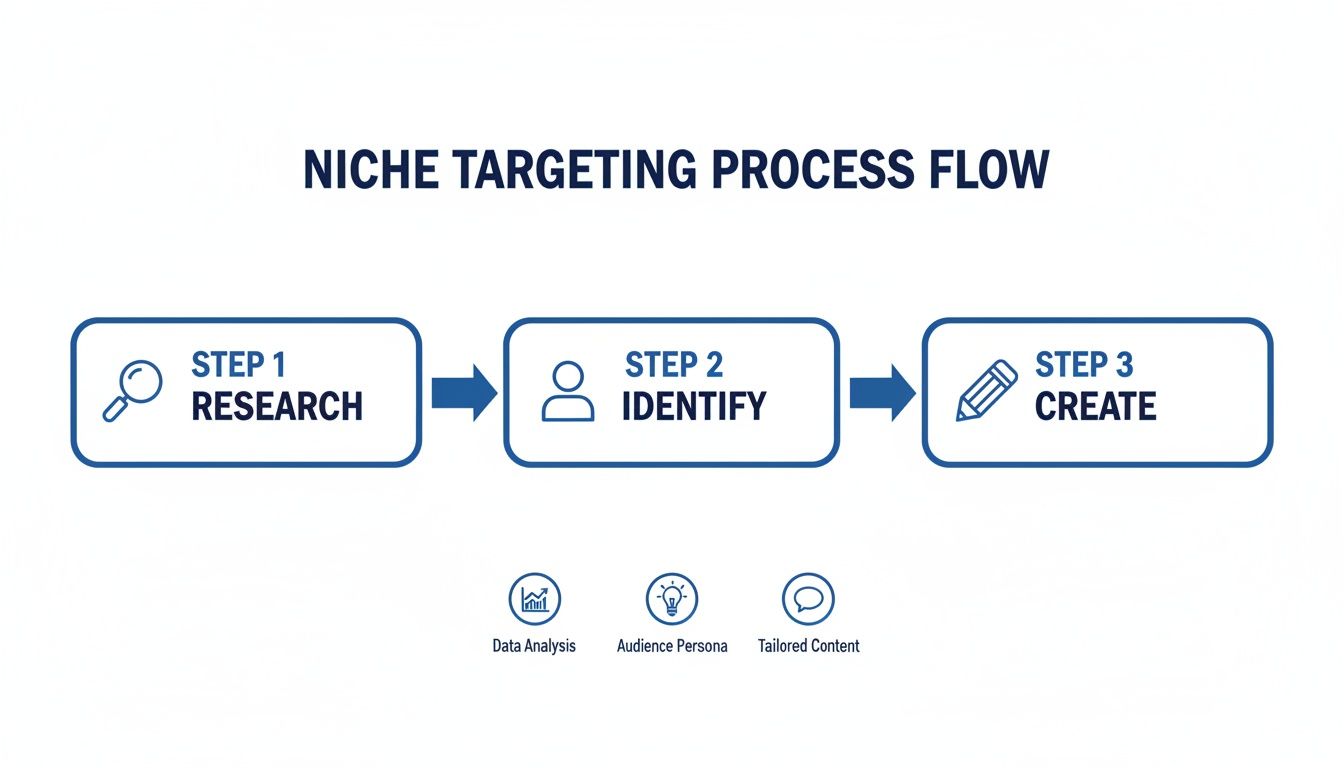
This simple flow—researching a niche, figuring out its audience, and creating something just for them—is the foundation for both technical and commercial success.
Mastering the Technical Specs
Your design file is basically the architectural blueprint for your t-shirt. If the measurements are off or the instructions are fuzzy, the final build is going to be flawed. For DTF printing, that blueprint needs to hit a few critical specs to ensure a perfect transfer every single time.
First up is resolution. Your design file absolutely must be created at 300 Dots Per Inch (DPI). This is the industry standard for high-quality printing, period. A lower resolution, like the 72 DPI common for web images, will give you a blurry, pixelated, and totally unprofessional-looking print.
Next is the file format. In the DTF world, your best friend is the PNG (Portable Network Graphics) file. The reason is simple: PNGs support transparent backgrounds. This is a huge deal because it tells the printer to only lay down ink where your design actually is, helping you avoid that dreaded white or colored box that can ruin a graphic saved as a JPEG.
Vectors vs. Rasters: A Quick Rundown
The type of artwork you create also plays a major role. Your designs will fall into one of two main camps, and knowing the difference is key to getting the technical side right.
- Raster Images: These are your typical pixel-based files, like the PNGs and JPEGs we just talked about. They’re made of a finite grid of tiny squares. While they’re great for photos and highly detailed images, they can't be scaled up without losing quality and looking blocky.
- Vector Images: Built with mathematical equations in programs like Adobe Illustrator, these are infinitely scalable. You could stretch a vector logo to the size of a billboard with zero loss in quality. For logos, text, and graphics that need resizing, vector is always the way to go.
Here's a pro tip: Always start with the largest size you might need. You can always scale a high-res raster or any vector image down, but you can never successfully scale a small, low-res raster image up.
Before sending anything to print, a quick check of your file specs can save you a world of headaches. This little checklist covers the must-haves for a print-ready DTF file.
DTF Design File Checklist
| Technical Spec | Requirement | Why It's Important |
|---|---|---|
| Resolution | 300 DPI | Guarantees a sharp, clear, and professional-looking print. Anything less will look pixelated. |
| File Format | PNG | Essential for its support of transparent backgrounds, preventing unwanted colored boxes around your design. |
| Color Mode | CMYK | Ensures the colors you see on screen are as close as possible to the final printed colors. |
| Background | Transparent | Tells the printer to only apply ink where your artwork exists, which is critical for non-rectangular designs. |
| Sizing | At Print Size | Design the file at the exact dimensions you want it printed to avoid scaling issues and quality loss. |
Making sure your files tick every box on this list is the single best thing you can do to ensure a smooth, predictable printing process.
Optimize Production with Smart Tools
Getting your individual design files right is step one. Step two is figuring out how to print them efficiently and affordably, especially when you have a bunch of different designs. Printing one shirt at a time is slow and expensive. This is where smart production planning comes in.
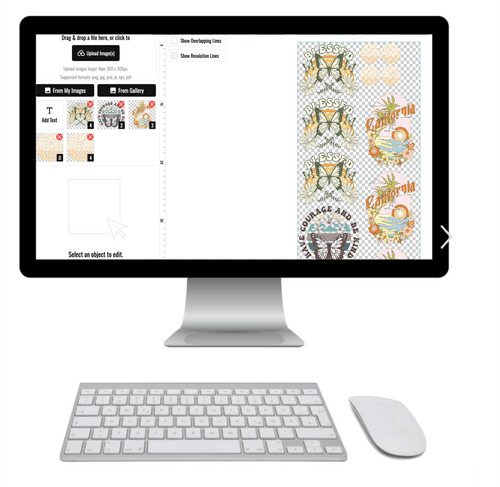
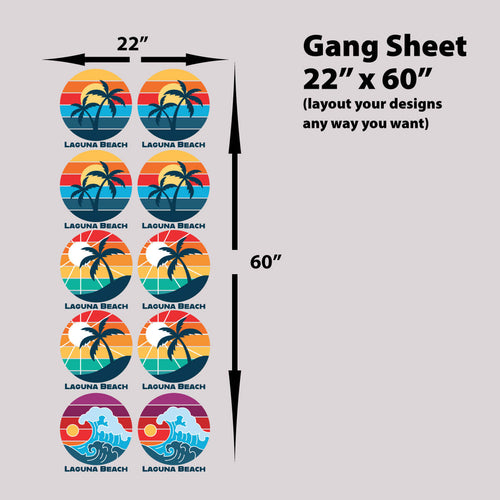
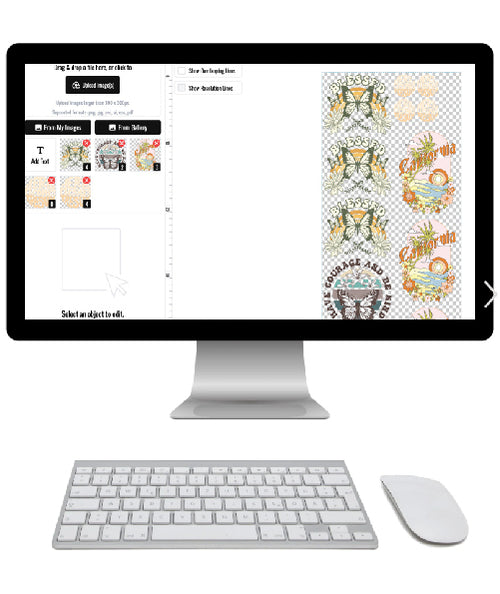
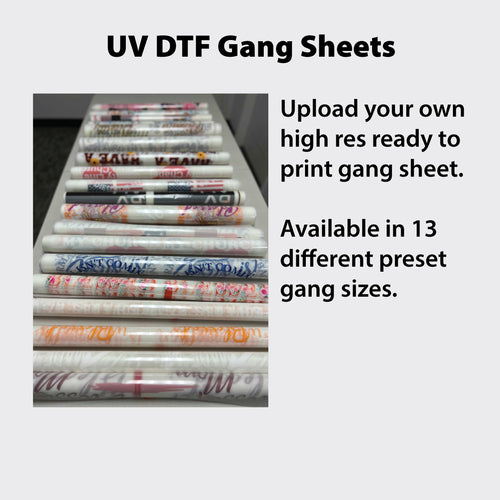
The key to being cost-effective is using every square inch of your transfer film. That’s exactly why we built our Auto-build gang sheet builder. This simple tool lets you arrange multiple designs—all different sizes and shapes—onto a single large sheet, a process made incredibly simple due to its ease of use.
By grouping your print jobs together, you slash material waste and bring down your cost per design. This makes professional-quality printing accessible and cost-effective, whether you’re running a small batch of custom orders or a big run for your clothing line.
The builder streamlines the whole process, bridging the gap between your perfected files and high-volume production. And for more technical know-how, understanding the ideal heat press settings for DTF transfers will make sure your perfectly printed designs are applied flawlessly.
Leveraging Personalization to Create Designs People Crave
The days of one-size-fits-all, mass-produced apparel are on their way out. Today's customers aren't just buying clothes; they're building an identity. They want apparel that tells their unique story, shares an inside joke, or shows off their community pride.
This shift has made personalization one of the most powerful forces in the game. It’s completely changed the answer to "what makes a good t-shirt design." It's no longer just about a cool graphic. It's about connection. A design that feels like it was made just for them will beat a generic one every single time. This is a massive opportunity for small businesses and independent creators who can tap into those specific desires.
The Explosive Growth of Custom Apparel
The numbers don't lie. The custom t-shirt printing market has become an absolute powerhouse, valued at $5.16 billion and on track to nearly double to $9.82 billion by 2030. That’s a compound annual growth rate of 11.5%, blowing past the general t-shirt market's growth.
Even more telling, the artwork segment—designs with custom slogans and personal messages—is growing even faster at 12.1% annually. This confirms what we see on the ground: people are actively looking for designs that let them express themselves. You can dig deeper into these t-shirt industry statistics to see just how strong the demand for unique apparel really is.
This trend is a game-changer. It proves that customers not only want custom designs but are willing to pay a premium for them. The real key is having the right tools to meet that demand without breaking the bank.
DTF Printing: The Engine of Personalization
Not long ago, creating custom one-off shirts was a costly nightmare. Traditional methods like screen printing demanded high minimum orders and steep setup fees for every single design. This made it practically impossible to produce small batches or unique items profitably, shutting the door on creators who wanted to test new ideas or serve niche audiences.
Direct-to-Film (DTF) printing has completely flipped the script. Because DTF doesn't need screens or complex, time-consuming setup, it's incredibly cost-effective for producing even a single, unique t-shirt. This technology gives creators the power to bring any custom vision to life, no matter how specific.
With DTF, personalization is no longer a luxury—it's a practical and profitable business model. You can offer endless customization without the financial risk of traditional printing methods.
This makes DTF the perfect technology to capitalize on the personalization movement. Whether you’re making a shirt for a family reunion, a local sports team, or an inside joke for an online community, DTF makes it happen.
Capitalizing on the Customization Movement
To win in this market, your strategy needs to be built around flexibility and efficiency. Instead of printing hundreds of the same thing, you can create dozens of highly targeted graphics for different micro-niches. This is where your production tools become critical for staying profitable.
For ultimate ease of use and cost-effectiveness, our Auto-build gang sheet builder is an essential tool. It lets you arrange multiple custom designs onto a single transfer sheet, which drastically cuts down on material waste and lowers your cost per print. This streamlined process makes it simple to manage a wide variety of personalized orders, turning the demand for unique apparel into a scalable and profitable part of your brand.
Your Essential T-Shirt Design Checklist
Taking a killer idea from your screen to a real, wearable t-shirt involves a lot of moving parts. To make sure nothing slips through the cracks, it’s smart to have one last quality check before you hit “send” on your art files.
Think of this as your pre-flight checklist. It's a quick, simple tool to gut-check your work and ensure you're consistently delivering high-quality, print-ready designs that actually sell. This three-stage process covers everything we've talked about, turning theory into a set of actionable questions.
Running through these steps will help you spot potential problems early, saving you time, money, and the headache of a bad print run. It's the final guardrail between a good design and a great one.
Stage 1: Concept and Audience Check
First things first, let's make sure the core idea is solid and actually connects with the people you want to wear it. A good t-shirt design is built on a strong foundation. Without it, even the slickest artwork can fall flat.
- Is my core message instantly clear? Can someone get the joke, vibe, or point of the shirt in three seconds or less?
- Does this design speak to a specific niche? Am I using inside jokes, visual language, or references that a particular community will get and love?
- Is the concept authentic? Does the design feel genuine to its audience, or does it feel like it’s just chasing a trend?
Stage 2: Visual Design and Composition Check
Next up, let's look at the actual execution. This is where you double-check that your artistic choices are working together to bring your concept to life, creating something that’s balanced, engaging, and easy on the eyes.
- Is there a clear focal point? Does the design naturally draw the viewer's eye to the most important element first?
- Is the typography legible and a good fit for the mood? Is the font easy to read from a distance? Does its style actually match the message?
- Is the color palette effective? Do the colors pop against the shirt color you have in mind? Is the palette tight and cohesive, or is it all over the place?
Stage 3: Technical DTF Prep Check
Finally, it’s time for the technical rundown. This is your last, most critical step to ensure what you see on your monitor is exactly what you get on the fabric. Get this wrong, and nothing else matters.
- Is my file a high-resolution PNG? Double-check that it’s saved at 300 DPI. Anything less will look blurry or pixelated when printed.
- Does my file have a transparent background? This is non-negotiable. If it doesn't, you’ll end up with a big, ugly colored box printed around your graphic.
- Is the artwork sized correctly? Did I build the design at the exact physical dimensions I want it to be printed on the final shirt?
Once you've checked every box on this list, you’re officially good to go. For a super easy and cost-effective way to get your designs printed, our Auto-build gang sheet builder lets you pack multiple print-ready files onto one sheet, maximizing every inch of your transfer film.
Still Have Questions About T-Shirt Design?
Even the best designers hit a snag or two. Let's walk through some of the most common questions that pop up, reinforcing the core principles that separate a good design from a great one. Getting these details right gives you the confidence to finalize your artwork and send it to print.
What's the Absolute Best File Format for T-Shirt Printing?
For DTF, you can't beat a high-resolution PNG (at 300 DPI) with a transparent background. This is the gold standard. It keeps your edges crisp and ensures we only print your design—not a big white or colored box around it.
Vector files, like AI or EPS, are also top-tier choices. Their biggest advantage is that you can scale them up to the size of a billboard without losing an ounce of quality.
How Do I Pick the Right Colors for My Design?
Always, and I mean always, start with the color of the shirt you're printing on. You need strong contrast so your design is easy to read from a distance. A simple, limited palette of just 2-4 colors almost always looks more polished and professional.
Think about the vibe you're going for, too. Use a little color psychology to tap into the right emotion for your brand and connect with your audience.
How Can I Make My Design Actually Unique?
True uniqueness isn't about just being different; it comes from having a sharp concept and really knowing your niche. Ditch the generic clip art. Focus on creating custom illustrations or clever wordplay that speaks directly to a specific community's inside jokes, passions, or values.
Personalization is your secret weapon. A design that feels like it was made just for them will always win.
The most memorable designs don't try to appeal to everyone. They aim to be the absolute favorite shirt for a specific person or group, creating a much stronger connection.
Bringing those unique ideas to life without breaking the bank is where the real magic happens. To make it incredibly easy and cost-effective, our Auto-build gang sheet builder lets you combine multiple print-ready designs onto a single sheet. This simple step maximizes every inch of film and dramatically lowers your cost per print.
Ready to see your perfect design come to life? The team at Lion DTF Transfers makes it simple to turn your vision into vibrant, durable transfers that are ready to press. Get started with our premium DTF transfers today!