


You've got a Tucson pop-up coming up, a club tournament around the corner, or a small product drop that can't wait for a long production queue. The artwork has several colors, the garment sizes are mixed, and ordering a large minimum would leave you with boxes of leftovers. That's where DTF Tucson buyers have a real decision to make, not just a choice between two decoration methods.
Direct-to-film transfers make sense when short runs, complex artwork, flexible fabrics, and fast fulfillment matter more than the lowest possible per-piece price on a very large order. Screen printing still has a place, especially for high-volume jobs with simple spot-color artwork. The mistake is treating either process as the automatic answer.
Tucson's expanding market gives creators, teams, breweries, schools, and small brands more reasons to choose a process that matches the job. The metro population reached 1,074,685 on January 1, 2025, compared with 1,065,239 in 2023 and 1,058,224 in 2022, according to the Federal Reserve's Tucson population series. That growth supports a broader customer base, but it also means more buyers need practical guidance before they place an order.
Why Tucson Creators Are Choosing DTF Right Now
A small Tucson brand sets up a merch table at a Sunday market. It has a photographic desert sunset design, a one-color chest logo, and a few shirts with individual names. The owner needs a modest batch before the event, not a large inventory commitment. Screen printing can produce excellent results, but the setup and quantity economics may work against that particular order.
The same issue comes up with a University of Arizona club preparing for a tournament. Thirty rush tees may include several garment sizes, a detailed mascot illustration, and a deadline measured in days. DTF lets the club use one transfer workflow across the order without building separate screens for every color or forcing the group into a large minimum.
A brewery with a staff of six faces a different version of the problem. It may need branded polos, aprons, or performance garments in a small quantity, with a logo that includes shading and multiple colors. DTF is usually the more practical recommendation when the order combines low volume, artwork complexity, and a hard deadline.
Tucson demand favors flexible production
Tucson's event calendar creates recurring opportunities for small-batch apparel. Gem and mineral events, rodeo season, tourism traffic, pop-up markets, and maker launches all reward sellers who can test designs without committing to a warehouse-sized inventory. A design that sells well can be reordered, while a weak design doesn't trap cash in unsold garments.
Manufacturing also matters to the local buying picture. In 2024, manufacturing represented 28,800 jobs, or 7.1% of total Tucson metro employment, and manufacturing accounted for 15.1% of Tucson's GDP in 2023, compared with 10.2% nationally, according to the University of Arizona's Tucson manufacturing report. That industrial base supports demand from aerospace, defense, production, technical, and operations-oriented businesses that may need branded workwear rather than novelty tees.
Remote founders have another reason to choose DTF. They don't need to visit a storefront if they can upload artwork, approve a layout, and receive ready-to-press transfers by shipment. Regional providers increasingly support ship-to-door ordering, gang-sheet building, UV DTF, and statewide delivery. Practical rule: Choose DTF when the job changes often, the artwork is visually complicated, or the deadline is more important than squeezing the last possible reduction from a large run.
How DTF Transfers Actually Work
DTF starts with artwork, but the finished result depends on what happens after the upload. A printer processes the file through RIP software, prints the design on PET film, adds a white underbase, applies adhesive powder, cures the transfer, and bonds it to a garment with a heat press.

The five production stages
- Design and RIP processing: RIP software separates and manages the printable color layers. It also controls ink placement and the white layer beneath the artwork.
- CMYK printing on PET film: The printer lays down pigment ink in the familiar cyan, magenta, yellow, and black process. The film carries the image until pressing, so the garment itself doesn't need to absorb the design during printing.
- White underbase application: White ink prints beneath the color image. This underbase keeps colors bright on black and dark garments and gives the design a visible foundation on synthetic materials.
- Adhesive powder application: Hot-melt polyurethane adhesive powder covers the wet printed area. The powder is then cured so it can bond the ink layer to the fabric during pressing.
- Heat pressing and peeling: Heat and pressure activate the adhesive and transfer the design from the film to the garment. Depending on the film and supplier, the carrier may be hot-peel or cold-peel. Hot-peel film is removed while warm, while cold-peel film needs time to cool before lifting.
The DTF transfer process guide provides a useful companion explanation for buyers who want to see how the layers work together. The important takeaway is that you're paying for more than an image printed onto plastic. You're paying for a controlled color layer, a white foundation, adhesive coverage, curing, and a transfer engineered for heat-press application.
Neutral DTF specifications commonly describe a CMYK plus white and adhesive-layer workflow at about 1200 DPI, using pigment ink and hot-melt PU adhesive powder, as outlined in DTF technical specifications. Those specifications also identify common operating ranges of 240 to 280°F, 40 to 60 PSI, and 10 seconds, although the transfer supplier's instructions should control the final press settings.
The white underbase is the key reason DTF handles cotton, polyester, nylon, spandex, and blends without depending on fabric absorbency alone. It gives the color image a stable, opaque surface, while the adhesive layer creates the bond after curing and pressing.
DTF vs Screen Printing for Tucson Buyers
The right comparison isn't “Which process is better?” It's “Which process fits this order?” For Tucson buyers, the major dividing lines are minimum quantity, artwork complexity, fabric mix, turnaround, setup, and how much the order rewards repetition.
One Tucson screen-printing provider describes a 48-piece screen-printing minimum and a 12-piece DTF minimum in its service information, as shown by Heart and Hook's Tucson printing page. That distinction matters to clubs, small brands, and event sellers who need a useful quantity but don't want excess stock.
| Criteria | DTF Transfers | Screen Printing |
|---|---|---|
| Minimums | Better for small orders and mixed quantities | Usually stronger economics at larger quantities |
| Color count | Handles full-color, gradients, and photographic artwork without separate spot-color screens | Best suited to simple spot-color artwork |
| Fabric type | Works across cotton, polyester, nylon, spandex, and blends when pressed correctly | Works well on standard garments, with fabric and ink selection affecting the result |
| Turnaround | Strong choice for rush work measured in days | Better when the schedule allows production setup |
| Setup cost | Lower setup burden for changing artwork and small batches | Screen preparation can make small, complex jobs less efficient |
| Per-piece cost | Often favorable for short runs and varied designs | Usually more attractive for large runs with repeated simple artwork |
| Durability | Durable when adhesive, heat, pressure, and wash care are handled correctly | Durable when the screens, ink, curing, and garment are matched correctly |
Where DTF wins
I recommend DTF for runs under roughly 50 pieces, full-color or photographic designs, mixed sizes, and rush work measured in days. It's also the better choice when every shirt may carry a different name, number, or small artwork variation. The process doesn't force you to treat every design as an identical repeat.
Screen printing wins for large runs with one to three spot colors on standard cotton tees, especially when the buyer can wait about a week. Once the artwork is simple and the quantity is high, screen setup gets distributed across more pieces, and the per-piece economics usually improve.
The practical rule is fast:
- Small quantity, complex art, mixed designs, or urgent deadline: choose DTF.
- Large quantity, simple repeated art, standard cotton, flexible deadline: quote screen printing.
- Several designs in one order: compare a gang sheet before choosing either process.
For a deeper technical comparison, review how DTF and screen print transfers differ, then ask for a quote based on the actual artwork and quantity. Generic price claims are less useful than a side-by-side quote for the specific job.
What to Expect From Tucson DTF Providers
Most Tucson DTF providers offer a predictable core service: upload artwork, choose a transfer size or gang sheet, select shipping option, and receive a film transfer ready for pressing. The quality of the experience depends less on the order form than on how carefully the provider handles artwork, white ink, powder coverage, curing, and instructions.
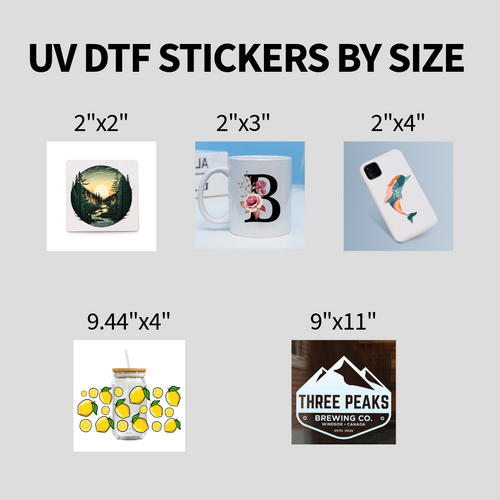
For transfer-only work, buyers commonly encounter one to three business days for standard turnaround, with same-day rush service often available when files arrive by mid-morning. Transfers may be priced by square inch, while gang sheets are often sold by linear foot or as a flat sheet rate. Because the verified DTF data supplied here doesn't establish market-wide pricing or turnaround benchmarks, treat the table below as a buyer's checklist, not a universal Tucson price list.
| Service | Typical Range | Notes |
|---|---|---|
| Transfer-only turnaround | One to three business days | Confirm the production clock before ordering |
| Rush service | Same-day may be available | Ask about the file cutoff and pickup window |
| Transfer pricing | Often quoted per square inch | Request the exact quote for your design dimensions |
| Gang sheets | Commonly quoted by sheet or linear foot | Ask which sheet sizes the provider supports |
| Artwork format | PNG with transparent background is widely preferred | Confirm how the shop handles JPEG files |
| Artwork resolution | 300 DPI is a common production target | Size the file to its final printed dimensions |
| Local fulfillment | Pickup may be available | Confirm the ready time, not just the order date |
| Arizona delivery | Shipping is an option for remote buyers | Ask for the carrier estimate and production time separately |
Files determine the result
Send a transparent PNG at 300 DPI, sized to the final print dimensions, unless the provider gives different specifications. Avoid unnecessary spot-color instructions for a process built around CMYK and white. If your artwork begins as a low-resolution image, ask whether the shop offers vector cleanup or file preparation before production.
Ask four questions before approving the order:
- Color control: Does the provider use color profiling or a proofing process?
- White underbase: How will the white layer be handled on a dark garment?
- Cutting: Will transfers arrive individually cut, or will the full sheet need trimming?
- Pressing guidance: Are temperature, pressure, time, and peel instructions included?
A provider should also explain how it handles transparent edges, small text, distressed effects, and fine gradients. Don't assume that a file that looks sharp on a phone will print sharply at shirt size. Review the artwork at its intended dimensions before you pay.
If you're outside Tucson, shipping can be more useful than pickup. A remote founder, Arizona print shop, or online seller can order transfers without coordinating a storefront visit, but should separate production time, carrier time, and pressing time when planning the launch.
Getting the Most From a Gang Sheet Builder
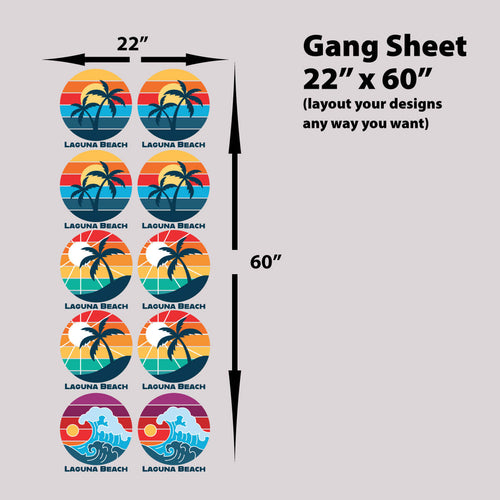
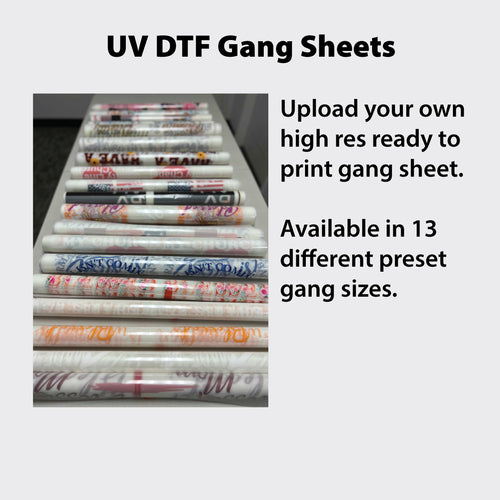
A gang sheet puts multiple designs on one sheet of transfer film. That simple change can reduce empty space, consolidate production, and make a mixed order easier to manage. The primary advantage appears when a job includes different logos, names, sizes, or quantities that would otherwise be ordered as separate transfers.
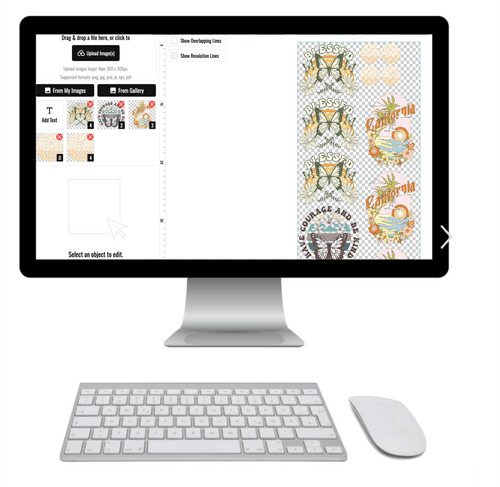
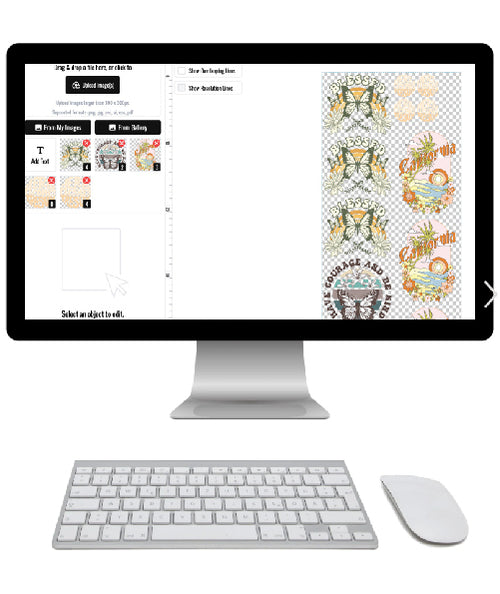
The Auto-build gang sheet builder is the cost lever many local buyers overlook. It automatically nests designs by their bounding boxes, rotates files when that improves fit, and snaps the layout to supported sheet sizes. That removes the wasted margins and awkward gaps common in hand-arranged sheets.

Where automated layout pays off
The supplied market guidance identifies potential savings of 30% to 50% compared with ordering designs individually, as represented in the gang-sheet builder infographic. The exact result depends on artwork dimensions, sheet rules, and how efficiently the designs pack, but the underlying logic is straightforward. Shared film means you aren't paying for a separate piece of unused space around every design.
Use the Auto-build tool when:
- Designs vary in size: A large back print and several small chest logos can share a layout.
- Quantities are uneven: Extra names, numbers, or replacement designs can fill otherwise unused space.
- A team needs multiple decoration types: One sheet can combine a club logo, sponsor marks, and player identifiers.
- You're testing a product drop: Several designs can be printed together without ordering a separate sheet for each concept.
A Tucson team might have three designs for an event collection and need different quantities of each. Auto-build handles the packing problem faster than manually dragging files around, and it gives the buyer a clearer view of how much film the order requires.
When hand-arranged layouts still make sense
Manual placement wins when spacing, alignment, and brand presentation are essential. A print shop preparing a tightly controlled logo kit may want every mark oriented identically, separated by a precise cutting path, or positioned for a particular production routine.
My recommendation is simple. Start with Auto-build for ease of use and cost effectiveness, inspect the preview carefully, and switch to a hand-arranged layout only when the visual or cutting requirements justify the extra control. The builder isn't merely a convenience feature. It's a way to turn a scattered order into a more efficient print plan.
Pressing DTF Transfers the Right Way
A good transfer can still fail on the shirt if the heat press is poorly calibrated. Tucson shops and home users often work with presses whose dials don't reflect the actual platen temperature, so verify the surface with a thermocouple strip before running production. Don't trust the display alone.
The infographic supplied for this workflow shows a 240-280°F and 10-second hot-peel setup, medium pressure around 40 to 60 PSI, and 10 seconds, as documented in DTF transfer specifications. Follow the instructions that arrive with your specific transfer, because film, adhesive, garment, and press calibration all affect the correct setting.
A reliable press checklist
- Verify the platen: Test the actual surface temperature with a thermocouple strip. Check more than one area if the press has uneven heating.
- Prepare the garment: Pre-press briefly to remove moisture and wrinkles. Place the transfer flat, with the printed side facing the fabric and the carrier film positioned according to the supplier's directions.
- Use medium-firm pressure: Pressure activates the adhesive across the design. Increasing heat or dwell time won't fix a platen that isn't applying enough pressure.
- Use the correct peel: Peel a hot-peel carrier immediately while it's hot, in one smooth motion. For a cold-peel transfer, wait until the film cools before lifting.
- Repress the surface: A short repress with parchment or a Teflon sheet can help secure the finish and reduce unwanted shine, provided the transfer supplier permits it.
Cotton, polyester blends, and tri-blends can all work well with DTF. For 100% polyester, lower heat may help limit dye migration, but use the supplier's fabric-specific instructions rather than guessing.
If an edge lifts, check pressure and platen contact first. More heat is not a substitute for correct pressure.
Wash finished garments inside out in cold water, then tumble dry on low or hang dry. Test one garment before pressing an entire order, especially when the fabric is dark, heat-sensitive, or performance-oriented.
Ordering DTF in Tucson Without the Guesswork
Start with the job, not the decoration method. Write down the quantity, garment type, artwork count, deadline, and whether you need pickup or shipping. If the order is a short run with complex art, mixed designs, or a tight deadline, route it toward DTF. If the quantity is large and the design uses a few simple spot colors, request a screen-print quote too.
Follow this order path
- Define the job: List garment colors, sizes, fabric types, design dimensions, and the exact date the apparel must be ready.
- Prepare artwork: Use a high-resolution transparent PNG sized to the final print. Keep the color requirements clear, and ask the provider to inspect files that originated as JPEGs or screenshots.
- Build the sheet: Upload multiple designs to the Auto-build gang sheet builder. Review the preview, check rotation and spacing, and confirm that the sheet includes every logo, name, and number required.
- Confirm production: Ask when printing and curing will finish, then separate that time from pickup or shipping time. For a rush order, send quantity, sizes, due date, garment blanks, and pickup requirements in the first message.
- Plan pressing: Verify the heat press with a thermocouple, test the fabric, and follow the transfer's hot-peel or cold-peel instruction.
- Inspect the result: Check color, registration, edges, adhesive coverage, and peeling on the test garment before pressing the complete order.
- Arrange fulfillment: Choose local pickup when available, timing and location make it practical, or request shipping when the order is coming from outside Tucson. The guide to custom DTF transfers near Tucson can help buyers compare an upload-and-ship workflow with local collection.
Tucson buyers should also consider the broader regional market. The University of Arizona's population profile reports 1,093,761 residents in the Tucson MSA in 2025, with growth of 0.7%, as shown in its Tucson MSA population profile. That makes shipping and repeatable file workflows useful for businesses serving customers beyond the city proper.
Lion DTF Transfers offers ready-to-press custom DTF transfers, gang sheets, online artwork uploads, shipping, and pickup options, along with pressing guidance and file support. If your Tucson order has mixed designs or a deadline, build the sheet first, verify the press settings, and visit Lion DTF Transfers to upload the artwork and choose the fulfillment option that fits your job.
Email orders@LionDTF.com or Text or Call: 833-350-5466