



You're probably dealing with one of two situations right now. You need custom prints fast for a launch, event, school order, or client deadline, or you're tired of ordering transfers that look fine on screen and fail once they hit the press.
That's why DTF San Diego searches keep climbing. Local brands, side hustles, print shops, and event teams want a process that moves quickly without forcing huge order sizes or sacrificing color. A key advantage of DTF isn't just the print itself. It's the full workflow. File prep, gang sheet setup, order timing, pickup planning, and press application all have to line up.
When that workflow is clean, DTF is one of the most practical ways to get professional apparel out the door on a tight schedule. When it's sloppy, the same job turns into wasted film, reprints, and late deliveries.
Why San Diego Creatives Are Choosing DTF Transfers
A lot of San Diego apparel work happens under deadline pressure. Convention merch, pop-up market runs, gym apparel, school spirit wear, nonprofit event shirts, and last-minute staff uniforms all share the same problem. They need speed, flexibility, and print quality at the same time.
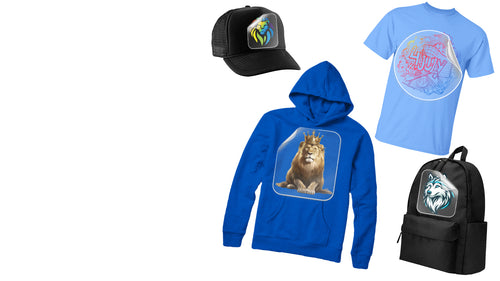
DTF San Diego orders fit that reality better than many older decoration methods. Direct-to-Film lets shops produce full-color, high-contrast designs on a wide range of fabrics without the color limitations of screen printing or the setup drag that comes with more traditional production methods. For local creators, that matters more than the technology buzzwords. It means fewer compromises when the design has gradients, small details, or bold color on darker garments.
The growth behind DTF isn't anecdotal. The global Direct-to-Film printer market was valued at USD 965.82 million in 2025 and is projected to reach USD 1,398.32 million by 2030, reflecting rapid adoption in markets including San Diego, according to DTF market projections and usage trends.
What makes DTF practical locally
Three things keep pushing DTF forward in San Diego:
- Short-run flexibility because many jobs don't justify long setup cycles.
- Fabric range because local businesses print on cotton, polyester, and blends constantly.
- Urgent turnaround because plenty of orders are tied to fixed dates and live events.
DTF works best when the artwork, production file, and pickup timing are treated as one system, not three separate tasks.
That's the part many buyers miss. A good result doesn't start when the transfer arrives. It starts when the file is built correctly and the order is placed with the end use in mind. If a creator needs press-ready sheets for a Saturday market, pickup timing matters. If a print shop is batching left-chest logos and full backs for multiple customers, gang sheet strategy matters more than almost anything else.
Where businesses usually lose time
The most common slowdown isn't the printer. It's indecision before ordering.
A few examples:
- The file isn't transparent, so cleanup is needed.
- The artwork is too low resolution, so edges print poorly.
- The sheet layout wastes space, so costs rise.
- Pickup plans are vague, so a “fast” order still misses the garment production window.
San Diego creators who get consistent results usually treat DTF as an operational tool, not just a print option.
Evaluating San Diego DTF Suppliers for Quality and Speed
A common San Diego rush order goes like this: art is approved at noon, garments are arriving from another vendor, and the transfer pickup has to happen before traffic stacks up on the 5 or the 805. In that situation, supplier quality is only half the job. The other half is whether the shop gives clear cutoff times, catches file problems early, and has the order ready when your press crew needs it.

Use a simple scorecard
I judge local DTF suppliers by how they handle production risk, not how polished the storefront looks. A clean ordering page helps, but it does not tell you whether small text holds, whether film peels cleanly, or whether a same-day order is ready for counter pickup.
| What to check | Why it matters |
|---|---|
| Print durability | Shows whether the transfer will hold up on repeat-wear jobs like uniforms, merch, and event apparel |
| Film type | Changes peel behavior, press rhythm, and how fast your team can apply transfers |
| Pickup reality | Confirms whether "fast turnaround" means printed, cured, packed, and available for pickup |
| File standards | Shows whether the shop protects output quality or pushes bad files straight into production |
| Support responsiveness | Matters when art changes, quantities shift, or a customer adds sizes late |
Durability still deserves attention, especially for school programs, staff shirts, and branded apparel that gets washed hard. If a supplier cannot explain expected wear performance or basic care guidance, that usually points to weak process control somewhere upstream.
Questions worth asking before you order
Ask specific operational questions.
- What is the actual pickup window for orders placed today? A print may be finished before the front counter is ready to release it.
- What file problems get flagged before production starts? Good shops stop low-resolution art, hidden backgrounds, and bad sizing before they burn time and material.
- What film are you running for this order? Hot-peel and cold-peel workflows affect application speed and labor planning.
- Will someone review gang sheet efficiency, or is that fully on the buyer? This matters if you are trying to control cost across multiple logos and placements.
If you are comparing local options, review how different providers explain custom DTF transfers near me services, especially around file review, turnaround definitions, and press instructions. Shops that stay vague before payment usually create more cleanup work after pickup.
Practical rule: If a supplier cannot explain file requirements, production cutoffs, and pressing instructions in plain language, your team will probably end up solving preventable problems on press day.
What separates a usable supplier from a risky one
The stronger San Diego suppliers have a consistent pattern. They reject weak art, confirm sizing before print, communicate same-day limits clearly, and tell you exactly how the transfer should be applied. That saves time across the full local workflow, from upload to pickup to pressing.
The weaker shops often accept everything and sort it out later. That sounds convenient until you are standing in the shop with garments due out the door and a transfer sheet that needed correction yesterday.
For recurring apparel work, I would rather use a supplier with firmer standards and fewer surprises than one promising speed without process. Fast only helps when the transfer is clean, the order is complete, and the pickup timing matches the production window.
Preparing Your Artwork for Flawless DTF Prints
Most DTF problems start before ink touches film. The artwork file is the foundation, and if it's wrong, the press operator can't save it later.
Successful DTF transfers require a minimum 300 DPI resolution with transparent background files in PNG, PSD, AI, or PDF formats to prevent pixelation. Adhesion failure rates can exceed 25% in unoptimized setups that ignore these specs, as noted in the verified technical guidance for DTF production.

The non-negotiables
These are the basics that need to be correct before upload:
-
Resolution must be at least 300 DPI
If the file is soft on screen, the film will show it. Fine outlines, halftone-style details, and small type suffer first. -
Background must be transparent
If the artwork has a hidden background box, it won't disappear on press. It becomes part of the transfer. -
Export format matters
PNG is common for ready-to-print raster art. PSD, AI, and PDF are useful when layered or vector-based source files need cleaner handling.
A lot of creators still mix up raster and vector art. If your design work includes logos, text-heavy compositions, or line art, reviewing raster vs. vector artwork differences can save you from sending a file that looks sharp only at one size.
Gang sheets are where cost control happens
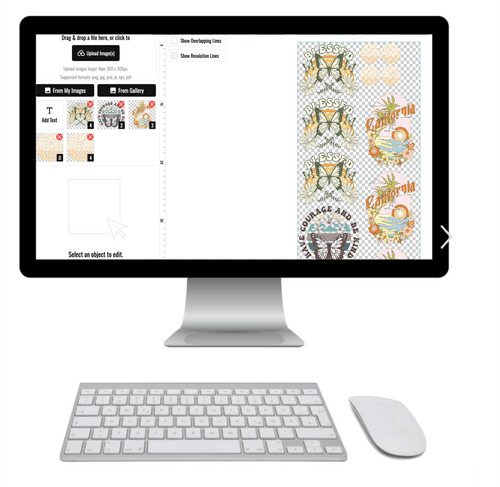
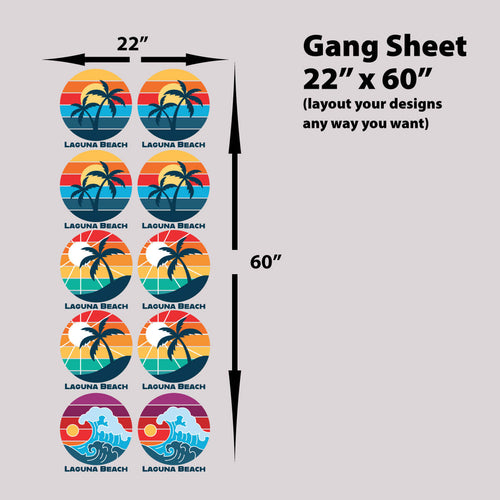
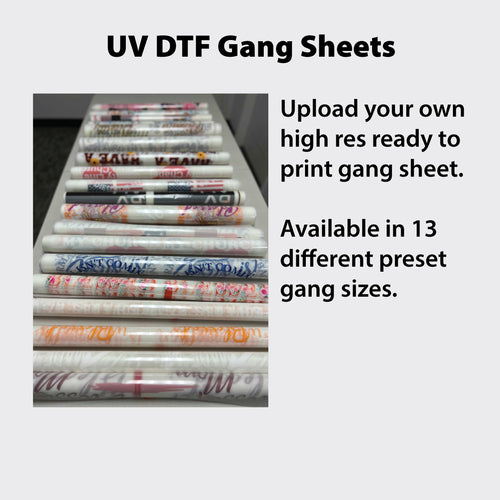
A gang sheet is just one print sheet holding multiple designs, logos, sizes, or placements. In practice, it's one of the most important levers in DTF ordering because it directly affects wasted space.
If you manually build gang sheets, the common mistakes are predictable:
- Too much empty margin
- Random sizing between logos
- Poor nesting of small and large graphics
- Missed opportunities to combine front, back, and sleeve art
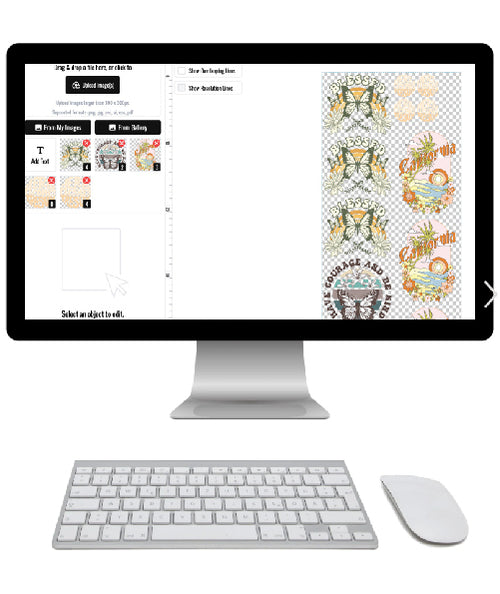
That's why I recommend using an Auto-build gang sheet builder when speed and cost control matter. It removes a lot of manual layout friction and helps maximize usable sheet area. For small businesses and creators running mixed designs, that's often the difference between a profitable batch and a sloppy one.
A better file prep workflow
Use this order of operations:
- Finalize garment placements first so you know whether you need left chest, full front, full back, or sleeve art.
- Clean the artwork next by removing stray pixels, hidden layers, and non-transparent backgrounds.
- Scale intentionally instead of resizing by eye during checkout.
- Build the sheet last once every design is production ready.
Bad files don't become good prints because the turnaround is fast.
If you want faster approvals and fewer reprints, treat artwork prep as production, not admin.
Understanding DTF Pricing and Placing Your Order
A San Diego order usually goes sideways in one of two places. The buyer either approves the wrong size because the mockup looked fine on a screen, or pays more than necessary because the sheet was built with too much dead space.
DTF pricing makes sense once you stop treating it like screen printing. You are usually paying for print area, sheet size, or both. That changes how local brands, event vendors, schools, and print shops should buy. Small runs stay practical. Test orders stay practical. Last-minute reorders stay practical too, if the file and layout are already dialed in.
Price the sheet, not just the design
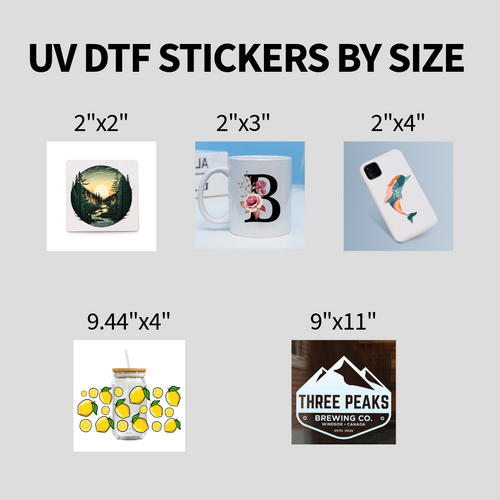
The cheapest-looking order is not always the cheapest finished order. A single chest logo may look inexpensive by itself, but the real question is how efficiently it shares space with back prints, sleeve hits, neck labels, or alternate sizes on the same sheet.
A few patterns show up all the time:
- Separate uploads for small graphics often create avoidable waste
- Mixed placements become more cost-effective when they are grouped intentionally
- Reorders get easier when you standardize art sizes before checkout
- One extra logo or name add-on is usually manageable in DTF, which is why it works well for short local runs
That is a key buying advantage in San Diego. You can run a small batch for a brewery event in North Park, test a staff uniform update for a restaurant group, or fill a one-off creator order without building your week around a large minimum.
Order with production in mind
The fastest orders come from buyers who place them like production managers, not first-time shoppers.
Use this sequence:
-
Choose the buying format
Order by individual size only if every graphic is straightforward. If you have multiple placements, size variants, or several SKUs, a gang sheet usually gives you better control over cost. -
Lock dimensions before upload
“Adult full front” is not a size. Put actual width and height on every placement so the vendor is printing instructions, not guesses. -
Name files by placement
Use labels likeLeft-Chest_3.5inorBack_11in. That cuts approval errors and speeds up communication if the shop has a question. -
Check press compatibility before paying
If your production floor uses lower-pressure clamshell presses, confirm that the transfer and adhesive system fit your setup. Shops that press daily know this step saves returns and ruined blanks. -
Set the fulfillment method around your press schedule
Pickup works best when your garments are already counted, sorted, and ready to press. Shipping works better when the order is feeding a later production window.
If your team needs a refresher on application variables before ordering, review these heat press settings for DTF transfers so the transfer spec matches the equipment you use.
Local ordering mistakes that cost money
Sizing errors are more expensive than print errors. I see that constantly on rush jobs. A design approved at the wrong width can still print perfectly and still be unusable.
The other common problem is bad deadline math. Start from the moment finished garments need to be packed or handed off. Then work backward through pressing, sorting, pickup, and proof approval. That approach is what keeps a Friday event order from turning into a Thursday panic.
For San Diego buyers, local pickup usually gives you tighter control when timing is the priority. Shipping still makes sense if your production day is later, your team is splitting fulfillment across locations, or the transfers are joining a larger apparel workflow. The right choice depends on when you can press, not just when you can place the order.
Local Pickup and Application Tips for Pro Results
Once your order is ready, the job still isn't finished. The final result depends on what happens between pickup, storage, and pressing.

The local advantage is straightforward. The DTF process involves printing onto a special PET film, coating it with adhesive, curing it, and heat-pressing it, enabling same-day turnaround and local pickup for urgent orders across San Diego, as described in Redwood Transfers' overview of custom DTF printing in San Diego.
Pickup timing matters more than most buyers think
If the transfer is for a rush event, pick it up when your production team can press it soon after. Don't grab it early, leave it exposed on a crowded worktable, and assume the final garment will be fine.
A better routine looks like this:
- Schedule pickup close to application time
- Transport sheets flat and clean
- Keep them away from excess dust, moisture, and unnecessary handling
That sounds basic, but rushed local jobs often fail on basic handling, not on printing.
Pressing basics that usually decide the outcome
The standard baseline for DTF pressing is 10 seconds at 240°F to 280°F with medium-to-firm pressure, followed by a cold peel after cooling completely, according to verified DTF heat press guidance. That same guidance notes a 5-second pre-press helps remove fabric moisture before application, which is especially useful when garments have been stored in humid conditions.
For 100% cotton, a firm 10-second press at 280°F is recommended in that source. Polyester needs a lighter touch, typically 7 to 10 seconds at 240°F, to reduce scorching risk.
Here's a useful reference if you want a practical setup guide before production: heat press settings for DTF.
After you've got the basics down, this quick visual walkthrough helps teams avoid rookie mistakes during application:
Cold peel usually gives you a little more forgiveness. Hot-peel workflows can move faster, but they demand tighter consistency from the operator.
What goes wrong in real shops
In practice, most failures come from four things:
- No pre-press
- Wrong temperature for the fabric
- Too little pressure
- Peeling before the transfer is ready
When local teams tighten those steps, DTF San Diego orders turn into dependable production, not emergency troubleshooting.
San Diego DTF FAQs and Final Ordering Checklist
Some questions come up on almost every order, especially from businesses switching over from screen printing, vinyl, or outsourced decorated apparel.
Quick answers that save time
Can DTF work on different fabric types?
Yes. DTF is commonly used across cotton, polyester, and blends when the transfer and press settings are matched properly.
Can I use a home iron?
For consistent commercial results, a real heat press is the safer choice. Pressure control matters too much to treat that step casually.
What's the biggest file mistake?
Low-resolution art and missing transparency cause more trouble than anything else.
Why do small orders make sense with DTF?
Because DTF is well suited to one-offs, test runs, and short local batches instead of forcing large minimum-style thinking.

Final ordering checklist
Before you place any DTF San Diego order, run this check:
-
Artwork is production ready
Resolution is high enough, edges are clean, and the background is transparent. -
Sizes are confirmed
Left chest, full front, back print, and sleeve placements are set before upload. -
Gang sheet strategy is intentional
You're not paying for empty space or building a sheet that's awkward to use later. - Pickup or shipping matches your press schedule The delivery method supports the actual garment deadline, not just the order date.
-
Application plan is clear
The operator knows the fabric type, press settings, peel method, and pre-press routine.
The real shortcut
The fastest way to get burned in DTF is to rush only the visible parts. Buyers focus on checkout speed and forget the production details that determine whether the transfer performs.
The fastest way to get good results is the opposite. Slow down on the file, sheet layout, and application plan. Then move quickly on the order itself.
If you need a practical option for gang sheets, single transfers, and local-ready DTF workflow, Lion DTF Transfers offers online ordering tools including an Auto-build gang sheet builder, plus support for creators and businesses that want cleaner file submission and faster turnaround.