


Maya has forty colorful shirts to deliver in five days. Mr. Alvarez needs team apparel for a school camp, but he can't afford wasted blanks, late shipping, or prints that crack after the first wash. Both buyers are asking the same practical question: should they find the closest pickup for DTF Long Beach, order from a nearby regional supplier in Irvine, or combine fast shipping with remote production?
The answer depends less on the word “local” and more on four details: what DTF transfers are, how quickly the supplier can produce them, how efficiently the artwork fits on a gang sheet, and whether the transfer is pressed correctly. This guide walks through each decision so you can order with confidence instead of guessing from a shop page. For more context on evaluating nearby options, see this guide to custom DTF transfers near Long Beach.
Ordering Custom Apparel in Long Beach Without the Guesswork
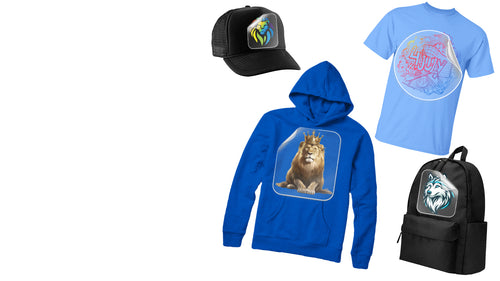
DTF, or Direct-to-Film, is a transfer process for decorating garments and other compatible materials. A printer creates the artwork on special film, applies adhesive powder, and uses heat to bond the finished image to fabric. You can order the transfer and press it yourself, or work with a decorator that handles pressing and finished apparel.
For a Long Beach buyer, the first decision is whether you need the physical transfer immediately or need the finished order to arrive on schedule. Pickup can matter when you need to inspect a sample, match a fabric in person, correct a sizing mistake quickly, or solve a rush problem. It matters less when your artwork is already approved, the garment specs are clear, and a regional supplier can ship within your production window.
Practical rule: Compare the promised arrival date, not just the supplier's distance from your address.
A regional ship-to model can be efficient when the printer has a simplified file-upload process and predictable production. A hybrid approach can work even better for some buyers. You might order printed transfers from a nearby Southern California supplier, choose fast shipping to Long Beach, and handle pressing at your studio, school, or shop.
The four decisions that prevent expensive mistakes
- Understand the product. Confirm whether DTF fits your artwork, garment material, quantity, and finish expectations.
- Check fulfillment. Ask whether the supplier offers pickup, standard shipping, rush production, or a combination.
- Build the sheet carefully. Group multiple designs on one film sheet so you aren't paying for unused space.
- Press and care for the transfer properly. Correct heat, pressure, peeling, and washing protect the result.
Long Beach has a serious decorated-apparel ecosystem. In January 2025, Impressions Expo Long Beach was described as its largest edition ever, with more than 300 companies reserving 124,000 square feet of floor space, according to Impressions Magazine's report on the 2025 expo. That industry presence gives local buyers plenty of choices, but it also means you should compare the actual workflow rather than assume every nearby provider offers the same turnaround or pickup experience.
What DTF Printing Actually Is and Why It Works
Think of DTF as a printed, heat-fused sticker for fabric. The image isn't cut from a single-color vinyl roll, and it isn't printed directly onto the shirt. Instead, the artwork is printed onto special PET film with water-based pigment inks. A hot-melt adhesive powder is then applied to the ink side, and heat presses the finished transfer onto the garment.

The process in three simple stages
First, print the artwork. The design is placed on PET film using pigment inks, including white ink when the garment needs an opaque base. That white layer helps preserve color on dark shirts.
Next, add adhesive powder. The powder coats the printed area and later melts under heat. It acts like the bonding layer between the ink and the garment.
Finally, heat press the transfer. Heat and pressure activate the adhesive, allowing the image to attach to cotton, polyester, nylon, spandex, blends, and many performance fabrics. The exact fabric still matters, especially when polyester can release dye into a light-colored print.
The most useful distinction is how DTF handles artwork. Screen printing typically requires separate screens and production preparation for each ink color. DTF doesn't charge by the number of colors in the same way, so a full-color illustration can be practical for a small run. That makes it useful for streetwear drops, school graphics, sponsor logos, and designs that change from one garment to the next.
Heat-transfer vinyl works differently again. Vinyl is excellent for clean names, numbers, and simple shapes, but detailed artwork may require multiple cut layers and weeding. DTF handles gradients, fine details, and photographic imagery without requiring you to weed or layer separate vinyl pieces.
For a clearer introduction to the method, review what DTF printing is and how it works. The main decision for your Long Beach order is straightforward: if you need vivid, detailed artwork across a small or mixed run, DTF often removes the setup friction that makes other methods cumbersome.
Who DTF Transfers Make Sense for in Long Beach
Tasha is launching a four-color capsule for an online streetwear shop. She doesn't want to commit to a large inventory before she knows which colorway will sell, and her artwork includes gradients and small illustrated details. Ordering transfers lets her produce a limited batch, press only the garments she needs, and reorder the design without rebuilding a screen setup.
For Tasha, pickup could be useful if she wants to approve a physical sample or fix a sizing issue before launch. It isn't automatically necessary if the supplier can send a proof, produce consistently, and ship within the launch schedule. Her best comparison is between the total delivery timeline and the cost of holding extra inventory.
Coach Diaz has a different problem. His school sports camp needs shirts with a team graphic, a sponsor mark, and individual player names. The front artwork may be identical, but the backs contain variable information. DTF handles that kind of mixed artwork naturally because each name can be printed as part of the transfer order instead of requiring a separate physical screen for every variation.
When DTF is a strong fit
- Small apparel drops: You can test a design without committing to a large inventory.
- Full-color graphics: Photographs, gradients, and detailed illustrations remain practical.
- Personalized garments: Names, numbers, and changing artwork can share one production workflow.
- Mixed fabrics: DTF can suit cotton, polyester, nylon, spandex, and blends when the transfer and pressing method match the fabric.
- Multiple garment colors: The same artwork can be applied to light or dark blanks, with appropriate white-ink handling.
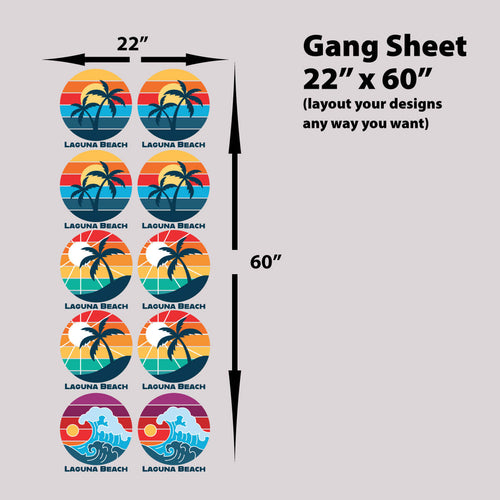
Gang sheets help both buyers. Tasha can place several logo sizes or colorways on one sheet, while Coach Diaz can group names and sponsor elements together. The DTF gang sheet optimization guide describes gang sheets as a way to spread setup and film costs across multiple designs. It reports that optimized gang sheets can cut material expenses by 40–60%, with example per-design costs moving from roughly $1.50–$2.50 to about $0.18–$0.40, depending on layout and production conditions.
DTF isn't always the cheapest choice for a large order of identical, one-color prints. Screen printing may still make more sense when the artwork is simple, the quantity is high, and the buyer values a highly standardized production run. The right choice depends on design complexity, quantity, personalization, and deadline, not just the garment count.
Choosing a Long Beach DTF Supplier You Can Count On
A supplier's location is only one part of the decision. Evaluate three things together: turnaround, color accuracy, and support. A shop a few miles away isn't useful if pickup is appointment-only, production timing is unclear, or nobody can answer a file-sizing question.
Long Beach buyers commonly face three fulfillment models:
| Fulfillment Model | Typical Turnaround | Best For | Trade-off |
|---|---|---|---|
| Local pickup | Same-day or next-day options may be available when offered | Rush corrections, in-person inspection, urgent projects | Pickup hours, appointment rules, and actual production location can vary |
| Regional ship-to | Professional DTF production is often framed around 24–48 business hours, according to industry turnaround guidance | Approved artwork, repeat orders, buyers who prefer delivery | You must include shipping time and may not inspect the transfer first |
| Hybrid fulfillment | Fast production followed by shipping or optional pickup | Buyers balancing speed, convenience, and production support | The service terms need to be confirmed before ordering |
Where local access helps
Local pickup can save time when a deadline is tight and the order is already ready. It can also help when you're matching a transfer to a specific blank, troubleshooting a failed press, or approving a sample before a larger production run. Those benefits are practical, but they're not guaranteed by a city name.
Existing Long Beach-area messaging is inconsistent. One provider presents pickup as appointment-only, while another describes Long Beach orders being shipped from nearby Santa Fe Springs rather than printed inside the city, as noted in the local-service information from DTF Print Fry. Ask direct questions: Where is the order produced? Is pickup available for this product? What does “same day” mean, production completion or customer collection?
Where distance matters less
File preparation, gang sheet layout, repeat artwork, and color approvals can often happen online. If your design is already tested and your supplier keeps production records, shipping may be simpler than arranging a pickup window.
Lion DTF Transfers offers online custom gang sheet building, ready-to-press transfers, UV DTF stickers, shipping, and pickup options for buyers in Irvine, CA, comparing local and regional fulfillment. Treat it as one supplier option, then confirm the current turnaround, pickup location, proofing process, and shipping choice before submitting a deadline-sensitive order.
Preparing Files and Building Gang Sheets the Easy Way
Most reprints begin before the printer touches the film. A blurry source file, hidden background, incorrect dimensions, or un-outlined font can create an avoidable delay. Send artwork that gives the production team a clear image, a clear size, and a clear placement.
Start with a production-ready file
Use these checks before uploading:
- Resolution: Prepare artwork at 300 DPI for clean edges and fine detail.
- Background: Export a transparent PNG when the design shouldn't print as a rectangle.
- Color mode: Use CMYK according to the supplier's upload guidance, and request help if brand color matching matters.
- Typography: Outline fonts or include the required font files so text doesn't change during processing.
- Dimensions: Set the artwork to the intended printed width and height instead of relying on a guess from the preview.
- Edges: Inspect small text, thin strokes, and semi-transparent effects at actual size.
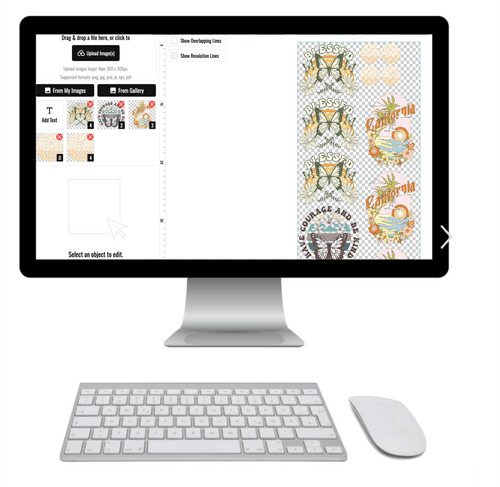
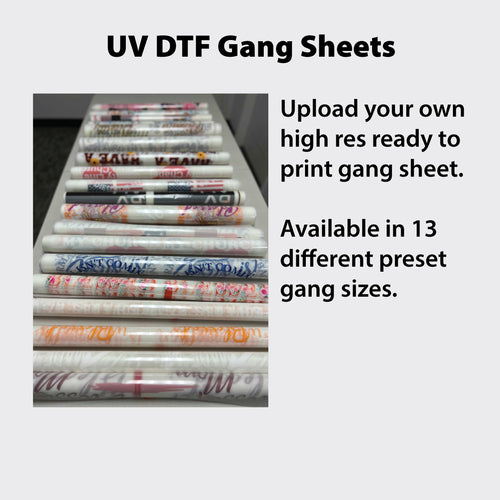
A gang sheet is one larger transfer sheet containing several separate designs. Instead of ordering every logo, name, or placement as an individual transfer, you arrange them together and use the film more efficiently. The savings come from reducing unused space and distributing setup and material costs across the sheet.
Use Auto-build instead of arranging every piece manually
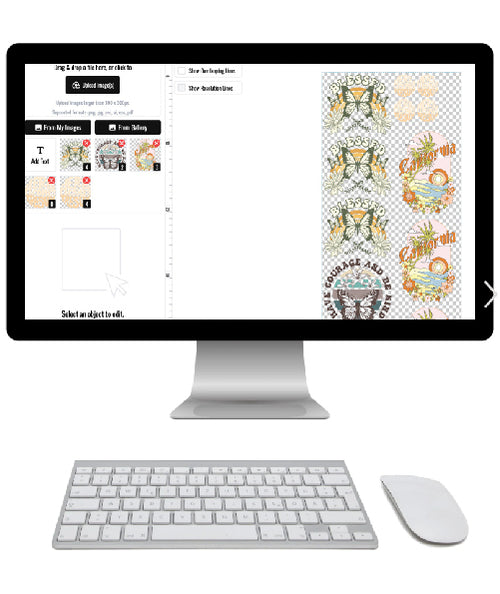
Manual layout can work for a few designs, but it becomes frustrating when you have different names, sizes, or placements. Lion's Auto-build gang sheet builder automatically arranges uploaded artwork on the selected sheet, helping you pack the available film without spending your evening nudging files into position.
The tool's core advantage is ease of use. A DTF gang sheet builder is designed to arrange multiple designs onto one transfer sheet, and modern nesting tools are described there as reaching roughly 85–95% packing efficiency. Your actual result depends on spacing, artwork dimensions, and the sheet size you select, so review the preview before checkout.

A practical ordering sequence
- Upload each design separately. Keep names, logos, and garment placements identifiable.
- Enter the final dimensions. A left-chest mark should not use the same width as a full-front graphic.
- Choose the film size. Select a sheet that gives the builder enough room without leaving excessive unused film.
- Run Auto-build. Let the tool arrange the artwork, then inspect gaps, orientation, and spacing.
- Check the proof. Confirm transparency, colors, text, and dimensions before ordering.
- Choose fulfillment. Use pickup when collection timing and access matter. Choose shipping when delivery is more convenient or the regional workflow is faster.
- Save the layout. Keep the approved file and sheet arrangement for consistent reorders.
For more guidance on planning sizes, spacing, and repeat orders, use this resource on DTF gang sheets. Auto-build isn't a substitute for checking the artwork, but it removes much of the repetitive layout work and makes cost control easier.
Pressing Transfers and Making Them Last
A good transfer can still fail if the press doesn't deliver consistent heat and pressure. Treat pressing as a repeatable production step, not a quick household ironing task.
Press-ready checklist
- Temperature: Start at 240-280°F.
- Time: Press for 7-10 seconds.
- Pressure: Use medium pressure.
- Peeling: Follow the film's hot-peel or cold-peel instruction. If you're unsure, test one transfer first.
- Fabric: Test unfamiliar polyester, coated materials, performance fabrics, or blends before pressing the full order.
Pre-press the garment briefly if the fabric holds moisture or wrinkles. Place the transfer flat, cover it as directed, and apply even pressure across the entire design. If an edge lifts during peeling, stop and follow the supplier's re-press instructions rather than pulling harder.
Hot-peel films release while warm, though some products need a short cool-down first. Cold-peel films must cool before removal. The label or supplier instructions take priority because film construction and adhesive behavior differ.
Wash care controls durability
Give the adhesive time to settle before the first wash. Then wash inside out in cold water or on a gentle cycle, dry on low heat, and avoid fabric softener and bleach. Harsh washing, excessive dryer heat, under-curing, and excessive pressing heat can contribute to edge peeling, cracking, or color softening.
Properly applied DTF transfers commonly sustain about 50–80+ wash cycles, according to DTF durability and wash-test guidance. Other industry testing reports durability beyond 80 washes, with stronger constructions approaching 80–100 washes, as described in this DTF durability overview. These are useful benchmarks, not a promise for every fabric, press, detergent, or wearer.
If you're ordering tonight, use this sequence:
- Upload artwork as a transparent PNG prepared at 300 DPI.
- Select a gang sheet size, or use the Auto-build gang sheet builder to arrange designs efficiently.
- Choose fulfillment, including Standard or Overnight shipping when available, or pickup in Irvine, CA if that option fits your schedule.
- Contact Lion DTF support with color, sizing, fabric, or deadline questions before checkout.
Check the delivery date against your actual press and garment schedule. A transfer that arrives on time can still create a problem if you haven't allowed time to press, inspect, pack, and distribute the apparel.
Common questions
Is there a minimum order size?
Ask the supplier. DTF commonly suits one-offs and small runs.
Can DTF work beyond cotton and polyester?
Yes, it can suit nylon, spandex, blends, and performance fabrics. Test first.
Will colors stay accurate on dark garments?
A white-ink base supports opacity, but request a proof for critical brand colors.
Can I reorder the same design consistently?
Save the approved artwork, dimensions, and gang sheet layout for repeat production.
What if the transfer doesn't press correctly?
Stop peeling, photograph the issue, and contact support before repressing the full batch.
A local pickup isn't automatically the best choice, and shipping isn't automatically a compromise. Match the fulfillment model to your deadline, then use accurate files, efficient sheet packing, and controlled pressing to protect the order from avoidable problems.
Lion DTF Transfers offers custom DTF transfers, gang sheets, ready-to-press designs, UV DTF stickers, online Auto-build tools, and shipping or pickup options for Long Beach buyers. Visit Lion DTF Transfers to upload your artwork, build a gang sheet, and choose the fulfillment method that fits your production schedule.
Email orders@LionDTF.com or Text or Call: 833-350-5466