



At 4 p.m. on a Friday, a youth hockey coach from Lee's Summit walks into a Crossroads print shop carrying blank jerseys and a Saturday morning problem. The design has gradients, the team needs only a dozen pieces, and a conventional screen-print job won't be ready until Tuesday. The counter offers two paths: a one-color screen print later in the week, or DTF transfers pressed that night for $14 per shirt.
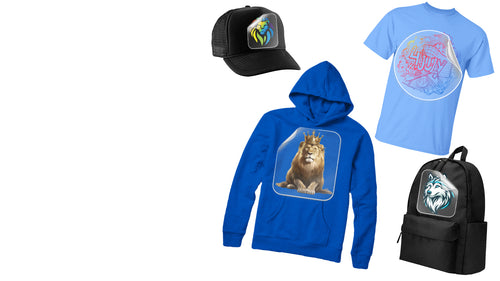
That's the DTF Kansas City question. It isn't just whether a shop can print your artwork. It's whether the method fits your deadline, fabric, artwork, quantity, and actual cost per square inch. Direct-to-Film printing places artwork on PET film, applies hot-melt adhesive powder, and heat-presses the finished transfer onto cotton, polyester, blends, and many performance fabrics.

The advice below is built for the buyer standing at that counter. You'll get practical guidance on rush orders, fabric fit, provider comparisons, file preparation, and the Auto-build gang sheet builder, which should be your default ordering workflow whenever you have multiple designs or repeated pieces.
A Kansas City Shop With a Deadline and a DTF Question
The coach doesn't need a lecture on printing technology. He needs to know whether the jerseys will be finished, whether the numbers will stick, and whether the artwork will look right on slick performance fabric before the team leaves for the tournament.
A dozen full-color jerseys is exactly where DTF earns its place. Screen printing remains efficient for simple artwork and large quantities, but setup can make a small, multi-color order unattractive. DTF handles gradients, detailed logos, names, numbers, and photographic elements without forcing the buyer into a long production run.
Counter advice: If the deadline is close and the artwork has multiple colors, ask for a DTF transfer quote before you ask for a screen-print quote.
The process is straightforward. A printer lays pigment ink onto PET film, a hot-melt adhesive powder bonds to the printed areas, and heat transfers the design onto the garment. The method works across cotton, polyester, nylon, spandex, and blends, which is why it's useful for teamwear and promotional apparel made from mixed materials. Published DTF specifications describe pigment ink and hot-melt PU adhesive powder as compatible with those common fabric categories, along with 1200 DPI output and 60-plus wash durability benchmarks.
The right decision still depends on the job. DTF is a strong choice when you need short-run flexibility, full-color artwork, varied fabrics, or quick production. It's a poor choice if you're treating every order as identical, ignoring the garment material, or accepting a vague bundled price without asking how the provider calculated it.
Kansas City buyers have another advantage. Local pickup can remove shipping time, and a self-service ordering system can eliminate a long chain of emails. Build the artwork into an Auto-build gang sheet, review the layout, and compare the finished sheet price against the cost of separate transfers before you commit.
What DTF Transfers Actually Are and How They Get Onto a Garment
Think of a DTF transfer as a layered sandwich. The artwork forms the printed center, the adhesive powder creates the bonding layer, and the garment becomes the final surface after a heat press applies pressure and heat.
The artwork becomes the first layer
Start with a finished PNG that has transparency and is prepared at 300 DPI. Keep the artwork in CMYK, remove mockups, and inspect thin lines, small text, and partially transparent effects before uploading. A mockup shows how a design might look on a shirt, but it isn't a print-ready file.
The printer places water-based pigment ink onto PET film. The white ink layer helps the design remain visible on dark garments, while the color layers create the visible artwork. The film carries the design through the early stages without becoming part of the finished shirt.

Powder turns ink into a pressable transfer
The print exits the machine wet. A shaker distributes hot-melt TPU powder across the printed image, and a curing heater melts the powder so it bonds to the inked areas. Excess powder is removed, leaving a transfer that can be stored, rolled, or shipped before application.
The powder isn't decorative. It's the adhesive bridge between the printed design and the garment. Poor powder coverage or incomplete curing can lead to weak adhesion, so the production side matters as much as the printer's color output.
The heat press completes the job
The operator places the transfer on the garment, applies heat and medium pressure, and peels the film according to its construction. Some films use a warm peel, while others require a cold peel. The exact setting should come from the transfer provider because film, adhesive, garment composition, and press calibration all affect the result.
DTF wins over screen printing when the order is short, the image is complex, or the garments include polyester, tri-blends, or other materials that complicate conventional ink application. DTG can produce excellent direct-to-garment detail, but DTF offers a useful separation between printing and pressing. A shop can prepare transfers first, then apply them as garments arrive.
Why Kansas City Is a Strong Market for DTF Printing
Kansas City's apparel story didn't begin with online transfers. From the 1940s through the early 1980s, the city was described as having one of the nation's largest garment industries. In the 1950s, the local garment sector was estimated to employ about 8,000 people, according to Kansas City garment manufacturing history documented by KCUR.
The old Garment District grew downtown because the city connected manufacturing with rail and distribution. Buildings in the district concentrated downtown between about 1898 and 1915, creating an infrastructure base for apparel production and wholesale movement. That history doesn't guarantee that every modern provider will deliver a good transfer, but it helps explain why apparel decoration remains familiar territory here.
Today's buyer sees that legacy in a more decentralized form. Providers and decorators serve customers across the Crossroads, Westport, Overland Park, and North Kansas City. Embroidery businesses can add transfers to their service mix, heat-press suppliers support local decorators, and small retailers around Westport Flea Market and Crown Center pop-ups often need custom runs without committing to massive inventory.
The local market also reflects a broader shift. The global DTF printing market was estimated at USD 2,720.0 million in 2024 and is projected to reach USD 3,920.0 million by 2030, implying a 6.0% CAGR from 2025 to 2030, according to Grand View Research's DTF market report. The same industry reporting ties expansion to customized, on-demand apparel and notes that DTF moved from niche adoption toward mainstream use in the early 2020s, with major equipment manufacturers introducing dedicated devices by 2023.
That depth gives Kansas City buyers real choice, but choice creates uneven pricing and quality. Don't select the first shop that promises speed. Compare the provider's file standards, sample quality, cost calculation, and pickup process before placing a serious order.
How to Compare DTF Providers in Kansas City
A good provider should make the important variables visible before payment. If the quote hides the sheet dimensions, rush handling, setup work, or delivery method, you're not comparing prices. You're comparing incomplete proposals.
Use this scorecard for every DTF Kansas City quote:
| Criterion | What to Ask | Red Flag |
|---|---|---|
| Print quality | Can I see color, fine-line detail, and opacity on a comparable dark or performance garment? | The provider shows only polished mockups and no physical transfer samples. |
| Turnaround | Is the order same-day, within 24 hours, or ready in two to three business days? When does production begin? | “Fast” appears without a defined pickup or ship time. |
| Price per square inch | What sheet dimensions and printable area determine the price? Are setup, color matching, and rush fees separate? | A low package price doesn't explain what's included. |
| File requirements | Do you need a transparent PNG at 300 DPI, in CMYK, with bleed or a safety margin? | The shop accepts any low-resolution JPG without warning you about quality loss. |
| Pickup versus shipping | Can you collect in Kansas City, Overland Park, or Independence, or will the order ship flat between cardboard backers? | The delivery charge or cutoff time appears only after checkout. |
The cheapest quote often becomes expensive after add-ons. Ask whether the price covers artwork cleanup, color matching, sheet setup, and rush handling. A provider that insists on a clean 300 DPI transparent PNG is usually protecting the final result rather than creating unnecessary friction.
Run a physical sample before a 500-piece production order. Press it onto a garment with similar fiber content, color, and texture. A transfer that looks excellent on cotton may behave differently on a slick polyester jersey, and a fine logo may lose clarity if the provider's curing or cutting process isn't consistent.
For a useful local reference point, review this guide to custom DTF transfers near you, then ask each provider the same questions. Consistent questions expose inconsistent workflows.
Building a Gang Sheet the Easy Way With Auto-Build
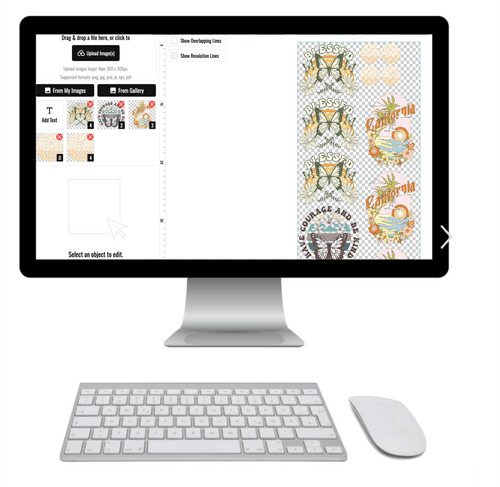
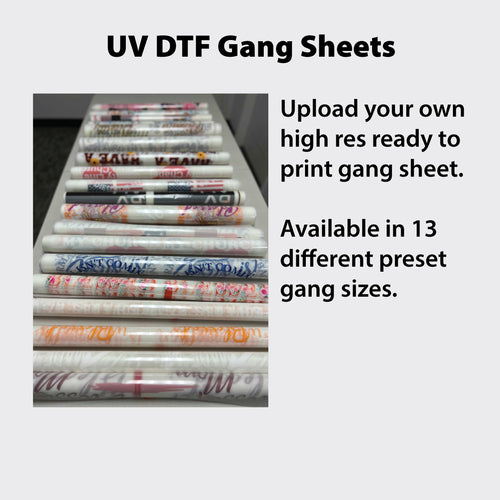
If you're ordering several designs, stop uploading each transfer as a separate job. Use the Auto-build gang sheet builder. Gang sheets consolidate multiple designs onto one sheet, which can reduce wasted film and make the cost per print easier to control. A neutral Missouri DTF source describes gang sheets as a cost-effective method for bulk orders because users place multiple uploads together on one printable layout, as explained by DTF Missouri's gang sheet guidance.
Start with the sheet, not the checkout form
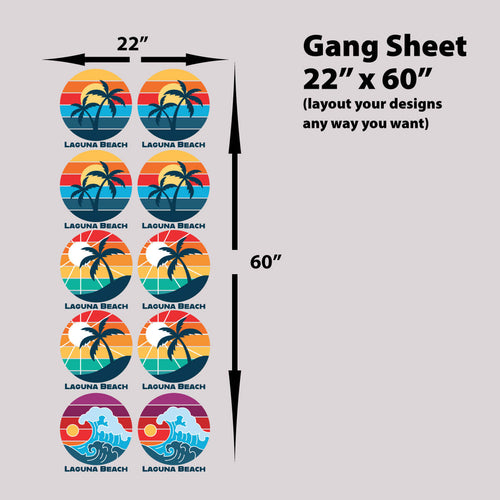
Choose a sheet that is 22 inches wide and select the length that fits the order. Common cuts include 5-foot, 10-foot, 25-foot, and 50-foot rolls. Don't choose a long roll just because it sounds economical. Measure the designs you need, then give the builder enough room to arrange them without crowding.
Upload finished 300 DPI PNG files with transparent backgrounds. Leave JPGs, shirt mockups, and screenshots out of the production folder. If a logo has a background that should disappear, remove it before upload rather than expecting the builder to interpret your intention.
Let Auto-build find the wasted space
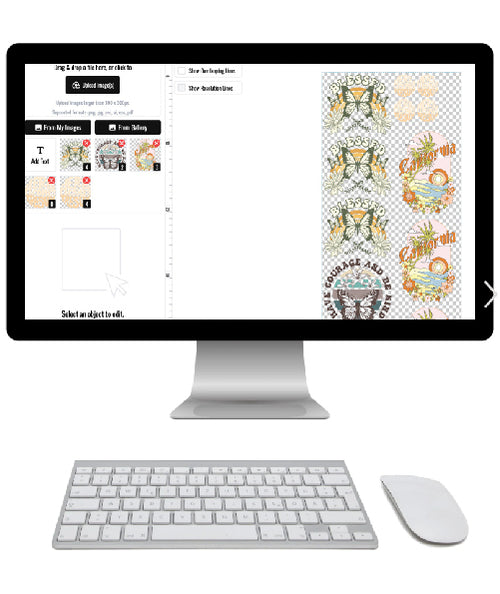
Use auto-pack to create a tight grid, then inspect the result yourself. The builder can fill gaps that a rushed manual layout misses, and tighter nesting lowers the amount of unused film inside the sheet's printable area. Drag, rotate, and snap-fit designs until the layout matches the actual press plan.
Leave a small safety margin around each design. Neighboring artwork that touches can create cutting problems, and an edge that sits too close to another transfer can catch during pressing. The buyer's goal isn't to fill every last pixel. It's to use the sheet efficiently while protecting clean cuts and easy handling.
 A guide to the Auto-builder feature shows why this workflow is easier than manually arranging every file. Review the preview, look for duplicate uploads, confirm that the price updates as the sheet fills, and then place the order.
A sports league that consolidates 24 logos on one sheet can reduce material cost by 30% to 40% compared with individual prints, based on the ordering scenario described here. Treat that figure as a layout-specific example, not a universal promise. The actual result depends on design dimensions, spacing, sheet length, and how tightly the artwork can be nested.
Pricing, Turnaround, and Shipping in KC
Price DTF by printable area, not by the number of names in an email thread. Kansas City standard-turnaround transfers typically run $0.03 to $0.06 per square inch, while densely packed Auto-build gang sheet orders can fall to $0.02 to $0.04 per square inch, according to the provided Kansas City pricing benchmarks. That difference is why I recommend building the sheet yourself before requesting a custom quote.
Same day shipping usually makes more sense for buyers in Brookside, the Crossroads, and North Kansas City, especially when a deadline leaves no room for delays. Customers in Lawrence, Topeka, or Columbia may prefer $10 to $15 flat-rate shipping, with transfers mailed between cardboard backers to prevent bending.
For orders under 25 linear feet, local pickup usually wins on speed and total cost. Longer rolls can justify shipping when the provider ships within 24 hours, because a flat-rate mailer may be more efficient than a long drive and a missed production window.
Don't default to emailing proofs back and forth. Upload finished files, use Auto-build, verify the real-time price, and shipping based on the deadline. That workflow reduces ambiguity before the rush fee becomes unavoidable.
Common KC Use Cases and How to Order for Each
A youth sports order has different needs from a merch drop, even if both use DTF. The artwork count, garment fabric, press plan, and pickup deadline should determine the sheet layout.
Sports teams need consolidation
An Overland Park youth league needs 60 matching tees by Saturday. Put names and numbers onto one 22-inch gang sheet, use Auto-build to keep the layout organized, and arrange pickup in the Crossroads within the required week. The pressing plan calls for 270°F for 10 seconds, assuming the transfer provider confirms those settings for the garment.
Merch launches need repeatable artwork
A Westport merch launch has 25 limited-run hoodies with one full-chest design. A single-image gang sheet keeps the layout simple and makes repeated pressing easier. A rush window of under 48 hours fits the drop date, but the buyer should approve one sample hoodie before pressing the full batch, particularly if the hoodie is heavyweight, fleece-lined, or made from a blend.
Recurring uniforms need a locked template
A River Market business reorders uniforms monthly. Build a standing gang sheet template with the logo, department marks, and recurring names or identifiers. Once the layout is proven, the buyer can reorder through Auto-build instead of restarting the proofing conversation every month.
The lesson is simple. Don't order by neighborhood or garment count alone. Order by the production pattern. Repeated artwork belongs on a repeatable template, mixed names belong on a consolidated sheet, and a high-pressure launch deserves a proof on the actual garment before the full run.
Pressing, Wash Care, and Your Next Step With a KC DTF Shop
The transfer can be excellent and still fail if the press operator guesses. Start with 240°-280°F, medium-firm pressure, and 10 seconds, then follow the provider's film instructions for peeling. Hot-peel and cold-peel films are not interchangeable, so confirm which one you received before lifting the carrier.
After peeling, cover the design with parchment and post-press for 5 seconds. That extra contact helps the adhesive settle into the garment surface. For a practical application reference, use this guide to pressing DTF transfers, while treating the transfer supplier's own settings as the final authority for that specific product.
Wash care protects the bond after pressing. Turn the garment inside out, use cold water and mild detergent, tumble dry on low or air dry, and skip fabric softener. Wait about 24 hours before the first wash, a recommendation included in independent DTF durability guidance at DTF Pro's wash-care guide.
Properly applied transfers can survive about 50 to 80 wash cycles under normal home-care conditions, while poor curing, hot water, or high-heat drying can reduce lifespan to roughly 100 cycles, according to MTU Tech's DTF durability discussion. Another independent test reports a well-pressed transfer remaining clean after 100 wash cycles, with cold washing, inside-out care, mild detergent, and low heat supporting that result at DTF Dallas's wash test.
That range tells you what matters. Durability depends on powder cure, press temperature, pressure, garment composition, and customer care. A shop that can explain those variables is a safer choice than one that only promises “vibrant and durable.”
Open the Auto-build gang sheet builder, upload your print-ready designs, and choose Kansas City pickup or shipping. For runs over 100 units, contact the shop directly so the team can review the garment mix, production schedule, and press requirements before quoting.
Lion DTF Transfers offers custom DTF transfers, gang sheets, UV DTF stickers, fast production, and online ordering for teams, brands, small businesses, and home press operators. Visit Lion DTF Transfers to build your sheet with Auto-build, upload your artwork, and place a Kansas City shipping order that matches your deadline.
Email orders@LionDTF.com or Text or Call: 833-350-5466