



You're standing in a small Detroit print shop with a 36-piece order on the counter. The artwork uses several colors, the shirts include black, white, and heather garments, and the customer wants them ready before a local event. Screen printing brings setup and color-separation decisions. Vinyl can become slow and stiff across a mixed order. The question isn't whether DTF sounds modern. It's whether the method fits the deadline, artwork, garments, and budget in front of you.
That's the practical meaning of DTF Detroit. Buyers in Corktown, Hamtramck, Eastern Market, and the wider Metro Detroit area need a decoration process that handles small batches without making every order behave like a large production run. DTF transfers can solve that problem, but only when you evaluate the film, artwork, turnaround, pricing model, and shipping plan together.
What DTF Detroit Means for Local Apparel and Merch Buyers
A 36-piece run is where many Detroit buyers get stuck. A neighborhood bar may need one design across several shirt colors. A car club may want detailed artwork with gradients and small lettering. A pop-up seller may need a short run to test demand before committing to a larger inventory order. None of those jobs automatically justify the preparation required for traditional screen printing.
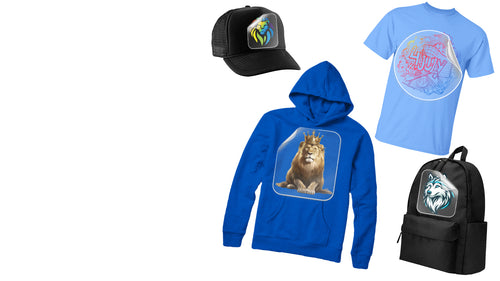
DTF, or direct-to-film printing, gives the shop another route. The design is printed as a transfer, then applied to the garment with a heat press. That makes the process useful for full-color artwork, small quantities, and orders that mix cotton, polyester blends, fleece, denim, or other compatible materials. The technical process is covered in detail in this guide to custom DTF transfers near you.
The local buying problem
Detroit's apparel market isn't one uniform customer base. A Corktown custom apparel shop may produce branded staff shirts, while a Hamtramck merch maker may be testing a streetwear drop. A church, school group, nonprofit, or union committee may need a focused order for one event rather than a permanent apparel program.
That fragmentation makes flexibility valuable. DTF can keep the same artwork workflow across different garment colors and can avoid the screen setup burden that makes very short runs less attractive. It also gives a print shop the option to produce transfers first and press garments as orders arrive, which can reduce the need to hold finished inventory.
Practical rule: Choose DTF when the artwork is complicated, the quantity is limited, or the garments vary enough that screen setup would become the expensive part of the job.
Where DTF beats vinyl and screen printing
Vinyl remains useful for simple names, numbers, and single-color lettering. It becomes less appealing when the design includes fine detail, photographic color, or many individual placements. Screen printing can deliver excellent results on repeatable larger runs, but setup, screens, color management, and minimums matter more when the order is small or the deadline is tight.
DTF isn't automatically superior. A large, uncomplicated run may still favor screen printing, and embroidery may be the better choice for a structured corporate polo or cap. The Detroit-ready decision is narrower: if you need complex art on a short run with mixed garment colors, DTF often removes the friction that slows the alternatives.
How DTF Printing Works
A DTF transfer starts as artwork on PET film and ends as a pressed design on fabric. The printer lays down color and white ink, adhesive powder bonds to the wet print, and a heat press attaches the cured transfer to the garment. The full-color transfer for fabric comparison explains the sequence, but the result depends on ink, powder, curing, and press settings working together to form a flexible bond with apparel fibers.

The four production steps
- Print the artwork. Modified inkjet hardware places CMYK color and a white layer onto PET film. The white ink supports the visible colors, preventing a dark garment from absorbing them and making the design look dull.
- Apply hot-melt powder. While the print remains wet, hot-melt adhesive powder covers the printed area. Coverage must be even. Too little powder can weaken the bond, while excess powder may change the transfer's feel and edges.
- Cure the transfer. Heat melts the powder and fuses it with the ink layer. Once cured, the film is ready for pressing instead of remaining a wet print that can smear or separate.
- Press it onto the garment. Heat and pressure activate the adhesive and bond the image to the fabric. The film is peeled according to the transfer's peel requirements, leaving the design on the garment.
The white layer is usually printed as an underbase beneath the color on dark apparel. That arrangement keeps artwork bright on a black hoodie and lets DTF handle dark substrates without depending on the same opacity approach used in conventional screen printing.
For buyers, production consistency matters more than the printer model. A properly produced and pressed transfer should stretch with the garment and retain a comfortable hand feel. Careful pressing and washing also affect how long the design performs, so follow the instructions provided with the transfer. A clear visual explanation of how DTF transfers work can help buyers understand the sequence before approving an order.
A short process demonstration can make the sequence easier to understand:
Why DTF Fits Detroit Apparel and Merch Use Cases
A Detroit bar can need event shirts without wanting leftover sizes. A church or nonprofit may know its fundraiser quantity in advance. A car club may need detailed artwork, but too few pieces to justify a traditional setup. With customers watching spending and deadlines closely, small-run flexibility has practical value.
The Detroit Economic Indicators Report for Q1 2026 records regional unemployment averaging 10.6% in Q1 2026, while metro job growth in June 2026 remained slightly below the prior year. Those conditions do not determine every apparel purchase, but they help explain why Detroit customers may examine price, minimums, and turnaround more closely than a generic DTF buyer.
Small orders without the traditional setup burden
DTF suits artwork that is more detailed than a basic one-color mark when the quantity is too small for extensive preparation. Buyers can order transfers by print area, combine designs on a gang sheet, and press garments as needed. That reduces the risk of tying cash up in finished inventory before demand is proven.
Common uses include:
- Local events: Union gatherings, neighborhood festivals, school activities, and fundraisers often need quantities tied to a specific date.
- Small businesses: Restaurants, bars, salons, and service companies can test branded apparel without committing to broad inventory.
- Streetwear drops: A Detroit creator can release detailed artwork in limited quantities across several garment colors.
- Sports and clubs: Cotton tees, athletic polyester, and fleece layers can fit one decoration workflow when the transfers match the fabrics.
Mixed garments are where the method earns its place
One buyer may need a 100% cotton tee for an Eastern Market pop-up, a tri-blend hoodie for university merchandise, and polyester athletic wear for a team. DTF printing in Metro Detroit uses water-based ink on PET film, a white underbase for dark substrates, hot-melt adhesive powder, and curing before pressing. According to the process description from Dee Custom Creation, the finished transfer can be applied to cotton, poly blends, nylon, denim, and fleece.
That range still requires testing. Nylon, fleece, and heavily textured garments behave differently from a standard cotton tee. Compatibility alone does not set the final result. Press temperature, pressure, dwell time, peeling method, and garment finish all affect adhesion, appearance, and hand feel.
DTF works best when the buyer treats fabric selection as part of production, not as an afterthought after the art is printed.
Per-square-inch pricing also suits fragmented orders because buyers pay for printed area rather than automatically paying for a separate setup for every design. Gang-sheet economics depend on vendor width, nesting, minimums, and price tiers. Ask the shop to show how it calculated the area before approving the quote, especially when several small designs share one sheet.
Same Day Shipping for Detroit DTF Orders
Same day shipping solves different problems. Shipping options gives Detroit buyers control over the final handoff, especially when they need to inspect the transfer, match it to a blank garment, or press a sample before committing to a larger run. Shipping can make more sense when a regional or out-of-state supplier offers better gang-sheet utilization, a needed film width, or a production schedule that fits the order.
The decision should be based on lead time, total cost, and risk tolerance, not just the advertised transfer price. A lower area rate can lose its advantage if the package arrives after the event or if a reprint has to travel again.
A practical comparison
| Factor | Local Pickup | Shipped Transfers |
|---|---|---|
| Lead time | Useful for urgent orders and in-person handoff | Depends on production and carrier timing |
| Total cost | Avoids shipping charges, but may involve cross-town travel | May offer efficient gang-sheet pricing, with delivery added |
| Quality check | You can inspect the transfer before leaving | Problems may be discovered after delivery |
| Best fit | Rush merch, samples, short local runs | Larger sheets, flexible timing, specialized formats |
| Risk tolerance | Lower handoff uncertainty | More exposure to carrier delays and weather |
Detroit's industrial geography makes cross-town pickup practical for many shops along the I-94 corridor, but convenience depends on traffic, parking, and the shop's actual pickup hours. Winter adds another variable to any shipment, particularly when the order has a fixed launch date.
For a local job, ask whether pickup is available and whether the transfer is already ready to press. Confirm the production window, the same day shipping cutoff, and what happens if the artwork needs correction.
Shipping can be the better choice for a high-volume gang sheet or a vendor that doesn't operate nearby. A buyer with flexible timing may accept delivery in exchange for better layout efficiency. A buyer with an event date locked in should price the cost of waiting, not only the cost printed on the quote.
How to Evaluate a DTF Vendor in Detroit
A reliable DTF vendor should answer production questions without hiding behind a shirt-level quote. Start by asking for a recent wash-tested swatch on a garment similar to yours. A screen preview can't show how a white underbase looks on black fleece, how fine lettering survives stretching, or whether the finish feels acceptable against the skin.
Five checks that reveal production quality
Color accuracy comes first. Ask whether the shop can provide a physical sample on your actual blank or a comparable fabric. If the artwork includes skin tones, gradients, neon colors, or brand colors, compare the printed swatch against a reference rather than approving from a monitor.
Durability needs a defined standard. Ask how the vendor tests wash performance, what care instructions apply, and whether the result changes on cotton-poly blends, fleece, or nylon. The independent benchmark of roughly 50 to 100 wash cycles is useful context, but a responsible shop should explain the conditions behind its own guidance. See the wash-cycle durability discussion for the broader benchmark.
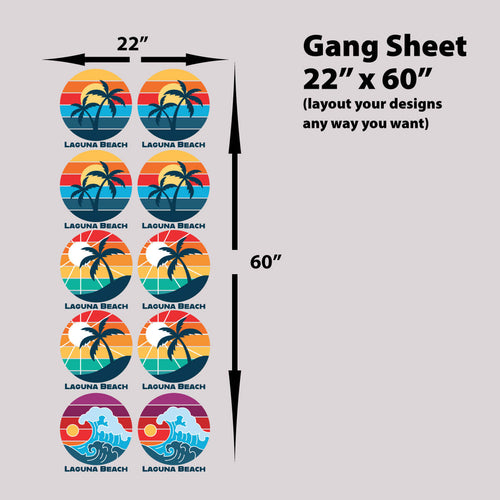
Pricing should be tied to area. Confirm whether the vendor charges by printed square inch, gang-sheet length, transfer count, or garment. A published reference shows a rate moving from $0.017 to $0.016 per square inch at 15,000 square inches or more, with examples including a fixed 22-inch width and sheet areas such as 440 square inches for 22 by 20 inches and 4,400 square inches for 22 by 200 inches, as shown by this DTF gang sheet calculator.
Turnaround must be written down. Ask when production starts, whether approval time counts, and how rush orders are handled. Don't accept a vague promise that the order will be “quick” if your event date is fixed.
Film width changes the math. A 22-inch roll, a 24-inch roll, and a 33-centimeter format create different nesting possibilities. The cheapest-looking sheet may waste more area if your designs don't fit its usable width.
Questions to copy into your first call
- Can you show me a recent wash-tested transfer on a garment close to mine?
- What is your minimum order, and how do you calculate square inches?
- What film width will you use, and what is the usable print width?
- What are your standard and rush production windows?
- Which film and hot-melt adhesive powder do you use?
- Can I approve a physical sample before the full order?
- What file specifications do you need, and who checks the artwork before production?
Be cautious if a vendor refuses sample photos, quotes only by the finished shirt, or can't identify the film and adhesive system. Those answers don't prove a job will fail, but they make it harder to predict the result before you spend money.
File Prep, Gang Sheets, and the Auto-Build Builder
Most expensive DTF mistakes start before the printer runs. The basic file requirements are straightforward: 300 DPI, a transparent PNG, CMYK color space with an embedded profile, and enough margin to keep important artwork away from the cut edge. Many operators use a 0.125-inch safe margin around each graphic, but you should follow the vendor's exact template when its production settings differ.
Build the sheet before you pay for waste
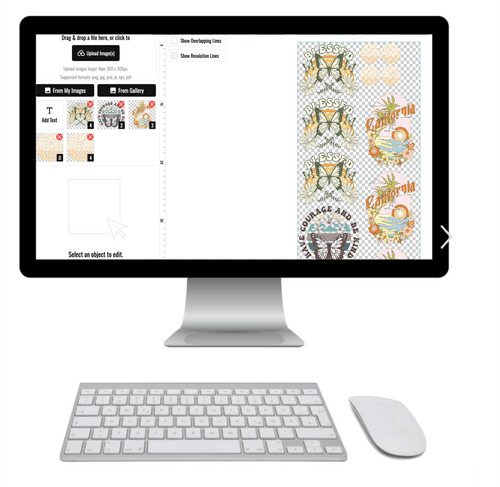
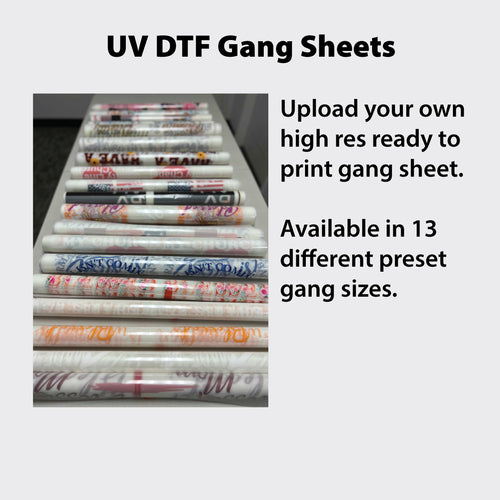
A gang sheet places several designs on one piece of film. That lets a buyer combine chest logos, sleeve marks, back graphics, names, and seasonal artwork rather than ordering each design as a separate transfer. Area-based pricing makes the arrangement important because unused film still affects the final cost.
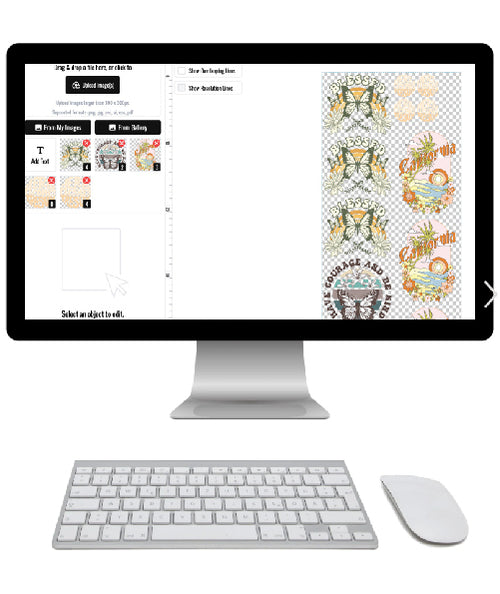
A browser-based Auto-build gang sheet builder can upload 100+ PNG designs and auto-arrange them in less than 60 seconds, according to DTF Build's gang sheet builder. That's the useful part of automation. It turns nesting into a repeatable production step instead of forcing a buyer to manually estimate every gap and rotation.
Another gang-sheet system describes uploading several designs onto a 60-centimeter gang sheet and paying by the linear meters used, with real-time pricing, as shown by this gang sheet builder example. The currency and format differ from a Detroit quote, but the principle is the same. Ask whether you're paying for actual printed area, sheet length, or a preset product size.

Settings that affect the pressed result
White underbase opacity controls how strongly color sits above a dark garment. Thin strokes may need a slight choke so white doesn't show as a halo. Keep important artwork inside the safe area, and use bleed only where the design needs controlled overflow. A 0.125-inch bleed and a 0.25-inch inset safe area serve different purposes, so confusing them can leave edges vulnerable to chipping or make small details too close to the trim.
Avoid casual CMYK conversions when the artwork contains neon or highly saturated colors. The conversion can flatten the look before the transfer is printed. The biggest recurring gang-sheet problem is often DPI mismatch. A file that looks sharp on a phone can become soft when enlarged to its intended print size.
Use this workflow:
- Confirm the finished transfer dimensions.
- Export the artwork as a transparent PNG at the intended resolution.
- Keep the file in RGB with its profile embedded.
- Upload each design to the Auto-build gang sheet builder.
- Check spacing, orientation, margins, and duplicate quantities.
- Review the proof at actual size, not only as a thumbnail.
- Submit the press-ready sheet after confirming fabric and transfer requirements.
For another explanation of automated sheet creation, see the Auto-builder feature for DTF gang sheets.
Your Detroit DTF Next Steps and Local Call to Action
A good Detroit DTF order comes down to a short decision chain. Confirm the garment count and deadline first. Request a physical swatch on the actual fabric or a close substitute, finalize the artwork at the vendor's required resolution, check the gang-sheet layout, and make sure the quoted production window leaves room for pickup, pressing, and inspection.
Don't choose a vendor on area price alone. Compare the usable film width, minimum order, proofing process, rush policy, and delivery method. A compact order with a fixed event date may justify pickup and a simpler layout, while a larger order with flexible timing may benefit from shipped transfers and more efficient nesting.
| Order Size | Typical Price/Sq. In. | Standard Turnaround | Local Pickup Window | Ship Option |
|---|---|---|---|---|
| Short run | Request a current area quote | Confirm with the vendor | Ask about same-day or next-day availability | Use when timing allows delivery |
| Mixed small batch | Compare gang-sheet utilization | Match production to the event date | Useful for local inspection and urgent pressing | Consider if the shop lacks the needed film width |
| Larger gang sheet | Check volume tiers and actual area math | Schedule before the drop date | Pickup can reduce handoff time | Shipping may suit flexible production schedules |
Before ordering, send the vendor the art, garment type, finished dimensions, quantity, and deadline in one message. That gives the shop enough information to quote the actual job rather than guessing from a product category.
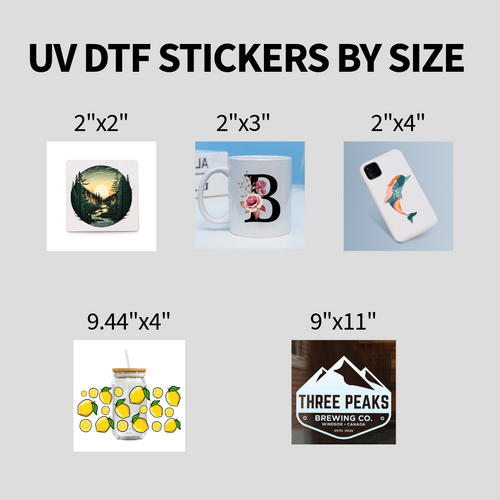
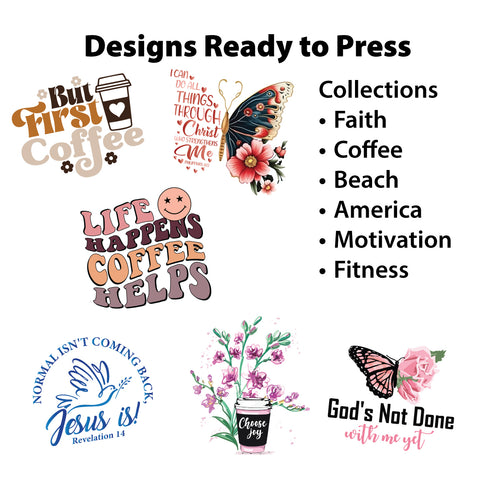
For a Detroit-ready order, use Lion DTF Transfers to upload artwork, build a gang sheet online, and choose ready-to-press transfers by size. The ordering portal supports shipping options, so visit the site, submit your files and deadline, and confirm the tracking for your order.