
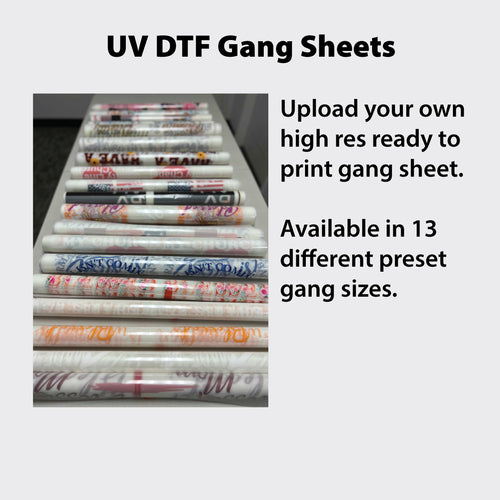
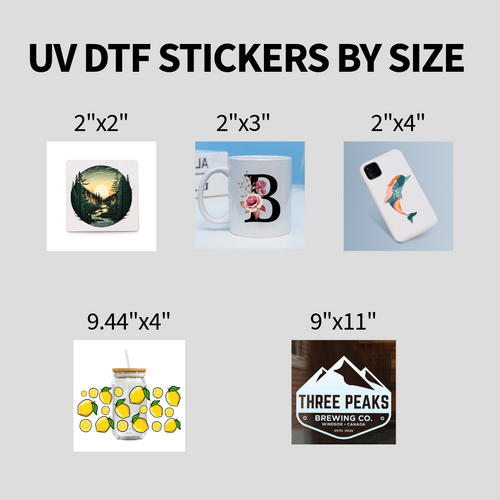
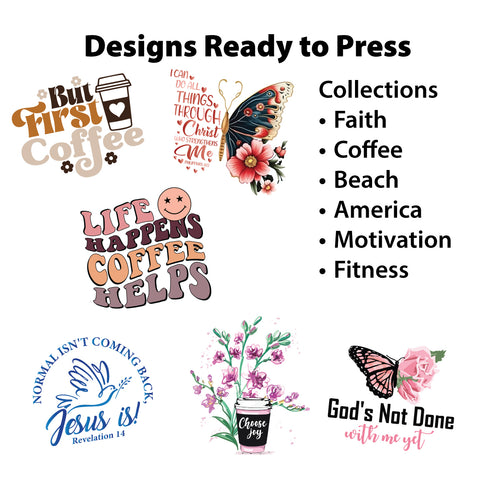



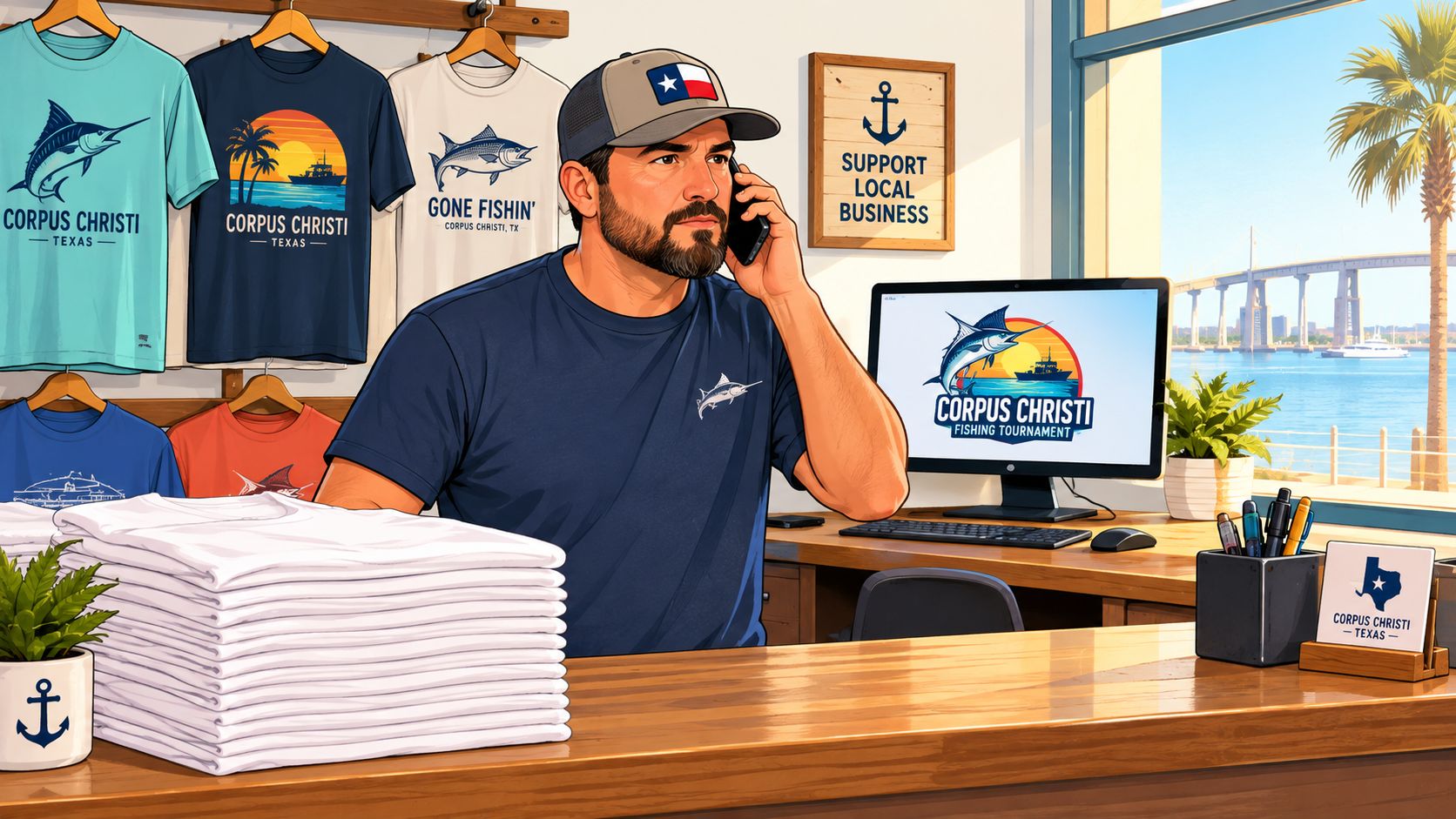
Tuesday afternoon in Corpus Christi, the phone rings with the kind of order that scrambles a small shop fast. A charter captain needs 48 tournament shirts by Saturday morning. The back print carries a full-color sponsor stack. The front needs individual names. The blanks are performance tees, not basic cotton, and nobody wants a screen setup bill for a run that size.
That's the moment when DTF starts making more sense than habit. In the Coastal Bend, a lot of jobs live in that middle ground. Not big enough to justify traditional setup. Not simple enough for vinyl. Not predictable enough to wait around on a long production cycle. For shops and brands working in DTF Corpus Christi, the question usually isn't whether the transfer can print. It can. The question is whether the workflow fits the deadline, the garment, and the reorder pattern.
Corpus Christi has the kind of business history that makes this practical, not trendy. The city's roots are commonly dated to 1838–39, when Colonel Henry Lawrence Kinney established Kinney's Trading Post, and Corpus Christi later incorporated on February 16, 1852, according to the City of Corpus Christi history page. This has been a trade and logistics market for a long time. That matters when you're deciding whether a local pickup, a shipped gang sheet, or a repeat production workflow is the smarter move.
A Corpus Christi Shop Owner's First DTF Order
The job starts the same way a lot of South Texas jobs start. A customer says, “It's only 48 shirts,” like that makes it easy. But 48 shirts with full-color sponsor art, a mixed-size name list, and a hard Saturday deadline can jam a shop quicker than a 300-piece basic print.
What the owner is actually weighing
A screen printer looks at that job and immediately starts doing setup math. How many colors in the back art. Whether the sponsor logos need cleanup. Whether the polyester blanks are going to behave. How much time the front names will add if they get split into another process.
A DTF workflow changes the decision. The owner can skip burning screens, skip color separations as a pricing driver, and press a full-color back plus individual front names without turning a medium rush order into a production headache. That's why a lot of shops that once treated transfers as backup now use them as a regular lane, especially for jobs with mixed artwork and coastal event deadlines.
Shop-floor rule: If the order is too small for easy screen-print efficiency but too complex for vinyl, DTF usually deserves the first look.
Why this keeps happening in Corpus Christi
Corpus Christi isn't a one-style apparel market. It's tournament shirts, school spirit gear, island merch, workwear, church runs, and event apparel. The local economy has long supported specialized production businesses. The Texas State Historical Association notes a population of 317,863 by 2020 and 9,037 reported businesses by 2023 in Corpus Christi, while a Federal Reserve regional study identified printing and related support activities as a measurable local sector with figures listed for 1990 and 2005 in the city's economic profile at the Texas State Historical Association entry on Corpus Christi.
For a shop owner, that means custom printing isn't some fringe niche here. It's part of a working local market. And if you're comparing vendors, this is also why buyers often search for custom DTF transfers near me. They want speed, not just geography.
What DTF Transfers Actually Are
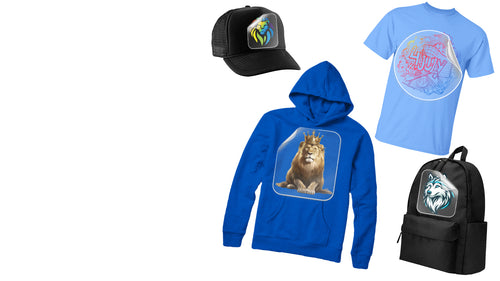
DTF is a print-then-press method. The artwork is printed in reverse onto clear film, adhesive powder is applied, that powder gets cured, and then the finished transfer is pressed onto the garment. On press, the transfer behaves less like a sticker and more like a prepared print layer waiting to bond.
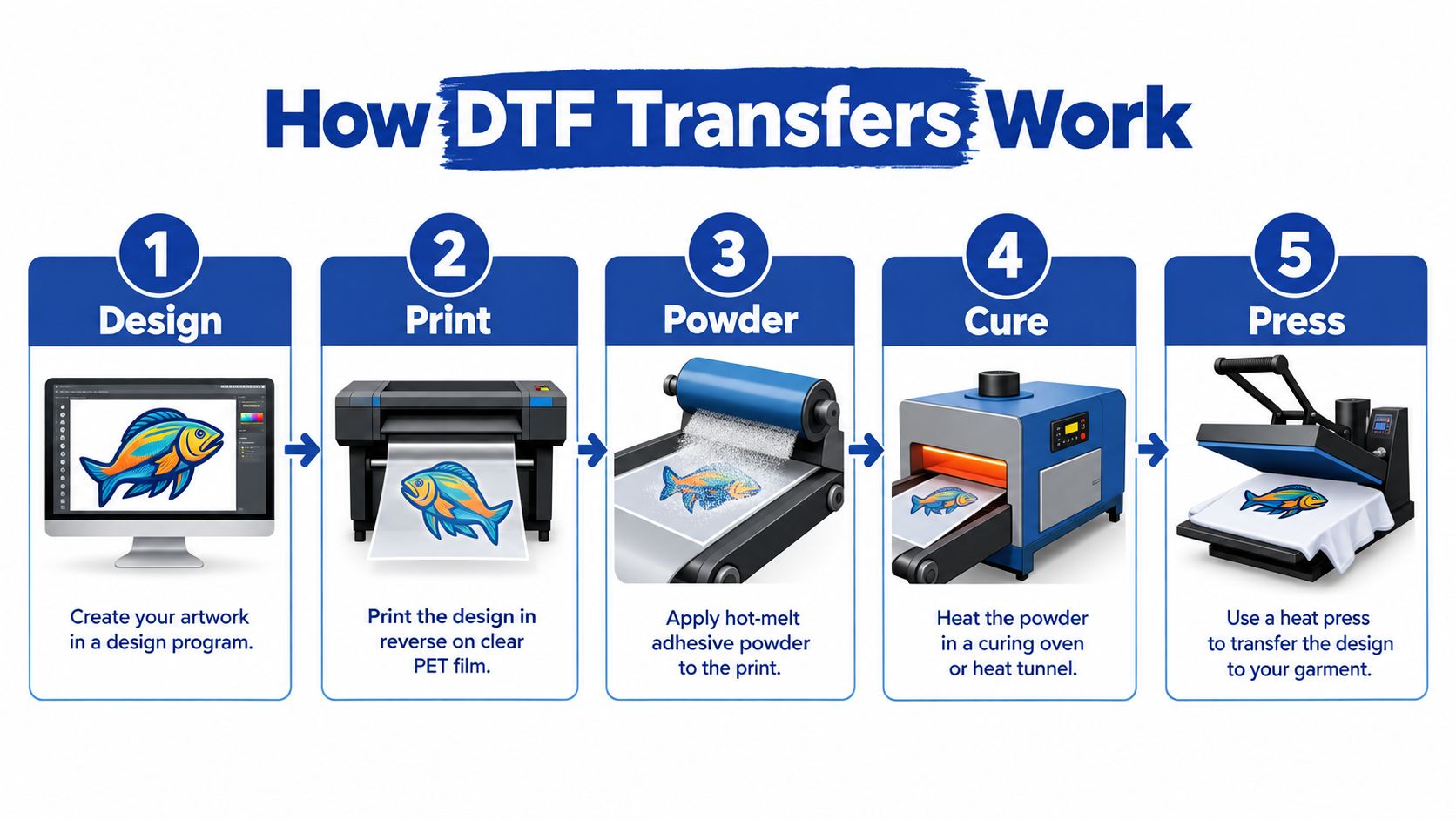
The four layers that matter
When buyers hear “transfer,” they often think of old plasticky heat-applied graphics. Modern DTF is more precise than that. The stack has four practical parts:
- Film keeps the artwork stable during printing and handling.
- Ink carries the color and the white underbase needed for dark garments.
- Adhesive powder is what lets the print bond to fabric under heat and pressure.
- Hot-peel release layer lets the carrier come off after pressing without tearing up the image.
Most operators think about the process in one motion, but each layer can make or break the result. If the powder cure is off, edges won't hold. If the press temp or pressure is off, the print may look fine at first and then fail later in wash and wear.
What happens on the heat press
A lot of shops run hot-peel DTF at around 320°F for 15 seconds. Exact settings still depend on the transfer and garment, but that range is familiar on real production floors. The point isn't the number by itself. The point is consistent heat, even pressure, and a flat pressing surface.
A transfer that looks bad usually didn't “fail.” Someone under-cured it, over-pressed it, or put it on the wrong garment without testing.
Why buyers keep choosing it
DTF doesn't care much about color count, and it works across cotton, polyester, and blends. That's why it keeps landing in the middle of jobs that don't fit cleanly anywhere else.
Here's the plain-language split:
- Screen printing is still strong when one design repeats across a larger batch.
- DTG works best when the garment is right and the art leans photographic.
- HTV is useful for simple names, numbers, and one-off personalization.
- DTF handles mixed fabrics, full-color detail, and short-to-mid runs without making setup the whole job.
A controlled textile study found DTF prints on cotton and polyester stayed fully scannable after five wash cycles, with color fastness around Grade 4–5, and the same study reported DTF outperforming screen printing in clarity and durability in that test at the Wiley-hosted durability study.
When DTF Beats Screen Printing, DTG, and Vinyl
Most decoration arguments get fuzzy because people compare methods in the abstract. Shops don't buy methods in the abstract. They buy the one that gets a specific order out the door with the least friction.
The five decisions that usually settle it
| Decision | Best Method | Why |
|---|---|---|
| Quantity | Screen print for large repeat runs | If one design repeats on many cotton shirts, setup gets spread across the order and production stays efficient. |
| Fabric | DTF | It handles cotton, polyester, and blends more flexibly than DTG and with less hassle than layering vinyl. |
| Color count | DTF or DTG | Full-color art doesn't trigger extra screen setups, which is where smaller orders often get upside down. |
| Deadline | DTF | Press-ready transfers move faster when the job has mixed graphics or variable names. |
| Finish | Depends on the art and garment | Screen print still has its lane. DTF has a strong soft-hand result when the transfer and press settings are right. |
Where each method wins
Screen printing still owns the clean, repetitive job. If you've got a large run, one location, and standard cotton blanks, it's hard to beat. That method falls off when the order gets complicated before it gets big.
DTG can produce beautiful full-color graphics, especially on suitable natural-fiber garments. But on polyester-heavy jobs, a lot of shops stop fighting that battle and move to something more forgiving.
HTV has a place. For single names, numbers, or simple block graphics, it's fine. The trouble starts when customers want layered color, fine detail, or a lot of small logos. Weeding turns into labor fast.
The lane where DTF makes the most sense
DTF wins the messy middle. That usually means:
- Short to mid runs that aren't worth multiple screen setups
- Mixed garments across cotton, poly, and blends
- Sponsor-heavy art with gradients or small details
- Rush jobs that need pressing right away
- Repeat replenishment where the shop wants to reorder transfers, not restart setup
For buyers comparing digital methods, the practical differences in DTF vs DTG printing come down less to theory and more to garment mix and deadline pressure.
Production judgment: DTF is not the answer for every order. If you're pushing a big stack of identical shirts with simple art, screen print still earns its keep.
How DTF Pricing in Corpus Christi Breaks Down
The biggest pricing mistake buyers make is comparing a DTF transfer to a finished shirt quote as if they're the same thing. They aren't. Transfer pricing is usually about printable area. Finished-shirt pricing wraps in blanks, labor, spoilage risk, packaging, and delivery.
What the cost structure really rewards
With DTF, the transfer cost is commonly tied to square inches or to a gang sheet size that effectively works out to square inches. That matters because the more efficiently you fill the sheet, the less waste you carry.
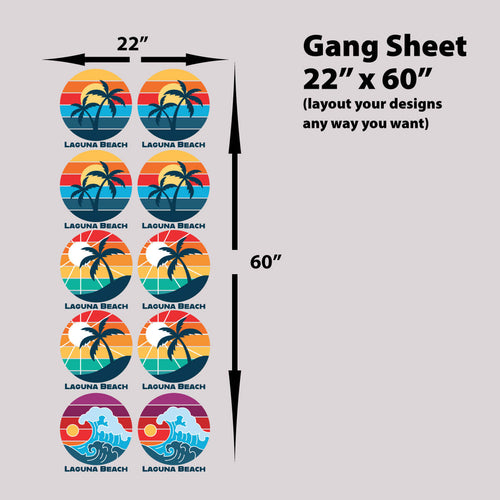
A DTF gang sheet is one transfer-film sheet holding multiple designs on the same layout. Independent guidance says optimized layouts can cut material expense by 40-60% versus printing individual transfers, and it recommends roughly 0.25 inches between designs with 75-85% utilization on optimized sheets at the DTF gang sheet optimization guide.
Why gang sheets change the math
A left-chest logo by itself can feel expensive if you buy it one-off. Pack that same left-chest logo next to a back print, a sleeve hit, and a few youth-size versions on the same sheet, and the economics improve fast.
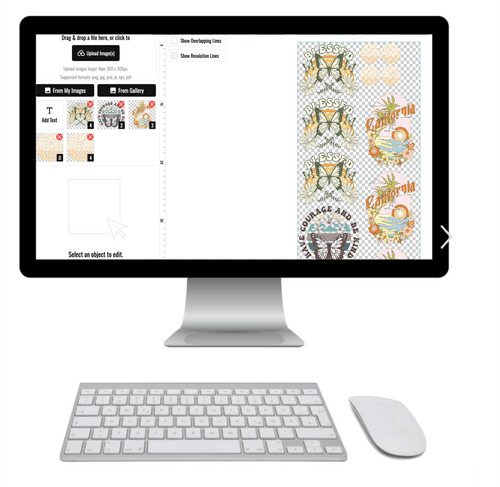
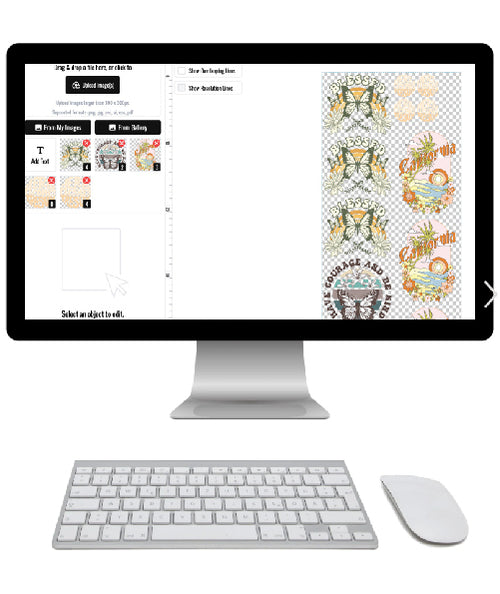
That's why the Auto-build gang sheet builder matters. Instead of manually dragging art around and wasting roll width, the builder packs the space for you. For craft-fair batches, small merch drops, and school jobs with several size variants, that's often the difference between an efficient order and a sloppy one.
| Gang Sheet Size | Per Sq In (approx.) | Example Design | Shirts @ 12 | Shirts @ 24 | Shirts @ 50 |
|---|---|---|---|---|---|
| Small sheet | Higher than larger sheets | 4x4 left chest | Good for testing and replacements | Works, but not the cheapest path | Usually inefficient for this volume |
| Mid sheet | Lower than small sheets | 12x16 full front | Better balance for short runs | Strong fit for team orders | May require multiple sheets |
| Large production sheet | Lowest per-square-inch tier | Mixed front, back, and extras | Often more capacity than needed | Efficient when filled well | Best when repeat art or multiple designs share the layout |
What you're not paying for
DTF usually avoids the quote bloat that comes from:
- Screen setup charges
- Color separation fees
- Extra color pricing
- Separate setup logic for each design variation
That flat logic is why DTF often flips the decision on small and medium runs. The art can get complicated without forcing the quote to get weird.
Ordering DTF Transfers Step by Step
Most bad transfer orders start before anyone prints anything. They start with messy files, wrong dimensions, or a gang sheet built by hand with too much dead space. Clean ordering fixes most of that before the printer ever runs.
Start with file prep
The file should be a PNG with a transparent background, built at 300 DPI at final size. Size it in inches, not guesses. Keep colors in RGB, and don't bury odd spot settings or stray background pixels in the file.
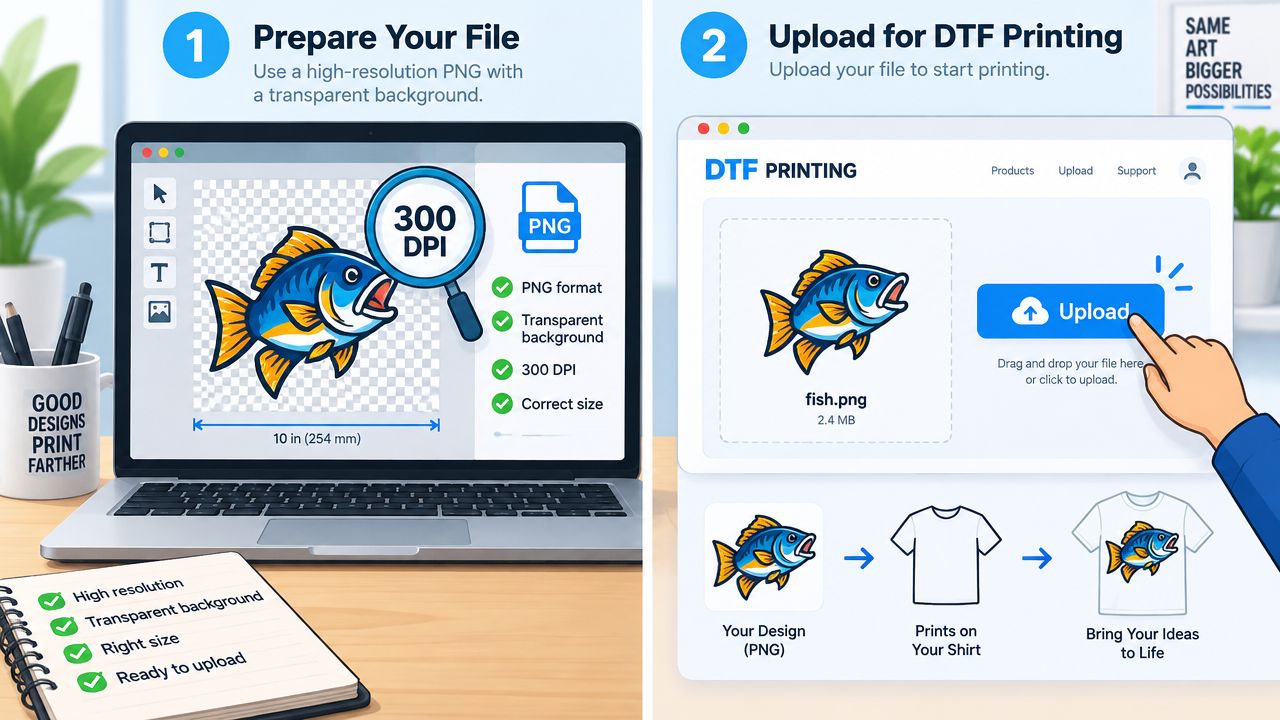
A lot of shops lose time because the customer sends “the logo” without saying whether that means cap size, chest size, or full back. If the file isn't sized intentionally, someone will guess. Guessing is where reprints come from.
Use the builder instead of hand-nesting
Manual gang sheet building in Photoshop works, but it's slow and easy to mess up. The better move is using an Auto-build gang sheet builder that nests uploads onto the roll width for you.
Industry guidance says modern nesting software can reach 85-95% packing efficiency, and a separate automation article notes that a gang-sheet workflow that used to take 30 minutes can be finished in under 3 minutes at the DTF gang sheet builder guide. That's why this tool isn't just convenient. It changes labor cost.
Practical upload options usually fall into three lanes:
- Drag and drop for a quick one-off batch
- Folder upload when the order has many design variants
- Saved collections for repeat buyers who reorder the same marks
One option in that lane is Lion DTF Transfers, which offers an Auto-build gang sheet builder, upload-based ordering, and repeat-order organization for shops that don't want to nest every file manually.
Check production timing before you hit submit
The useful planning number isn't “when I placed the order.” It's when the transfers will be in hand and ready to press. For buyers working across Texas, 1–2 business day production and a 24-hour printing option can make distance less important than whether the workflow is clean and the art is ready.
Later in the process, your urgency decides the fulfillment method. You can pick up, ship standard, or move it by air if the press is waiting.
A quick walkthrough helps if you're building your first sheet:
Pickup, Next-Day Air, or Standard Shipping
For DTF Corpus Christi buyers, “local” isn't always the same thing as “faster.” Sometimes a statewide producer with a tight production workflow gets the transfers to your press sooner than a nearby shop that's backed up or manually laying out art.
The three lanes that matter
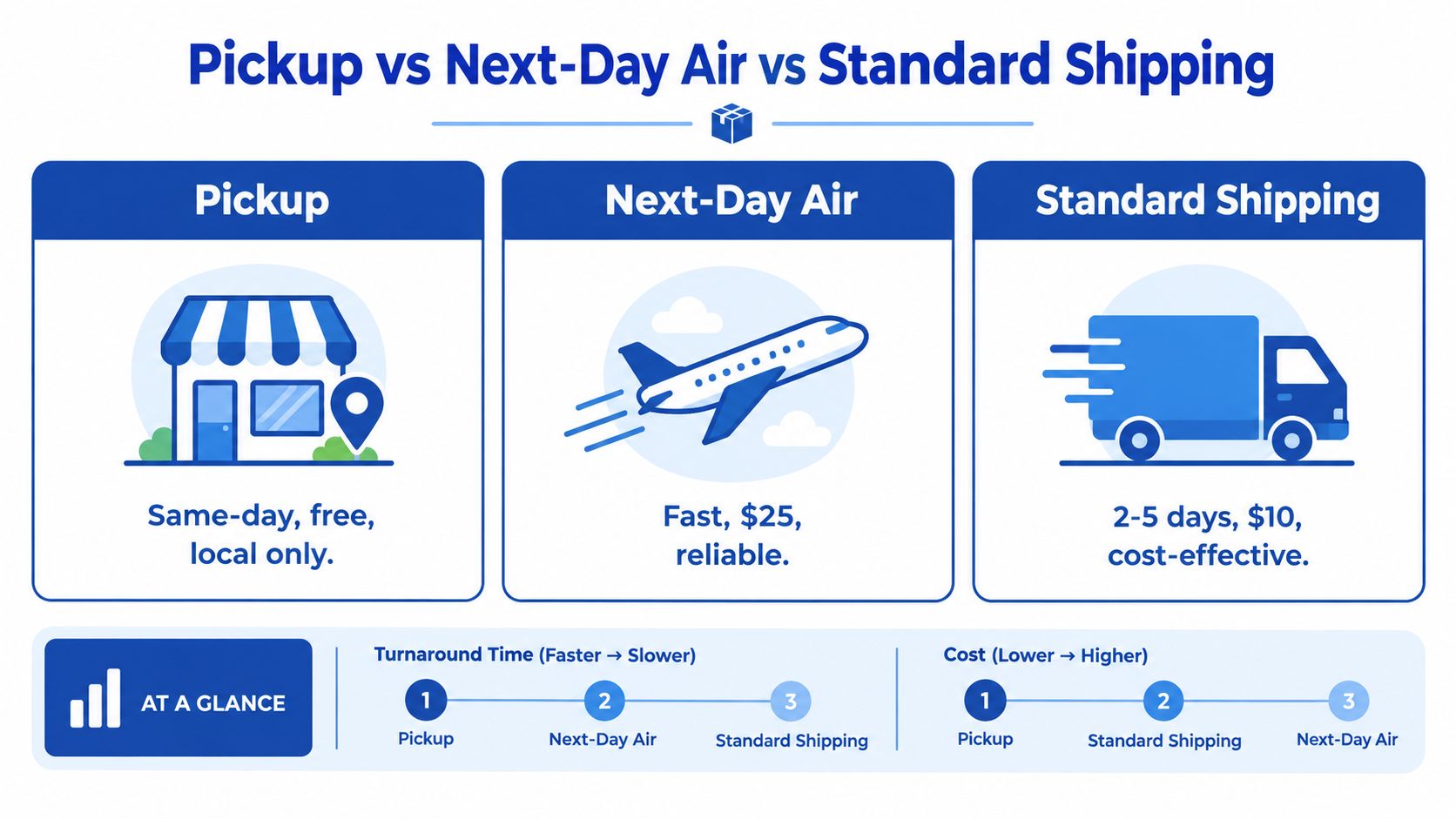
Pickup is the speed play if you're close enough and the order is confirmed early. It removes carrier risk and gets transfers onto the press the same day. The downside is obvious. It only works when driving there is realistic.
Next-day air is the deadline play. It costs more than standard ground, but it gives a buyer a clean answer when the job can't drift. For a tournament shirt run or a Friday school event, that premium can be cheaper than losing the order.
Standard Texas shipping is the default for normal production. It's the lower-cost option and often the right call for planned work, restocks, and small-batch merch where the garments don't need pressing tomorrow.
How I'd rank them by job type
| Option | Turnaround | Cost | Reliability |
|---|---|---|---|
| Pickup | Fastest when feasible | Lowest shipping cost | High, because no carrier handoff |
| Next-day air | Very fast | Highest | Strong for deadline-sensitive orders |
| Standard shipping | Slower than air | Most cost-effective | Best for routine orders with buffer |
The local-versus-shipped question is often more operational than geographic. Search results for Corpus Christi-specific DTF pages sit alongside Texas-focused suppliers promising 2-business-day delivery across the state, which is why buyers benefit more from comparing pickup, shipping, and reorder workflow than from assuming local is always better at the Corpus Christi DTF shipping comparison page.
For policy details on service choices, cutoff planning, and fulfillment options, buyers should check the shipping options page.
Real Use Cases for DTF in the Coastal Bend
The best way to judge DTF Corpus Christi is by the jobs that keep showing up, not by abstract print theory. Coastal Bend orders tend to be mixed. Different fabrics. Uneven quantities. Customers who want sponsor logos, sleeve hits, names, and reorder flexibility all in one shot.
Tournament shirts and performance blanks
Fishing tournament apparel is one of the clearest DTF fits in this market. The garments are usually moisture-wicking polyester, the art is sponsor-heavy, and the deadline is tied to a date that won't move. That combination pushes a lot of shops away from slow setup methods.
A properly applied DTF transfer can hold up well under real wear. One engineering-focused review reports properly applied transfers typically survive about 40–60 wash cycles on cotton and 55–65 on polyester before visible cracking, fading, or edge peeling, and it notes that industrial wash testing often maps one lab cycle to roughly five home washes at the DTF print durability review.
Surf brands, school orders, and craft fair runs
A Padre Island surf brand usually doesn't need 500 identical shirts. It needs a small drop across several graphics, maybe on a mix of tee colors and a few fleece pieces. Standard shipping works fine when the calendar is under control and the gang sheet is packed efficiently.
School spirit jobs from places like Calallen or London often create a different kind of mess. Multiple shirt variations, several grade levels or groups, and short approval windows. The Auto-build gang sheet builder earns its keep. It cuts the nesting time and keeps repeat logos organized.
Craft fair production is another quiet DTF win. A single operator can press dark totes and tees all morning without weeding a pile of vinyl scraps. For one-person makers, that's not a small difference. It changes how many products they can prepare before the event.
If the order has lots of versions but not huge quantities, workflow matters more than raw print speed.
The service tier should match the job
Here's the simplest pairing:
- Pickup for local rush production when the press is already waiting
- Next-day air for date-locked event orders
- Standard shipping for planned merch and reorder programs
- Auto-build builder for repeat layouts, multi-design sheets, and cleaner restocks
Ordering Help, Support, and Next Steps
If you strip away the sales talk, the decision is pretty direct. Use DTF when the order has full-color detail, mixed fabrics, short-to-mid quantities, or a tight deadline. Use screen print when you're running a large batch of identical cotton shirts and the setup has room to pay for itself.
The practical ordering path
For rush work, call first. That's still the fastest way to settle artwork questions, sizing issues, and whether the job should move by pickup, air, or standard shipping. For file review or quote questions, email is cleaner because everyone can look at the same art.
For routine orders, the website is usually the fastest route. The Auto-build gang sheet builder is the main time-saver because it removes manual nesting, helps repeat buyers keep layouts organized, and makes small replenishment orders less annoying to rebuild.
Support matters most on the first order
The first file review catches the mistakes buyers make over and over. Low-resolution logos, white boxes around “transparent” art, and dimensions that don't match the actual garment area. If someone catches that before printing, you save a lot more than time.
Shops that don't have production-ready art also need a clean fallback. Vector cleanup, layout adjustment, and gang-sheet assistance are all more useful than a flashy promise if they prevent a bad transfer from ever being made.
One more point matters in Corpus Christi. Distance inside Texas isn't always the deciding factor anymore. If a provider can produce in 1–2 business days, offer a 24-hour printing option, and still give you pickup or air when the deadline turns sharp, then the better question is whether their workflow fits your shop. That's the DTF Corpus Christi decision now.
Lion DTF Transfers offers custom DTF transfers, gang sheets, upload-based ordering, and fulfillment options that fit the way Corpus Christi shops run, including short deadlines, repeat layouts, and mixed-fabric jobs. If you need a cleaner way to handle full-color transfers without turning every small order into a setup project, visit Lion DTF Transfers.