


You're standing in a print shop, school office, garage workspace, or small business with a deadline getting closer. The artwork is ready, the shirts are waiting, and a search for “DTF Anaheim” produces results that may have more to do with a restaurant location than Direct-to-Film printing. You need the right kind of DTF, a dependable turnaround, and transfers that still look right when the next order arrives.
Introduction to DTF Anaheim and Why Local Matters
Anaheim gives custom apparel projects a demanding setting. The city was founded in 1857 by fifty German families, incorporated on March 18, 1876, and changed dramatically after Disneyland opened on July 17, 1955. That history helped move Anaheim from an agricultural community into a major tourism and hospitality market. Today, the 2020 Census recorded 346,824 residents, with a density of 6,898.8 residents per square mile, according to the Anaheim city overview.
The market remains substantial. The U.S. Census Bureau estimated 344,561 Anaheim residents on July 1, 2024, and the city grew from 166,701 residents in 1970 to 346,824 in 2020, more than doubling over five decades, as shown in Census QuickFacts for Anaheim. That means local demand can come from school groups, youth sports, hospitality businesses, convention vendors, creators, promotional agencies, and families preparing for events.
First, identify what DTF means
The search phrase itself creates friction. A buyer looking for DTF printing near Anaheim can encounter Din Tai Fung location results instead of transfer suppliers. The Anaheim DTF search landscape highlights this ambiguity and notes that global DTF output exceeded 7.2 billion prints in 2024, up nearly 30% year over year. The practical lesson is simple. Add words such as printing, transfers, gang sheets, pickup, or Orange County when searching.
Local access matters most when a tournament, school function, product launch, or event leaves little room for a failed shipment. A nearby or responsive supplier can help clarify artwork, confirm available fulfillment options, and reduce uncertainty around pickup or delivery. You still need to verify production timing, but local service makes the conversation more direct.
This guide focuses on the decisions that affect an Anaheim order: how DTF works, which fabrics suit it, how to judge color and wash performance, how gang sheets change short-run economics, and how to move from an artwork file to a pressed garment without avoidable mistakes.
Practical rule: Treat turnaround, repeatable color, and file quality as part of the product, not as afterthoughts.
How Direct to Film Transfers Work in Plain Language
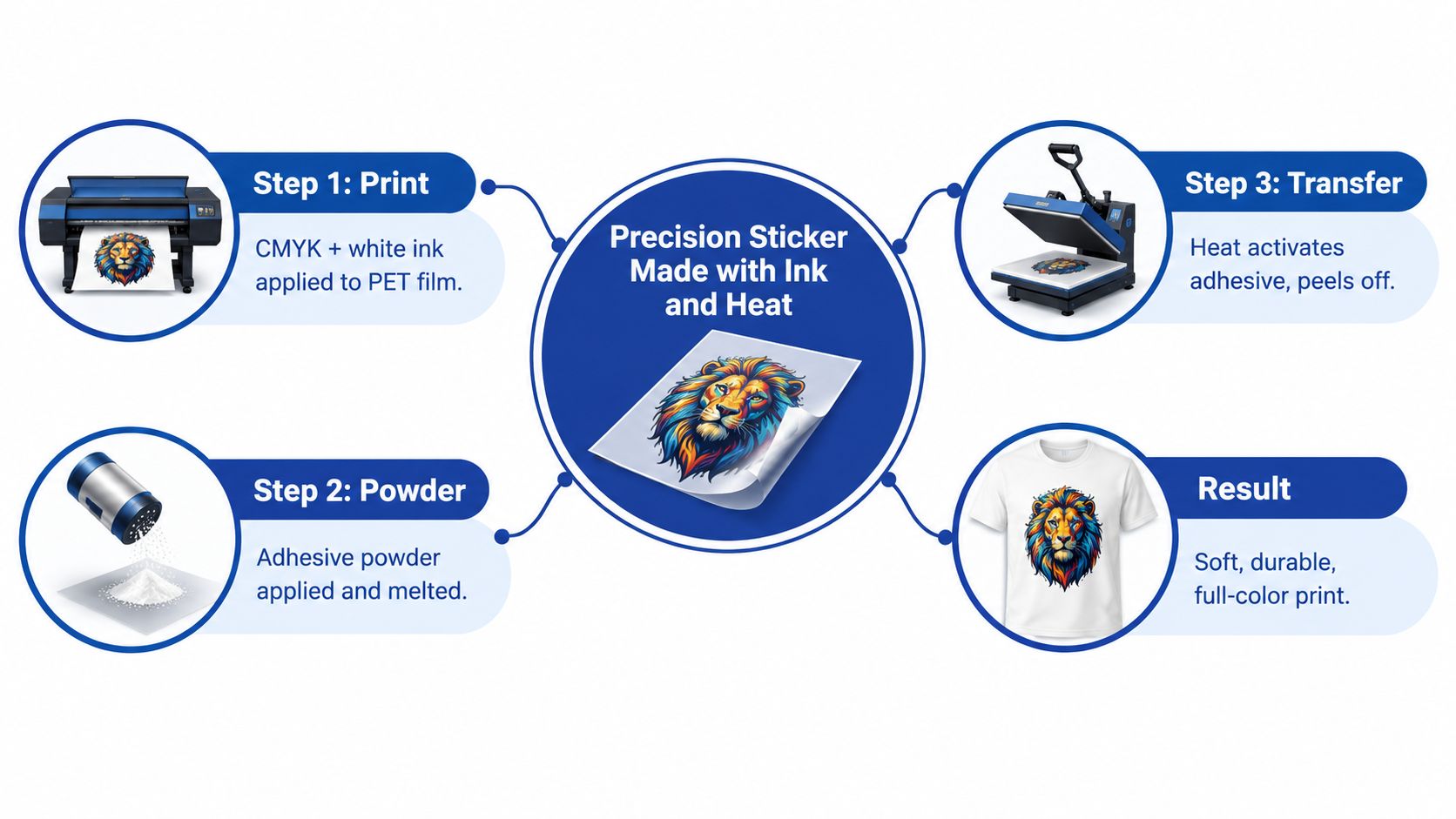
For an Anaheim order, DTF works like a temporary sticker that becomes part of the garment through heat and pressure. The design is printed onto PET film, coated with adhesive, then transferred to fabric with a heat press. That sequence matters because the finished shirt depends on both the printed image and the way the transfer is pressed.
Step one creates the image
The printer uses a CMYK plus white-ink workflow. CMYK produces the colors, while white ink forms an opaque foundation beneath the artwork. On a black shirt or another dark garment, that foundation keeps the fabric from dulling or changing the printed colors.
The image is placed on PET film, a smooth carrier sheet. It functions like temporary backing paper, holding the artwork in position until heat and pressure move it onto the garment.
Step two adds the adhesive
While the ink is still wet, adhesive powder is applied over the printed areas. Even coverage matters because the powder creates the bond between the transfer and the fabric. The transfer is then cured, melting the powder into a ready-to-press adhesive layer.
A finished transfer therefore includes more than ink. It has the image, a white backing where the garment requires it, and adhesive prepared for application.
Step three moves the design to fabric
A heat press applies controlled heat and pressure. These conditions activate the adhesive and attach the design to the garment. After the transfer reaches the correct peel stage and cools as directed, the PET film is removed, leaving the artwork on the fabric.
For a clearer visual explanation, see how DTF transfers work.
DTF supports cotton, polyester, nylon, spandex, and blends without pre-treatment, according to DTF printing information for Anaheim. That range helps one Anaheim order cover different garment types. It can also reduce concerns about dye migration on dark polyester and other synthetics, where garment dyes may react to heat.
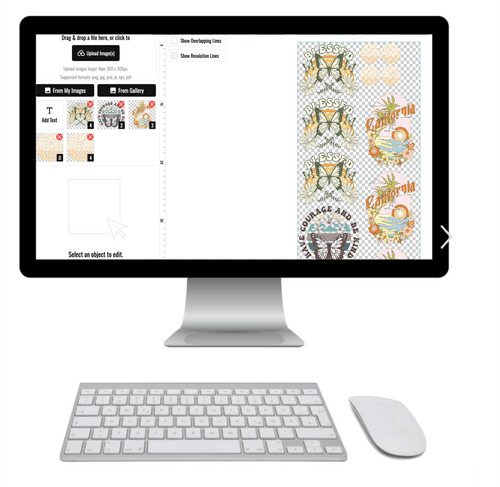
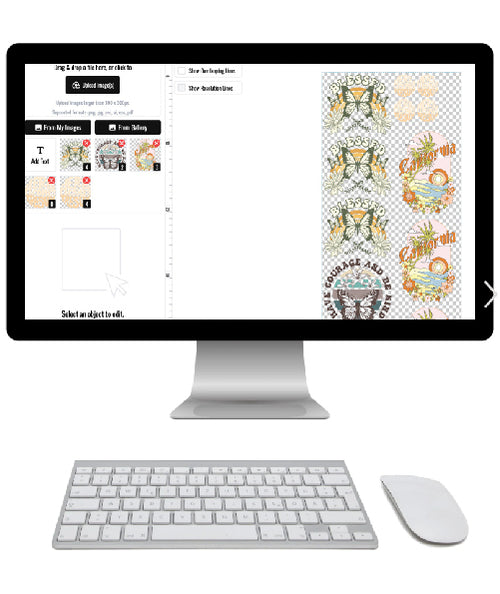
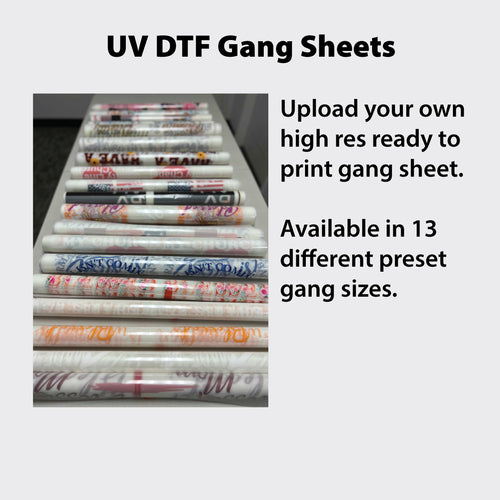
For repeat orders, color consistency starts before pressing. A provider's gang sheet builder, such as Lion DTF's Auto-build option, can arrange multiple designs efficiently, helping you review spacing and use film economically. Ask how the supplier manages white ink, adhesive coverage, film quality, and pressing instructions. Those details determine whether the sticker-like transfer becomes a clean, durable garment print.
Benefits and Real World Use Cases Around Anaheim
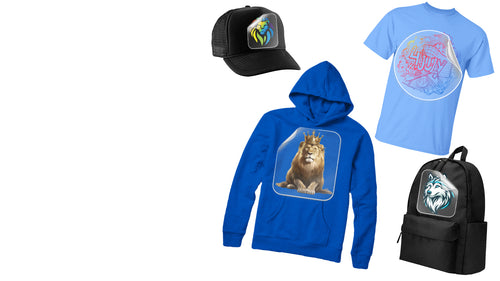
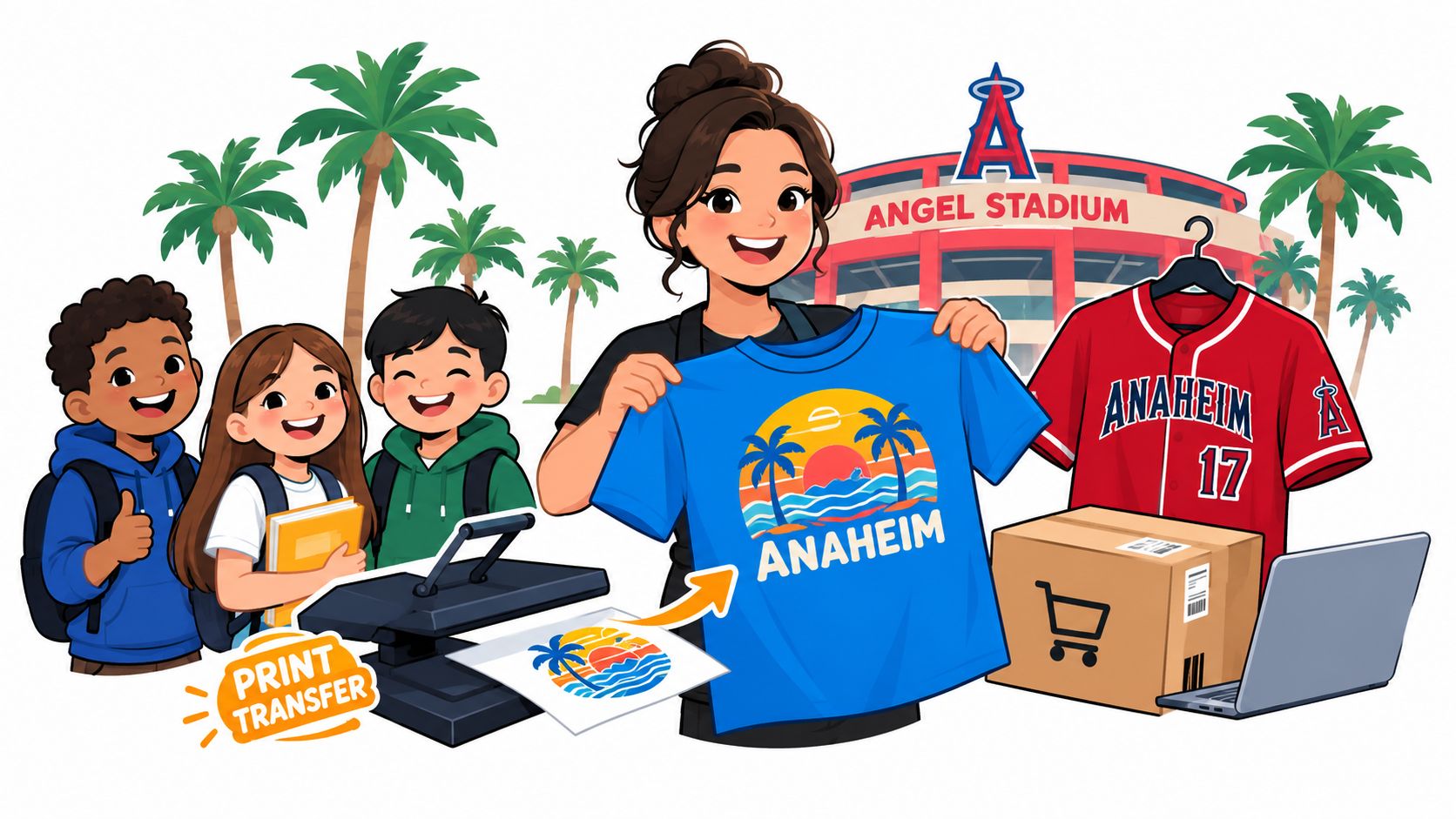
A school may need a small run of spirit shirts. A sports team may have a tournament approaching. A creator may want to test a design without committing to a large inventory. DTF fits these situations because it handles detailed, colorful artwork across several fabric types while allowing buyers to order transfers rather than fully printed garments.
Match the method to the garment
DTF has a practical advantage over methods that work best on a narrower fabric range. Because it can be applied to cotton, polyester, nylon, spandex, and blends without pre-treatment, one workflow can cover a mixed apparel order. That helps an Anaheim event organizer coordinate cotton tees, performance jerseys, and stretch garments without automatically changing decoration methods.
Screen printing can make sense for a repeatable design and a larger, consistent production run. Embroidery suits textured decoration on hats, jackets, and other structured items. Direct-to-garment printing can be attractive for certain cotton-focused applications, but DTF is often more flexible when the order includes synthetics, dark garments, or designs that need a strong white base.
See the local use cases clearly
- School and team apparel: A last-minute roster update or tournament design can be printed as transfers and pressed onto garments locally.
- Small business merchandise: A café, salon, hotel, or event vendor can test several designs without holding a large quantity of finished shirts.
- Creator-led drops: A seller can combine multiple logos or illustrations on a gang sheet and press garments as orders arrive.
- Promotional work: Agencies can use one transfer workflow for branded apparel, event merchandise, and client-specific artwork.
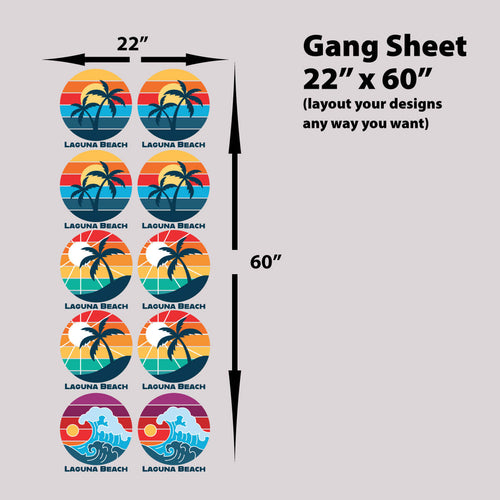
Gang sheets can improve material use because several designs share one sheet. Instead of ordering each small logo separately, a buyer can arrange front prints, sleeve marks, names, or small icons together. The savings depend on artwork dimensions, spacing, and the provider's pricing model, so compare the complete sheet cost rather than assuming the smallest individual print is automatically cheapest.
The Orange County DTF printing guide offers additional context for buyers planning fulfillment around Anaheim and nearby communities. Local production can be especially useful when the deadline includes pressing, sorting, or distributing garments, not just receiving a package.
How to Choose the Right DTF Provider in Anaheim
A low quoted price doesn't tell you whether the transfer will match the sample, preserve fine lettering, or behave well during pressing. Choose a provider by checking the production signals that affect the finished shirt.
Start with artwork and color control
Ask how the provider handles CMYK plus white output, especially for dark garments. A bright screen preview doesn't guarantee the same result on fabric. Request information about color matching, proofing, and how the supplier manages repeat orders.
Small text deserves its own check. Zoom into the design and look for clean edges, open counters in letters, and fine lines that haven't filled in. A supplier should also explain what happens when the artwork file has low resolution, unwanted backgrounds, or transparency problems.
Test the physical result
A quality review should include more than visual brightness. Check the transfer's hand-feel, stretch behavior, adhesion, and wash instructions. If you sell the same design repeatedly, press a sample before committing to a larger order. That sample helps separate a low price from a workable production cost.
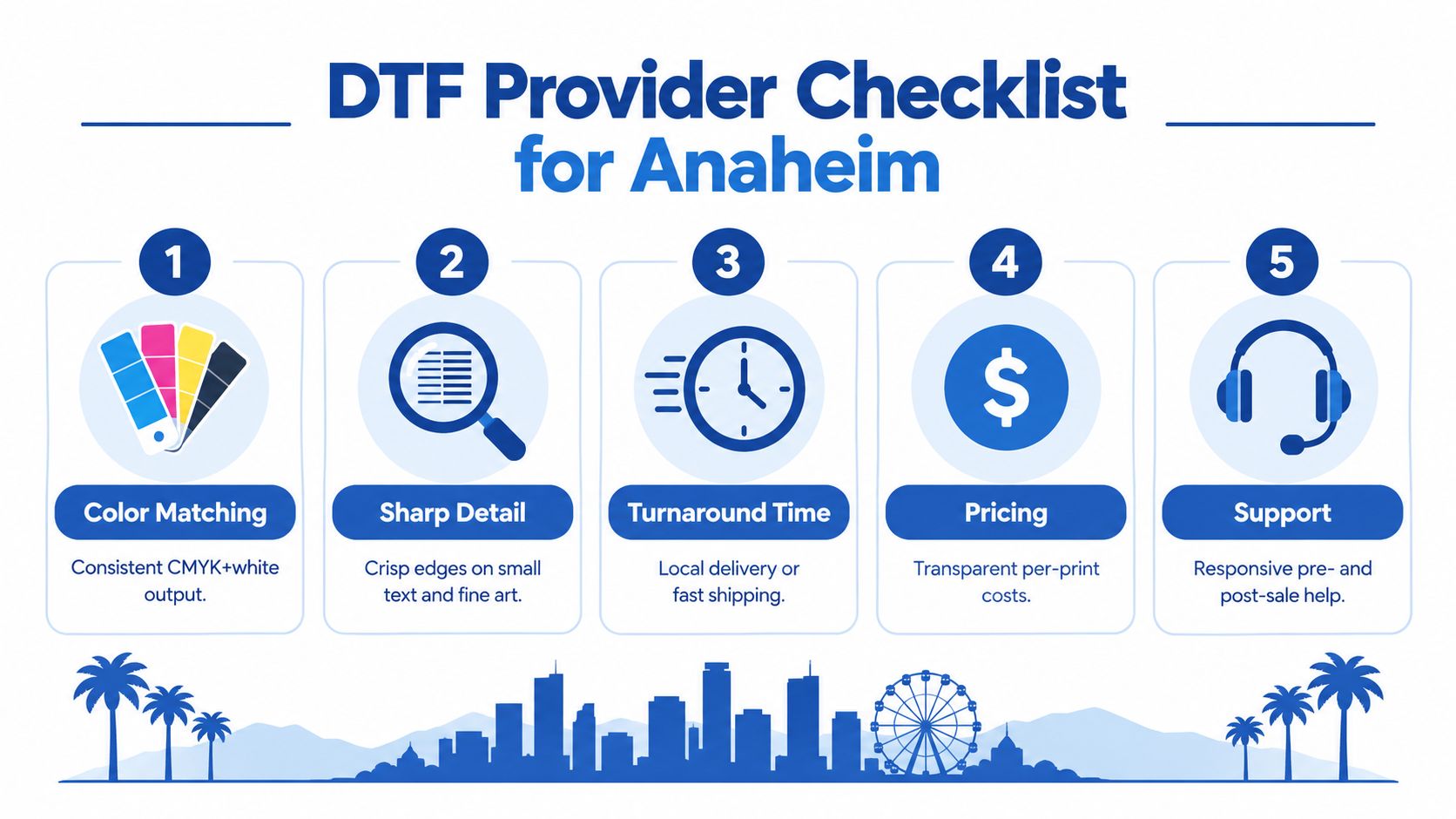
Use this checklist before ordering:
- Color consistency: Confirm that the provider can reproduce the same artwork across reorder cycles.
- Detail retention: Inspect small text, thin lines, gradients, and transparent areas.
- Turnaround clarity: Ask when production starts, how shipping is handled, and whether pickup is available.
- Pricing structure: Compare individual transfers with gang sheets and check whether setup or handling costs apply.
- Human support: Make sure someone can answer file, pressing, and order questions before the deadline.
The guide to choosing a reliable DTF transfer supplier is useful when you want a broader supplier-evaluation framework. Price-and-quality skepticism is reasonable in a maturing market. Independent reporting on California DTF market trends, demand, and pricing describes creator-led brands and on-demand production as growth drivers while pointing to expected price compression. That makes operational proof more valuable than a feature list.
Ask one question that reveals a lot: “If I reorder this design, how will you help me keep the color and size consistent?”
A provider that answers precisely is easier to trust than one that only promises speed.
Inside Lion DTF Transfers Offerings for Anaheim Buyers
For Anaheim-area buyers comparing suppliers, Lion DTF Transfers offers premium hot-peel DTF transfers, gang sheets, and UV DTF stickers. The useful feature for small batches is its Auto-build gang sheet builder, which helps arrange multiple designs on available sheet space. Better layout can reduce unused film and make a mixed order easier to organize.
The builder changes the ordering task from “How do I place every design?” to “Which artwork should share this sheet?” A school could combine a chest logo, mascot, participant names, and a small sleeve mark. A seller could arrange several product designs for a test drop. You still need to review dimensions and spacing, but the tool makes the first layout more approachable and supports cost effectiveness when several prints share one sheet.
Options for different production needs
Lion DTF lists pricing as low as $0.017 per square inch, with the final cost depending on the artwork and order configuration. It offers 24-hour printing, one to two business day shipping, same-day pickup, and next-day air options. Buyers should confirm availability and cutoff times for the specific order before relying on a deadline.
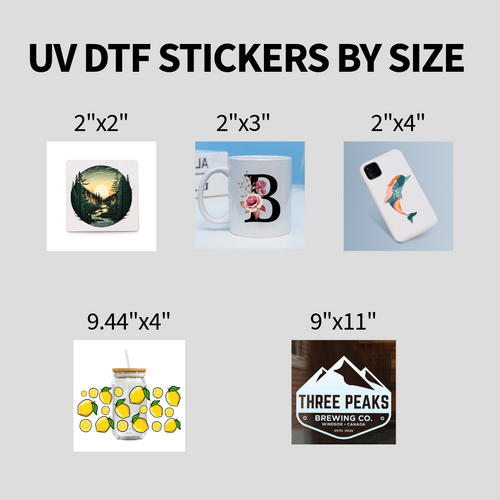
The product range also includes UV DTF stickers for decorating suitable hard, smooth surfaces. For buyers who need more than a file upload, the team provides design help, vectorization, and a “We Build a Gang Sheet for You” service. Those services can help when artwork needs cleanup or when a customer isn't comfortable arranging multiple images manually.
A local buyer should still evaluate every order against the same essentials: artwork clarity, garment compatibility, pressing conditions, delivery timing, and reorder consistency. The Auto-build tool is an efficiency anchor, not a substitute for checking the final layout.
Ordering insight: Gang sheet economics improve when you plan the whole batch, not when you add random designs at the last moment.
Ordering Pressing and Care Made Simple
The smoothest DTF project starts before you open the heat press. Organize the artwork, decide which designs belong together, and choose whether pickup or shipping fits the deadline.
Build the order in a sensible sequence
- Prepare the artwork. Use clean, print-ready files with transparent backgrounds where appropriate. Check that lettering, edges, and intended dimensions are correct before uploading.
- Open the Auto-build gang sheet builder. Upload multiple designs, set the sizes you need, and let the tool arrange the artwork. Review spacing and make sure every design is included.
- Choose the fulfillment method. Select the relevant transfer format, then compare shipping with pickup or expedited delivery based on the actual event date.
- Confirm the proof details. Check garment color, print size, quantity, address, and any notes before submitting. A correct transfer can still miss a deadline if the order details are wrong.
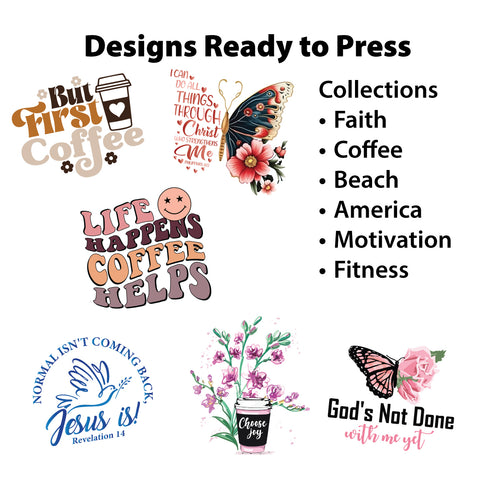
If you don't need a custom layout, ready-to-press collections can shorten the selection process. If the artwork needs cleanup, design support or vectorization may be more efficient than repeatedly uploading a file that isn't ready.
Press with control
Preheat the garment according to the supplier's instructions and place the transfer in the intended position. Use the recommended heat, pressure, and press time for that transfer and fabric combination. Too little heat or pressure can weaken adhesion, while too much can affect the garment or finish.
Peel according to the transfer's instructions. A hot-peel transfer is designed for removal while hot, but the exact method still matters. If the design lifts, stop and repress rather than pulling harder.
For UV DTF stickers, clean the smooth surface thoroughly, align the sticker, apply firm pressure, and remove the carrier carefully. Don't use them as a replacement for a textile transfer on fabric.
Wash care protects the finished work. Let the garment cool and settle before washing, turn it inside out, use a gentle cycle, and avoid harsh treatment or unnecessary high heat. Store unused transfers flat, clean, and protected from moisture so the adhesive and film remain ready for pressing.
Bringing Your Anaheim DTF Project Together
A successful DTF Anaheim order follows a straightforward decision chain. First, match the method to the garments and artwork. DTF is a strong fit when you need full-color designs across cotton, polyester, nylon, spandex, and blends without pre-treatment. Next, judge suppliers by visible quality signals, including color repeatability, fine detail, adhesion, turnaround clarity, and support.
Anaheim's scale makes dependable fulfillment valuable. The city had an official population estimate of 344,561 on July 1, 2024, according to Census QuickFacts. A separate 2026 estimate projects Anaheim at 340,018, with a median household income of $95,227 and a median age of 36.2 years, according to World Population Review's Anaheim profile. These figures describe a substantial consumer market for apparel, merchandise, and branded event goods, though individual order demand will always depend on the audience and project.
Local promotion also requires practical awareness. Anaheim's city code makes it unlawful to paste, post, print, paint, nail, tack, or otherwise fasten a sign, banner, handbill, poster, advertisement, or similar notice on another person's property without the owner's consent, as stated in the Anaheim municipal code. Printed apparel and permitted event materials can support promotion without assuming that every public surface is available for advertising.
Use the Auto-build gang sheet builder when several designs need to share space. Verify the layout, select the fulfillment option that matches your deadline, and press a sample when color or fabric performance matters. Then follow the supplier's heat, pressure, peel, and wash guidance instead of relying on guesswork.
Whether you're preparing team apparel, testing a merchandise idea, or fulfilling a client order, the safest process is repeatable. Clear files, a deliberate layout, a verified provider, and careful pressing give you a much better chance of getting every shirt ready when Anaheim's event date arrives.
Lion DTF Transfers offers hot-peel DTF transfers, custom and Auto-build gang sheets, UV DTF stickers, design support, and fulfillment options for Anaheim-area buyers. Visit Lion DTF Transfers to build your gang sheet, upload artwork, compare transfer options, or ask the team for help with your next local apparel project.
Email orders@LionDTF.com or Text or Call: 833-350-5466