


At a busy Albuquerque event, professional DTF outsourcing can save production time and reduce material waste, especially when you use an Auto-build gang sheet builder. Albuquerque had about 449.1 thousand employed workers in October 2025, followed by 449.0 thousand in November 2025, before employment fell to 433.1 thousand in December 2025 and 432.7 thousand in January 2026, giving custom-print providers a substantial local customer base (BLS Albuquerque labor data).
You may be preparing shirts for the Balloon Fiesta, restocking a small apparel brand, or trying to finish a mixed order before the Downtown Growers' Market. The artwork is ready, the garments are waiting, and the deadline isn't moving. In that situation, the right DTF workflow matters more than owning every piece of printing equipment yourself.
Navigating the Local Print Market
An Albuquerque maker might start the week with a small chest logo for a local business, a full-color event graphic for a vendor, and a few personalized shirts for a sports team. None of those jobs is especially large by itself. The difficulty comes from handling different artwork, garment colors, transfer sizes, and deadlines without sacrificing consistency.
That pressure is familiar in a city with an active commercial and event culture. The Albuquerque International Balloon Fiesta began in 1972 as part of a 770 KOB Radio 50th-birthday celebration. Its first event featured 13 balloons and drew 20,000 spectators at the Coronado Center parking lot (Albuquerque International Balloon Fiesta history). Seasonal events create recurring opportunities for branded apparel, vendor merchandise, uniforms, and limited-run designs.
The Downtown Growers' Market has operated since 1996 and entered its 30th year in 2026, with that season scheduled from April 4 through November 7, on Saturdays from 8 a.m. to noon (Downtown Growers' Market information). A maker selling at a market may need a small batch of several designs, then a quick replenishment when one shirt sells faster than expected.
The local competition is real
Albuquerque already has a dense print-services cluster. Public listings include established providers such as The Printer's Press, Business Printing Services, Print New Mexico, Print Express, and UPS Store print centers (The Printer's Press). Local shops advertise screen printing, embroidery, DTG, DTF, stickers, banners, and fulfillment.
That variety is useful, but it can make the buying decision harder. Screen printing may suit a larger order with a stable design. Embroidery may fit workwear or caps. DTF often makes more sense when the order contains detailed artwork, mixed fabrics, multiple designs, or a low quantity.
Practical rule: Choose the production method around the order you actually have, not the method you used last time.
Outsourcing also avoids the cost and learning curve of running your own DTF printer, shaker, curing system, and maintenance routine. You can focus on artwork, garment selection, pressing, packaging, and customer service while a transfer provider handles the print-production stage. For a closer look at the local buying decision, compare the workflow described in this guide to custom DTF transfers near Albuquerque.
Understanding the Core Concept of DTF
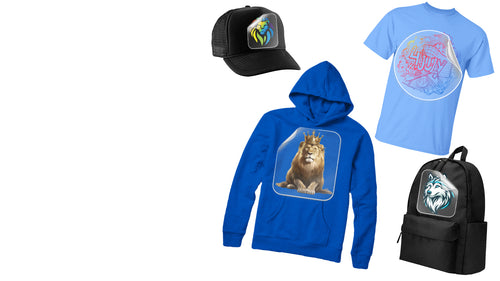
Direct-to-Film, or DTF, is a high-fidelity stamp for fabric. Instead of printing ink directly onto the shirt, a provider prints the design onto special PET film, applies adhesive powder, cures the transfer, and sends it ready for heat application.
The basic workflow looks like this:
- Prepare the artwork. The design is checked for physical dimensions, transparency, edges, and color.
- Print onto PET film. A DTF printer lays down the color image and a white ink layer where opacity is needed.
- Apply adhesive powder. The powder bonds to the printed areas and later connects the image to the garment fibers.
- Cure the transfer. Heat sets the adhesive so the transfer can be handled and pressed.
- Press onto the garment. A heat press applies controlled temperature, pressure, and dwell time.

Why DTF handles complicated artwork
Screen printing separates an image into color layers and uses a separate mesh screen for each color. It also involves garment preparation, setup, registration, and cleanup. That workflow can be efficient for repeat production, but setup becomes less attractive when you need only a small quantity or several different designs.
DTF moves much of that complexity into the digital print stage. A full-color illustration, gradient, fine line, or photographic graphic can be prepared as one digital file rather than rebuilt through multiple screen separations. The transfer can be applied to cotton, polyester, and blends, provided the garment and pressing conditions are compatible.
The method isn't automatically superior for every job. Screen printing can remain a sensible choice for a large run with a simple design, while embroidery is often better for raised, stitched branding. DTF earns its place when flexibility, detail, and short-run production matter.
The pressing stage determines the result
A well-printed transfer can still fail if the shirt isn't pressed correctly. The garment should lie flat on a clean platen, seams and pockets should stay outside the pressing area, and the press should reach stable heat and pressure before application.
Place the transfer with the printed side against the fabric, press for the provider's specified settings, and allow the film to cool or peel according to its peel type. A hot-peel transfer is removed while warm, but you should still follow the supplier's instructions rather than pulling immediately or lifting at an angle.
Why Gang Sheets Are Essential for Local Businesses
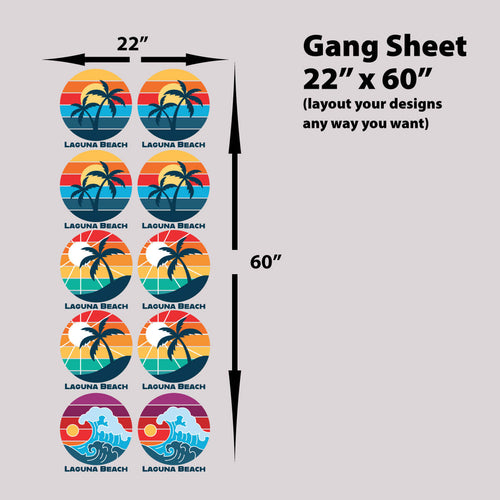
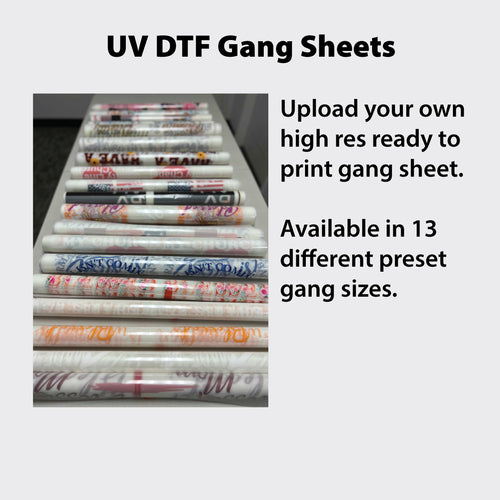
A gang sheet places multiple transfer designs on one larger sheet of film. Instead of ordering each logo or graphic as an isolated piece, you organize several required transfers together, using available film area more efficiently.
That matters for Albuquerque businesses serving markets, teams, festivals, schools, and local retailers. An event order might combine a large back graphic, a small chest logo, staff apparel, and a vendor mark. A reseller may need several unrelated designs for a small merchandise drop. A gang sheet lets those requirements become one production plan instead of a series of disconnected files.
One industry guide describes gang sheets as an effective way to minimize film and ink waste and lists common production sizes such as 22 x 24, 22 x 48, and 22 x 96 inches (DTF gang sheet production guide). The actual value depends on how well the designs fit. A badly planned sheet can leave awkward gaps or make separation difficult.
Use the Auto-build gang sheet builder
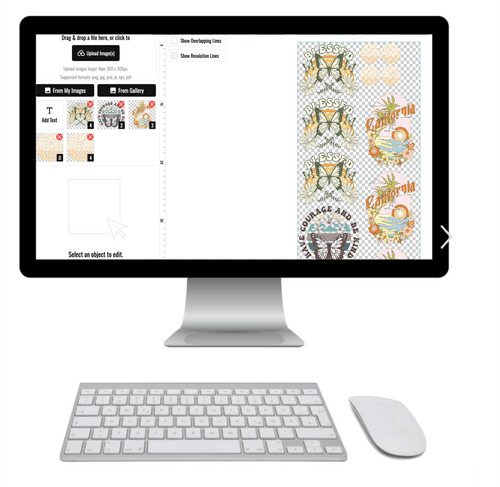
Lion DTF Transfers' Auto-build gang sheet builder removes much of the manual layout work. You upload one or more designs, specify the required sizes, and let the builder arrange the artwork into a workable sheet. Gang sheet builders can also support dragging, resizing, duplicating, and adding text during layout preparation (custom gang sheet builder guide).
That ease of use matters when you don't work in Illustrator or another layout program every day. It also helps you make better production decisions before placing the order. You can see whether a design needs to be resized, whether repeat logos belong on the same sheet, and whether ordering transfers individually would be simpler.
Production insight: A gang sheet isn't automatically cheaper. It works best when the designs, sizes, and quantities are known before you arrange the layout.
Turn mixed orders into a repeatable system
Start with a short artwork list:
- Design A: intended placement, physical size, and quantity.
- Design B: alternate size or garment group.
- Design C: repeat logo or event variation.
- Design D: extra graphic required for the same production run.
Keep each design at its actual intended size. Don't fill empty space with artwork you haven't approved, and don't treat identical artwork at different physical sizes as the same production requirement. That distinction keeps the finished transfers easier to identify and press.
For more guidance on planning multiple designs and quantities, use this DTF gang sheet workflow. It can help a small business decide whether a gang sheet supports the order or whether transfer-by-size ordering is clearer.
The Step-by-Step Ordering Workflow
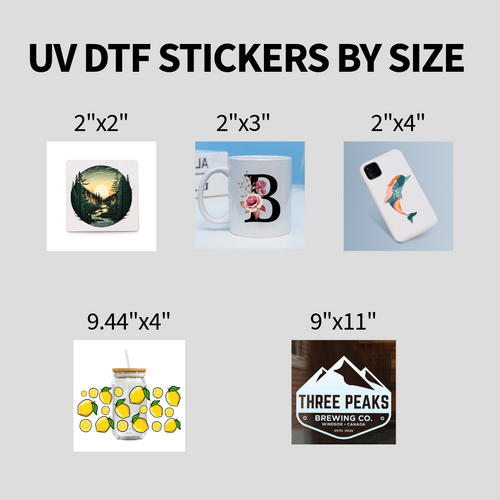
A reliable DTF order begins before you open the builder. First, gather the final artwork, decide where each design will be pressed, and determine the physical dimensions. “Large logo” isn't a production specification. A usable instruction looks more like “back print at the intended width” or “small left-chest placement.”

Prepare the file before uploading
Use a transparent-background PNG when possible. Check that the artwork is sharp at its final physical size, remove hidden background boxes, and confirm that small text is large enough to survive transfer and pressing.
If a customer supplied a low-resolution logo, don't enlarge it and hope for a clean result. Ask for the original vector file, request a better export, or have the artwork recreated or vectorized. A blurry source file produces a blurry transfer, even when the printer itself is calibrated correctly.
Build the sheet around the order
Upload the artwork into the Auto-build gang sheet builder. Add each design at its required size and quantity, then review the arrangement before checkout. The builder is useful because it handles the spatial planning that often causes mistakes when a customer manually prepares a finished sheet.
Look for three things:
- Correct dimensions: Every design should match the intended garment placement.
- Correct counts: Repeat logos and alternate sizes should reflect the actual order.
- Usable separation: Designs should be easy to cut apart and identify after printing.
Don't maximize sheet density at the expense of handling. A few inches of practical separation can make cutting, sorting, and pressing much faster.
Select the transfer details
Choose the appropriate transfer size and peel preference. Hot-peel transfers are designed to be peeled while warm, but the exact pressing process still depends on the supplier's instructions and garment material.
Review the digital proof carefully. Check spelling, artwork orientation, transparency, color appearance, and the order quantity. Once the sheet enters production, correcting an overlooked mistake becomes much more difficult than catching it on screen.
For a fuller ordering walkthrough, follow this custom DTF transfer ordering guide.
The ordering interface should support the production decision, not replace it. If the design sizes remain undecided, pause before checkout and settle the garment placements first.
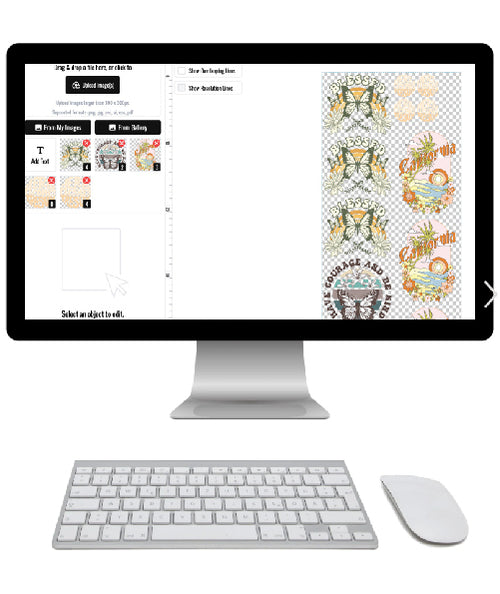
Here is a visual walkthrough of the ordering experience:
After the transfers arrive, test one application before pressing the entire batch. Pre-press the garment briefly to remove moisture and wrinkles, position the transfer, apply firm and even pressure, and peel according to the selected film type. Let the finished print cool and follow the recommended wash-care instructions.
Comparison of Delivery Options
Albuquerque customers usually have three practical fulfillment questions: Can the order be picked up locally, how much time does standard shipping add, and what happens when an event deadline is close?
Local production listings show that rapid turnaround is an active part of Albuquerque's print market. One local provider advertises same-day pickup for orders placed before cutoff times (Fully Exposed Graphics services). Other Albuquerque-area pages describe turnaround ranges from 5 business days plus shipping time to 7–10 business days, with some providers offering rush services. Those figures aren't interchangeable, so confirm the actual production schedule before committing to a deadline.
| Fulfillment option | Best fit | Advantages | Trade-offs |
|---|---|---|---|
| Standard shipping | Planned apparel production | Convenient for makers who don't need to travel | Adds transit time after printing |
| Next-day air | A deadline that leaves little schedule flexibility | Compresses the shipping portion of the order | Costs more and doesn't replace production time |
| Rush production | A late order with a fixed use date | May shorten the production queue | Availability must be confirmed before ordering |
Plan from the event backward
If the shirts are for a market or festival, count backward from the moment you need to press and pack them. Include artwork approval, ordering, production, delivery, pressing, sorting, and a small buffer for misprints or garment issues.
Don't assume “same-day” means the finished shirts are ready that day. It may refer to pickup availability after production, or it may require a specific order cutoff. Ask what time the order must be submitted, when it will be ready, and whether local pickup is available.
For a small e-commerce brand, standard shipping may be enough when inventory is planned. For a last-minute team order, or rush production may be worth the added coordination. The right option depends on the complete lead time, not the shipping label alone.
Quality Guarantees and Support Services
Quality starts with the transfer, but it ends with the application. A provider should give you clear pressing instructions, identify the peel type, and explain garment compatibility. That information is especially valuable for makers using a home heat press, because inconsistent pressure or temperature can create problems that look like print defects.
Premium hot-peel transfers can simplify production by reducing the wait between pressing and peeling. They still require disciplined handling. Keep the garment flat, use the correct pressure, avoid pressing across zippers or thick seams, and test unfamiliar blanks before running a full batch.
Durability depends on the complete process
Lion DTF Transfers may last 100+ washes (Lion DTF Transfers). Treat that as a product durability claim tied to proper application and care, not as permission to ignore pressing instructions. The garment, adhesive bond, press settings, wash temperature, detergent, and drying method all influence the finished result.
A print provider can also help before the transfer reaches the press. Support may include logo cleanup, vectorization, shirt-design assistance, and application guidance. Those services are useful when a customer has a recognizable idea but not a production-ready file.
Application rule: A transfer should be evaluated as part of a workflow, not as an isolated sheet of film.
Support is operational, not decorative
For a small print shop, responsive support can prevent a production stoppage. A question about transparency, sizing, peel timing, or a garment blend is easier to resolve before the order is printed than after a batch has been pressed incorrectly.
The strongest workflow keeps responsibility clear. The provider supplies a properly produced transfer and relevant instructions. The customer confirms artwork, selects compatible garments, calibrates the press, and follows the application process. That division lets both sides solve the problems they control.
The Essential Pre-Order Checklist
Use this checklist before submitting a DTF Albuquerque order:
- Confirm the artwork: Upload the final approved design, not an outdated draft.
- Check transparency: Remove unintended backgrounds and hidden rectangles.
- Verify physical size: Measure each design for its actual garment placement.
- Count every variation: Separate quantities for small, medium, large, front, back, and sleeve graphics.
- Review the gang sheet: Make sure the Auto-build layout uses space efficiently without making separation difficult.
- Check the garment: Confirm that the fabric blend, color, seams, pockets, and surface are suitable for DTF application.
- Inspect the proof: Review spelling, orientation, edges, and color before checkout.
- Confirm timing: Ask whether pickup, standard shipping, rush production, or air delivery fits the deadline.
- Prepare the press: Verify that the press can apply even heat and pressure across the full design.
- Plan a test press: Apply one transfer first when the garment or artwork is unfamiliar.
This short review catches the mistakes that waste the most time, especially wrong sizes, missing quantities, unsuitable garments, and artwork that was never ready for production.
Conclusion and Next Steps for Local Makers
DTF gives Albuquerque makers and print shops a flexible route for detailed artwork, mixed fabrics, short runs, and repeat merchandise. The local market already includes established screen printers, embroidery shops, and full-service providers, so the advantage of outsourced DTF isn't that other methods have disappeared. It's that ready-to-press transfers and gang sheets solve a different production problem.
The Auto-build gang sheet builder is especially useful when one order contains several designs, repeat logos, or mixed sizes. It reduces layout guesswork and helps you plan the transfer sheet around the garments you need.
For an event organizer, school, sports team, reseller, or small apparel brand, the next step is practical. Finalize one design, confirm its intended size, choose the garment, and build a small order you can test from upload through pressing.
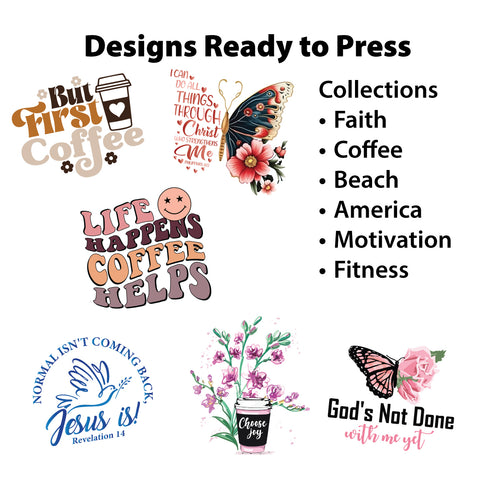
Lion DTF Transfers offers custom DTF transfers, ready-to-press options, gang sheets, and an Auto-build gang sheet builder for Albuquerque creators who need organized, low-volume production. Visit Lion DTF Transfers to upload your artwork, build your first sheet, and choose the fulfillment option that matches your next deadline.
Email orders@LionDTF.com or Text or Call: 833-350-5466