



You're probably in the phase where orders are coming in faster than your production method can handle. Small left-chest logos are easy enough. Then a customer wants full-color front prints on mixed garments, another needs names added by Friday, and suddenly your shop is losing time to weeding, setup, or rework instead of invoicing the next job.
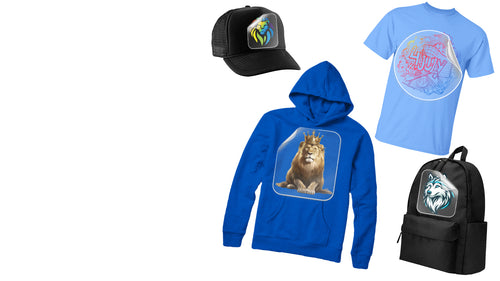
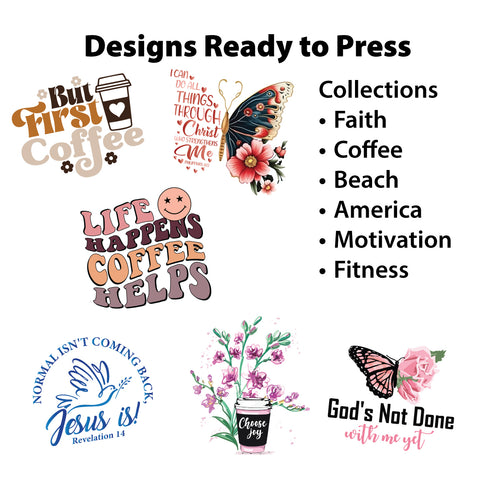
That's where wholesale dtf transfers start making sense. They let you keep selling custom apparel without tying every order to a long production chain. You can buy press-ready transfers, stock blanks, and turn jobs around with less labor than vinyl and less setup friction than screen printing on short runs.
The mistake most shops make is thinking the decision starts and ends with price per inch. It doesn't. The shops that protect margin look at labor, sheet utilization, file prep, shipping, and how reliable the supplier is when an order gets tight.
Why Wholesale DTF Transfers Are a Game Changer
A lot of shops reach the same breaking point in similar ways. The order book looks healthy, but production starts backing up. HTV is too manual for repeat volume. Screen printing feels inefficient for short runs with lots of colors. DTG can work, but not every order fits that workflow cleanly.
Wholesale DTF transfers solve a specific business problem. They separate printing from pressing. That matters more than people realize. When the transfer supplier handles the print side, your shop can focus on apparel sourcing, scheduling, pressing, packing, and customer service.

Why shops switch
When a shop moves into wholesale dtf transfers, the first win usually isn't some dramatic production miracle. It's operational relief.
- Less manual labor: You stop spending so much time weeding individual pieces.
- Better fit for short runs: Multi-color artwork becomes practical without screen setup overhead.
- More flexibility on garment mix: Cotton, polyester, blends, and performance fabrics are all in play.
- Faster response to custom orders: You can keep a heat press active without owning the full print stack.
Practical rule: If your bottleneck is decoration labor more than sales, wholesale dtf transfers deserve a serious look.
There's also a broader reason this shift isn't temporary. Grand View Research's direct-to-film printing market report valued the global direct-to-film printing market at USD 2.72 billion in 2024 and projects it to reach USD 3.92 billion by 2030, with a 6.0% compound annual growth rate from 2025 to 2030. That tells you this isn't a side method anymore. It's an established production lane with expanding demand.
What changes in a real shop
In practice, wholesale dtf transfers work well when you have:
| Shop situation | What usually happens |
|---|---|
| Short runs with many colors | DTF simplifies decoration without screen setup |
| Mixed garment types in one order | One transfer workflow handles more SKU variation |
| Frequent reorder work | Stored art and repeatable pressing make reorders easier |
| Rush demand | Press-ready transfers reduce in-house production steps |
What doesn't change is the need for discipline. DTF doesn't rescue sloppy files, weak scheduling, or inconsistent pressing. It gives you a cleaner path to scale if the rest of your operation is organized.
Comparing DTF Transfers Against Other Methods
A wholesale DTF transfer is straightforward in concept. The design is printed onto film, adhesive is applied and cured, then you heat press the finished transfer onto the garment. For a shop owner, the primary question isn't how the chemistry works. It's when this method beats the alternatives.

Where DTF fits best
DTF usually wins when the order has full color, frequent design changes, or a mix of garment types. It's also strong when you want to separate print production from garment finishing.
Screen printing still has its place. For long, stable runs with simple art, it can be the cleaner manufacturing choice. HTV still works for names, numbers, and very simple spot applications. DTG can be a good fit for some direct print workflows, especially when the garment and art style line up. If you want a deeper process comparison, this breakdown of DTF vs DTG printing is a useful reference.
Honest trade-offs by method
| Method | Strongest use case | Where it struggles |
|---|---|---|
| DTF transfers | Short to mid runs, full-color designs, mixed fabrics | Press quality depends on settings and transfer quality |
| Screen printing | Longer runs with stable artwork | Setup burden can hurt small multi-color jobs |
| HTV | Simple names, numbers, bold shapes | Labor-heavy for complex or repeated designs |
| DTG | Certain direct-to-garment applications | Workflow and garment compatibility aren't always ideal for every shop |
DTF is rarely the answer for every order. It's the answer for the orders that punish manual labor, setup-heavy printing, or fabric inconsistency.
What business owners usually care about most
For most growing shops, the decision comes down to five things:
-
Setup burden
If every order starts with a long prep cycle, your margin gets eaten before production starts. -
Artwork flexibility
Photographic work, gradients, and fine multi-color graphics push many shops toward DTF. -
Fabric range
If your orders move between cotton tees, poly hoodies, and blends, DTF simplifies planning. -
Labor per finished piece
Vinyl gets expensive in labor even when the material seems manageable. -
Turn speed under pressure
When a client changes quantities late, a transfer-based workflow is easier to absorb.
The wrong way to compare methods is by asking which one is “better.” The right way is asking which one protects margin for the kind of jobs your shop gets every week.
The Real Economics of Buying Wholesale DTF Transfers
The advertised rate is only the starting point. What matters is landed cost, meaning what the transfer costs by the time it's usable in your shop and attached to a profitable job.
Buyers frequently get tripped up. A low per-inch price can look great until the supplier adds shipping, applies a minimum, or leaves you with poor sheet utilization. That's why the cheapest listing often isn't the cheapest order.
What landed cost actually includes
Teddy Transfers' wholesale DTF pricing page highlights a problem buyers run into all the time. Some suppliers advertise low pricing with a separate gang-sheet rate of $3.50/sq ft and a minimum charge for a 22.5 x 24 sheet. For a small order, that can drive the effective cost much higher than the headline price suggests.
Here's what to review before you compare vendors:
- Sheet utilization: Empty space is wasted money. Poor nesting raises the cost of each finished logo or graphic.
- Shipping: A low item price can lose its advantage once freight is added.
- Artwork prep time: If your team has to fix every file, labor costs creep in fast.
- Minimum order thresholds: These hit small reorder jobs especially hard.
- Reprints and errors: A supplier that forces preventable remake costs is expensive even if the invoice looked cheap.
Cheap transfers become expensive when your team spends extra time cleaning up art, rebuilding layouts, or replacing failed prints.
A better way to cost a job
Instead of asking, “What's the price per inch?” ask these questions:
| Cost question | Why it matters |
|---|---|
| How full is the gang sheet? | Better utilization lowers the cost per design |
| Is there a minimum sheet charge? | Small runs can get distorted by minimums |
| Who's doing file cleanup? | Design labor belongs in job costing |
| What's the shipping impact? | Fast freight can erase pricing advantages |
| How likely is a reprint? | Reliability affects margin more than advertised rates |
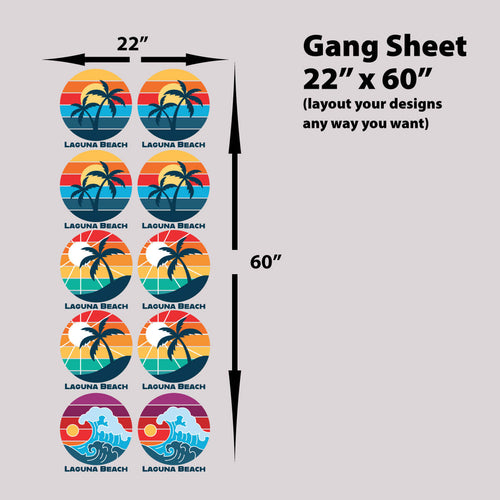
The most practical lever you control is gang sheet efficiency. If you lay out logos, sleeve prints, neck labels, and full fronts intelligently, your economics improve fast. If you submit scattered files with excess dead space, you lose margin before the package even ships.
Where buyers usually make the wrong call
They compare vendor A to vendor B on base rate alone. They don't compare the actual cost of getting usable transfers into production with minimal waste. That's the difference between buying wholesale dtf transfers and buying them intelligently.
How to Prepare Artwork and Order Gang Sheets
Bad artwork creates expensive problems. Not always immediately, but usually once the transfer is pressed and the customer sees soft edges, rough transparency handling, or shapes that don't match the intended size. DTF is forgiving in some areas. File quality isn't one of them.

Start with file discipline
DTF Transfers' wholesale product guidance recommends vector files or raster files at 300 DPI minimum. That's the baseline because DTF shows edge issues quickly. Lower resolution can produce soft detail and visible artifacts after printing and curing.
The file prep checklist should be routine:
- Use 300 DPI artwork: Lower resolution tends to break down on fine detail.
- Keep backgrounds transparent: A messy background can create unwanted print areas.
- Match the artwork to final print size: Resizing late can change proportions and sharpness.
- Check thin lines and tiny text: Very fine elements can fail in production or wear testing.
- Preflight before upload: Don't assume the supplier will catch every issue.
Why gang sheets matter
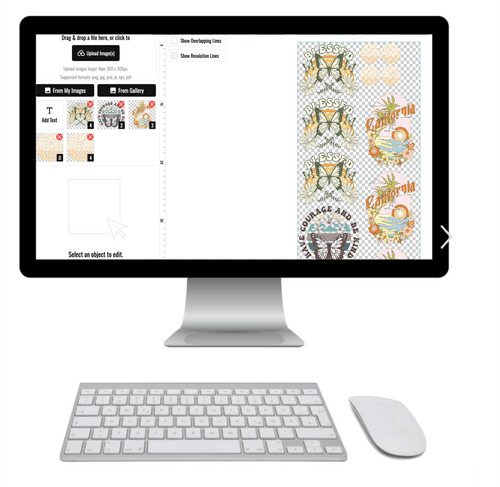
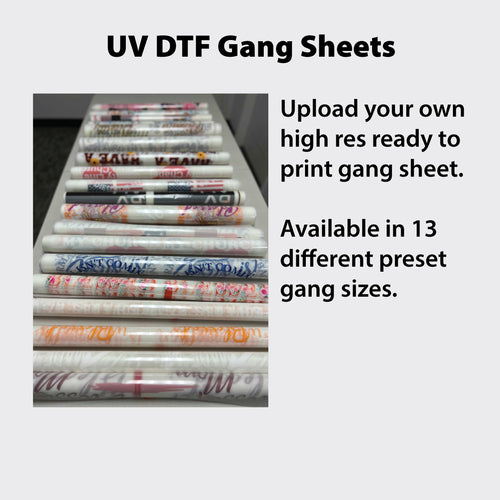
A gang sheet is multiple designs arranged on one sheet of film. It's one of the easiest ways to improve cost efficiency because you're using more of the printable area. Good gang sheet building lowers waste, simplifies ordering, and helps you consolidate jobs.
Manual gang sheet building in design software works, but it eats time. It also creates easy mistakes. Mis-sized logos, uneven spacing, duplicate art, and dead space all show up when someone is rushing.
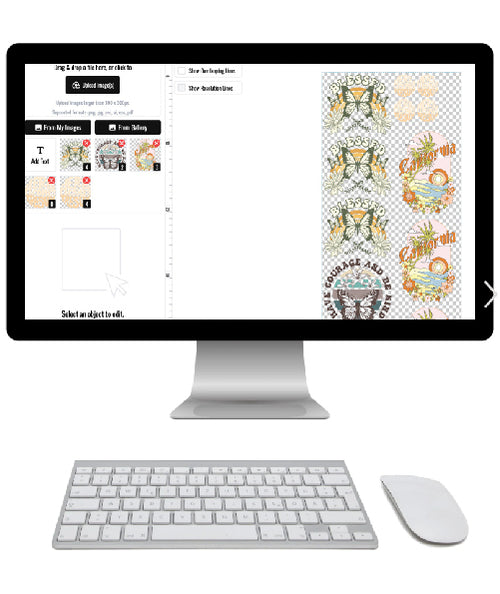
A faster option is an online builder such as an Auto-build gang sheet builder, which places artwork into a sheet format without forcing your team to manually assemble every layout element. If you want a clearer overview of gang sheet workflow, this guide to a DTF gang sheet is worth reviewing.
A practical ordering workflow
A clean ordering process usually looks like this:
-
Sort art by print size
Separate left chest, sleeve, tag, and full-front graphics first. Don't build mixed-size chaos. -
Remove avoidable edits before upload
Fix transparency, naming, and scale in advance. The more cleanup you push downstream, the slower and riskier the order gets. -
Build for utilization, not aesthetics
Gang sheets aren't supposed to look pretty. They're supposed to reduce waste. -
Use tools that remove manual layout work
An Auto-build gang sheet builder saves time and usually improves consistency. If you don't want to build layouts yourself, a “We Build a Gang Sheet for You” service is often the smarter option for busy shops.
This walkthrough helps show what a smoother gang sheet process looks like in practice:
The most expensive art mistake isn't ugly design. It's sending a file that forces resizing, causes a reprint, or stalls production on a rush order.
Ensuring Quality Durability and Perfect Application
A good transfer should press cleanly, hold color well, and stay intact through wear and washing. If the print looks dull, edges lift, or the surface feels unstable after pressing, the problem usually comes from application, not just the transfer itself.
That's important because buyers often judge transfer quality too early. A press-ready transfer still needs the right heat, pressure, and peel handling to perform the way it should.

What quality should look like
Durability depends on correct application and that variables like heat press temperature, pressure, and peel method directly affect adhesion on cotton, polyester, and blends.
A finished print should show:
- Strong color density
- Clean edge definition
- A flexible surface that moves with the garment
- Reliable bonding across the full design area
Application habits that prevent failure
Most pressing errors come from inconsistency. One operator pre-presses the garment, another skips it. One uses firm pressure, another guesses. Those differences show up later as peeling or incomplete bonding.
Use a repeatable press routine:
- Pre-press the garment: Remove moisture and flatten the print area.
- Place the transfer carefully: Don't rush alignment on bulk work.
- Use consistent pressure: Uneven pressure causes partial adhesion.
- Follow the peel method intended for the transfer: Hot peel and other peel styles need to be handled correctly.
- Inspect immediately after pressing: Catch weak corners or missed sections before packing.
A transfer that fails after washing often started failing at the press.
What doesn't work
A few habits create problems fast:
| Common mistake | Likely result |
|---|---|
| Too little pressure | Edges or sections don't bond fully |
| Excess heat | Film distortion or poor hand feel |
| Inconsistent peel timing | Surface defects or incomplete release |
| No incoming inspection | You miss issues before production starts |
If you want dependable output from wholesale dtf transfers, treat pressing like a production step, not an afterthought. Good suppliers matter. Press discipline matters just as much.
Choosing Your Wholesale DTF Transfer Supplier
A supplier isn't just sending film in a box. They're affecting your turnaround, your remake rate, your color consistency, and how confidently you can accept new business. That's why choosing a wholesale dtf transfers partner deserves the same scrutiny you'd give any core vendor.
A useful benchmark comes from a transparency report discussed in this YouTube production breakdown. One DTF transfer company reported 5,559 total orders in a year, with 39% year-over-year growth, and 52% of those orders fulfilled through its own website. The same report also noted 2,27x orders from its website, and that December was its slowest month with 59 orders. The takeaway isn't that every supplier should match those exact figures. It's that a real wholesale operation has to handle scale, direct ordering, and seasonal swings without breaking service.
What to vet before you commit
Don't stop at sample quality. Check the operating model.
- Ordering infrastructure: If the upload flow is clumsy, your team will feel it on every job.
- Turnaround reliability: Fast promised times are meaningless if consistency breaks under volume.
- Color repeatability: Reorders need to look like reorders.
- Support access: When a file issue or rush need comes up, you need a real response channel.
- Workflow options: Same-day pickup, expedited production, and rush shipping matter when customers change plans.
Signs of a supplier built for production
| Supplier trait | Why it matters to your shop |
|---|---|
| Clean online ordering | Reduces admin time and ordering mistakes |
| Scalable fulfillment | Helps during busy weeks and seasonal spikes |
| Responsive support | Solves file and production issues faster |
| Clear specialty services | Useful when your team can't prep everything internally |
One option in this category is Lion DTF's local and wholesale transfer resource, especially if you need online ordering, gang sheet tools, and support across call, text, email, and chat. The value isn't just convenience. It's reducing production friction when the order load increases.
The real test
A good supplier makes your process simpler under pressure. A weak one looks fine until you have a deadline, a reorder, or an art issue that needs a fast answer.
Common DTF Transfer Questions and Troubleshooting
Most DTF problems trace back to one of three places. File quality, gang sheet setup, or press application. If a transfer isn't adhering, start with pressure and heat consistency. If the print looks fuzzy or rough, inspect the artwork. If a job that looked cheap ends up unprofitable, revisit your landed cost assumptions.
Fast troubleshooting
-
Transfer won't fully stick
Check for insufficient pressure, poor garment prep, or peel timing problems. -
Print cracks or wears badly
Review application consistency first. Durable output depends on correct pressing. -
Design looks soft or jagged
Low-resolution art is a common cause. Preflight the file before ordering. -
Order cost felt higher than expected
Look at sheet utilization, minimum charges, and shipping instead of only the listed base rate.
Common questions
Can I use a home iron
You can try, but it isn't the workflow most shops should rely on. A heat press gives you more consistent pressure and more predictable results. If you're producing for customers, consistency matters more than improvisation.
Is apparel DTF the same as UV DTF
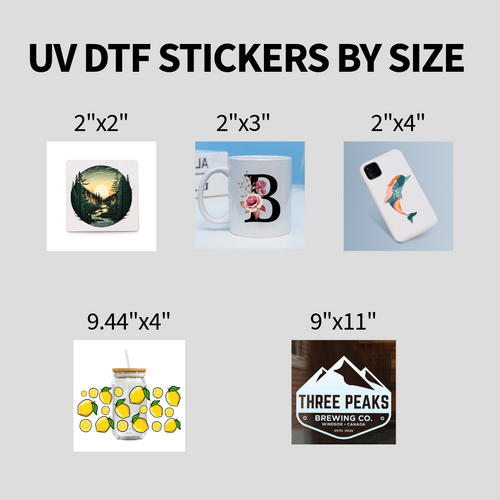
No. They're different applications. Standard DTF is for fabrics and garments. UV DTF is used for hard goods and a different decoration workflow.
Do I need to mirror my artwork
Usually, you should follow the supplier's file instructions and upload print-ready art as requested. Don't assume every workflow uses the same prep rule. The safest move is to verify the supplier's ordering requirements before submission. Do not mirror artwork when uploading at Lion DTF Transfers
How long can I store unpressed transfers
They can be stored for later use, but storage conditions and handling matter. Keep them organized, protected, and free from damage or contamination so they're still clean when you're ready to press them.
Wholesale dtf transfers work well when you run them like a system. Tight files, efficient gang sheets, disciplined pressing, and a supplier that can handle real production volume. That combination gives a shop room to take more orders without adding unnecessary complexity.
If you want a simpler way to handle wholesale dtf transfers, Lion DTF Transfers offers press-ready transfers, gang sheets, and an Auto-build gang sheet builder that can reduce layout time and improve sheet utilization. If you'd rather not build sheets manually, their “We Build a Gang Sheet for You” option can help keep orders moving without tying up your design time.