


You already know the pain point.
A customer wants a clean logo on a tumbler, a cosmetic jar, a candle lid, or a glass bottle. They do not want a cheap-looking label that lifts at the corners. They do not want hand-cut vinyl with visible layering. And you probably do not want to spend your day weeding tiny text or fighting inconsistent placement on awkward hard goods.
That is where uv dtf stickers change the conversation.
For small makers, promo shops, and brand owners, this is not just another print method. It is a practical way to add hard-goods customization without buying into a complicated decorating setup. You can offer premium-looking drinkware, branded packaging, custom accessories, and short-run product decoration with a workflow that is far more approachable than many expect.
Why Your Business Needs UV DTF Stickers Now
A lot of small shops hit the same ceiling. Apparel is covered. Paper labels are easy. But the moment a customer asks for polished branding on a mug, candle vessel, acrylic sign, phone case, or water bottle, the options get messy fast.
Vinyl can work, but labor stacks up. Direct UV printing can look great, but setup and alignment are not casual purchases. Standard stickers feel temporary on products that should look premium. uv dtf stickers sit in the middle in the best way. They let you produce or order full-color transfers for hard surfaces, then apply them without a heat press.
That matters because hard goods are where a lot of profitable add-ons live. Think giftable products, event merch, retail packaging, launch kits, limited-edition accessories, and business branding items. Shops that only think in shirts leave those orders on the table.
The demand side is no longer niche. In 2025, search volume for “UV DTF Cartoon and Themed Cup Wrap Stickers” peaked at 158.9 in August 2025, and production technology improved at the same time, with AI color matching reaching 95%+ first-print accuracy and robotic systems increasing daily output by 200–300% compared to manual methods according to this UV DTF market overview. That combination tells a useful business story. Buyers are looking for these products, and suppliers now have better tools to produce them consistently.
Why this matters for small operators
You do not need a giant catalog to benefit from UV DTF.
A maker can use it to personalize a small batch of tumblers. A candle brand can upgrade plain packaging into shelf-ready branded product. A local print shop can add hard-surface decoration without building a separate apparel-style workflow around heat application.
Three things stand out:
- Lower equipment friction: Application is pressure-based, not heat-based, so you can decorate many hard items without adding a press to every step.
- Better presentation: Full-color art, gradients, and fine branding details look cleaner than many quick-turn alternatives.
- New average order value: One customer who buys shirts may also want matching mugs, product labels, event favors, or promotional accessories.
Practical takeaway: If customers already trust you for custom work, UV DTF gives you a straightforward way to sell them more categories, not just more units.
Where shops make money with it
The strongest use case is not “sell stickers.” It is “sell finished products and branded hard goods.”
That is a different margin mindset. You are not competing with commodity sticker packs. You are solving presentation, personalization, and branding for products people use, gift, photograph, and reorder.
Understanding the Magic Behind UV DTF Technology
The simplest way to explain uv dtf stickers is this. They work like a high-tech product transfer. You print a design into a layered film system, then transfer that design onto a hard surface with pressure.
That sounds simple because the application is simple. The part that makes it work is the layered build.

If you want a broader primer before ordering, Lion DTF has a useful explainer on what UV DTF is.
What the layers are doing
A UV DTF transfer is not just “ink on plastic.” Each part has a job.
- Printable film: This is the base that holds the printed design during production.
- UV-cured ink: The artwork is printed in layers, including white where needed, to keep colors visible on different surfaces.
- Adhesive layer: This is what allows the printed design to transfer and bond to the target item.
- Protective carrier or transfer film: This keeps the design aligned while you place and press it.
- Varnish or protective top finish: This adds surface protection and helps the final graphic hold up in real use.
The effectiveness comes not from any single distinct layer. It is that the stack works together.
Why it feels different from ordinary stickers
Traditional stickers announce themselves. You see the border. You feel the edge. On premium products, that can make the decoration look added-on rather than built-in.
UV DTF transfers look more integrated, especially on smooth hard goods. The result has a polished, direct-to-product feel without requiring you to print directly onto each object.
That is why these transfers have become so useful for:
- Curved drinkware
- Glass jars and bottles
- Metal tins
- Acrylic pieces
- Plastic containers
- Retail packaging with smooth surfaces
What shops often misunderstand
Some people hear “DTF” and assume this is just the hard-goods version of shirt transfers. It is not.
Standard apparel DTF is for fabric and relies on heat application. UV DTF is built for hard, smooth surfaces and relies on adhesive transfer. Different use case. Different substrate. Different selling opportunity.
Tip: If the item bends like a shirt, UV DTF is the wrong tool. If the item is rigid, smooth, and presentation matters, UV DTF is often worth testing first.
Why the process matters to your customer
Customers do not buy “layer construction.” They buy confidence.
They want the mug logo to stay put. They want the bottle branding to look sharp. They want the custom gift to feel professional enough to sell or give away. Understanding the structure helps you price correctly because you are not selling a casual decal. You are selling a finished visual upgrade for a product someone plans to use.
Choosing the Right Method UV DTF vs Vinyl and More
Not every decoration method deserves a spot in every shop. The right question is not “Which method is best?” It is “Which method fits the product, artwork, labor budget, and finish I need?”
uv dtf stickers are strong, but they are not universal. Fabric belongs to apparel DTF or other garment methods. Very simple one-color hard-good graphics may be fine in cut vinyl. Large-volume production on specific items may point toward direct print or screen-based workflows.
Customization Method Comparison
| Method | Best For | Durability | Color/Detail | Labor Required |
|---|---|---|---|---|
| UV DTF | Hard goods like tumblers, glass, plastic, acrylic, metal, packaging | Strong for everyday hard-surface use | Excellent for full-color art, gradients, and small details | Moderate application labor, no weeding, no heat press |
| Adhesive Vinyl | Simple shapes, lettering, basic logos on hard surfaces | Good when applied well, but more edge-related issues over time | Best for simpler graphics and spot-color looks | Higher labor due to cutting and weeding |
| Standard DTF | Apparel and fabric items | Good for garments when applied correctly | Strong color and detail on textiles | Requires heat application workflow |
| Screen Printing | Repeating designs at scale on suitable products | Strong in the right production setup | Great for simpler repeated graphics, less flexible for short-run custom detail | High setup effort, best when volume justifies it |
Where UV DTF wins
The biggest advantage is the mix of appearance, flexibility, and labor control.
With cut vinyl, tiny text and layered full-color logos turn into production headaches. With standard DTF, you are solving the wrong problem because it is meant for textiles. With screen printing, setup only makes sense when the volume and product consistency are there.
UV DTF stands out when you need:
- Short runs or mixed-product orders
- Complex artwork without hand-weeding
- A polished finish on hard goods
- Customization across several blank types
Where another method makes more sense
A lot of wasted money comes from using the wrong process just because it is trendy.
Use another method when:
- The product is fabric. Standard DTF or another textile method is the right call.
- The design is ultra-simple. Basic vinyl can be efficient for large, uncomplicated lettering.
- The production run is repetitive and standardized. A direct print workflow may make sense for shops built around one product type.
The labor trade-off overlooked
UV DTF saves labor in one place and asks for care in another.
It removes cutting and weeding from the decoration stage. That is huge. But application still requires clean surfaces, accurate placement, and steady pressure. If your team is sloppy with prep, the finished product will show it.
Key takeaway: UV DTF is not “zero skill.” It is “skill shifted from cutting and heat pressing to prep, placement, and product selection.”
For many small businesses, that is a very good trade.
Key Benefits of Using UV DTF Stickers
The value of uv dtf stickers is not one feature. It is the stack of benefits working together in a way that opens products you probably were not offering before.

Durable enough to justify premium pricing
This is the biggest business argument.
According to ColDesi’s overview of UV DTF decal longevity and durability, UV DTF decals can last 2 to 5 years under optimal conditions and up to 1 to 3 years outdoors under normal conditions. That same source notes the durability comes from UV-cured inks that create a waterproof, scratch-resistant surface.
That durability changes how you sell the product. You are not positioning it like a throwaway sticker. You are offering a long-wear decorative or branding finish for hard goods.
No heat press required
For many shops, this is the feature that makes UV DTF practical.
You can customize hard goods without building your workflow around heat. That means fewer concerns about pressing pressure on awkward shapes, heat-sensitive materials, or getting a flat press area on rounded products.
This is especially useful for:
- Tumblers and bottles
- Glassware
- Jars and candles
- Plastic cases
- Acrylic displays
- Smooth branded packaging
Strong visual payoff on small products
Hard goods are unforgiving. On a shirt, slight texture can hide a lot. On a glossy bottle or smooth jar lid, flaws stand out immediately.
UV DTF works well when the product itself needs to look retail-ready. Fine linework, detailed logos, and multi-color branding generally come across cleaner than methods that involve hand assembly or simplified cut shapes.
Less tedious finishing than vinyl
If you have ever weeded tiny letters from adhesive vinyl, you already know the issue. The material cost is one thing. The time cost is another.
UV DTF removes that hand-detail bottleneck for many designs. The gain is not just speed. It is consistency. Staff members do not need to be vinyl surgeons to get polished graphics onto products.
Better range for short-run creativity
Short-run custom work is where many small shops either gain loyal customers or lose them.
UV DTF helps you say yes to more requests:
- one-off gifts
- event-specific drinkware
- niche product branding
- small business startup kits
- seasonal packaging updates
The first day matters
The same ColDesi source notes that the first 24 hours after application are the critical adhesion window. That is a practical benefit only if you treat it like one. Shops that communicate this clearly reduce complaints and get better long-term results.
Tip: Tell customers to handle the decorated item normally only after that initial cure period. Clear care instructions protect your work and your reputation.
Inspiring Applications for UV DTF Stickers
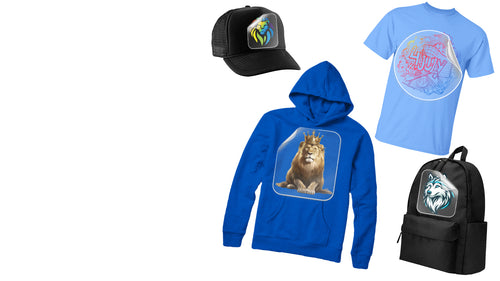
A lot of people first see uv dtf stickers on tumblers. That is fine, but it is also limiting. The broader opportunity is in moving beyond the sticker concept. Once you stop thinking “sticker” and start thinking “hard-surface product decoration,” more product lines open up.

Personal products people use
These are the easiest sales because buyers already understand the item.
A plain water bottle becomes giftable with a name, monogram, or themed wrap. A phone case gets a boutique look. A laptop cover, notebook shell, or mirror accessory can move from generic to personal with one well-placed graphic.
This category works well for:
- Custom tumblers and cold cups
- Water bottles
- Phone and tablet cases
- Makeup organizers
- Desk accessories
- Storage containers
The smart play is bundling. One personalized item sells. A matched set sells better.
Small business branding without expensive packaging runs
This is one of the most overlooked uses.
Many brands do not need thousands of custom-printed containers. They need flexible, polished branding on small batches. UV DTF gives them a way to upgrade blank jars, bottles, boxes with hard-coated lids, and display items into branded products that look intentional.
Examples include:
- Candle vessels
- Cosmetic jars
- Product display signage
- Salon tool containers
- Retail shelf props
- Front-desk branding items
For startups, this can bridge the gap between homemade presentation and fully custom manufactured packaging.
Event and promotional products
This category is a workhorse because clients want visual impact fast.
Wedding favors, pop-up merch, team drinkware, event welcome gifts, branded conference items, and launch-day accessories all benefit from short-run personalization. UV DTF is a strong fit because you can keep the product assortment flexible instead of locking into one item type.
Niche custom markets
Here, shops find their highest-value repeat customers.
A sports-focused seller can customize smooth hard-surface accessories. A realtor can brand closing gifts. A coffee shop can create limited-run seasonal cups and jars. An an artist can decorate acrylic panels, coated wood pieces, or mixed-media hard surfaces.
Practical takeaway: The easiest way to profit from UV DTF is not to sell “custom decals.” It is to build themed offers for a specific buyer type and apply the transfers to finished goods.
That shift turns a print method into a product strategy.
How to Apply UV DTF Stickers for a Perfect Finish
Application is simple, but simple does not mean careless. Most failures come from rushing prep, touching the adhesive area too much, or peeling before the transfer is fully pressed down.

If you want a visual reference for the process, Lion DTF provides a step guide for UV DTF sticker application.
The basic application workflow
- Clean the surface well Remove dust, oils, fingerprints, and moisture. Smooth hard surfaces reward clean prep and punish shortcuts.
- Dry it completely Even a small amount of moisture can interfere with adhesion.
- Position before committing UV DTF is not something you want to “eyeball and hope.” Test the angle, spacing, and center line before you press.
- Press from one side across Start at one edge and work across the design with steady pressure. This helps reduce trapped air.
- Use a squeegee or firm tool Apply even pressure across the full graphic, especially on detailed edges and fine text.
- Peel the carrier carefully Go slowly. If any part lifts, lay it back down and press again.
What clean application looks like
Good application is boring. No bubbles. No silvering. No corners lifting. No stretched film from tugging too hard.
The trick is controlled pressure and patience, especially on curved drinkware. A wrap that is slightly misaligned at the start gets worse as you continue.
Common mistakes during install
- Rushing the cleaning step: Residue is one of the fastest ways to ruin adhesion.
- Starting in the middle randomly: You want a deliberate path across the transfer.
- Peeling too fast: Fine details can lift if the transfer has not been fully seated.
- Using rough or heavily textured blanks: UV DTF likes smooth, hard surfaces.
A quick demo helps teams and first-time buyers understand the feel of the process.
Pro tips from the shop floor
Some jobs need more patience than strength.
- For rounded items: Apply gradually instead of trying to force the whole transfer down at once.
- For small text: Spend extra time burnishing the letter edges before peeling.
- For giftware: Apply the transfer, then let the item rest before packaging it.
Tip: After application, leave the product alone during the initial cure period. That one habit prevents a lot of edge-lift complaints.
Preparing and Ordering Your Custom UV DTF Prints
Good results start before the transfer is printed. Most order problems trace back to artwork, sizing, or poor layout choices, not the print method itself.
If you want UV DTF to be profitable, your pre-production process has to be clean.
Start with print-ready artwork
For most custom orders, your safest files are the ones that are already built for transparent-background output.
Use these baseline checks:
- Resolution: Build artwork at 300 DPI for print clarity.
- Background: Keep it transparent unless the design intentionally includes a shape or flood area.
- File types: PNG works for many ready-to-print jobs. AI or PDF is better when you need vector artwork and cleaner scaling.
- Edges: Zoom in and inspect outlines, small text, and cut-off details before uploading.
- Color expectations: Hard goods, surface color, and finish can all affect how art is perceived once applied.
If a logo came from a screenshot, social profile image, or low-res web file, fix that before ordering. UV DTF can reproduce detail well, which means it also reproduces file problems well.
Size for the product, not the screen
This sounds obvious, but it gets missed constantly.
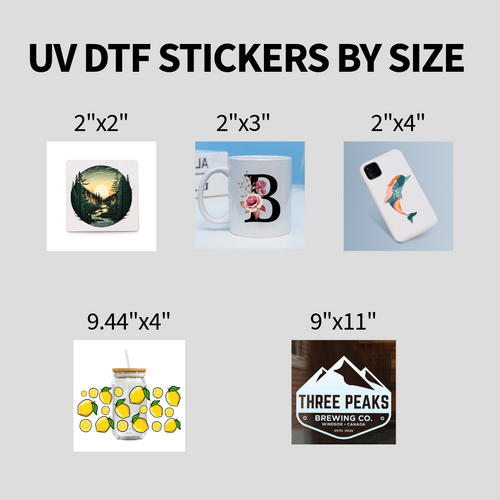
A design that looks balanced on your monitor may look undersized on a tumbler or oversized on a candle lid. Measure the actual printable area of the blank. Then build to that space with some breathing room.
For product lines, keep a running template library. That saves time and reduces repeated guesswork.
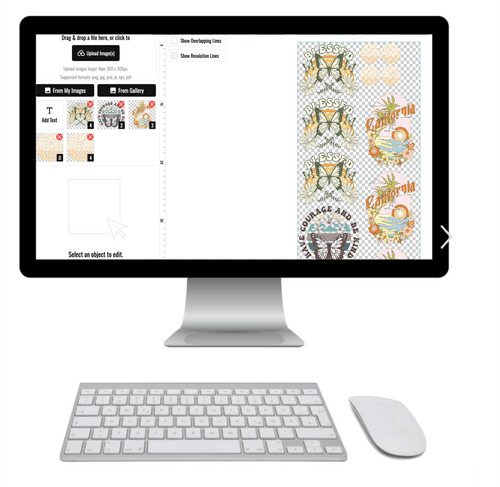
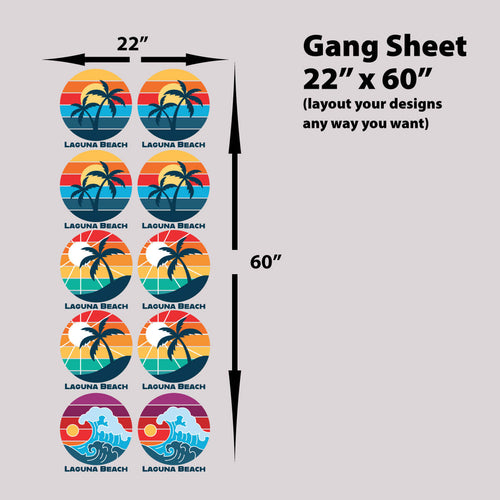
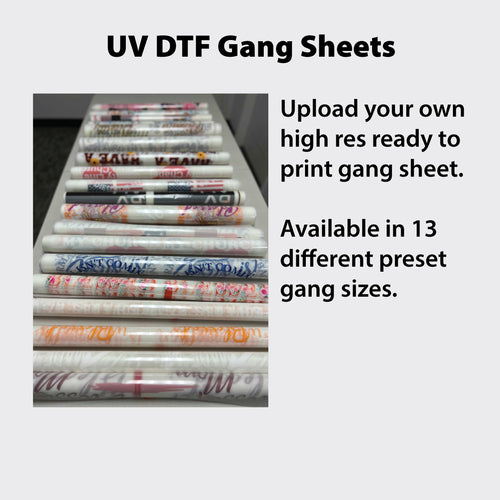
Why gang sheets matter
Gang sheets are one of the easiest ways to control cost.
Instead of ordering individual pieces one by one, you place multiple designs or repeats on one sheet. That helps you use available print area efficiently, especially when you are producing mixed items, sample packs, or several small logos at once.
This matters for:
- Multi-SKU small businesses
- Etsy and website sellers
- Sample runs
- Brand kits with several logo sizes
- Seasonal products with a mix of art files
Use an auto-build workflow when possible
Manual layout is fine when you have the time and a clean prepress workflow. A lot of small businesses do not.
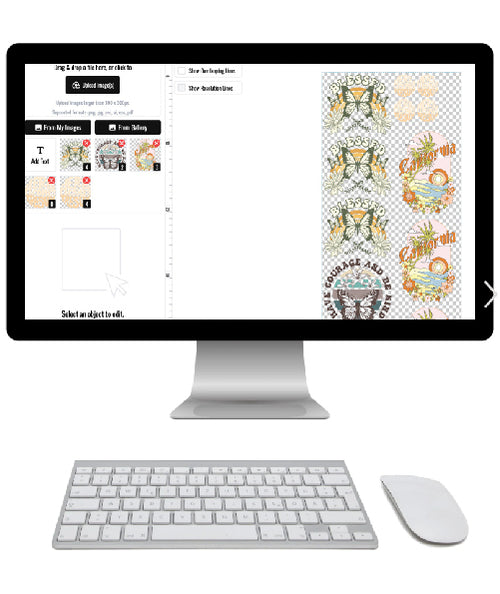
One practical option is the UV DTF gang sheet builder, which includes an Auto-build gang sheet builder workflow for placing artwork efficiently. That kind of tool is useful when you want to reduce wasted space, move faster on mixed orders, and keep cost per sticker under control without hand-building every sheet.
The primary benefit is not convenience alone. It is consistency. You spend less time dragging files around and more time checking whether the order itself makes business sense.
A simple ordering checklist
Before you submit, confirm:
- Artwork is sharp
- Background is correct
- Sizes match the actual product
- Duplicates are intentional
- Spacing leaves room for clean handling
- You are grouping jobs logically on the sheet
If you treat gang-sheet planning as part of profit management, not just artwork setup, UV DTF gets much easier to scale.
Troubleshooting and Frequently Asked Questions
Most UV DTF issues are fixable, and most of them come down to surface choice, prep, or application technique rather than the transfer itself.
Troubleshooting common problems
Edges are lifting
This points to poor surface prep, uneven pressure, or a blank that is too textured for reliable bonding.
Clean the item again before the next attempt. Use firmer, more even pressure, especially around fine details and outer edges. If the product has a rough, matte, powdery, or heavily textured finish, switch blanks.
Bubbles show under the design
Bubbles happen when the transfer goes down too fast or gets pressed inconsistently.
Start from one side and work across. Use a squeegee deliberately instead of patting the transfer into place. On curved items, move slower and seat the graphic in sections.
Part of the design lifts with the carrier
That means the transfer was peeled too soon or not pressed thoroughly enough.
Lay the carrier back down and burnish again. Focus on small text, narrow strokes, and corners. Then peel slowly at a controlled angle.
The colors look different than expected
Check the file first. Low-quality artwork, flattened previews, and poor exports create surprises.
Also remember that the final appearance changes based on the blank itself. Glossy, frosted, metallic, and colored surfaces all influence how the finished piece reads to the eye.
Practical reminder: Test unfamiliar blanks before offering them widely. A sample run saves money and awkward customer conversations.
Frequently asked questions
Can I use UV DTF on fabric? No. UV DTF is for hard surfaces. Fabric needs a textile-specific method such as standard DTF or another apparel decoration process.
Are UV DTF stickers good for drinkware? Yes, they are used on smooth drinkware like tumblers, cups, and bottles, as long as the surface is suitable and the transfer is applied correctly.
What surfaces should I avoid? Avoid heavily textured, soft, oily, dusty, or unstable surfaces. If the substrate is rough or flexible, adhesion gets less reliable.
Do I need a heat press? No. That is one of the biggest practical advantages for hard-goods customization.
How should I store transfers before use? Store them clean, flat, and protected from handling damage. Good shop habits matter, for detailed designs.
Can beginners apply them successfully? Yes, if they start with smooth blanks, clean carefully, and do not rush the peel.
If you want to add hard-goods customization to your product line without overcomplicating production, Lion DTF Transfers offers custom UV DTF options, gang sheet workflows, and an Auto-build gang sheet builder that can help streamline ordering for mixed designs and small-batch runs.