


You’re probably here because one of three things keeps happening.
You weed vinyl for far too long and still lose tiny pieces in the corners. You buy stickers that look good at first, then start lifting on cups, jars, or packaging. Or you want full-color decoration on hard goods without setting up a heat press workflow that doesn’t even belong on those products.
That is where uv dtf stickers earn their place in a shop.
I’m going to explain them the way I’d explain them to a new employee on the production table. Not with hype. With the stuff that matters when you need clean prints, solid adhesion, and fewer remakes. We’ll cover what they are, where they work well, where they do not, how to prep artwork, and what causes failure in practical applications.
Beyond Vinyl A New Era for Custom Decals
A lot of shops arrive at UV DTF the same way. They get tired of fighting the limits of older methods.
With cut vinyl, the time drain is usually weeding. A bold logo can be simple. A detailed illustration with tiny islands, outlines, and layered colors can eat up your afternoon. Printed paper labels solve the color problem, but they are not built for the same abuse as a cup, bottle, or hard case that gets handled every day.
UV DTF sits in the middle of those problems and removes a lot of the friction. It gives you a full-color decal for hard goods without weeding and without heat. You print the design onto film, transfer it onto the object, and end up with a finish that feels more like a branded product than a basic label.
That shift is one reason the category got so much attention in 2025. Search volume for “UV DTF Cartoon and Themed Cup Wrap Stickers” peaked at 158.9 in August 2025, and the same period matched peak average sales counts. The same market report notes that AI color matching can achieve 95%+ accuracy on first prints, while robotic systems increased daily production output by 200–300% compared to manual methods. You can review those figures in Accio’s UV DTF sticker trends report.
Why shops notice the difference fast
Shops often first notice labor savings. No weeding. No heat press. No layering colored vinyl to fake a printed look.
The second thing they notice is presentation. UV DTF can produce high-detail graphics with a slightly raised finish that feels more premium than a flat paper label. On mugs, tumblers, acrylic signs, jars, and packaging, that matters.
What makes it feel like a newer tool
Older methods still have their place. I still use vinyl where vinyl makes sense. But UV DTF is a newer answer to a specific job:
- Hard surfaces: Good fit for glass, metal, plastic, ceramic, and similar items.
- Detailed art: Better fit for gradients, tiny text, and multi-color graphics.
- Small runs: Easier for one-off personalization and short-batch custom work.
- No-heat workflow: Useful when the item should not be pressed or baked.
Shop-floor rule: If the customer wants a sharp, full-color decal on a hard item and you don’t want to weed it, UV DTF is usually the first method worth testing.
What Are UV DTF Stickers and How Do They Work
Imagine UV DTF as a high-tech temporary tattoo for hard surfaces, except the goal is not temporary use. The design moves from a film onto the product, but it is built to stay put when applied correctly.

If you want a simple brand-side overview first, this introduction to what UV DTF is gives the short version. On the production side, here’s what matters.
Breaking down the name
UV refers to the curing method. The inks are hardened by UV LED light during printing.
DTF means direct-to-film. The design is printed onto a film system, then transferred to the final object.
New people often get confused at this point. Standard apparel DTF and UV DTF are not the same workflow. Apparel DTF is for fabric and usually involves adhesive powder and heat pressing. UV DTF is for rigid, smooth objects and applies without heat.
The A and B film system
UV DTF stickers use an AB film system. The design is printed between layers, then transferred onto the product surface.
Here’s the practical version:
- A film carries the printed design The artwork is printed with UV-curable ink onto the carrier layer.
- UV light hardens the ink right away The curing process polymerizes the ink fast, helping create a durable, scratch-resistant surface.
- B film acts as the protective laminate and transfer partner This layer helps move the design onto the final object.
- You apply pressure, not heat Burnish the decal onto the object, then peel away the carrier film.
The result is a printed decal that adheres to smooth, non-porous surfaces without needing a heat press.
What the chemistry means in plain English
When the ink cures under UV light, it forms cross-linked bonds. You do not need to memorize the chemistry. Just remember what it does for you on the floor:
- It helps the print resist scratching
- It improves water resistance
- It gives the decal a firmer, more finished feel
- It supports outdoor use on suitable surfaces
Where beginners mix it up
The biggest misunderstanding is expecting UV DTF to act like fabric transfer film. It doesn’t.
Use UV DTF when the item is something like:
- A tumbler
- A glass jar
- A laptop cover
- A plastic case
- A ceramic mug
- An acrylic sign
Do not treat it like a shirt transfer. If the substrate is soft, porous, stretchy, or fabric-based, you’re in the wrong lane.
Easy memory trick: Apparel DTF goes on garments with heat. UV DTF goes on hard goods with pressure.
UV DTF vs Other Sticker Methods A Clear Comparison
Choosing the right decal method is a lot like choosing the right blade for a cutter. You can force the wrong one to work, but you’ll pay for it in waste, time, or callbacks.

A good comparison starts with the job, not the trend. If the customer wants a single-color store-hours decal for a window, cut vinyl is still useful. If they want product labels for dry indoor packaging, paper labels may be enough. If they want full-color branding on a tumbler, jar, helmet, or hard case, UV DTF becomes much more attractive.
Sticker Method Comparison
| Feature | UV DTF Stickers | Cut Vinyl Decals | Printed Vinyl Stickers | Paper Labels |
|---|---|---|---|---|
| Best use | Hard goods branding and decoration | Simple shapes and solid-color lettering | General-purpose printed decals | Indoor packaging and temporary labeling |
| Color capability | Full color, gradients, fine detail | Limited by vinyl colors and layering | Full color | Full color |
| Weeding required | No | Yes | Sometimes depends on finish and format | No |
| Heat required | No | No | No | No |
| Surface fit | Smooth hard surfaces | Best on flatter, simpler surfaces | Varies by adhesive and laminate | Best on dry, low-wear surfaces |
| Finish feel | Slightly raised, premium | Flat film look | Flat printed look | Flat paper look |
| Outdoor resilience | Strong on suitable hard goods | Good when material is well matched | Good with proper media | Weak compared with plastic-based options |
Where UV DTF clearly wins
If the design includes small text, shading, or multiple colors, UV DTF saves a lot of labor. A cut-vinyl version of the same art often turns into a puzzle of layered pieces. That raises the chance of misalignment and slows production.
UV DTF also helps when the item itself can’t go through a heat workflow. Hard plastics, coated products, or assembled goods are much easier to decorate with a pressure-applied transfer.
Another strong point is durability on hard-use items. According to Sumo Transfers’ article on how long UV DTF decals last on vehicles, UV DTF decals can last 3 to 5 years on vehicles when applied properly, with scratch resistance, waterproof performance, and UV protection helping them hold up outdoors.
Where other methods still make sense
Not every job needs UV DTF.
Cut vinyl
Best when the art is simple and bold. Storefront lettering, one-color logos, and clean geometric shapes still suit cut vinyl well.
It is also a good option when a customer specifically wants a classic vinyl finish and the design does not need photo detail.
Printed vinyl
Printed vinyl is still useful for many decal jobs, especially when the application style or media choice is built around traditional sticker production.
It works well for flat sticker distribution, mailed promo stickers, and some signage workflows.
Paper labels
Paper labels remain a practical choice for dry indoor use. If the item won’t see moisture, abrasion, or heavy handling, paper can be the economical route.
The problem starts when people expect paper to perform like a hard-goods decal. It usually won’t.
The decision filter
Ask these questions before choosing the method:
- What surface is this going on? Smooth and hard favors UV DTF.
- How detailed is the artwork? Tiny text and gradients favor UV DTF.
- How much abuse will it take? Moisture, rubbing, and outdoor use push you away from paper.
- How much labor can the shop afford? If weeding time is the hidden cost, UV DTF can save headaches.
Decision shortcut: If the object is a hard good and the design would be annoying to cut from vinyl, UV DTF is usually the cleaner production choice.
Technical Deep Dive Durability and Material Specs
The reason UV DTF feels different from a normal sticker is not just the adhesive. It’s the way the printed layers are built and cured.

What the cured surface is doing
UV DTF uses UV-curable inks in the AB film system. Those inks are instantly polymerized by UV LED lamps. In plain language, the print hardens fast and forms a surface that is more resistant to scratching and water than a basic paper label.
The technical source that lays this out well is DTF Database’s UV DTF stickers and decals application guide. That guide describes printing at up to 1200 DPI, with the cured result forming a waterproof, scratch-resistant surface suitable for 1 to 3 years of outdoor exposure under normal conditions.
If you want a broader material primer on transfer construction, this overview of what DTF transfers are made of helps connect the film-and-ink side of the process.
What 1200 DPI means in shop terms
Specs are only useful if they change the output you see.
With UV DTF, higher-resolution printing helps with:
- Fine text: Small lettering stays cleaner.
- Detailed illustrations: Edges look sharper.
- Photo-style art: Gradients and subtle transitions reproduce better.
- Complex branding: You can carry more design information without simplifying everything into cut shapes.
For a customer, that usually translates to a decal that looks manufactured instead of homemade.
Surface feel and finish
UV DTF often leaves a slight raised texture. Some people call it embossed, though the exact feel depends on the print build and varnish layers used in production.
That raised finish matters because it changes perception. On a mug, bottle, or cosmetic jar, the decoration feels closer to a premium branded item than a flat office sticker.
Durability with some honesty attached
The cured print is tough, but “tough” does not mean invincible.
A UV DTF sticker can handle routine use well on the right substrate. It still needs a clean surface, proper pressure during application, and realistic care afterward. If the object flexes a lot, has deep texture, or exposes the edges to constant abrasion, durability drops.
Why many shops like the process itself
The same DTF Database guide notes that the process is more energy-efficient than solvent-based printing, and it points to reduced energy use of up to 50% compared to solvent inks in the production context of UV curing. That’s a process benefit for shops, not just a product benefit for buyers.
Practical takeaway: The durability comes from the cured ink structure and the right substrate working together. Good material plus poor prep still fails. Good prep plus the wrong surface also fails.
Common Applications and Creative Use Cases
Once you understand where UV DTF fits, the product ideas start multiplying fast.
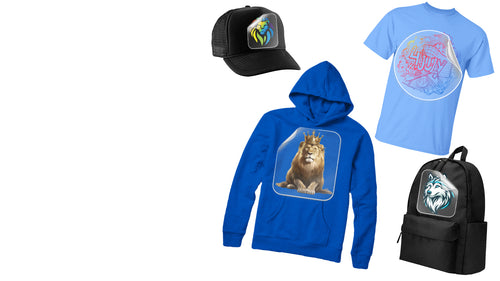
A coffee shop owner can put a detailed logo on ceramic mugs and glass cold cups without setting up a full sublimation workflow. A construction company can mark hard hats, water bottles, and jobsite clipboards with the same branding style. A maker selling online can decorate acrylic keychains, candle jars, notebooks, and phone cases with small-batch designs that would be painful to weed in vinyl.
Hard goods that make sense
UV DTF is most comfortable on smooth, hard, non-porous surfaces. In day-to-day shop work, that usually means:
- Glass: jars, cups, candle vessels, mirrors
- Metal: tumblers, tins, toolboxes, insulated bottles
- Plastic: phone cases, storage bins, promotional products
- Ceramic: mugs, tiles, planters
- Acrylic and similar blanks: signs, tags, ornaments
The nice part is that one print style can serve many product lines. That matters for small shops that don’t want a different decoration method for every item they sell.
A few practical examples
Brand kits for local businesses
A bakery might want matching logo decals on cookie jars, counter signage, packaging accessories, and staff drinkware. UV DTF lets the artwork stay visually consistent across those hard surfaces.
Artist merch
Artists often have full-color illustrations, not one-color logos. UV DTF works better for that kind of art because it can hold detail, shading, and character work without turning the design into a layered vinyl project.
Team and event items
Sports teams, schools, and event organizers often need names, mascots, or sponsor graphics on bottles, cases, and keepsakes. UV DTF works well when the base item is already finished and just needs decoration.
Where creativity needs restraint
The trick is not to assume every “hard-ish” surface is a good candidate.
Raw wood, heavily textured ceramic, and rubbery or porous items are where people get overconfident. If the surface has low contact area or drinks in moisture and air, the adhesive has a harder job. Sealed, smooth, hard goods are the safer lane.
Why shops like it for customization
UV DTF supports one-off names and short runs without forcing a long setup. That makes it friendly for:
- Personalization
- Short seasonal drops
- Test batches
- Low-quantity brand merch
- Sample packs for clients
A lot of print methods get more efficient only when quantity goes up. UV DTF stays useful even when the order is small.
Ordering and Designing Your UV DTF Stickers
Most UV DTF failures start before the transfer ever touches the product. The art file is soft, the edges are fuzzy, the color profile is off, or the gang sheet was laid out inefficiently.
That’s why file prep matters more than many beginners expect.

Start with the artwork, not the product blank
A nice tumbler won’t save a weak design file.
One underserved issue in UV DTF content is design prep. A cited review of common file problems notes rejection rates of 15–25% from unvectorized PNGs or mismatched color profiles. The same source also notes that since mid-2025, UV DTF printer sales surged 55%, while many guides still skip core file specs like 300 DPI and proper bleed margins. It also states that services that automate file prep and color matching can reduce rejection rates to less than 1%. Those figures appear in this YouTube-backed source on UV DTF design prep issues.
The file checklist I’d hand a new employee
Resolution
Use high-resolution artwork for raster files. If the source image is low-res, do not expect the printer to invent detail for you.
Background
Transparent backgrounds help prevent ugly boxes or unwanted printed areas around the design.
Edges
Watch for rough anti-aliased edges, stray pixels, and soft shadows that should not be there. These often sneak in from screenshots or badly exported PNGs.
Color setup
Mismatched color expectations create frustration. If your file was built casually in one environment and printed in another, color shifts are more likely.
Bleed and spacing
Give the design proper margin and spacing on the sheet. Cramming artwork too tightly makes handling and separation harder.
Tip from the production table: Zoom in before uploading. If the file looks jagged on screen, it will not look better on film.
Why gang sheets matter
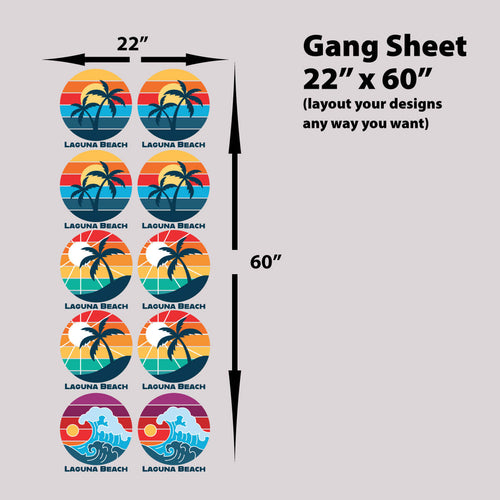
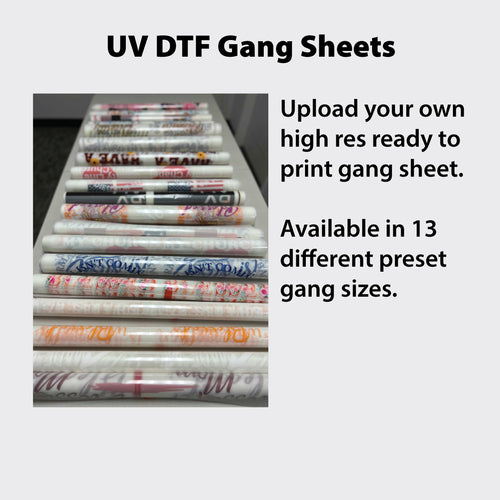
A gang sheet is just multiple designs arranged on one larger print sheet. Visualize it as loading a baking tray efficiently instead of baking one cookie at a time.
That matters because gang sheets help you:
- Combine several logos or designs into one order
- Test variations without separate setups
- Reduce wasted space
- Lower cost per usable decal
For shops and sellers running mixed products, gang sheets are one of the easiest ways to keep UV DTF practical.
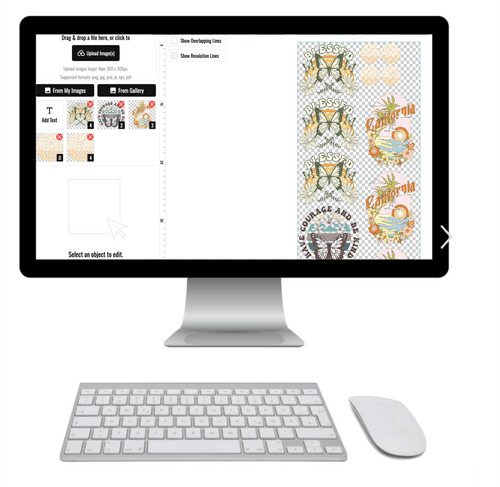
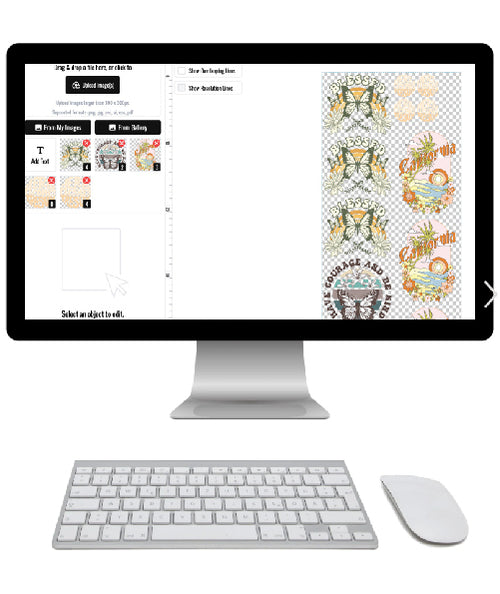
One option is the Auto-build gang sheet builder from Lion DTF Transfers, which lets you place multiple designs on a sheet for easier layout and more cost-effective ordering. Tools like that are useful when you want to avoid manual arrangement mistakes or when you’re filling a sheet with mixed-size art.
What to send and what to avoid
Send artwork that is print-ready. Avoid grabbing logos from social media posts, screenshots, or tiny website images.
Bad inputs often look like this:
- A blurry PNG pulled from a phone screenshot
- A logo with a white box around it
- Small text built from a low-resolution image
- Artwork exported several times until edges get muddy
Good inputs are cleaner:
- Native design files when available
- High-resolution transparent PNGs
- Properly vectorized artwork for logos and line art
- Consistent file naming for production
A quick walkthrough can help if you’re visual. This video shows the ordering flow and setup approach:
Before you place the order
Do one last practical check.
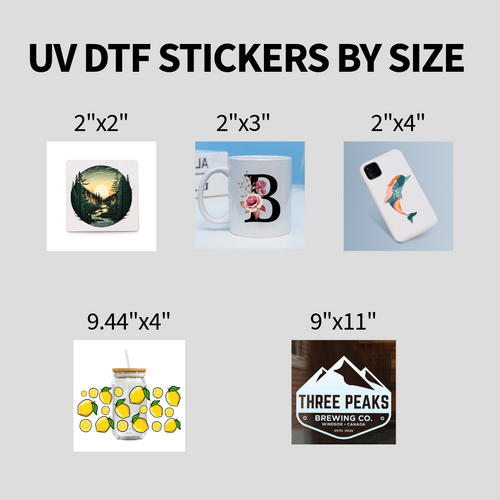
Match the design size to the actual object. A decal that looks balanced on-screen can feel oversized on a mug or tiny on a bottle. Print a paper mockup if needed and hold it to the product blank. That simple step catches a lot of bad assumptions.
Application and Long-Term Care Guide
Application is where many people get overconfident. UV DTF feels simple, and it is simple, but simple does not mean forgiving.
If you rush it, touch the adhesive too much, or apply it to a bad surface, you can ruin a good print in a few seconds. If you want a full walkthrough from a supplier page, this UV DTF sticker application guide is a useful companion.
The clean application routine
- Clean the surface Use isopropyl alcohol and a lint-free cloth. Remove dust, oil, fingerprints, and residue.
- Dry it fully Moisture under the decal is asking for trouble.
- Test the position first Hold the design in place before peeling anything. Alignment errors are much easier to fix before contact.
- Peel the backing carefully If part of the design stays behind, stop and burnish again.
- Apply with steady pressure Start from one side or the center, depending on the shape. Smooth outward to reduce trapped air.
- Burnish the whole design Pay attention to edges and small elements.
- Peel the carrier film slowly Use a low angle. If any part lifts, lay it back down and burnish again.
Where long-term issues show up
A lot of product pages talk about permanent adhesion. Daily use often presents more complexities.
One source focused on underserved adhesion issues notes common complaints about peeling edges on curved plastics after 3–6 months. It also reports 20–30% failure rates on porous wood or ceramic without primers. That same source argues that realistic adhesion guidance matters for businesses scaling merch. Those points appear in Transfer Kingdom’s article on why to choose UV DTF stickers.
That lines up with what shops see. UV DTF loves smooth, hard, well-prepped surfaces. It gets less happy when the item is porous, sharply curved, heavily textured, or exposed to constant edge friction.
Care instructions I trust
For decorated drinkware and similar items:
- Hand wash when possible
- Avoid abrasive scrubbers
- Do not soak for long periods
- Avoid picking at edges
- Treat curved-edge placements carefully
These are not dramatic rules. They’re just the habits that help decals stay clean longer.
Honest expectation: “Permanent” usually means strong adhesion, not magic. Surface type, prep quality, and daily abuse still decide the outcome.
What about removal
Removal is possible, but it may not be neat. On some surfaces, the decal can leave residue or come off in pieces. That is normal for a product built to bond firmly.
If removal matters, test one sample on the exact substrate before committing to a full run. That single habit saves expensive surprises.
Frequently Asked Questions About UV DTF Stickers
Are UV DTF stickers safe for drinkware?
They are commonly used on drinkware exteriors like tumblers, mugs, and cups. The practical rule is simple. Keep the decal on the outside surface, away from direct contact areas like the lip.
Can I apply UV DTF to curved items?
Yes, but curves vary. Gentle curves usually behave better than tight compound curves. The more the design has to wrap and stretch around changing angles, the more careful you need to be with placement, pressure, and edge burnishing.
Do UV DTF stickers work on wood?
Sometimes, but only with caution. Smooth, sealed wood is a much safer bet than raw, porous wood. If the surface is textured or absorbent, adhesion becomes less predictable.
Why use a gang sheet instead of ordering one sticker at a time?
Gang sheets make the process more efficient when you have multiple designs, names, sizes, or repeat logos. They reduce wasted space and make small-batch ordering more practical.
Do I need a heat press?
No. That is one of the main reasons shops like uv dtf stickers for hard goods. Application relies on pressure and proper surface prep, not heat pressing.
What is the biggest beginner mistake?
Poor artwork. A rushed file creates blurry output, rough edges, and avoidable reprints. Bad prep beats good printing every time.
UV DTF works well because it fills a very specific need. It gives shops and makers a way to decorate hard goods with sharp, full-color graphics, without weeding and without heat. Used on the right surfaces, with good file prep and careful application, it can make custom products look far more polished.
If you’re ready to order uv dtf stickers or lay out multiple designs more efficiently, take a look at Lion DTF Transfers. Their site includes custom UV DTF ordering and an Auto-build gang sheet builder that can help simplify layout and make better use of sheet space for mixed designs.