


You’ve got the artwork. Maybe it’s a team logo, a merch graphic, a fundraiser shirt, or the first design for a brand you want to take seriously. The hard part isn’t always the idea. It’s getting that idea onto a shirt so it looks clean, presses straight, feels professional, and doesn’t waste money on bad sizing, bad files, or a sloppy sheet layout.
That’s where a lot of first orders go sideways. The art may look good on a screen, but shirts expose every weak decision. A design that’s too small looks amateur. A soft glow effect can print muddy. A file with the wrong color mode can shift more than expected. A gang sheet packed carelessly can turn a simple order into unnecessary cost.
From Digital Idea to Wearable Art
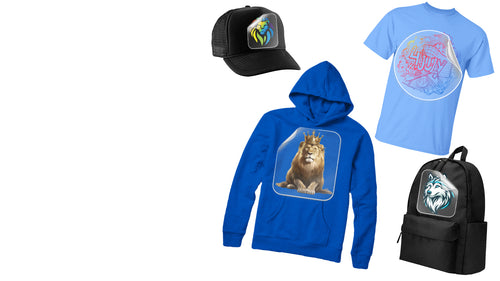
DTF made transfer designs for shirts much more accessible for small brands, crafters, school groups, and print shops that need flexibility. You can print detailed full-color artwork, apply it to different garment types, and avoid some of the setup limits that come with older methods. That matters when your order mix includes one left chest logo, several full fronts, a sleeve hit, and a few youth sizes in the same run.

The timing is good for creators entering custom apparel. The global custom t-shirt printing market was valued at USD 6.46 billion in 2024 and is projected to reach USD 15.89 billion by 2033, according to Straits Research’s custom t-shirt printing market report. That doesn’t guarantee easy sales, but it does confirm what most shops already see on the ground. People want personalized apparel, and they want it faster than traditional production models usually allow.
Why DTF fits first and growing orders
DTF works well when you need a process that’s forgiving across common apparel categories. Cotton tees, poly blends, and other everyday blanks are all realistic options. For a new creator, that means you can focus on artwork, sizing, and application technique instead of building your whole production plan around one fabric type.
It also rewards smart workflow. Good transfer designs for shirts aren’t only about visual style. They depend on three connected choices:
- Design choices: Line weight, color transitions, text clarity, and how much detail belongs at the final print size.
- File setup: Resolution, transparency, font handling, and color prep determine whether the transfer prints cleanly.
- Ordering strategy: The way you group sizes, logos, and placements on a gang sheet affects both waste and cost.
If one of those breaks, the shirt usually tells on you fast.
Practical rule: The cleanest shirt starts long before the heat press. Most quality problems begin in the artboard or during file export.
What a professional result really looks like
A professional shirt isn’t just vibrant. It’s proportionate, centered for the garment style, readable from a natural viewing distance, and pressed with the right balance of heat and pressure. The transfer should look like it belongs on that specific blank, not like a generic decal dropped onto fabric.
That’s why the most efficient workflow is one continuous path. You choose artwork that suits the medium. You prep files so the printer gets exactly what you intended. You build a gang sheet that uses space well instead of paying for empty film. Then you press with settings that match the transfer and the garment.
That full path saves more money than chasing the lowest unit price on the transfer itself.
Designing Transfers That Print Perfectly
A design can be beautiful and still print badly. That usually happens when the artwork was made for a screen, not for fabric. Shirts change the way people read scale, contrast, and placement. Transfer designs for shirts need to survive three real-world tests: they have to stay legible at arm’s length, they need enough contrast against the garment color, and they have to fit the garment without feeling either cramped or undersized.
Design for the shirt, not just the mockup
Mockups lie when the garment scale is off. A graphic that looks bold on a digital model can land tiny on a real adult tee. Start by deciding the actual print role of the art.
Some designs want to be the statement. Those belong on full front or oversize placements. Others work better as supporting marks like a left chest logo, sleeve detail, or upper back identifier. If you don’t decide that early, you’ll keep resizing the same artwork for placements it was never built to fit.
DTF handles detail well, but detail still needs purpose. Fine lines, layered colors, textured illustration, and gradients can all work if they remain readable at final size. What usually fails is decoration without structure. Tiny text, faint shadow effects, and semi-transparent haze may look polished on a monitor but often lose clarity on fabric.
What usually works well
These design traits tend to translate cleanly:
- Bold primary shapes: Strong silhouettes read fast and hold up across shirt colors.
- Clear contrast zones: Light against dark, dark against light, or intentionally separated color fields make the design visible once worn.
- Purposeful detail: Add fine detail where the viewer will notice it, not everywhere.
- Controlled transparency: If an effect depends on subtle opacity shifts, test it visually at final size before ordering.
- Realistic text hierarchy: Brand name, event title, or slogan should be readable without needing someone to step close.
A common beginner mistake is adding too many effects because DTF can technically print them. It can print a lot. That doesn’t mean every effect improves the shirt.
Good shirt art usually gets stronger when you remove one visual idea, not when you add three more.
Sizing and placement standards that keep shirts looking professional
For professional results, full-front adult designs average 11 inches wide by 11 inches tall, placed 3 to 4 inches down from the collar. Those specs scale to 9 x 9 inches for youth or 13 x 15 inches for oversize back prints, and they generally fill 60 to 70% of the usable garment width, according to this transfer placement t-shirt design size chart guide.
Those aren’t arbitrary shop habits. They keep the artwork proportionate to the body of the shirt. A print that’s too narrow looks timid. A print that runs too wide can crowd seams and feel awkward once worn.
Standard Transfer Design Sizing & Placement Guide
| Placement Location | Adult Size (Avg.) | Youth Size (Avg.) | Placement Notes |
|---|---|---|---|
| Full front | 11 x 11 in | 9 x 9 in | Place 3 to 4 inches down from the collar, centered |
| Left chest | 4 x 2 in | 3 x 1.5 in | Keep high enough to read clearly, but not tight to the collar |
| Upper back | 12 x 4 in | Scale proportionally smaller | Place 3 to 5 inches down from the collar area |
| Oversize back print | 13 x 15 in | Scale based on garment size | Best on roomier shirts where the design has space to breathe |
| Hoodie or jacket front/back | 10 to 16 in | Scale by garment proportions | Account for larger canvas and pocket or seam interruptions |
If you want a deeper look at how artwork intent affects final production, this guide on custom heat transfer designs is useful alongside your own mockup and measurement process.
Placement choices that save rework
Designers often focus on width first. Shops usually think placement first. That’s the better habit.
A full-front print has to relate to the neckline and chest width. A left chest logo has to avoid looking like it drifted too far inward or too far toward the sleeve. An upper back print has to sit high enough to feel intentional. Once a transfer is pressed, bad placement is expensive.
Use the flat shirt, not the product photo, as your guide. Measure from the collar and centerline. For fitted styles, youth sizes, and fashion blanks, check proportions on the smallest garment in the run before approving the rest. If the design works on the smallest shirt, the rest of the size range is easier to scale responsibly.
Garment type changes the visual math
Not every blank carries the same artwork the same way.
- Standard tees: Safest for balanced full fronts and basic left chest placements.
- Hoodies: Larger visual field, but pocket seams and thicker fabric change how the print reads.
- Youth garments: Need simpler composition and tighter scaling. Adult art shrunk down rarely feels intentional.
- Performance or slick fabrics: These can show placement drift faster because the shirt surface doesn’t sit as naturally flat during setup.
The cleanest design process starts with the garment category, then the placement, then the artwork adjustments. Most beginners do it in the reverse order.
How to Prepare a Print-Ready File
File prep is where a promising design becomes either easy to print or annoying to fix. Shops can often spot trouble before a transfer is ever produced. Fuzzy edges, missing fonts, accidental backgrounds, and color surprises almost always trace back to the file, not the press.
For DTF transfer designs for shirts, the core prep standards are straightforward. Build or export at 300 DPI, use CMYK color mode, and convert fonts to outlines. That file prep workflow is part of the DTF methodology described in this heat transfer printing guide.

The non-negotiables
These settings matter because each one affects a different part of final print quality.
-
Resolution at 300 DPI
Raster artwork needs enough information to print sharp edges and clean detail at final size. If you upscale a low-resolution internet image, the software may make it larger, but it doesn’t create real detail. The shirt will still show the weakness. -
CMYK color mode
Shirts are printed, not backlit like a phone screen. CMYK gets your file closer to print behavior. If you design entirely in RGB and never check conversion, some colors may shift more than you expected. -
Outlined fonts
If the font doesn’t travel with the file, another system can substitute it. That can break spacing, distort style, or replace your intended typeface entirely. Outlining locks the text into shape. -
Transparent background
A fake transparent background is one of the most common beginner errors. If there’s an unnoticed white box or a leftover colored field, it can show up around the artwork in production.
How to prep the file in practice
Illustrator, Photoshop, Canva, and similar tools can all work if you stay disciplined. The software matters less than the export decisions.
In vector software
If you’re working in Illustrator or another vector tool, build art at final print dimensions whenever possible. Keep text editable until the final check, then outline it before export. Expand anything that depends on appearance settings if you need to avoid unexpected output shifts.
Vector is ideal for logos, typography-heavy graphics, badges, and shape-driven art because edges stay clean as you scale. It also makes gang sheet planning easier when you need multiple sizes of the same design.
In raster software
If you’re using Photoshop or another pixel-based app, start at final size and 300 DPI from the beginning. Don’t build small and enlarge later. Keep the background transparent and zoom in along the edges to catch halos, stray pixels, or rough cut lines.
Raster is fine for illustration, painting, and photo-based graphics. It just demands more discipline because every resize decision can reduce quality.
In Canva
Canva is practical for simple merch designs, but you need to watch for limitations. Check that all uploaded graphics are high quality before placing them. Avoid grabbing tiny PNG assets and enlarging them. If your design includes text, export carefully and review the final file at full size before submission.
A quick pre-submission checklist
Before you upload, check these points:
- Correct final size: The file should match the intended print size, not a random artboard.
- Clean background: No white box, no hidden layer, no stray texture behind the art.
- Font safety: Text converted to outlines or flattened intentionally.
- Color review: CMYK conversion completed before final export.
- Edge inspection: Zoom in and look for rough outlines, accidental shadow pixels, or compression artifacts.
- Proper format: Save in a print-ready format such as PDF or AI when appropriate.
A file that passes your own close inspection usually moves through production faster and with fewer questions.
Why file prep affects cost too
People think file prep is only about quality. It also affects efficiency. If the artwork arrives clean, it’s easier to size correctly, easier to duplicate for multiple placements, and easier to fit tightly on a gang sheet. If the file is messy, every later step slows down.
That’s why design, prepress, and ordering aren’t separate decisions. They’re one chain. A crisp file lets you build transfer designs for shirts that are easier to place, easier to gang, and easier to press without surprises.
Build a Gang Sheet to Maximize Value
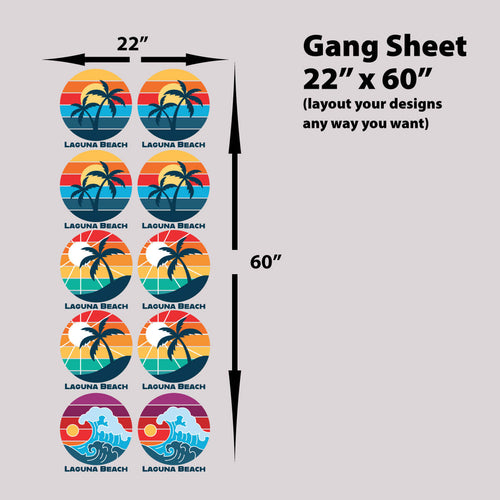
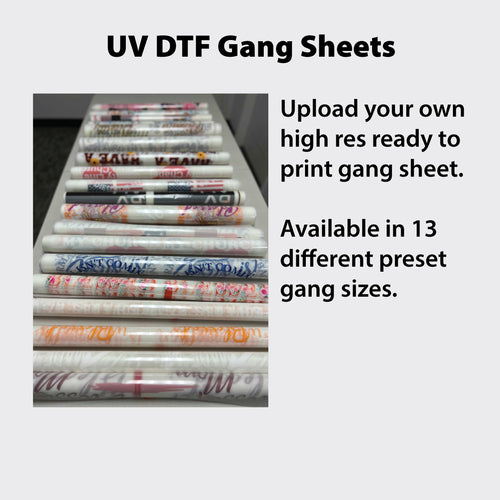
A gang sheet is one of the easiest ways to stop overspending on transfers. Instead of ordering every graphic as a separate piece with wasted surrounding space, you group multiple designs on a single sheet. That can include different logo sizes, left chest marks, full fronts, sleeve prints, neck labels, or event names for the same project.

If you run a shop, gang sheets help you batch work. If you sell merch, they help you order smarter. If you’re making shirts for a school or event, they help you combine placements that would otherwise be split across several orders.
What belongs on the same sheet
The best gang sheets are built around production logic, not just visual similarity.
A practical sheet might include:
- Main prints for the front: Keep your core design sizes grouped.
- Supporting logos: Left chest, sleeve, upper back, or locker tag style graphics fit around larger pieces.
- Size variants: Adult, youth, and alternate placements can live on one sheet if the files are clearly labeled.
- Repeat sellers: If one design moves often, use leftover space for extras you know you’ll press later.
Beginners often lose value through inefficient practices. They upload one large file, leave unusable gaps, and pay for empty film. Manual layout can work, but it takes patience, spacing judgment, and a good eye for fitting irregular shapes together.
Why the auto-builder matters
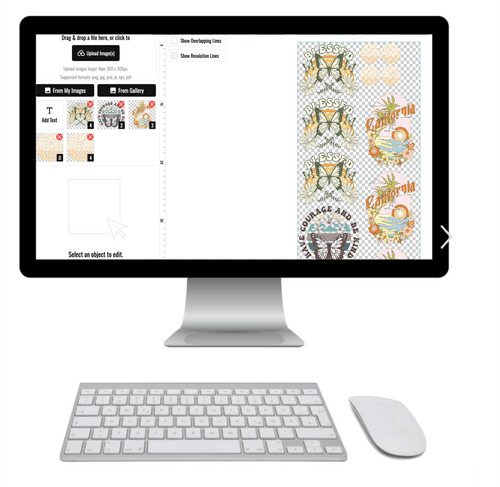
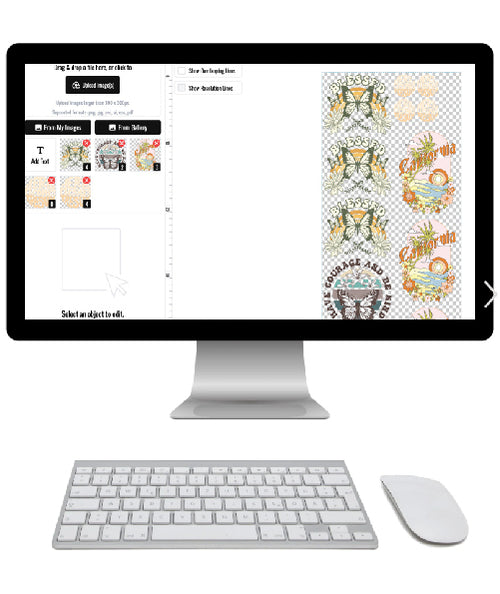
An auto-builder solves the most annoying part of gang sheet ordering. Instead of dragging pieces around manually and second-guessing spacing, you upload artwork and let the builder arrange the sheet efficiently. That’s especially useful when the order includes mixed placements and repeated graphics.
For creators who don’t want to spend half an hour nesting artwork, an auto-build option is faster. It also reduces the chance that you’ll miss open areas where another logo or backup print could have fit.
One option is the DTF gang sheets resource from Lion DTF, which explains gang sheet use and supports an Auto-build gang sheet builder for creators who want a simpler layout process.
Shop habit: Build sheets around the whole garment program, not one print at a time. Fronts, sleeves, chest logos, and extras often fit together better than people expect.
How to order strategically
Think in batches, not pieces. If you’re preparing transfer designs for shirts for a drop, event, or client package, ask these questions before building the sheet:
- Will this design need more than one placement? Add them now.
- Do I need youth and adult versions? Include both while the file is open.
- Is there empty space that can hold a future seller? Use it.
- Will I want spare prints for mis-presses or quick reorders? Place them while you still have room.
Gang sheets are where file prep starts paying you back. Clean edges, proper sizing, and transparent backgrounds make layouts easier to pack. Sloppy files do the opposite. They force more cleanup, more caution, and more empty safety space.
When manual layout still makes sense
Manual ganging still has a place when you’re handling highly specific spacing, odd shape rotation, or a carefully curated arrangement for production reasons. But for most everyday custom work, especially mixed-logo and multi-size orders, automated building is the more practical path.
It saves time, lowers layout friction, and makes it easier to order with confidence instead of staring at a blank sheet and wondering what you forgot to include.
The Perfect Press Every Time
A great transfer can still fail on the press. This is the part new decorators underestimate most. They assume the transfer does the work. It doesn’t. The transfer and the press have to work together, and the details matter.
A successful DTF application includes a 3 to 5 second pre-press at 320°F, then pressing at 300 to 330°F for 10 to 15 seconds at 60 to 80 PSI medium pressure, followed by a hot peel after a short cooling period, based on this DTF heat transfer application guidance.
Start with the garment, not the transfer
Pre-pressing matters because shirts hold moisture and wrinkles. Even when the garment feels dry, trapped moisture can interfere with adhesion. The quick pre-press also flattens the print area so the transfer meets the fabric evenly.
Positioning matters just as much. On standard adult tees, the familiar neckline spacing rule is a useful starting point, but don’t rely on instinct alone. Use a ruler, T-square, or alignment tool and check the shirt body, not just the collar seam.
The press sequence that works
A reliable routine looks like this:
- Pre-press the shirt for a few seconds at the recommended prep setting.
- Place the transfer carefully on the flattened garment.
- Press with steady pressure inside the recommended temperature and time range.
- Let it cool briefly as needed for hot-peel handling.
- Peel smoothly and confidently rather than hesitating or jerking upward.
If you want a settings reference to compare against your own machine behavior, this page on heat press settings for DTF is a useful technical checkpoint.
The goal isn’t just adhesion. It’s even adhesion across the whole print. Corners, edges, and fine details all need the same press conditions.
What good pressure feels like
Pressure is where many home setups drift off course. Too light, and parts of the print may not bond fully. Too heavy, and you can flatten texture in ways that don’t help the final feel. Consistency matters more than force for its own sake.
Shops with dependable results usually treat pressure like a calibration issue, not a guess. Once you find settings that suit your press and garment mix, write them down and stop freelancing every order.
Hot peel technique and final feel
The peel is part of the application, not an afterthought. Peel too aggressively and you risk lifting weakly bonded areas. Peel too slowly or at the wrong moment and you can create inconsistency, especially on fine edges.
When the press is dialed in, the finished print should look integrated and intentional. It should sit cleanly on the fabric with strong color and no obvious edge failure. If something looks off right after peeling, trust that signal. A shirt rarely improves after a weak press.
Press reminder: Don’t troubleshoot from memory. Keep a written log of garment type, temperature, time, pressure, and peel behavior for repeatable results.
Troubleshooting and Advanced Support
Most pressing problems don’t come from one dramatic mistake. They come from small misses stacked together. A slightly crooked garment, a seam that throws off your eye, pressure that’s a little too light, or artwork that was sized without considering the blank. Fixing transfer designs for shirts gets easier when you diagnose the actual cause instead of changing three variables at once.
If the print doesn’t look or feel right
When a transfer feels too plastic, check the artwork first. Large solid blocks of color naturally feel different from broken-up art with texture and negative space. If adhesion seems uneven, look at pressure consistency and whether the shirt was fully flattened before pressing.
When parts of the design look weak around the edges, review your setup habits:
- Recheck platen contact: The whole design area needs even contact, not just the center.
- Look at garment seams: Thick seams or collars can tilt the surface.
- Test one variable at a time: Change either pressure, time, or temperature first. Don’t guess across all three at once.
- Inspect the shirt itself: Some garments naturally press more consistently than others.
Straight enough is often better than obsessively centered
One issue people rarely talk about enough is shirt rotation caused by uneven collar seams. A common but under-discussed fix is to pull the armpits evenly before pressing so the shirt sits straighter. A misalignment of 0.25 to 0.5 inches is often imperceptible when worn, as noted in this alignment discussion and demonstration.
That matters because beginners often trust the collar too much. The collar seam may not be your true center reference. The body of the shirt is usually the better guide.
If the shirt hangs straight on a person, that’s the result that counts. Perfect math against an imperfect seam can still look crooked when worn.
Hard garments and odd sizes need different thinking
Youth sizes, plus-size garments, fitted tees, and performance blanks all challenge the simple center-and-press routine. The best adjustment is usually proportional, not dramatic. Reduce or expand placement based on the visual field of the garment, then test on the smallest or trickiest blank first.
For unusual orders, support services can save time. Vectorization helps when customer-supplied files aren’t ready for production. A “We Build a Gang Sheet for You” option helps when the order includes many placements or size variants and you don’t want to risk wasted space or layout errors.
That kind of support is useful because it removes friction at the exact points where beginners and busy shops usually lose time. You don’t need to do every technical step yourself to run a clean order. You just need to know where mistakes happen and bring in help before they become expensive.
Start Creating Your Custom Apparel Today
Professional transfer designs for shirts come from a connected process. The artwork has to fit the garment. The file has to be built for print, not just for screen viewing. The order has to be laid out intelligently so you aren’t paying for wasted space. Then the press has to finish the job with clean placement, proper pressure, and a confident peel.
That’s the workflow that keeps shirts looking intentional instead of improvised.
If you’re placing your first professional transfer order, keep the standard simple. Choose artwork that reads clearly on fabric. Measure the garment before you commit to size. Export a clean file. Use a gang sheet strategically, especially if you’re ordering more than one placement or size. And don’t treat pressing like the easy part. It’s where all the earlier decisions either hold up or fall apart.
Once you build that habit, custom apparel gets much easier to repeat.
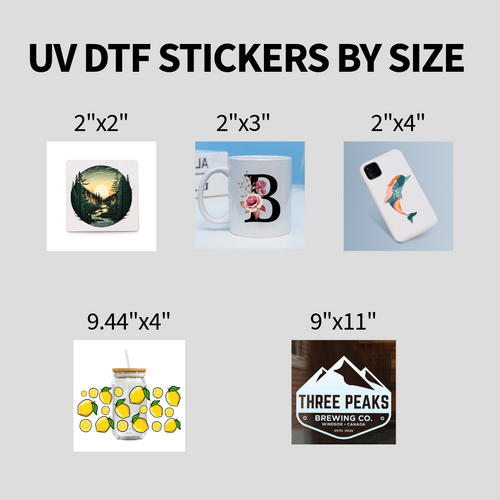
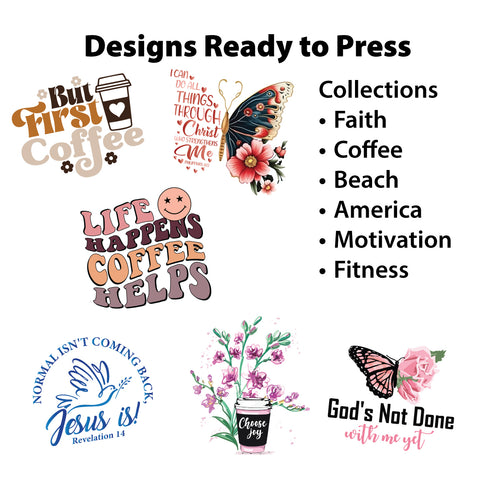
If you’re ready to turn artwork into press-ready apparel, Lion DTF Transfers offers custom DTF transfers, gang sheets, UV DTF stickers, file support, and an Auto-build gang sheet builder that helps simplify layout and reduce wasted space on mixed orders.