


So, you have an idea for a killer t-shirt. Welcome to the club! This guide is all about turning that flash of inspiration into something you can actually wear, sell, or show off. Whether you're building a brand from scratch or just kicking off a fun DIY project, consider this your roadmap.
Your Introduction To The World Of Custom T Shirt Printing
The journey from a simple design file to a wearable piece of art is an awesome one, but picking the right printing method is where the magic really happens. Getting this choice right is crucial. The custom apparel world is absolutely booming, filled with creators, small shop owners, and brands all trying to make their mark. This isn't just a niche hobby anymore—it's a massive, fast-growing industry.
Get this: a staggering 2 billion t-shirts are sold across the globe every single year. That's pushing the industry toward a projected $330 billion valuation by 2025. This explosion is driven by everything from the shift to comfy remote-work clothes to e-commerce platforms that let anyone bring their designs to life without a huge investment. You can discover more insights about these apparel industry trends and figure out how to grab your piece of the pie.
Navigating Your Printing Options
To really succeed, you need to get familiar with the core technologies out there. Each one strikes a different balance between quality, cost, and what it can actually do. Think of this guide as your compass, pointing you toward the best fit for your specific project. We'll give you a quick flyover of the four main players in the t shirt and printing game:
- Direct-to-Film (DTF): A modern powerhouse known for its eye-popping colors, super soft feel, and ability to stick to just about any fabric you throw at it.
- Screen Printing: The old-school workhorse. It’s perfect for big batches of simple designs with just a few solid colors.
- Direct-to-Garment (DTG): This works kind of like a paper printer but for fabric. It's the go-to for complex, photorealistic images, especially on cotton shirts.
- Heat Transfer Vinyl (HTV): A fantastic choice for simple text or bold, single-color graphics. Think names and numbers on the back of jerseys.
Getting a handle on these methods is the first step. It lets you make smart decisions that line up with your vision, your budget, and the quality you're aiming for. Your choice directly shapes how your final apparel looks, feels, and holds up over time.
Making Printing Easy And Affordable
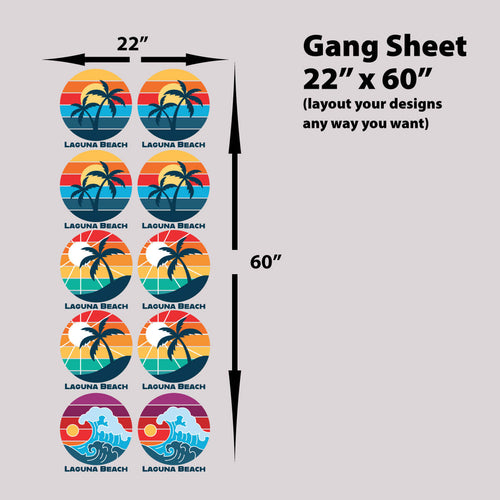
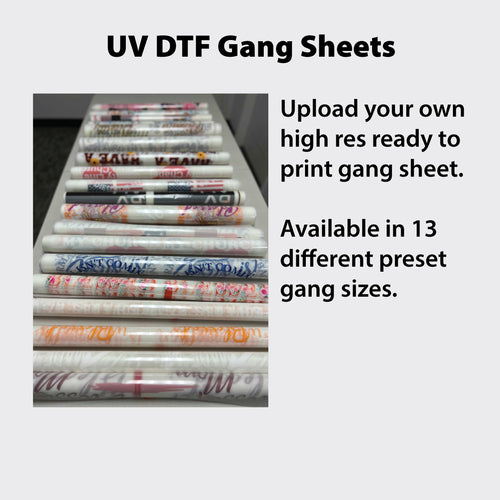
As you start exploring, there's a key concept you'll want to know for getting the most bang for your buck: the "gang sheet." It’s a simple but brilliant idea—you arrange multiple designs onto one single, large sheet of film to be printed all at once. This trick dramatically cuts down on waste and cost.
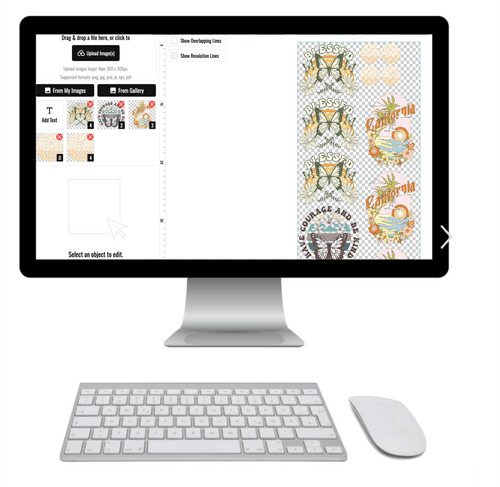
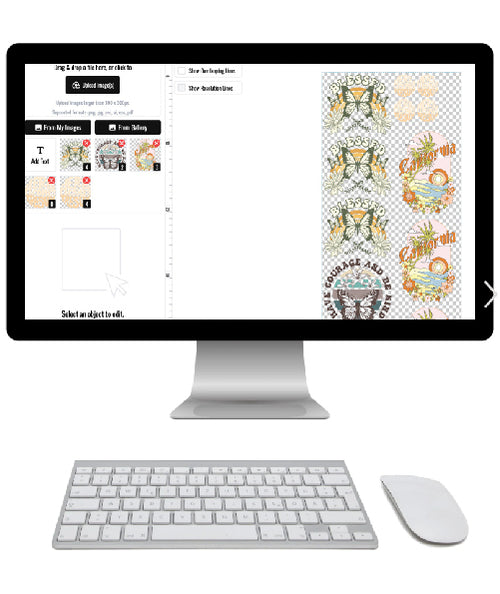
Tools like our Auto-build gang sheet builder make this whole process a breeze. It’s incredibly easy to use and saves you money by automatically arranging your designs for the tightest fit, ensuring you get the most value out of every single print run. This approach sets you up perfectly for a deep dive into each printing method, giving you the confidence you need to get your projects off the ground.
Comparing The Top T-Shirt Printing Methods
Trying to pick the right method for your t-shirt and printing project can feel like you're navigating a maze. There are so many options, each with its own quirks and strengths, and it's easy to get lost. Let's clear things up and break down the four most popular techniques everyone talks about.
I find it helps to think of them with simple analogies:
- Screen Printing is like using a highly detailed stencil. It’s perfect for pushing ink through a screen to create bold, simple designs, especially when you're making a ton of them at once.
- Direct-to-Garment (DTG) works almost exactly like the inkjet printer in your office. But instead of paper, it prints right onto the fabric, which is why it's the go-to for photorealistic images.
- Heat Transfer Vinyl (HTV) is basically like applying a super high-quality, durable sticker. You cut designs from a colored sheet of vinyl and then use a heat press to lock them onto the shirt.
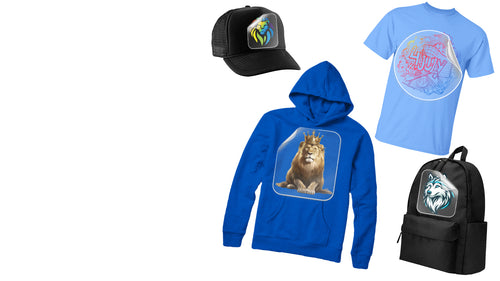
- Direct-to-Film (DTF) is like applying a high-tech, permanent temporary tattoo. The design is printed onto a special film first, then transferred to the garment with heat, giving you both incredible detail and serious versatility.
This flowchart can help you visualize that initial decision-making process, whether you're just starting a fun DIY project or launching a full-fledged brand.
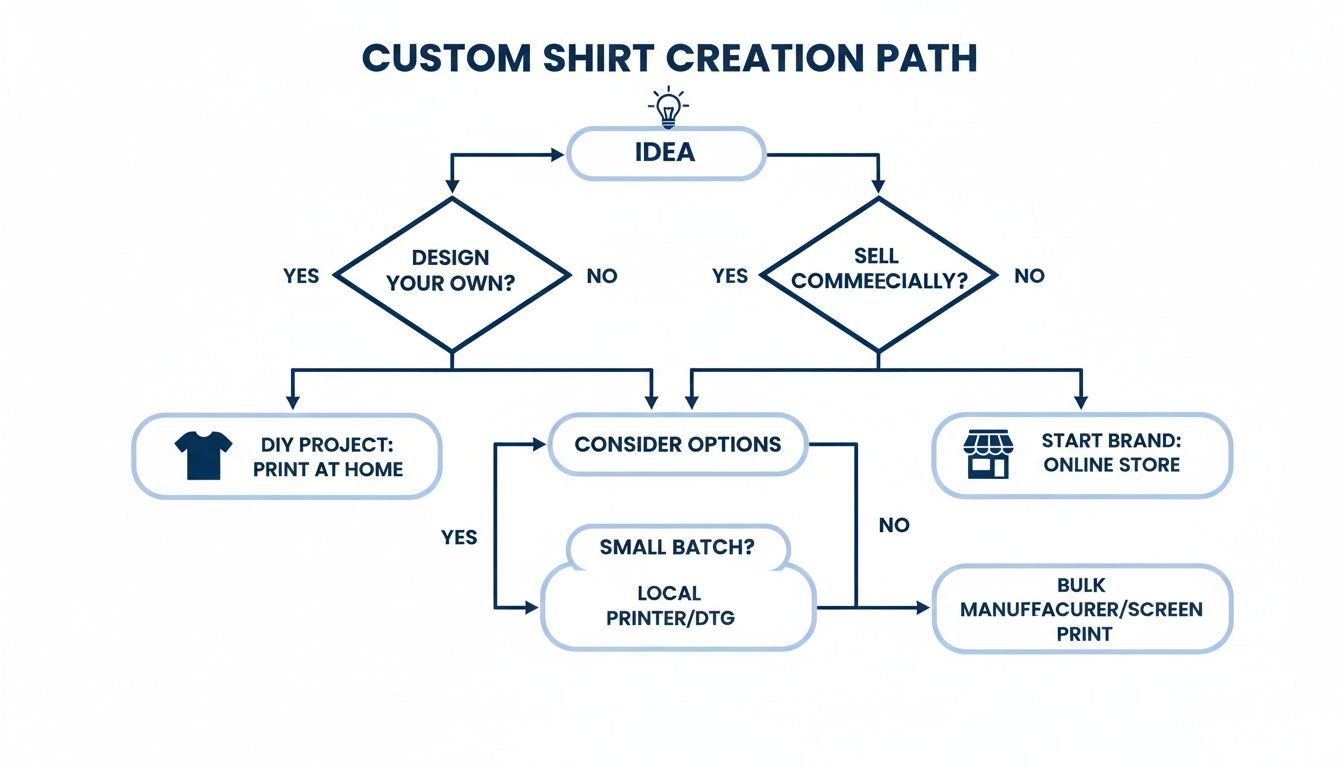
The main takeaway here is that your end goal—be it a personal project or a commercial brand—is going to heavily influence which printing path makes the most sense for you, both practically and financially.
Key Factors For Your Decision
To make a smart choice, you have to compare these methods based on what really matters for custom apparel. We'll look at everything from how the print feels on the shirt to how much it's going to cost you per piece.
First up, let's talk about the print feel. A DTG print feels incredibly soft because the ink soaks directly into the cotton fibers. Screen prints and HTV, on the other hand, sit on top of the fabric, creating a thicker, more noticeable layer. DTF strikes a fantastic balance here, offering a finish that's much softer and more flexible than vinyl but with a slight hand feel.
Next is color vibrancy and detail. This is where DTG and DTF really shine. Both can reproduce millions of colors, gradients, and tiny details, making them perfect for photos or complex artwork. Screen printing is limited to solid colors, and each new color requires a new screen, which drives up the cost. HTV is also stuck with the solid colors of the vinyl rolls you can buy.
Durability And Fabric Compatibility
How well is your design going to hold up in the wash? Durability is a huge deal. High-quality screen printing is famous for its longevity; the inks cure and form a rock-solid bond with the fabric. DTF is also a champion of durability, with our premium transfers often tested to withstand over 100 wash cycles without cracking or fading.
DTG prints, while vibrant, can sometimes be more susceptible to fading over time, especially if they aren't cared for properly. HTV is generally tough but can be prone to cracking or peeling if not applied perfectly or if the garment is stretched too much.
The fabric you choose often makes the decision for you. DTG, for instance, works best on 100% cotton. Screen printing does well on cotton and blends. But HTV and DTF are the kings of versatility, adhering beautifully to cotton, polyester, blends, and even tricky materials like leather or nylon.
This versatility is a massive advantage for modern brands that want to offer more than just standard cotton tees. If you want to dive deeper, check out our complete guide to t-shirt printing where we explore these topics in more detail.
Cost Per Shirt: Small Vs. Large Orders
Finally, let's talk money: the cost. The economics of each method are completely different depending on your order size. Screen printing involves a lot of setup time and cost for each color screen. This makes it expensive for small runs but incredibly cost-effective for large bulk orders (think 100+ shirts of the same design).
DTG and DTF are the exact opposite. They have almost zero setup costs, making them perfect for one-off prints or small batches. This is why the entire print-on-demand industry is built on these technologies. For entrepreneurs, being able to order small, varied batches without a massive upfront investment is a total game-changer. An easy-to-use tool like our Auto-build gang sheet builder can make this process even more cost-effective.
To make this even clearer, I’ve put together a table that breaks down these comparisons side-by-side. It’s a great way to see exactly where each method stands out.
T-Shirt Printing Method Comparison
| Feature | DTF (Direct-to-Film) | Screen Printing | DTG (Direct-to-Garment) | Heat Transfer Vinyl (HTV) |
|---|---|---|---|---|
| Print Feel | Soft, flexible, slight hand | Thicker, sits on fabric | Very soft, no feel | Thicker, plastic-like feel |
| Color Vibrancy | Excellent, unlimited colors | Good, bold solid colors | Excellent, unlimited colors | Good, limited solid colors |
| Durability | Excellent (100+ washes) | Very Good | Good | Good, can peel over time |
| Best Fabrics | Cotton, Poly, Blends, Nylon | Cotton, Blends | 100% Cotton | Cotton, Poly, Blends |
| Small Orders (1-20) | Very Cost-Effective | Expensive | Very Cost-Effective | Cost-Effective |
| Large Orders (100+) | Cost-Effective | Most Cost-Effective | Less Cost-Effective | Less Cost-Effective |
After looking at all these factors, it's easy to see why DTF is gaining so much momentum. It delivers a powerful combination of vibrant, full-color printing, incredible durability, and the freedom to print on almost any fabric. This makes it an ideal solution for small businesses and growing brands looking for flexibility and professional quality without the huge upfront costs.
Why DTF Transfers Are A Game Changer For Modern Brands
In the hyper-competitive world of custom apparel, Direct-to-Film (DTF) printing is quickly becoming the secret weapon for brands that refuse to compromise. It blows past the frustrating limitations of older methods, delivering a knockout combo of quality, versatility, and efficiency that’s perfectly in tune with what today's business owners and creators actually need.
The single biggest win for DTF is its incredible material versatility. While other methods box you in—think DTG's strict reliance on 100% cotton—DTF tears down those walls. It works flawlessly on a massive range of fabrics and surfaces.
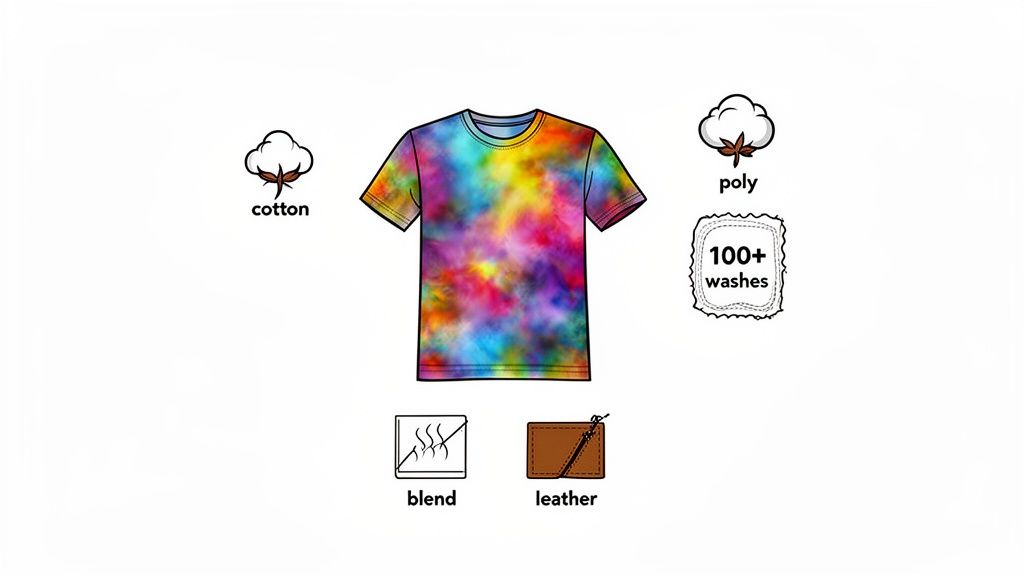
Whether you’re printing on buttery-soft ringspun cotton, slick polyester performance wear, classic cotton/poly blends, or even totally unconventional materials like leather and nylon, DTF transfers stick with amazing reliability. This freedom means you can expand your product line without ever having to jump to a different printing technology.
Unlocking Photorealistic Detail And Unlimited Color
Another area where DTF just shines is design complexity. Methods like screen printing start to sweat when dealing with intricate details, and they’re held back by the number of colors you can use. Every single color adds more cost and more complexity to the job.
DTF, on the other hand, eats full-color, photorealistic designs for breakfast. It can reproduce smooth gradients, razor-thin lines, and subtle shading with stunning accuracy, all in one clean pass. Your most creative, ambitious designs are suddenly on the table.
For e-commerce stores and small businesses, this is a massive deal. You can offer vibrant, detailed merchandise that genuinely stands out, all without the gut-punch of steep setup fees that come with multi-color screen printing.
This capability is essential for modern t shirt and printing projects where the visuals are everything. You can confidently print complex logos, detailed illustrations, or even high-resolution photos, knowing the final product will look sharp and ridiculously vibrant.
The Perfect Balance Of Feel And Durability
Customer experience is everything, and the feel of a print—what we in the industry call the "hand"—plays a huge role. Heavy, plastic-like prints can make even a premium garment feel cheap. DTF transfers, however, have a remarkably soft, lightweight, and flexible feel that moves right along with the fabric.
But that premium feel doesn't come at the cost of toughness. A common worry with any printed apparel is how it will survive the washing machine. Lion DTF transfers are built for the long haul, rigorously tested to withstand over 100 wash cycles without cracking, peeling, or fading. This ensures your products don't just look amazing on day one—they continue to represent your brand's quality for years.
This level of performance gives both you and your customers peace of mind, making DTF a rock-solid choice for everything from team uniforms to high-end brand merch. If you want to get into the nitty-gritty, our article on DTF transfers takes a much deeper dive into the tech.
Cost-Effective Production For Any Order Size
Maybe the most practical advantage of DTF for small businesses is its economic model. Unlike screen printing, which demands a ton of setup and only makes financial sense for huge bulk orders, DTF has practically zero setup cost per design. This makes it the perfect solution for small runs, one-off samples, or print-on-demand fulfillment.
This financial flexibility gets even better when you use tools built for efficiency. For instance, our Auto-build gang sheet builder lets you cram multiple different designs—logos, sleeve art, neck tags—onto a single transfer sheet. By paying for the sheet instead of each individual design, you crush your cost per print and maximize your profit, even on small, diverse orders. It's an approach that makes professional-quality t shirt and printing accessible and genuinely affordable for everyone.
How To Maximize Savings With A Gang Sheet Builder
In the world of custom t-shirt and printing, keeping your costs down without compromising on quality is the name of the game. If there's one pro-level strategy that dramatically lowers your expenses, it's mastering the gang sheet. It's a simple but brilliant way to get the absolute most out of every print run.
Think of it like baking cookies. You wouldn't bake one cookie at a time on a giant tray; you’d fill the whole thing up to be as efficient as possible. A gang sheet applies that same logic to printing. It’s a single large sheet of transfer film where you can arrange multiple, even completely different, designs to be printed all at once.
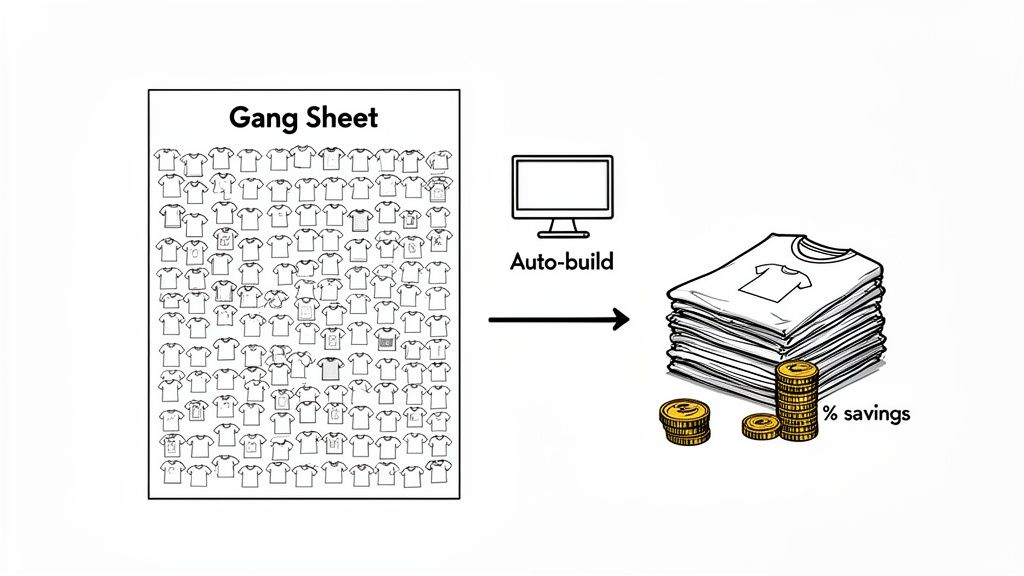
This completely flips the cost structure of your orders on its head. Instead of paying for each design separately—a front logo here, a sleeve hit there, a neck tag somewhere else—you just pay for the sheet itself. This instantly slashes your cost-per-print, making it incredibly affordable to produce jobs with multiple graphics.
From Manual Hassle To Automated Efficiency
Not long ago, creating a gang sheet meant firing up design software and spending a good chunk of time on it. You had to manually place, rotate, and nest every single image, trying to solve a complex puzzle to avoid wasting expensive film. It was tedious work, and it was easy to leave valuable space empty.
But modern tools have changed everything. Our user-friendly Auto-build gang sheet builder makes this entire process dead simple and hyper-efficient. We designed the system for pure ease of use, so anyone can get professional-level results without needing a lick of graphic design experience.
The magic behind an automated builder is its smart nesting algorithm. Just upload your designs, and the tool automatically analyzes their shapes and sizes, then arranges them to use up every last square inch of film. This means virtually zero waste and maximum bang for your buck.
This kind of tech empowers small businesses and solo creators to compete at a much larger scale. You can now produce complex, multi-design orders just as affordably as a basic, single-design bulk run.
The Real-World Impact On Your Bottom Line
So, what does this actually look like in practice? Imagine a small brand is launching a new t-shirt. They might need:
- 50 large front logos
- 50 small sleeve graphics
- 50 custom neck tag labels
If you ordered those as three separate jobs, it would be expensive and a logistical headache. With a gang sheet builder, you can combine all 150 elements onto just a few large sheets. The savings are immediate and significant, which gives a direct boost to your t-shirt business's profitability. For a closer look at how it works, you can learn more about our powerful DTF gang sheet builder and what it can do.
This efficiency is a lifesaver for anyone in the print-on-demand space or for shops that handle a lot of small-batch orders. Being able to "gang up" designs from multiple customers onto a single sheet is a proven strategy for beefing up your margins. It shifts your thinking from paying per piece to paying per square foot—a much smarter and more cost-effective model. Ultimately, mastering the gang sheet is a fundamental step toward building a more sustainable and profitable apparel business.
Preparing Your Artwork For Flawless Printing
Even the most advanced t shirt and printing technology can't rescue a bad art file. A great print doesn’t start when the heat press warms up; it begins the moment you create your design file. Getting this part right is the secret to avoiding expensive mistakes and making sure your vision translates perfectly from screen to fabric.
Think of your design file like a blueprint for a house. If that blueprint is blurry, has the wrong measurements, or calls for the wrong materials, the final build will be a mess. It's the exact same idea here. A low-quality file will always produce a low-quality print, costing you both time and money.
Resolution: The Foundation Of A Crisp Print
The single most critical factor for a sharp, clean print is resolution, which we measure in DPI (Dots Per Inch). For professional-grade apparel, the industry standard is 300 DPI at the final print size. Anything less, like the common web standard of 72 DPI, will look blurry, pixelated, and just plain unprofessional when it's on a shirt.
Imagine trying to blow up a tiny passport photo to the size of a movie poster. It would turn into a blocky, unrecognizable mess, right? That’s what happens when you use a low-resolution file for a t-shirt. To guarantee a killer result, always start your design on a canvas that's set to 300 DPI from the get-go.
File Type And Color Mode
The format you save your file in is also a huge deal. For DTF printing, your best bet is always a PNG file with a transparent background. This ensures only your design gets printed, not a clunky white or colored box around it. A file type like JPEG, for example, can't handle transparency and will always come with a solid background.
Color mode is another one of those small technical details that can make a massive difference. Your computer screen shows you color in RGB (Red, Green, Blue), which is perfect for looking at things digitally. Printers, however, use a different language: CMYK (Cyan, Magenta, Yellow, Black) to mix colors on a physical surface.
Submitting a file in RGB can cause some surprising color shifts during printing because the printer has to guess how to convert it to CMYK. For the most accurate color, it's always best to design in CMYK from the start if your software gives you the option.
What To Do If You're Not A Designer
If all this technical talk has your head spinning, don't sweat it. You don’t need to be a graphic design guru to get amazing prints. Lots of artists and businesses use vectorization services to turn low-quality images into perfectly scalable, print-ready art.
Even better, you can make your life easier and your prints more cost-effective by arranging your designs on one big sheet. Our Auto-build gang sheet builder makes this a breeze, automatically organizing your files to make the most of every single inch. It's the perfect tool for getting maximum value, especially when you have a bunch of logos or graphics lined up for your next big t shirt and printing project.
So, Just How Big Is the T-Shirt Game?
Picking a print method for your t-shirts isn't just about ink and machines; it’s a major business move. To really see the runway in front of you, you have to zoom out. The custom t-shirt world is so much more than a side hustle—it’s a massive global market that’s growing like crazy.
And we're not talking small potatoes here. This is a worldwide industry that has absolutely exploded. The global t-shirt market was already worth a staggering $169.143 billion back in 2021. It's on track to hit $195.6 billion by the end of 2025 and is projected to climb to an insane $261.577 billion by 2033. Don't just take my word for it; you can dive into the full t-shirt market trends and projections and see the numbers yourself.
Tapping Into Key Regional Trends
Knowing where all this growth is happening gives you a huge leg up. Take the Asia Pacific region—it’s an absolute powerhouse, expected to own a 36.50% slice of the market in 2025. That boom is fueled by huge manufacturing hubs and an enormous consumer base, proving there’s a serious global hunger for custom gear.
Right here at home, North America is still a goldmine. The demand for personalized products, band merch, and promo wear is as strong as ever. By locking in an efficient and top-quality printing method like DTF, you’re setting yourself up perfectly to grab a piece of that action.
This isn't just about putting ink on fabric. It's about plugging into a multi-billion dollar river of global demand. Your ability to crank out vibrant, tough, and affordable apparel is your ticket to ride.
Making smart choices on the production floor is how you win. For instance, using tools that save you money is non-negotiable if you want to turn a real profit. Our Auto-build gang sheet builder is a perfect example. It helps you cram as many designs as possible onto one sheet, slashing waste and dropping your cost per print. That kind of efficiency lets you compete, whether you're selling at a local market or to a worldwide online audience, and makes it way easier to scale when you're ready.
Common Questions About T-Shirt Printing
Jumping into the world of custom t-shirt printing can bring up a few questions, especially when you’re trying to pick the right method for your project. Let's clear up some of the most common ones so you can move forward with confidence.
How Durable Are DTF Transfers Compared To Screen Printing?
This is easily the question we get asked the most, and the answer might surprise you. DTF transfers are incredibly durable, often matching and sometimes even outlasting traditional screen prints.
Our premium transfers are tested to withstand over 100 washes without cracking, peeling, or fading. The ink doesn't just sit on top of the fabric; it chemically bonds with the fibers, creating a finish that's tough yet flexible enough to handle daily wear and tear.
Can I Use A Regular Home Iron To Apply DTF Transfers?
While it’s tempting to grab your home iron for a quick job, we strongly advise against it. To get a transfer that lasts, you need a proper heat press.
A heat press is engineered to deliver two things a home iron can't: consistent, even pressure and precise temperature across the entire design. An iron creates hot spots and uneven pressure, which leads to a weak bond. That's why iron-on designs often start peeling after just a couple of washes.
Investing in a quality heat press is the single best way to guarantee professional results and the long-term durability your customers expect.
What Is A Gang Sheet And How Does It Save Money?
Think of a gang sheet as a cost-saving tool. It's a large sheet of transfer film where you can arrange multiple designs—different logos, sizes, or graphics—to be printed all at once. Instead of paying for each design individually, you just pay for the sheet.
This approach massively drops your cost per print, especially if your apparel needs multiple graphics like a front logo, sleeve art, and a neck tag. Using an Auto-build gang sheet builder makes this even easier. You just upload your files, and the tool automatically arranges them to fill every inch of space, ensuring you get maximum value with zero waste.
Ready to bring your t-shirt ideas to life with unmatched quality and efficiency? Lion DTF Transfers makes it simple. Explore our Auto-build gang sheet builder and discover how easy professional printing can be.