


You’re probably in one of two spots right now. Either you need custom shirts, posters, or merch and you’re trying to figure out what “screen printing prints” means, or you already print and you’re deciding whether a job belongs on a screen printing press or should move to DTF.
That choice matters more than most buyers realize. The wrong method can leave you paying for setup you didn’t need, fighting detail that won’t hold, or producing a print that feels heavier or looks flatter than the job demands. The right method makes production smoother, margins healthier, and the finished piece better.
What Are Screen Printing Prints
Screen printing prints are prints made by pushing ink through a mesh screen onto a surface such as a t-shirt, tote bag, poster, or paper print. Think of the screen as a controlled stencil. Some areas stay blocked, some stay open, and ink only passes where the design is supposed to print.
That simple idea is why screen printing has lasted. It’s direct, durable, and very good at laying down bold color. A properly built print can look clean, opaque, and professional in a way that still sets the standard for many apparel jobs.
The practical definition
In shop terms, a screen printing print is the result of four linked decisions:
- The artwork has to be separated in a way the press can reproduce.
- The screen has to hold the right stencil cleanly.
- The ink has to suit the fabric and the visual goal.
- The cure has to lock the print in so it survives wear and washing.
If any one of those misses, the print shows it. You’ll see fuzzy edges, weak coverage, rough hand feel, poor stretch, or wash issues.
Why this method still matters
Screen printing isn’t some outdated craft hanging on by nostalgia. The U.S. screen printing industry generated $8.4 billion in revenue in 2023 and includes more than 10,000 establishments employing 66,636 workers, according to U.S. screen printing industry data. That tells you something important. Shops keep using it because customers keep needing what it does well.
Practical rule: If a design is simple, repeatable, and headed for a larger run, screen printing still deserves the first look.
That doesn’t mean it’s always the best answer. It means it’s still a foundational one. If you need strong spot colors, long production runs, and a print style with proven staying power, screen printing remains one of the most dependable tools in a shop.
What clients usually mean when they ask for it
Most clients asking for screen printing prints are really asking for one of these outcomes:
| What they want | What screen printing usually delivers |
|---|---|
| Bold logo on dark shirts | Strong opacity and solid color |
| Event or team shirts in volume | Repeatability and efficient production |
| Merch that feels proven and familiar | Traditional print look and durability |
| Art prints with rich ink presence | Crisp, graphic output on paper |
That’s why understanding the method matters. You’re not just choosing a machine. You’re choosing the production logic behind the final product.
The Screen Printing Process Step-by-Step

A lot of confusion around screen printing comes from the fact that the finished shirt looks simple, but the path to get there isn’t. Every sharp edge and every consistent repeat depends on prep done before ink ever touches fabric.
Start with separations, not the press
The job begins in the file. If the design has multiple colors, each color becomes its own printable element. For spot-color work, that means deciding exactly what prints first, what traps are needed, and where registration matters most.
If you want a plain-language walkthrough of the basics, this guide on how to screen print a shirt is useful as a starting reference. It helps newer decorators connect the artwork stage to what happens on press.
Bad files create expensive problems. Thin lines can close up. Tiny gaps can disappear. Halftones can break down. In a production shop, that isn’t a design issue anymore. It becomes a remake issue.
Build the stencil correctly
Once the file is ready, the screen gets coated with emulsion, dried, exposed, and washed out. That creates the stencil. The open areas are where ink will pass through. The blocked areas stay clean.
This is one of those steps beginners underestimate. The stencil doesn’t just define the image. It controls edge quality, ink release, and repeatability across the whole run.
A bad screen can still print. It just won’t print well for long.
Match mesh to the design
Mesh count matters because it changes both detail and ink deposit. According to this mesh count guide for screen printing, mesh count is measured in threads per inch. Higher counts such as 200 to 305 TPI hold finer detail and thinner ink deposits, while lower counts such as 110 to 156 TPI allow heavier deposits for stronger opacity on dark garments.
That has direct consequences on press:
- Use higher mesh counts when the design has halftones, fine lines, or small text.
- Use lower mesh counts when you need bold fills and heavy white coverage.
- Don’t force one screen to do both jobs if the art needs detail and brute opacity in different areas.
A lot of messy prints come from bad mesh choices, not bad operators.
Here’s a quick visual reference before the next step.
Print with controlled pressure
On press, the printer floods the screen, then pulls or pushes the squeegee so ink passes through the open stencil onto the substrate. Experience quickly becomes evident. Too much pressure can smear detail and overwork the print. Too little can leave weak coverage or broken strokes.
A good operator watches a few things at once:
- Registration so colors land where they belong.
- Ink deposit so the print looks full without becoming clumsy.
- Off-contact and release so the screen snaps cleanly off the garment.
- Consistency so shirt one looks like shirt fifty.
Cure the print so it lasts
Printing isn’t the finish line. Curing is. If the ink isn’t cured correctly, the design may look fine leaving the shop and fail later in wear or wash.
That’s why experienced shops don’t judge success by how the print looks warm off the platen. They judge it by whether the print is fully set, flexible, and stable after cooling. A clean print that isn’t cured is still a bad print.
Inks Substrates and Final Feel
The print method gets most of the attention, but ink choice and fabric choice decide how the print feels in real life. That’s the part customers notice first when they put the garment on.
Plastisol compared with water-based ink
Plastisol is the workhorse in many shops because it’s forgiving on press and strong visually. It tends to sit more on top of the fabric, which helps create dense, bold color and solid opacity. That can be exactly what you want for athletic graphics, bright logos, and prints on dark garments.
Water-based ink behaves differently. It penetrates the fibers more, which usually gives a softer hand and a less raised surface. If a customer asks for a print that feels less coated and more worn-in, water-based is often closer to that target.
Neither one is “better” in every context. They solve different problems.
| Goal | Often the better fit |
|---|---|
| Bright, punchy logo on a dark shirt | Plastisol |
| Softer retail feel on cotton | Water-based |
| Heavier coverage with a classic print look | Plastisol |
| More natural hand on the garment | Water-based |
Fabric changes everything
Cotton is usually the easiest conversation. It prints predictably and gives both plastisol and water-based inks a good chance to perform well. Cotton blends can also print well, but the blend affects absorption, softness, and sometimes the final appearance.
Synthetics and performance fabrics need more caution. Dye migration, heat sensitivity, and surface slickness can all complicate the job. A design that looks easy on a ring-spun cotton tee may become a problem on polyester if you use the same assumptions.
That’s one reason shops should ask fabric questions before they quote. The same art can need a different production plan depending on the blank.
Feel is part of print quality
Customers often talk about durability and color, but hand feel matters just as much. A print can be technically strong and still miss the mark if it feels too heavy for the garment style.
For jobs that rely on halftones and controlled transitions, this discussion on halftones in screen printing is relevant because dot structure, mesh, and ink deposit all affect how soft or dense the final print feels.
If the shirt is lightweight and premium, a thick print can feel wrong even when it looks right.
That’s why experienced printers don’t just ask, “What color is the logo?” They ask what the garment is, how the customer wants it to feel, and whether the print is supposed to look clean, vintage, athletic, or fashion-forward.
Advantages and Limitations of Screen Printing
Screen printing has a well-earned reputation. It also punishes bad assumptions. If you know where it shines and where it drags, you can quote better, schedule better, and steer customers toward the right outcome instead of the most familiar one.

Where screen printing wins
The biggest strength is efficiency once the job is set up. If you’re running a straightforward design across a larger batch, screen printing can move fast and produce a very consistent result. That’s especially true when the artwork is built around solid spot colors.
It also does bold opacity well. White ink under dark shirt conditions, solid team logos, left chest branding, and graphic backs are all natural territory for screen printing. The print has presence. On the right job, that’s an advantage, not a drawback.
Another strength is durability when the shop handles prep, deposit, and cure correctly. Customers trust screen printing because they’ve worn it for years on event shirts, workwear, school gear, and merch.
Where screen printing fights back
The main limitation is setup. Screen printing asks you to do real production work before the first garment is saleable. According to screen printing data preparation requirements, each color needs its own high-resolution 300 DPI file, and multi-color jobs can take hours in separation and setup before a single shirt is printed.
That’s the hidden cost newer buyers miss. They compare a ten-piece order to a fifty-piece order and assume the difference is just ink and labor. It isn’t. The setup burden lands hardest on small, multi-color jobs.
The trade-off in plain terms
Screen printing is strongest when complexity stays controlled. It gets less attractive when variation rises.
- Great fit: repeat jobs, limited colors, larger runs, bold graphics
- Harder fit: tiny orders, photo-heavy art, frequent name changes, many one-offs
- Risk area: customers who want fast turnaround on detailed art but expect bulk pricing
Shop-floor truth: The press run can be the easy part. The expensive part is everything you had to do to make the press run possible.
That’s why a shop owner should never sell screen printing as the universal answer. It’s one answer. A strong one. But only when the job matches the method.
Screen Printing vs DTF Transfers Which to Choose
This is the decision most shops and buyers need. Not “which method is best” in the abstract, but which method fits this order, this artwork, this deadline, and this margin.
Screen printing and DTF transfers overlap. They also solve very different production problems.

Decision Matrix Screen Printing vs. DTF Transfers
| Factor | Screen Printing | DTF Transfers |
|---|---|---|
| Order volume | Strong for larger repeated runs | Strong for small runs and mixed quantities |
| Artwork style | Best for bold spot-color graphics | Better for complex, full-color, and gradient-heavy art |
| Setup burden | Higher because each color needs screen prep | Lower because the workflow is digital |
| Turnaround flexibility | Good once setup is complete | Very good for short-notice and varied orders |
| Personalization | Less efficient when every print changes | Better for names, numbers, and one-offs |
| Fabric range | Excellent on many standard garments with the right ink system | Often easier when orders include varied garment types |
| Feel | Can range from soft to heavier depending on ink and deposit | Usually consistent, with a transfer-based feel |
| Reorders | Excellent when the original job specs are dialed in | Excellent when art stays digital and easy to place |
Choose screen printing when the art is simple and the run is real
If a customer needs a stack of event shirts with a bold front print and maybe one back hit, screen printing usually makes sense. The setup gets spread across the run, the colors stay strong, and the end result looks familiar to most buyers.
It also makes sense when the design language is intentionally graphic. Solid inks, sharp spot colors, athletic lettering, and high-contrast merch often look exactly the way they should in screen printing.
Choose DTF when complexity or flexibility leads the job
DTF wins fast when the art is detailed or the order is awkward. Small quantities, many colors, gradients, tiny text, individual names, and mixed garment types all push the job toward a transfer workflow.
That’s not because screen printing can’t do detail. It can. It’s because detail in screen printing often adds prep, risk, and cost. DTF removes a lot of that friction.
A practical example: if a client orders a small batch with full-color artwork and a quick deadline, I wouldn’t force it into a screen printing workflow just because that’s the traditional route. I’d protect the schedule and keep the art intact with DTF.
DTF is also strong as a shop tool, not just a retail option
A lot of printers still frame this as one method replacing another. That’s the wrong way to think about it. DTF is often best used as a pressure-release valve for jobs that don’t fit the press schedule or don’t justify screen setup.
That includes:
- Short-run add-ons after the main screen printed order has shipped
- Complicated left chest placements with fine detail
- Sample pieces before a bulk order commits
- Mixed-size art sets that would be annoying to separate and burn traditionally
- Personalized extensions such as staff names, player names, or limited variants
For shops exploring this route, screen print transfers compared with related workflows is a useful angle because it helps decorators think in terms of workflow fit, not loyalty to one process.
The hybrid approach is usually the smartest one
The most profitable shops I’ve seen don’t treat this as a purity test. They use screen printing where it has an advantage and use DTF where screen printing becomes inefficient.
A hybrid order might look like this:
| Part of the order | Best method |
|---|---|
| Main event shirt front in a bold design | Screen printing |
| Staff names added later | DTF |
| Small reorder after event totals change | DTF |
| Limited-edition colorway for a subset of buyers | DTF |
That approach keeps the high-volume portion efficient while avoiding unnecessary setup for the changing pieces.
Don’t ask which method is more “pro.” Ask which one protects quality and margin on the specific job.
A clean way to make the choice
Use this rule set when you quote:
- Count the colors and look at the detail. More complexity pushes toward DTF.
- Look at the quantity. More repetition pushes toward screen printing.
- Ask whether every item will be identical. Variation pushes toward DTF.
- Check the deadline. Tight turnaround often favors digital transfer workflows.
- Review the blank garments. Mixed materials can make DTF the cleaner path.
If the order is large, simple, and stable, screen printing is hard to beat. If the order is detailed, variable, or urgent, DTF usually saves time and trouble.
Real-World Examples of Screen Printed Goods
The easiest way to understand where screen printing belongs is to look at the jobs that keep returning to it.

Tour shirts and event merch
A band, festival, or school event usually needs merchandise that’s bold, readable, and repeatable. The front graphic has to look good from across the room, and the back print has to stay legible after repeated wear. That’s classic screen printing territory.
These jobs often rely on strong spot colors and predictable placement. Once the setup is dialed, the run becomes efficient and consistent.
Team apparel and workwear
Uniform tees, volunteer shirts, staff apparel, and company event gear often prioritize reliability over complexity. A clean chest logo and a larger back print don’t need a fancy production method. They need one that can repeat the same image over and over without introducing unnecessary variability.
That’s where screen printing prints feel natural. The result looks familiar because this is the kind of work the method has handled for years.
Art posters and flatstock prints
Screen printing isn’t just for garments. It also produces striking prints on paper. Artists use it when they want sharp shapes, intentional layers, and ink that feels like part of the piece rather than just color sitting invisibly on the sheet.
A good screen printed poster doesn’t just show the artwork. It shows the printing process as part of the artwork.
Tote bags and simple promotional goods
Totes, simple giveaway items, and branded soft goods are often ideal when the art stays graphic and the placement is straightforward. A single-color mark or a limited palette can look excellent and hold up well.
The common thread in all these examples is simple. Screen printing works best when the design benefits from deliberate ink laydown and the job rewards repeatability.
Care Durability and Getting the Most from Your Prints
A quality print should last, but care still matters. Even a well-made screen print can age badly if the garment gets hammered with heat and abrasion.
How to wash screen printed garments
Use straightforward habits:
- Turn garments inside out before washing so the print rubs less against other items.
- Wash in cold water to reduce stress on the ink and fabric.
- Use normal detergent and skip anything harsh that can wear the surface faster.
- Avoid high heat drying when possible. Lower heat is easier on the print.
These steps aren’t complicated. They just reduce the things that break prints down over time.
Why that care advice works
If the print has a heavier ink deposit, friction and heat matter more. Repeated rubbing can dull the surface. Excessive dryer heat can make some prints feel stiffer sooner or shorten the life of the garment around them.
Softer prints also benefit from careful washing. Even when the ink feel is lighter, the graphic still lasts longer when the garment isn’t being overcooked in the dryer.
What buyers should expect
A professionally produced screen print should feel like a long-term product, not a disposable decoration. If the artwork was prepared correctly, the ink matched to the fabric, and the cure handled properly, the print should remain one of the most durable decoration options available.
That said, no print method is immune to abuse. If you wash hot, dry hot, and treat printed garments like shop rags, you’ll shorten their life. Good care protects the investment and keeps the print looking the way it should.
Your Next Steps in Custom Printing
The simplest way to make sense of all this is to stop asking which print method is best overall. Ask which one fits the order in front of you.
If the job is large, consistent, and built around simpler graphics, screen printing is usually the right first choice. If the job is small, detailed, personalized, mixed, or moving on a tight deadline, DTF often makes more operational sense.
A practical decision filter
Run every order through these questions:
| Question | If yes, lean toward |
|---|---|
| Is the artwork bold and limited in color? | Screen printing |
| Is the quantity high enough to justify setup? | Screen printing |
| Does the art include gradients, tiny details, or many colors? | DTF |
| Will names, sizes, or versions change across the order? | DTF |
| Do you need a fast reorder or a quick sample? | DTF |
That filter keeps you out of the two most common mistakes. One is forcing a complex short run into screen printing. The other is ignoring the value of screen printing when the order is stable enough to reward setup.
Think in workflows, not loyalties
Good print shops don’t defend one method like a religion. They build systems around what each method does well. That’s how you keep quality high without wasting labor on the wrong production path.
If you’re a shop owner, maker, or merch seller, your next move should be practical. Review your typical order size, the complexity of your art, and how often your customers request changes after approval. Those three factors usually tell you where screen printing belongs and where DTF should take over.
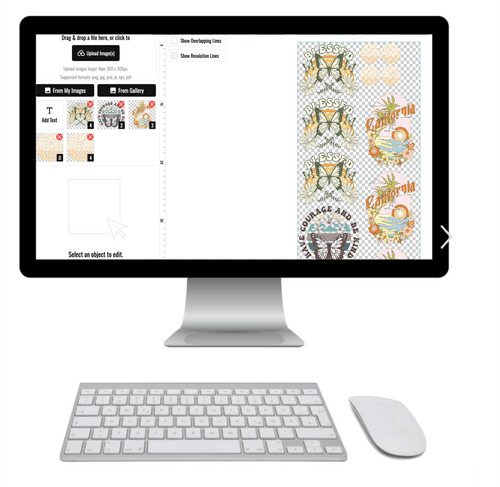
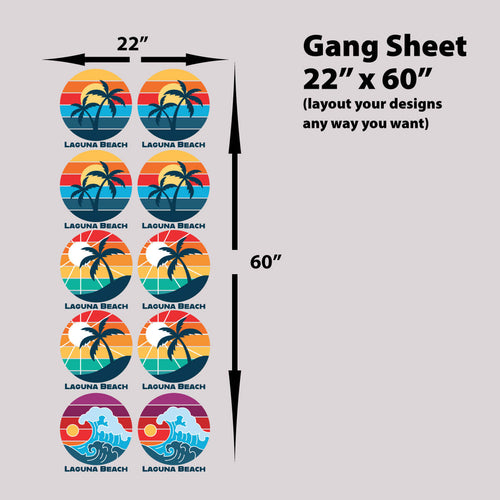
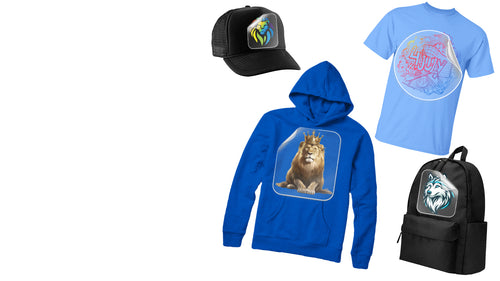
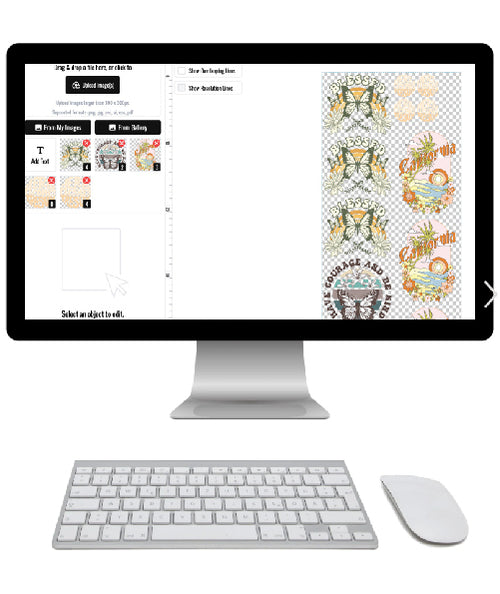
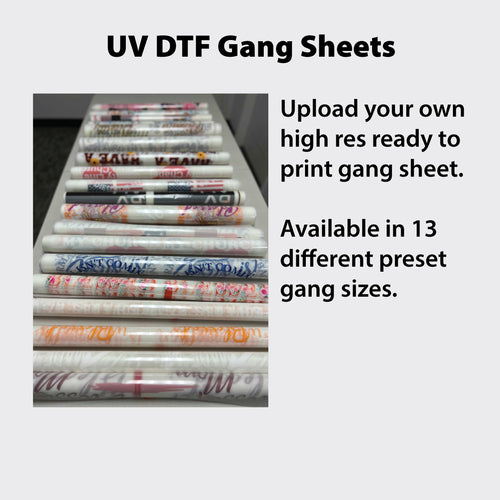
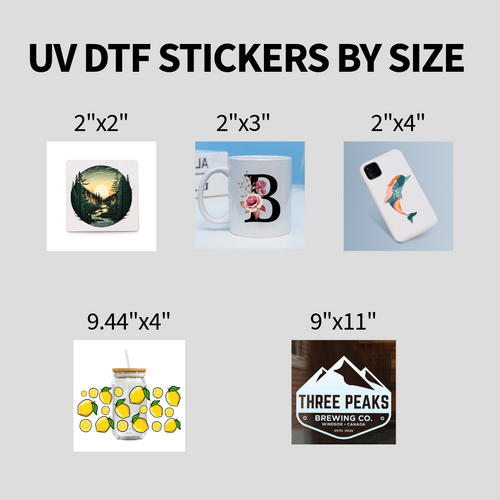
If your jobs lean toward detailed artwork, short runs, quick turnarounds, or mixed-order flexibility, Lion DTF Transfers is a smart next step. Their Auto-build gang sheet builder makes it easy to pack artwork efficiently, reduce wasted space, and keep small or complex orders cost-effective without the setup burden of traditional screens.