


saWhen you need custom shirts, and you need them fast, what's the first thing you do? You probably type "printing t-shirt near me" into a search bar. It makes sense.
But what if the best printer for your job isn't the one down the street? In today's world, "local" has a new meaning. It's less about geography and more about a combination of speed, quality, and cost—often delivered right to your door via next-day shipping from a national specialist.
Rethinking Your Search For T-Shirt Printing Near Me
Finding the right t-shirt printer used to be a simple choice between a few shops in your town. Not anymore. Now, your best partner might be a national supplier who can get high-quality prints to you faster than a local shop can even get you into their production queue.
This isn't just a small shift; it's a massive trend. The global custom t-shirt printing market is on track to explode, projected to hit USD 12.4 billion by 2036. That growth is fueled by people just like you who demand unique, personalized apparel. You can discover more insights about this market's growth and what it means for creators.
This new reality calls for a smarter search. Instead of just focusing on proximity, you need to weigh quality, speed, and overall value.
What To Look For In Any T-Shirt Printer
Whether you go with a shop in your zip code or a national supplier, a solid printer will have a website that gives you everything you need to feel confident. Here's what to keep an eye out for:
- A Real Portfolio: Look past the stock photos. Do they show off crisp, high-resolution pictures of their actual work? You should be able to find examples that look similar to the style and complexity of your own design.
- Clear Pricing: Can you easily figure out what your order will cost? Hidden setup fees, confusing price tiers, and other surprises are major red flags.
- Honest Customer Feedback: Don't just rely on the cherry-picked testimonials on their site. Hunt down reviews on independent platforms. A pattern of genuine, positive feedback is what you're looking for.
Understanding The Core Printing Methods
To make a good call, you've got to know the basics of the three main printing technologies out there. Each has its own strengths, and the right one for you depends entirely on what you're trying to create.
Choosing the right print method is the single most important decision for ensuring your final product matches your vision. A mismatched process can lead to dull colors, poor durability, or unnecessarily high costs.
The big three you'll run into are Direct-to-Film (DTF), Screen Printing, and Direct-to-Garment (DTG).
DTF is the jack-of-all-trades, known for its incredible versatility and vibrant colors that pop on any fabric. Screen printing is the undisputed king of large bulk orders with simpler, bold designs. And DTG is the master of printing photorealistic, complex images directly onto cotton.
Knowing these differences empowers you to ask the right questions. You can find a printer who offers the best solution for your project, not just the only one they have available. Services that offer smart tools like an Auto-build gang sheet builder can also be a game-changer, letting you cram multiple designs into one print job to seriously cut down on costs.
Choosing The Right Print Method For Your Project
Once you start searching for a "t-shirt printer near me," you’ll quickly find out that not all print shops are created equal. The technique they use is a big deal—it directly affects how your shirt looks, feels, and how much it costs. Understanding the big three is key: Direct-to-Film (DTF), Screen Printing, and Direct-to-Garment (DTG).
Think of it this way: you wouldn't use a paint roller for a detailed portrait. Each method has its own sweet spot.
Screen printing, for example, is the undisputed champ for big, bulk orders. If you're organizing a 5K race and need 500 shirts with a simple, one-color logo, screen printing is your most cost-effective bet. The setup is a bit involved, but once it's done, the cost per shirt plummets, making it perfect for large quantities.
But what if you just want a single, one-off shirt with a super-detailed photo of your dog? That's where Direct-to-Garment (DTG) printing comes in. It's basically a high-end inkjet printer for fabric, capable of recreating millions of colors with no minimum order. The only catch? It typically works best on 100% cotton.
The Modern, Versatile Contender: DTF
And that brings us to Direct-to-Film, or DTF. This method is the perfect middle ground, taking the best features from both DTG and screen printing. DTF prints give you the vibrant, unlimited colors of DTG but with the incredible durability and fabric versatility of screen printing.
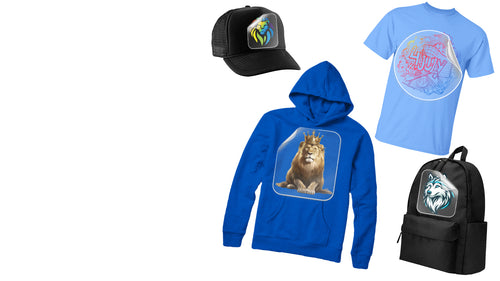
You get that sharp, photorealistic detail, but you can press it onto almost anything—cotton, polyester, blends, you name it. Even better, these prints are built to last. Our premium Lion DTF transfers, for instance, are rated for over 100 washes without cracking or fading. It’s a professional finish, every time.
To really get into the weeds on how these two digital methods stack up, check out our in-depth guide comparing DTF vs DTG printing.
This flowchart breaks it down simply based on your order size.
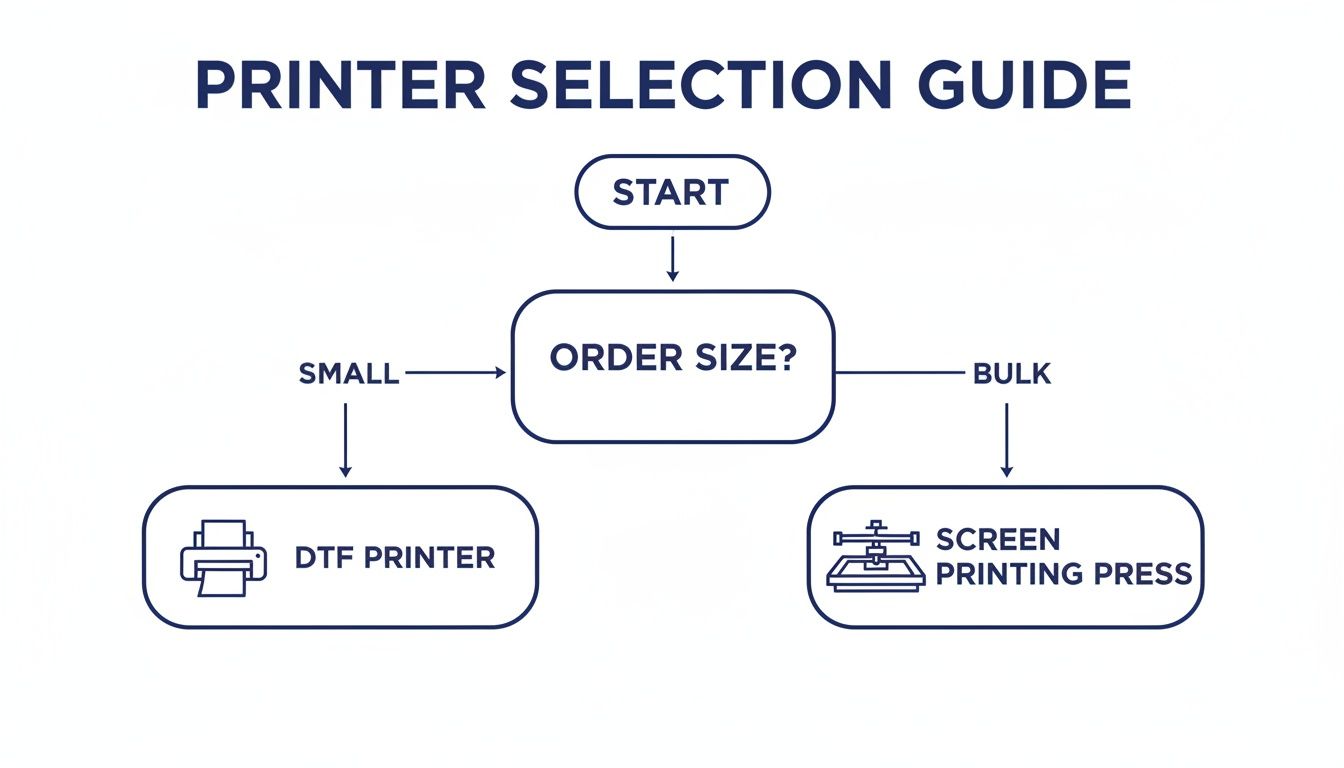
As you can see, DTF is ideal for smaller, more complex jobs, while screen printing remains the king for high-volume, simpler designs.
T-Shirt Printing Method Comparison Guide
To make things even clearer, here’s a quick-reference table that lays out the strengths and weaknesses of each method. It's a handy tool to help you match your project's needs with the right technology.
| Feature | DTF (Direct-to-Film) | Screen Printing | DTG (Direct-to-Garment) |
|---|---|---|---|
| Best For | Small to medium runs, full-color complex designs | Large bulk orders (50+), simple graphics | One-offs, detailed photos, very small orders |
| Color Capability | Unlimited colors, photorealistic detail | Limited colors (one screen per color) | Unlimited colors, great for gradients |
| Fabric Versatility | Excellent (cotton, poly, blends, leather, nylon) | Good (best on cotton, can do blends) | Limited (best on 100% cotton, light colors) |
| Feel of Print | Soft, flexible, slightly raised | Thicker, durable layer of ink on the shirt | Very soft, ink dyes the fabric directly |
| Durability | Excellent (100+ washes) | Very good (can last the life of the shirt) | Good (can fade over time with washing) |
| Minimum Order | None | High (usually 24-50 shirts) | None |
| Cost-Effectiveness | Great for small, colorful orders | Best for large volume, simple designs | Good for single shirts, expensive at scale |
This table should give you a solid starting point for figuring out which method is the right fit for your specific job, whether you're printing one shirt or one thousand.
Why Digital Printing Is Gaining Ground
The custom apparel world is definitely shifting. While screen printing still holds a hefty 56% market share, digital methods like DTF and DTG are closing the gap fast. They’re projected to grow at an impressive 12.5% annually through 2030 for one simple reason: they remove barriers. High minimums and design limitations are becoming a thing of the past.
This shift means more power for you. You no longer need to order 50 shirts just to get a good price on a full-color design. With DTF, you can print one or one hundred with the same level of quality and detail.
For entrepreneurs and new brands, this is a total game-changer. It opens the door to on-demand production, which slashes inventory risk and upfront investment. Even better, you can print multiple designs at once without extra setup costs.
With a tool like Lion DTF’s Auto-build gang sheet builder, you can easily arrange different logos and graphics onto a single sheet. This maximizes every inch of the material, driving down the cost per print and making professional-quality merch more accessible than ever before. For ease of use and maximum cost effectiveness, it's an invaluable asset.
Getting Your Artwork Ready for a Flawless Print
Let's be real for a second: your finished t-shirt will only ever be as good as the design file you send over. One of the most common—and totally avoidable—mistakes we see is people submitting low-quality, poorly formatted files. A great print starts with a great file. It's that simple.
Getting the basics right isn't as technical as it sounds. First, you need to know the difference between the two main image file types: vector and raster.
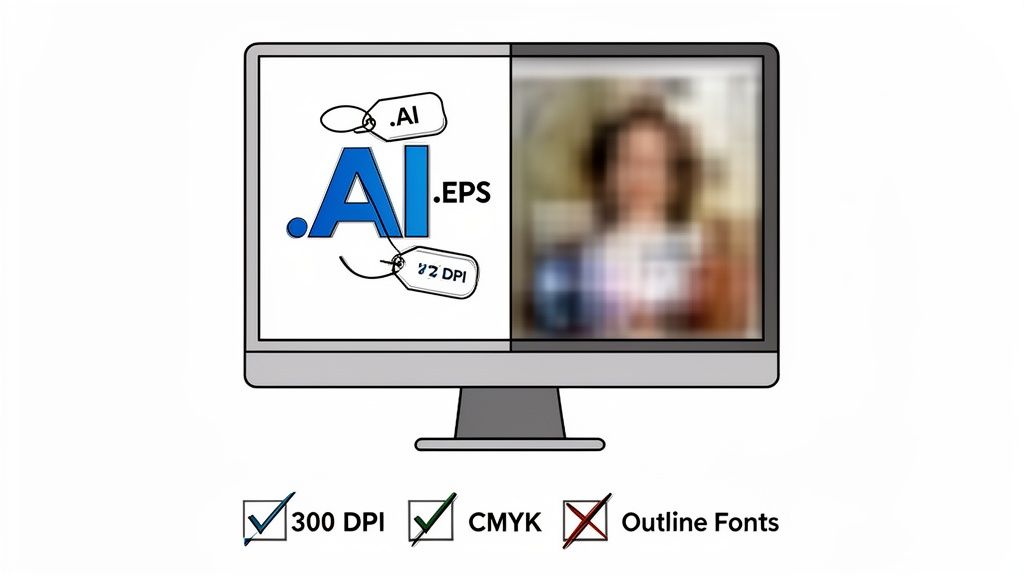
Think of a vector file (.AI, .EPS, .SVG) as a set of mathematical instructions. You could scale it to the size of a billboard, and it would never, ever lose its sharpness. A raster file (.JPG, .PNG), on the other hand, is built from tiny pixels. Try to stretch it too far, and you get a blurry, pixelated mess.
For logos, text, and any kind of bold graphic, vector is always the way to go. It guarantees those crisp, clean lines you want on the final shirt.
The Essential File Prep Checklist
Before you hit 'send' on that email to a printer, run through this quick checklist. Taking five minutes to double-check these details can save you from a whole lot of disappointment later.
- Resolution is King: Your file needs to be at least 300 DPI (dots per inch) at the exact size you want it printed. Anything less will come out looking blurry or pixelated. No exceptions.
- Color Mode Matters: Your computer screen shows colors in RGB (Red, Green, Blue), but professional printers run on CMYK (Cyan, Magenta, Yellow, Black). You have to convert your file to CMYK to make sure the colors on your shirt actually match what you designed on screen. We break this down more in our guide on CMYK vs RGB color modes.
- Outline Your Fonts: This is a simple but critical trick of the trade. Outlining text in your design software turns it from an editable font into a fixed shape. This guarantees it prints exactly as you see it, even if the print shop doesn’t have that specific font installed on their system.
- Transparent Background is a Must: Unless you actually want a big white or black box printed behind your design, save your file with a transparent background. A .PNG or any vector format will do the trick.
Getting your artwork print-ready can feel overwhelming if you're not a designer. A small mistake in file preparation can ruin an entire batch of shirts, wasting both time and money.
That’s precisely why we have options for everyone. If you’re not design-savvy, our "We Build a Gang Sheet for You" service is a lifesaver. Our experts will take your images, make sure they are 100% print-ready, and lay them out perfectly for you.
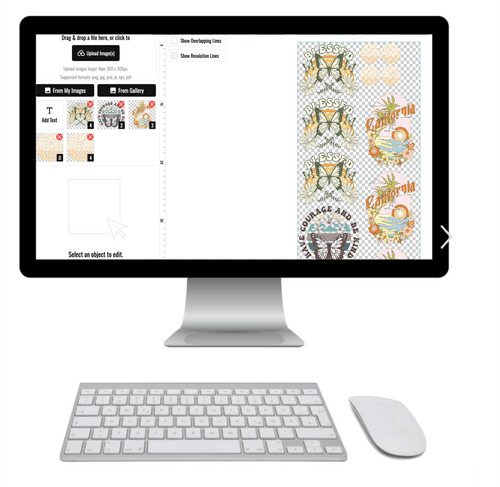
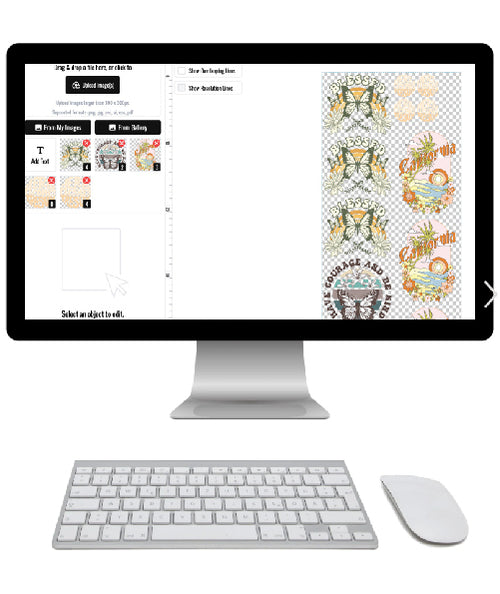
For the creators who have their files ready and want full control, our Auto-build gang sheet builder is the perfect tool. It provides an intuitive, easy-to-use platform to upload and arrange your designs, helping you maximize every inch of your print space. It's not just efficient—it's incredibly cost-effective.
Key Questions To Ask Before You Place Your Order
Choosing a local t-shirt printer is about more than just finding the lowest price. You're looking for a partner, and asking the right questions upfront is the best way to separate the real pros from the ones that will give you headaches later.
A good printer should be totally transparent and happy to give you the details you need to feel confident before spending a dime.
Production and Pricing: Get the Full Story
Before you even think about sending over your art files, you need to get crystal clear answers on their process and costs. Any hesitation or vague responses here should be considered a major red flag.
Here's what you need to lock down:
- What’s your minimum order quantity (MOQ)? This is a big one, especially for screen printing. A professional shop will give you a straight number. Be wary of anyone who tries to push you into ordering more than you actually need.
- Are there any setup fees? Screen printing, for example, often has fees for creating the screens. A good shop will tell you about this immediately. If they can’t give you a clear breakdown of the total cost, it's a bad sign.
- What’s your standard turnaround time? You need a specific number of business days. An answer like "pretty fast" just doesn't cut it when you're on a deadline. At Lion DTF, we've set the bar high with same-day pickup and shipping in just 1-2 business days.
- Can I see a digital proof before you print? This is non-negotiable. A digital mockup is your only chance to catch typos or color issues. Any printer that skips this step is gambling with your money and your project. Always, always insist on approving a proof.
- What happens if there's a mistake? Let's be real, mistakes happen. A reputable printer will have a clear, straightforward policy for fixing their errors on their own dime. If they stumble on this question, you should walk away.
A printer's willingness to answer these questions directly tells you everything you need to know about their professionalism. Transparency isn't just a nice-to-have; it's the foundation of a good partnership.
Getting these answers lets you compare different printers on an even playing field. For example, a slightly higher cost per shirt might actually be a better deal if it means no setup fees and a guaranteed faster turnaround.
Ultimately, you want a partner who makes the whole process feel easy and predictable. If you've got a complex job with a bunch of different designs, you should also ask how they handle pricing for that. Modern, easy-to-use tools like our Auto-build gang sheet builder are designed to make this simple and cost-effective, letting you pack multiple designs into a single order without confusing pricing.
Unlock Savings And Efficiency With Gang Sheets
If you're looking for a way to get the absolute most value out of your t-shirt printing project, it's time to get familiar with gang sheets. This is one of the smartest, most powerful ways to slash costs and streamline your workflow, especially when you're working with multiple designs.
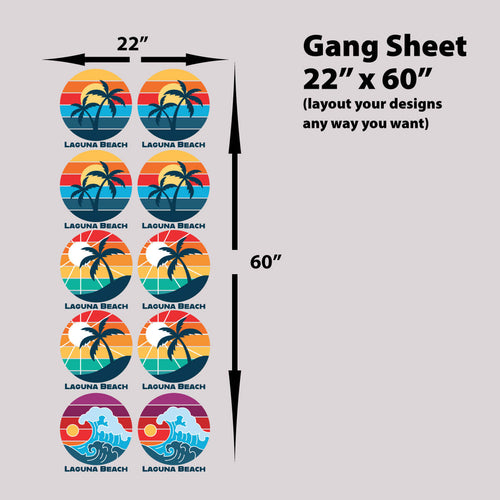
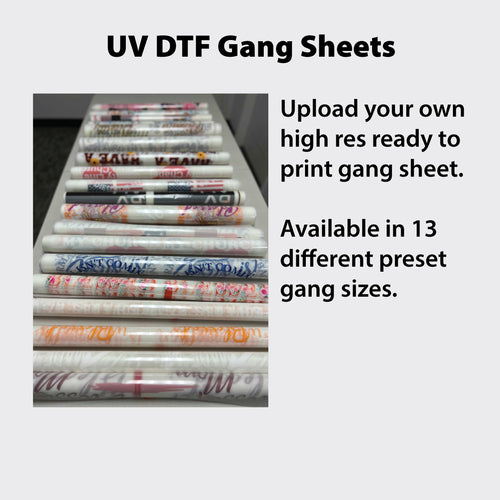
So, what is a gang sheet? It's just a large transfer film where you arrange—or "gang up"—several different designs together. Instead of paying to print each graphic individually, which eats up material and inflates your costs, you use every square inch of the film.
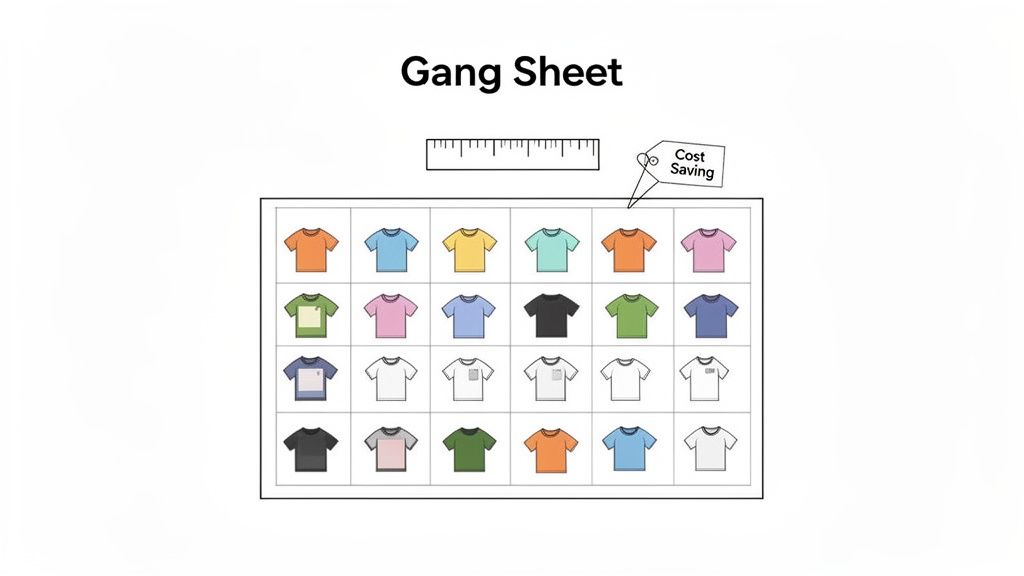
Think about it. You might need a few large logos for t-shirt backs, some smaller graphics for hats, and a handful of pocket-sized designs for tote bags. Normally, that would be three separate orders. With a gang sheet, you can fit all of them onto a single film and pay one flat price for the sheet, not a fee for every single design. The savings add up fast.
The Power of a Smart Layout
The real magic here is in the efficiency. By arranging your artwork smartly, you eliminate all that expensive empty space, which directly lowers your cost per print. It’s a total game-changer for anyone trying to produce professional merchandise without a massive budget.
This strategy is perfect for:
- Brands with multiple products: Combine your main shirt logos, sleeve graphics, and even small tag prints all onto one sheet.
- Event organizers: Need designs for adult shirts, kid sizes, and volunteer apparel? Print them all at once.
- E-commerce sellers: This is the best way to test out several new designs in a small batch without committing to a huge, costly run for each one.
When you group your designs, you’re not just saving money. You're also making your production process so much simpler. Everything you need for a diverse product line can arrive in a single, easy-to-manage package. If you want to dive deeper into the possibilities, check out our detailed guide on what DTF gang sheets are and how to use them.
Making Gang Sheets Effortless
In the past, building an optimized gang sheet took design software and a good bit of patience. You had to manually drag and drop each image, making sure to leave just enough space for cutting while packing everything in as tightly as possible. Honestly, it could be a real headache.
The goal today is to make professional printing accessible to everyone, not just folks with graphic design degrees. Technology has made the whole process incredibly simple.
This is where Lion DTF’s Auto-build Gang Sheet Builder changes the game. Our tool completely removes the guesswork. You just upload all your designs, and the software automatically arranges them into the most efficient, space-saving layout possible. It’s built for ease of use and maximum savings, making it the most cost-effective way to produce multiple designs.
In just a few minutes, you can have a perfectly optimized sheet ready to go, driving your costs down to as little as $0.017 per square inch. For any creator or business owner searching for "printing t-shirt near me," this kind of efficiency transforms what's possible. It puts high-volume pricing within reach, even for small, varied orders.
Why A National DTF Supplier May Be Your Best Local Choice
When you're searching for "t-shirt printing near me," your mind probably jumps to the print shop down the street. But what if the best local option isn't actually local at all? It’s a bit of a paradox, but a specialized national supplier often completely redefines what "near me" means by delivering a mix of quality, speed, and convenience that many neighborhood printers just can't keep up with.
It really boils down to specialization. National Direct-to-Film (DTF) suppliers live and breathe this stuff, which means they invest heavily in top-of-the-line printing technology. This kind of equipment is built for one job: producing incredible color accuracy, razor-sharp details, and a level of consistency that’s tough for a smaller, all-purpose shop to replicate. The end game? You get a professional-grade product, every single time.
Speed That Redefines "Local"
One of the biggest myths out there is that a nearby printer is automatically faster. Sure, you can drive over to pick up your order, but what good is that if you’re stuck in their production queue for a week or more? Many local shops are juggling different types of jobs and can get bogged down with long backlogs, especially when things get busy.
A dedicated national supplier like Lion DTF, on the other hand, is engineered for speed. Our entire workflow is built around a 24-hour production cycle. Combine that with next-day air shipping, and your order can be printed and in your hands faster than the local shop can even get it on the press. This kind of logistical efficiency makes a national specialist your fastest and most reliable "local" choice, functionally speaking.
The modern definition of 'local' is less about physical proximity and more about access and speed. A national supplier that delivers to your door in 24 hours is functionally closer than a shop across town with a two-week waitlist.
Unlocking Unbeatable Cost and Ease of Use
Beyond just the quality and speed, national suppliers often bring better value and accessibility to the table. Because we operate at a much larger scale, we can offer more competitive pricing. But more importantly, we provide powerful online tools that make the entire process ridiculously simple from start to finish.
This is where something like our Auto-build gang sheet builder becomes a massive advantage. It makes creating complex orders with tons of different designs incredibly simple and way more cost-effective. Here’s how it helps you out:
- So Easy to Use: You don't need to be a graphic designer. Just upload your artwork, and the tool automatically arranges everything perfectly to minimize waste. Its ease of use is a core feature.
- Seriously Cost-Effective: By packing multiple designs onto a single sheet, you slash your cost per print. This makes even small, varied orders totally affordable, highlighting its cost effectiveness.
- You're in Control: You see exactly how your sheet will look before you finalize anything, giving you total confidence in what you're getting.
At the end of the day, partnering with a national DTF specialist gives you access to a level of technology, speed, and efficiency that can transform your creative ideas and your business. It’s the modern, smarter answer to finding the best t-shirt printing solution right where you are.
Answering Your Top Questions About T-Shirt Printing
When you’re trying to find the right “t-shirt printer near me,” a few questions always seem to pop up. Let's cut through the noise and get you some straight answers based on what we see every day from creators and brands just like yours.
What's The Best Way To Print Full-Color Photos On Shirts?
If you want to print a photograph with all its rich detail and smooth gradients, you’re really looking at two main options: Direct-to-Garment (DTG) and Direct-to-Film (DTF).
Both can handle photorealism well, but DTF transfers often pull ahead. They produce incredibly bright, punchy colors that look just as good on polyester and blends as they do on cotton. That flexibility is huge and gives you way more choices for your apparel projects.
How Can I Get A Good Price On A Small Batch Of Custom Tees?
This is a big one. Saving money on smaller runs, especially if you have a few different designs, is all about being efficient. The single most effective way to do this is with a DTF gang sheet.
Instead of paying a setup fee or a per-print price for each individual design, you simply arrange all of your graphics—whether for shirts, hats, or hoodies—onto one large transfer sheet.
Think of it like this: you're paying for the real estate on the sheet, not for how many designs you fit into it. This approach dramatically drops your cost per print because you're using every square inch of material. It’s the smartest hack for getting professional quality without the small-run penalty.
Tools like our Auto-build gang sheet builder are designed for exactly this. Its ease of use is unmatched; you can drag and drop all your artwork onto one sheet in seconds, making sure you get the absolute most for your money. This simplicity makes it the most cost-effective way to get professional prints, no matter your budget.
Is A Local Printer Actually Faster Than An Online Service?
You'd think so, right? But surprisingly, "local" doesn't always mean "faster."
While picking up your order from a shop down the street sounds convenient, many local printers are juggling a long list of jobs. It’s not uncommon for their production queue to be a week out or even longer.
On the flip side, a specialized national supplier is often built for pure speed. With a production process that runs around the clock and options for next-day air shipping, a national service can often get your finished prints delivered to your door faster than a local shop with a big backlog.
Ready to get professional, vibrant prints without the wait? Lion DTF makes it simple. Use our online tools to build your perfect transfers, and we'll have them shipped out in just 1-2 business days.