


You've got artwork ready. Maybe it's a logo for a small business launch, a shirt graphic for an online drop, a fundraiser design for a school event, or a quick-turn order for a local team. What usually slows people down isn't the idea. It's the path from file to finished garment.
Most first-time buyers hit the same wall. Screen printing feels built for larger runs. Vinyl feels too manual. Buying blank apparel is easy, but getting a clean, professional print onto it without wasting time or money is where the confusion starts.
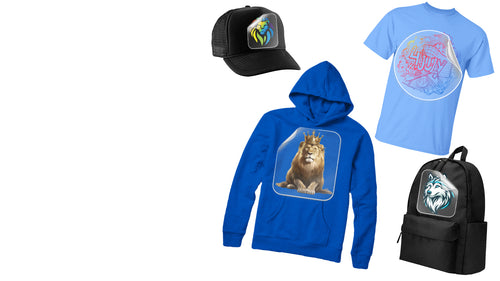
That's where print and press services fit. They turn a digital design into a transfer you can apply to apparel with a heat press, without forcing you into old production models that don't match how modern brands, makers, and print shops work.
Your Idea to Custom Apparel Made Simple
A lot of customers come in with the same problem stated three different ways. “I only need a few.” “I need several designs.” “I need these fast.”
That could be a coffee shop owner ordering staff shirts and tote bags, a coach trying to get parent merch together before the weekend tournament, or a seller testing two new tee concepts before committing to a larger launch. They don't need a lecture on print theory. They need a path that's simple, repeatable, and doesn't punish them for ordering short runs.
Print and press services solve that by splitting the job into two clean stages. First, the artwork gets professionally printed onto a transfer. Then the transfer gets pressed onto the garment. That sounds basic, but it changes everything for smaller apparel projects because it removes a lot of setup friction.
If you're still shaping the product side of the idea, this guide to creating a custom T-shirt is a practical place to start. It helps you think through artwork, garment choice, and what kind of final product you're trying to sell or distribute.
Why this model works for modern apparel
Older print workflows were built around scale first. Today, many buyers need flexibility first.
Practical rule: If your order has mixed garment types, several graphics, or uncertain quantities, a transfer-based workflow is usually easier to manage than a setup-heavy print method.
That's why DTF has become such a useful option inside modern print and press services. It gives creators and businesses a way to move from design to finished apparel without committing to large minimums or slow manual production.
What Exactly Are Print and Press Services
Print and press services are a two-part apparel production workflow.
A provider prints your design onto a transfer medium. After that, the transfer is applied to the final garment with a heat press. Sometimes the same shop handles both stages. Sometimes the provider supplies ready-to-press transfers and you do the application in-house.
For a new buyer, that distinction matters. You're not shopping for “a shirt printer” in the old sense. You're choosing a process that fits your order size, timeline, garment mix, and production setup.
The workflow in plain terms
Here's what usually happens:
- You supply artwork. That might be one logo, several chest prints, sleeve graphics, neck labels, or a full gang sheet layout.
- The provider prints transfers using a commercial workflow designed for consistency.
- You press the transfer onto the blank apparel with heat, pressure, and the correct dwell time.
- You finish and package the garment for sale, distribution, or internal use.
That sits between two older models many people already know.
- Screen printing works well when a job is stable, quantities are high, and the design set is locked.
- Cut vinyl works for certain simple graphics, but weeding and layering become a bottleneck fast.
- Print and press services are useful when you need detailed artwork, multiple versions, or short-run flexibility without a long setup process.
Why this model makes sense historically
Printing has always moved toward greater output and easier replication. The modern movable-type printing press is generally dated to around 1440, and a single European press around 1600 could produce roughly 1,500 to 3,600 impressions per workday, while output by the early 1600s had risen to an estimated 150 to 200 million copies according to the printing press history summary on Wikipedia.
That history matters because it shows the same basic pattern buyers still care about now. The winning workflow is the one that makes quality reproducible.
Commercial printing is still a large business category in the United States. IBISWorld projects the industry at $81.5 billion in 2026 with 50,404 businesses, even as legacy demand declines, according to its U.S. printing industry outlook. Print didn't disappear. It specialized.
What buyers should take from that
The useful question isn't “What method exists?” It's “Which production model fits the job in front of me?”
A good print workflow reduces manual touchpoints, protects consistency, and gives you room to change quantities without rebuilding the entire order.
That's why transfer-based apparel production has become such a practical part of modern print and press services.
The Modern Workflow with DTF Transfers
DTF transfers turn full-color digital artwork into a ready-to-press film transfer that can be applied to apparel and other compatible surfaces with a heat press. For most custom apparel buyers, the appeal is simple. You can run detailed graphics, multiple colors, and mixed orders without the labor of cutting and weeding vinyl or the setup burden tied to more traditional methods.

What happens behind the scenes
A DTF workflow starts with file prep. Clean edges, transparent backgrounds where needed, correct sizing, and consistent color handling matter before anything reaches the printer. The design is printed onto film, adhesive powder is applied and cured, and the finished transfer is shipped or staged for pressing.
That sounds straightforward because it should be. What makes DTF reliable isn't just the printer. It's the discipline around the workflow.
Commercial production-print operations succeed on throughput, consistency, and repeatability, and practical scalability comes from end-to-end process control such as file prep, color management, and queue optimization rather than raw device speed alone, as explained by Total Pro Source's production print overview.
Why DTF fits apparel so well
For garment decorators, DTF is useful because it handles complexity without forcing complexity into the ordering process.
- Mixed fabrics. Buyers often use one graphic across cotton, polyester, and blends.
- Detailed artwork. Small text, gradients, and illustrated designs are easier to manage than with cut-film methods.
- Short and varied runs. You can press one shirt, ten hoodies, and a few tote bags from the same transfer order if the layout is planned correctly.
Variable jobs are where transfer workflows really earn their keep. Variable Data Printing in traditional print uses software-driven mapping so pieces can change within one run without stopping production, and the bottleneck becomes data integrity and setup rather than the press itself, as described in this Variable Data Printing guide. Apparel decorators run into a similar reality. The challenge usually isn't “Can it print?” It's “Did we organize the files, sizes, versions, and placements correctly?”
If a transfer order goes wrong, the problem often starts before printing. Bad file prep, inconsistent sizing, and unclear naming create more waste than the press ever will.
What a good provider should deliver
A solid DTF workflow gives you transfers that arrive press-ready, with predictable peel behavior, accurate detail, and consistent color from one order to the next. That consistency matters whether you're running a merch drop, filling local team orders, or supporting your own print shop during overflow periods.
At this stage, print and press services stop being a generic category and start becoming an operational advantage.
How to Order Transfers and Maximize Your Budget
A client sends over six logos, two full-front graphics, youth and adult sizes, and asks for a rush turnaround by Friday. Jobs like that go sideways when the order is built one graphic at a time. They run smoothly when the whole sheet is planned before anything is uploaded.
Ordering transfers well starts with sheet strategy. Cost usually rises because of wasted space, oversized art, duplicate placements, or files that need cleanup before production. Buyers who treat print and press services as a full workflow, from artwork to pressing, get better margins and fewer surprises.

Start with the gang sheet, not the single logo
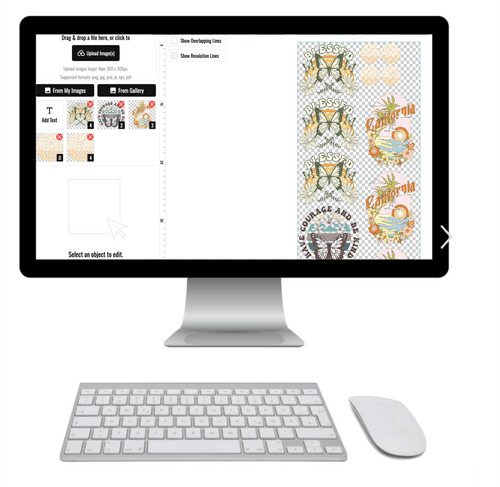
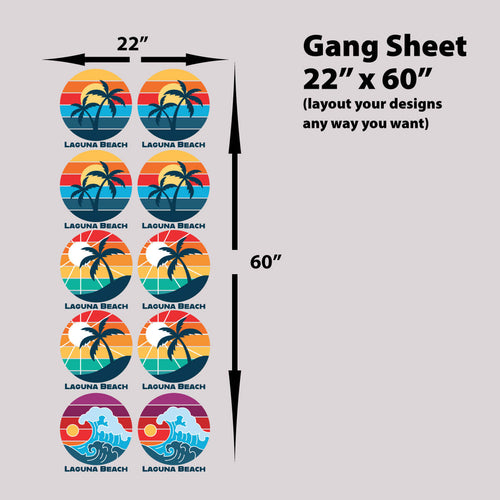
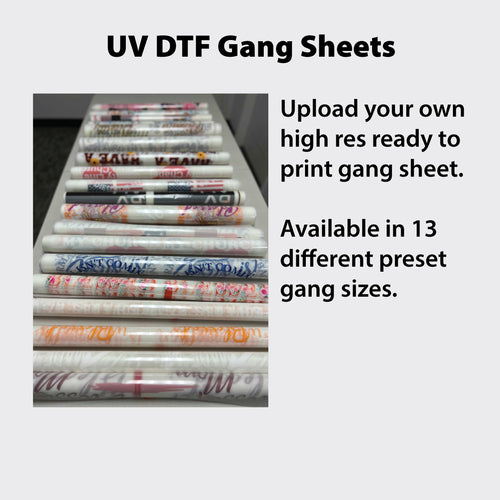
A gang sheet lets you combine multiple designs, placements, and sizes onto one sheet so every inch is working for you. That matters if you are building left chest prints, full backs, sleeve hits, and neck labels for the same order. Ordered separately, those pieces often cost more and create more chances for sizing mistakes.
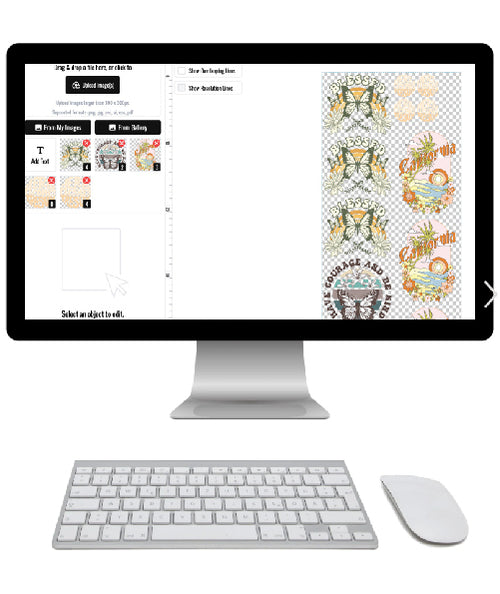
The better approach is to build the entire job around the sheet. Lion DTF Transfers offers an Auto-build gang sheet builder that arranges uploaded art efficiently, which saves time and helps reduce dead space. For new buyers, that tool solves a common problem. They know what they need printed, but they do not always know how to group it for the best value.
If you are still comparing suppliers, this guide on where to order DTF transfers for quality, speed, and consistency gives a practical checklist.
What to prepare before you upload
Good orders are usually decided before production starts. Clean files, clear naming, and correct sizing prevent a lot of waste.
Check these before you upload:
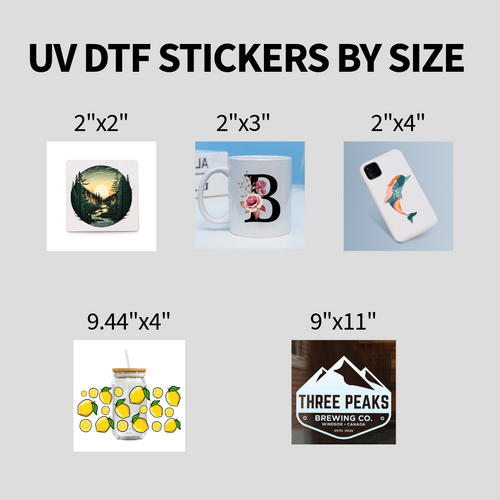
- Set the print size in the artwork file. A youth logo, adult full front, and tote graphic should not be left open to interpretation.
- Use a transparent background when the design calls for it. Hidden background areas can print when they should not.
- Upload sharp source art. Low-quality files produce soft edges, broken detail, and hard-to-read small text.
- Name files by placement and size. “Left-chest 3.5in black shirt” is much easier to process than “final-new-2.png.”
Buyers save real money. A clean file goes to print. A messy file slows approval, creates avoidable questions, and can turn a rush order into a remake.
Rush orders need a controlled process
Fast turnaround only helps if the order is accurate. In real production, rushed jobs fail for predictable reasons: unclear approval responsibility, missed cutoffs, and bad assumptions about sizing or layout.
Institutional print teams handle rush work as a quality control problem as much as a scheduling problem. Color review and press checks still matter under deadline pressure, according to UT Southwestern's printing guidance. The same logic applies to DTF transfers.
Before placing a rush order, confirm:
- Who approves final sizing and placement
- What the production cutoff is for same-day or next-day processing
- How reprints are handled if the problem comes from the file versus production
A short product walkthrough helps if you're new to building transfer orders:
Budget moves that actually work
The buyers who keep apparel profitable usually follow a few repeatable habits.
| Order habit | Why it helps |
|---|---|
| Batch placements together | Fronts, backs, sleeves, and labels can often fit on one well-built gang sheet |
| Standardize recurring sizes | Reorders move faster when placements stay consistent across jobs |
| Test new graphics separately | Sample uncertain designs first, then scale proven sellers with less waste |
One more trade-off matters here. Packing a sheet tightly lowers cost, but cramming unrelated graphics into one order can create sorting mistakes at the press. The best builds are efficient and easy to identify later.
Optimize the whole job, not just the price of one logo. That is how print and press services become a smarter buying system instead of a series of small decisions.
Pressing Your DTF Transfers for Perfect Results
A great transfer can still fail on the press. Most pressing problems come from one of four issues: uneven pressure, wrong temperature, poor garment prep, or peeling at the wrong time.
The good news is that DTF isn't difficult once your process is stable. It rewards consistency.

The pressing routine that prevents most mistakes
Before you apply the transfer, pre-press the garment briefly to remove moisture and flatten the print area. That single step fixes more adhesion issues than people expect.
Then position the transfer carefully. A crooked full front or uneven left chest placement makes even a perfect print look amateur.
Use this simple checklist:
- Pre-press first. Moisture and wrinkles interfere with a clean bond.
- Check platen contact. Pressure has to be even across the full design area.
- Use the supplier's instructions. Peel behavior and dwell time can vary by transfer construction.
- Repress when recommended. A finishing press with a cover sheet often improves hand feel and edge security.
Material matters
Cotton, polyester, and blends don't always respond the same way under heat. Polyester especially deserves caution because heat sensitivity can show up quickly as scorch risk, dye migration, or surface shine if you push settings too hard.
That doesn't mean DTF is difficult on performance garments. It means you should test unfamiliar blanks before a full run and keep records once you find a combination that works.
A press setting that works on one hoodie brand may not be ideal on another. Treat new blanks like new production conditions, not like guaranteed repeats.
For a more detailed walkthrough, this guide on how to press DTF transfers is a useful reference during setup.
Common problems and the likely cause
| Problem | Usual cause |
|---|---|
| Edges lifting | Pressure too light, insufficient time, or garment moisture |
| Shiny box around design | Too much heat exposure or direct platen contact without protection |
| Patchy adhesion | Uneven pressure or seams/zippers disrupting the press surface |
| Scorching or fabric shine | Temperature too aggressive for the garment |
One more practical note. Hot-peel transfers can speed up production because you don't need a long cooldown cycle before removal. In a busy shop, that can make the press station flow better, especially on multi-piece orders.
Who Uses Print and Press Services
Print and press services attract a wide mix of buyers because the workflow adapts well to real-world order patterns. The common thread isn't industry. It's variability.

Small brands and online sellers
A new apparel brand might launch with several graphics but limited certainty about which one will sell. Transfers let that owner test designs across tees, hoodies, and tote bags without committing to one large production style upfront.
That flexibility matters even more when the store is releasing small drops or seasonal artwork. They can reorder proven designs and retire weak ones without rebuilding the entire process each time.
Teams, schools, and local organizations
A coach or booster club often needs more than matching player shirts. They may need fan gear, coach polos, warmup hoodies, and parent merch with different placements and sizes. Transfer-based production handles those mixed needs cleanly.
The same thing happens with schools and nonprofits. One event can require staff shirts, volunteer apparel, tote bags, and a rush reorder two days later.
Makers, agencies, and print shops
A crafter selling at weekend markets might need only a handful of highly specific pieces, each with a polished finish. A marketing agency may need branded apparel for a client event where deadlines are tight and the garment mix is broad.
Then there are print shops. Many use transfer workflows to support overflow, short runs, artwork that doesn't fit their usual setup, or customer jobs with many SKUs and small quantities.
The more mixed the order, the more useful a disciplined transfer workflow becomes.
That's why print and press services aren't limited to beginners. Experienced decorators use them too, especially when speed, variety, and manageable setup matter more than one fixed production model.
Frequently Asked Questions About DTF Transfers
What's the real difference between DTF, screen printing, and vinyl
The buyer's decision usually comes down to volume, turnaround, and artwork type.
DTF works well for short runs, detailed multicolor graphics, and mixed garment orders. Screen printing becomes more attractive when the job is stable and high volume. Vinyl still has a place for certain simple applications, but it gets labor-heavy when designs become intricate or quantities increase.
Buyers often need a practical rule for when a job should move from short-run digital or specialty production into a higher-volume process, and that decision is usually about product type, quantity stability, and deadline pressure rather than definitions alone, as noted in this offset printing decision guide.
Can I use a home iron instead of a heat press
You can try, but it's not a dependable production method.
A heat press gives you even pressure, controlled temperature, and repeatable results. A home iron usually can't maintain the same consistency across the full print area. That leads to partial adhesion, weak edges, and shorter wear life. If you're making anything for sale, events, teams, or repeat use, use a real press.
How should I wash garments with DTF transfers
Turn the garment inside out before washing. Use normal laundry care that avoids unnecessary heat stress, especially on decorated areas. Let the print cool after pressing before wear or wash, and avoid aggressive treatment that puts friction directly on the design.
What file mistakes cause the most problems
Three issues show up constantly:
- Wrong dimensions. The print may be technically sharp but physically too large or too small.
- Messy backgrounds. Hidden pixels or nontransparent areas can print when you didn't expect them to.
- Poor organization. Mixed-up front and back files slow approval and create preventable errors.
Are DTF transfers only for T-shirts
No. They're commonly used across other apparel and soft goods too, as long as the material and application setup are compatible. That's one reason they're so useful for brands and decorators handling varied product lines.
If you want a smoother path from artwork to finished apparel, Lion DTF Transfers offers ready-to-press DTF transfers, gang sheets, and an Auto-build gang sheet builder that helps organize multi-design orders efficiently. For shops, brands, teams, and makers, that kind of workflow keeps ordering simpler and pressing more predictable.