



You've got artwork ready, blank shirts picked out, and people waiting to buy. Then the questions show up. Will the colors print the way they look on screen? Will the transfer feel cheap? Will the design crack, peel, or sit crooked once it's on the garment?
That gap between a design idea and a shirt you can sell is where most personalized shirt printing goes wrong. Hobby guides usually stop at “print the transfer and press it on.” Real production doesn't. You need a repeatable workflow, file discipline, placement standards, and a cost structure that still works when orders get mixed, rushed, or spread across several garment types.
Custom apparel is also a serious business category, not a side niche. The global custom T-shirt printing market was valued at USD 5.16 billion in 2024 and is expected to reach USD 9.82 billion by 2030, with an 11.5% CAGR from 2025 to 2030, according to Grand View Research's custom T-shirt printing market analysis. If you run a shop, sell merch, or fulfill apparel for schools and events, that matters. Buyers expect fast-turn customization now, not eventually.
From Idea to Inventory A Modern Workflow
The cleanest production shops don't treat shirt printing like isolated tasks. They treat it like a chain. Art prep affects transfer quality. Transfer quality affects press consistency. Press consistency affects returns, reprints, and customer trust.
A modern personalized shirt printing workflow usually looks like this:
- Start with the garment use case. Is it merch, uniforms, team wear, event apparel, or sample runs for a brand drop?
- Choose the print method before quoting. Fabric type and order profile should drive that decision.
- Prepare the file correctly. Sharp art saves more jobs than any last-minute press adjustment.
- Batch intelligently. Gang sheets reduce waste and simplify mixed orders.
- Press with discipline. Good transfers still fail with bad pressure or sloppy placement.
- QC every order. Not every defect is obvious until you slow down and inspect.
That order matters. Shops lose money when they do it backward. If someone accepts artwork first, prices second, and thinks about garment compatibility last, the job gets more expensive with every revision.
What separates a brand workflow from a hobby workflow
A hobbyist asks, “Can I make this shirt?”
A business owner asks, “Can I make this shirt the same way every time, at a cost that still works, without turning every order into a custom experiment?”
That's the mindset shift. Personalized shirt printing becomes scalable once each stage has rules. Your file standards should be fixed. Your placement standards should be fixed. Your reprint threshold should be fixed.
Practical rule: If a process depends on memory instead of a checklist, it will fail under volume.
The shops that stay profitable aren't always the ones with the most equipment. They're the ones with the fewest avoidable mistakes.
Choose Your Printing Method DTF vs The Field
The first technical decision is rarely about the artwork. It's about the garment. If you pick the wrong process for the fabric or run size, you create problems before the press heats up.
According to Design Brand Print's guide to T-shirt printing methods, DTF offers broad fabric-agnostic versatility, DTG excels on cotton, and dye sublimation is strictly for polyester. The same guide notes that mismatching the method to the material is a primary cause of print failure. That lines up with what experienced shops already know. The method has to fit the job, not the other way around.

Where DTF fits best
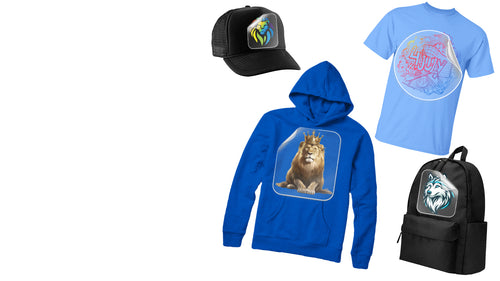
DTF sits in a useful middle ground for modern apparel work. It handles full-color graphics, small runs, left chest logos, sleeve prints, back prints, and mixed garment types without forcing you into the setup burden of screen printing or the cotton preference of DTG.
For many shops, that means fewer compromises when an order includes:
- Mixed fabrics: Cotton tees, blends, hoodies, and other common apparel in one batch
- Multiple placements: Front, back, sleeve, tag-area branding, or pocket-area art
- Short and mid-sized runs: Jobs too varied for screen setup to feel efficient
- Detailed artwork: Gradients, small elements, and multicolor designs that would be clumsy to separate manually
DTF isn't magic, though. Bad film, weak adhesive coverage, poor pressing, or sloppy file prep will still show up in the final shirt.
DTF vs DTG vs screen printing
Here's the practical comparison most buyers need:
| Method | Best fit | Weak point | Operational note |
|---|---|---|---|
| DTF | Mixed fabrics, varied placements, full-color jobs | Press technique matters a lot | Flexible for modern custom orders |
| DTG | Detailed prints on cotton or cotton-rich garments | Less versatile across fabric types | Strong option when the garment is right |
| Screen printing | Bulk runs and simpler artwork | Setup burden makes small jobs less efficient | Works best when volume is stable |
| Dye sublimation | Polyester garments | Doesn't belong on cotton | Best reserved for synthetic apparel |
If you want a deeper side-by-side breakdown, this DTF vs DTG printing comparison is worth reviewing before you lock in a workflow.
DTF works well when your order mix changes daily. Screen printing works well when your order stays predictable.
What doesn't work
A few bad habits create expensive outcomes:
- Using sublimation on cotton: The print won't give you the durable result buyers expect.
- Choosing DTG for every job by default: It can be the wrong fit when garments vary.
- Forcing screen printing onto small mixed orders: Setup time eats the economics fast.
- Waiting until production to think about method: The right decision should happen at quote time.
If you run a shop with custom orders coming from different directions, DTF often becomes the practical default because it handles variety without making every garment a separate production problem.
Master Your Design and File Preparation
Most print problems start on the screen, not on the press. If the art file is weak, the transfer only makes that weakness more visible. DTF is forgiving in some ways, but it won't rescue blurry edges, rough transparency, or badly built artwork.

Build files like they're going straight to production
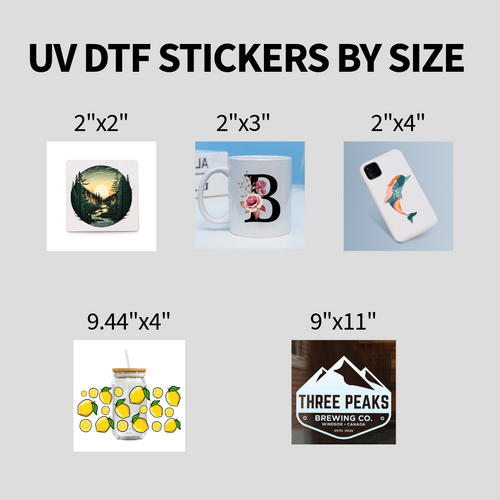
A print-ready file should be prepared at final size, not “close enough” size. If a front print will be worn at a specific width, build it at that width from the start. Resizing after upload is where soft edges and proportion issues creep in.
Here's the checklist I'd treat as essential:
- Use high-resolution artwork: Low-resolution files print like low-resolution files. There's no secret fix once the art is already damaged.
- Keep the background transparent: Fake transparency, white boxes, or rough cutouts show up fast on press.
- Clean the edge detail: Soft glow effects and feathered shadows often create ugly halos.
- Watch thin lines and tiny details: If the design includes hairline elements, test whether they'll hold up through transfer and wear.
- Size each design intentionally: A youth shirt, a left chest logo, and a full back graphic should never share one default export.
The problem isn't just appearance. Weak files slow production because they trigger revisions, proof questions, and rejections.
Common art mistakes that cost shops money
The fastest way to spot amateur prep is to zoom in. Jagged edges, accidental background debris, and uneven transparency usually become obvious at high magnification. If you can see the issue on your monitor, it won't disappear on the shirt.
A few repeat offenders show up all the time:
- Raster logos pulled from websites
- Social media screenshots used as source art
- Compressed files with muddy gradients
- Designs exported with stray pixels around the perimeter
- Artwork built without considering the garment color underneath
If your art only looks correct at thumbnail size, it isn't ready for production.
This is also where many shops undersell the importance of proofing. A quick visual approval isn't enough. Check alignment, edge cleanliness, scale, and legibility at actual print size.
For a visual walkthrough of what sharper art and better prep look like in practice, this video helps:
File prep habits that scale
When you're pressing a few shirts, messy file naming is annoying. When you're fulfilling many designs across multiple sizes and placements, it becomes a production risk.
Use a simple internal standard:
| File element | Good practice |
|---|---|
| Naming | Include customer, placement, and size reference |
| Versions | Keep approved art separate from draft files |
| Placement variants | Export front, back, sleeve, and tag art individually |
| Archive | Save final approved files for easy reorders |
Professional output starts before the transfer is printed. The press can only apply what the file gives it.
Optimize Your Order with Gang Sheets
One-off layout work drains time fast. If you're printing personalized shirt printing orders with mixed placements, multiple logos, and several small graphics, using separate transfer builds for every piece is one of the easiest ways to waste money.
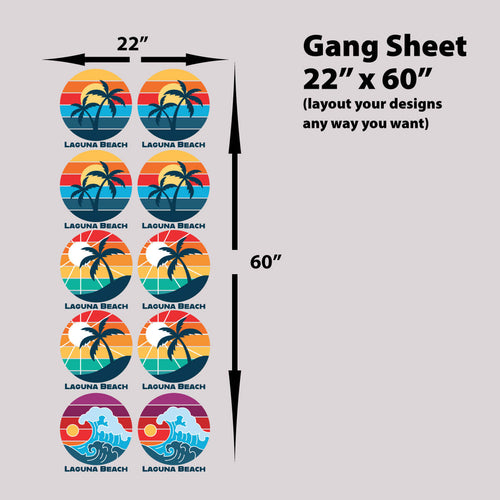
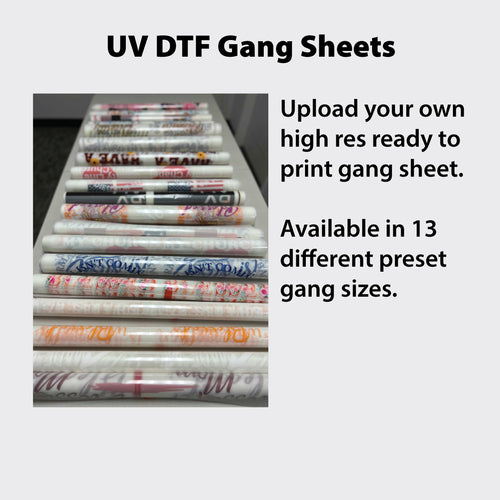
Gang sheets fix that. Instead of treating each design as its own isolated print, you arrange multiple graphics on one larger sheet and cut them apart after production. That approach is useful for brand drops, school orders, sponsor tees, event apparel, and any order with left chest logos plus larger back graphics.
Why gang sheets change the math
The savings don't come from some trick. They come from using the printable area better.
A gang sheet lets you combine:
- Front and back art for the same shirt
- Multiple size variations of one design
- Sleeve hits, pocket prints, and neck labels
- Several customer jobs when you're batching internal production
That matters because dead space is expensive. Every gap you leave on a sheet is paid-for area doing nothing.

Manual layout vs auto-build
Manual gang sheet building works, but it's slow. Someone has to scale each file, rotate pieces, fit odd shapes together, and keep enough spacing for clean cutting. That's manageable on a light day. It becomes a bottleneck when orders stack up.
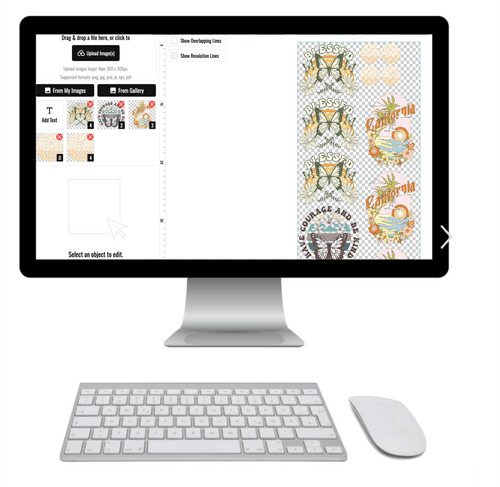
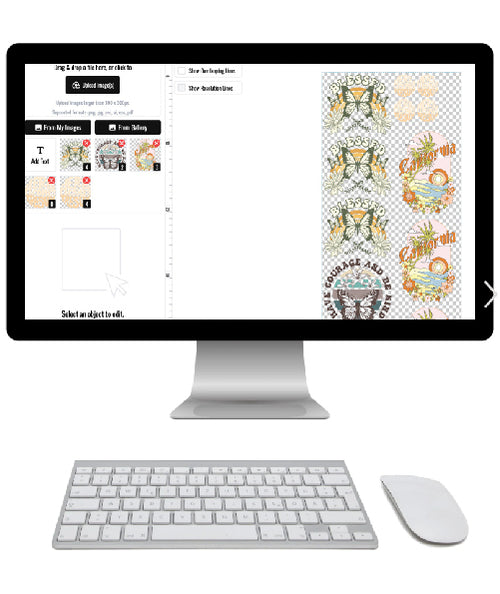
For shops that want a simpler layout process, Lion DTF's Auto-build gang sheet builder automates the arrangement of uploaded designs onto a sheet to reduce wasted space and simplify ordering. That's the kind of tool that makes sense when your priority is speed and cost control, not hand-placing every file like a puzzle.
Shop-floor advice: Don't spend production time doing layout work a tool can do faster.
How to use gang sheets well
Gang sheets help most when the files are already organized. If uploads are random and unlabeled, the sheet may be efficient but your cutting table won't be.
Use this workflow:
- Group by garment or customer so pieces stay easy to sort after cutting.
- Separate placement types when it helps your press crew move faster.
- Duplicate repeat logos intentionally instead of rebuilding them on future orders.
- Leave enough room for clean trimming so the finishing step doesn't become messy.
The point isn't just to fit more onto a sheet. The point is to reduce wasted media, reduce design labor, and keep production moving without layout becoming its own job.
Perfect The Press Application and Finishing
A good transfer can still fail in the last minute. Pressing is where many shirts go from professional to disappointing. The usual causes are simple. Inconsistent pressure, rushed pre-press, bad placement, or peeling at the wrong moment.

What to do before the transfer touches the shirt
Start with the garment, not the transfer. Smooth the shirt, check for seams or obstructions, and pre-press to remove moisture and wrinkles. Even a small wrinkle under the print area can distort adhesion or leave part of the design under-pressed.
Then center the design carefully. A shirt can be technically well printed and still look wrong because the placement is off.
A widely viewed placement guide notes that standard center-chest placement is about 2.5 to 3 inches below the collar, and hoodie back prints often need to sit 5 to 6 inches below the hood seam so the hood doesn't cover the artwork, as shown in this garment design placement guide on YouTube.
Placement details that make shirts look professional
Small placement choices signal whether a shirt came from a shop or a hobby table.
Use these as working standards:
- Center chest: About 2.5 to 3 inches below the collar for a standard front placement
- Pocket-area print: Center visually above the pocket area, not merely offset by guesswork
- Hoodie back print: Drop it lower. About 5 to 6 inches below the hood seam keeps the art visible
- Sleeve graphics: Align with a consistent reference point, not by eye alone
Placement templates help, but consistent measuring matters more. Once your team has a placement standard, write it down and keep it at the press.
Time, temperature, and pressure have to work together
The biggest mistake beginners make is chasing one variable while ignoring the others. They increase temperature when the issue is pressure. Or they press longer when the problem is uneven contact.
For hot-peel transfers, follow the transfer supplier's instructions exactly. If you need a reference point for dialing in your setup, review these heat press settings for DTF before running production.
A dependable pressing routine looks like this:
- Pre-press the garment to flatten and dry the print area.
- Position the transfer using measured placement, not guesswork.
- Press with even pressure across the full image area.
- Peel as directed for the transfer type.
- Inspect immediately for any edge lift or incomplete adhesion.
A transfer that peels cleanly but wasn't fully bonded will often reveal the problem at the corners first.
Finishing habits that prevent reprints
Don't stack freshly finished garments carelessly. Let them settle flat, especially on larger prints. Then check for silvering, edge lift, skewed placement, and trapped lint.
Also, don't rely on “close enough” pressure. A press that feels firm can still be inconsistent across the platen. If one side regularly underperforms, the shirt will tell you before the customer does.
Implement Quality Control and Wash Testing
Pressing the shirt isn't the end of the job. It's the start of the inspection. Shops that skip QC usually think they're saving time. They effectively move the quality check from the shop floor to the customer's laundry room.
What to inspect right after pressing
The first check should happen while the garment is still in front of you. Don't fold it and assume it's fine.
Look for:
- Full adhesion: Edges should sit flat with no lifting
- Even finish: The texture should look consistent across the print
- Accurate placement: Check against your measurement standard
- Clean surface: No lint, scorch marks, ghosting, or stray press marks
- Expected color appearance: Make sure the output matches the approved art as closely as possible
One defective shirt in a stack usually means the same issue affected others nearby. When you find a problem, stop and inspect the batch pattern, not just the single piece.
Why wash testing matters
A shirt can look perfect on the table and still fail after wear. That's why serious apparel sellers wash test. You learn whether your process is durable, whether your garment choice works well with the transfer, and whether your care instructions need to be more specific.
Use your own test shirts. Press them the same way you'd press a customer order, then wash them repeatedly under normal conditions. Watch the edges, detail retention, and overall finish. If something degrades early, your process needs adjustment before you scale that design.
The best time to discover a weakness is before a customer does.
Build a QC routine you'll actually follow
Keep it simple enough that your team won't skip it on busy days.
| QC stage | What to check |
|---|---|
| After press | Adhesion, peel quality, placement, visual defects |
| Before packing | Correct size, correct garment, clean fold, final appearance |
| After wash test | Durability, edge hold, surface integrity, care note accuracy |
Consistency is what turns personalized shirt printing into a real product line. A nice-looking sample proves you can make one shirt. QC proves you can make the next hundred without surprises.
Optimize Costs and Scale Your Operation
Scaling doesn't happen because orders increase. It happens because your workflow holds up when orders increase. If every new order creates file cleanup, layout confusion, pressing uncertainty, and packing errors, more sales just create more stress.
The shops that grow profitably usually tighten four areas first.
Know your true cost per shirt
Don't price from gut feel. Price from the full job.
Your actual cost includes:
- Blank garment cost
- Transfer cost
- Layout efficiency, especially when gang sheets reduce waste
- Labor for pressing, trimming, sorting, and packing
- Reprint risk caused by avoidable file or press mistakes
That last part matters more than people think. A shop can lose its margin by redoing work it should've gotten right the first time.
Standardize the work before you add volume
If you want to move from occasional orders to steady production, lock in your repeatable steps:
- Approve only production-ready files
- Use a fixed placement system for each garment type
- Batch similar work together
- Inspect before packing
- Archive final art for reorders
Many small brands often get stuck. They think scaling means buying more equipment. Often it means reducing variation in the process they already have.
Protect your time, not just your material cost
Material waste is visible. Time waste hides in small decisions all day long. Re-answering the same art questions, rebuilding the same layouts, and correcting preventable pressing errors can slow a shop more than any machine issue.
A scalable personalized shirt printing operation usually has these traits:
- Files arrive organized
- Transfers are ordered in production-friendly batches
- Gang sheets are used strategically
- Press operators follow the same placement rules
- Quality checks happen before the box is sealed
When those pieces are in place, you can spend more energy on selling, fulfillment, and customer communication instead of fixing preventable problems. That's the shift from making shirts to running apparel production.
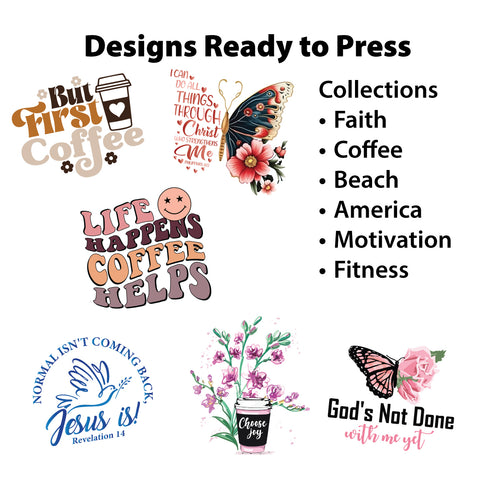
If you need ready-to-press transfers for custom apparel, Lion DTF Transfers offers DTF transfers, gang sheet ordering, and online upload tools that fit shops, brand owners, and small-batch apparel sellers who want a more consistent production workflow.