



A family group chat is filling with shirt colors, nicknames, and size guesses, but boarding day is getting closer. If you're organizing the cruise, a little planning now can spare everyone a last-minute scramble and give the group shirts they'll still want to wear after the trip.
The useful goal isn't to make every shirt loud or identical. It's to choose comfortable designs that help people find each other, suit the places they'll wear them, and work with the group's mix of ages, sizes, and preferences.
Why a Cruise Group Needs Planned Shirts
At the terminal, a multigenerational family is trying to spot one another while the boarding line moves. Some people are wearing whatever they pulled from their suitcase; others are checking their phones to find the next relative. A coordinated shirt gives the group an easy visual reference for photos and meetups, without asking everyone to dress alike from morning to night.
The audience for that kind of group apparel is substantial. Cruise Lines International Association's 2025 industry report says 34.64 million people took ocean cruises worldwide in 2024, up 9.3% from 31.69 million in 2023. North America supplied 20.53 million passengers in 2024. Those figures include the kinds of travelers who may be organizing family vacations, reunions, celebrations, and group excursions.
Cruises are often group occasions, not just individual holidays. CLIA reported that 82% of people who have cruised intend to cruise again, and nearly one-third of 2024 passengers sailed with three or more generations, according to Cruise & Ferry's account of CLIA findings. Shared roles and first names can help everyone feel included, from grandparents to young children.
Packing is another reason to choose outfits deliberately. In an October 2022 survey of 2,000 UK adults, 39% considered packing stressful, 22% admitted to overpacking, and some respondents changed outfits three times per day on average, according to Avanti Travel Insurance's cruise clothing article. A planned group shirt can cover a selected activity without adding a separate outfit for every photo.
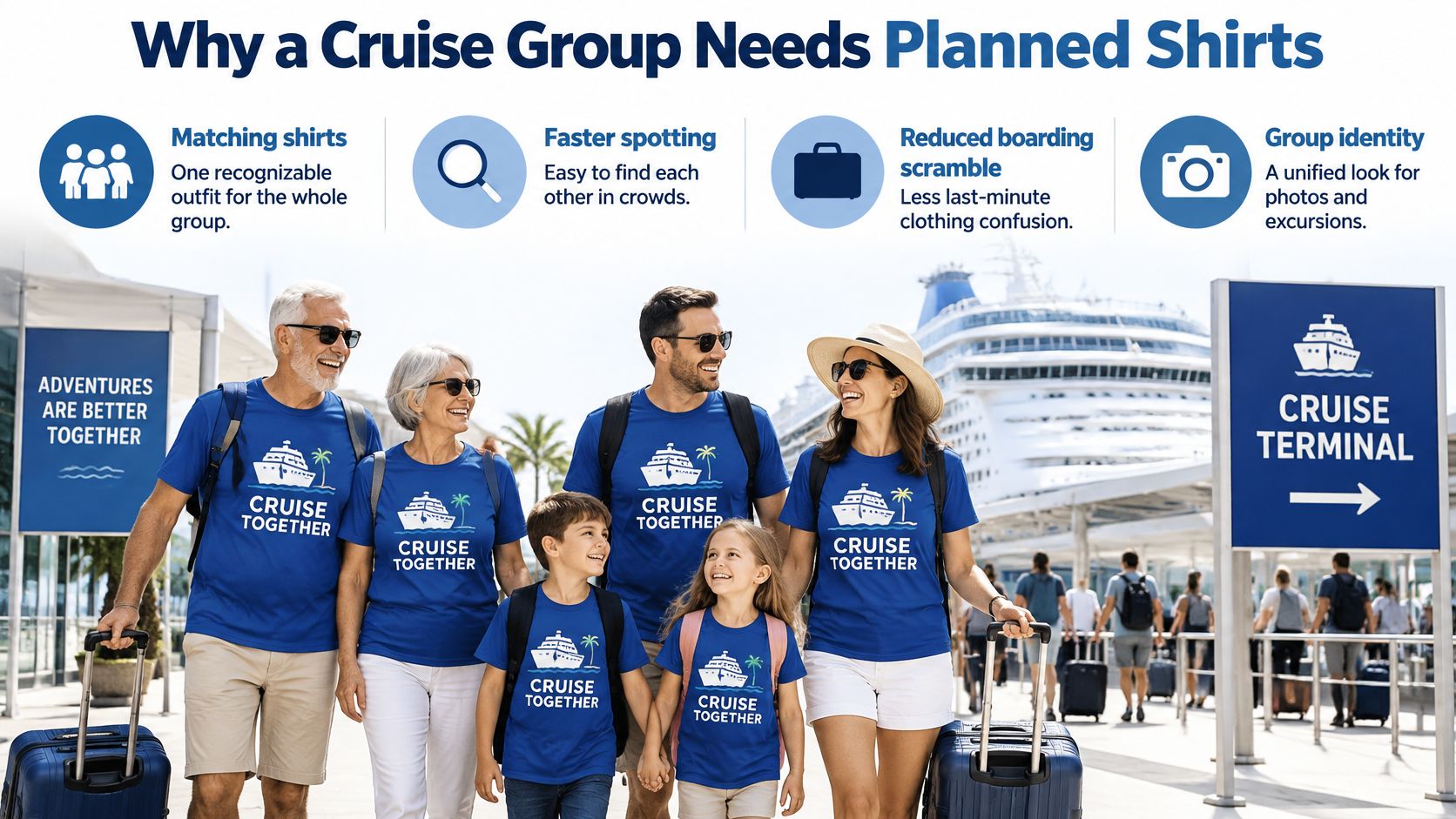
A successful order passes three simple checks: people can spot the group in a crowd, the shirts create a recognizable photo look, and each person can see themselves wearing the shirt at home. To get there, decide where shirts fit onboard, settle on wording, choose a print method and fabric, check every size, and then place the order.
Match Each Shirt to the Day and the Venue
At embarkation, a group may want one look for terminal photos, a practical shirt for shore excursions, and something neater for dinner. Start with the ship's rules and schedule, then match each shirt to the occasions where it will be worn. Royal Caribbean says most daytime clothing is casual, while some sailings include one to four “Dress Your Best” nights, according to its onboard dress-code guidance. Disney Cruise Line permits polished casual clothing and, in applicable casual settings, T-shirts and shorts, but not swimwear or tank tops in dining venues. Some Disney itineraries also include themed deck parties and optional dressier nights, according to its dining dress-code information.
| Occasion | Dress reality | Shirt to order | Leave out |
|---|---|---|---|
| Embarkation and sailaway | Casual daytime clothes and terminal photos | Lightweight crew neck with group name and first names | Cabin numbers and full surnames |
| Sea day | Casual decks, with shirts or cover-ups required indoors | Breathable tee that layers under a light shirt or jacket | Graphics that read as swimwear |
| Shore excursion | Heat, walking, and sunscreen | Light-color tee with a small, high-contrast meetup mark | Heavy dark prints that may feel hot in the sun |
| Themed deck party | Optional pirate, holiday, or costume night | A separate themed design if the party is confirmed | Relying on the theme shirt as the only shirt |
| Casual dining | Shirts required; swimwear and often tank tops barred | Neat crew neck or polo that isn't beachwear | Tank cuts and wet-look designs |
| Dressy or formal night | One to several nights depending on line and length | Skip the printed tee, or wear a plain layer under a jacket | Buying elaborate tees for every night |
Use the table as a starting point, then check the ship's current guidance and daily schedule. Rules and onboard plans can vary, so confirm the specific ship before settling the order.
For many groups, two lightweight crew necks cover embarkation and excursions. Add a themed shirt only if the party is confirmed. A printed tee is a poor choice for formal night; a neat shirt under a cardigan or jacket may work as a layer, depending on the venue's rules.
Choose shirts for the occasions the group will attend. A simple design worn around the ship and again at home often serves the group better than a louder shirt made for just one photo.
Group Names and Wording Worth Printing
A good group name feels like it belongs to the people wearing it. The Portside Cousins, Cabin Crew 2026, and Nana's 70th at Sea tell a clearer story than a generic “Cruise Mode.” Keep the wording short enough to read at a glance, and choose a phrase that won't feel out of place when someone wears the shirt at home.
Build the design in layers. Put the shared group line on each shirt, then add a first name or role, such as “Captain Dad” or “Junior Navigator.” A small port or ship mark can finish the design without competing with the words. On an adult chest, main lettering around 1.5 to 2 inches tall is a useful production target; make secondary names smaller and keep the text to two lines. Check a proof at actual print size before approving it.
Personalization can also reveal information to strangers. Holland America's clothing guidance covers onboard dress expectations, while the practical question for a group organizer is what details are sensible to display in terminals, ports, and public photos.
| Detail | Print on front | Reason |
|---|---|---|
| First name or nickname | Yes | Identifies people without exposing trip logistics |
| Shared group name | Yes | Builds identity across all shirts |
| Color icon or palette | Yes | Works for people who dislike matching |
| Cabin number | No | Readable by strangers in terminals and photos |
| Full surname | No | Reveals identity beyond the group |
| Exact sailing dates | No | Shows when a home is unoccupied |
Privacy rule: Use details that help your group recognize one another, not details that disclose where someone is staying or when their home is empty.
Exact matching isn't the only way to look coordinated. Keep a shared icon or palette, then let people choose among coral, navy, and white shirts, or select a cut they feel comfortable wearing. That approach gives the group a common look without forcing anyone into an identical outfit.
Choose destination-neutral artwork if you want the shirt to get repeat wear. A simple nautical icon, subtle name, or family joke that still makes sense at a backyard barbecue can last longer than a design tied to one port or sailing.
Before moving into design, send the group these five fill-in lines:
- Group name:
- Personalizer on each shirt:
- Icon:
- Colors:
- One fact that must stay off the shirt:
Print Options and a Gang Sheet Layout
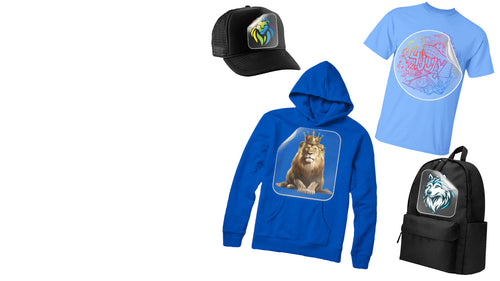
A family ordering shirts for port days may want one shared icon, individual first names, and a few different shirt colors. The print method affects how easily those elements fit together and what the order costs. Direct-to-film (DTF) transfers suit full-color artwork with a different name on each shirt. Screen printing often fits a large batch of the same one- or few-color design. Heat-transfer vinyl works for a simple shape or a last-minute name, while embroidery adds texture to a small polo mark but is less suited to detailed scenes or long phrases.
| Method | Best cruise job | Cost shape | Watch-out |
|---|---|---|---|
| DTF gang sheet | Full color plus a different name on each shirt | Can reduce wasted print area when designs share a sheet | Press the transfers before travel day |
| Screen print | Two dozen or more identical shirts | Setup fee, then a low piece price | Poor fit for unique names |
| Heat-transfer vinyl | One or two last-minute names | Labor rises with each different shirt | Can crack on very stretchy fabric |
| Embroidery | Small chest mark on a polo | Higher cost per shirt | Poor for photos and long slogans |
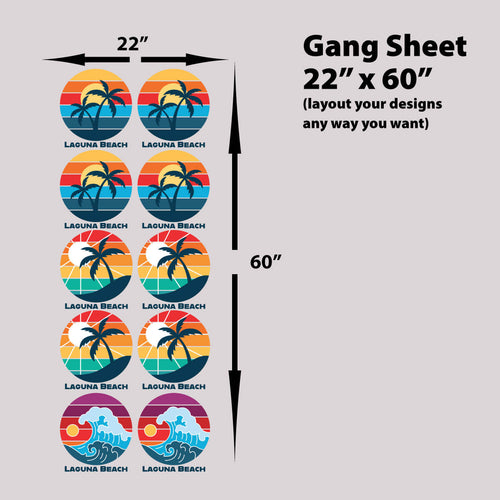
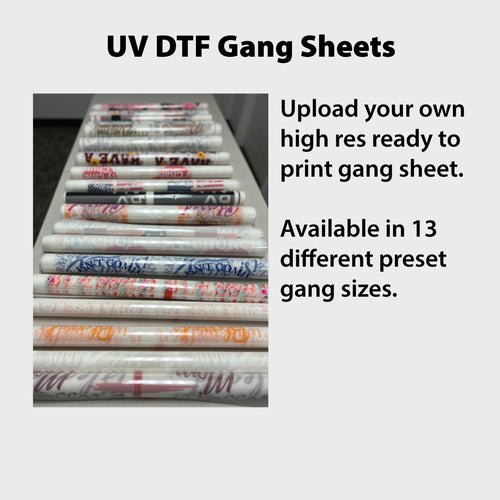
A gang sheet places multiple pieces of artwork on one print area. For a cruise order, that might mean a shared icon alongside names or roles in different sizes. A trade report describes a 40 cm by 50 cm sheet as holding an average of 15–20 small-to-medium designs, and cites potential film-use reductions of up to 40% and production-cost decreases of 25–30% after adopting gang sheets. These are production estimates, not guaranteed savings. Capacity and cost depend on the artwork and layout, as explained in this trade report on DTF gang-sheet printing.
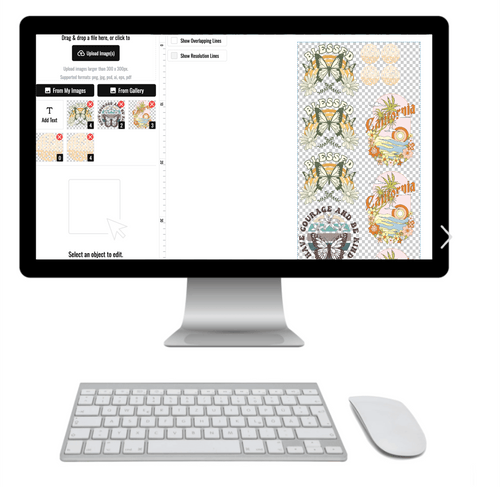
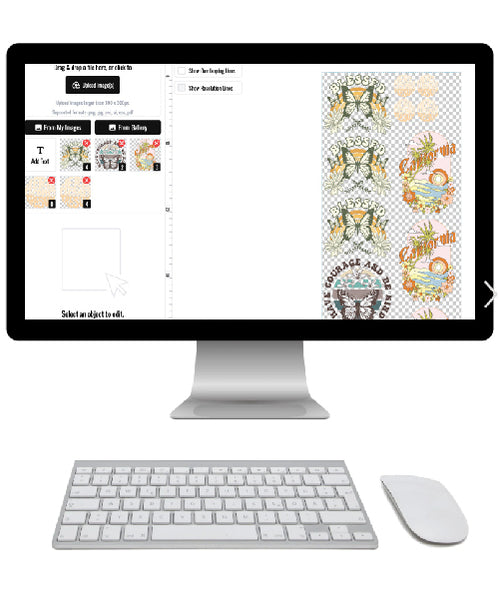
Lion DTF Transfers lets customers build custom gang sheets online or use its “We Build a Gang Sheet for You” service. Either option can help organize a shared design and personalized elements for the order.
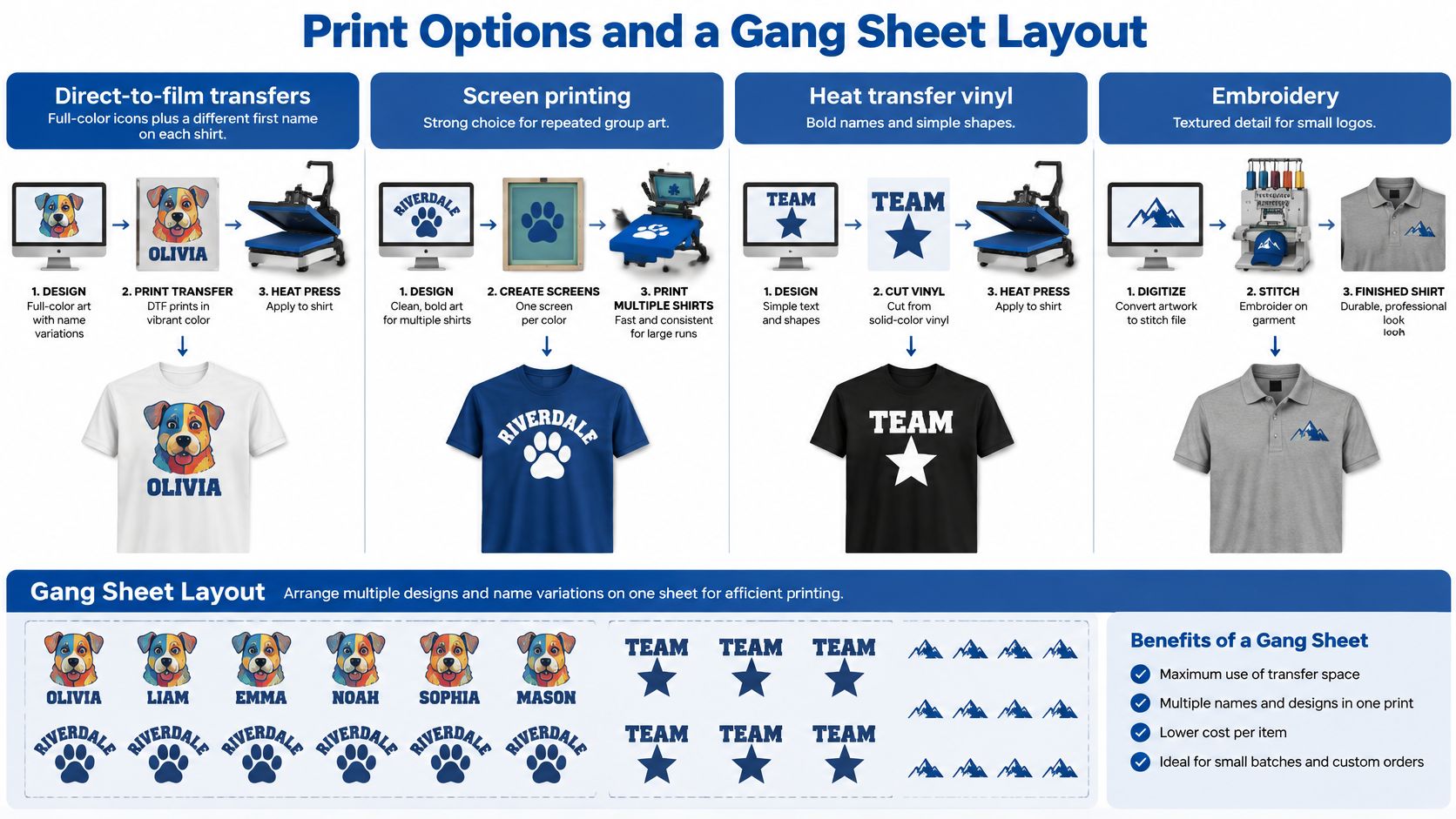
Use this workflow to prepare a sheet:
- Export each name or icon as its own PNG with a transparent background at print resolution. Convert small text to outlines so fonts don't shift during export.
- Upload the files to the online gang-sheet builder and arrange the layout.
- Check the smallest name at its intended printed size. Use a proof to confirm the text stays legible.
- Order the sheet, then press the shirts and check the finished transfers before the group leaves.
A video walkthrough can help you visualize how gang sheets fit into a print workflow.
Fabrics That Handle Sun, Sweat, and Laundry
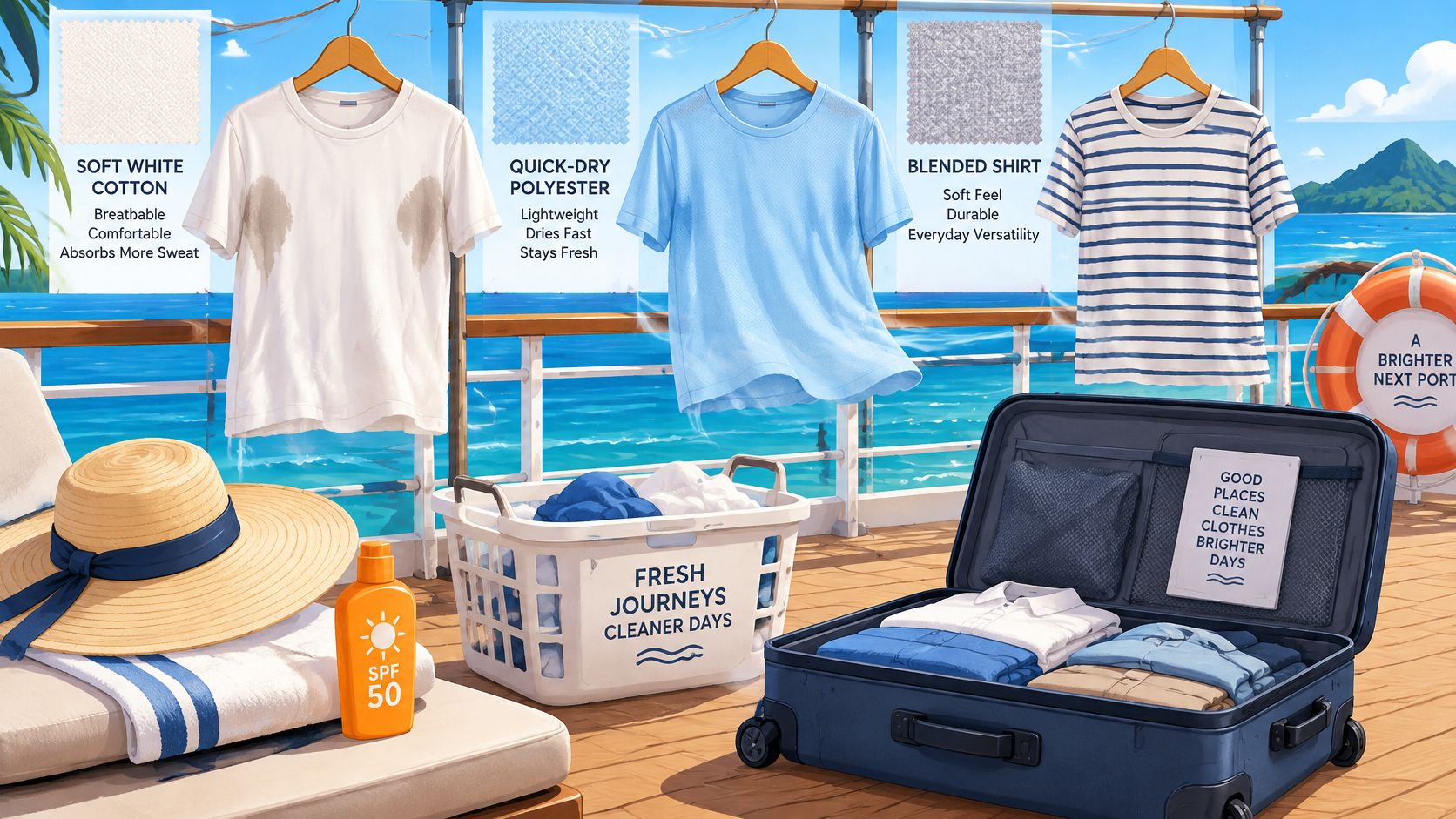
Treat the blank shirt as part of the design. A cotton tee has a familiar feel and can photograph well, but it may hold onto sunscreen and sweat and feel heavy in a hot port. Polyester dries quickly and resists suitcase wrinkles, yet a slick knit can feel uncomfortable in heat and may be more prone to dye-migration issues under a transfer. For a mixed group, a cotton-poly blend is a sensible default: it balances familiar hand-feel, drying time, and print stability.
Choose the blank to suit the climate and the group's comfort. Light colors can feel more appropriate for sunny shore days, while a heavier cotton tee may be welcome in cooler conditions. Before choosing a single garment for everyone, check what's available in the cuts and size range your group needs.
Durability claims should explain how the finished shirt was tested. ISO 105-C06 evaluates textile color resistance during laundering with reference detergents. Its single-test procedure roughly represents one household or commercial wash; some multiple-test procedures can approximate up to five washes at temperatures no higher than 70 °C. The standard cautions that multiple tests are harsher because mechanical action increases, and detergent or bleach differences can change results, as stated in the ISO 105-C06 standard description.
For meaningful quality control, test the actual blank and decoration together, not just the artwork file. Record fabric composition, detergent, water temperature, cycle type, drying method, and number of cycles. Then inspect the shirt under consistent lighting for color change, staining, cracking, lifted edges, and image distortion. An internal wash check isn't the same as formal ISO certification.
Guests can reduce unnecessary stress on a print by turning the shirt inside out, washing it cool, skipping chlorine bleach, and avoiding high-heat drying. Before finalizing the blank, match its feel and weight to the occasions you selected and confirm that the decoration method suits that fabric. For further background on material choices, see this guide to fabrics used with DTF transfers.
How to Size a Mixed Cruise Group
For a family of 16, the sizing work starts before anyone chooses a shirt label. Sizes can differ between brands, and adult sizes do not provide a reliable guide for children. ASTM D6240/D6240M provides male body-measurement tables across chest sizes 34–52 and short, regular, and tall proportions. Youth sizes follow their own charts, so measure children against a youth reference rather than an adult size.
Collect measurements, then use one blank brand's chart for the whole order. A well-fitting T-shirt can help someone compare fit, while body measurements give the organizer a consistent basis for matching each person to the selected blank. Keep adult, youth, plus-size, and tall or short groups separate so each person is matched against the right chart.
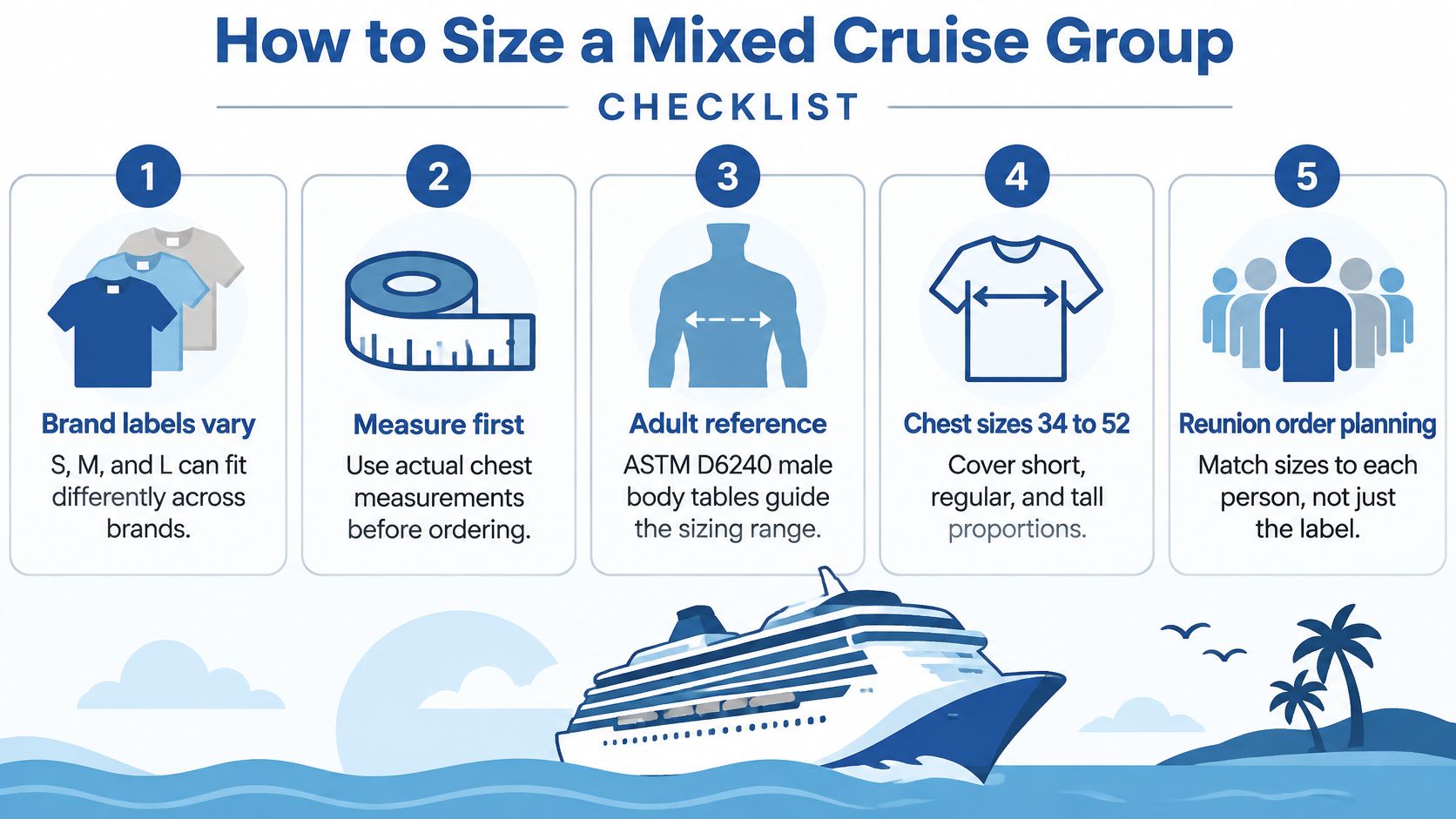
Use this collection process:
- Ask each traveler for chest and body-length measurements, or the brand and size of a current tee that fits well.
- Match those details against the chart for one blank brand. Mixing brand charts can lead to inconsistent fits.
- Count adult regular, plus-size, tall or short, and youth sizes separately.
- If someone falls between sizes, consider sizing up when the design is large. A stretched print can distort and put extra stress on its edges.
- Describe print placement by garment landmark, such as center chest, upper back, or left chest. A fixed inch measurement can look different as garment sizes change.
A sample roster for a 16-person family could look like this:
| Group | Count | Size basis |
|---|---|---|
| Adult regular | 8 | Chest and length against the adult regular chart |
| Adult plus or tall | 3 | Separate size chart, not the adult regular chart |
| Youth | 4 | Youth chart, not adult sizes scaled down |
| Held adult medium | 1 | Released only if a reply is missing |
| Total | 16 | Includes one held spare |
Different shirt lengths and shoulder widths can stand out in a group photo, so don't guess a teenager's size from a parent's. Set a deadline three weeks before sailing to check the roster and address any needed replacement. For garment-fit guidance, compare measurements with a DTF sizing chart resource.
Finish with a one-page roster listing name, chest, length, size ordered, and design version. It helps the person pressing or distributing shirts match each garment to its wearer, so the group can choose shirts that work across casual venues and still feel comfortable wearing at home.
Place the Group Order With a Clear Count
By order time, the organizer shouldn't be reopening design decisions. Put the choices in one message and ask the group to confirm four things: which occasions need a shirt, the shared name and details to leave off, the print method, and the final size roster. That gives everyone a concrete chance to catch a spelling or size error before production.
Work backward from embarkation. Lock names two to three weeks ahead, approve the gang-sheet proof, and aim to receive or press the shirts with several days left for a test wash. Share the care notes in the group chat so guests know how to look after the prints.
Order one spare adult size only if someone hasn't replied. A full extra set adds unnecessary cost and leaves you with shirts nobody requested. If the group would rather not prepare its own sheet, the organizer can upload the files and approve a proof through the print provider.
Use a final send test before paying: Can every traveler name their size, the shirt's job on the ship, and the one line printed on it? If so, the order is ready to move forward.
Lion DTF Transfers offers custom DTF transfers and gang sheets for placing shared artwork alongside individual names on cruise shirts. Use its Auto-build gang sheet builder to prepare a group layout, then visit Lion DTF Transfers to start an order.
Email orders@LionDTF.com or Text or Call: 833-350-5466