



You sent the file with the exact Pantone code. The logo looked right on screen. The mockup looked right. Then the shirt arrived and the brand blue looked flatter, darker, or just slightly wrong.
That’s one of the most common frustrations in apparel decoration. It happens because Pantone and CMYK aren’t the same system, and DTF adds its own variables on top of the normal print conversion problem. PET film, white underbase, curing, and heat application all affect the final look.
Generic print advice usually stops at “convert Pantone to CMYK.” That’s not enough for transfer printing. The goal is getting the closest possible printable result on the material and process you’re using.
Achieving Perfect Brand Color in DTF Printing
A lot of clients come in with the same situation. They’ve already done the hard part. Their branding is established, the Pantone callout is chosen, and the artwork is clean. What they need is confidence that the printed transfer will respect that work.

The problem is bigger in DTF than many people expect. General offset guidance exists, but DTF-specific instruction is thin. Print forum data cited in this industry discussion on DTF Pantone mismatch complaints says 40% of all DTF-related queries in 2025-2026 involve complaints about Pantone color mismatches.
That tracks with what experienced decorators already know. A Pantone code is a target. It isn’t a guarantee once that color has to be rebuilt with CMYK inks on film and then pressed onto fabric.
What usually goes wrong
- The file was built for screen viewing first and only converted later.
- The Pantone value was auto-converted by software without checking the output profile.
- No one judged the color on the final substrate, which matters more in DTF than many buyers realize.
Practical rule: If brand color matters, treat the screen preview as a rough guide and the printed proof as the real decision point.
If you’re new to color-managed print files, it helps to understand what an ICC profile does before changing swatches or export settings. This short guide on what an ICC profile is gives the right foundation.
The good news is that the process can be controlled. You won’t get every Pantone shade to land perfectly in CMYK, but you can avoid the common mistakes and improve your match dramatically when you use a DTF-aware workflow.
Why Pantone and CMYK Are Different Languages
When people search pantone color convert to CMYK, they often assume they’re looking for a formula. In practice, they’re translating between two different print languages.
Pantone is a spot color system. CMYK is a process color system. Those are not interchangeable ideas.

What Pantone actually is
Pantone started as a standard way to remove guesswork from color matching. The Pantone Matching System launched in 1963 and initially standardized 1,114 spot colors for consistent reproduction across print and manufacturing, according to this overview of Pantone and CMYK conversion history.
A spot color works like a custom-mixed paint. If you specify a Pantone color, you’re pointing to a defined target, not asking the press to “get close” by mixing four inks on the fly.
That’s why brand managers, packaging teams, and apparel buyers love Pantone. It creates a common language.
What CMYK actually is
CMYK builds color from four process inks: cyan, magenta, yellow, and black. Instead of using one premixed ink, the press creates the appearance of a color by layering and screening those four inks.
That’s efficient and cost-effective. It’s also limited.
The same Pantone overview notes that CMYK can reproduce about 70-80% of Pantone’s solid colors, which is why bright oranges, deep purples, and other saturated hues often lose punch in conversion. That’s the technical reason a “perfect” match often isn’t possible.
Why the same code still changes
A Pantone code is fixed. A CMYK result is conditional.
It changes based on:
- Profile choice such as coated, uncoated, FOGRA, or GRACoL
- Substrate behavior including how the material accepts and displays ink
- Production method because DTF film does not behave like coated paper
- Viewing conditions since the same print can look different under different light
Pantone is the target. CMYK is the method. Problems start when people expect the method to contain every target.
Spot color versus process color
| System | How color is made | Strength | Limitation |
|---|---|---|---|
| Pantone spot color | Predefined, premixed ink target | Strong consistency for specific brand colors | Not inherently what a CMYK press prints |
| CMYK process color | Four inks combine to simulate color | Practical for most production printing | Cannot reproduce every Pantone hue |
Why DTF makes the translation trickier
Most online guides were written with paper printing in mind. DTF introduces film, adhesive powder, cure, transfer, and fabric interaction. Even when your CMYK build is technically sound, the final pressed result can still move visually.
That’s why generic conversion charts can feel disappointing in apparel work. The chart may be acceptable for a brochure and still miss the mark on a shirt.
If you deal with metallic-looking tones, warm yellows, or branded golds, the translation gets even more sensitive. This example-rich guide on PMS color for gold shows why some branded shades need extra care before they’re sent into a process workflow.
The practical takeaway is simple. Don’t think of Pantone to CMYK as a direct swap. Think of it as a controlled approximation where your job is to choose the best possible compromise for the actual print method.
The Professional Workflow for Color Conversion
The fastest way to get a bad result is to let software auto-convert a Pantone swatch and assume the job is done. Good color work is slower than that. It’s also more repeatable.

A professional workflow uses ICC profiles, calibration, visual comparison, and a real print proof. According to this technical breakdown of Pantone to CMYK conversion in digital printing, teams aim for Delta E 2000 below 3.0 for a match that is considered visually indistinguishable, software alone can introduce 5-10% tonal variance, and calibrated workflows can improve consistency to over 90% repeatability.
That sounds technical, but the workflow is straightforward when broken into steps.
Start with a real Pantone reference
Use a physical Pantone Color Bridge Guide first. Don’t start with a random online converter and don’t trust an old library by default.
The Bridge guide matters because it gives Pantone’s own CMYK approximation for a specific print condition. That’s not the final answer for DTF, but it’s a reliable starting point.
If you’re converting a brand logo, this first reference point helps you avoid bad guesses that look fine on screen but collapse in print.
Build in CMYK intentionally
Inside Illustrator or InDesign, place the Pantone swatch on an object, duplicate it, and convert the duplicate to process CMYK. Keep both versions side by side while you work.
That comparison does two things:
- It shows you the initial gap between the spot target and the process simulation.
- It forces you to judge the color as a print problem, not a monitor problem.
If the file was originally designed in RGB, convert early and assess immediately. Don’t keep designing around colors that your print process can’t reproduce.
If you need a quick refresher on the broader setup differences, this article on RGB to CMYK for print files is a useful reference.
Use LAB values and ICC profiles as your anchor
The strongest conversion workflows don’t rely only on visual guessing. They use LAB values and ICC profiles to define how color should translate on a specific output condition.
LAB is useful because it’s device-independent. It describes color more universally than a screen value or a printer guess.
ICC profiles are what tell your software and RIP how to map those colors into the printable gamut for the device and material you’re using.
Choose the right rendering intent
When you convert out-of-gamut color, the software has to decide how to handle what CMYK can’t reproduce.
Two rendering intents matter most:
- Relative Colorimetric is usually the safer choice for logos and solid brand colors. It tries to preserve in-gamut colors more strictly.
- Perceptual is often better for photographic artwork because it remaps the full range more smoothly.
If you use the wrong intent, your file may still print acceptably, but a logo color can drift more than expected.
Use Relative Colorimetric for a logo first. Use Perceptual when the image matters more than one exact swatch.
Soft proof, but don’t stop there
Soft proofing is useful when your monitor is calibrated. It lets you preview how a CMYK profile will compress the color before print.
That’s worth doing. It saves time and catches obvious issues.
It’s not enough by itself.
A monitor emits light. A transfer print reflects light. DTF on film and fabric adds more variables than a coated paper proof. Soft proofing is part of the workflow, not the finish line.
A quick visual walkthrough can help if you want to see the software side in motion:
Print a wet proof on the actual target setup
At this stage, real print shops separate from casual conversion habits.
Expert workflow guidance says to output a wet proof on the target substrate and verify under controlled viewing conditions. In DTF terms, that means testing on the actual film and evaluating the pressed result, not just the digital preview.
The proof shows what software cannot fully predict:
- ink holdout on film
- white underbase effect
- curing behavior
- heat press influence
- how the garment color changes your perception
Measure if the job is color-critical
For strict brand work, use a spectrophotometer and compare against the Pantone standard. Industry guidance in the same Southwest Business reference supports measurement-based calibration and proofing, with Delta E used as the benchmark.
For some jobs, visual approval is enough. For regulated brand identity work, visual-only approval can become expensive.
A practical DTF workflow you can actually follow
1. Check the Pantone book first
Use the latest physical Pantone guide you trust. Identify whether you’re referencing coated or uncoated values. Don’t pull a number from a screenshot or a forum post and assume it’s current.
2. Convert a duplicate, not your only swatch
Keep the Pantone spot version visible while you build the CMYK version. That side-by-side comparison catches bad conversions early.
3. Assign the intended ICC profile
Use the profile that matches the production condition as closely as possible. Generic coated print settings can help as a temporary reference, but DTF output needs to be judged by the actual output condition.
4. Soft proof on a calibrated monitor
Use this to catch obvious gamut loss, shadow shifts, and over-optimistic screen color. Treat it as a preview, not approval.
5. Print and press a physical sample
This is the step people skip when they’re in a rush. It’s also the step that prevents the expensive surprise.
6. Adjust with restraint
For DTF, some colors need minor visual compensation after proofing. Overcorrecting in software often creates a different problem on the next run.
What works and what doesn’t
| Works | Usually fails |
|---|---|
| Physical Pantone reference | Browser-based conversion as final authority |
| ICC-aware conversion | Default software settings with no profile check |
| Hard proof on actual process | Screen-only approval |
| Measured calibration | “Looks close on my monitor” decisions |
| Separate handling for logos and photos | One conversion method for every file |
The core lesson is simple. The best pantone color convert to CMYK workflow is not a one-click tool. It’s a controlled print workflow that respects the limits of process color and verifies the result where it matters most, on the finished transfer.
Preparing Your Artwork for Lion DTF
Once the color work is done, file prep becomes the next place people lose accuracy. A well-converted color can still print poorly if the file is messy, exported carelessly, or missing key production details.

The clean file checklist
Use this as a final pre-upload pass:
- Save in a professional format. PDF or AI is usually the safest choice for preserving vector shapes, placed elements, and CMYK definitions.
- Embed the CMYK profile used during conversion so the file carries your intended color behavior with it.
- Outline all text so font substitution doesn’t change the artwork.
- Remove hidden or stray objects that can create unexpected print areas.
- Keep placed images high quality and already prepared for print, not left for last-minute conversion.
Call out the target Pantone in your order notes
Even when the artwork is supplied in CMYK, it helps to include the original Pantone target in the order notes. That gives the production team context for what you were aiming for.
That note doesn’t magically turn CMYK into a spot color print. It does help everyone judge the file with the same target in mind.
If brand color matters, don’t just upload the art. State the Pantone target you want the print to honor.
Think about the final garment too
A transfer doesn’t live on film forever. It ends up on a shirt, hoodie, tote, or other fabric. The garment color, surface texture, and finish all affect how the pressed print reads to the eye.
That means your approval mindset should be practical:
- approve for the final use
- compare under normal lighting
- avoid overreacting to tiny on-screen differences that won’t matter on a worn garment
Gang sheets and efficient layout
If you’re ordering multiple logos, size variations, or artwork sets, file organization matters almost as much as color accuracy. Crowded, inconsistent layouts create errors and waste space.
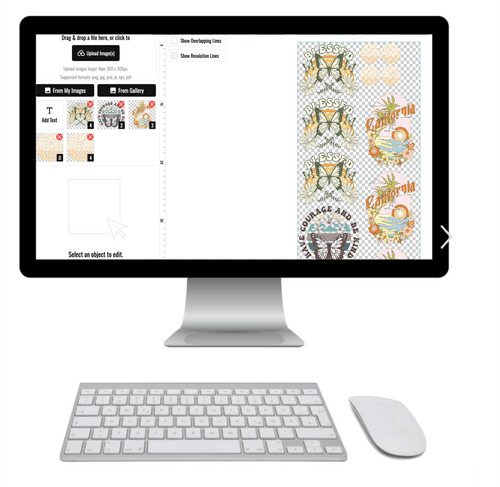
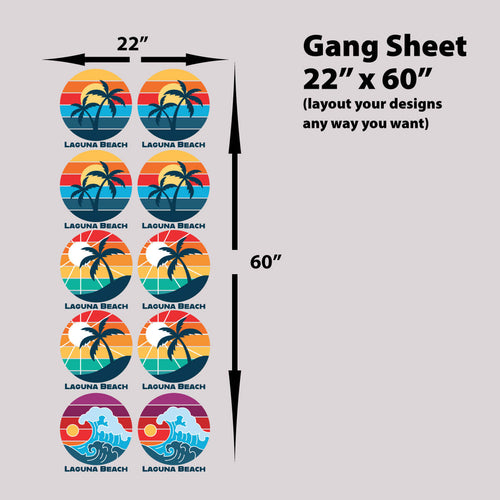
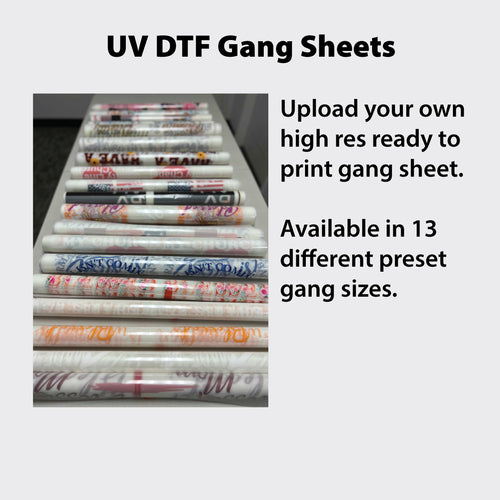
That’s why the Auto-build gang sheet builder is so useful. It simplifies layout, reduces wasted material, and helps keep the order cost-effective without forcing you to manually arrange every element. If you want a more hands-off route, the “We Build a Gang Sheet for You” option also makes sense.
Final preflight before upload
Check names and versions
Make sure the file you upload is the final approved version. A surprising number of color mistakes happen because someone sends an older export with outdated swatches.
Flatten only when necessary
If your workflow depends on editable vectors and clean CMYK builds, don’t flatten too early. Keep control as long as possible.
Keep notes simple
If a design includes a color-critical logo and a less critical illustration, say so. That context helps prioritize what must stay closest.
A clean file won’t fix a bad conversion. But it protects a good conversion from getting lost in production noise.
Common Color Conversion Mistakes to Avoid
Most color failures don’t happen because Pantone is confusing. They happen because someone trusts the wrong shortcut.
Mistake one: starting in RGB and hoping CMYK will keep up
This is the classic one. The design looks fantastic on screen because RGB can display bright, light-based color that print can’t fully reproduce.
Then the file is converted late, and the result feels dull.
What to do instead:
- Build print-bound work with print in mind.
- Convert early enough to judge the loss accurately.
- If the color is outside printable range, adjust the design before approval, not after production.
Mistake two: trusting the monitor more than the print
An uncalibrated monitor can make weak color look strong and printable color look wrong. That’s why designers can argue over the same file and both feel sure they’re right.
What to do instead:
- Use a calibrated display if color matters.
- Soft proof with the intended output profile.
- Approve the final look from a physical sample when the job is brand-sensitive.
Mistake three: using the wrong Pantone reference
Coated and uncoated references are not small variations. They can push you toward different CMYK builds and different expectations.
This matters even more when the final process doesn’t behave like paper. In transfer work, using the wrong reference point can send you in the wrong direction before the first proof is printed.
A quick comparison mindset
| Bad habit | Better habit |
|---|---|
| Pull any Pantone value you can find | Verify the exact guide and print condition |
| Assume all Pantone books behave the same | Check whether your reference is coated or uncoated |
| Treat film like coated paper | Proof for the actual DTF process |
Mistake four: relying on outdated conversion charts
Old libraries cause real problems. According to this discussion of Pantone 2025 conversion issues and Adobe library mismatches, Pantone’s 2025 eco-ink revisions altered the Lab* values of 15% of popular colors, and using a pre-2025 CMYK bridge can produce a mismatch of 5-8 Delta E.
That level of shift is visible. If your software, swatch set, or reference book is outdated, the file may be “correct” according to old data and still wrong in production.
What to do instead:
- confirm your Pantone references are current
- avoid old saved swatch libraries unless you’ve verified them
- recheck legacy brand colors instead of assuming the historical build is still valid
Old color books create new problems. If the job matters, verify the reference before you verify the artwork.
Mistake five: approving generic converter output for DTF
Many free tools give a number. That doesn’t mean they give the right number for your process.
Generic converters usually ignore the details that matter in transfer printing, such as film behavior and process-specific profiling. They can still be useful for a rough starting point. They are not final approval tools.
Mistake six: using one method for logos and photos
A logo needs consistency and edge clarity. A photograph needs tonal balance and natural overall appearance. Those are different conversion priorities.
What to do instead:
- treat brand marks as color-critical objects
- treat photos as tonal images
- decide what matters most before conversion, not after
Mistake seven: skipping the pressed sample
This is the one that causes the most regret. A print on film is not the same as a print after pressing, and neither is the same as a monitor preview.
If you skip the final physical check, you’re approving an intermediate stage, not the product your customer will wear.
The practical fix list
- Update your references before using saved builds.
- Convert sooner so you can design around print reality.
- Proof physically when the brand color has to be close.
- Separate logo handling from photo handling.
- Judge the final pressed result, not just the artwork file.
Most of these mistakes are avoidable. They come from speed, assumption, or overconfidence in software. Good color work is less glamorous than people expect. It’s mostly careful setup and disciplined checking.
Your Color Conversion Questions Answered
Can you get a perfect Pantone match in CMYK DTF?
Sometimes you can get very close. You can’t assume a perfect match exists.
Some Pantone shades sit outside the printable CMYK gamut, and that’s why the result becomes an approximation rather than a duplication.
Why does one converter give me a different CMYK value than another?
Different tools use different profiles, assumptions, and conversion methods. A bright blue like Pantone 301 C can vary by up to 10% in ink values between tools and profiles, as noted in this explanation of Pantone 301 C conversion variability.
That’s not a minor detail. It’s why two “correct” answers can still print differently.
Is a physical proof really necessary?
If the color is brand-critical, yes.
A proof is the only place where you’re judging the actual process instead of a software interpretation. It remains the ultimate source of truth when color matters.
Why not just print with spot inks instead of converting?
Spot inks can solve some matching issues, but they aren’t always practical for a CMYK production workflow. They’re also 2-5 times more expensive than process colors according to the same Testmuai reference above.
For many apparel and transfer jobs, the practical solution is not “use spot color instead.” It’s “manage the CMYK conversion properly.”
Which colors usually cause the most trouble?
The hardest ones are usually the most saturated hues. Bright blues, intense oranges, neons, metallic-like tones, and some deep purples often expose the gap between Pantone intent and CMYK capability fastest.
If your logo depends on one of those, set expectations early and insist on a proof.
What’s the safest way to approach pantone color convert to CMYK for DTF?
Use a current Pantone reference, convert with the right profile, soft proof on a calibrated monitor, and approve from a pressed sample when the project is sensitive.
That approach isn’t the fastest. It’s the one that protects your brand.
If you need fast, dependable DTF production with careful color handling, Lion DTF Transfers makes the process easier. You can upload print-ready artwork, note your Pantone target, and use the Auto-build gang sheet builder to save time and keep orders cost-effective. For more complex layouts, the team can build the gang sheet for you and help you get closer to the print result you want.