



So you’ve got an idea for a t-shirt business and want to run it from home. Awesome. Getting started really comes down to a few key things: finding a profitable niche, picking a production method that fits your budget, setting up a shop, and getting the word out.
It’s never been easier to get started, especially with modern print methods like Direct-to-Film (DTF) transfers. These let you create professional, retail-quality shirts without needing a massive upfront investment. Think of this guide as your blueprint for turning that creative spark into a real, thriving brand.
Your Blueprint for a Profitable Home T-Shirt Business
Launching an apparel brand from your living room might seem like a huge leap, but with a solid plan, it’s completely doable. You can forget the idea that you need a giant workshop or a ton of complicated equipment. Today's tools and services have leveled the playing field for solo entrepreneurs.
We'll start with the absolute essentials: finding a niche with actual buyers, figuring out your real startup costs, and choosing a production workflow that makes sense for you. Whether you're a crafter who loves their heat press or you're aiming to build a serious online store, the fundamentals are the same. A strong foundation is everything.
If you want a broader overview of the digital side, this guide on how to start an online business is a great place to begin.
Tapping into a Growing Market
Let's be clear: the demand for custom apparel is booming. The global t-shirt market was valued at $169.1 billion in 2021 and is on track to hit $195.6 billion by 2025. This isn't just a fleeting trend. You're tapping into a massive, stable market where small, home-based businesses can absolutely find their footing and thrive.
Starting from home gives you some serious advantages:
- Low Overhead: No rent, no extra utility bills, and no staff costs that come with a brick-and-mortar shop.
- Total Flexibility: You set your own hours. You can scale up or down at a pace that works for you and your life.
- Direct Customer Connection: Building your brand online means you get to talk directly to the people buying your stuff, creating a loyal following.
The real power of a home t-shirt business is its scalability. You can literally start with a single heat press and a handful of designs, testing the waters with minimal financial risk before you even think about buying in bulk.
This is where modern printing methods like Direct-to-Film (DTF) transfers really shine. They let you produce vibrant, durable, full-color designs with nothing more than a quality heat press. It completely removes the messy, complicated learning curve of traditional screen printing.
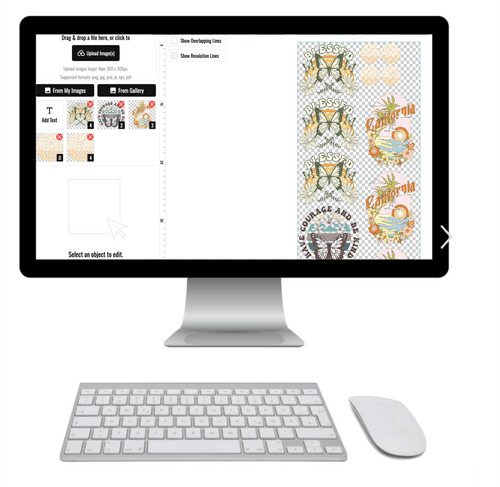
And it gets even better. By working with a supplier who offers an Auto-build gang sheet builder, you can fit multiple designs onto a single transfer sheet. This makes your production incredibly cost-effective, even when you're only printing a few shirts at a time. That kind of efficiency is exactly how you stay profitable in the beginning.
Finding Your Niche and Designing Shirts That Actually Sell
Trying to sell t-shirts to everyone is the fastest way to sell to no one. It’s a classic rookie mistake. The real secret to a successful home t-shirt business is finding a specific audience—a niche—and creating designs that feel like an inside joke they’re a part of.
This is what turns a generic piece of clothing into a statement. It’s how you build a community and, more importantly, drive actual sales.
Think smaller. Seriously, get laser-focused. Instead of just "funny t-shirts," drill down to "funny t-shirts for accountants during tax season." Forget "shirts for dog lovers" and aim for "shirts for people who own rescue greyhounds." That level of specificity is where you find passionate buyers who are actively hunting for products that get them.
Uncovering Your Profitable Niche
A profitable niche is where passion (yours or someone else's) meets real market demand. You don't have to be a die-hard expert in the niche yourself, but you absolutely need to understand what makes its members tick. The goal is to find those underserved communities.
Start digging where these communities already hang out online.
- Subreddits: Look for active subreddits dedicated to specific hobbies, jobs, or fandoms. A subreddit for "urban gardening" or "vintage synthesizer enthusiasts" is packed with potential customers and design ideas.
- Facebook Groups: Search for private groups centered around things like local hiking clubs, specific car models, or even niche professions like "veterinary technicians." The language and in-jokes used here are pure gold.
- TikTok and Instagram Hashtags: Follow hashtags related to your potential niches. Pay attention to what's trending, the comments, and what kind of merch, if any, is already being sold to that audience.
Once you have a few solid ideas, validate them before you spend a single dime. Use a free tool like Google Keyword Planner to see if people are actually searching for terms related to your niche. Low competition and decent search volume? That's the sweet spot.
From Winning Idea to Wearable Design
With a validated niche in hand, it's time to create designs that resonate. And no, you don't need to be a professional graphic designer to knock this out of the park. Some of the all-time best-selling shirts are just simple text or minimalist graphics. The connection is what matters.
And the market is hungry for it. Graphic tees currently account for a massive 57% of the t-shirt market revenue, which shows a huge consumer appetite for unique, expressive designs.
Not a designer? No problem. You’ve got options:
- Hire a Freelancer: Platforms like Upwork or Dribbble are full of talented designers who can bring your vision to life for a reasonable fee.
- Use Design Tools: Tools like Canva have made it incredibly easy to create simple, text-based, or graphic-heavy designs with a user-friendly interface.
- Purchase Pre-Made Designs: Marketplaces like Creative Market offer royalty-free graphics and vector packs you can buy with a commercial license.
Pro Tip: Whether you're creating a design or commissioning one, your final files absolutely must be high-resolution—at least 300 DPI (dots per inch)—with a transparent background. This is non-negotiable for getting a crisp, professional print.
For a deeper dive into the creative process, our guide on how to create your own t-shirt designs gives you actionable steps for turning raw ideas into print-ready files.
Preparing Your Designs for Production
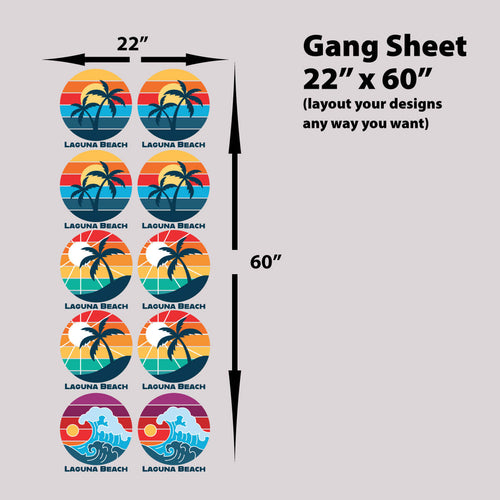
Okay, your designs are ready. Now you need to prepare them for printing in a way that’s efficient and cost-effective—two words that should be music to any home-based business owner's ears. The smartest way to manage production costs is by grouping multiple designs onto a single sheet, known as a gang sheet.
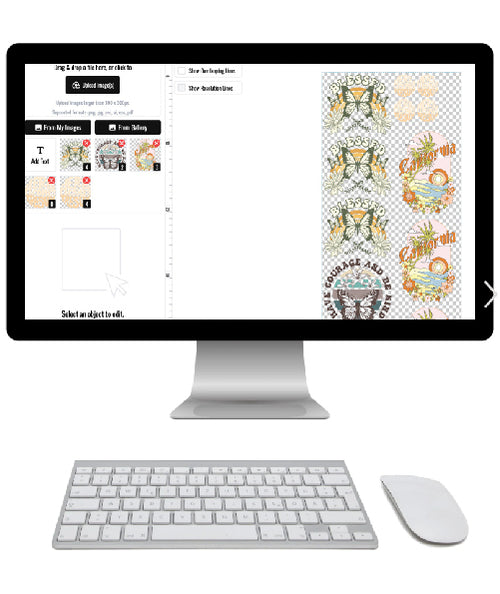
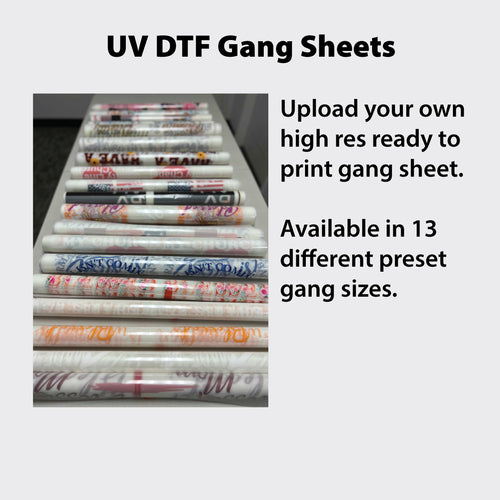
This is where a tool like an Auto-build gang sheet builder is a game-changer. Instead of painstakingly arranging each design by hand, you just upload your files. The software automatically nests them together, maximizing every square inch of the transfer sheet.
This simple step dramatically lowers your cost per print, letting you produce a whole variety of designs affordably. That kind of efficiency is key to maintaining healthy profit margins, especially when you're just starting out and need to test different concepts without sinking a ton of money into inventory. Your well-designed, properly prepared files are the final, crucial step before you bring your t-shirts to life.
Choosing Your Production Method: DTF vs. The Alternatives
Okay, let's get into the engine of your new business: how you’re actually going to make your shirts. This decision is huge. It dictates your startup costs, the quality of your final product, your day-to-day workflow, and how much money you actually make on each sale.
For anyone starting a t-shirt business from home, it really comes down to a few main players: Direct-to-Film (DTF) transfers, old-school screen printing, Heat Transfer Vinyl (HTV), and the hands-off Print-on-Demand (POD) model.
Each one has its pros and cons, but they are definitely not created equal. Your mission is to find that perfect balance of quality, cost, and complexity that fits what you want to build. Let’s break them down, no fluff, so you can make the right call.
This decision tree gives you a quick visual on which path might be the best fit, depending on whether you're chasing a passion project or jumping on a hot market trend.
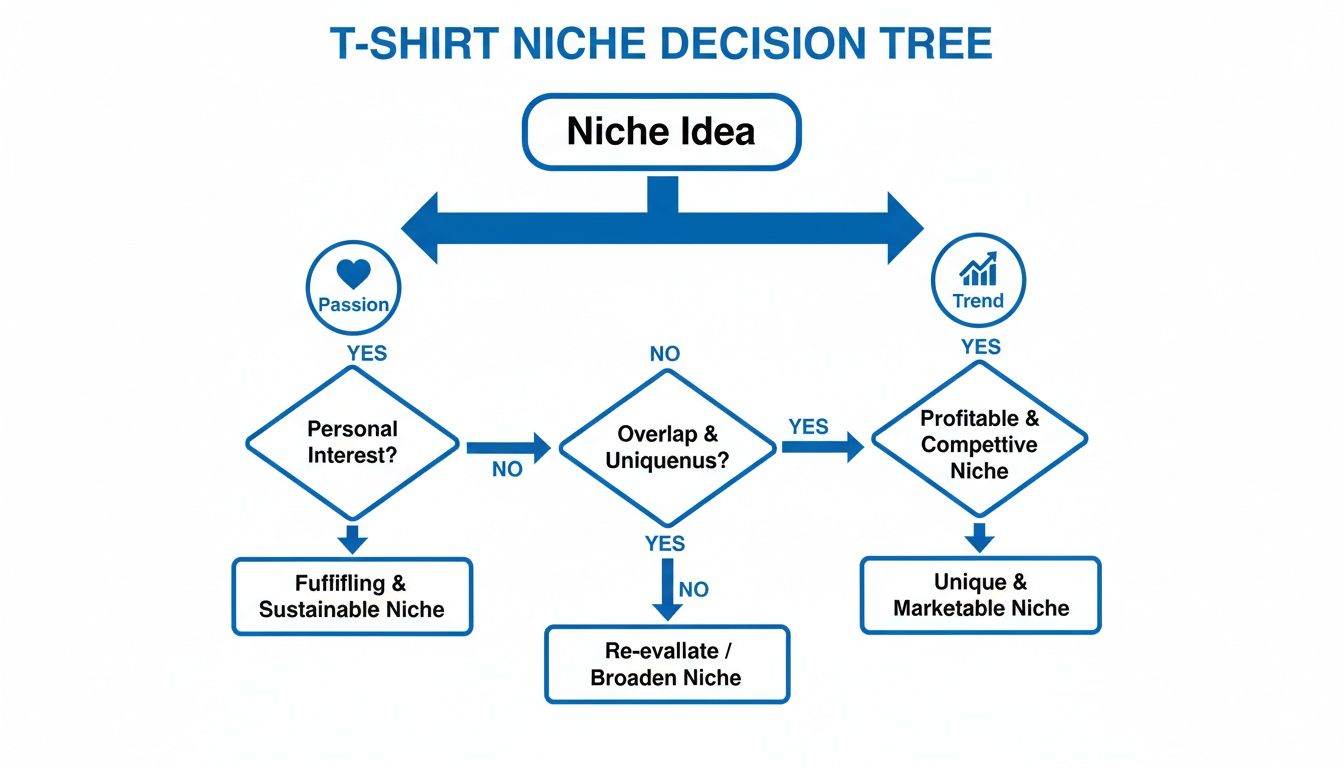
The bottom line is that both passion-driven niches and trend-focused ones can be seriously profitable. But the production method you pick will fundamentally shape how you serve that market.
Direct-to-Film (DTF): The Modern Game-Changer
DTF has exploded in popularity for home businesses, and honestly, it’s for good reason. It delivers the best of both worlds—you get the vibrant, long-lasting quality of screen printing, but with the full-color, no-limits flexibility of high-end digital printing.
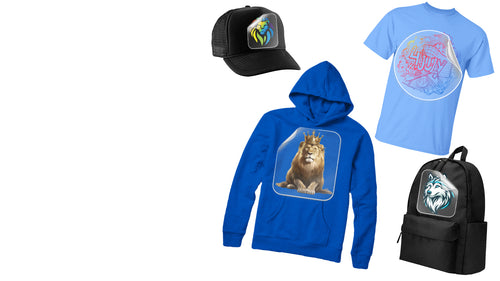
The process is refreshingly simple. You get your designs professionally printed onto a special film, and then you just use a heat press to transfer them onto your shirts. That's it. No weeding tiny vinyl pieces, no messy inks or chemicals, and no complicated screen setups.
The real magic for a startup is partnering with a DTF supplier. This move gives you immediate access to professional-grade printing with a tiny initial investment. All you need on your end is a reliable heat press.
Working with a DTF transfer supplier basically lets you outsource the hardest part of production. You get to pour your energy into creating amazing designs and selling, while getting retail-quality prints that feel soft, stretch with the shirt, and last for dozens and dozens of washes.
A huge win here is the cost-effectiveness, especially when you’re doing small runs with lots of different designs. Using a tool like an Auto-build gang sheet builder, you can upload a bunch of different designs and have them automatically arranged to squeeze onto a single transfer sheet. This move crushes your cost-per-print, making it profitable to sell a wide variety of designs without being forced to buy a hundred of each.
T-Shirt Printing Method Comparison
To really see how these options stack up, here’s a head-to-head comparison. This table breaks down the key factors that matter most when you're just starting out and need to make every dollar and every minute count.
| Feature | DTF Transfers (with Supplier) | Screen Printing (at Home) | Heat Transfer Vinyl (HTV) | Print-on-Demand (POD) |
|---|---|---|---|---|
| Upfront Cost | Low (Heat press is the main cost) | High (Press, screens, exposure unit, inks) | Moderate (Cutter, press, vinyl) | Zero |
| Print Quality & Feel | Excellent (Soft, durable, full-color) | Excellent (Very durable, vibrant) | Good (Can feel thick/stiff, may crack) | Varies (No control over quality) |
| Best For | Small to medium runs, full-color designs, varied inventory | Large bulk orders (50+) of the same simple design | Simple text/shapes, one-offs, personalization | Testing ideas, brand building with no risk |
| Complexity & Labor | Low (Just press the transfer) | High (Steep learning curve, messy, time-consuming setup) | High (Weeding complex designs is a major time sink) | Zero (Completely hands-off) |
| Profit Margin | High | Very High (on bulk orders) | Medium | Low |
| Design Flexibility | Unlimited colors, gradients, fine details | Limited colors (each needs a new screen) | Limited by available vinyl colors, difficult layering | Unlimited colors |
As you can see, the "best" method really depends on your budget, business model, and how hands-on you want to be. While POD is risk-free, DTF from a supplier offers the best blend of low startup cost, professional quality, and healthy profit margins for a serious home business.
Screen Printing: The Traditional Workhorse
Screen printing is the OG. It's the method behind most major apparel brands and is legendary for producing prints that are incredibly durable and punchy. It’s fantastic for simple, bold designs. But—and this is a big but—setting up a screen printing operation at home is a serious commitment.
The process involves multiple steps for every single color in your design: creating a mesh screen, applying light-sensitive emulsion, "burning" the design onto the screen, and then manually pushing ink through it.
- High Upfront Cost: You’re not just buying a press. You need screens, a washout booth, an exposure unit, and a whole collection of inks and chemicals. A decent setup can easily run you thousands of dollars.
- Best for Bulk Orders: Because the setup is so labor-intensive, it only becomes cost-effective when you’re printing large batches of the exact same design—we’re talking 50+ shirts. It’s a terrible fit for one-off custom orders.
- Design Limitations: Every color requires its own screen. A four-color design means four screens, four setups, and a lot more room for error. Complex, photorealistic designs are pretty much off the table for a home setup.
Screen printing is a respectable craft, but for most people starting out, the barriers of time, space, and money are just too high.
Heat Transfer Vinyl (HTV): The Crafter's Choice
If you've spent any time in the DIY world, you've seen Heat Transfer Vinyl. It involves a cutting machine (like a Cricut or Silhouette) that cuts your design from a sheet of colored vinyl. You then have to "weed" away all the excess vinyl by hand before heat-pressing it onto a shirt.
HTV is great for super simple things—think single-color text, team numbers, or basic shapes. For a real business, however, the drawbacks become obvious pretty quickly.
The weeding process is painfully slow for anything remotely complex. Layering multiple colors is a finicky, time-consuming puzzle. Worst of all, the final print often has a thick, plastic-y feel and is prone to cracking or peeling over time, especially when compared to the professional finish of DTF or screen printing. It’s a fun hobby, but trying to scale a business with HTV will create a massive production bottleneck.
Print-on-Demand (POD): The Hands-Off Approach
Print-on-Demand services are the ultimate low-risk way to dip your toes in the water. You partner with a third-party company (Printful and Printify are two of the biggest) that handles literally everything: the printing, the packing, and the shipping, all done automatically when an order comes in. You never even have to see or touch a shirt.
The biggest advantage is clear: zero upfront inventory costs. You can upload hundreds of designs to your online store without spending a dime until a customer actually buys something.
But that convenience comes with major trade-offs. Your profit margins get slashed, as the POD company takes a huge cut of the sale. You also give up all control over print quality and shipping times, which can lead to some angry customer emails that are completely out of your hands. It’s a brilliant way to test design ideas, but you’re sacrificing both profit and control.
No matter which path you choose, you're entering a booming market. The custom T-shirt printing industry is projected to hit $9 billion in 2025 and is forecasted to reach a massive $13.55 billion by 2029, growing at a powerful 10.8% CAGR. This explosion is driven by everything from local sports teams to online influencers, creating plenty of room for small home businesses to carve out a profitable niche. You can check out the full report from Research and Markets for a deeper dive into the numbers.
For a more granular look at how DTF stacks up against another popular digital method, check out our guide on DTF vs. DTG printing.
Setting Up Your Business and Online Store
You’ve got your niche locked down and a game plan for production. Awesome. Now comes the part where we build the actual business—the legal stuff and the digital storefront where the magic happens. This part is less about creativity and more about getting the foundation right, but it's absolutely critical for your long-term success.
We’re going to walk through the practical, no-fluff steps to make your operation legit. That means picking a killer name, getting registered, and then diving into the fun part: building an online store that makes people want to click "buy."
Making It Official
Before you even think about selling your first shirt, there are a few boxes you need to tick. It might not be the most glamorous part of the journey, but it protects you legally and instantly makes your brand look more professional.
First up, a business name. It needs to be memorable, hint at what you sell, and most importantly, be available. Do a quick search on social media, domain registrars, and your state's business registry to make sure no one else has snagged it. Once you've got a name, it's time to think about your business structure.
- Sole Proprietorship: This is the easiest path. You and your business are legally the same entity. It’s simple for taxes, but it offers zero personal liability protection. That means if something goes wrong, your personal assets could be at risk.
- LLC (Limited Liability Company): This is the go-to for most small businesses. An LLC creates a legal separation between your personal assets and your business debts, giving you a crucial layer of protection as you grow.
For most people starting out, forming an LLC is a smart move. After you register your business, do yourself a huge favor and open a separate business bank account. Keeping your finances clean from day one will save you a world of headaches later.
Choosing Your E-Commerce Platform
Your online store is your digital headquarters. It's where customers discover your designs, connect with your story, and hand over their money. The platform you choose shapes your entire operation, so this isn't a decision to take lightly.
For new sellers, two platforms stand out: Shopify and Etsy.
Shopify: Think of Shopify as owning your own building. You have 100% control over your branding, the customer experience, and the look and feel of your store. It takes a bit more effort to set up, but it gives you a powerful, scalable foundation to build a real brand.
Etsy: This is like renting a booth at a massive, bustling craft fair. You get instant access to a built-in audience of millions of shoppers actively looking for unique products. The trade-off? You have less control over your branding and have to play by Etsy’s rules.
For anyone serious about building a long-term t-shirt business, Shopify is almost always the best bet. That said, plenty of successful brands start on Etsy to test their designs and build an initial following before launching their own Shopify site. If you're weighing your options, exploring a list of the Top Platforms to Sell Your Creations Online can give you a broader perspective.
Creating Product Listings That Actually Sell
Once your store is live, it’s time to fill it with product listings that grab attention and turn browsers into buyers. This is about so much more than just uploading a design file; it’s about killer photos and descriptions that do the selling for you.
You don't need a fancy studio to get great product photos. Your smartphone will do just fine.
- Find good, natural light. A spot near a window is perfect. Just avoid harsh, direct sun that creates ugly shadows.
- Use a clean, simple background. A plain wall, a piece of poster board, or even a clean wooden floor can work wonders.
- Show the shirt in context. Shoot flat lays, but also get shots of the shirt on an actual person (or a mannequin) so customers can see the fit and scale.
- Capture the details. Get close-ups of the print quality and the fabric texture so people know they're getting a quality product.
Your product descriptions need to pull their weight, too. Don't just list facts—tell a story. What was the inspiration behind the design? How does the shirt feel? Is it buttery soft, lightweight, or structured? And always, always include a clear sizing chart with actual measurements to help minimize returns.
If managing inventory and printing feels overwhelming right now, you might want to look into an alternative. We put together a guide on the print-on-demand business model, which offers a more hands-off approach that's perfect for starting with minimal risk.
Finally, secure payment processing is non-negotiable. Thankfully, platforms like Shopify and Etsy have this built right in, letting you accept credit cards, PayPal, and other major payment methods from day one. This gives your customers a smooth, trustworthy checkout experience and makes sure you get paid for your hard work.
Pricing, Marketing, and Shipping Your First Orders
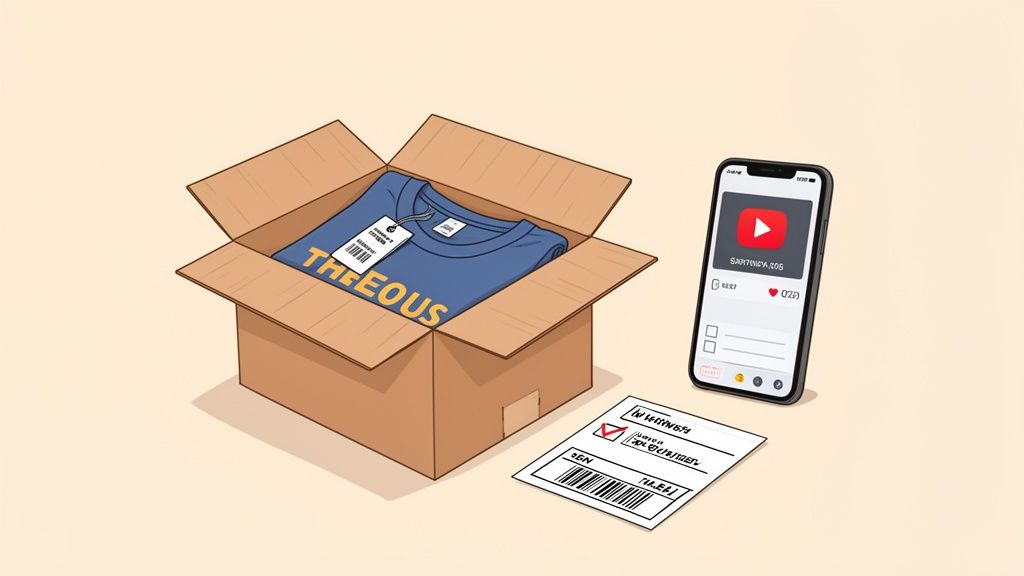
This is the moment it all comes together. All the planning, designing, and pressing transforms from a creative project into a real, money-making business. Getting your pricing dialed in, landing those first few customers, and shipping out orders smoothly are the three pillars that will hold up your launch and pave the way for real growth.
Let's break down these final steps without overcomplicating things. We'll start with a dead-simple way to price your shirts for profit, move into marketing that actually gets results for a new home business, and finally, cover the logistics of getting your awesome products into your customers' hands.
Calculating Your Price for Profitability
Setting your price is a balancing act. You need to cover costs, make a decent profit, and still offer a price that your customers find reasonable. If you price too low, you're basically working for free. Price too high, and you'll struggle to get any traction. The easiest way to start is with a cost-plus pricing model.
First, you have to nail down your Cost of Goods Sold (COGS) for every single t-shirt you make. This is the direct cost of producing one unit.
The formula is straightforward:
Cost of Blank Shirt + Cost of DTF Transfer + Cost of Packaging = Total COGS
Let's run through a quick example.
- Blank Shirt: You found a great quality blank for $5.00.
- DTF Transfer: Using our Auto-build gang sheet builder, you fit 10 designs on a $15 sheet. That brings your cost per design down to just $1.50. This kind of efficiency is exactly how you keep costs in check.
- Packaging: Your poly mailer, thank you note, and shipping label add up to about $0.50 per order.
So, in this case, your total COGS is $5.00 + $1.50 + $0.50 = $7.00.
Now that you have your COGS, you can set a retail price. A healthy target is a 40-60% profit margin. To hit a 50% margin on your $7.00 shirt, you just double the cost, pricing it at $14.00. That leaves you with a $7 profit on every sale—money you can pour right back into new designs and marketing.
Low-Budget Marketing for Your Launch
Forget about paying for ads right now. When you're launching a t-shirt business from home, your number one goal is to connect with your niche where they already are. That means platforms like TikTok and Instagram are about to become your best friends.
The trick is to create content, not commercials. People scroll to be entertained or to feel like they're part of something, not to be sold to.
Here are a few content ideas that flat-out work:
- Behind-the-Scenes: Show your process. A quick time-lapse of you heat-pressing a new design or neatly packaging an order builds a ton of trust. It shows the human touch behind the brand.
- Pack an Order With Me: This is a classic for a reason. It's a simple, oddly satisfying format that shows off your product, your branding, and your appreciation for each customer.
- Tell a Story: Make a short video or a carousel post talking about the inspiration for a specific design. Connect it to an inside joke or a shared passion that your niche will instantly get.
The best marketing you can do at launch costs nothing. It's about building real connections. Reply to comments, ask your followers questions, and get hyped when a customer tags you in a photo. That social proof turns your first buyers into your most powerful advocates.
Mastering Your Shipping Workflow
Shipping your first orders is a huge milestone. A professional and smooth fulfillment process leaves a great impression and is key to getting repeat customers. You don't need a massive, complicated system to get started.
First, get the right supplies on hand.
- Poly Mailers: These are perfect for shipping t-shirts—they're lightweight, tough, and waterproof.
- Small Scale: A digital shipping scale is a must-have. It ensures you get accurate weights so you're not guessing and overpaying on postage.
- Label Printer: This isn't essential on day one, but a thermal label printer will save you an incredible amount of time (and printer ink) once orders start rolling in.
When an order comes through, platforms like Shopify and Etsy make buying and printing shipping labels incredibly easy. They pull the customer's address automatically, calculate the postage, and send tracking info for you.
Set up a dedicated "shipping station" in your workspace, even if it's just one corner of your desk. Keep your mailers, labels, tape, and any little extras like stickers or thank-you cards all in one spot. This little bit of organization makes fulfilling orders feel less like a chore and more like a victory lap.
Got Questions? We’ve Got Answers.
Jumping into any new business means you’re going to have a ton of questions. When you're figuring out how to start a t-shirt business from your own home, it's easy to get bogged down by all the unknowns. Let's clear the air with some straight-up answers to the questions we hear most often.
How Much Does It Really Cost to Get Started?
Honestly, your startup cost comes down to how you plan to make your shirts. While there are a few ways to go, a lot of people find the sweet spot by pairing up with a DTF transfer supplier and grabbing a solid heat press. This kind of setup will usually run you between $500 to $1,500.
That budget gets you the must-haves:
- A heat press you can count on
- Your first run of blank tees
- An initial order of custom DTF transfers
- Basic fees for your online store
If you're looking for the absolute lowest entry point, a print-on-demand model can get you going for less than $100, which mostly just covers setting up your store and ordering a few samples. The catch? Your profit margins will be razor-thin on every shirt you sell. On the flip side, if you decide to go all-in with a home screen printing setup, expect to spend upwards of $2,000 for equipment that won't let you down.
Can I Just Print Any Design I Find Online?
This one is a hard no, and it's probably the most important thing to get right. Grabbing a cool design from a Google search or a Pinterest board and slapping it on a t-shirt is a recipe for disaster. Using copyrighted or trademarked images, logos, characters, or even song lyrics without the proper license is illegal and can land you in serious legal and financial trouble.
Stay safe and build your business on solid ground. You have three clean options: create 100% original artwork, use royalty-free assets that explicitly include a commercial use license, or buy a commercial license for any fonts and graphics you want to use. If you're ever in doubt, the safest move is to assume you can't use it.
What’s the Best Way to Grow My Business?
Scaling a home business is all about creating smart, repeatable systems that can handle more orders without you losing your mind. In the beginning, your main focus should be pouring your profits right back into two things: more inventory and targeted marketing that speaks directly to your niche.
Your production strategy is where you can really scale smartly. Using DTF gang sheets is an incredibly savvy way to expand your design catalog without letting your cost-per-shirt get out of hand. Tools like our Auto-build gang sheet builder streamline this whole process, helping you pack as many designs as possible onto a single sheet and slash your printing costs.
As you get busier, start creating a real workflow. Maybe Mondays and Wednesdays are for pressing shirts, and Tuesdays and Thursdays are for packing and shipping. That kind of structure keeps things from getting chaotic. Once you're consistently busy, you can think about hiring a virtual assistant for customer service or even investing in a second heat press to double your output.
Ready to create professional, retail-quality shirts from home with unmatched efficiency? Lion DTF Transfers makes it simple. Our industry-leading hot-peel transfers and intuitive Auto-build gang sheet builder help you maximize profit and minimize effort. Get started with your custom prints today at https://liondtf.com.