



If you’re serious about creating custom apparel, a quality heat press for transfer paper isn't just a nice-to-have—it's the heart of your operation. It’s the one tool that delivers the consistent heat and even pressure needed to turn a great DTF transfer into a durable, professional-looking garment. A home iron just won't cut it.
Your Foundation for Flawless Prints

Getting into custom apparel can feel overwhelming at first, but here’s the reality: creating amazing prints boils down to mastering just three things. Get these right, and you'll build a reputation for quality. Get them wrong, and you'll be dealing with peeling prints and unhappy customers.
The demand for custom gear is exploding. The transfer paper market alone was valued at USD 3.3 billion in 2025 and is projected to climb to USD 5.8 billion by 2035. This isn't just a niche craft anymore; it’s a huge opportunity in modern fashion and sportswear. You can explore more data on this expanding market to see just how big the potential is.
The Three Pillars of Perfect Pressing
Every successful transfer application comes down to a perfect balance of three key variables. When you nail this trio, your DTF transfers bond permanently to the fabric, creating a soft, durable finish that holds up wash after wash.
- Time: This is how long you apply the heat. Too little time, and the adhesive won't activate properly. Too much, and you’ll scorch the shirt or ruin the print.
- Temperature: Different fabrics and transfers have their own sweet spot. The right temperature melts the adhesive just enough to create a rock-solid bond without damaging the garment’s fibers.
- Pressure: This is the force your press applies. Firm, even pressure is what pushes the ink into the fabric’s weave, making the design a part of the shirt, not just something sitting on top of it.
Key Takeaway: Think of Time, Temperature, and Pressure as a recipe. If one ingredient is off, the whole thing is ruined. Mastering this balance is what separates the pros from the hobbyists.
Choosing Your First Heat Press
Your heat press is the engine of your business. Picking the right one depends on your space, the products you want to make, and your budget. Let’s break down the main types.
Here’s a quick look at the most common heat presses to help you decide which one fits your workflow.
Quick Guide to Heat Press Types
| Heat Press Type | Best For | Pros | Cons |
|---|---|---|---|
| Clamshell | Beginners, small shops, and standard T-shirts | Space-saving design, easy to use, generally more affordable | Limited layout space, can be tricky for thicker items like hoodies |
| Swing-Away | Thicker items, precise alignment, and busy shops | Full, unobstructed view of the platen, even pressure distribution | Requires more operational space, often more expensive |
| Drawer | Hybrid users who need easy layout and a small footprint | Pull-out platen for easy garment arrangement, safer to use | Can be more complex than a clamshell, moving parts may require more maintenance |
Ultimately, a clamshell is great for starting out, a swing-away offers more precision for serious production, and a drawer press gives you a nice mix of both.
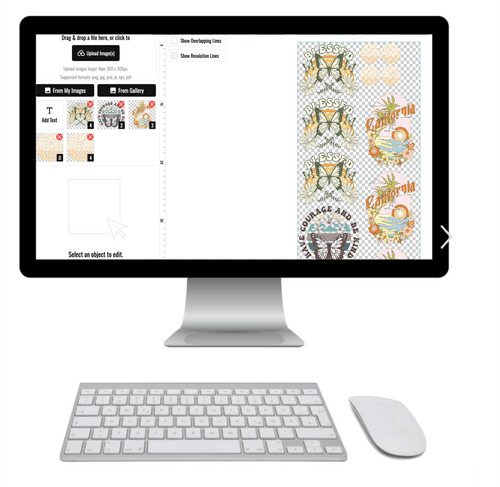
Of course, the right machine is only part of the equation. To really get your business moving, you need to be efficient from the start. That's where smart tools like our Auto-build gang sheet builder come in. It lets you pack multiple designs onto a single sheet, slashing your cost per print and streamlining your entire workflow before you even heat up the press. Combining quality equipment with cost-effective production is how you scale from a side hustle to a real business.
Choosing the Right Heat Press for Your DTF Business
Picking the right heat press is a huge step for any apparel business. It's often the single piece of equipment that separates a hobby from a real, professional operation. When you move beyond basic models, you're looking at specs that directly control the quality and staying power of your prints, especially when using a heat press for transfer paper.
This decision is more crucial than you might think. The global heat transfer paper market was valued at around USD 656.62 million back in 2026 and is on track to hit USD 1,224.5 million by 2034. That's a massive jump, growing at a rate of 6.43% each year. It tells you one thing: a lot of creators are getting into custom apparel. You can read up on the market projections to see just how big the opportunity is.
Platen Size Is Your Production Canvas
The platen is the heated metal plate that does all the work, and its size literally defines what you can and can't create. The key is to match the machine to the jobs you do most often.
- Small Platens (like 9" x 12"): These are perfect for the small stuff. Think baby clothes, tote bags, or just knocking out left-chest logos and sleeve hits. If you're running an Etsy shop focused on children's clothing, a press this size is your best friend.
- Standard Platens (15" x 15" or 16" x 20"): This is the workhorse. A 16" x 20" press is the gold standard for most T-shirt businesses because it can handle nearly any adult-sized design, including those big back graphics. It's incredibly versatile.
- Large-Format Platens (over 16" x 24"): Ready to go big? These are for all-over prints, custom jerseys, or oversized graphics on hoodies and blankets. If your brand is built on those trendy, large-scale designs, this is a must-have.
Always think a step ahead. If you have plans to grow, starting with a larger platen gives you room to breathe and saves you from needing to upgrade later. A bigger platen also means you can press multiple designs at once, which is a game-changer for workflow.
For instance, our Auto-build gang sheet builder lets you pack a single transfer sheet with a ton of different designs. With a 16" x 20" press, you can apply a huge chunk of that sheet in one go, seriously speeding up your production time. It's an easy and cost-effective way to prepare your transfers.
Pressure Systems: Manual vs. Automatic
For DTF transfers to last, consistent pressure is completely non-negotiable. If the pressure is off, the adhesive won't bond right, and you'll end up with faded spots or designs that peel after just a few washes.
A manual press means you are the pressure system. You set the tension and physically lock the handle down. They're affordable, but they can be a source of inconsistency, especially when you get tired or if different people are running the press.
An automatic press (either pneumatic or electromagnetic) uses air or magnets to deliver the exact same amount of force, every single time. If you're running a high-volume shop, that repeatability is everything for quality control. It takes the guesswork out and ensures every shirt is pressed perfectly.
Pro Tip: When you see a PSI (Pounds per Square Inch) setting on a transfer's instructions, that's for an automatic press. For a manual press, you're aiming for a "firm" pressure—the kind where you need to use two hands and some real effort to lock it down.
Control and Consistency: Temperature Controls
The final piece of the puzzle is heat. The adhesive on a DTF transfer needs a very specific temperature to activate correctly. Too little heat, and the design fails. Too much, and you can scorch delicate fabrics like polyester. You can find more tips in our guide to heat press machine settings for t-shirt printing.
Digital controls are the standard for a reason. They let you dial in the exact temperature and time, and the machine holds it steady. This is absolutely critical for getting the same great result across a big batch of shirts.
Analog controls, with their simple dials, are usually found on cheap, entry-level presses. They're far less precise and often suffer from "hot spots" where the platen temperature is uneven. For any serious business, a press with reliable digital controls isn't a luxury—it's a necessary investment.
The Perfect Pressing Process for DTF Transfers
Alright, this is where the theory ends and the real work begins. Your press is hot, your transfers are ready, and it’s time to make something great. Getting a perfect DTF transfer isn't magic—it comes down to a solid, repeatable process.
We’re going to walk through the exact steps to turn that printed film into a clean, durable design that feels like part of the fabric. From prepping the garment to that final satisfying peel, we’ll cover what you need to know to get professional quality every single time.
Good Prep Is Half the Battle
Before you even think about laying down a transfer, there's one quick step that makes all the difference: the pre-press. Every garment, no matter how dry it feels, holds a bit of moisture and has tiny wrinkles you might not even see.
Skipping this is a rookie mistake that almost always leads to bad adhesion. When the press clamps down, that hidden moisture turns to steam and gets in the way of the adhesive, preventing a solid bond with the fabric.
To get ahead of this, just pre-press the garment for 5-10 seconds. This simple step smooths out the surface and gets rid of any moisture, giving your transfer the perfect canvas to stick to.
Nailing Your Transfer Alignment
With a flat, dry garment ready to go, it’s time for placement. A professional-looking shirt starts with perfect alignment. For a standard t-shirt, a good starting point is placing the top of your design about three or four inches below the collar.
- Get Your Tools Out: T-shirt guides, rulers, or laser alignment systems are your best friends here. They take the guesswork out and give you dead-on placement every time.
- The Fold Trick: In a pinch, fold the shirt in half vertically and give it a quick, light press to make a center crease. Do the same for your transfer film, and you can line up the two center marks perfectly.
- Use Heat Tape: On slick fabrics like polyester that love to slide around, a small piece of heat-resistant tape will keep your transfer locked in place when you close the press.

Dialing in Your Settings: Temp, Time, and Pressure
This is the heart of the whole operation. While you should always check the instructions that come with your specific DTF transfers, having a reliable baseline is key. Different fabrics require different settings to get that perfect press. An easy and cost-effective way to get all your designs ready is with our Auto-build gang sheet builder.
Here are the starting points we recommend for our hot-peel DTF transfers.
Recommended Heat Press Settings for DTF Transfers by Fabric
| Fabric Type | Temperature Range | Press Time (Seconds) | Pressure Level | Peel Method |
|---|---|---|---|---|
| 100% Cotton | 280°F | 10 | Medium-Firm | Hot Peel |
| Polyester | 240-250°F | 7-10 | Medium | Hot Peel |
| 50/50 Blends | 270-280°F | 10 | Medium-Firm | Hot Peel |
| Tri-Blends | 270-280°F | 10 | Medium | Hot Peel |
These settings are your starting blocks. It’s always a smart move to test a new fabric or batch of transfers on a scrap piece first to ensure you have everything dialed in just right.
Don’t Forget Protection: Always use a Teflon sheet or a piece of parchment paper over your transfer. It’s a non-negotiable step that keeps ink off your upper platen and protects the garment from scorching.
The Peel and the Finishing Press
Once the timer beeps, open the press for the best part. With hot-peel transfers, you don't wait. While the shirt is still on the platen, peel the film away in one smooth, steady motion.
If you see any part of the design starting to lift with the film, stop. That’s usually a sign your pressure or temperature is a bit too low. Just lay the film back down and press it again for another 3-5 seconds to get it to stick.
After the film is off, you’re not quite done. For a professional matte finish and maximum durability, do one last finishing press. Cover the exposed design with your parchment paper and press for another 5-10 seconds. This final touch really locks the ink into the fibers, improving the washability and giving it a softer feel. For a deeper dive, check out our complete guide on heat press settings for DTF transfers.
Troubleshooting Common Transfer Paper Problems

Even with the best setup, a print will eventually go wrong. It’s frustrating, wastes materials, and can definitely make you second-guess your process. The good news is that most issues with a heat press for transfer paper are simple to diagnose and fix once you know what to look for.
Learning to troubleshoot is one of the most valuable skills you can develop. It saves you time, money, and a lot of headaches. Let’s walk through the most common problems and how to solve them based on real-world shop experience.
Why Is My Transfer Peeling or Cracking After Washing?
This is easily the most common issue new creators run into, and it almost always comes down to a bad bond. When a DTF transfer or transfer paper print starts peeling or cracking after just one wash, it means the adhesive never fully fused with the fabric fibers.
Three things are usually to blame for this adhesion failure:
- Insufficient Pressure: The design might look fine right off the press, but if the pressure was too light, the adhesive never got pushed deep enough into the fabric’s weave. You need firm, even pressure to create a bond that lasts.
- Moisture in the Garment: Fabric holds a surprising amount of moisture. If you skip the 5-10 second pre-press, that moisture turns into steam during the press, which gets in the way of the adhesive. Always pre-press to create a dry canvas for your transfer.
- Incorrect Temperature: If your heat is too low, the adhesive won't activate and melt properly. On the other hand, if it's too high, you can actually burn out the adhesive before it even has a chance to bond.
The Fix: Crank up your pressure to a firm setting—on a manual press, you should feel some real resistance when you lock it down. Never skip the pre-press, and always confirm your temperature is in the recommended range for your specific transfers.
Fixing Dull or Faded Colors
Did your vibrant, colorful design come off the press looking muted and disappointing? This almost always points to an issue with either temperature or time. The inks in a quality transfer need a specific amount of heat for a specific duration to fully “bloom” and hit their intended vibrancy.
This is a classic symptom of a heat press for transfer paper with uneven heating or "cold spots" across its platen—a frequent problem with cheaper, lower-quality machines. One area of your design might look perfect while another part is faded simply because it didn't get enough consistent heat.
Another culprit is just not pressing long enough. The heat needs time to work its way through the film and activate the inks. If you peel too early, the colors never get a chance to reach their full potential. For a deeper dive, check out our guide on the fundamentals of heat transfer paper printing.
Avoiding Scorch Marks and Press Box Outlines
Nothing tanks a great-looking shirt faster than a faint yellow scorch mark or that dreaded square outline from the heat platen. These problems are especially common on sensitive fabrics like polyester or light-colored blends.
- Scorch Marks: This is a dead giveaway that your temperature is too high for the garment. Polyester and tri-blends are notorious for scorching at temperatures over 300°F (149°C).
- Press Box Outline: This happens when you combine too much pressure with a platen that's way bigger than your design. The hard edge of the platen crushes the fabric fibers around the print, leaving a permanent indent.
To solve this, start by lowering your temperature by 5-10 degrees. For the press box outline, dial back your pressure to a medium setting. The real game-changer here is using a heat press pillow or a foam pad inside the shirt. This elevates the print area so only the design itself gets firm pressure, keeping the platen edges off the garment.
Optimizing Your Workflow for Speed and Profit
Once you’ve nailed the basics of using your heat press for transfer paper, the natural next step is to get faster. More speed means more products, and more products mean more profit. This is the moment you shift from a hobbyist mindset to a business-focused one, where your press becomes the engine driving your apparel operation.
This isn’t just about working harder; it’s about working smarter. The market numbers back this up: the heat transfer industry was valued at USD 2.33 billion in 2025 and is on track to hit USD 3.37 billion by 2032, growing at a steady 5.40% CAGR. That growth means there's a huge opportunity for anyone who can produce quality gear efficiently. You can discover more insights about this growing market and what it means for product trends.
Expanding Beyond the T-Shirt
A lot of people think a heat press is just for t-shirts. They're wrong. With a few key accessories, you can unlock entirely new product lines and start charging premium prices. This is where specialized platens come into the picture.
Platens are the interchangeable bottom plates of your press. Investing in a few different sizes can immediately expand what you’re able to offer.
- Hat Platens: These are curved to fit the front panel of a cap, letting you get the firm, even pressure needed for baseball caps, dad hats, and beanies.
- Sleeve/Leg Platens: These long, narrow platens let you isolate a pant leg or a sleeve, so you can press graphics without the rest of the garment bunching up.
- Label Platens: Perfect for small, high-value details. Use them for custom neck tags or branding small items like pouches and tote bags.
Suddenly, that single machine can produce a full line of branded merchandise. You can go from just selling shirts to offering a complete collection of hats, hoodies, and accessories.
The Heart of Efficiency The Pressing Station
A messy workspace will kill your speed. A truly efficient workflow is built around an organized pressing station where every movement has a purpose. This is how you press more shirts per hour with less fatigue.
Think of your space like a professional kitchen's prep line. Every tool has its home, and every step flows logically into the next.
- Garment Prep Area: To your left (if you're right-handed), have a clean surface with your blank shirts stacked and ready. This is where you’ll handle your pre-press.
- The Pressing Zone: Your heat press sits at the center of your universe. Everything you need should be within arm's reach.
- Transfer & Tool Station: To your right, keep your transfers, heat tape, Teflon sheets, and rulers. No more walking away mid-press to find something.
- Cooling & Folding Area: A table or rack behind you is perfect for letting finished shirts cool down before you fold and stack them for shipping.
This "U-shaped" layout is a classic for a reason. It minimizes wasted steps and keeps you focused, which translates directly into faster production times and better profit margins.
The Ultimate Cost Saver Ganging Your Designs
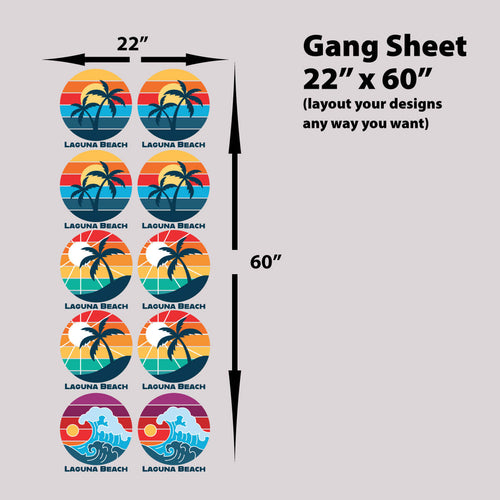
If there's one strategy that will slash your costs and make you more money, it's ganging your designs. Instead of ordering individual transfers for every small logo or tag, you arrange multiple designs onto one large sheet. The cost per print drops dramatically.
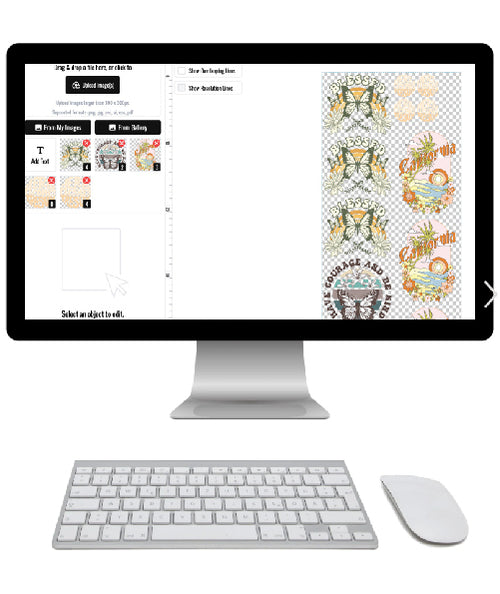
Our Auto-build gang sheet builder was designed specifically for this. It's a simple, powerful tool that lets you drag and drop your artwork onto a digital canvas, and it automatically nests everything to use every square inch of film.
Think about it: instead of paying separately for a chest logo, two sleeve graphics, and a neck tag, you get them all for a single sheet price. This isn't just about saving money on materials—it's about saving time. You can prep and press multiple graphics at once. It’s simply the smartest and most profitable way to order transfers.
Frequently Asked Questions
Even with the best instructions, you're bound to have questions when you're dialing in a new process. We get it. Here are some quick, no-nonsense answers to the most common issues people run into when using a heat press for transfer paper. Let's solve these common roadblocks so you can get back to what you do best—making awesome products.
Can I Use a Home Iron Instead of a Heat Press for DTF Transfers?
Technically, yes, but for any professional or long-lasting result, a home iron is a terrible idea. A real heat press gives you two things an iron just can’t deliver: consistent, even heat across the entire surface and uniform, measurable pressure.
Irons are famous for hot spots and cool zones, which means you’ll get uneven adhesion every time. More importantly, you're relying on your own strength for pressure, which is impossible to apply evenly. This is the fast track to transfers that peel, crack, or wash away because the adhesive never properly bonded in the first place. For quality work, a heat press is a non-negotiable investment.
Why Are My DTF Transfers Cracking or Peeling After Washing?
This is the number one issue we see, and it almost always comes down to one of three things: the wrong temperature, not enough pressure, or skipping the pre-press. If the heat from your press is too low, the DTF adhesive won't melt and activate correctly.
If your pressure is too light, the transfer won’t be pushed securely into the fabric fibers to create a solid mechanical bond. And finally, every garment holds moisture; pre-pressing for 5-10 seconds is absolutely essential to remove it. If you skip this, you're trapping steam that gets in the way of proper adhesion. Always double-check your settings against the recommendations for your specific transfers and fabric type.
Expert Insight: When you’re troubleshooting adhesion problems, always check your pressure first. Most beginners are way too timid with it. On a manual press, it should take some real effort to lock that handle down.
How Do I Prevent the Square Outline of the Press on My Shirts?
Ah, the dreaded "press box." That faint outline is usually caused by too much pressure or using a heat platen that’s way bigger than your actual design. You'll see it most often on sensitive fabrics like polyester and tri-blends, where the heat and force can easily flatten the fibers.
To fix it, start by backing off your pressure setting. For many fabrics, a medium pressure is more than enough. The best fix, though, is to use a heat press pillow or a foam pad inside the shirt. This raises the print area so the press only makes firm contact where your design is, which softens the pressure at the edges and prevents that sharp outline from forming.
What Is a Gang Sheet and How Does It Help My Business?
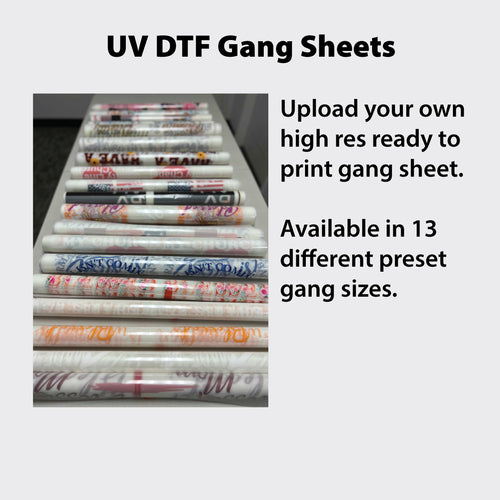
A gang sheet is a large transfer sheet where multiple designs are printed together—or "ganged up." Instead of ordering dozens of individual small transfers for logos, neck tags, or different graphics, you arrange them all onto one large sheet to be printed at the same time.
For any shop trying to save money and time, this is a game-changing strategy. It drastically lowers your cost per individual design and makes managing your inventory so much simpler. For example, our Auto-build gang sheet builder lets you easily drag-and-drop all the designs for an upcoming job onto a single sheet for one low price. For high-volume shops or brands with a lot of different designs, it's easily the most cost-effective way to order.
Ready to create durable, vibrant, and professional custom apparel? Lion DTF offers premium hot-peel DTF transfers that are tested to last 100+ washes and ship in as little as one business day. Build your custom gang sheet today and see how easy professional printing can be.