



If you want to create professional, long-lasting custom apparel, a quality heat press machine for t shirt printing is the single most important tool you'll own. Think of it as a specialized oven, using precise heat and even pressure to permanently lock your designs into the fabric. It delivers a level of quality that a simple iron just can't touch.
Why a Heat Press Is Your Most Important T-Shirt Printing Tool
Welcome to the world of professional T-shirt making. In this space, one piece of gear stands above all others as the cornerstone of quality: the heat press. Don't just see it as a machine; see it as the critical link between your creative ideas and a real, high-quality product that people will actually want to wear.
Its job is simple but requires precision: it applies heat and pressure for a specific amount of time to fuse a graphic onto a garment.
This controlled process is what separates a DIY hobby project from professional, sellable apparel. A home iron gives you spotty heat and inconsistent pressure, but a heat press guarantees your designs are bonded edge-to-edge, with vibrant colors that survive wash after wash. For a deeper dive into different models, check out this complete heat press machine guide.
From Garage Startups to Production Shops
The versatility of the heat press has made it the industry standard, period. Whether you're an entrepreneur just starting out in your garage or a high-volume print shop handling massive orders, this tool is essential. It’s the key to working with nearly every popular transfer type, especially Direct-to-Film (DTF).
A quality heat press that delivers accurate time, temperature, and pressure is the key to creating high-quality, durable products. Without consistency in these three areas, even the best transfers can fail, leading to wasted inventory and unhappy clients.
Maximizing Efficiency and Profit
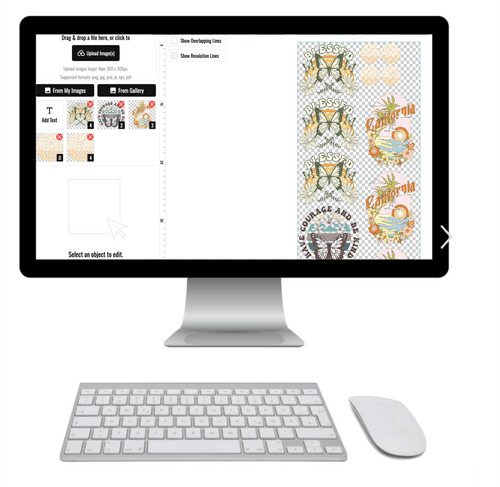
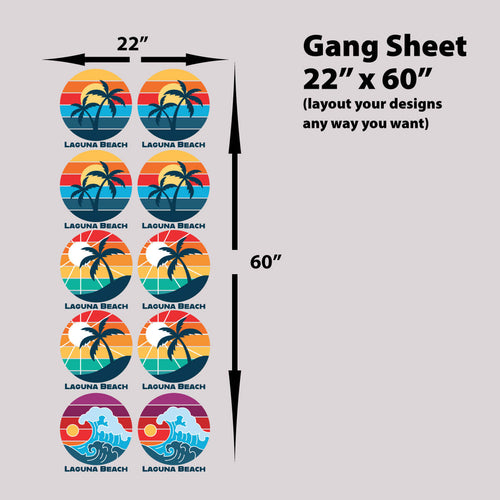
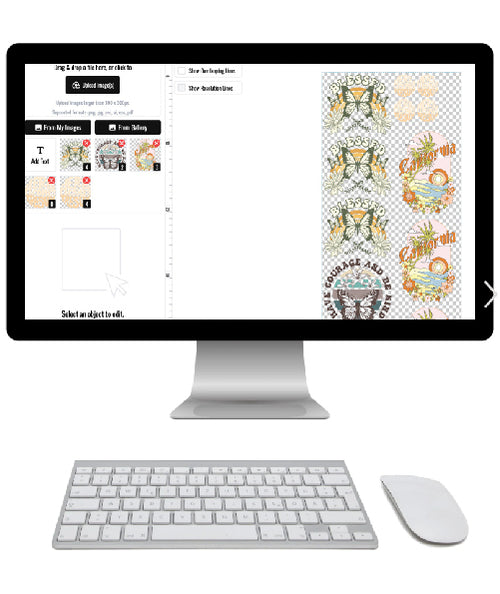
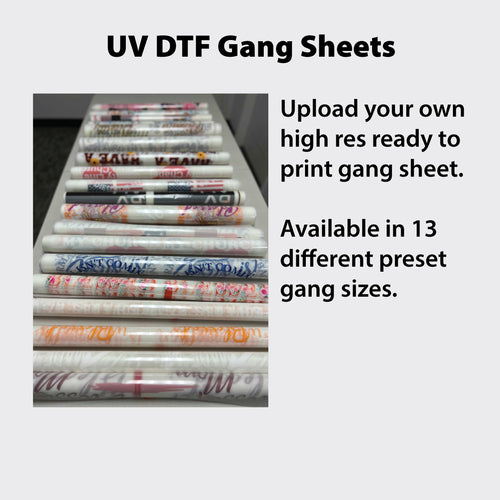
A good workflow starts long before you even power on the press. This is where smart preparation comes in. For instance, our Auto-build gang sheet builder lets you cram multiple designs onto a single sheet, which drastically cuts down on material waste and lowers your cost per print. That kind of efficiency makes your whole T-shirt printing operation more profitable from day one.
Understanding the relationship between the press and your transfers is everything. You can learn more about why a heat press is essential for DTFs in our detailed guide. In this article, we'll walk you through everything you need to know—from picking the right machine to dialing it in for perfect prints, every single time.
Choosing Your Press: Clamshell, Swing-Away, or Draw?
Not all heat presses are created equal, and picking the right style is your first big decision on the road to printing success. The design of a heat press machine for t shirt printing has a huge impact on your workflow, the space you need, and even your safety. Getting to know the three main types—Clamshell, Swing-Away, and Draw—is the key to finding the perfect match for your goals.
It's no surprise these machines are becoming more popular. The global market for heat presses is sitting around $500 million and is projected to climb by 8% annually through 2033, all thanks to the worldwide demand for custom apparel. As the market gets bigger, having the right gear becomes even more important for standing out. You can read more about this market growth trend if you want to dig into the numbers.
The Compact Clamshell Press
Think of a clamshell press like a big waffle iron or a panini maker. The top platen lifts straight up on a hinge at the back, opening and closing in one simple motion. This design makes it a fantastic choice if you're tight on space—think a small craft room, a corner of the garage, or a pop-up kiosk at a live event.
But its biggest strength is also its main weakness. Since the hot top platen is always hovering right over the lower platen, your workspace for laying out the shirt and transfer is pretty tight. This can make it tricky to get perfect alignment and raises the risk of accidentally burning your knuckles while you work.
- Best For: Beginners, small spaces, and banging out high-volume runs of simple, centered designs where speed is key.
- Keep in Mind: The limited access means you have to be extra careful with your hand placement to avoid burns.
The Accessible Swing-Away Press
A swing-away press completely solves the access problem you get with a clamshell. Instead of lifting straight up, the heated top platen swings out to the side, leaving the lower platen totally exposed. This gives you a wide-open, unobstructed area to lay out your garment and perfectly position your DTF transfers without worrying about brushing up against a hot surface.
The trade-off? Space. You need a good amount of clearance on at least one side of the machine to let the top platen swing out all the way. That makes it a no-go for tight spots, but it's an absolute game-changer for anyone working with complex, multi-part designs or thicker items like hoodies and jackets.
The unobstructed view you get with a swing-away is a huge win for accuracy. It lets you perfectly align intricate graphics, like those on a packed gang sheet, and get professional results every single time.
To get the most out of any press, our Auto-build gang sheet builder is a tool you can't live without. It lets you pack multiple designs onto one sheet before printing, which cuts down on waste and lowers your cost per item. This is especially handy when you're placing several smaller graphics on a garment—a task made much, much easier with the clear workspace of a swing-away.
The Hybrid Draw Press
The draw press offers a smart compromise between the other two styles. The top platen lifts up like a clamshell, but the bottom platen slides out toward you like a drawer. This setup gives you the easy, burn-free access of a swing-away without needing all that extra side clearance.
You can prep your t-shirt and transfers on the extended lower platen and then just slide it back under the heat. This makes it a fantastic solution for people who want better access and safety but just don't have the room for a full swing-away model. It really does combine the best of both worlds, offering a user-friendly and space-conscious option.
Comparing Heat Press Machine Types
To make the choice a little easier, here's a quick side-by-side look at how the three main types of heat presses stack up against each other. Think about your available workspace, the types of products you'll be making, and how much you value speed versus precision.
| Feature | Clamshell Press | Swing-Away Press | Draw Press |
|---|---|---|---|
| Footprint | Small & compact | Large (needs side clearance) | Medium (needs front clearance) |
| Workspace Access | Limited & restricted | Excellent & unobstructed | Excellent & unobstructed |
| Best For | Speed, simple designs, tight spaces | Precision, thick items, safety | A mix of space-saving and access |
| Ease of Use | Very simple, fast operation | Slower operation but safer layout | Easy layout, simple pressing motion |
| Price Point | Generally the most affordable | Tends to be more expensive | Mid-to-high range |
| Burn Risk | Higher risk due to hovering platen | Lowest risk, platen is moved away | Low risk, platen slides out |
Ultimately, there's no single "best" press—only the best press for your needs. This table should help you quickly identify which style aligns with your shop's reality.
Understanding the Features That Matter Most
Beyond the basic style, the technical specs of a heat press machine for t shirt printing will absolutely make or break your final product. Getting a machine with the right features isn't just a good idea—it's non-negotiable if you want to produce professional, durable apparel. Think of this as your buyer's checklist for making a smart, long-term investment.
The market is definitely booming. Global sales for custom decorated t-shirt printing machines hit $1.2 billion and are on track to hit $1.9 billion by 2033. That growth is great for buyers—it means more options and better tech. But it also means more potential pitfalls. To get a better sense of this expansion, you can explore the full market forecast.
The Heart of the Machine: Platen Size and Quality
First things first: let's talk about the platen. This is the flat, heated surface that does all the heavy lifting, so its size and material are critical.
-
Platen Size: A 15"x15" platen is the industry workhorse for a reason. It’s versatile enough to handle the vast majority of adult t-shirts, from small to XL, making it the perfect starting point for most shops. But if you know you'll be doing oversized graphics or pressing larger items like hoodies and jackets, go straight for a 16"x20" platen. You'll be glad you did.
-
Platen Material: You want a platen coated with a non-stick material, almost always Teflon. This coating is a lifesaver, preventing stray ink and adhesives from sticking to the surface. It makes cleanup a breeze and, more importantly, protects your garments from stains.
A quality platen is the foundation of a good press. It's what ensures your heat is delivered exactly where it needs to go, every single time.
The Non-Negotiables: Consistent Heat and Even Pressure
If a heat press fails in one of these two areas, it’s basically a giant, expensive paperweight. Inconsistent heat and pressure are the top culprits behind peeling transfers, faded colors, and a growing pile of wasted inventory.
Consistent Temperature
Cheaper machines are notorious for having "cold spots"—areas on the platen that just don't reach the set temperature. Even a small variance of a few seconds is enough to completely ruin a transfer. When you're shopping, look for machines that advertise edge-to-edge heating elements. This design ensures the entire surface maintains a steady, consistent temperature, which is absolutely critical for curing DTF transfers properly.
Even Pressure
Pressure is just as important as heat. The press has to apply uniform force across the entire design, from corner to corner. Here's a quick test: if you can slide a piece of paper out from under a corner of the platen when it's clamped down, your pressure is uneven. That will lead to parts of your design not sticking correctly. A well-built frame and a solid clamping mechanism are the tell-tale signs of a machine that can deliver the goods.
Think of it like this: a cheap press with uneven heat is like trying to bake a cake in an oven that’s blazing hot in one corner and cold in the other. No matter how good your recipe (or your transfer), the result is going to be a disaster.
Controls and Usability: Digital vs. Manual
How you set your time and temperature directly impacts your efficiency and, more importantly, your accuracy. Modern machines have moved to digital controls, and for good reason—they're far superior to the old manual or analog dials.
-
Digital Controls: These give you precise, easy-to-read displays for both temperature and time. You can dial in your temp to the exact degree and your timer to the exact second, which completely eliminates guesswork. That kind of precision is essential for getting repeatable, professional results with every single press.
-
Manual Controls: Those old-school analog dials are just less accurate and can be a real pain to set with any confidence. While they might save you a few bucks upfront, the inconsistency they introduce will cost you way more in the long run through failed prints and wasted materials.
Investing in digital controls is one of the smartest moves you can make. It streamlines your entire workflow, especially when you're working with multiple designs on a single sheet using our Auto-build gang sheet builder. When every graphic on that sheet needs the same perfect settings, precision isn't a luxury—it's how you save time and money.
Your Step-By-Step Guide to a Perfect Press With DTF Transfers
Alright, you've got the hardware sorted. Now it's time to put that heat press machine for t shirt printing to work and get some incredible results. This is your practical, step-by-step guide for pressing Direct-to-Film (DTF) transfers, one of the best methods out there for vibrant, durable custom apparel.
Remember, the right technique is every bit as important as the right machine. Nailing the process is what separates an amateur print from a professional-grade one that you can proudly sell.
Prep Your Designs and Workspace Before Anything Else
A great press actually starts long before you even plug in the machine. Smart preparation is the secret to saving time and, more importantly, money. This is where getting your designs ganged up efficiently makes a huge difference. For ease of use and cost-effectiveness, an intuitive tool like our Auto-build gang sheet builder can be a game-changer, allowing you to maximize every inch of your transfer film.
Once your designs are ready, turn your attention to your station. Make sure your workspace is clean and totally free of lint, dust, or stray hairs. It sounds minor, but any little speck can get trapped under the transfer and ruin an otherwise perfect garment.
With the area clean, it's time for the most critical prep step of all: the pre-press. Lay your t-shirt on the lower platen and give it a quick press for 3-5 seconds. This does two crucial things: it evaporates any hidden moisture lurking in the fabric and smooths out every last wrinkle. Seriously, don't skip this. It's one of the most common reasons transfers fail to stick properly.
Dialing in the Perfect Settings
Garment prepped? Good. Now, let's get your machine dialed in. The three pillars of a perfect press are temperature, time, and pressure. For DTF transfers, getting these right isn't just a suggestion—it's non-negotiable.
-
Temperature: For Lion DTF hot-peel transfers, the sweet spot is right around 240-280°F. This range is hot enough to fully cure the adhesive without scorching the fabric.
-
Time: You don't need long. A dwell time of 10 seconds is typically all it takes to activate the adhesive and create a permanent bond.
-
Pressure: You're aiming for medium to firm pressure. The idea is to make sure heat is applied evenly and forcefully across the entire design, leaving no cold spots.
This simple checklist is a great visual reminder of the three core elements to check before every single press. Consistency is key.
Treat these three settings—clean platen, correct temp, and even pressure—as your foundation. Get them right, and you're already 90% of the way to a perfect print.
The Pressing and Peeling Process
Here we go—the main event. Carefully place your DTF transfer onto the pre-pressed shirt, design facing up. A T-square ruler can be a lifesaver for getting perfect alignment every time.
Once you're happy with the placement, cover the transfer with a Teflon sheet or a piece of parchment paper. This protects both the garment and your heat platen from any mishaps.
Close the press and start the timer. As soon as it beeps, open the machine smoothly. For our hot-peel transfers, you're going to peel the film away immediately while it's still hot. Grab a corner and pull it back in one smooth, confident motion. Don't hesitate! This immediate peel is what gives you that vibrant, soft-to-the-touch finish.
If you want an even deeper dive into the process, our guide on how to use a heat press machine has some extra pro tips.
Pro Tip: Want an extra-durable, matte finish? Try a quick second press. After you peel the film, cover the design with parchment paper and press it again for another 5-7 seconds. This final touch really helps meld the ink into the fabric fibers for maximum longevity.
By following these steps and paying attention to the details, you'll be able to consistently produce high-quality custom shirts that not only look professional but are built to last through wash after wash.
Troubleshooting Common Heat Press Problems
Even the most reliable heat press machine for t shirt printing is going to give you a headache now and then. When a print goes wrong, it’s easy to point the finger at the transfer, but more often than not, the real issue is hiding in the application process. Let's walk through how to diagnose and fix the most common t-shirt printing problems, saving you time, materials, and a whole lot of frustration.
Don't panic when a print fails. Most of these issues are surprisingly easy to solve with a few simple tweaks to your settings or technique. Getting back to flawless prints is usually just a matter of figuring out what went wrong.
Solving Peeling or Faded Transfers
One of the most common complaints we hear is about a transfer that peels up at the edges or just looks washed out right after pressing. This almost always comes down to a problem with one of the three kings of heat pressing: temperature, time, or pressure.
First, check your heat. If the platen is too cool, the DTF adhesive won't activate properly, giving you a weak bond. On the flip side, too much heat can scorch the shirt and cook the ink, making it brittle.
Next up is pressure. Uneven or weak pressure is probably the biggest reason for failed prints. Here’s a quick trick: tear four small pieces of paper and place one in each corner of the platen. Clamp it down and try to pull them out. If any of them slide out without a fight, your pressure is uneven and needs to be adjusted.
Inconsistent results are the enemy of a profitable print shop. A failed print isn't just one wasted shirt; it's lost time, materials, and a potential hit to your reputation. Mastering troubleshooting is a non-negotiable skill for professional-quality results.
Finally, look at your dwell time. If you aren't pressing for long enough, you're not giving the heat and pressure enough time to do their job and create a permanent bond between the transfer and the garment.
Eliminating Ghosting and Press Marks
Ever peel back your film only to find a faint, blurry shadow right next to your design? That's called "ghosting." It happens when the transfer sheet shifts—even just a tiny bit—as you open or close the press. The fix is simple: use a few small pieces of heat-resistant tape to lock down the corners of your transfer before you press. Problem solved.
Another classic annoyance is the "press box"—that faint rectangle left on the shirt from the edges of the platen.
Here are a couple of ways to get rid of it:
- Use a Heat Press Pillow: Slide a foam pillow inside the shirt to raise the print area. This focuses all the pressure directly on the transfer, keeping the platen's hard edges from making contact with the surrounding fabric.
- Adjust Your Pressure: Sometimes, all you need to do is back off the pressure from firm to medium. This is often enough to prevent the press box from appearing without compromising the transfer quality.
For a deeper dive into getting that perfect press, you might want to check out our article on tips and tricks for beginners pressing DTF transfers on t-shirts.
Keeping Your Machine in Top Condition
The best way to troubleshoot is to prevent problems in the first place, and that comes down to good maintenance. If you ever have an "oops" moment and press a transfer upside down, getting adhesive all over your top platen, act fast. Turn off the machine, and while it's still warm (not scorching hot!), gently scrub the gunk off with a soft cloth.
Making a habit of wiping down your upper platen after you're done for the day prevents any residue from building up and messing with your next project. It's a small step that makes a huge difference in keeping your workflow clean and efficient, preventing a ton of problems before they can even start.
Safety Guidelines and Smart Investment Tips
Running a heat press isn't just about making great shirts; it's about doing it safely and making a smart financial choice. Get these two things right, and you're building a business that's not just profitable but sustainable. It's about protecting yourself and your bottom line.
First, let's talk about the non-negotiables. The platens on your heat press get incredibly hot—hot enough to cause a serious burn in a split second. Always keep your workspace clean and clear of clutter, especially flammable materials. Good ventilation is a must to keep fumes from building up, and getting into the habit of using heat-resistant gloves is just plain smart.
To keep everyone on the same page, it's a good idea to have some documented rules. This practical safe operating procedure sample is a great place to start building your own.
Calculating the True Cost of Ownership
When you’re budgeting for a new press, that initial price tag is only part of the story. To understand the real investment, you have to look at the true cost of ownership, which includes everything you'll spend to keep it running. A cheap machine that's always down for repairs can bleed you dry faster than a slightly more expensive but reliable one.
Keep these ongoing costs in mind:
- Consumables: Things like Teflon sheets, heat-resistant tape, and heat press pillows are essential for quality work. You'll be replacing them regularly.
- Energy Consumption: A heat press pulls a lot of power. If you're running it all day, you're going to see it on your electricity bill.
- Maintenance and Repairs: This is where a good brand with a solid warranty really pays off. A budget press that breaks down doesn't just cost you in repair bills; it costs you in lost income every minute it's not working.
Investing for Growth and Profitability
Think of your heat press as a direct investment in your shop's potential. The custom t-shirt market is blowing up, projected to grow by USD 2.23 billion by 2029. With one in five people willing to pay a 20% premium for personalized gear, the demand is there. E-commerce apparel sales are climbing 22% year over year, making a dependable machine a core part of your business, not just a tool.
A quality heat press doesn't just make shirts; it builds your reputation. Every perfectly pressed garment that leaves your shop is a testament to your professionalism, leading to repeat business and positive reviews.
At the end of the day, a smart investment pays for itself through efficiency, reliability, and the quality of your finished product. That's especially true when you pair a great press with tools designed to boost your profitability, like our Auto-build gang sheet builder. It’s designed to cut down on transfer waste, making sure you get the most out of every single order. Looking at the whole picture is how you make an investment that's both safe and incredibly smart.
Still Have Questions About T-Shirt Heat Presses?
Even after you've nailed down the basics, a few questions always pop up when you're getting started with a heat press machine for t-shirt printing. Let's clear up some of the most common ones we hear so you can get to work with total confidence.
What Are the Best Settings for DTF Transfers?
For most of the hot-peel DTF transfers you'll be working with on cotton or poly-blends, a solid starting point is 260-280°F. Aim for a press time of 10 seconds with medium-to-firm pressure to get a really strong bond.
But here's the one step you can't skip: always pre-press your t-shirt for 3-5 seconds. This little move gets rid of any hidden moisture in the fabric, which is the number one culprit behind transfers that just won't stick right.
Can I Just Use a Regular Iron Instead of a Heat Press?
It's tempting to try, especially for a one-off project, but a home iron just can't do what a dedicated heat press does. A press delivers two things an iron can't: perfectly consistent temperature across the whole design and even, sustained pressure.
If you use an iron, you're almost guaranteed to end up with peeling, cracking, and a finish that looks homemade—and won't last more than a couple of washes.
A heat press is really an investment in consistency. It ensures every single item you make hits the same professional standard, which is everything when you're trying to build a brand and keep customers coming back.
How Do I Stop the Press from Leaving a Mark on My Shirts?
Ah, the dreaded "press box." That faint square outline is a common headache when you're new to this. The best way to beat it is to use a heat press pillow or a foam pad inside the shirt.
These accessories lift the printing area up just enough so the platen’s pressure is focused only on the transfer itself, not the fabric edges around it. You can also try backing off the pressure setting just a little bit; often that's enough to fix the problem without hurting the print quality. And when you're setting up your art, remember that our Auto-build gang sheet builder is perfect for arranging multiple designs efficiently, making it easier to plan your placement and avoid those press box issues on more complex jobs.
Ready to start making incredible, long-lasting custom apparel? The team at Lion DTF Transfers delivers premium hot-peel DTF transfers that bring your designs to life with brilliant color and a super-soft feel. Build your gang sheet and get your order in today!