




DTG printer cost runs from $3,000 for entry-level machines to over $200,000 for industrial systems, and that wide range is only the first layer of the budget. A realistic mid-range setup can push your upfront spend to more than $17,350 before inventory or rent, so the printer price alone won't tell you what ownership costs.
Those exploring dtg printer cost are standing in the same spot. They want to print full-color shirts, avoid outsourcing, and keep more margin in-house. On paper, buying a machine sounds like the moment the business becomes real.
Then the quotes start coming in. One printer looks affordable. Another jumps way up. Then someone mentions pretreat, curing, software, ink, platens, cleaning, and the fact that a dead machine means you can't produce at all.
That's the key conversation. The right question isn't "What does a DTG printer cost?" It's "What will this setup cost me to own, run, and depend on?"
Why the Sticker Price Is Just the Beginning
A lot of new apparel businesses start with a simple mental math problem. If a printer costs a certain amount, and each shirt sells for a healthy retail price, the machine should pay for itself. That logic feels clean, but shop work rarely stays clean for long.
The first trap is assuming the printer is the business. It isn't. The printer is one tool in a chain that includes pretreatment, curing, artwork prep, shirt handling, consumables, troubleshooting, and reprints. If any one part of that chain is weak, the machine becomes an expensive bottleneck instead of a profit center.

What new owners usually miss
Someone sees a used or entry-level DTG machine and thinks they've found the shortcut. That can work in very specific situations, but most first-time owners underestimate how many extra moving pieces show up on day one.
Three costs usually hit hardest:
- Support equipment: You need more than the printer to produce finished shirts consistently.
- Recurring materials: Ink, pretreat, cleaning supplies, and test prints don't stop after the install.
- Interruption risk: If the printer is down, the orders still exist, but production doesn't.
Practical rule: If your budget only covers the machine, you don't have a DTG budget yet.
TCO matters more than purchase price
The useful lens here is total cost of ownership, or TCO. That means startup equipment, ongoing materials, labor friction, and the financial strain of maintenance and downtime.
A printer can look cheap and still become the expensive choice once you factor in what it takes to keep it productive. That's why a narrow focus on sticker price leads people into bad buying decisions. They compare machine to machine, when they should be comparing business models.
Breaking Down DTG Printer Price Tiers
A newcomer sees a DTG printer listed for a few thousand dollars and assumes the hard part is over. In practice, the price tier you choose determines how much labor, maintenance pressure, and downtime risk you are agreeing to live with.
Published market listings from ColDesi's DTG printer catalog and Mimaki's direct-to-garment product line show how wide the spread can get. Entry-level units sit in the low thousands. Production-focused systems move into the five-figure range fast. Industrial platforms can climb far beyond that once automation, throughput, and service contracts enter the picture.
Entry-level machines
Entry-level DTG printers appeal to side hustles, startups, and shops that want to test demand without tying up too much cash. That lower buy-in is real. So is the extra hands-on work.
These machines usually ask more from the operator. Expect slower output, tighter maintenance windows, more manual alignment, and less room for error on dark garments. A budget printer can make saleable shirts, but it often does so by shifting cost away from the invoice and onto your time.
That matters more than many buyers expect.
If one person is spending the morning unclogging lines, re-running test prints, and babysitting pretreat results, the printer did not stay cheap. It just changed where the expense shows up.
Mid-range machines
Mid-range DTG equipment is where many small shops get serious. You are paying for better consistency, stronger print quality, and a workflow that breaks less often under normal order volume.
In my experience, this is the tier where owners start to feel the difference between "I own a printer" and "I can reliably fill orders." Better printheads, improved platen options, and more stable software reduce reprints and operator frustration. Shops also tend to pair these machines with better finishing tools, including a heat press setup built for t-shirt production, because weak curing or poor finishing can waste a good print.
Mid-range still carries risk. You are spending more upfront, and the machine still needs daily attention. The gain is that you usually get fewer workflow interruptions and more predictable output.
Professional and industrial systems
Professional and industrial DTG systems belong to shops with real volume, trained staff, and enough demand to keep the equipment busy. The higher price reflects more than print speed. You are buying automation, production capacity, stronger support infrastructure, and a machine that is supposed to hold up under pressure.
The history of DTG pricing helps explain why these systems still command serious money. NW Custom Apparel's overview of DTG history notes that early commercial DTG machines were expensive and often difficult to run well. Modern systems are better, but the core economics have not changed much. Higher-volume DTG still requires capital, disciplined maintenance, and enough throughput to justify both.
For a shop with steady contract work, that math can make sense. For a small operator with uneven order flow, it can become a very expensive bet.
Why the tiers feel so different in real use
The gap between tiers shows up in daily operations more than spec sheets.
| Tier | Typical buyer | What usually drives the real cost |
|---|---|---|
| Entry-level | Startup, hobby seller, low-volume shop | More manual labor, slower production, higher interruption risk |
| Mid-range | Small shop with steady orders | Better consistency, but still maintenance-heavy |
| Professional or industrial | Established production shop | High capital exposure, justified only by sustained volume |
The smart question is not which DTG printer costs the least to buy. The better question is which tier fits your order volume without turning downtime, maintenance labor, and missed deadlines into a second monthly payment.
That is also where many shops start comparing DTG ownership to DTF transfers. A transfer-based model gives up some in-house control, but it removes a lot of the financial volatility that sits behind the DTG price tag.
Budgeting for Essential DTG Startup Equipment
A new shop owner buys a DTG printer, gets it delivered, and realizes the machine cannot produce sellable shirts yet. There is no pretreat setup, no curing workflow, no spare platens, and no workstation ready to run files. Cash is already tied up, but production still cannot start.
That mistake is common because the printer gets marketed as the business. It is only one part of the business.
A workable DTG startup budget needs to cover the full production chain, from garment prep to curing to file output. If one piece is missing or underbought, the printer sits idle, jobs back up, and your real startup cost climbs fast.
The equipment budget that catches people off guard
The printer is the headline number. The supporting equipment is what turns that printer into a functioning shop.
A realistic setup usually includes pretreatment equipment, a heat press, a dedicated computer, design and RIP software, extra platens, and a starting stock of shop supplies. Epson’s SureColor F2100 product information gives a clear view of how DTG systems are sold. You see the printer first. You still need the rest of the workflow around it.
That is where early budgeting errors happen. New operators leave room for the printer payment, then start patching together the rest with whatever cash is left. In practice, that usually means slower setup, weaker consistency, and more wasted garments during the learning curve.

Why each piece changes your real cost
Some tools add convenience. Others protect margin.
- Pre-treatment equipment: Dark garments depend on even pretreat application. If coverage is inconsistent, prints can look dull, stain, or wash out early. That means reprints, wasted blanks, and customer service problems.
- Heat press: You need reliable curing for pretreat and finished prints. A bad press creates production delays just as quickly as a bad printer. If you are comparing options, this guide to heat press machines for t-shirt printing gives a useful baseline.
- Computer and software: DTG does not run well on an old office laptop. File prep, color handling, RIP settings, and print queue management all depend on stable hardware and software.
- Platens and accessories: The right platen mix cuts setup time and helps print placement stay consistent. The wrong mix forces workarounds that slow operators down all day.
I have seen shops try to save money by postponing one or two of these purchases. They usually pay for it later in wasted labor, spoiled shirts, or missed turnaround times.
Budget in three buckets
A simple budget works better than a vague estimate. Put every line item into one of these groups before you buy the printer.
-
Production equipment
Printer, pretreat setup, heat press, curing tools, platens. -
Digital workflow
Computer, RIP software, design software, file storage, backup basics. -
Startup readiness
Cleaning supplies, test garments, spare small parts, organization, and room in the budget for setup mistakes.
That last bucket gets ignored too often. DTG startup rarely goes exactly to plan. Shops burn time and money dialing in pretreat levels, garment profiles, curing settings, and artwork prep. If the budget has no cushion for those mistakes, the machine becomes a financial stress point before it has earned anything back.
The practical lesson is simple. Budget for a working system, not a printer in a box. That approach gives you a truer total cost of ownership from day one, and it makes the comparison to outsourced DTF transfers much more honest.
Calculating Your Ongoing Operational Costs
The upfront investment gets attention because it's obvious. The ongoing costs matter more because they decide whether each job is healthy, marginal, or not worth taking.
DTG is a consumables business wrapped around a printer. If you don't understand what the machine burns through every week, you won't price jobs correctly, and you'll have no idea why cash feels tighter than sales suggest.

The material costs that keep showing up
Published cost guidance puts DTG ink at $200 to $600 per liter and pretreatment fluid at $40 to $100 per gallon, with white ink usage for dark garments running 30% to 50% higher. For a small business, annual consumable costs can reach $8,000 to $15,000, according to MTU Tech's DTG cost breakdown.
That explains why dark shirts change the economics. A simple print on a light cotton tee and a bold design on a dark garment don't put the same stress on your material budget. White ink and pretreat are where newcomers often underquote jobs.
How to think about cost per print
You don't need a complicated spreadsheet to start. You do need discipline.
Track these inputs on every order:
- Ink intensity: Light shirt versus dark shirt changes consumption immediately.
- Pretreat use: Relevant whenever white ink or dark garments enter the job.
- Waste: Test prints, misprints, and cleaning cycles count.
- Handling time: Setup, loading, curing, and repressing aren't free labor.
If you need a practical framework for turning those inputs into selling prices, this guide on how to price custom shirts is a good companion to the cost side of the equation.
What works and what doesn't
What works is building your pricing around real shop behavior. Assume some waste. Assume some cleaning. Assume certain jobs will take longer than the artwork suggests.
What doesn't work is pricing every shirt as if the machine runs perfectly and every print uses the same amount of white. That's how a job looks profitable on paper and disappoints in production.
This walkthrough gives a decent visual of where day-to-day DTG expense comes from:
Dark garments expose weak pricing fast. If your numbers are too optimistic, white ink will find the mistake for you.
The Unseen Financial Risks of DTG Ownership
The biggest blind spot in dtg printer cost isn't the printer, the pretreat unit, or even the ink. It's the cost of uncertainty.
Most buyers can handle known expenses. They can budget for software, supplies, and part of the learning curve. What hurts is the category that doesn't show up cleanly in product listings or most buying guides: machine downtime, failed jobs, missed due dates, and the pressure of having revenue tied to one piece of equipment.
Downtime has a real cost even when nobody can quote it cleanly
One published warning captures the problem well. Guides talk about maintenance, but they rarely quantify what a breakdown does to a small business. A $5,000 DTG printer breaking during a holiday rush could cost thousands in lost orders and reputational damage, and that risk usually isn't reflected in the initial machine price, as noted in MTU Tech's DTG printer price guide discussion.
That matters because production businesses don't lose money only when they spend money. They also lose money when they can't fulfill work they already sold.
The data gap is part of the risk
There is a notable gap in published numbers around maintenance and failure. Search results discuss cheap printers costing more over time, and they imply that industrial-grade parts and automation improve reliability, but they don't provide clear comparative data on failure rates, repair totals, or average downtime burden. That gap itself should make a new owner cautious.
If you're betting your order calendar on one machine, you need to ask practical questions that glossy pricing guides avoid:
- What happens if the print head clogs and won't recover quickly?
- Can you reroute production the same day?
- Do you have backup capacity, or does the whole workflow stop?
- Will customers wait, or will they move to another vendor?
A machine problem becomes a customer problem fast. Customers rarely care whether the issue was maintenance, humidity, software, or parts delay.
What experienced operators watch closely
The cost of a DTG setup isn't only measured in dollars. It's also measured in operational fragility.
New owners should pay attention to:
| Risk area | Why it matters |
|---|---|
| Single-machine dependence | One failure can halt fulfillment |
| Maintenance complexity | More operator time gets pulled into recovery work |
| Peak-season pressure | Problems hurt most when order volume is highest |
| Reputation damage | Missed deadlines can affect repeat business |
This is the piece many cost comparisons leave out. Ownership gives control, but it also concentrates risk. If your business depends on guaranteed output, unplanned downtime isn't a side issue. It's one of the central financial questions.
DTG Ownership vs DTF Transfers A Cost Comparison
At some point, the question stops being "Can I buy a DTG printer?" and becomes "Should I own one at all?"
That's where a comparison with outsourced DTF transfers becomes useful. Not because the methods are identical, but because many small businesses are choosing between building an in-house production stack and using an outside supplier with predictable ordering.
Side-by-side cost reality
For in-house DTG, the money leaves your account in multiple directions. Startup equipment, software, consumables, operator time, maintenance routines, and downtime exposure all sit on your side of the ledger.
With outsourced DTF transfers, the cost model is simpler. You buy transfers when you need them, press them onto garments, and avoid printer ownership altogether. That means no print head responsibility, no pretreat workflow, and no standing worry about whether the machine is going to cooperate on a rush order.
| Cost Factor | In-House DTG (Mid-Range) | Outsourced DTF Transfers (Lion DTF) |
|---|---|---|
| Startup costs | High upfront commitment, including printer and supporting gear | No printer purchase required |
| Consumables | Ongoing ink, pretreat, cleaning supplies, test prints | Transfer cost is predictable at order time |
| Labor burden | Printing workflow includes setup, pretreat, curing, and maintenance | Workflow centers on artwork prep and pressing |
| Downtime risk | Machine failure can stop production | No printer ownership risk |
| Scalability | Growth may require more equipment or more production time | Easier to scale by ordering more transfers |
| Costing jobs | Can vary based on garment color, ink use, and waste | Easier to estimate per order |
A broader comparison of methods is useful if you're deciding which production path fits your business. This breakdown of DTF vs DTG printing helps frame where each process makes sense.
Where DTF changes the financial equation
DTF transfers don't eliminate all production work. You still need to press correctly, choose garments carefully, and manage artwork well. But they remove the ownership burden tied to a DTG machine.
That has a few practical benefits:
- Predictable purchasing: You're buying output, not maintaining a device that creates output.
- Less operational risk: A rush order isn't hanging on one printer staying healthy.
- Flexible order mix: Small runs and mixed artwork are easier to manage without reworking your machine schedule.
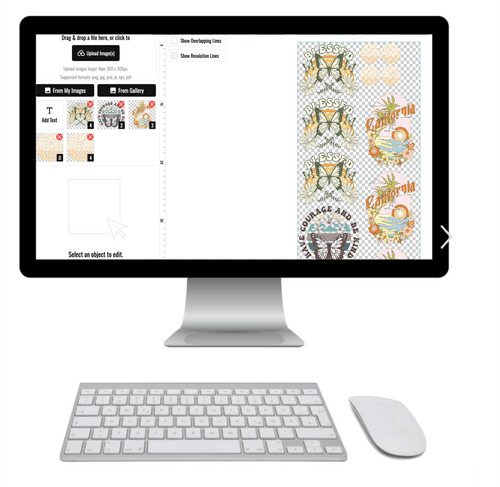
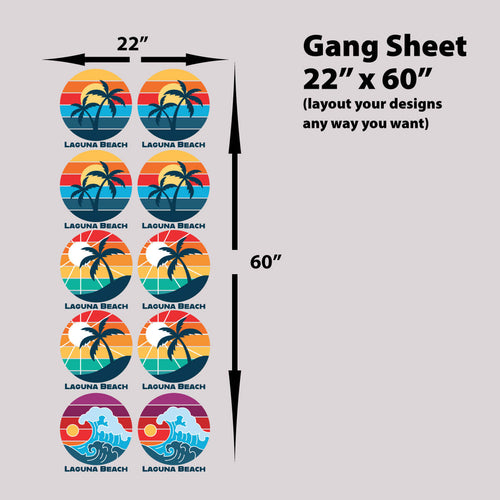
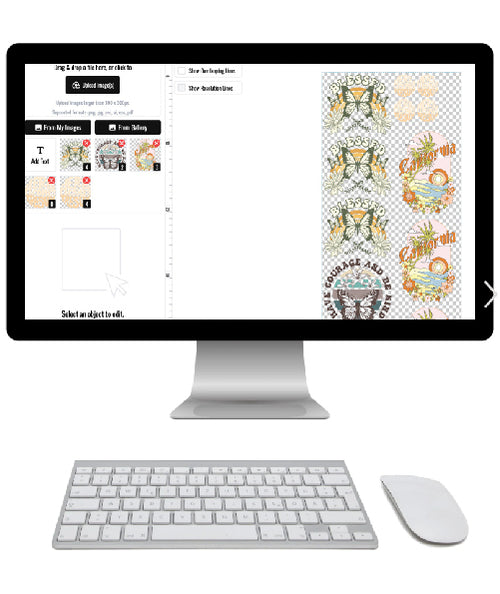
There's also a very practical advantage in gang sheet ordering. A strong Auto-build gang sheet builder helps reduce waste because it packs multiple designs onto one sheet quickly and efficiently. For shops handling left chest logos, sleeve hits, youth sizes, event graphics, and one-off name variations, that kind of tool is one of the easiest ways to keep ordering cost-effective without manually arranging every inch of layout.
When ownership still makes sense
Owning DTG can still be the right move if your shop already has stable volume, trained operators, and enough margin to absorb the friction that comes with equipment ownership. Shops that need direct-to-garment capability and know how to keep the machine busy can make it work.
For many newcomers, though, outsourced transfers are the lower-risk path. They let you sell decorated apparel without first taking on the full mechanical and financial load of DTG. That's not a compromise. In a lot of cases, it's the smarter first business decision.
Common Questions About DTG Printer Costs
Is a cheap DTG printer a good way to start
Sometimes, but only if you're treating it like a learning tool and not depending on it for flawless production from day one. Lower entry pricing can be appealing, yet the total ownership picture changes quickly when support equipment, consumables, and interruptions enter the picture. Cheap to buy and affordable to operate aren't the same thing.
What expense do new owners underestimate most
Usually it's the combination of recurring material cost and the time required to keep the system running well. Ink, pretreat, routine cleaning, and bad prints don't look dramatic on a quote, but they shape profitability every week. Downtime is the other major miss because it doesn't appear until the machine fails at the worst possible time.
Does DTG ownership make sense for small order volume
It can, but small volume often struggles to justify both the upfront spend and the ongoing maintenance responsibility. If the machine sits too often, ownership can become harder to defend financially. That's one reason many smaller sellers test demand with outsourced production before taking on equipment.
How should I compare DTG with other print methods
Compare business models, not just print styles. Ask how each method handles startup cost, repeatability, labor, material waste, and order spikes. The right answer depends on whether you need in-house control or whether you need dependable output with fewer moving parts.
What's the smartest way to evaluate dtg printer cost
Build two budgets. One for the purchase. Another for ownership over time. If the second budget feels fuzzy, that uncertainty is part of the decision.
If you want the flexibility of custom apparel without taking on printer ownership risk, Lion DTF Transfers is a practical place to start. You can order ready-to-press transfers, use the Auto-build gang sheet builder to maximize sheet space and keep costs tight, and scale jobs without worrying about DTG maintenance, downtime, or consumable overhead.