


You've probably hit the same wall most new apparel sellers hit.
A customer wants six shirts, all with full-color art, on a mix of cotton and poly. Screen printing feels too setup-heavy for that kind of run. DTG can be picky about garment type and dark shirts. HTV works, but weeding small details gets old fast, and layered vinyl rarely gives the finish people want for brand graphics.
That's where DTF transfers for T shirts have changed the game. They let small shops, side hustlers, Etsy sellers, school boosters, and local brands produce detailed graphics without building their whole workflow around large minimums or limited fabric choices. The reason adoption keeps rising is simple. The global Direct-to-Film printing market was valued at USD 2,720.0 million in 2024 and is projected to reach USD 3,920.0 million by 2030, growing at a CAGR of 6.0%, driven by demand for customized and on-demand apparel, according to Grand View Research's DTF printing market report.
The part most guides skip is what grabs a buyer's attention the second they touch the shirt. How does it feel?
A vibrant transfer that feels like a stiff plastic patch can make a good design feel cheap. A soft-hand print that wears well can make a small brand look established. That trade-off matters if you're selling to customers, not just pressing shirts for fun.
The Future of Custom T-Shirts Is Here
A lot of shirt businesses start with the same kind of order. A youth team needs dark shirts with bright names. A local coffee shop wants a small merch batch. A startup streetwear brand wants photo detail, gradients, and oversized back prints without committing to a giant run.
That's exactly where older methods start to show their limits. Screen printing still makes sense for repeat bulk orders, but setup can feel heavy when artwork changes from shirt to shirt. DTG can look great in the right lane, but it's not always the easiest answer when you need broad fabric flexibility. HTV is dependable for simple names and numbers, but it slows down when designs get busy.
DTF transfers for T shirts sit in the middle of those problems and solve a lot of them at once. You print the artwork onto film, cure the adhesive, then press it onto the garment. That gives small operators a practical way to handle detailed designs, dark garments, and mixed-fabric jobs without the normal production headaches tied to other methods.
Why more shops are moving this direction
The demand behind DTF isn't hype. It follows the way people buy apparel now. Customers want smaller runs, quicker turnarounds, and more personalization.
That's a big reason the global Direct-to-Film printing market was valued at USD 2,720.0 million in 2024 and is projected to reach USD 3,920.0 million by 2030, growing at a CAGR of 6.0%, with growth tied to rising demand for customized and on-demand apparel, based on Grand View Research's industry analysis.
Practical rule: If your orders are getting more custom, more colorful, and more mixed in garment type, DTF usually becomes easier to profit from than methods built around uniformity.
Where beginners get tripped up
Most first-time buyers focus on color because that's what they see in photos. Experienced shops also judge three other things:
- Feel on the shirt: A print can look sharp online and still feel too heavy in person.
- Application tolerance: A transfer is only as good as the press settings used on the actual garment.
- Fit for the product line: Fashion tees, team uniforms, and promo shirts don't all need the same transfer behavior.
If you understand those trade-offs before ordering, you make better decisions on artwork, fabric, and transfer quality. That's where DTF stops being a novelty and becomes a reliable production method.
How DTF Transfers Actually Work
The simplest way to explain DTF is this. It's like a high-tech temporary tattoo for fabric, except it's built to stay put after repeated wear and washing.
The design isn't printed straight onto the shirt. It's printed onto a special film first, then bonded to the garment with heat and pressure. That two-stage process is what gives DTF its flexibility across different apparel types.

The core sequence
-
The artwork is printed onto PET film
The printer lays down the color layer, then a white backing layer. That white layer is what helps the design stay bright on dark shirts. -
Adhesive powder is added to the wet ink
This powder isn't a minor extra. It's the bonding agent that lets the printed image move from film to fabric. -
The sheet is cured
Heat melts and sets the powder so the transfer becomes press-ready. -
The transfer is heat pressed onto the shirt
Pressure and temperature activate the adhesive and drive the bond into the garment surface. -
The film is peeled after cooling
For many premium transfers, cold peel matters because the adhesive needs to fully settle before the carrier comes off.
If you want a deeper visual breakdown of the mechanics, this guide on how DTF transfers work is worth reviewing before you place a production order.
A quick demo helps make the workflow easier to picture.
Why the output looks so different from older methods
DTF is strong on detail because it handles full-color artwork without forcing you into color-by-color setup like screen printing. It also performs well on dark garments because of the white ink base.
According to DTF SATX's overview of DTF printing, DTF printing technology achieves approximately 90% Pantone color accuracy, and while printers can support 1200–1440 DPI, the standard working range for crisp t-shirt prints is 300 to 600 DPI. In practical terms, that means gradients, photo elements, and fine line detail are all very realistic targets when your file is prepared correctly.
What affects feel more than most people realize
The ink gets most of the attention, but the adhesive layer often determines whether a transfer feels smooth and flexible or thick and rubbery. A heavy powder application or poor cure can make the final print sit on the shirt like a patch. Better transfers usually come from controlled powder coverage, proper cure, and artwork sized with some restraint.
Softness starts before the heat press. It comes from the film, powder, cure, and artwork decisions working together.
That's why experienced shops don't just ask whether a transfer is vibrant. They ask how much ink coverage it has, how much solid area it carries, and what kind of hand feel the finished shirt needs.
DTF Compared to DTG Screen Printing and HTV
Every decoration method has a lane. The mistake is treating them like they're interchangeable.
If you're comparing DTF, DTG, screen printing, and HTV, the right question isn't which one wins overall. The right question is which one fits the order on your table. A six-piece fashion drop, a school spirit order, and a five-hundred-shirt event run don't reward the same production method.

Quick comparison table
| Method | Best fit | Strength | Main trade-off |
|---|---|---|---|
| DTF | Mixed fabrics, dark garments, complex art, short to medium runs | Detail, versatility, easy repeat application | Feel depends heavily on transfer quality and application |
| DTG | Cotton-rich garments with soft-hand expectations | Very soft result on the right shirt | Narrower comfort zone on garment choice |
| Screen printing | Repeating bulk orders | Excellent for volume and repeatability | Less flexible for many small design changes |
| HTV | Names, numbers, simple graphics | Straightforward for simple personalization | Gets slow and bulky on complex multicolor designs |
Where DTF clearly pulls ahead
DTF earns its place when one order includes cotton, polyester, and blends, or when you need the same artwork on several garment types. That's hard to beat in a small shop.
It also handles color-heavy art without the setup logic screen printing requires. If you sell brand tees with photo detail, shadowing, or a lot of tonal variation, DTF is usually far simpler to run. For a useful side-by-side on one of the most common comparisons, see this breakdown of DTF vs DTG printing.
Durability and hand feel
People often oversimplify the durability of DTF transfers. DTF can be very durable, but not every transfer feels the same. Transfer quality, adhesive behavior, and press accuracy all affect the final result.
High-quality DTF transfers on t-shirts can reach a wash durability benchmark of 50–100 industrial cycles without cracking or peeling, and that performance can surpass DTG on dark fabrics while matching traditional screen printing durability, based on the testing referenced in this DTF durability video.
That doesn't automatically mean every DTF shirt feels soft. DTG usually wins on pure ink-into-fabric softness. DTF can get close enough for many commercial shirt lines, but only when the transfer is made and pressed correctly. Cheap transfers tend to feel thicker, especially on large solid prints.
If a customer cares most about softness, don't judge DTF by a bargain transfer with a heavy glue layer. Judge it by a well-made transfer pressed correctly on the right blank.
Speed and workflow in the real shop
Here's how the methods usually behave in day-to-day production:
- DTF: Strong when you need to keep artwork flexibility high.
- DTG: Useful when you want direct printing onto the garment and the blank fits the process well.
- Screen printing: Hard to beat when artwork is stable and volume is high.
- HTV: Great for personalization work, especially numbers and names.
For many new entrepreneurs, DTF becomes the practical first serious production method because it doesn't force them into a giant setup decision right away. It lets them test designs, switch blanks, and keep inventory lean while still offering professional-looking output.
How to Order DTF Transfers and Maximize Your Budget
Ordering transfers gets expensive when you think one design at a time. It gets much more efficient when you think in sheet space.
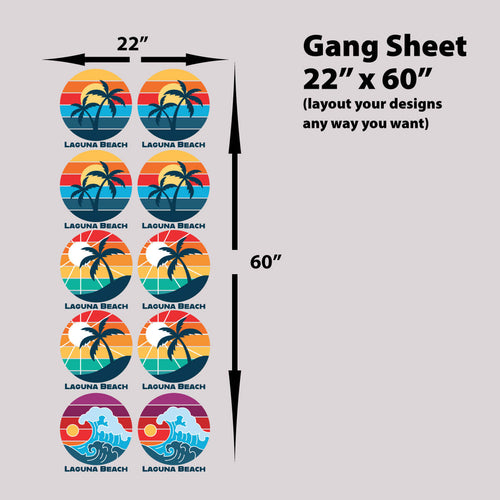
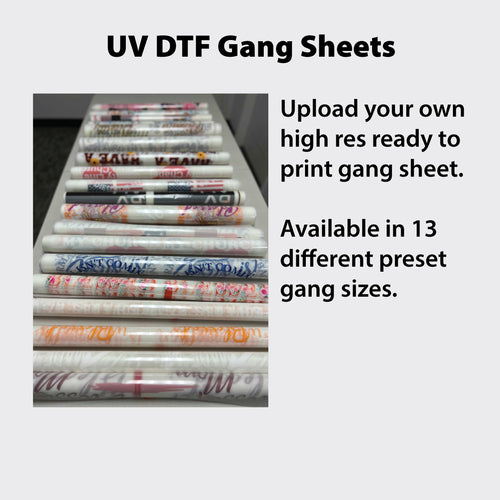
That's why gang sheets matter. Instead of ordering each logo, left chest graphic, sleeve hit, and full front as separate jobs, you place multiple designs on one transfer sheet and use the available space more efficiently. Done right, that reduces waste and makes your press time cleaner too.

Why gang sheets save money
A gang sheet works best when your order includes a mix of sizes or placements:
- Brand drops: full fronts, neck labels, and small chest logos
- Team orders: player names, numbers, and sponsor marks
- Craft sellers: multiple small designs for testing different products
- Promo work: a stack of logos heading onto different blank styles
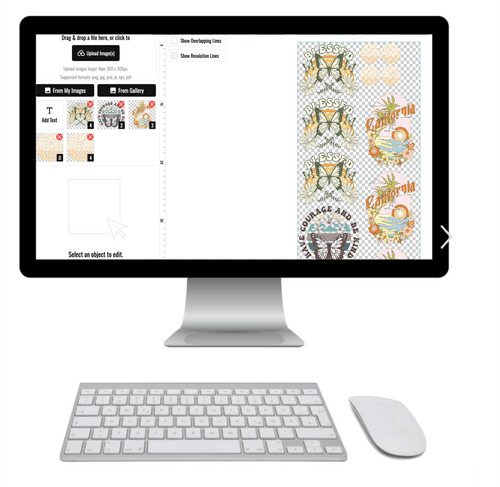
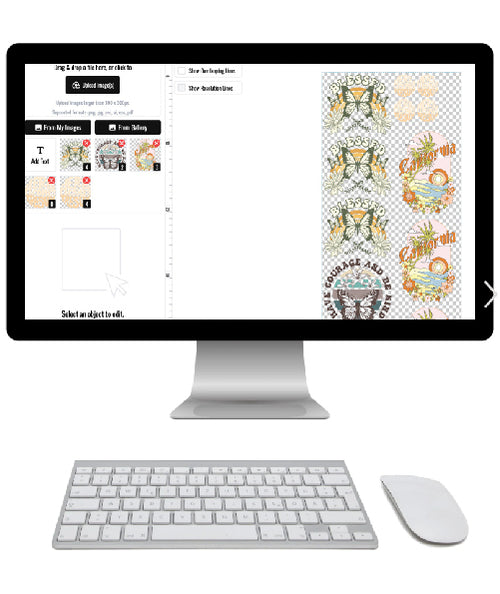
The key is layout discipline. If your artwork is scattered, over-spaced, or resized badly, the sheet stops saving money. That's where our Auto-build gang sheet builder for ease of use and cost effectiveness makes practical sense. It lets you upload multiple files and automatically arrange them on one sheet without manual cropping or spacing. That aligns with the way ShirtMax describes an Auto-build gang sheet builder as a tool that uploads multiple design files and automatically arranges them onto a single sheet for cost effectiveness and minimal setup time.
What to prepare before you order
Bad files are one of the biggest reasons people think a transfer printer let them down. Many times, the problem started in the artwork.
Use this checklist before submitting a job:
- Transparent background: Don't send flattened art with a white box unless that box is meant to print.
- Clean edges: Jagged exports show up fast on fine text and outline work.
- Correct print size: A chest logo and a full-front graphic should not be exported at the same dimensions.
- Resolution in the working range: For apparel graphics, clean files prepared for standard print resolution perform better than stretched low-quality artwork.
- Readable small text: If you can barely read it on screen at intended print size, don't expect the press to save it.
A practical ordering workflow
Some shops manually build every gang sheet in design software. That works, but it takes time and introduces small placement mistakes.
A more efficient approach is to:
- Sort artwork by garment placement.
- Group designs that will be pressed on the same fabric family.
- Upload all files into a builder.
- Review spacing and scale before checkout.
- Keep a saved layout for repeat orders.
If you want one provider option that supports that workflow, Lion DTF Transfers offers a build-your-own gang sheet process along with our Auto-build gang sheet builder for ease of use and cost effectiveness, which is useful when you're trying to pack mixed artwork onto one order without hand-placing every piece.
Shop-floor advice: Don't cram a gang sheet so tightly that cutting becomes sloppy. A sheet that saves a little film but costs you time and mistakes at the trimming table isn't actually cheaper.
Where beginners overspend
They usually overspend in one of three ways:
- Ordering too many separate sheets instead of combining art logically
- Submitting oversized graphics for garments that don't need them
- Ignoring fabric mix and later finding they need different pressing workflows
A good order starts before checkout. It starts with planning the shirt line, the artwork placements, and the actual press sequence you'll use once the transfers arrive.
Achieving the Perfect Press on Any Fabric
A lot of transfer problems get blamed on the print. The press is often the culprit.
Good DTF application is mechanical. Temperature, time, pressure, fabric behavior, and peel timing all matter. If one of those is off, even a strong transfer can fail. If all of them are right, pressing gets repeatable fast.

Cotton settings that work
For cotton garments, the target is specific, not vague. According to Lion DTF, cotton requires 270-280°F for 10 seconds with medium pressure.
That range matters because cotton can handle the heat needed to melt the adhesive properly without the same scorch risk you face on more sensitive synthetics.
Use this routine:
- Pre-press the shirt: Knock out moisture and flatten fibers.
- Place the transfer cleanly: Crooked art is still crooked after a perfect press.
- Press with even pressure: Don't guess from the handle feel alone.
- Let the transfer cool if it calls for cold peel: Rushing this step causes avoidable failures.
For a more detailed setup reference, keep a copy of these heat press settings for DTF near your press station.
Polyester needs a lighter touch
Polyester isn't forgiving. Too much heat can distort the fabric, create shine, or cause dye migration on some garments.
That's why the same source specifies 240-250°F for 7–10 seconds for polyester, with a stricter approach than cotton. If you run athletic wear, performance tees, or lightweight fashion poly, this difference isn't optional.
Polyester punishes impatience. If you press it like cotton, the shirt usually tells on you immediately.
Blends and mixed-order production
Blends are where shop habits matter. If you're running a mixed stack of cotton, poly, and tri-blends, don't press by memory. Separate garments before you start and press in batches by fabric family.
That's also where our Auto-build gang sheet builder for ease of use and cost effectiveness helps operationally. If you organize designs by garment type while building sheets, production gets smoother because you're not constantly switching settings blindly mid-run.
The peel step beginners ignore
Many DTF transfers rely on a cold peel process. The transfer should cool completely before the carrier film is removed. Pulling early can distort the image or weaken the bond.
If your peel feels resistant, don't yank it. Let it cool more, peel steadily, and watch the edge behavior. The goal is a transfer that releases cleanly while the design stays planted.
Bad pressing usually comes from rushing one of the quiet steps. Pre-pressing, fabric sorting, peel timing, and pressure consistency aren't glamorous, but they're what make production look professional.
Ensuring Durability and Solving Common Problems
Customers don't judge a shirt on press day. They judge it after they've worn it, washed it, and thrown it back in rotation.
That's why durability advice has to be practical. Tell buyers to wash the shirt inside out, use cold water, and dry on low heat or air dry when possible. Those habits reduce stress on the transfer surface and help the print hold its finish longer.
Why some DTF prints feel too plastic
This is the complaint that matters most for apparel brands. A shirt can look amazing and still lose the sale if the print feels like a heavy sticker.
The feel usually comes down to a few factors:
- Too much adhesive powder: Heavy application creates a thicker film layer.
- Large solid artwork blocks: More coverage means more material sitting on the shirt.
- Poor curing control: Under-cured or badly cured transfers often feel awkward and wear poorly.
- Low-grade transfer construction: Cheap transfers tend to prioritize quick output over hand feel.
Better DTF work aims for enough adhesive to bond well without building unnecessary thickness. That's how shops get closer to a softer hand while still keeping the durability buyers expect from premium transfers.
Common failure points and what usually fixes them
| Problem | Likely cause | Practical fix |
|---|---|---|
| Cracking after wear | Press temp, pressure, or dwell time was off | Recheck garment-specific settings and pressure consistency |
| Peeling at edges | Early peel, weak bond, or poor press contact | Allow full cooling if cold peel is required and confirm platen pressure |
| Dull color | Weak artwork file or poor print prep | Send cleaner files with proper transparency and intended print size |
| Stiff hand feel | Heavy adhesive layer or oversized solid print | Reduce unnecessary ink coverage and source better-made transfers |
A lot of “bad transfer” complaints are really “bad process” complaints. The shirt doesn't care where the mistake happened. It only shows the result.
The softness trade-off in plain terms
If you want maximum opacity, aggressive white under-base, and very heavy solid graphics, the shirt will usually feel heavier. If you want a softer hand, you often need smarter artwork choices, cleaner production, and a transfer built with hand feel in mind.
That's the main trade-off. Not all softness comes from magic materials. Some of it comes from restraint. A design with breathing room, controlled coverage, and good cure behavior usually wears better and feels better than a giant slab of inked film.
When you're building a clothing brand, that matters. Customers remember the shirt that looked good online. They reorder the shirt that also felt right in hand.
Use Cases and Services to Grow Your Business
DTF opens doors for businesses that need flexibility more than they need rigid production uniformity.
A streetwear startup can run oversized art on black tees without committing to a huge inventory position. A school apparel seller can press mixed sizes across cotton and performance blanks. A local team decorator can handle names, sponsor marks, and team graphics without changing methods mid-order. An Etsy seller can test multiple niche designs without building stock for each one.
Where DTF fits especially well
- Brand launches: Great for testing artwork before scaling a proven seller
- Sports and spirit wear: Useful when garments vary and durability matters
- Event merch: Strong for short-run, deadline-sensitive jobs
- Print-on-demand shops: Helps keep inventory light while offering broad variety
Some entrepreneurs don't need more equipment. They need less friction. If artwork isn't fully production-ready, outside help with vectorization or layout can keep jobs moving. If schedule is tight, a service that builds gang sheets for you can remove one more bottleneck from the workflow.
The shops that use DTF well usually do one thing consistently. They match the transfer, the blank, and the customer expectation before production starts. That's what turns a useful decoration method into a profitable part of the business.
If you need a practical source for custom gang sheets, ready-to-press transfers, or help getting artwork into production shape, Lion DTF Transfers offers online ordering, gang sheet building, and support services for businesses, shops, and creators who want a simpler path from design file to finished shirt.