



You've got a Saturday event, the artwork is still sitting in a designer's inbox, and someone has just asked whether the shirts can be picked up in Sacramento instead of shipped. That's where DTF Sacramento orders become practical rather than theoretical. The print method matters, but file quality, sheet layout, production cutoffs, and collection details usually decide whether the order runs smoothly.
A reliable order starts before the transfer reaches the heat press. You need artwork at the correct size, a layout that doesn't waste film, a realistic production window, and a clear choice between pickup and delivery. The guidance below follows that process from file preparation through finished-garment care.
What DTF Transfers Mean for Sacramento Apparel Orders

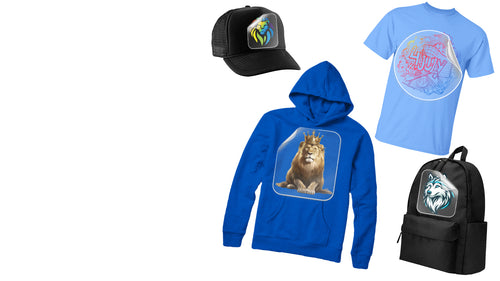
DTF, or Direct-to-Film, prints artwork onto PET film with water-based ink. Adhesive powder is added to the wet design, cured, and then heat-pressed onto the garment. The method can work on cotton, polyester, nylon, spandex, and blends, provided the transfer and press settings match the fabric. Supplier guidance commonly places pressing around 240 to 280°F, using 40 to 60 PSI of medium pressure for 10 seconds. The Published DTF specifications outline ranges commonly used by suppliers.
For Sacramento buyers, the practical advantage is order flexibility. A shop may need team shirts, staff uniforms, promotional pieces, or replacement garments without changing production methods. Short runs and one-off garments are also workable because DTF does not require screen-printing setup for every color.
Why local fulfillment can matter
The question for a Sacramento order is usually whether the transfers or finished garments will be ready by a fixed date. School events, sports weekends, fundraisers, restaurant openings, and company gatherings rarely allow room for a late file or missed production cutoff. Local collection can remove a shipping handoff, but local availability does not guarantee immediate production.
Ask for the production window before paying, especially for rush work. Sacramento-area providers may advertise same-day, rush, or one to three business day fulfillment, while other local offerings quote three to five business days for full-color DTF. Sacramento Ink Gear shows why buyers should confirm the actual cutoff and completion time instead of assuming proximity means speed.
The Sacramento-Roseville-Folsom region includes many organizations and workers purchasing branded apparel. Regional figures presented by DTF Sacramento business information show a substantial base of contractors, schools, retailers, teams, and institutions. That demand helps support local DTF production, while order timing still depends on artwork readiness, sheet capacity, and the selected pickup or delivery option.
Preparing Print-Ready Files the Right Way
Most DTF problems begin in the file, not in the printer. Before uploading artwork, check each item below.
Start with size and resolution
Export a PNG with a transparent background at 300 DPI and at the final printed dimensions. A design intended to print at 10 inches wide should be 3,000 pixels wide, not 1,500. A low-resolution file may look acceptable when viewed small on a phone, but enlarged edges reveal blur and jagged detail.
Transparency matters because the film should contain the artwork, not an unwanted rectangle behind it. Open the exported PNG over both a light and dark background. If a white box appears, the background hasn't been removed.
Set up color and typography
Use CMYK color mode for the upload. The RIP software remaps the file for the DTF printer, and a CMYK file can produce noticeably duller color than the version you approved on screen. That doesn't mean every screen color will reproduce identically, but CMYK gives the production workflow the correct starting point.
Fonts create another avoidable failure. Embed them or convert text to outlines before export. Otherwise, a missing typeface can replace the lettering during processing, changing spacing, weight, or even the overall appearance.
Clean the canvas before upload
Flatten smart objects, remove hidden layers, and trim the canvas to the visible artwork edge. Keeping the file under 200 MB prevents upload friction and makes the actual print dimensions easier to verify. Inspect the artwork at 100 percent zoom in Photoshop or another graphics program. Auto-builders can arrange files, but they can't reliably judge whether a small wordmark is already too soft to print.
Leave at least a quarter inch between separate graphics on the canvas. Powder adhesive can bridge designs that are packed too tightly during curing, creating unwanted connections between pieces. Save a final production copy after these checks, and don't keep editing the version that has already been approved for print.
Choosing Between Pre-Cut Sizes and Custom Gang Sheets
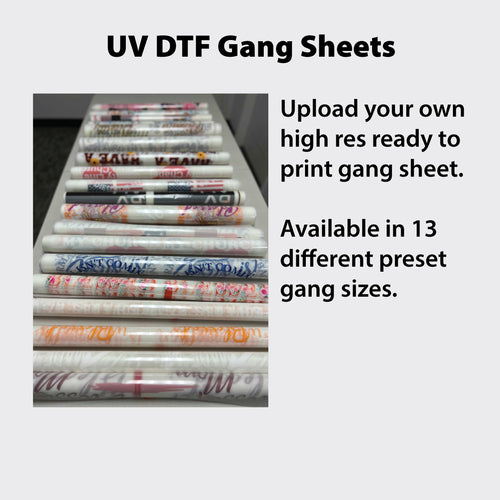
The cheaper order path depends on repetition. Pre-cut transfers make sense when you need a small number of identical graphics. A custom gang sheet makes more sense when the order contains different designs, placements, or sizes that can share the same film area.
| Factor | Pre-Cut Transfers | Custom Gang Sheet |
|---|---|---|
| Best use | Repeated logo or artwork | Mixed designs and sizes |
| Layout work | Handled through size selection | Buyer arranges or auto-builds the sheet |
| Waste control | Simple for identical pieces | Stronger when artwork is nested tightly |
| Ordering decision | Convenient for small repeated runs | More efficient for varied production |
| Main risk | Paying for separate size brackets | Paying for unused blank film space |
A practical rule is under five graphics of the same size, consider pre-cut transfers. For more than five mixed graphics, a gang sheet usually deserves a closer look. That isn't a guarantee of the lowest quote, because each shop sets its own pricing and minimums, but it's a useful first filter.
Where the film math changes
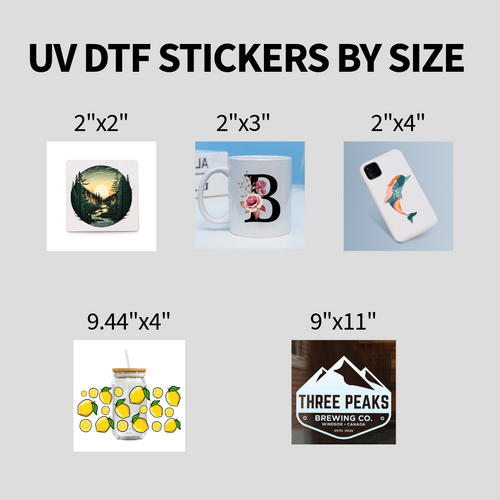
Pre-cut pricing is commonly organized by size brackets, such as small chest graphics, medium front prints, and larger chest artwork. You pay for a defined transfer size, which keeps checkout simple. The trade-off is that ten different designs may become ten separately priced items, even when they could fit efficiently on one sheet.
Gang sheets charge for the material area used. One trade builder advertises 57-centimeter-wide sheets up to 100 meters long, showing how the format supports high-volume production and material efficiency. The DTF gang sheet builder from DTF UK provides that example of a roll-based workflow.
Blank space still counts. If you place artwork loosely, rotate nothing, or leave large unused gaps, the billable sheet length can grow without adding a single printable design. Ask about the shop's minimum order, since a minimum of one linear foot is common in local workflows, but verify the policy before checkout.
Practical rule: Count designs by size and placement before you choose a product. The right question isn't “Which option looks cheaper?” It's “Which option uses the least paid film for this exact mix?”
Building Your Gang Sheet With the Auto-Builder Tool
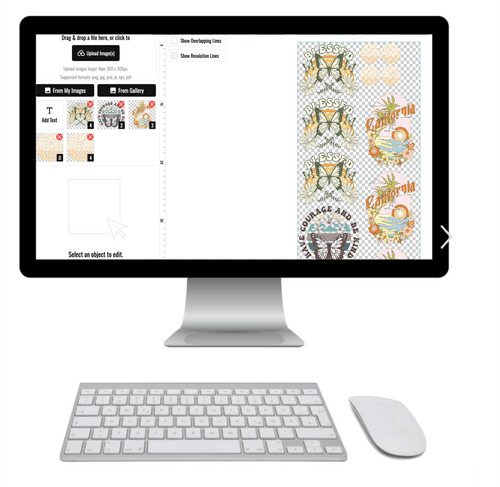
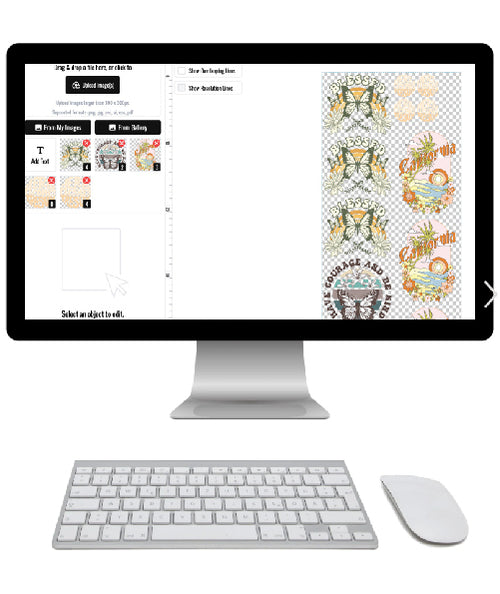
An auto-builder removes much of the manual layout work, but it doesn't remove the need for a careful proof. Start by uploading clean PNG files, then confirm the artwork dimensions before you let the tool arrange them.
A workable build sequence
- Upload the approved files. Use the final transparent PNGs, not layered working files or screenshots. Check that each design has the intended dimensions.
- Group by print size. Put repeated chest logos together, then larger front graphics, sleeve marks, and special placements. This makes it easier to spot an incorrectly sized file before checkout.
- Let the Auto-build gang sheet builder nest the artwork. Automatic nesting can arrange 100 or more PNG designs and export print-ready PNG or PDF files. One browser-based tool describes arranging a gang sheet in under 60 seconds, as documented by DTFBuild's gang sheet builder.
- Rotate designs where appropriate. A horizontal logo may fit better beside a vertical graphic than beneath it. Rotation reduces unused gaps, but don't rotate artwork that has a directional design unless the final transfer will be cut and handled individually.
- Inspect the preview. Look at edge clearances, safe zones, orientation, and the sheet boundary. A preview is where you catch artwork touching the trim line, not after the film has been printed.
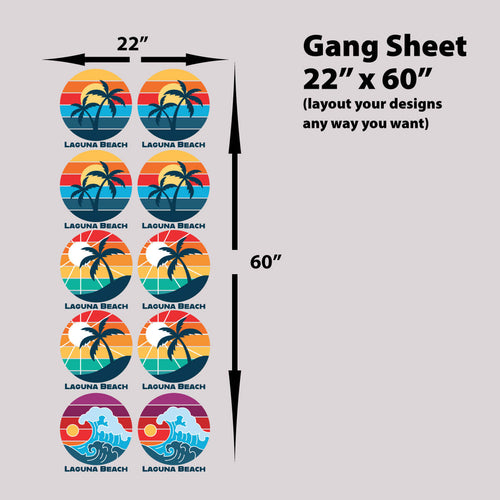
For a simple layout example, a 22-inch-wide sheet can hold two 10-inch-wide logos across its width, with space remaining for separation and edge clearance. That doesn't mean every design should be forced into that arrangement. Height, transparent margins, bleed requirements, and the shape of each graphic determine the actual fit.

Check the price before approving
Some builders calculate price from the linear length used on a fixed-width sheet. Another builder offers 60-centimeter sheets, instant linear-meter calculation, and pricing advertised at 7 €/m + VAT. The DTF Pro builder shows how real-time sizing and pricing can work. Your Sacramento provider may use square-foot, linear-foot, or another pricing model, so don't transfer one vendor's math to another vendor's checkout.
Quantity can affect the quote at common order sizes such as 12, 24, or 50 sheets, but the available break depends on the printer. Ask for the actual quantity price rather than assuming a discount. The most common reprint triggers are unflattened transparent backgrounds, designs packed into unsafe zones, and artwork placed too close to the trim line.
For a closer look at the workflow, see the Auto-builder feature guide. The useful habit is simple: build the sheet, review every design at actual size, and approve only after the preview matches the garments you plan to press.
Pressing and Caring for Your Finished Transfers
A clean transfer can still fail if the garment contains moisture or the press doesn't apply consistent heat and pressure. A practical sequence starts with a short pre-press, then a controlled application and a post-press.
- Pre-press the garment for 5 seconds. This removes moisture and smooths the pressing area.
- Set the heat press to 270°F with medium-firm pressure. Confirm that the platen reaches temperature rather than trusting the display alone. Polyester and heat-sensitive garments may need a test press or adjusted settings.
- Press the transfer for 10 seconds. Keep the garment flat and ensure the entire design receives pressure.
- Peel according to the film instructions. Some films are designed for hot peel, while others require cooling before removal. Don't guess, especially on a large solid print.
- Post-press for 10 seconds under a Teflon sheet when the transfer instructions call for it. This can help settle the surface and produce a more durable matte finish.
Cotton is generally straightforward, while polyester and tri-blends deserve a test because heat sensitivity, dye migration, and fabric stretch can change the result. Use a pressing cover and follow the transfer supplier's instructions when the garment manufacturer recommends a lower temperature.
This guide to pressing DTF transfers is useful when a team member is pressing the order rather than an experienced apparel operator.
Give the adhesive time to settle
Wait 24 hours before the first wash. Wash the garment inside out in cold or lukewarm water, avoid bleach and fabric softener, and tumble dry on low or air dry. Properly applied DTF transfers are commonly benchmarked at 50 to 100 wash cycles, provided the garment receives correct care. DTF SATX's durability guidance explains the care controls that help reduce cracking, fading, and edge lift.
Turnaround, Pickup, and Shipping Across Sacramento
A Saturday event can expose a scheduling mistake made on Tuesday. Work backward from the time the heat press needs the transfers, then confirm file review, production capacity, cutoff time, and delivery method. A fast-production label does not guarantee a finished order if the artwork misses the daily cutoff or requires clarification.
| Option | Turnaround | Best For |
|---|---|---|
| Same-day cutoff and next-morning pickup | Depends on the shop's posted cutoff and capacity | Local buyers with a fixed morning deadline |
| Standard production | Often 24 to 48 hours when the order is accepted into the normal queue | Planned team, business, and event orders |
| Rush production | About 4 to 6 hours where offered and capacity allows | Late artwork and urgent replacements |
| Shipping | Commonly 1 to 2 business days for providers offering that service | Buyers outside convenient pickup range |
Treat these windows as planning estimates, not guarantees. Sacramento providers may advertise one to three business day production, same-day service, or rush options, while some full-color DTF orders still require three to five business days. Ask local Sacramento printers which timing applies to your order size, artwork, and production type.
Shipping Options
Same day shipping from including Midtown, Elk Grove, Roseville, and Folsom, once the ordering and shipping window is confirmed. It avoids carrier delays and gives you a chance to check the package before leaving. Shipping may make more sense for customers coming from the foothills or locations roughly 50 miles away, where driving time and fuel cost can exceed the shipping charge.
The sheet math also affects the schedule. A large gang sheet, several designs, or artwork needing file corrections may enter a different queue from a simple repeat order. Send the final files together, label each design, and confirm whether the provider measures production from checkout, payment, or approval.
Ask these questions before paying:
- Cutoff time: Is noon Pacific the deadline for next-day processing?
- Capacity: Does a large gang sheet order move into a different queue during event season?
- Shipping Update: Will the shop text or email when the package is ready to ship?
Follow Lion DTF's pickup instructions instead of relying on an old address or assuming walk-in service. Pickups are available in California and Tennessee. For a weekend event, approve the proof early, confirm the cutoff in writing, and reserve time to press and inspect the garments.
Local FAQs and How to Order From Lion DTF
Do I need to order a large quantity?
No universal quantity rule applies across Sacramento providers. DTF is suited to short runs, repeated logos, and mixed designs, but each shop can set its own minimum or material threshold. Ask whether the provider sells by individual transfer, sheet length, or another unit before comparing quotes.
Can I email the artwork?
Some shops accept emailed files, while others require an upload through the product page or gang sheet builder. Uploading keeps the artwork attached to the order record and reduces confusion between drafts. If you email, include the exact print size, garment placement, quantity, and deadline in the same message.
Which fabrics work well?
DTF can be used on cotton, polyester, nylon, spandex, and blends when the transfer is properly applied. Cotton is often the easiest starting point, but polyester and tri-blends should be tested because heat sensitivity, stretch, and dye migration can affect the finish. A small test is cheaper than discovering a problem after pressing an entire team order.
Can multiple designs share one pickup?
Yes, if the designs are included in the same approved order and the provider has produced them together. Gang sheets are particularly useful for combining different artwork, but make sure each design is separated clearly and labeled if you plan to cut the sheet before pressing.
What payment methods and reorder options are available?
Payment methods and reorder policies vary. Check the checkout page or contact the shop before submitting a time-sensitive order. For a reorder, keep the approved file, final dimensions, garment color, and placement notes. That record helps you request the same artwork without rebuilding the design from memory.
What should I send with the order?
Include the finished PNG, intended printed dimensions, garment type, quantity, deadline, and collection preference. If a designer supplied the file, ask for a production export rather than a screenshot or editable file with missing fonts. The more decisions you settle before checkout, the less likely the order is to pause for clarification.
The easiest workflow is to start with the Auto-build gang sheet builder, upload press-ready artwork, review the sheet proof, and shipping options before payment. If the date is tight, contact the shop through its listed support channels, including phone, email, text, or website chat, and confirm the production cutoff and same day shipping options. Lion DTF's publisher information lists orders@liondtf.com and 833-350-5466 as contact paths, but always verify.
Lion DTF Transfers offers custom gang sheets, size-based DTF transfers, online artwork uploads, and shipping options for Sacramento-area apparel orders. Start your file in the Auto-build gang sheet builder, confirm the proof and deadline, then visit Lion DTF Transfers to choose the right order path.
Email orders@LionDTF.com or Text or Call: 833-350-5466