


You've got blanks on the bench, a press that's already warmed up, and a client who wants shirts before the weekend. In Phoenix, that kind of order is normal, not exceptional. DTF Phoenix works because it fits how local buyers move, fast, mixed, and usually with no room for wasted inventory.
Phoenix is a big market by any practical measure. The city had more than 1.6 million residents at the 2020 census and sits as the fifth-most populous city in the United States and the most populous state capital Phoenix population and city scale. For apparel work, that means a deep pool of schools, civic groups, sports teams, neighborhood brands, and small businesses that need custom gear on a recurring basis. It also means the buyer asking for one shirt today can easily turn into a 50-piece reorder next month.
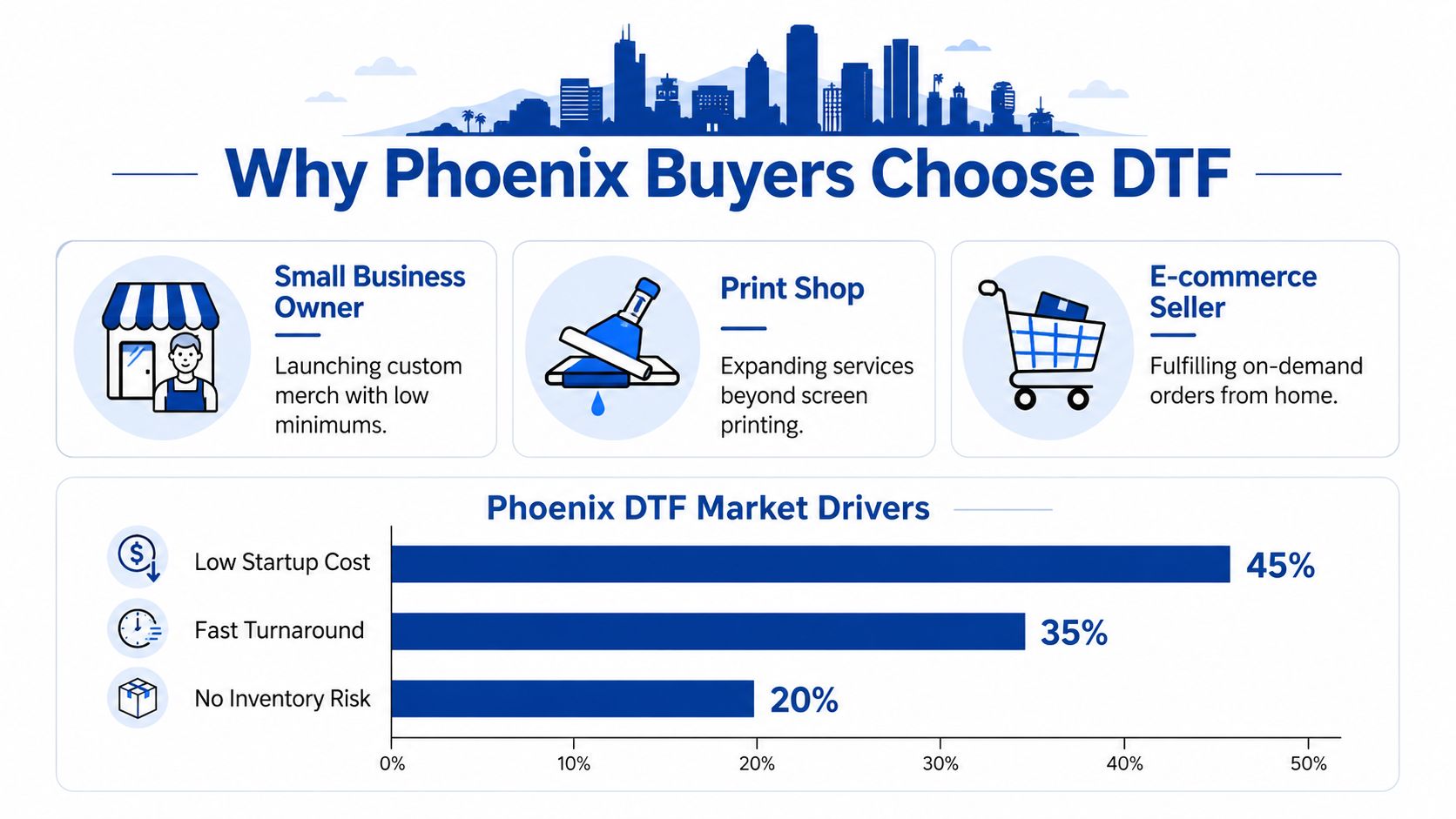
A lot of local print buying comes down to fit, not theory. Schools need quick spirit wear, sports groups need name-and-number runs, and small brands want merch without sitting on boxes of dead stock. DTF transfers answer that pattern well because they're built for short runs, mixed designs, and fast press-and-ship workflows.
Practical rule: If the order has urgency, multiple sizes, or different art on the same run, DTF usually makes more sense than waiting for a slower, higher-setup method.
For Phoenix buyers, the question usually isn't whether custom apparel is useful. It's whether the method can keep up with the pace of the order, the heat of the shop, and the reality of shipping deadlines. That's why local search for DTF often turns into a decision about turnaround, garment type, and whether the seller can organize the job cleanly with an Auto-build gang sheet builder for ease of use and cost effectiveness. For a starting point on transfer options, browse DTF transfers by use case.
What DTF Printing Is
DTF printing is a film-first process. The design is mirrored, printed onto PET film in CMYK with a white underbase, dusted with adhesive powder, cured, and then pressed onto the garment Direct-to-film printing overview. In practice, the film is the working surface. The shirt does not come into the process until the artwork, ink, and powder are already set.
That sequence matters because each step changes how the transfer performs on press. The mirror flip keeps text and logos facing the right way, the white layer helps the color hold on dark garments, and the powder-and-cure stage turns loose ink into something that can bond under heat. Rush one part, and the transfer may still go on, but it will not feel or wear like a clean production job.
Why the film stage matters
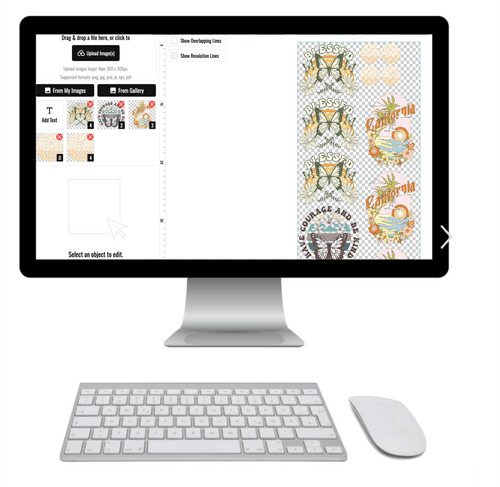
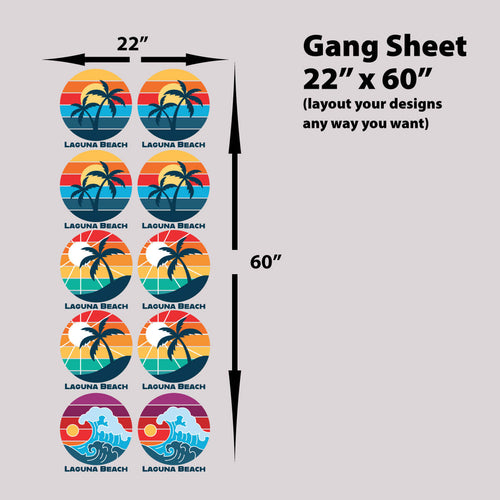
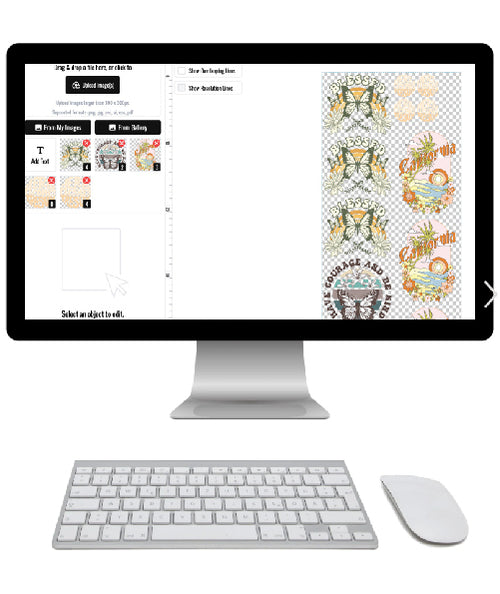
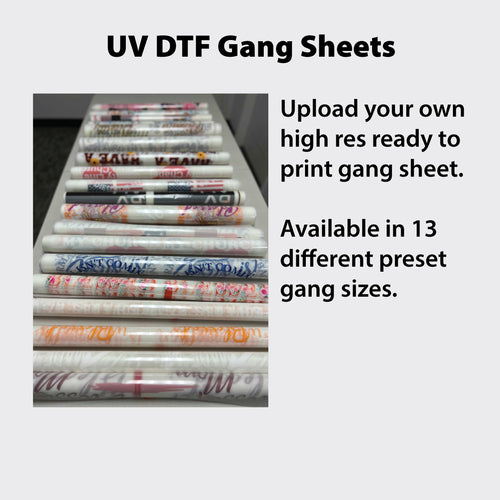
The film is where layout discipline starts. Multiple designs can sit on one sheet, which is why gang sheets make sense for mixed orders and sample runs. An Auto-build gang sheet builder is useful here because it lets you pack several mirrored designs onto a single film layout before printing, instead of treating every design like a separate production problem.
A technical listing for the Phoenix Air curing unit specifies 1000 W power and a 0–150°C (0–302°F) range Phoenix Air curing oven specifications. That range lines up with standard low-to-mid-temperature DTF curing, not high-heat textile processing. The practical takeaway is simple, DTF is controlled heat work, not a process where turning the temperature up fixes a bad setup.
The same basic workflow shows up in beginner pressing guidance too. One instructional source describes adhesive powder after printing, then curing, then the final heat press step. Another beginner guide uses a 280°F for 10 seconds press setting and describes DTF as a hot-peel process DTF pressing video. Those examples matter because they show how repeatable inputs produce repeatable transfers. That is the difference between a press-ready job and one that changes from shirt to shirt.
Fabric Compatibility and Where DTF Fits Best
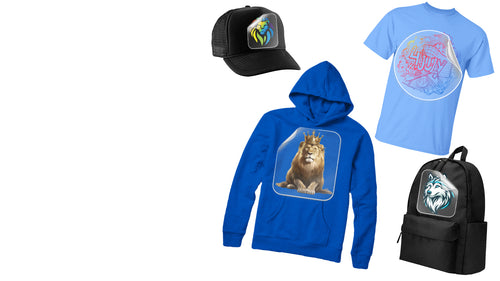
DTF earns its place in a Phoenix shop because it handles cotton, polyester, and blends with full-color detail Printful DTF fabric compatibility. That gives it an advantage in the kinds of mixed orders local buyers place every week. One school order might include cotton tees, poly-blend staff polos, and tote bags, and nobody wants to split that into three decoration methods unless they have to.
What Phoenix buyers usually put DTF on
A lot of the best fits are obvious once you think in terms of usage, not just fabric. 100% cotton tees work well for merch and event shirts. Poly-blend polos are common for hospitality, front desk, and field staff. Tri-blend heather shirts suit boutique brands that want a softer retail feel. Tote bags and aprons come up constantly for pop-ups, coffee shops, and event vendors.
DTF is strongest when the same brand needs different garment types in one order.
The other reason it fits Phoenix is storage and handling. Finished transfers and PET film should stay out of direct heat, because desert conditions can soften adhesive or make staging messy if bundles sit in a hot truck or sunny workspace. I've seen good transfers get blamed for bad results when the actual issue was transport and storage, not the print itself.
DTF also makes sense when you want one decorated look across different substrates, because the process isn't limited to a single fabric family the way some other methods are. That matters for local buyers who don't control every blank they receive. A hospitality group might switch shirt suppliers mid-season, and a good DTF setup still keeps the branding consistent.
How to Order DTF Transfers in Phoenix
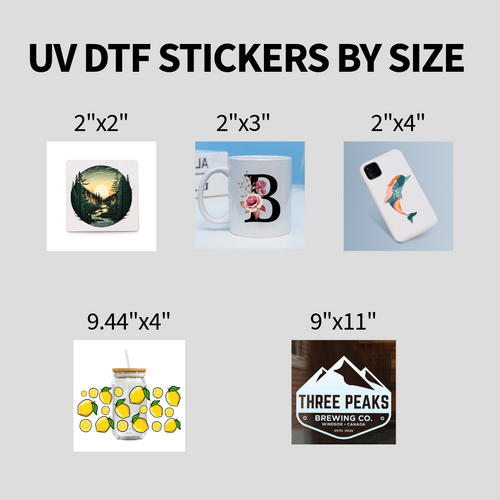
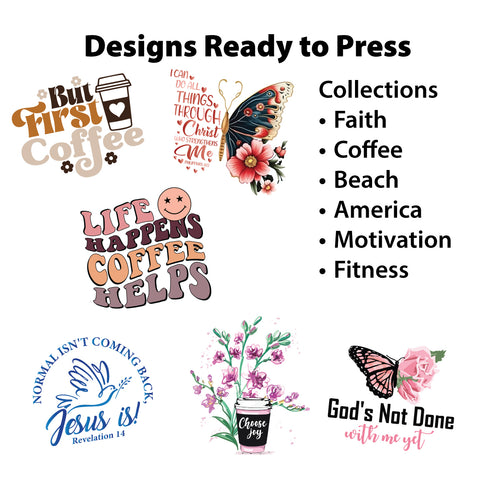
The cleanest orders start with the layout choice. If you have multiple logos, names, or seasonal designs, build a custom gang sheet online with an Auto-build gang sheet builder so everything lands on one PET film and your cost stays organized. If you only need one design in one size, ordering DTF by size is usually simpler. For file-savvy buyers, uploading a print-ready file gives the most control. For shoppers who want something ready, themed collections are the fastest route.
One local-friendly option is to keep the order style tied to the job type. A school booster run with five club logos belongs on a gang sheet. A single front-left chest mark for a restaurant supervisor shirt does not need that complexity. That difference is where buyers save time and avoid overpaying for unnecessary setup.
What helps when the file is not ready
Not every buyer is a designer, and that's normal. Services like logo and shirt design, vectorization, and a We Build a Gang Sheet for You option can keep a job moving when the art file is rough or the customer only has a screenshot. I'd still rather receive a clean file, but real shops live in the world of mixed file quality.
The file-prep checklist is straightforward. Make sure the artwork is mirrored if needed, the background is transparent, the size is correct for the garment, and the fonts are embedded or outlined. If you are sending a raster image, it needs to be sharp enough to hold edges after pressing, not just look fine on a phone screen.
For a local buyer who wants a step-by-step path, the ordering flow on how to order custom DTF transfers is a useful model. It pairs well with the practical reality of Phoenix work, where a rush order might start as a text thread, a logo screenshot, and a deadline that moved up overnight.
Turnaround, Pickup, and Shipping for Phoenix Orders
A Phoenix order usually comes down to one question, how fast does the transfer need to be in hand? 24-hour printing works for the jobs that cannot wait. 1 to 2 business-day standard turnaround fits planned merch drops and team runs where the art is ready and the deadline is set. Same-day pickup makes sense when blanks are already on site and the decorator only needs transfers. Next-day air is the practical choice for last-minute or out-of-town orders that need a tighter clock than ground shipping can offer.
Phoenix Sky Harbor International Airport handled 51,618,649 total passengers in 2025 and 487,142 total operations. That kind of traffic reflects the city's logistics reach. It supports the travel, trade show, retail, and event activity that keeps fast fulfillment realistic for local shops and nearby buyers.
Picking the right speed
A shop that ran out of a popular design yesterday should use same-day pickup if it is available. An event organizer whose date got moved up should choose next-day air instead of hoping ground shipping lands in time. A merch seller with a planned launch can stay with standard turnaround and protect margin instead of paying rush pricing for no reason.
Fast fulfillment only helps when the art is clean and the pickup details are confirmed before the job enters the queue.
Phoenix also has a useful regional position for Southwest shipping patterns. That does not make every package fast on its own, but it does help when the buyer chooses the right service level. If the order is going across the country, air can keep the schedule intact. If it is staying local, pickup removes the extra shipping leg entirely.
For ordering and handoff details, how to press DTF transfers is the kind of operational reference that helps buyers plan the full job, not just the print file.
Pressing, Durability, and Caring for DTF Apparel
A DTF transfer can look sharp on the sheet and still fail at the press if the operator gets casual with the setup. In the shop, a solid starting point is around 270°F for about 10 seconds, with a pre-press to drive off moisture and an instant hot peel after the image has set. That is the baseline I would give a buyer in Phoenix, then I would adjust it for the garment, the platen, and how fast the press recovers heat.
What makes the press look clean
Pre-pressing matters because moisture turns to steam under heat, and steam breaks the bond before the adhesive can settle. Cool peeling matters because the print needs a moment to lock in before the film comes off. Even pressure matters across the whole platen, especially near seams, zippers, thick hoodie fabric, and the shoulder area on polos where many presses lose consistency.
For a step-by-step reference, the DTF pressing guide is useful because it separates the press, peel, and finish stages instead of treating them like one motion. That separation matters in real production. A powder cure, a transfer press, and the final garment press are related, but they do different jobs, and mixing them up usually shows up as edge lift, dull color, or a print that looks fine until the first wash.
A second workflow reference shows the same sequence in practice, with powder, cure, and final press handled as separate stages DTF workflow video. That is the part operators learn the hard way. If the press person rushes the first step, the rest of the job has to compensate, and it usually cannot.
Lion DTF Transfers says its prints are tested to last 100+ washes, and the day-to-day care rules should match that claim. Turn the garment inside out, use lower dryer heat, and avoid harsh bleach. Those habits will not save a weak press, but they do help a good press hold its color and edge detail longer, especially on shirts that get worn and washed often.
A care card should read like a shop owner wrote it, short, clear, and hard to misunderstand.
If you sell decorated apparel, keep the care instructions plain and direct. The customer does not need a process lecture. They need to know how to keep the print looking clean after the first wash and after repeated use, especially on merch that sees gym bags, job sites, or long days in the Arizona sun.
Phoenix Use Cases for DTF Transfers
A youth sports league is a classic gang sheet job. One sheet can hold multiple names and numbers, which keeps the order efficient and makes reorders easier when a player is added late. If the season starts tonight, same-day pickup or next-day air makes more sense than a slower fulfillment choice.
A Phoenix coffee shop launching a seasonal drop usually wants a single graphic across a few shirt sizes and maybe a tote bag. That's a clean gang sheet or single-size decision, depending on the art count. The value is not just speed, it's keeping the merch fresh without locking the shop into a box of one design.
An event or hospitality brand often needs branded polos and aprons in mixed fabrics. DTF fits because the same artwork can move onto different blanks without rebuilding the decoration plan from scratch. That consistency matters when staff image has to look pulled together across roles and garment types.
A print shop uses DTF as overflow when screen presses are booked or the order mix is too small for setup-heavy methods. That's where the format saves the day. One extra run of short jobs can still leave the main production line intact, and the customer never has to know the schedule was tight behind the scenes.
Ordering Checklist and Phoenix DTF FAQs
Before you place the order, check four things. Artwork should be mirrored, transparent, and sized correctly. Fulfillment speed should match the deadline. Garment blanks should be ready, because delayed blanks slow the whole job. Press settings should already be decided, including temperature and peel method.
Quick FAQs
Will desert storage affect my transfers? Yes, if the film or finished sheets sit in direct heat. Keep them shaded and stable until press time.
What should I confirm before uploading art? File type, transparency, size, and whether the fonts are outlined or embedded. A clean file saves back-and-forth.
What if I'm not a designer? Ask for vectorization, logo cleanup, or a gang-sheet build service so the file arrives press-ready instead of half-finished.
Should I request a press test for a new garment? Yes, especially if the blank is unusual or the fabric mix is different from your normal order.
If you're ready to turn a rush job, a merch drop, or a team order into press-ready transfers, Lion DTF Transfers offers gang sheets, DTF by size, file help, and fast fulfillment options built for that workflow. For Phoenix buyers who need something practical and ready to press, visit Lion DTF Transfers and compare the transfer format that fits your next order.