



You need shirts for a school fundraiser in Irvine, polos for a service team in Anaheim, or branded merch for an online store you run out of Costa Mesa. The deadline is close, the artwork has gradients and small text, and every print method you check seems to come with a catch. Screen printing wants volume. Vinyl feels limiting. Some online printers look cheap until shipping and delays get involved.
That's where DTF Orange County buyers usually start looking harder at local transfer providers.
Direct-to-Film works well for the jobs that used to fall into an awkward middle ground. You can order a short run, keep full color, and press designs onto different garment types without building your whole production schedule around one decorating method. For small businesses, agencies, school programs, and print shops, that flexibility matters more than marketing slogans.
The smarter question isn't just “Who offers DTF?” It's “Who can get me clean transfers fast, price them in a way that makes sense, and help me avoid the common mistakes that waste garments and time?” In Orange County, local buying changes the answer because speed, pickup, and direct communication can matter as much as print quality.
Your Guide to Custom Apparel in Orange County
A common Orange County apparel job looks like this. A restaurant group needs staff shirts for a new opening. A youth sports organizer wants fan gear with multiple names and numbers. A small apparel brand needs a short run to test designs before committing to larger quantities. None of them wants a complicated production process.
Traditional methods still have their place, but they don't always fit local demand. Screen printing is strong when the artwork and quantities line up. Heat-transfer vinyl works for simple graphics. But once you need full color, fast turnaround, and low minimum flexibility, those options can start creating friction.
Orange County is a strong market for this kind of work because the county has about 3.17 million residents, supporting a dense base of small businesses, e-commerce brands, schools, and creative organizations, according to the Orange County population and economic context report from Cal State Fullerton. That local density is a practical reason custom apparel demand stays active across the county.
Where buyers usually get stuck
Most buyers don't struggle with design ideas. They struggle with the buying process.
- Speed pressure: The event date is fixed, and missing it makes the order useless.
- Mixed garment needs: One order might include tees, hoodies, and performance blends.
- Budget tension: You want quality, but you don't want to overpay for waste.
- Order complexity: Multiple logos, sizes, and placements can get messy fast.
Practical rule: If your order needs color detail, a short run, or several designs grouped efficiently, DTF is often the first method worth pricing seriously.
The best local DTF experience doesn't feel technical. It feels simple. You send usable artwork, choose a provider with clear turnaround, use a gang sheet when it saves money, and either press in-house or have your apparel decorator do it. That's why DTF has become such a useful lane for Orange County businesses that need custom apparel without the baggage of a larger production setup.
Understanding DTF Transfers and Their Benefits
DTF transfers are easiest to understand as a high-detail fabric transfer system. The design is printed onto a film, adhesive is applied, and the transfer is heat pressed onto the garment. For a non-printer, the simplest analogy is a high-tech fabric sticker that bonds properly under heat and pressure, not a craft-store peel-and-stick patch.

DTF has grown quickly because it fits how modern apparel gets ordered. The worldwide DTF printing market was valued at approximately 782.1 million U.S. dollars in 2023 and is projected to grow at a double-digit CAGR, driven by short-run custom apparel demand in markets including Southern California, as summarized in this DTF market overview.
If you want a basic primer before comparing vendors, this explanation of what a DTF transfer is gives a helpful starting point.
Why buyers choose DTF over older options
The biggest advantage is range. DTF handles detailed, full-color art without forcing you into the setup logic of screen printing. That matters when you're decorating brand graphics, photo-style prints, event art, or merch drops with several SKUs but modest quantities.
Here's where DTF usually wins:
- Artwork freedom: Gradients, shading, and small details are easier to preserve.
- Low minimum practicality: You don't need a large run to make the order worthwhile.
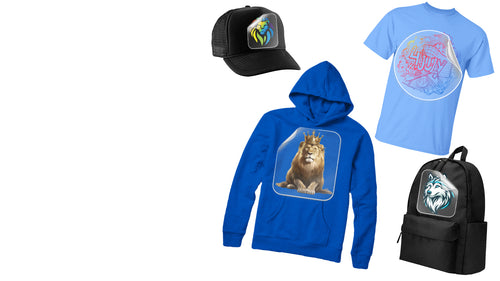
- Fabric versatility: It works across common apparel categories, including blends and darker garments.
- Easy outsourcing: A business can buy transfers only, then press them as needed.
What quality actually depends on
A good transfer doesn't come from ink alone. Application matters.
Most DTF transfers achieve optimal wash-resistant adhesion at (260 to 280 °F) for 7 to 10 seconds with medium pressure, according to this DTF pressing and application guide. In real shop terms, that means a transfer can look excellent out of the box and still fail if the press runs cold, the dwell time is off, or the operator guesses instead of checking platen temperature.
A bad press setup can make a good transfer look like a bad supplier problem.
That's one reason DTF works so well for shops and home operators who use a reliable heat press and follow the supplier's instructions closely. Compared with vinyl, DTF gives more design freedom. Compared with screen printing, it removes much of the setup friction for short runs. Compared with low-end transfers, it offers a more professional path when quality control is taken seriously.
The Advantage of Local DTF Printers in Orange County
Buying local isn't just about supporting nearby businesses. In DTF, local often means less risk.
If you're ordering for an event, store launch, pop-up, or team deadline, the biggest failures usually aren't dramatic print defects. They're timing failures. A box ships late. A courier misroutes it. You receive transfers too close to the event to test, repress, or reorder. Working with a nearby provider cuts down those points of failure.

For buyers searching specifically for DTF Orange County, local access matters because pickup changes the production timeline. If the art is approved and the provider offers fast production, same-day pickup can save a project that would otherwise be hostage to shipping.
For a local perspective on the service offerings, this page on DTF in Orange County reflects the kind of turnaround and accessibility many buyers are looking for.
What local service changes in practice
National online providers can be useful for commodity ordering. But local providers bring advantages that are hard to replicate remotely.
| Buying factor | Local Orange County provider | Remote online-only provider |
|---|---|---|
| Urgent orders | Pickup may be possible | Shipping controls the timeline |
| Artwork questions | Faster direct communication | More back-and-forth |
| Testing | Easier to verify quality before scaling | Harder to troubleshoot quickly |
| Reorders | Faster repeat cycles | Added delay from transit |
Why speed is only part of the story
Good local providers also help buyers avoid preventable mistakes. That includes checking whether the artwork is press-ready, catching sizing issues before film is wasted, and helping customers decide whether individual prints or a gang sheet makes more sense.
- Pickup flexibility: Useful when you've got an event clock running.
- Clearer communication: Questions get answered faster when the provider knows the local pace of business.
- Less shipping overhead: You avoid the cost and uncertainty tied to rush delivery.
- Better problem solving: If something needs adjustment, the turnaround is tighter.
Local DTF is strongest when you treat the provider like a production partner, not just a checkout page.
That doesn't mean every local shop is automatically better. It means proximity gives a good provider more ways to help you succeed. In custom apparel, that's valuable.
Evaluating DTF Transfer Providers in Orange County
Most DTF providers sound similar online. They all promise bright color, strong adhesion, and fast service. The useful differences show up when you ask operational questions.
Start by thinking like a buyer who has to live with the result. You don't just need a transfer that looks good in a product photo. You need one that arrives on time, presses cleanly, and doesn't turn your garment inventory into test pieces.

The questions worth asking before you order
Use this checklist when comparing DTF Orange County providers:
- Application guidance: Do they give clear pressing instructions, including temperature, time, and peel method?
- Durability standard: Do they state a real wash-performance claim, such as 100+ wash cycles, rather than using only vague words like “premium”?
- Turnaround honesty: Can they explain what same-day, next-day, or standard production means for your file approval time?
- Pricing logic: Do they charge by size, by sheet, or by square inch, and can you tell which option fits your order?
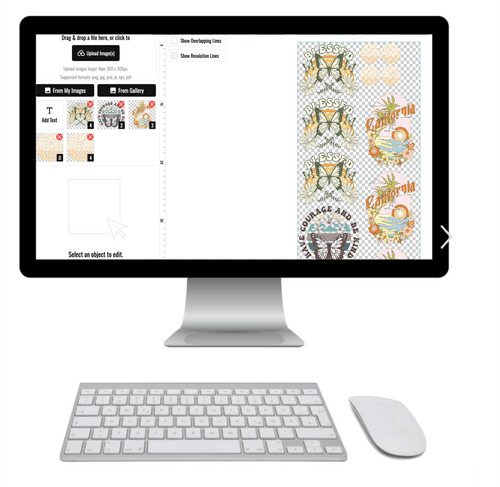
- Gang sheet options: Do they offer an Auto-build gang sheet builder that makes layout simple and lowers wasted film space?
- File review support: Will someone flag obvious artwork problems before production?
- Local access: Can you pick up, call, or message someone quickly if the job is time-sensitive?
What separates a good vendor from a risky one
A weak provider often hides behind broad claims. A strong one gives you operational detail.
Look for signs that the company understands production reality:
- They talk about pressing, not just printing.
- They explain hot peel or cool peel clearly.
- They price transparently enough that you can compare order formats.
- They make gang-sheet ordering easy instead of forcing manual layout work.
- They understand that small businesses need speed without chaos.
Buyer check: If the ordering process feels confusing before you've paid, support probably won't improve after you've paid.
One issue I see often is buyers choosing only on unit price. That can backfire. A lower price isn't better if the file setup is clumsy, the transfer requires heavy troubleshooting, or the delivery window puts your event at risk. The smart comparison is total usable value: transfer quality, order efficiency, and how much time the provider saves you.
How to Order DTF Transfers from Lion DTF
Ordering gets easier when the platform matches the way real customers build jobs. Some buyers have one design in one size. Others need a sheet packed with left-chest logos, sleeve hits, and full-front prints. The best ordering systems account for both.

A practical starting point is to review DTF printing solutions from Lion DTF Transfers, because it reflects the main order paths customers typically need.
Use the order path that fits the job
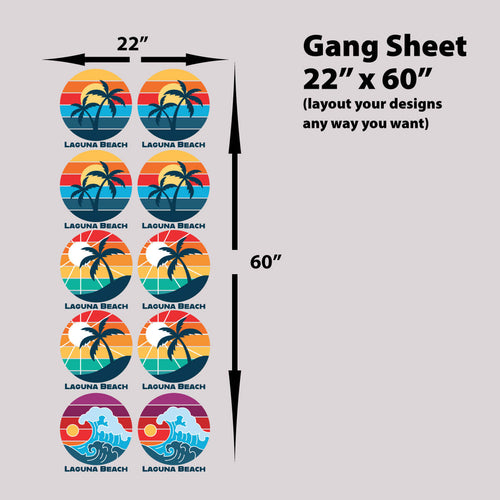
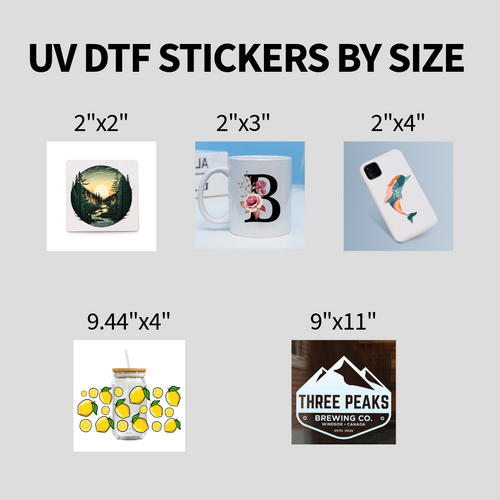
If your artwork is simple and already sized, ordering by transfer size can be the cleanest route. If your order includes multiple graphics, repeated logos, or mixed placements, gang sheets are usually the better value.
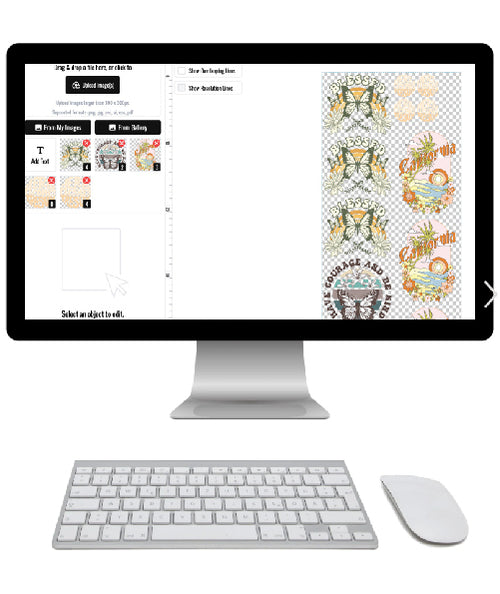
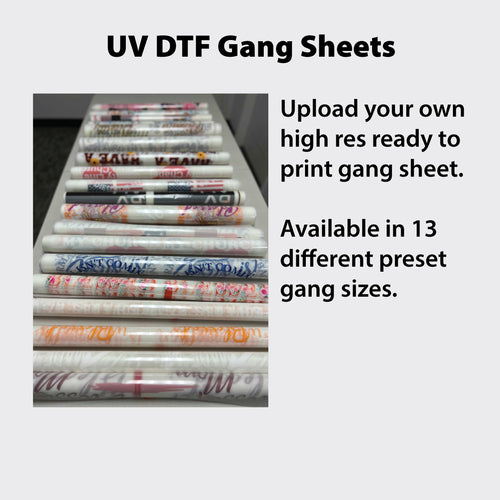
The biggest convenience feature is the Auto-build gang sheet builder. It lets you assemble multiple designs onto one film sheet without manually fighting a layout program. That matters because gang sheets aren't just a print-shop trick. They're one of the clearest ways to reduce per-transfer cost when you have several images to batch together.
Lion DTF Transfers markets this tool specifically as a cost-saving workflow. It helps reduce per-image overhead on film and adhesive powder by consolidating designs onto one sheet, which is exactly why small businesses and print shops lean on gang sheets when they want to buy intelligently.
A simple way to approach your first order
Here's the workflow that makes the most sense for most buyers:
- Sort your artwork first. Group designs by intended size and garment placement.
- Decide whether repeated graphics belong on one sheet. Left-chest logos, sleeve prints, and tag-size branding often work well together.
- Use the Auto-build gang sheet builder if you want easier layout and stronger cost control.
- Choose pickup or shipping based on deadline pressure. For local buyers, pickup can be the safer move.
- Test one transfer before pressing the whole run if you're working with a garment you haven't used before.
Another useful path is the “We Build a Gang Sheet for You” style service, which helps when you have art but don't want to manage layout yourself. That's especially helpful for agencies, schools, and busy small business owners who don't want to spend their afternoon nesting logos.
A quick demo helps if you're new to the process.
Why buyers focus on cost, speed, and durability
Lion DTF Transfers advertises hot-peel transfers tested for many wash cycles and pricing that starts at approximately $0.017 per square inch for certain designs. It also operates on a 1 to 2 business-day shipping window, with 24-hour printing availability, same-day pickup, and next-day air shipping for rush projects. Those details matter because they address the three things Orange County buyers usually care about most: lasting print performance, understandable pricing, and turnaround speed.
The key is using the right order format. If you upload one file at a time when a gang sheet would have worked, you may spend more than necessary. If you crowd too many mismatched graphics onto a sheet without planning the press workflow, you can save on ordering but lose time in production. Good ordering is about balancing layout efficiency with pressing efficiency.
Common Questions About DTF Transfers
What equipment do I need to apply DTF transfers
You need a reliable heat press more than anything else. The transfer quality only shows up properly when the press runs at the right temperature and pressure. If you're using a bargain press with uneven heat, expect inconsistent results.
For wash-resistant adhesion, most DTF transfers perform best at (260 to 280 °F) for 7 to 10 seconds, which is a key detail behind long-lasting performance, as noted in the earlier DTF pressing reference.
What artwork files work best
Print-ready files save time and avoid rework. Transparent-background artwork is usually the easiest format for non-designers to submit, while vector files are helpful when available because they scale cleanly.
Ask the provider whether your file needs cleanup before production. The common failure points are low-resolution art, stray backgrounds, and text that's too small to reproduce cleanly on the chosen transfer size.
The fastest order is the one that doesn't need three rounds of file correction.
What fabrics can DTF be used on
DTF is popular because it works across a broad range of common apparel fabrics. That makes it practical for T-shirts, hoodies, sweatshirts, and many blended garments. It's also useful when one order spans several garment types and you want one decoration method to cover the run.
Always test on unfamiliar garments before committing the full batch, especially if the material has a coating, unusual texture, or stretch characteristic.
Are gang sheets really worth it
Yes, when the order includes multiple designs or repeated graphics. A gang sheet is often the most economical way to combine small logos, alternate prints, and supporting placements onto one film sheet. The Auto-build gang sheet builder makes that process easier and more cost-effective because it reduces the manual work of arranging everything yourself.
Should I choose local pickup or shipping
If the deadline is tight and you're in Orange County, pickup usually gives you more control. Shipping is convenient for routine work, but pickup removes a layer of uncertainty. For event-driven orders, that matters.
Is DTF a good fit for print shops too
Often, yes. It can be a useful add-on for shops that don't want every short run going through screen setup or every detailed color job going through a slower workaround. The main thing is to treat DTF as a production lane with its own rules, not a magic replacement for every other print method.
If you want fast, durable transfers from a local specialist, Lion DTF Transfers offers hot-peel DTF transfers, same-day pickup options, fast shipping, and an easy Auto-build gang sheet builder that helps Orange County businesses order more efficiently and keep costs under control.