



You've got a deadline, a logo that looks fine on your screen, and a pile of shirts waiting for decoration. Maybe it's merch for a Sun City event, team gear for a coach, or a small wholesale order that needs to leave your shop quickly. Searching for DTF El Paso providers isn't really about finding out whether DTF exists. It's about finding someone who can review your file, keep your colors consistent, produce transfers that press cleanly, and meet the date you promised your customer.
El Paso's mix of small businesses, schools, teams, makers, and border-market commerce makes that operational question especially important. The local metropolitan area had a civilian labor force of 422.8 thousand in June 2026, with 405.7 thousand employed and a 4.0% unemployment rate, while total nonfarm employment reached 364.5 thousand, up 0.4% year over year, according to the BLS data reported by KFOX. That's a broad customer base for uniforms, event apparel, business merchandise, and team orders.
Why El Paso Buyers Are Choosing DTF Right Now
A local maker starts with a handful of branded shirts, then gets asked for hoodies, tote bags, and a second logo variation. A coach needs names and numbers across different garment colors. A restaurant owner wants employee apparel now, not after a long setup process. In each situation, the transfer itself is only one part of the purchase.
The practical questions are:
- Who checks the artwork?
- Who catches a weak resolution or missing background before production?
- Who can match a brand color closely enough for repeat orders?
- Who can print and ship before the event, launch, or uniform deadline?
Local DTF search results often explain the process or invite a quote, but they rarely answer those questions directly. That leaves buyers comparing generic service pages while trying to piece together proof approval, art review, turnaround windows, pickup options, and production accountability. For a business owner, that's the wrong order of operations.
El Paso also functions as a major border and logistics market. Local reporting citing U.S. border enforcement data recorded more than 200,000 migrant encounters in fiscal year 2023 in the El Paso Sector, as summarized by Gitnux's border-crossing statistics. The figure isn't a measure of apparel demand, but it reflects the scale and movement of a region where fast fulfillment and dependable commercial service matter.
My buying rule: Don't choose a DTF supplier because the mockup looks attractive. Choose the supplier that can prove quality, color control, wash performance, and deadline handling.
Those four pillars will determine whether your order becomes a repeatable workflow or a last-minute rescue job.
What DTF Transfers Actually Are
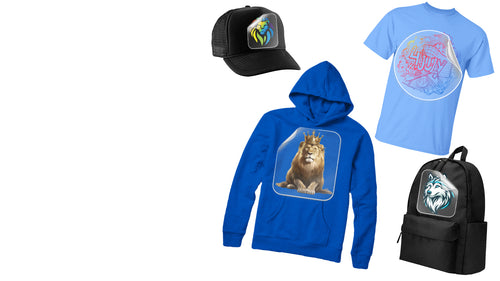
Think of DTF as an ink sandwich. The top layer is a PET film carrying the printed design. The middle layer is hot-melt adhesive powder. The bottom layer is the garment fabric. Heat and pressure melt the adhesive so the design bonds to the textile.
The production sequence is straightforward:
- Print the artwork onto PET film. DTF uses water-based textile inks, including a white layer that helps the design stay visible on dark garments.
- Apply adhesive powder. The powder sticks to the wet printed areas rather than covering the entire sheet.
- Cure the powder and ink. Controlled heat turns the loose powder into an adhesive layer.
- Press the transfer onto the garment. A heat press applies the required temperature, pressure, and dwell time.
- Peel the film and finish the bond. Hot-peel film can be removed after pressing, followed by a brief second press when the product instructions call for it.

The layered construction explains why DTF works well for cotton, polyester, and blended fabrics. It also handles detailed artwork, gradients, photographic elements, and multiple colors without requiring a separate screen for every color. Screen printing still has a place, especially for large repeat runs, while DTG prints directly onto the garment and can be attractive for certain cotton-focused jobs. DTF's advantage is that the design is printed and cured before you apply it, giving a shop or maker a ready-to-press decoration.
DTF in one line: It's a printed film transfer with adhesive powder that bonds detailed artwork to fabric through heat and pressure.
For El Paso buyers, hot-peel transfers are particularly useful when production needs to move quickly. You can separate printing from pressing, store ready-to-press transfers, and decorate garments as orders arrive. That flexibility matters more than a generic claim that one printing method is always superior.
How to Judge a Reliable DTF Provider in El Paso
A quote tells you the price. It doesn't tell you whether the edges will be sharp, whether the red in your logo will look consistent, or whether the order will be ready when your customer expects it.
Start with print quality. Ask for a close-up sample of fine lettering, thin lines, solid fills, and transparent edges. A good provider should explain how they handle artwork that needs cleanup instead of printing a weak file. The local gap is clear here. Many pages describe DTF broadly, but buyers need a production conversation about proof approval and file correction.
Ask about color before you approve the order
Color accuracy matters most when you're decorating uniforms, company apparel, or repeat merchandise. Ask whether the provider reviews your file before printing, whether they can discuss brand-color matching, and whether they'll send a proof when the artwork needs adjustment.
Don't assume a screen preview equals a printed result. Monitor settings, file color profiles, garment color, white ink, and transfer curing all affect the finished appearance. A responsible provider will explain what can be matched closely and what limitations apply.
Require evidence for durability and turnaround
A comparative textile-testing study found DTF among the most wash-resistant decoration methods tested. Its samples showed no significant color loss through 15 wash cycles and remained among the strongest performers at 20 cycles, while screen printing performed comparably in that study, according to the independent textile-testing research. That supports DTF as a practical choice for repeatedly laundered apparel, but only when curing and pressing are controlled.
For turnaround, ask for a specific production window, not “fast shipping.” Published DTF service guidance describes standard production in 1–3 business days and expedited production in 24–48 hours, as outlined by ColDesi's DTF gang-sheet guidance. Confirm whether that window starts after payment, artwork approval, or file correction.
For a deeper supplier-evaluation framework, use this guide to choosing a reliable DTF transfer supplier and take the questions below into your next call.
What to Ask Any El Paso DTF Provider
| Buyer question | Strong provider answer | Red-flag answer |
|---|---|---|
| Can you review my artwork before printing? | The provider explains file issues and confirms a proof. | “Upload it and we'll see what happens.” |
| Can you match my brand colors? | The provider explains the matching process and limitations. | “The screen preview is accurate.” |
| What wash testing or durability evidence can you provide? | The provider shares documented testing or clear care requirements. | “It lasts forever.” |
| What is the guaranteed production window? | The provider states when production starts and what expedited options mean. | “It should be out soon.” |
A checklist-driven provider makes problems visible before the press. A generic quote-based shop makes you discover them after the garments arrive.
File Prep, Upload, and the Auto-Build Gang Sheet Builder
Most DTF problems start before printing. Send a clean file, use a sensible layout, and confirm the finished dimensions before checkout.
Prepare the artwork first
Use a transparent PNG at 300 DPI whenever possible. Keep the artwork in RGB unless your provider specifically requests another color space, and inspect the file at its intended print size. Tiny text, soft shadows, semi-transparent edges, and low-resolution logos can produce weak or uneven results even when the design looks acceptable on a phone.
Before uploading, check four things:
- Background: Remove unwanted rectangles, halos, and hidden layers.
- Edges: Inspect fine lines and small lettering at the final size.
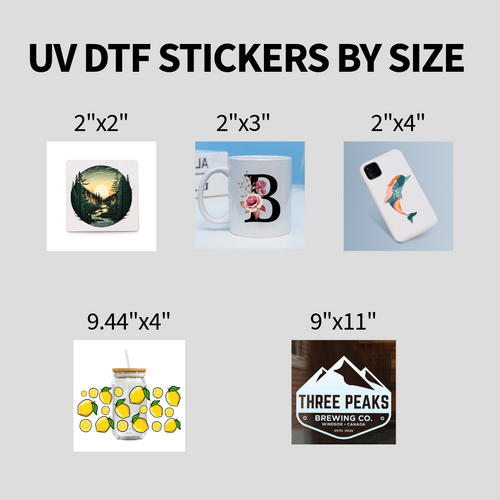
- Dimensions: Confirm the width and height your garment requires.
- Color: Keep brand colors consistent across files and repeat orders.
If you're unsure, ask for an art review before payment. A few minutes of correction can prevent an entire order from being unusable.
Let the builder pack the sheet
Hand-arranging several logos on a gang sheet wastes time and creates an avoidable risk. Designs can run too close to the edge, spacing can become inconsistent, and the person preparing the file may miss an element entirely.
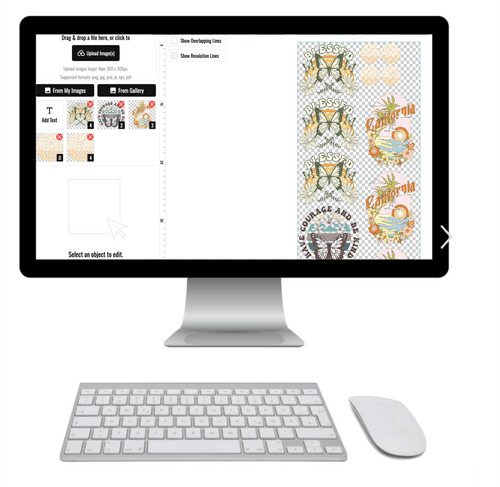
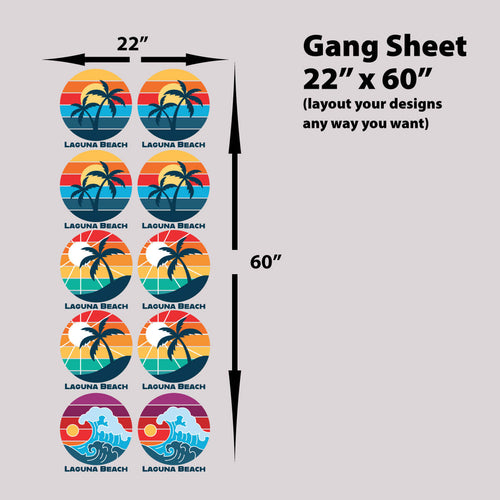
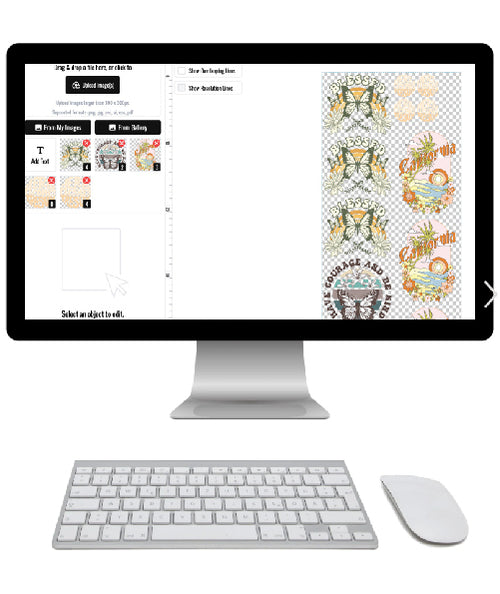
An Auto-build gang sheet builder solves the layout problem by arranging multiple designs into the available printable area. That can improve film usage and reduce the cost per transfer because several designs share one print run. Industry guidance reports that a well-packed 1 metre gang sheet can provide 4.6 times more printable area than an A3 sheet, with the cost per design potentially dropping from about £3.60 or more on individual A-size sheets to under £1 per print on a 1m sheet, as explained by Brandum's gang-sheet guide.
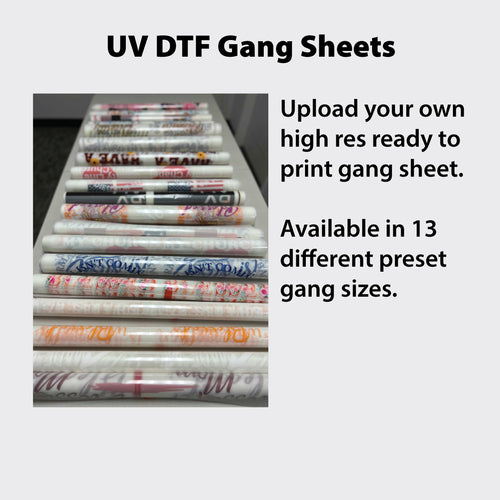
Use the DTF gang sheet builder guide to understand the workflow, then use the Auto-build gang sheet builder for logo sets, mixed-size artwork, team names, or a collection of small product graphics. It's easier to use, more cost-effective than manually buying separate sheets, and less likely to leave valuable film unused.
Practical rule: Upload the largest clean version of every design, set the final sizes, and let Auto-build handle the packing before you approve the proof.
That workflow also supports faster fulfillment. When the layout is created through a few clicks instead of manual nudging, the provider can move your order into printing sooner, which is exactly what rush event and reseller orders need.
Shipping vs Local Pickup in El Paso
For an El Paso order, the delivery method is part of production planning. Choose between a provider that ships the transfers and a local pickup option based on speed, cost, and risk, then confirm who will fix artwork, approve color, and meet the pressing deadline.

Choose local pickup when the deadline is close
Pickup is the safer choice for event garments, replacement orders, or team deliveries scheduled within a short window. It removes the carrier handoff and lets you inspect the package before leaving. You still need to account for the drive, operating hours, and whether the order will be ready when promised.
Ask these questions before selecting pickup:
- When will printing finish?
- When will the pickup notification arrive?
- Can someone verify the order contents at collection?
A provider offering 24-hour printing and same-day pickup may fit a rush job, but confirm when that clock starts. Artwork approval, color corrections, and proof changes can occur before production begins.
Choose shipping when planning matters more than immediacy
Shipping works well for repeat orders, larger transfer quantities, and buyers who would rather avoid a cross-town trip. Compare the carrier service, tracking, packaging, and delivery estimate. Regional shipments into El Paso may arrive faster than distant orders, but weekends, weather, border-area traffic, and carrier delays can still affect the handoff.
Ask whether the provider offers standard and expedited carrier options, when tracking becomes available, and what happens if the package is delayed. Build time for artwork corrections and delivery instead of scheduling pressing on the same day the package is expected.
Deadline rule: If a missed event would cost more than the delivery upgrade, choose pickup or expedited shipping. For planned inventory, standard shipping is usually the calmer option.
Use the Auto-build gang sheet builder for either method. A clean, approved layout gives the shop fewer reasons to pause production, while pickup or shipping determines how the finished transfers reach you. The published DTF fulfillment guidance also supports treating fulfillment as an operational decision, not an afterthought.
When DTF Beats Screen Printing and DTG for El Paso Jobs
DTF is the default choice for short runs, mixed fabrics, detailed artwork, and tight deadlines. That doesn't make it the universal winner. It means the job should determine the method, not a sales pitch.
For a small-batch merch drop under 50 pieces, DTF usually avoids the setup burden associated with screen printing. You can print one detailed design, several colorways, or a collection of logos without building a separate screen workflow for each variation. That's useful for a local brand testing demand before committing to a larger inventory order.
Mixed-fabric orders are another strong fit. If one customer needs cotton shirts, polyester performance garments, and tri-blend sweatshirts in the same production batch, DTF can keep the decoration method consistent across the garment mix. DTG tends to be more dependent on garment composition and pretreatment, while screen printing works best when the order is standardized.

Pick by the job, not the decoration label
| Job requirement | DTF | Screen printing | DTG |
|---|---|---|---|
| Small-batch merch under 50 pieces | Strong fit with fast setup | Setup can be inefficient | Possible, especially for suitable garments |
| Cotton, polyester, and blends together | Strong fit | May require more garment-specific planning | More sensitive to garment and pretreatment |
| Full-color or photographic artwork | Strong fit | More complex production | Strong detail on appropriate garments |
| High-volume, repeat single-color work | Practical, but not always the most efficient | Often the better choice | Usually not the first choice |
| One-off or varied artwork | Strong fit | Less convenient | Can work when garment conditions are right |
DTF also handles event and team gear well because names, numbers, sponsors, and player variations can share a production workflow. Screen printing earns the advantage when you're repeating a simple design across a high-volume, standardized run. DTG can make sense when the order centers on direct-to-garment detail and compatible cotton apparel.
Simple decision rule: Use DTF for short runs and mixed fabrics. Use screen printing for high-volume, repeat artwork with limited colors. Consider DTG when the garment and artwork suit direct printing.
Use the comparison below to see how the methods differ in practice.
Pressing DTF Transfers the Right Way
A good transfer can still fail if the press operator skips the basics. Moisture, uneven pressure, premature peeling, and excessive dryer heat all affect the bond.

Use this pressing sequence
- Pre-press the garment. Close the press briefly to remove wrinkles and moisture. A dry, flat surface gives the adhesive a better chance to bond evenly.
- Position the film. Place the transfer with the printed side against the garment. Check alignment before closing the press.
- Press with the supplier's settings. Temperature, time, and pressure vary by transfer film and garment. Don't substitute a random setting from another product.
- Hot-peel smoothly. If the transfer is designed for hot peeling, remove the film in one controlled motion while following the supplier's instructions.
- Re-press the design. A second press for 5–8 seconds helps lock the ink and adhesive into the fabric, according to this DTF pressing guide. Use a cover sheet or protective paper.
Wait 24 hours before the first wash. Wash the garment inside out in cold or cool water, and use low heat for drying. Best-practice guidance recommends washing inside out at 30–40°C and avoiding high-heat drying to reduce cracking and edge lift, as explained in this DTF durability guide.
Properly applied transfers commonly reach 40–50 washes, with optimized application and curing reaching 80–100 or more, based on industry durability benchmarks in that same guide. Other independent guidance reports typical DTF lifespans of 50 or more wash cycles when garments are washed cold, inside out, and dried gently, as described by Fcolor's washing guidance.
The pressing routine matters more than chasing the lowest transfer price. A cheap design that lifts after a few washes costs more once you replace the garment and repair the customer relationship.
Your Pre-Order Checklist for DTF in El Paso
Run this checklist before you place the order. It takes only a few minutes and catches the problems that create most DTF headaches.
- Confirm the artwork: Upload a transparent PNG at 300 DPI, inspect the final dimensions, and remove unwanted backgrounds or weak edges.
- Ask who reviews the file: You should know whether a person checks the artwork before production and how corrections are handled.
- Discuss color matching: Send brand references and ask what the provider can match, especially for uniforms and repeat merchandise.
- Choose the layout method: Use an Auto-build gang sheet builder for multiple designs, team names, logo sets, or mixed-size artwork. Gang sheets can make each transfer more cost-effective when the sheet is packed efficiently.
- Confirm durability instructions: Ask about curing, pressing requirements, first-wash timing, and care recommendations.
- Get the deadline in writing: Clarify whether the turnaround clock starts after upload, payment, or proof approval.
- Pick fulfillment deliberately: Choose local pickup for a tight event deadline when available. Choose shipping when you have enough buffer for carrier transit.
- Order by the job: DTF suits short runs, mixed fabrics, detailed designs, and variations. Screen printing may suit large, repeat runs with simpler artwork.
The three questions that predict most of your outcome are simple: Who reviews my art? Can you match my brand colors? What's the fastest guaranteed turnaround? If a provider answers clearly, you can plan. If the answers are vague, the risk belongs to you.
Treat DTF as a repeatable production workflow, not a one-time purchase. Save approved files, record garment choices, keep the pressing instructions with the transfers, and use the same Auto-build process for every repeat order.
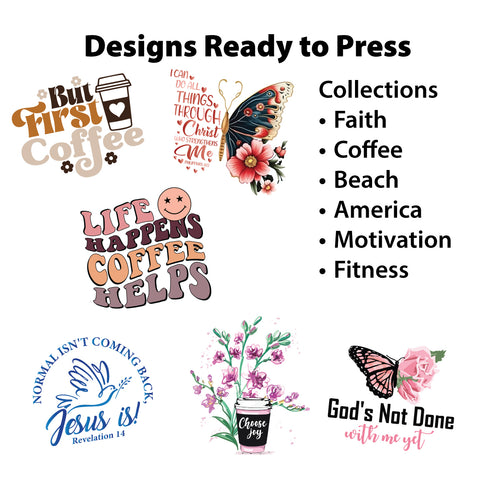
Lion DTF Transfers offers ready-to-press DTF transfers, custom uploads, gang sheets through an Auto-build builder, and fast fulfillment options including 24-hour printing and same-day pickup. For a proof-ready, cost-conscious DTF order in El Paso, visit Lion DTF Transfers and build your transfers around the deadline, garment mix, and artwork you need.