



You're juggling a deadline, a stack of blank tees, and a client who needs merch yesterday. Maybe it's a brewery drop, school spirit wear, or trade-show shirts for a Denver startup, and the question isn't whether the artwork looks good, it's whether you can get it made, packed, and pressed before the window closes. That's why DTF Denver has become such a practical search term for local shops and entrepreneurs who care about turnaround, consistency, and not getting buried in setup work.
Denver's market is big enough to make those pressures real. RTD-Denver reported 65,230,065 annual boardings in 2024, up from 65,175,290 in 2023 and 61,602,568 in 2022, with 42,689,708 bus boardings and 19,493,133 rail boardings in 2024, serving a 3.09 million population in its service area (RTD facts and figures). That kind of mobility tells you something simple, there are a lot of moving parts here, and the businesses that win are the ones that can keep up.
Why Denver Businesses Are Turning to DTF Transfers
A Denver shop rarely gets to sit on an order for long. A customer approves a design late in the afternoon, a launch event is coming up, and the apparel still has to be printed, packed, and delivered without drama. DTF solves that problem more cleanly than a lot of older methods because it gives you a fast way to produce full-color transfers without building a whole production line around each job.
What makes that appealing in Denver is the shape of the local market. The transit agency profile shows a service area population of 3,098,079, a population of 2,686,147, and 2,342 square miles of coverage, along with 64,533,895 annual unlinked trips and 196,209 average weekday trips (FTA agency profile). That's not a tiny, neighborhood-only market. It's a regional business environment where shops need to serve multiple customer types, from schools and teams to brands, breweries, and event organizers.
Why the workflow matters more than the buzz
DTF fits Denver because the work isn't always huge, but it is often urgent. A decorator who can handle short runs, mixed sizes, and repeat orders has a real edge over a shop that still needs a bunch of setup before the first shirt is even touchable.
Practical rule: if the order needs speed, color, and flexibility, DTF is usually easier to schedule than a method that needs more prep work.
That doesn't mean DTF is magic. It means the format lines up with how Denver businesses buy, especially when they need branded apparel that can move from approval to fulfillment quickly. For many owners, the decision is less about chasing the newest printing acronym and more about reducing the number of places an order can go wrong.
Understanding How DTF Technology Works

DTF is straightforward once you break it into parts. Building the transfer first, then applying it to the garment at the end, is a better approach than trying to decorate the shirt from the start. The design is printed onto PET film, adhesive powder is applied, the transfer is cured, and then a heat press bonds it to the garment.
The production chain in plain English
The print heads matter because they set the pace and quality of the output. Commercial DTF systems in the 600 to 700 mm class are typically built around Epson i3200-class printheads with white-ink circulation, and published throughput ranges from about 5.5 m²/h on higher-quality multi-pass settings up to about 21 m²/h on faster 4-pass configurations (DTF system manual reference). In practical terms, more passes usually mean smoother detail and slower output, while fewer passes push more material through the machine faster.
The key advantage is what DTF avoids. There are no screens to burn, no vinyl shapes to weed by hand, and no fabric pretreatment step for the same kind of workflow many decorators know from other processes. That makes it useful for one-off orders, mixed artwork, and jobs that would be awkward or time-consuming with more traditional methods.
A good transfer shop doesn't just print. It controls heat, humidity, and handling so the finished transfer behaves the same way from order to order.
One more thing matters for Denver operators, the environment. Published systems call for operating humidity ranges like 40% to 60% and temperatures around 60 to 80°F, while another requires 35% RH to 65% RH and 15°C to 35°C (DTF operating conditions reference). That's a reminder that DTF isn't only a design workflow, it's a controlled production process.
Comparing DTF to Other Apparel Printing Methods

DTF earns its place by sitting in the gap between methods that are very good at one type of job and clumsy at another. Screen printing still makes sense when you're doing a big batch of simple artwork. Heat transfer vinyl is fine for basic shapes and names. Sublimation works well in its lane, but that lane is narrow.
Where each method actually wins
Screen printing is strong when the artwork is simple, the quantity is high, and the setup cost makes sense across the run. It starts to lose appeal when the job is small, color-heavy, or needs frequent changes. For many Denver customers, that's most of the calendar.
HTV is easier to understand because it's basically cut, weed, and press. The problem is time, especially when the design has tiny text, layered colors, or a lot of detail. It's a useful tool, just not the right one when you need photo-like art or multiple logos on the same order.
Sublimation has its own limitation, it's tied to specific substrates and usually performs best on light-colored polyester. That makes it a bad fit for a lot of cotton-based merch, dark garments, and mixed apparel programs. DTF is more flexible there because it handles a wider range of garments without forcing the customer into one fabric path.
Here's the practical decision rule:
- Choose screen printing when the run is large and the design is simple.
- Choose HTV when the artwork is basic and you only need a few pieces.
- Choose sublimation when the product matches the substrate requirements.
- Choose DTF when you need full color, small runs, mixed sizes, or faster turnaround without extra prep.
For a shop owner, that flexibility often matters more than any single technical feature. It means fewer reasons to turn away a job or split it across multiple vendors.
Maximizing Value with DTF Gang Sheets
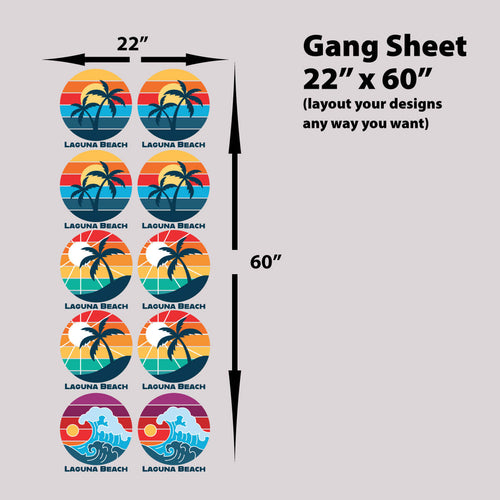
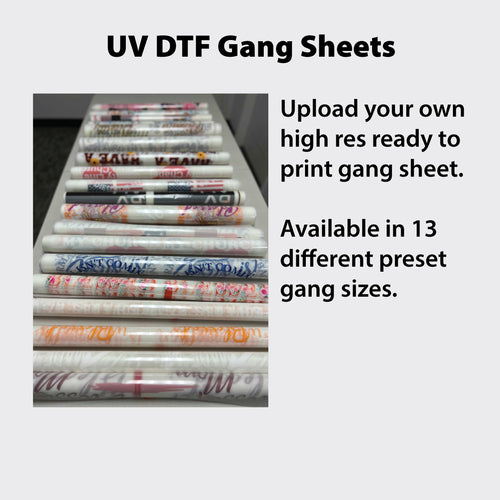
Gang sheets are one of the cleanest ways to cut waste in DTF. Instead of ordering each design as a separate transfer, you place multiple graphics on one sheet and use the available film more efficiently. That matters when you're juggling left-chest logos, back prints, youth sizes, adult sizes, and a handful of recurring brand marks in the same order.
Why layout efficiency changes the math
The biggest cost problem in transfer printing is usually not the artwork itself, it's wasted space. Every blank gap on a sheet is material you paid for and didn't use. Gang sheets reduce that dead space, which is why they make so much sense for schools, teams, merch sellers, and decorators running mixed orders.
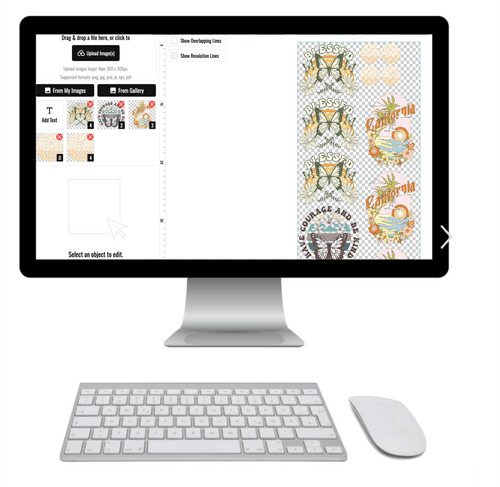
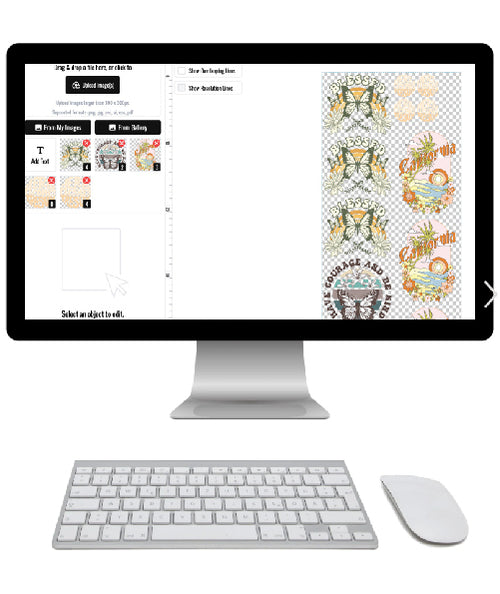
Lion DTF Transfers' Auto Builder gang sheet tool is built for that exact use case, it automatically arranges artwork to improve layout efficiency and reduce the manual work of building the sheet. Their gang sheet guide explains the workflow in more depth at their gang sheet resource, and the practical benefit is simple, less time dragging graphics around means fewer mistakes and faster checkout.
If you're ordering more than one design, sheet layout is part of the job, not an afterthought.
Savings become evident when your order includes a variety of placements or size breaks. Instead of treating each logo like its own little project, you bundle the artwork into a cleaner production plan. That's especially useful for repeat clients who need the same artwork across different garments or event teams that want several names and numbers without separate setup for each piece.
Gang sheets also make reorders easier. Once your layouts are built correctly, future runs move faster because the composition work is already done. That's the kind of small operational improvement that keeps a print shop profitable when orders are irregular but constant.
Preparing Print-Ready Files for DTF Orders
File prep is where good DTF orders get protected and bad ones get exposed. A sharp design can still print poorly if the file is too small, the background isn't transparent, or the art was pulled from a low-quality source. The simplest way to avoid that is to treat the file like production material, not a loose idea.
What needs to be right before upload
The most important baseline is 300 DPI for customer-submitted artwork, which is reinforced in industry guidance for preparing designs for print. That matters because DTF transfer detail depends on the file being sharp enough before it ever reaches the printer. A blurry logo doesn't get better just because the output device is good.
Use a transparent PNG when the design needs a clean cutout, or use vector artwork when you need scalable edges that stay crisp at different sizes. That keeps the transfer from carrying unwanted backgrounds or jagged lines into the final garment. If the design needs resizing, make sure the proportions still fit the print area and the shirt style.
The file that looks fine on a phone screen can still fail on press if the resolution and background aren't right.
Avoid the mistakes that cause the most reprints. Low-resolution images soften the final print, incorrect file formats make transparency messy, and poorly sized artwork can land too big or too small for the garment. Spelling errors are another expensive problem because a transfer can print exactly what you uploaded, even when the text is wrong.
For shops that don't have an in-house designer, outsourced help can save a lot of time. Lion DTF Transfers also offers design support for logo creation, vectorization, and artwork adjustments, which can be useful when a customer sends a rough draft instead of a production-ready file. For format decisions, their guide at what file format is best for printing is worth keeping in the workflow.
Local Fulfillment and Turnaround Options in Denver
A Denver order can look simple on the front end and still miss the job if the transfer arrives too late. The question is often speed, not price. When your calendar is stacked with launches, games, markets, and school events, a low-cost transfer stops making sense the moment it misses the production window.
Picking the fulfillment path that fits the deadline
Local pickup makes sense for same-week work when you want to cut shipping risk and keep the order in your hands. Shipping fits better when the job is planned ahead, needs to reach several locations, or has to land outside your own business hours. The right choice comes from the schedule, the order size, and how much room you have to absorb a delay.
Lion DTF Transfers lists 24-hour printing, 1 to 2 business day shipping, same-day shipping, and next-day air options for urgent orders. That gives Denver buyers more flexibility to match production with the event, instead of forcing every job through the same delivery path. The shipping details are outlined in custom DTF transfers near me.
For Denver shops, local fulfillment only helps if the supplier can keep pace with the work. A transfer that leaves the press quickly still needs the right handoff, the right carrier choice, and enough buffer for weather, traffic, or a packed receiving dock.
That trade-off matters even more for businesses serving a wide regional customer base. The FTA agency profile shows the scale of weekday and weekend movement across the service area, and that kind of activity puts pressure on timing all along the chain. If you are filling multiple customer orders at once, one delayed transfer can still push back the rest of the production day.
The practical rule is straightforward. Use shipping for planned jobs, pickup for urgent work, and treat local fulfillment as an operational advantage only when the supplier has the workflow to support it.
Getting Started with Lion DTF Transfers
The cleanest ordering process starts with the file, not the cart. Upload artwork that's ready to print, use the Auto Builder when you need a gang sheet, and choose the fulfillment path that fits the deadline. That keeps the order from stalling at the last step, which is where a lot of print jobs lose time.
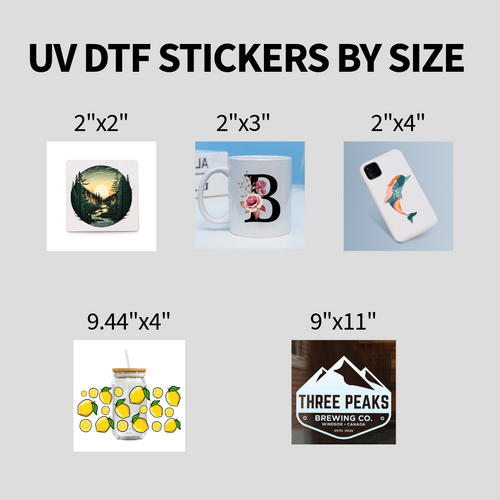
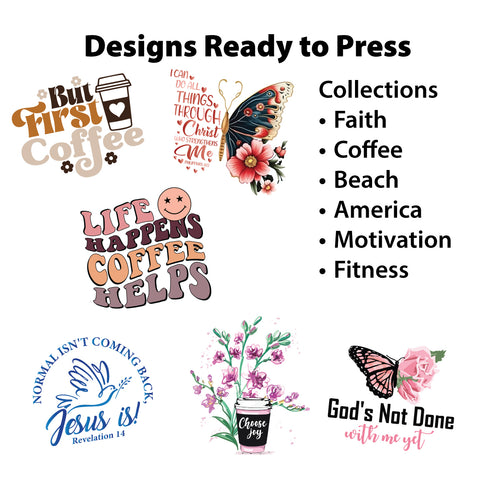
Our service model includes custom DTF transfers, gang sheets, ready-to-press collections, and support for artwork cleanup when the customer doesn't have a polished design. Also our prints can last 100+ washes and their pricing starts as low as $0.017 per square inch, which gives buyers a clear sense of the durability and pricing structure they're working with. Ready-to-press collections also cover themes like America, faith, coffee, and seasonal holidays, which can help when the need is more about speed than custom artwork.
What to do before you place the order
Check the file size, confirm the spelling, and think through the garment type before you upload. If the order includes multiple logos or sizes, build the sheet so you're not paying for empty space. If the artwork isn't print-ready, use design help instead of guessing, because the correction is usually cheaper than a reprint.
The support channels matter too. Responsive help by call, text, email, and website chat makes the process easier when a shop is trying to keep a production day on track. That's often the difference between a transfer supplier that looks fine online and one that fits a working print shop.
If you're comparing turnaround, file prep, and gang sheet efficiency for your next apparel run, take a look at Lion DTF Transfers. Their DTF transfers, Auto Builder gang sheet tool, and local fulfillment options are built for the same deadline pressure Denver businesses deal with every week, and the fastest way to see if they fit your workflow is to review your next order and start from there.