



You’ve probably got the same problem most custom apparel sellers hit early. You have ideas for shirts, hoodies, team gear, or event merch, but the path from artwork to finished product feels messy. One vendor wants bulk quantities. Another can’t handle small runs cleanly. A third gives you prints that look fine on day one and tired by wash day.
That’s where a disciplined DTF workflow changes the business. It gives you a way to launch faster, test designs without gambling on deep inventory, and keep production tight enough that margins don’t disappear in reprints and waste.
Why DTF Is Your Secret Weapon for Custom Apparel
Traditional apparel decoration breaks down fast when your business depends on variety. Small orders, multiple sizes, frequent artwork changes, dark garments, rush jobs, and seasonal drops all expose the weak points in older workflows. Setup-heavy methods punish experimentation. Large minimums lock up cash. Limited color flexibility slows down custom work.
DTF, or Direct-to-Film, solves a lot of that friction. You print the design onto transfer film, apply adhesive powder, cure it, and press it onto the garment. That sounds simple because it is. The power is in what that process lets you do: short runs, full-color graphics, fast reorders, and broad fabric compatibility without rebuilding your whole production model every time a customer changes the art.
The timing is good. The global custom apparel market was valued at $14.7 billion in 2023 and is projected to reach $31.2 billion by 2032, growing at a 9.1% CAGR, and 1 in 3 individuals prefer buying customized products, according to custom apparel market data. That matters because this isn’t a niche hobby trend anymore. Buyers expect personalized products, and custom apparel shops need production methods that can keep up.

What makes DTF practical
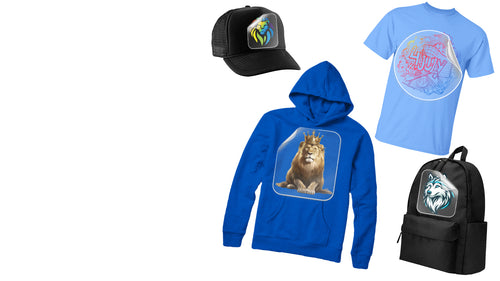
DTF works well when your orders don’t come in neat, uniform batches. A school booster order might need youth sizes, adult sizes, hoodies, and tees. A local brand might need ten test pieces now and a reorder next week. A promo client might want left chest logos, sleeve hits, and back prints on mixed garments.
That’s exactly where DTF earns its place.
- Small runs stay viable because you don’t need the same setup burden that comes with traditional screen workflows.
- Full-color art stays intact without breaking a design into simplified spot-color compromises.
- Mixed garment jobs become manageable because one transfer workflow can cover a lot of use cases.
Practical rule: If your business sells variety more often than uniform bulk, DTF usually gives you a cleaner path to profit than methods built around long, repetitive runs.
Where shops win and lose
Shops win with DTF when they treat it like a production system, not a shortcut. Good art prep, clean gang sheet planning, consistent pressing, and garment-aware testing make it profitable. Shops lose when they assume “easy to order” means “no process needed.”
The shops that make money in custom apparel aren’t the ones chasing every order with a different setup. They’re the ones using one repeatable workflow to handle many order types with fewer mistakes.
Preparing Your Artwork for Flawless Prints
Bad artwork creates expensive problems. Most print failures blamed on the transfer, the press, or the garment start in the file. Jagged edges, fuzzy text, weak transparency handling, strange halos, and muddy color all begin before anything gets printed.
In custom apparel manufacturing, the pre-production sample approval process is mandatory, and experienced teams would rather delay production than approve a flawed sample because that guarantees a flawed bulk run, as explained in this overview of PP sample approval. For DTF, your print-ready file is that sample. If the file is wrong, everything after it is correction work.

Treat the file like production, not a draft
A customer may send a logo pulled from social media, a screenshot from a phone, or a flattened image off a website. None of that is unusual. It’s also rarely ready for press.
Two file types matter most:
| File type | Best use | Common issue |
|---|---|---|
| Vector | Logos, text, line art, clean shapes | Fonts not converted or outlines too thin |
| Raster | Photos, textured art, painted effects | Low resolution and rough edges when scaled |
Vector files are ideal when the design depends on crisp edges. Logos, team names, simple icon sets, badge layouts, and text-heavy prints should start here whenever possible.
Raster files can work well too, but only if they’re built at the right size and clarity. If the art is low quality and you enlarge it, the print won’t hide the damage. It will show it.
The artwork checklist that saves reprints
Use this before you upload anything.
- Set final size first. Don’t design a left chest image and later stretch it into a full front. Build the file for the actual print dimensions.
- Keep resolution clean. For raster art, 300 DPI at final print size is the standard target shops use because it preserves edge detail.
- Remove fake backgrounds. If the design should float on the garment, the file needs real transparency. A white box behind the art will print like a white box.
- Check small details. Tiny text, hairline outlines, and narrow gaps often look fine on-screen but break down in production.
- Flatten effects carefully. Glow, blur, shadow, and transparency effects can shift if exported poorly.
Approve the digital file with the same seriousness you’d approve a physical production sample. That’s where quality is decided.
Good files and bad files
A good DTF file has sharp edges, proper transparency, readable text, and intentional sizing. A bad one usually shows one of these warning signs:
- Pixelated curves on logos and lettering
- Soft edges where art should be crisp
- Background leftovers from screenshot exports
- Color surprises because the screen preview was never checked against print reality
A simple test helps. Zoom in hard on your artwork before upload. If curves break into squares or text edges look fuzzy, the file needs work.
Color and transparency habits that matter
Designers often work in RGB because screens display color brightly there. Printing behaves differently. The bigger point isn’t memorizing color science. It’s understanding that on-screen color and printed color aren’t the same thing, especially with highly saturated shades.
What helps most is consistency:
- Use one approved version of each logo.
- Keep brand colors documented.
- Avoid sending different file versions for the same design.
- Ask for file cleanup or vectorization if the source art is weak.
If you’re selling custom apparel for clients, don’t skip a final art approval step. Send a mockup. Confirm spelling. Confirm size. Confirm placement. The few minutes you spend there save hours of remake work later.
Minimum standards for professional-looking DTF art
Use these standards internally, even if your customers never see them written down.
| Checkpoint | Acceptable standard |
|---|---|
| Edges | Clean, intentional, no pixel stair-stepping |
| Transparency | True transparent background where needed |
| Text | Legible at final print size |
| Scale | Built for actual placement size |
| Consistency | Same logo version across the job |
Shops get into trouble when they accept “close enough” files for rush orders. Those are the same jobs that come back with complaints about clarity, color, or finish.
Mastering the Gang Sheet for Maximum Profit
Most shops don’t lose margin on the press. They lose it in layout. If you’re ordering individual transfers one by one, wasting dead space on film, or manually arranging art every time, you’re making custom apparel harder and more expensive than it needs to be.
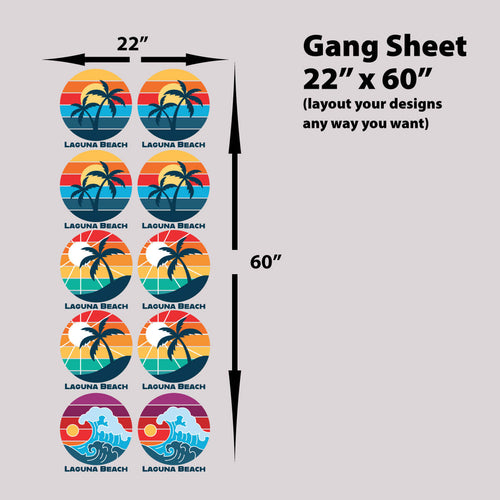
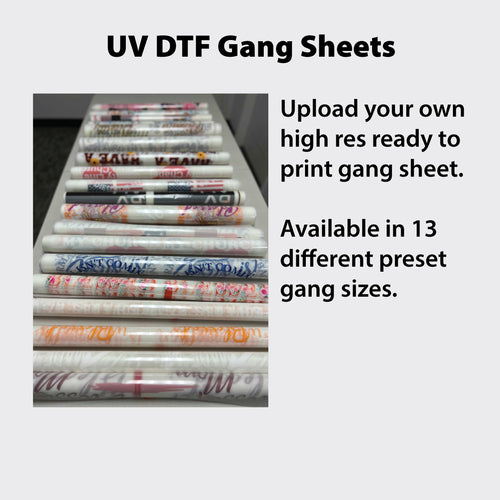
A gang sheet is one transfer sheet loaded with multiple designs, sizes, or placements. Fronts, backs, sleeves, youth versions, alternate colorways, and pocket logos can all live on the same sheet. That turns layout into a cost-control tool.

Where gang sheets create margin
The value isn’t just convenience. It’s efficiency.
When you fill a sheet intelligently, you lower waste, reduce ordering friction, and keep more usable transfers in every run. That’s especially important for small brands, print shops, schools, and promo companies juggling mixed artwork.
- One sheet can cover many placements. That means fewer separate orders and less fragmented production.
- Leftover space can become sellable inventory. Add sleeve logos, hat-size graphics, or reorder extras instead of leaving gaps.
- Design testing gets cheaper. You can place multiple concepts on one sheet and press samples without committing to bulk decorated inventory.
For a more detailed look at layout strategy, Lion offers a focused guide on using DTF gang sheets efficiently.
Manual layout vs auto-build workflow
Manual gang sheet building works, but it burns time. You upload art, resize pieces one by one, nudge them around, rotate them, try to squeeze in one more chest logo, then realize the spacing is off and start over. It’s fine if you enjoy production Tetris. It’s not fine if you’re quoting jobs, answering customers, and trying to keep press time moving.
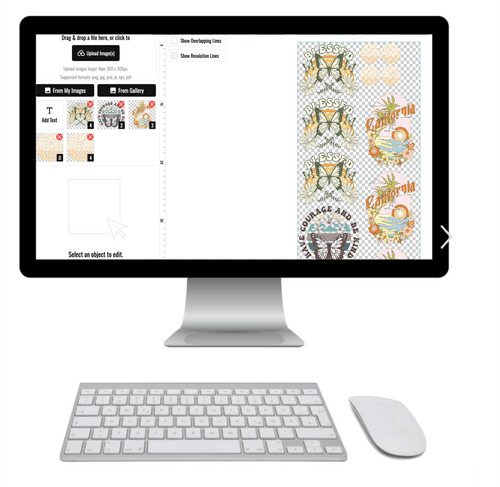
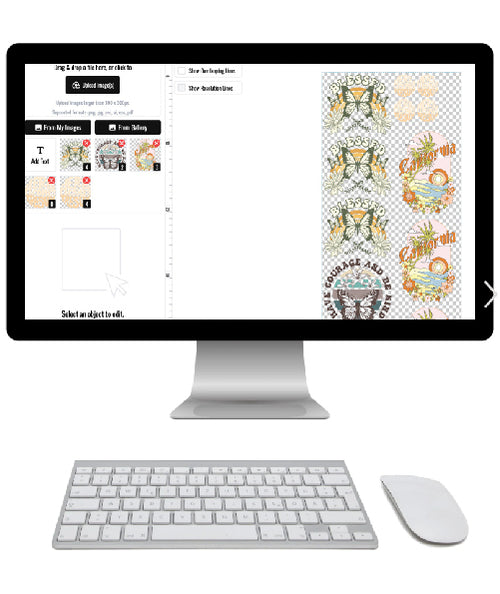
The Auto-build gang sheet builder is particularly useful. Instead of manually arranging every file, you upload your print-ready art and let the system place designs to use the sheet more efficiently. For shops handling repeat jobs or mixed design sets, that shortens ordering time and helps control waste. Lion DTF Transfers also offers a “We Build a Gang Sheet for You” option for shops that want file help or layout support.
The gang sheet isn’t just a print product. It’s a pricing tool. The better you fill it, the better your margins usually look.
Here’s the embedded walkthrough for the process in action:
What to place on a gang sheet
Don’t think only in terms of one shirt design per sheet. Think in terms of a whole order set.
A profitable gang sheet often includes a mix like this:
| Placement type | Why it belongs on the sheet |
|---|---|
| Full front graphics | Main sale item for tees and hoodies |
| Left chest logos | Common for staff wear, uniforms, sponsor gear |
| Sleeve prints | Easy upsell for merch and team apparel |
| Back prints | Event shirts, brand statements, roster prints |
| Size variants | Youth and adult scaling without separate setup |
That approach matters because dead space is expensive. If a sheet has room, use it.
Smart layout habits
Shops that get good at gang sheets usually follow the same habits:
- Batch by order type. Group jobs by garment color, event, customer, or collection.
- Plan likely reorders. Add extra top sellers if the space is available.
- Scale intentionally. A youth front print and an adult front print should not always be the same dimensions.
- Keep naming clean. File names should tell you exactly what each transfer is for when you’re at the press.
One mistake I see often is filling a sheet with only the obvious big graphics, then ordering a second sheet later for all the “little extras.” Pocket logos and sleeve hits should have been packed into the first run.
The best use of auto-build
Auto-build is strongest when your files are already correct. It won’t fix weak artwork, inconsistent scaling logic, or missing transparency. It handles arrangement. You still need to make the production decisions.
Use it when:
- you have multiple placements for one order
- you’re batching several small jobs together
- you want fast quoting from a realistic layout
- you’d rather spend time selling and pressing than manually nesting files
Use manual layout only when placement order, spacing, or grouping has a specific production reason that outweighs speed.
The Ultimate Guide to Pressing DTF Transfers
A strong transfer can still fail if the press work is sloppy. This is the point where a lot of new custom apparel sellers undercut themselves. They buy decent transfers, then apply them with inconsistent heat, weak pressure, or rushed peeling.
That’s why a real heat press matters. A home iron can’t hold even temperature across the platen and usually can’t deliver reliable pressure. If you’re making custom apparel to sell, not just experiment with, controlled application is part of the product.
The broader market supports that need for speed and flexibility. The custom screen printing industry is projected to reach $12.8 billion by 2025, driven largely by event-based demand for custom apparel, according to IBISWorld’s custom screen printing industry profile. DTF fits that environment well because it handles short timelines and variable artwork without the heavier setup that screen printing often requires.
The pressing sequence that works
Pressing should feel routine. If every press is a guess, quality will drift.
Use this order:
- Pre-press the garment. This removes moisture and flattens the print area.
- Position the transfer carefully. Check centering, collar distance, and visual balance.
- Press with consistent temperature, time, and pressure. Don’t improvise from shirt to shirt.
- Peel according to the transfer type. Hot-peel transfers need confidence. Hesitation can affect finish.
- Finish press if needed. A short final press with a cover sheet can improve hand feel and bond.
A good press cycle looks boring. That’s the goal.
Settings by fabric
Exact settings can vary by transfer, press calibration, garment finish, and shop conditions, so use your supplier’s current instructions and test before production. Lion maintains a reference guide for DTF heat press settings by fabric.
| Fabric Type | Temperature (°F / °C) | Time (Seconds) | Pressure |
|---|---|---|---|
| Cotton | Follow supplier guidance | Follow supplier guidance | Medium to firm, based on transfer instructions |
| Polyester | Follow supplier guidance | Follow supplier guidance | Medium, with extra care for heat-sensitive garments |
| Cotton polyester blend | Follow supplier guidance | Follow supplier guidance | Medium to firm |
| Performance fabric | Follow supplier guidance | Follow supplier guidance | Controlled pressure, test first |
| Fleece or heavyweight garments | Follow supplier guidance | Follow supplier guidance | Firm, with attention to even contact |
Fabric-specific trade-offs
Cotton is usually forgiving. It takes heat well and gives you a predictable press surface. Polyester needs more caution because some garments can scorch, shine, or shift if the press is too aggressive. Blends sit in the middle and usually press well when your settings are dialed in.
Performance wear adds another variable. Stretch, slick finishes, coatings, and texture all change how the transfer seats into the garment. Always test one before committing the whole order.
A transfer that peels badly often points to process, not product. Check temperature accuracy, pressure, garment moisture, and dwell time before you blame the film.
Common pressing problems and what causes them
A few issues show up again and again in DTF shops.
-
Edges lifting after peel
Usually caused by low pressure, low heat, short press time, or uneven platen contact. -
Design looks dull or under-bonded
Often tied to insufficient application or skipping a proper pre-press. -
Shiny press box around the print
Common on heat-sensitive garments when pressure or heat is too aggressive, or when the press surface contacts more garment area than necessary. -
Small details not holding well
Frequently linked to artwork that was too fine in the first place, though pressing technique can make it worse.
Pressing habits that improve consistency
The easiest way to stabilize quality is to remove variables.
| Habit | Why it helps |
|---|---|
| Warm up the press fully | Cold starts create inconsistent first runs |
| Use the same placement guides | Reduces visual errors across batches |
| Press test garments first | Catches issues before the full run |
| Track successful settings | Builds repeatable shop standards |
If you press for customers regularly, keep notes by garment brand and style. One hoodie line may need a different touch than a lightweight ring-spun tee. Shops that document results waste less time rediscovering what already worked.
Ensuring 100+ Wash Durability with Proper Care
A durable print starts in production, but it finishes with care. If you want custom apparel that keeps looking sellable long after delivery, you need to pass care instructions to the customer in plain language. Don’t assume they know what to do.
DTF is a strong fit for inclusive product lines because extended sizing and adaptive styles often use fabrics that need both stretch and reliable print hold. As this apparel inclusivity discussion notes, demand for more inclusive sizing is growing, and durable DTF transfers are well suited to garments used across those broader fit ranges. Lion’s transfers are also described as 100+ wash-tested in the verified publisher information, which makes proper application and aftercare worth taking seriously.
The care card every order should include
Keep it simple enough that customers will read it.
- Wash inside out to reduce abrasion on the printed surface.
- Use cold water because gentler wash conditions help preserve the finish.
- Tumble dry low or air dry when possible.
- Avoid ironing directly on the design. If ironing is needed, work around the print or use a protective layer.
Those instructions don’t need to sound technical. They need to be clear.
What damages prints over time
Most long-term wear issues come from repeated stress, not one bad wash. High heat, aggressive detergents, rough drying cycles, and direct ironing all push the print harder than necessary.
For shops selling custom apparel, that means care education is part of quality control. A customer who ruins a shirt in a harsh wash cycle may still blame the print shop if you gave them no guidance.
Good aftercare turns durability from a product claim into a customer experience. That’s what protects repeat business.
A better customer handoff
Include care instructions in at least one of these places:
| Format | Best use |
|---|---|
| Printed insert | Good for online orders and packaged merch |
| Packing slip note | Useful for repeat reminders |
| Product page copy | Helps set expectations before purchase |
| Order follow-up email | Works well for brands with direct customer contact |
If you sell across a wide size range or on stretch garments, this matters even more. Customers expect prints to move with the garment, hold color, and survive regular wear. Proper care helps the print keep doing its job.
From Side Hustle to Empire with DTF
The easiest way to kill a custom apparel startup is to buy too much inventory too early. That happens constantly with blank garments, private label experiments, and decoration methods that only make sense when volume is already proven.
That’s one reason the DTF model works for small operators. High minimum order quantities, such as 1000 units, and inconsistent private label blanks are identified as major reasons behind the 90% failure rate for apparel startups, according to this analysis of custom apparel manufacturing pitfalls. DTF lets you build around demand instead of betting on inventory first.
The cost formula that keeps you honest
Every shirt you sell has a real unit cost. If you don’t know it, pricing is guesswork.
Use a simple formula:
| Cost component | What to include |
|---|---|
| Blank garment cost | Tee, hoodie, crewneck, or uniform piece |
| Transfer cost | Your share of the gang sheet cost per design |
| Pressing labor | Your time or staff time to produce it |
| Packaging | Bag, insert, label, tag, or care card |
| Overhead share | Supplies, electricity, spoilage, equipment wear |
Total unit cost = blank + transfer + labor + packaging + overhead
Then set your selling price based on the margin your business needs, not what “feels fair.” If a shirt takes more handling because it includes front, back, and sleeve prints, price it like a premium decorated item.
For help building pricing logic into your shop, this guide on how to price custom shirts is useful.
How a small brand scales cleanly
A realistic growth pattern looks like this:
A new brand starts with a handful of tested designs, buys blanks in controlled quantities, and orders transfers based on actual demand. It learns which graphics move, which colors stall, and which garment styles customers reorder. Then it expands only the winners.
That model works because it avoids the classic trap of overcommitting to inventory before product-market fit is clear.
Here’s what usually works:
- Batch winners, not everything. Reorder proven designs first.
- Source blanks with consistency in mind. A cheap blank that changes fit or finish can create customer trust issues.
- Standardize placements. Repeatability speeds pressing and reduces visual mistakes.
- Use gang sheets for collections, not just single jobs. That helps you test more ideas without multiplying setup friction.
What doesn’t work
A lot of sellers turn a simple operation into a cash drain by making the same avoidable moves.
- Buying too many blanks because the per-piece price looks lower
- Launching too many designs at once without testing demand
- Accepting weak artwork to “save the sale”
- Pricing from competitors’ storefronts instead of their own costs
- Treating rush production like normal production
The shops that last tend to be disciplined, not flashy. They move fast where speed helps, and they slow down where mistakes get expensive.
Building a repeatable production rhythm
A healthy custom apparel business usually has a routine that looks something like this:
| Workflow stage | What good operators do |
|---|---|
| Design intake | Approve artwork before production |
| Transfer planning | Batch logically and fill gang sheets well |
| Blank purchasing | Buy to demand, not to fantasy projections |
| Pressing | Use documented settings and placement standards |
| Fulfillment | Include care info and package cleanly |
That’s how a side hustle turns into a stable shop. Not by chasing every trend, but by tightening every step between order and delivery.
Frequently Asked Questions
Can you use a home iron for DTF transfers
You can experiment with one, but it’s not a reliable production tool. Irons don’t hold even heat across the surface and can’t apply controlled pressure consistently. If you’re selling custom apparel, use a heat press.
What’s the difference between hot peel and cold peel
Hot peel means you remove the carrier soon after pressing. It speeds production and keeps workflow moving. Cold peel requires waiting for the transfer to cool before peeling. Neither is automatically better in every scenario, but your process needs to match the transfer type exactly.
How should unused transfers be stored
Store them flat, dry, and away from heat, humidity, and direct sunlight. Keep them organized by job so they don’t get scratched, curled, or mixed into the wrong order.
What’s the biggest mistake beginners make
They rush. Usually on art approval, layout, or pressing. Most costly errors in custom apparel come from skipping checks, not from the DTF method itself.
Do you need to test every garment
For any new garment style or unfamiliar fabric, yes. One test press tells you far more than assumptions do.
If you want a faster path from artwork to finished custom apparel, Lion DTF Transfers offers hot-peel transfers, gang sheets, an Auto-build gang sheet builder, file support, and ordering options that fit both small runs and scaled production.