


saA customer sends over a full-color photo. It has skin tones, soft shadows, background texture, and a few bright accents that looked great on their phone. Then the real shop question hits. Do you separate it for process, rebuild it as spot colors, or skip the press setup and run it as a transfer?
That’s where cmyk for screen printing still earns its place. It was built for the job that spot color can’t handle efficiently: too many colors, too many gradients, too much tonal detail to justify a screen for every visible hue. But CMYK isn’t magic, and it definitely isn’t forgiving. It works best when the art, garment, mesh, press, and expectations all line up.
A lot of shops get into trouble because they treat CMYK like an automatic upgrade over spot color. It’s not. It’s a specific production method with real strengths and obvious weak points. If you run it on the wrong artwork, on the wrong shirt, or with weak separations, you get mud. If you use it where it fits, you can produce soft-hand, photographic prints with only four process screens.
Unlocking Photographic Prints on Fabric
The classic CMYK job is simple to recognize. It’s the order where the customer wants a photograph on a tee, a poster-style image on a tote, or a full-color graphic that would be absurd to break into individual spot screens. You’re not trying to hit every color with opaque ink. You’re trying to build an image through transparent layers and controlled halftones.
That’s why CMYK has lasted so long in the trade. The CMYK color model was first standardized in 1906 by the Eagle Printing Ink Company, adding black to the earlier CMY process and giving printers the depth and efficiency needed for commercial color work, according to Fujifilm’s history of CMYK. That same principle still drives process printing on garments today.
What matters in the shop is less the history and more the fit. CMYK shines when the design has:
- Photographic detail with tonal shifts instead of hard-edged fills
- Many visible colors that would be expensive to separate as spots
- Light garments where transparent inks can do their job
- Customers who care about the image overall, not exact Pantone matching
It starts falling apart when the design depends on bold, flat, branded color. It also gets rough on dark garments unless you move into underbases, hybrid workflows, or a different print method entirely.
Shop reality: If the artwork is a photo, CMYK is on the table. If it’s a logo with strict brand color, CMYK is usually the wrong first choice.
The best way to think about CMYK is this: it’s a production tool for images, not a cure-all for full color. Good shops keep it available, but they don’t force every complex design into four-color process just because the art file looks busy.
Understanding CMYK Process Printing
CMYK works by layering cyan, magenta, yellow, and black transparent inks so the eye reads them as a full-color image. In practice, you’re not printing every color directly. You’re printing four controlled versions of the same image, each one broken into halftone dots.

How the illusion works
Think of process ink like stacked transparent filters. Cyan affects the red range, magenta affects green, yellow affects blue, and black adds depth and detail. On press, those dot patterns overlap and the viewer’s eye blends them into continuous tone.
That’s the reason graphic screen printing accounts for over 50% of all U.S. screen printing activity, with methods like CMYK driving production for apparel, posters, and promotional work, as noted in this industry report on screen printing activity.
The trick is in the dots, not the ink bucket. A light pink area isn’t a mixed pink ink. It’s usually sparse magenta information, sometimes supported by yellow, printed as tiny dots. A dark neutral may involve all four channels, with black anchoring the contrast.
What printers need to understand early
A lot of frustration comes from assuming CMYK behaves like spot color. It doesn’t.
With spot color, you print the color you mixed. With process, you print transparent information and trust the overlap. That creates a few immediate trade-offs:
-
Strength
CMYK handles gradients, skin tones, and photos better than spot color without requiring a pile of screens. -
Weakness
It struggles with large, solid, defined areas where you need punch and opacity. -
Visual feel
A good process print often has a softer, more image-based look than a logo-driven print built from spots. -
Press sensitivity
Minor setup issues that a spot job would tolerate can ruin a process job fast.
If you need a refresher on how dots behave on fabric, this guide to halftones in screen printing is worth reviewing before you set up separations.
Why black matters
Black, or key, does more than make the print darker. It gives the image shape. It sharpens edges, supports neutral areas, and keeps the entire print from feeling washed out. Without a well-controlled black channel, process prints often look flat.
Good CMYK isn’t about flooding the shirt with four inks. It’s about controlling where each channel contributes and where it stays out of the way.
That’s also why process work rewards restraint. If every separation is heavy, the print goes muddy. If each channel has a defined role, the image breathes.
Choosing Your Color Separation Method
The first real production decision isn’t what mesh to use. It’s whether CMYK belongs on the job at all.
A lot of designs that arrive labeled “full color” shouldn’t be printed as process. Some want spot color because the art is mostly flat fills. Some want DTF because the run is short, the garment is dark, or the customer expects bright color with minimal setup. The fastest way to protect margin is to choose the method before you start building films.

The practical comparison
| Attribute | CMYK Screen Printing | Spot Color Screen Printing | DTF Transfers |
|---|---|---|---|
| Best artwork type | Photographs, gradients, complex tonal art | Logos, flat graphics, exact brand colors | Mixed artwork, detailed graphics, short-run full color |
| Garment preference | Best on light garments | Works across many jobs depending on ink strategy | Works well on light and dark garments |
| Color character | Transparent, image-building color | Opaque, direct color | Full-color transfer result |
| Brand matching | Limited for strict corporate color needs | Best option for exact color targets | Good practical option when speed matters more than press setup |
| Setup demand | High | Moderate to high depending on screen count | Low press setup |
| Registration sensitivity | Very high | Moderate to high | Much less demanding on a screen printing press |
| Best quantity fit | Better when the run justifies setup | Strong for repeat graphics | Strong for small and mixed orders |
| Common weakness | Muddy solids, weaker vibrancy on some designs | Screen count climbs fast on complex art | Different hand feel than direct screen print |
When CMYK is the right answer
CMYK makes sense when the artwork is image-heavy and the garment color supports transparent process inks. It’s especially useful when the design would take too many spot screens to make sense operationally.
Use it when the art has:
- Continuous tone such as portraits, painterly effects, or poster-style photos
- Subtle transitions where halftones are an asset instead of a liability
- Light substrates that won’t choke off transparent color
When spot color still wins
Spot color remains the best call for logos, simple merch graphics, and jobs where color accuracy matters more than tonal realism. If the print has large solid panels of red, blue, or green, process ink usually won’t look as strong as a purpose-mixed spot.
If the customer says, “This logo color has to match,” stop treating CMYK as the default.
Spot is also easier to troubleshoot. You can isolate one color, adjust opacity, and move on. Process work is more interdependent. One weak or heavy channel changes the whole image.
When DTF is the smarter production move
DTF becomes the practical option when the setup burden of CMYK doesn’t pay back. That usually means short runs, dark shirts, mixed garments, or jobs with a lot of detail and no tolerance for registration headaches.
For shops that juggle many small orders, DTF also solves the “too many little jobs” problem better than four-color process. You can group designs, fill space efficiently, and avoid tying up the press for art that doesn’t benefit from being screened.
The easiest way to judge the method is to ask four direct questions:
- Is the artwork photographic or logo-based
- Is the garment light enough for transparent process inks
- Does the customer need exact brand color
- Does the run justify screen setup and press time
If too many answers push away from process, don’t force it.
Preparing Your Files for CMYK Success
A lot of CMYK jobs are won or lost before the screens are coated. If the file is built for a monitor instead of a shirt, the press crew spends the run chasing problems that were baked in during prepress.

Good file prep starts with one honest question. Is this artwork a fit for CMYK screen printing, or are you forcing a process job onto art that would run cleaner as spot color or faster as DTF? Shops make better money when that call happens early.
Start with the right color space
If the file arrives in RGB, convert it before final retouching and before anyone approves color. That is the only point where you can see what the artwork really has left once it moves into printable CMYK. Bright blues, acid greens, and glowing screen colors often flatten out fast.
Customers approve what they see on a backlit phone. You print ink on fabric. Those are different conditions, and the gap matters. If you need a quick reference for explaining that shift to a customer or a newer artist, this guide to RGB to CMYK conversion lays out the main color changes clearly.
Use a simple prepress check:
- Convert first: Do not save color correction for after separation.
- Check problem hues: Greens, blues, violets, and neon-looking accents usually need attention.
- Clean up neutrals: Gray balance problems print dirty fast.
- Control the black channel: If black is doing too much work, the print gets heavy and loses depth.
One bad black build can wreck an otherwise solid separation.
Build halftones for fabric, not for paper
Fabric closes up faster than paper. Ink spreads into the fibers, the surface is less uniform, and small tonal errors get amplified in the print. That is why process files for shirts need stronger highlight and midtone discipline than the same image prepared for a brochure.
Treat the monitor as a rough preview, not a proof of print behavior. Midtones that already feel dense on screen usually come out heavier on press. Shadows built with too much overlap across all four channels tend to plug, especially in faces, dark garments with underbase experiments, or images with a lot of low-end detail.
A practical file usually prints better when you:
- Open the highlights enough to survive mesh and garment texture
- Hold back the midtones so gain does not muddy the image
- Reduce stacked shadow information across multiple channels
- Simplify weak detail that will disappear once it hits fabric
This is also where modern shop decisions matter. If the art depends on tiny tonal transitions, soft skin texture, or very smooth blends on a mixed-fiber garment, DTF may hold the image more predictably than a four-screen process setup. CMYK screen printing still has a place, but not every photo file deserves it.
The halftone settings that keep you out of trouble
Safe settings beat aggressive settings. For many shops, that means building separations around a realistic line count your mesh can hold and your garment can show clearly. Chasing extra detail on paper specs often creates worse prints on press.
For high-detail work, many printers stay around 55 LPI with round dots at 22.5 degrees because that balance is easier to register and less likely to create visible patterning on fabric. Round dots are usually the safer starting point. They hold up well through exposure, washout, and print deposit.
Keep the separations disciplined:
- Use dot shapes your screens can hold
- Keep angles consistent across the set
- Protect highlight detail
- Do not force every shadow detail to print if the shirt cannot support it
Here’s a solid visual walkthrough if you want to compare setup choices and on-press results:
Proof like a printer
A strong prepress proof answers production questions, not just design questions. The goal is not to ask whether the image looks nice on a calibrated screen. The goal is to decide whether the separations will survive mesh, registration tolerance, ink deposit, and garment texture.
Before output, check these points:
- Are the highlights open enough to print cleanly
- Do the midtones leave room for gain
- Are the shadows relying on too many channels at once
- Will the image still read if one color prints slightly warm, cool, light, or heavy
I also look at the job from the production side. If the file needs constant babysitting to make CMYK work, the print method may be wrong. Some jobs belong on the press. Some belong in a DTF gang sheet. The shops that stay efficient know how to use both.
Your Technical Setup for Process Printing
A CMYK file can look clean in prepress and still fall apart on press if the hardware is loose. Process work is less forgiving than spot color, and that is why many shops that can print spot jobs all day still struggle with four-color process. The setup has to hold detail, repeat registration, and control ink deposit from the first print to the last.
Screens and mesh choice
Screen choice sets the ceiling for the whole job. For high-detail cmyk for screen printing, 305 to 355 threads per inch is a practical range for many shops because it supports finer halftones and keeps the ink film thin enough to preserve detail, as outlined in this guide on CMYK screen printing mesh and halftone settings.
Lower mesh can help if the ink is too stiff or the shop is fighting poor release, but it comes with a price. Dot gain climbs fast. Midtones plug. Skin tones get heavy. On press, the problem often looks like bad color when the actual issue is too much ink getting through the screen.
High-tension screens matter here. So do consistent stencil thickness and clean, fully supported frames. A worn frame that still passes on a spot-color reorder can waste a full process setup.
Ink order and squeegee behavior
Process inks need controlled layering. A common print order is YMCK, which puts yellow down first and helps the image build more predictably. That same source recommends a 70 to 75 durometer squeegee, which is a sensible starting point if the goal is clean deposit instead of extra laydown.
A few habits separate stable CMYK printing from guesswork:
- Keep the blade edge sharp. A rounded squeegee loses detail fast.
- Use only enough pressure to clear the screen. Extra pressure drives ink into the garment and enlarges the dots.
- Match flood and print rhythm across heads. Uneven stroke style creates color shifts that look like separation problems.
- Watch off-contact closely. Too little and the screen drags. Too much and the image gets harder to control.
If a job needs more body, brighter solids, or easier repeatability than process screens can comfortably deliver, it is worth comparing that setup to screen print transfers for short runs and hard-to-register artwork. Sometimes the better technical decision is changing the production method, not forcing CMYK to behave like a spot-color job.
Registration is the real test
Small registration errors barely show in many spot prints. In process work, they show up immediately as halos, muddy neutrals, and faces that look wrong before you can name why.
Micro-registration helps. An automatic press helps more, especially on longer runs where tiny shifts add up across the job. Manual presses can still produce good CMYK prints, but only if the pallets are consistent, the heads are tight, and the operator prints with the same stroke every cycle.
Cure and deposit control
Thin deposit is one reason CMYK screen prints can feel softer than heavy underbased work. It also makes cure less forgiving. Undercure the print and wash durability suffers. Overheat it and the garment can glaze, shrink, or shift enough to throw off multicolor registration during production.
Use the ink manufacturer's cure target, verify it with a donut probe or wash testing, and treat the underbase as its own variable when you print on dark garments. A white base can improve image visibility, but it also adds height, changes how the process colors sit, and increases the chance of trapping too much ink in the print stack.
That trade-off matters in a modern shop. If the art needs a photographic look on dark shirts and the run is large enough to justify dialing in screens, CMYK can still earn its place. If the order is smaller, the garment mix is messy, or the image needs more opacity than process inks want to give, DTF is often the cleaner production call.
Combining CMYK with Spot Colors and DTF
The most useful modern approach isn’t picking one method and defending it. It’s combining methods on purpose.
Pure CMYK is strong at photographic information. Spot color is strong at opacity and accuracy. DTF is strong at handling difficult art and awkward order profiles without the usual screen setup burden. Good shops stop treating those as competing beliefs and start using them as production options.

CMYK plus a spot channel
This is the easiest hybrid to justify. The image runs in process, and one critical brand element gets its own screen. That might be a logo, a headline, or a neon accent that process inks won’t hit well enough.
This approach solves a very common problem. The art is mostly photographic, but one element needs to stay bold and clean. Instead of forcing CMYK to do everything, you let process handle the tones and let spot do the precision work.
Screen print plus transfer logic
There’s also a practical crossover between process thinking and transfer production. Industry guidance notes that CMYK alone often fails to produce vibrant colors or solid coverage, and that hybrid workflows using screen-printed underbases with DTF overlays can reduce screen counts by 30 to 50%, according to this discussion of CMYK hybrid workflows and DTF overlays.
That matters most on jobs where traditional process gets stretched too far:
- Dark garments that need more punch than transparent inks can provide
- Artwork with both gradients and strong solids
- Short or mixed runs where building extra screens doesn’t pay back
- Orders with frequent revisions where transfer flexibility saves remake time
If you already use screen print transfers in production, the hybrid mindset makes sense fast. You stop asking which one replaces the other and start asking which part of the design belongs to which process.
Some jobs print better when you divide the work. Let process handle images. Let spot handle authority. Let transfers handle complexity.
Where hybrid workflows make sense
A few examples come up often in real shops:
- Merch drop artwork with a photo background and a bold logo
- Event tees with image-based art but changing sponsor panels
- Dark-shirt retail graphics where the customer wants bright color without simulated process setup
- Brand work where one exact color matters more than the rest of the image
The common thread is simple. Hybrid jobs work when one method covers another method’s weakness.
Solving Common CMYK Printing Problems
Even well-prepped jobs can drift once ink starts moving. The fastest fix comes from diagnosing the symptom correctly instead of changing three variables at once.
Muddy or brownish color
Cause
Too much dot gain, too much pressure, heavy separations, or poor channel balance usually create this look. Printing out of sequence can also wreck blends.
Solution
Check whether the art was compensated enough in midtones. Back off pressure and confirm you’re running YMCK in a controlled wet-on-wet sequence. If the image still feels heavy, look at the black channel and the combined shadow build before blaming the yellow.
Moiré or pattern interference
Cause
Halftone angles are fighting each other or fighting the mesh. You’ll see a distracting geometric texture instead of a smooth image.
Solution Recheck the film output settings and make sure the screen choice supports the dot structure you’re trying to print. If your shop keeps seeing moiré, simplify the variables. Use proven dot shapes, stable mesh, and don’t freestyle angles on a live job.
Blurry print or color halos
Cause
Registration drift. Usually plain and simple.
Solution
Stop the run. Re-register instead of trying to print through it. Tighten screen locks, inspect pallet condition, and make sure nothing is moving under the stroke.
A process print that is slightly out of registration is not “close enough.” It is already failing.
Weak detail in highlights or blocked shadows
Cause
The tonal range wasn’t built for fabric. Tiny highlights disappeared, or dark areas stacked too hard.
Solution
Open the file and rebalance the image. Process printing rewards edits that look conservative on screen but print correctly on cloth. If you keep trying to hold every screen detail from the original photo, the shirt usually loses the argument.
When to Choose DTF Over CMYK Screen Printing
CMYK still belongs in a modern shop, but it belongs in a narrower lane than it used to. It’s a strong option for image-driven work on light garments when the run is big enough to justify process setup and the customer doesn’t need exact spot-color authority.
DTF is the better call when flexibility matters more than tradition. If the order is small, the garment is dark, the art has a mix of gradients and bold solids, or you need to move fast without dialing in four-color registration, DTF usually wins on labor and predictability.
Choose DTF when these conditions stack up:
- The quantity is too low to make four screens worth the prep
- The artwork is too complex to simplify without losing the look
- The garment color works against transparent process inks
- You need repeatable output without spending press time fighting registration
- The order contains multiple designs or names that are easier to combine on one transfer layout
CMYK gives you a classic screen print path for photographs. DTF gives you range. That range matters more now because a lot of shops aren’t running one giant repeat order all week. They’re juggling short-run e-commerce graphics, team gear, event work, and customer art that changes constantly.
If you’re still choosing between the two, use this rule. Pick CMYK when the image and order profile clearly support process printing. Pick DTF when the shop needs speed, versatility, and fewer chances for setup waste.
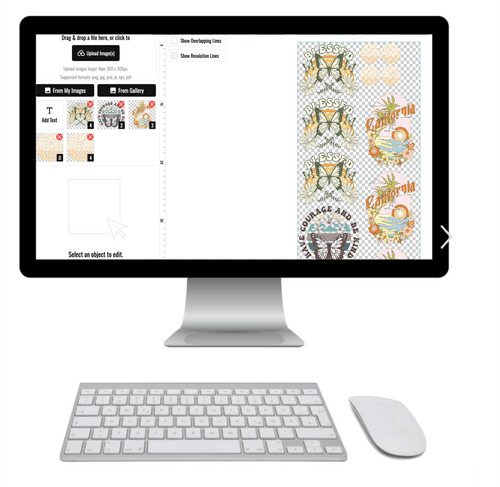
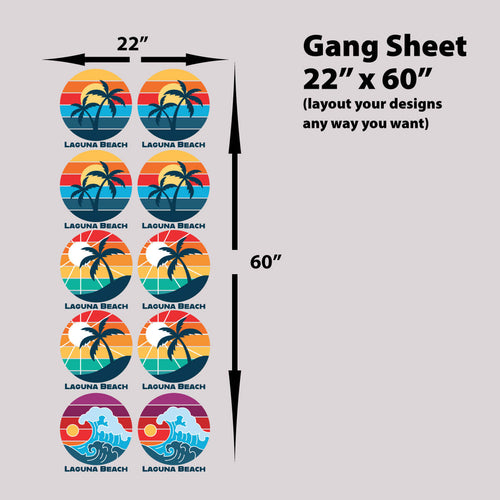
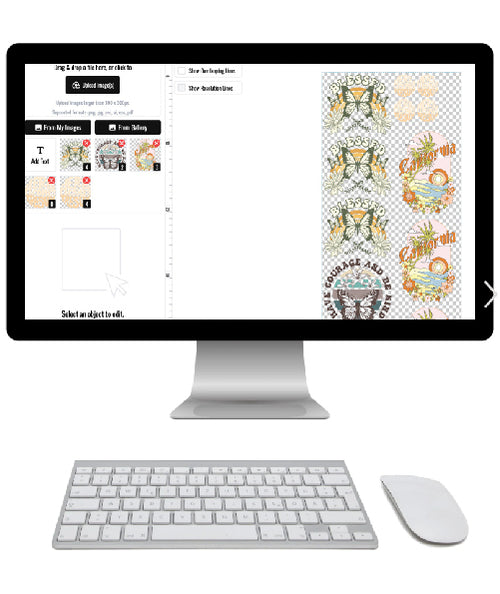
If you want a faster way to handle full-color jobs without burning screens, Lion DTF Transfers is built for that workflow. You can order ready-to-press transfers, upload mixed artwork, and use the Auto-build gang sheet builder to pack multiple designs onto one sheet for a more cost-effective run. For shops balancing screen printing with modern full-color production, it’s a practical way to keep quality high and turnaround simple.