
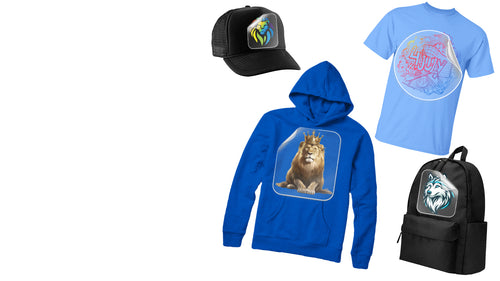


A great back-of-hoodie design does more than just fill space—it turns a basic garment into a statement. For any creator, it's the single most valuable piece of real estate on custom apparel, giving you a massive canvas to grab attention and share a powerful message.
Why Back of Hoodie Designs Are a Goldmine for Creators

The back of a hoodie isn’t just fabric; it’s a blank canvas begging for your best ideas. In the custom apparel world, no other placement offers a bigger opportunity to make an impact. Think of it as a walking billboard for your brand, your art, or your team’s identity.
This prime spot has become the heart of streetwear culture, where bold graphics and meaningful statements define the most in-demand pieces. The trend is pushed hard by Gen Z's focus on self-expression, with many using graphic hoodies to put their personality and values on full display.
The Market Is Hungry for Custom Backs
The numbers tell the real story. The global market for hoodies and sweatshirts is set to explode, growing from USD 256.08 billion in 2026 to a projected USD 442.64 billion by 2034. A huge part of that growth comes from customization, where a unique back design transforms a simple garment into a must-have item.
In fact, graphic hoodies are growing at an impressive 9.2% CAGR, driven by the 70% of Gen Z consumers who pick them to reflect their personal style. You can discover more insights about the hoodies and sweatshirt market and see exactly how this trend is reshaping the industry.
This isn't just an opportunity for big fashion labels. It’s a massive opening for all kinds of creators and businesses:
- Etsy Sellers and Small Brands: Stand out in a crowded market with unique, large-format designs that printing methods like DTF make easy and affordable.
- Sports Teams and Clubs: Create unforgettable team gear with names, numbers, and mascots displayed proudly for fans and players.
- Promotional Companies: Give clients high-impact merch that gets noticed, turning every person who wears it into a brand ambassador.
- Artists and Designers: Use the huge canvas to show off intricate artwork without the limits of smaller print areas like a t-shirt pocket.
The back of a hoodie gives you an unmatched canvas to tell a story. Unlike a front design that's often partially hidden by crossed arms or posture, a back design is almost always in full view, making it the most effective spot for your main message.
Unlock Your Creative and Financial Potential
Nailing a great back-of-hoodie design is the first step. The next is figuring out how to produce it efficiently and without breaking the bank. This is where modern printing solutions like Direct-to-Film (DTF) printing really shine. DTF allows you to create vibrant, detailed, and durable full-color graphics without the steep setup costs of old-school screen printing.
For creators looking to make their work profitable, grouping multiple designs onto a single transfer sheet is the key. Our Auto-build gang sheet builder makes this incredibly simple and cost-effective. You can easily combine several large back designs or mix them with smaller chest logos, which drastically cuts your cost per print and makes your creative vision a financial reality.
Mastering your back-of-hoodie design is where it starts; using the right tools turns that vision into a profitable business.
Principles For Creating Designs That Demand Attention

Designing for the back of a hoodie isn’t like designing for a t-shirt. Not even close. You're working with a huge, three-dimensional canvas, and a successful back of hoodie design has to do more than just fill the space—it needs to work with the garment's shape, movement, and structure to really get noticed.
To make something that pops, you have to think beyond just slapping a graphic on there. Your design needs to flow with the fabric as it hangs across the shoulders and down the back. It also has to account for the bulky hood, seams, and the way a person actually moves.
Mastering the Vertical Canvas
The back of a hoodie is a big, vertical space. This shape completely changes how someone’s eye will travel across your artwork. Designs that are too wide and short often look clunky and out of place, but art that embraces that vertical real estate just feels right.
This is where you need to establish a strong visual hierarchy. It's a design principle that guides the viewer's eye exactly where you want it to go, starting with the most important part of your design.
- Primary Focal Point: This is the main event—the element that grabs attention first. It should be bold and clear, typically hitting that upper-middle back area for maximum impact.
- Secondary Elements: These are your supporting details. They should add depth and context without stealing the show from your focal point.
- Negative Space: This is the empty area around your artwork. A lot of designers ignore it, but you can use it strategically to make your main graphic stand out and keep the whole thing from looking cluttered. Good balance is key.
For instance, a huge, detailed dragon could be your focal point. Your secondary elements might be smaller wisps of smoke or text that curves around its body. The negative space is what makes that dragon feel powerful instead of crammed. We cover more general rules in our guide on what makes a good t-shirt design.
Designing Around Obstacles
A hoodie isn't a flat canvas. You’re dealing with seams, a heavy hood, and sometimes even a kangaroo pocket that will mess up your art if you’re not careful. The biggest "obstacle" by far is the hood, which covers the top part of the back whenever it’s down.
A critical mistake is placing key design elements too high. A good rule of thumb is to start your main artwork at least 3-4 inches below the bottom seam of the hood. This ensures the most important part of your design is always visible, whether the hood is up or down.
Imagine you've got a design with a character's face. If you place it too high, the hood will cover their eyes when it's down, killing the entire vibe. You have to position the whole face below that 4-inch buffer zone. The same goes for text—you don't want the first line of your message disappearing under the hood.
You also need to be mindful of the center back seam on some hoodies. While our flexible DTF transfers can be applied over seams with the right technique (a pressing pillow helps a lot), tiny details or small text can get distorted. It's usually safer to design your art so that critical elements don't land right on a seam.
Adapting Designs for a 3D Surface
What looks perfect as a flat file in your design software can look completely different once it's on a real, three-dimensional hoodie. A design might appear dead-straight in Adobe Illustrator, but once it's pressed, it can curve and warp as it wraps around the wearer's body.
This is especially true for designs with hard geometric shapes or straight, horizontal lines of text.
Scenario: You created a bold design with your brand name in a straight line across the shoulder blades.
- On a T-Shirt: It looks great—clean and sharp.
- On a Hoodie: As the fabric drapes, the ends of the text can look like they’re drooping downward, creating an accidental "sad" effect.
To fix this, you can actually build a slight upward arc into your text or other horizontal elements. This little trick pre-corrects for the fabric drape, making the design look perfectly straight when it's worn. It’s a subtle adjustment that makes a huge difference. If you're planning to test out different layouts and sizes, using our Auto-build gang sheet builder is a cost-effective way to try multiple variations on a single sheet so you don't waste any material.
Preparing a Perfect Print-Ready File for DTF
A great back-of-hoodie design can fall flat at the last minute if the digital file isn’t prepped correctly. This is the technical step where all your creative work gets locked in—or lost. Getting it right ensures the vibrant, detailed artwork you see on screen is exactly what ends up on the fabric.
Think of your design file like a blueprint for the final garment. If the specs are wrong, the final product will have flaws. For Direct-to-Film (DTF) transfers, a few specific settings are non-negotiable for getting that crisp, durable finish we’re all after.
Get Your Canvas Right from the Start
Before you even place the first design element, you need to set up your document correctly. This single step prevents a world of headaches later on, like having to scrap and rebuild low-quality artwork. The two most critical settings here are your canvas size and resolution.
- Artboard Size: Your canvas needs to match the exact physical dimensions you want the final print to be. For a standard adult hoodie back, a great starting point is 12 inches wide by 16 inches high. Working at the final print size from the very beginning guarantees everything is scaled properly.
- Resolution: Always, always set your resolution to 300 DPI (Dots Per Inch). This is the gold standard for high-quality apparel printing. A 72 DPI file might look decent on your monitor, but it will come out looking blurry and pixelated when printed at full size.
You can’t add quality to a low-resolution file later. It's like trying to sharpen a blurry photo—the pixel data just isn't there to begin with. Always start at 300 DPI.
This initial setup ensures your file has enough information to produce the sharp lines and smooth color transitions that make a back-of-hoodie design look truly professional.
Color Mode and File Format: The Non-Negotiables
Once your canvas is set, the next thing to nail down is your color and transparency. These two elements directly impact how vibrant your print looks and how cleanly it applies to the hoodie.
While most digital design happens in RGB (for screens), professional printing works differently. We strongly recommend designing in CMYK (Cyan, Magenta, Yellow, Black). This color mode more closely matches the inks used in the printing process, which means the colors you see on screen will be far more accurate to the final print.
Just as important is how you save the file. For DTF, the only format you should be using is a Transparent PNG.
- Why a PNG? Simple: PNG files support transparency. You only want your artwork printed, not the box it sits in.
- Why Transparent? A transparent background tells the printer to only lay down ink where your actual design exists. If you accidentally leave a background—even a white one on a white hoodie—you’ll end up with a big, unwanted shape printed on the garment.
The massive growth of DTF is tied to its ability to handle these details perfectly. Search interest in Direct-to-Film has surged by 200% as creators adopt it for its vibrant prints that can withstand over 100 washes. That durability is especially key for promotional agencies, where a branded hoodie can generate far more impressions than the 3,300 a custom tote bag might get. You can read the full research on the custom apparel industry to see how these trends are playing out.
Group Your Designs to Save Money
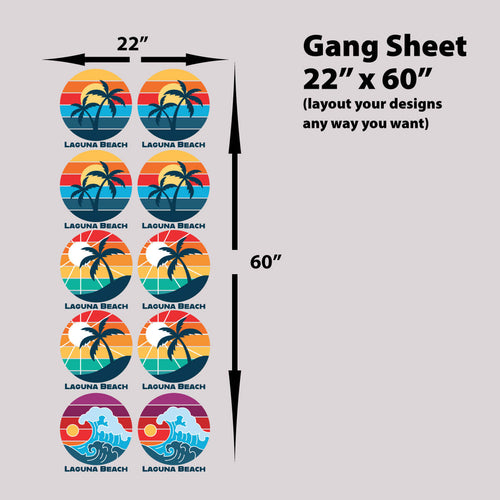
Preparing individual files is one thing, but if you want to be smart with your budget, you should be ganging your designs. By placing several of your perfected, transparent PNGs onto one large artboard, you create a "gang sheet." This is the single best way to bring your cost-per-print way down.
For example, you could easily fit a large back design, a couple of sleeve prints, and a few small chest logos all onto a single sheet. You’re paying for the sheet, not for each individual transfer.
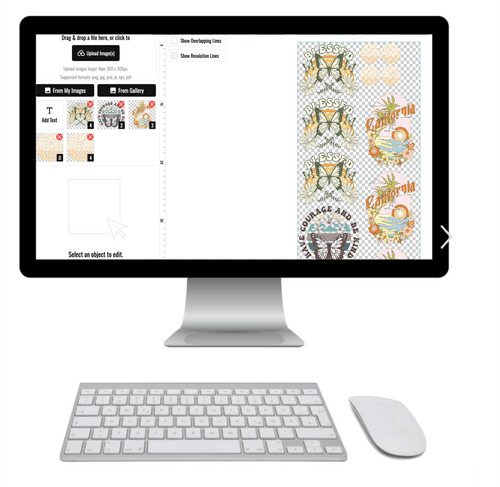
To make this dead simple, our Auto-build gang sheet builder is designed for exactly this. Just upload your individual transparent PNGs, and the tool automatically arranges them to maximize the print area and minimize waste. It's the perfect way to get more prints for your money, especially for small businesses and creators looking to scale up.
Using Gang Sheets to Maximize Your Profit
A killer back-of-hoodie design is a great start, but turning that creativity into cash is the real goal. The secret to better margins isn't just about selling more hoodies—it's about radically lowering your production costs. This is where gang sheets completely change the game for apparel creators.
A gang sheet is a large DTF transfer sheet where you can place multiple designs. Instead of paying for each transfer individually, you pay for one large sheet packed with all your artwork. It's the single most effective way to drop your cost-per-print and actually make money on your designs.
The Power of Grouping Designs
For any small business or independent creator, every penny counts. The ability to group different designs onto a single sheet is a massive financial advantage, and it's not just for big production runs. It's perfect for creating variety without committing to huge batches of one design.
Think about your next hoodie project. Let's say you need:
- Five large back designs (maybe 11x15 inches each).
- Five matching front chest logos (around 4x4 inches).
- A handful of sleeve prints or neck tag labels to give them a professional finish.
Instead of ordering over 15 separate transfers, you can fit all of them onto a single, large gang sheet using an easy tool like our Auto-build gang sheet builder. Your cost-per-piece plummets instantly, letting you compete with bigger brands on price while delivering the same high-quality feel.
By ganging up your prints, you're using every square inch of the transfer film you pay for. This efficiency is the secret to hitting incredibly low print costs and boosting your profit on every hoodie you sell.
This strategy is especially smart right now. Oversized graphic hoodies with statement back designs are leading the trends, and the custom apparel market is projected to grow from USD 224.77 billion in 2025 to a staggering USD 366.45 billion by 2033. You can learn more about the hoodies and sweatshirt market findings to see where the industry is headed.
Effortless Gang Sheet Creation
Building a gang sheet might sound complicated, but our Auto-build gang sheet builder was designed to make the process dead simple and cost-effective. It’s a tool built to remove all the guesswork.
You just upload your individual, print-ready PNG files. The builder automatically nests them together, optimizing the layout to cut down on waste and squeeze as many designs as possible onto the sheet. It's the most direct path from a digital file to cost-effective production. You can get into the nitty-gritty by checking out our guide on how to make your own DTF gang sheets.
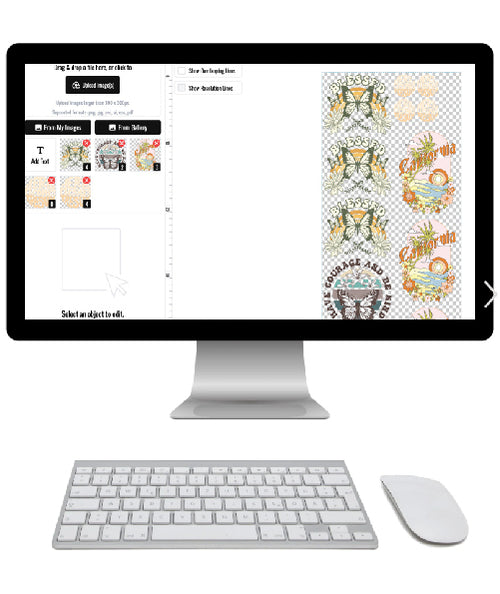
The screenshot above shows our "We Build a Gang Sheet for You" service, which is an even easier option. If you're short on time or just want an expert to handle the layout, this service is the ultimate convenience.
With this hands-off approach, your sheet is professionally optimized for the best possible value, so you can focus entirely on your designs and your business. We handle the technical setup, guaranteeing a perfectly arranged sheet that's ready to print.
Pressing Large DTF Transfers for Flawless Results
A brilliant back of hoodie design is only half the battle. The real test of a professional brand comes down to the application—that moment where your digital art becomes a physical product. If the press isn't perfect, the design doesn't matter.
Pressing a huge transfer onto a bulky hoodie can feel a little intimidating, especially with all those seams, thick fabric, and the hood getting in the way. But with the right prep and a solid technique, you can get a durable, retail-quality finish every single time.
Essential Prep Work for a Perfect Press
Before that transfer even gets near the hoodie, you need to prep your garment. The number one cause of failed presses, especially peeling edges, is hidden moisture in the fabric. Hoodies are basically sponges for humidity.
A quick pre-press for 5-10 seconds is absolutely mandatory. This step warms the fabric, smooths out wrinkles, and forces out any steam that would otherwise ruin your transfer's adhesion. Don't skip it.
Next up is finding the exact center. With a large back of hoodie design, being off by even a little bit is immediately obvious. The easiest way to nail this is to fold the hoodie in half vertically, lining up the side seams perfectly. A light press will create a temporary crease right down the middle, giving you a perfect guideline for placement.
Navigating Seams and Bulky Hoods
Pressing a flat t-shirt is easy. A hoodie? That's a different game entirely. You’re fighting against thick seams and the bulky hood, all of which create uneven pressure—the biggest enemy of a good DTF transfer.
The solution is to isolate the print area. A pressing pillow or a simple heat-resistant foam pad placed inside the hoodie is a game-changer.
- The pillow lifts the flat print area so it’s the highest point.
- It lets the thick seams and the hood fall away around it.
- This guarantees your heat press makes direct, even contact across the entire transfer.
Without a pillow, the press hits the high spots like the center seam, leaving the rest of the design with weak pressure and poor adhesion. This one small tool makes a massive difference in quality and durability.
This simple process shows how smart design and production choices lead directly to better profits. Organizing your designs efficiently is a key step in this strategy, minimizing waste and maximizing your return on every print run. Our Auto-build gang sheet builder is the perfect tool for this, ensuring a cost-effective layout every time.

The visualization above links smart design preparation to cost-effective production using gang sheets, which is a core part of boosting profitability.
Troubleshooting Common Pressing Issues
Even with the best prep, things can go wrong. Knowing how to spot and fix common problems on the fly will save you from wasting hoodies and transfers.
Key Takeaway: If your transfer isn't sticking right, it almost always comes down to three things: time, temperature, or pressure. A small tweak to one of these usually solves the problem.
Common Problems & Quick Fixes:
| Problem | Likely Cause | Solution |
|---|---|---|
| Edges are Peeling Up | Not enough pressure, or uneven pressure. The platen isn't making full contact. | Increase your pressure. Use a pressing pillow to raise the print area and ensure the entire transfer gets even heat. |
| Uneven or "Splotchy" Adhesion | Moisture in the garment, or cold spots on your heat press platen. | Always pre-press the hoodie. Use a temperature gun to check your press for any inconsistent heating. |
| Scorching or Discoloration | The temperature is too high for the fabric. Polyester and blends are especially sensitive. | Drop your temperature by 5-10 degrees. Test on a scrap piece if you're unsure. |
For a deeper dive into dialing in your settings, check out our guide on heat press settings for DTF. Getting your temperature and pressure just right for different fabrics is what makes a back of hoodie design not just look good, but last.
Common Questions About Back of Hoodie Designs
When you're deep in a hoodie project, some questions always seem to pop up. Getting straight, practical answers is the key to keeping your project on track. Here are the most common issues we see creators run into when dialing in their back of hoodie designs.
What Is the Best Size for a Back of Hoodie Design?
While there’s no single "perfect" size, there are professional standards that are a safe bet for most adult hoodies. For a standard Large or XL hoodie, a design width between 11 and 13 inches is the sweet spot. The height can be more flexible, but it usually lands between 12 and 16 inches.
This sizing makes a strong visual impact without wrapping awkwardly around the sides of the garment.
- For smaller adult sizes (S/M), you'll want to scale down to 9-10 inches wide to keep the proportions right.
- For youth hoodies, an 8-10 inch width is a solid choice.
- Always measure your blank hoodie first. Make sure to leave at least 1.5-2 inches of breathing room from the side seams for a clean, professional look.
A critical placement tip: position the top of your design about 3-4 inches below the hood's bottom seam. This prevents your artwork from being hidden when the hood is down, ensuring the most important parts of your design are always visible.
Can I Put a DTF Transfer Over the Hoodie's Seam?
Yes, you can, but it requires the right technique. DTF transfers are flexible enough to go over seams, but the real challenge is getting a perfect press. The seam creates an uneven surface, which stops your heat press from applying consistent pressure across the whole design.
The solution is a pressing pillow or a foam pad placed inside the hoodie. This simple tool elevates the print area, allowing the thick seam to sink into the soft padding. This gives your heat press a flat surface to work with, guaranteeing solid contact and proper adhesion for the entire transfer.
Without a pillow, the press only makes contact with the high point of the seam, leaving the areas on either side with too little heat and pressure. This is a classic recipe for peeling after the first wash.
How Do I Make Colors Pop on a Dark Hoodie?
This is where DTF really shines. Our transfers are printed with a white ink underbase layer, which is the key to vibrant color on dark garments. This opaque white layer is printed onto the film first, and then your full-color design is printed directly on top.
When you press the transfer, that white base goes down first. It acts as a solid, bright foundation that completely blocks the dark fabric color from bleeding through. This stops your colors from looking dull and ensures your bright reds stay fiery and your yellows stay brilliant.
Why Is a 300 DPI Resolution So Important?
DPI stands for Dots Per Inch, and it’s the universal standard for print quality. A 300 DPI resolution is non-negotiable if you want to produce professional, high-quality apparel.
When your file is set to 300 DPI at the actual print size (like 12x16 inches), it has enough pixel data for our printers to create razor-sharp lines, smooth gradients, and crisp details. If you send a file with a low resolution, like 72 DPI (the standard for web images), it will look blurry and pixelated when scaled up for a big back-of-hoodie print.
You can't add quality to a low-resolution image after the fact. Always start your design project in a 300 DPI canvas to guarantee a result you’ll be proud to sell or wear.
Ready to bring your designs to life? At Lion DTF Transfers, we make it easy to get professional, vibrant, and durable prints. Use our Auto-build gang sheet builder to maximize your value and create stunning custom apparel today.