



You've got artwork ready, shirts waiting, and a deadline that suddenly feels much closer than it did yesterday. That's usually when one looks for where to print DTF transfers near me and expects Google to hand them one obvious answer.
It rarely works that way.
The local results often mix true production shops, brokers, home-based operators, and companies that look local because they target your city in search. The right choice depends less on who appears first and more on who can hit your deadline, print your file cleanly, and give you a transfer that presses well on the garment you're using.
Finding the Right DTF Printer Starts Here
DTF moved fast from a newer decoration method into an everyday production option. It became commercially established in the early 2020s, and by 2024 to 2026 it had expanded into a mainstream choice for small shops because it can produce full-color transfers without screens or minimum order volumes, with providers in major U.S. markets advertising same-day printing or 24 to 48 hour production (commercial DTF timeline and turnaround context).
That shift changed how buyers should search.
A few years ago, if you needed custom apparel fast, you often had to choose between a local screen printer with setup constraints or a rush online order with limited flexibility. DTF changed that because a shop can print one transfer, a gang sheet, or a mixed batch without building screens for each design.
Practical rule: Don't treat “near me” as a map problem. Treat it as a production problem.
What works is a decision framework. Start with the deadline. Then check whether the shop handles your file type, your quantity, and your garment type. After that, look at distance.
What doesn't work is assuming the closest listing is automatically the safest option. A nearby shop that answers slowly, prints from weak files, or can't confirm pickup timing can cost you more time than a provider outside your city that runs a tighter operation.
What a good decision looks like
A solid DTF partner usually makes a few things easy:
- Fast quoting and fast answers so you're not chasing basic order details
- Clear upload requirements for gang sheets, single transfers, and transparent artwork
- Straight answers on pickup or shipping instead of vague “rush available” language
- Confidence on materials if you're pressing onto more than standard tees
If you're ordering for a brand launch, team event, fundraiser, school program, or customer reorder, that framework matters more than a pretty website. Good DTF buying is mostly about reducing avoidable mistakes before they happen.
Smart Search Strategies for Local DTF Printers
The common search term is too broad. If you type “DTF printing near me,” you'll get a messy list of results that doesn't tell you who can print today, who allows pickup, or who only collects orders and forwards them elsewhere.

Search for operations, not just location
For this query, the most reliable filter is turnaround plus pickup geography. Local DTF providers commonly advertise same-day printing, same-day shipping, and local pickup for qualifying orders. A practical workflow is to shortlist by ZIP code or city, verify pickup support, then confirm the order cutoff, file readiness, and whether they can print gang sheets or single transfers the same day (operational checklist for local DTF pickup and same-day printing).
Use searches that force that information to the surface:
- “same day DTF transfer pickup [city]”
- “DTF gang sheets [city]”
- “custom DTF transfers local pickup [ZIP code]”
- “hot peel DTF transfers [city]”
- “rush DTF printing [city]”
Those queries do a better job of exposing production capability than a generic near-me search.
Build a shortlist fast
When I'm checking local options, I want answers to four questions before I care about anything else:
-
Do they actually print in-house?
Some businesses market DTF but don't run the production themselves. -
Can I pick up the order?
If yes, ask for the exact pickup address, not just the city they rank for. -
What's the cutoff for today?
“Same day” means nothing without a file deadline. -
Do they support gang sheets and one-offs?
Many urgent jobs include both.
Search results can look local while the actual production or pickup point is somewhere else. Confirm the real address before you build your timing around it.
What to check on the listing itself
Google Maps and business profiles still help, but use them carefully.
Look for:
- Recent photos of printed transfers
- Mentions of pickup or rush work
- Evidence they handle gang sheets
- Replies to customer questions
Skip listings that only say “custom printing” with no mention of DTF workflow, file prep, or order handling. Those shops may still be good, but they're giving you too little to make a rush decision.
Your Vetting Checklist for Quality and Reliability
Once you have a shortlist, stop comparing shops by price alone. A cheap transfer that arrives late, prints fuzzy edges, or presses poorly isn't cheap. It creates rework.
Technical screening should prioritize shops that specify high-resolution printing, white-ink layering, and a hot-peel workflow. A practical benchmark is to ask whether the shop outputs at least 300 DPI, uses consistent color management, and supports hot-peel application, because those factors affect edge sharpness, gradient smoothness, and wash durability (Printful's breakdown of DTF process and quality benchmarks).

The questions worth asking
Ask these directly. A real production shop should be able to answer without dancing around the details.
-
What resolution do you print at?
If they can't speak clearly about 300 DPI file expectations or output quality, keep looking. -
Do you use white-ink layering correctly for color support?
This matters for color pop and clean opacity, especially on dark garments. -
Is your transfer hot peel?
Hot-peel workflow affects how the transfer behaves during production and post-press. -
How do you handle color consistency?
You want to hear that they have a repeatable process, not “we just print what comes through.” -
What file problems cause delays?
The answer tells you how experienced they are with real-world orders.
Reliability is operational, not just technical
A shop can have decent equipment and still be hard to work with. Reliability shows up in communication.
Here's a practical screening table you can use when comparing providers:
| Vetting Criteria | What to Ask | Why It Matters |
|---|---|---|
| Print quality | Do you print at 300 DPI or higher, and what file type do you prefer? | Sharp detail starts with both machine capability and file standards |
| White ink and application method | Do you use white-ink layering and hot-peel transfers? | These affect opacity, feel, and press performance |
| Color handling | How do you maintain color consistency across reorders? | Important for brand work and repeat jobs |
| Turnaround | What's today's cutoff for same-day or next-day production? | Rush orders fail when cutoff details are vague |
| Pickup process | Is pickup available, and where is the actual pickup address? | Prevents timing mistakes and location confusion |
| Order type | Can you handle gang sheets and individual transfers in the same order? | Useful for mixed production runs |
| Support | If my file has an issue, will someone flag it before printing? | Prevents preventable reprints |
| Pricing clarity | How are jobs priced, and are there extra setup or handling charges? | Helps you compare quotes fairly |
Warning signs that usually lead to trouble
You don't need a long list. A few red flags are enough.
- No clear file specs usually means more production mistakes.
- No mention of hot peel or white ink suggests they may not fully consider DTF quality.
- Vague turnaround promises often break under deadline pressure.
- No proofing or file review process can turn a small artwork issue into a full reprint.
A reliable DTF provider doesn't just say yes. They tell you what could go wrong before it does.
Preparing Your Files for a Flawless Print
Even a strong printer can't rescue weak artwork. Most bad DTF outcomes start at the file level, not the press.
Printful's process notes point to a common failure mode. DTF captures detail best with transparent PDFs at 300 DPI, and low-resolution or non-transparent files can wipe out the quality advantage before the job even starts. For a plain-English primer on file setup, this guide on what file format is best for printing is useful before you upload.

Do this, not that
The cleanest approach is simple:
-
Use artwork built for print.
Logos and text should stay crisp. If you have vector files, send them. -
Keep the background transparent.
A hidden box around the design can become an ugly printed edge. -
Check the resolution before exporting.
If the file looks soft on-screen at print size, it won't look better on film. -
Clean up stray pixels and outlines.
Tiny mistakes often show up after pressing.
Then avoid the usual traps:
- Don't upscale a small web image and call it print-ready
- Don't flatten everything too early if edits might be needed
- Don't assume RGB screen color will match print exactly
- Don't approve a proof without checking size and edge detail
What to review before approval
If the printer sends a proof, don't just glance at the artwork and reply “looks good.”
Check:
- Final size
- Placement on the sheet
- Transparent edges
- Small text readability
- Any unexpected border, shadow, or background artifact
One careful review is faster than fixing a batch of bad transfers after they arrive.
Maximize Value with Gang Sheets and Smart Ordering
If you order transfers one design at a time, you usually leave money and sheet space on the table. That's why shops that run DTF every day lean on gang sheets.
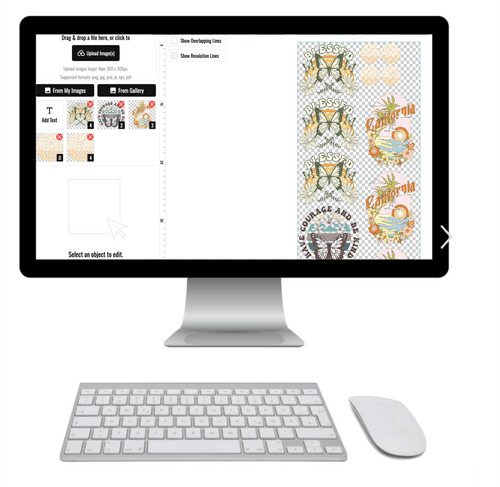
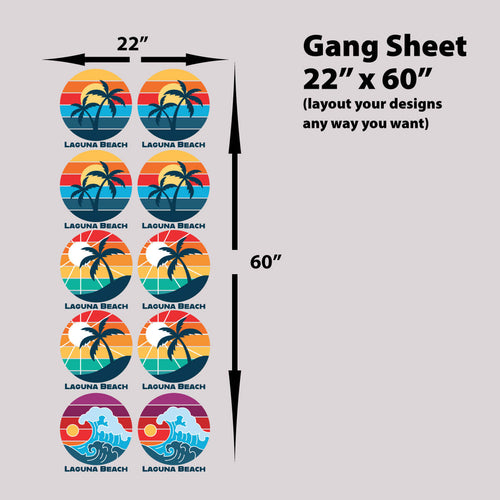
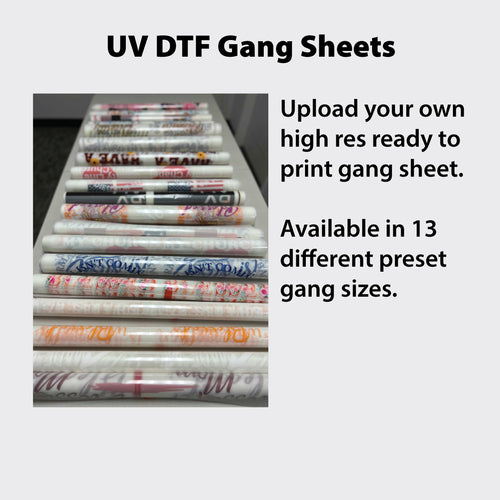
Gang sheets let you place multiple designs, sizes, or logo variations on one sheet so you use more of the printable area. That matters whether you're producing left-chest logos with back prints, building event merch in several sizes, or batching reorder graphics for multiple customers.
Why gang sheets usually make more sense
They solve two common production problems at once.
First, they reduce waste. Instead of paying for scattered single pieces, you organize artwork into a tighter layout. Second, they simplify fulfillment. One sheet can hold a full mixed run for a small job.
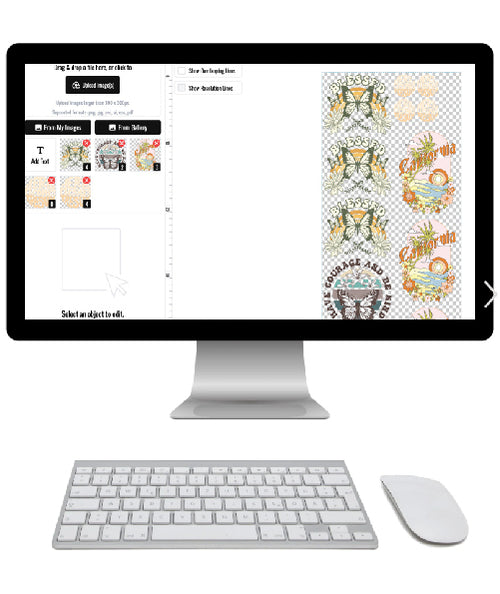
If you want a practical overview of layout strategy and order planning, this article on DTF gang sheets covers the basics well. For buyers who don't want to build layouts manually, an Auto-build gang sheet builder is the easiest path. It speeds up setup, helps use sheet space efficiently, and makes mixed artwork orders more cost-effective.
Smart ordering includes garment compatibility
A lot of buyers focus only on speed and forget the pressing surface. That's a mistake.
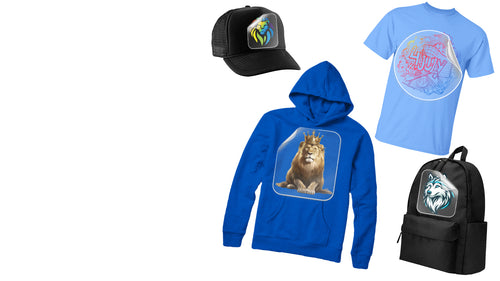
An often-missed question for local DTF providers is compatibility with nonstandard substrates. Many buyers need transfers for more than cotton tees, such as nylon jackets, jute bags, or leather goods, and asking whether a provider has successfully tested those materials can prevent costly failures on promotional, sports, and workwear jobs (material compatibility guidance from a local DTF provider).
If your order is going onto nylon, jute, denim, or leather, don't ask “Can you print this?” Ask “Have you tested this material before?”
When single transfers still make sense
Gang sheets aren't automatically right for every order.
Use single transfers when:
- You're testing one design before a larger run
- The artwork changes constantly
- You need a quick replacement print
- The job is too simple to benefit from sheet planning
But once you're ordering multiple graphics, multiple sizes, or repeated logos, gang sheets usually make the workflow cleaner and the cost easier to manage.
Local Pickup vs. Fast Shipping Which Is Better

A lot of “near me” searches are really deadline searches. Many results market themselves as local, but the practical decision often comes down to turnaround time instead of pure distance. Providers that emphasize same-day pickup or 24 to 48 hour production and shipping reflect what urgent buyers prioritize, which is reliability against a deadline (turnaround versus locality in DTF search behavior).
When pickup wins
Pickup is the better move when the job is urgent and the file is already ready to print. If you can send approved artwork, hit the cutoff, and drive to a confirmed pickup location, local pickup can remove the uncertainty of transit.
It also helps when you want to inspect the transfers before you leave or when the order is tied to same-day pressing.
When fast shipping is the smarter choice
Shipping often wins when the provider is better organized than the local shop. A company that prints quickly, communicates clearly, and ships on schedule can be a safer option than a nearby business that's vague about production timing.
If you do choose pickup, confirm the details before ordering. These pickup instructions for DTF transfer orders show the kind of operational clarity you should look for from any provider offering local collection.
This video gives a useful visual reference for how buyers think through DTF ordering and fulfillment:
The practical answer is simple. Choose pickup when every hour matters and the location is real, confirmed, and reachable. Choose shipping when the better producer isn't local but can still meet the date with less risk.
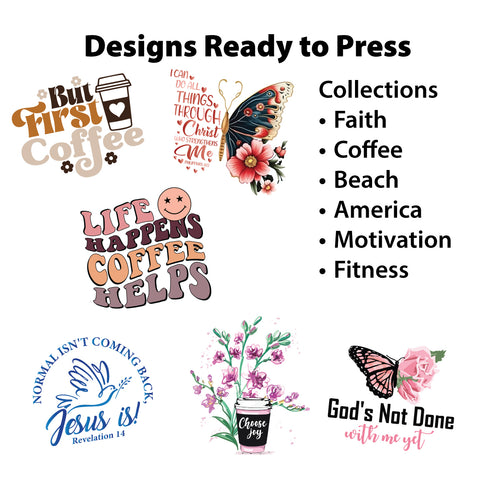
If you need a provider that offers custom DTF transfers, gang sheets, and ready-to-press ordering with both shipping and pickup options, Lion DTF Transfers is one option to compare against local shops. Use the same checklist from this guide. Confirm turnaround, file readiness, pickup details if needed, and whether the order fits your garment and workflow before you place it.